Home Blog Page 1784

Fireworks will fly at Mazatlán’s 6-day carnival bash

0
Costumed dancers are part of Mazatlán's annual carnival.

Mazatlán, Sinaloa, is getting ready to let go of its worries and party, with six days and nights of carnival festivities lined up for the end of this month.

The theme for this year’s Mazatlán Carnival, slated to light up the streets and shores of the coastal city on February 20-25, is “Somos América” (We Are America).

Also known as “The Pearl of the Pacific,” Mazatlán is one of the most popular tourist destinations on Mexico’s Pacific coast, and the festival’s lineup is ready to live up to that fame.

The events will be topped off with nightly concerts by popular Mexican and international artists. Remmy Valenzuela, Pepe Aguilar, Carlos Rivera, Yuri, Danna Paola and Mazatlán’s own Banda Los Recoditos are among the headlining acts.

Colombian reggaeton artist J Balvin will also perform.

Each evening will include traditional events such as the quema del mal humor (burning of the bad mood), during which a selected person or theme that has been bringing society down over the last year is metaphorically torched along with a large visual likeness of it. The subject of this year’s burning has yet to be announced.

There will also be dances, parades, food fairs, light shows and coronations of the carnival king and queen, among other events.

Mazatlán’s signature carnival tradition, called the Naval Combat, is a grand fireworks display that dramatizes the defense of the port during the French invasion of 1864.

Most of the events are free to the public, though some, such as the concerts, require tickets. They can be bought on the Mazatlán Carnival website (Spanish only).

Source: Dónde Hay Feria (sp)

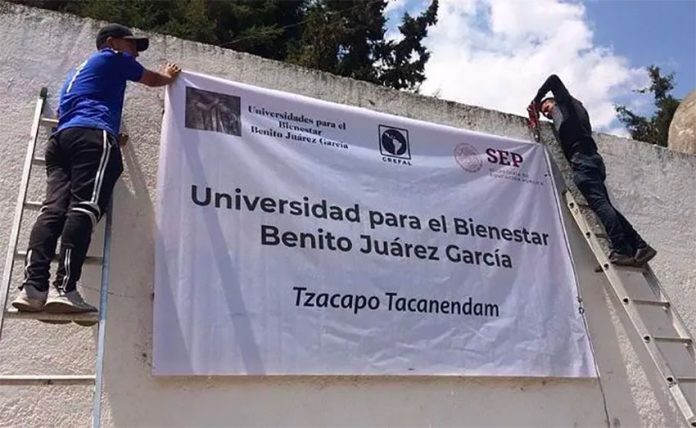
Anti-graft NGO finds new public universities offer questionable education

0
The new schools got low marks from anti-corruption group.The new schools got low marks from anti-corruption group.
The new schools got low marks from anti-corruption group.

A corruption fighters group has slammed the federal government’s new tertiary education scheme in a new report.

Public universities established by the current government are operating outside existing regulations and the quality of the education they offer is questionable, according to Mexicans Against Corruption and Impunity (MCCI).

In its report Universities in Limbo, MCCI said that none of the 30 Benito Juárez Well-Being Universities (UBBJ) it visited in 14 states last October can award degrees to students because they are not certified by the Secretariat of Public Education (SEP) to do so.

The organization also said that all but four of the UBBJ campuses fail to meet the government’s own requirement of being located in towns where the nearest tertiary education institute is at least 50 kilometers away.

“On average, the 30 universities are 22 kilometers from another higher education institute,” the report said.

MCCI claimed that partisan politics played a role in decisions about where the campuses should be located.

Fifty of 100 UBBJ campuses are in municipalities governed by the ruling Morena party, the report said, while a further seven are in municipalities governed by Morena’s coalition partners.

The anti-graft group also said that it detected “atypical” spending on the tertiary education scheme, stating that not a single peso was spent on the program in the first three quarters of last year.

In the fourth quarter, however, the government allocated 880.2 million pesos (US $47.3 million) to the universities, the report said.

MCCI said that assessing the educational programs on offer at 26 of the UBBJ campuses it visited was difficult because their chancellors refused to provide any information.

In such cases, representatives of the organization spoke with principals of high schools in the same municipality, who said that they were unaware of the operation of the universities and questioned the quality of the education they purport to offer.

UBBJ students who spoke with MCCI complained that the campuses they attend are subject to flooding, that classrooms don’t have windows and lack basic educational infrastructure. They indicated that they studied at the government’s new universities because they failed to gain admission to other tertiary education institutes or because they simply wanted to collect the 2,400-peso monthly scholarship on offer.

“As we say in the title [of the report], it’s a program that is in limbo,” said MCCI executive president María Amparo Casar.

“Does it look good? No, it doesn’t look good at all. In terms of its design, in terms of implementation, I don’t believe that it can be a program that meets its objectives.”

In light of its findings, MCCI made five recommendations to the government: increase the number of places available at existing universities rather than create new ones from scratch; build regional campuses of existing public universities; concentrate spending on UBBJ universities in marginalized municipalities; ensure resources are used for their intended purpose; and ensure compliance with SEP requirements so that the new public universities can award degrees.

It’s not the first time that the MCCI has been critical of the federal government.

The organization published a report last year that claimed the government’s youth employment scheme was tainted by corruption.

It was also part of a collective that launched legal action against the Santa Lucía airport with the aim of reviving the previous government’s US $13 billion airport project, which was canceled by President López Obrador after a legally questionable public consultation.

Source: Reforma (sp) 

Cumbre Tajín 2020 aims to reawaken pride in Veracruz’s Tontonac roots

0
Recording artist Lila Downs will be one of the performers at the Cumbre Tajín.

Veracruz is set to celebrate its Totonac heritage with the 21st edition of the Cumbre Tajín (Tajín Summit), to take place in and near the El Tajín archaeological zone, a UNESCO World Heritage Site in the northern part of the state.

One of the largest regional indigenous celebrations in Mexico, the Cumbre Tajín will stage its main events on March 13-15. According to Xochitl Arbesú Lago, secretary of Tourism and Culture for the state of Veracruz, this year’s theme, Ven a Despertar, refers to an awakening of culture, consciousness and pride in Veracruz and the Totonac people.

Like most of Mexico’s regional fairs, the main draw is music with local, Mexican and international artists performing at over 50 concerts. Headliners include Lila Downs, Grammy nominee Ximena Sariñana and actress/singer Regina Orozco.

One of the invited bands is Tercera Raíz from Coatzacoalcos, a band that fuses reggae, ska and Caribbean music, which will perform March 14. The group’s name is an allusion to the third ethnic strand of Veracruz, and Mexico in general — its African heritage, which is all but forgotten.

2020 marks a significant reorganization of the event with the aim of making it more inclusive. In the past, the event was held over five consecutive days at the Takilhsukut Park and El Tajín. Starting this year, the main events last three days, with other events scheduled for the weeks before and after, and some events will be held in Papantla, designated a Magical Town by tourism authorities. Another significant change is that almost all events are free or with entrance fees of a few hundred pesos.

For the main weekend, there will also be guided tours of the archaeological site, demonstrations of local cuisine, Totonac traditional medicine/rituals, handicrafts, art and regional/indigenous dance and music. Light and sound shows focused on the Pyramid of the Niches remain a perennial attraction.

The first of the peripheral events is the Carrera de Pescado de Moctezuma on March 5-6. Commemorating the tradition of carrying a fish from the coast of Veracruz to the ancient city of Teotihuacán north of Mexico City, the long-distance relay running event has six or 12-person teams covering the same route.

On the 12th and 13th is the off-road motor race called the Ruta Extrema Jarochazo with over 300 participants. Rituals for the spring equinox will be held at the pyramid on March 19 and at the Vega de Alatorre Horse Race on March 21. State authorities expect to draw 250,000 visitors to the region during the period.

The reason for the changes is to encourage tourists and other visitors to explore the Totonac region, with its beaches, traditional communities and more. One event that is being promoted along with the Cumbre Tajín is the Fiestas del Petroleo of the nearby oil refining city of Poza Rica.

The Cumbre Tajín is an important event for the entire state of Veracruz. It is expected to bring in 6 million pesos (US $319,000), with an overall influx of 90 million pesos to the businesses of the state’s northern region. The event also generates 8,500 seasonal jobs, most of which benefit the local Totonac population.

The event is organized by El Tajín, A.C. with the support of the Secretariat of Education and Culture of the State of Veracruz, other state agencies, the Universidad Veracruzana and the municipality of Papantla. Tickets are available through Ticketbox.

Source: La Jornada (sp)

Stakes are high as rising mayhem tarnishes Cancún’s longstanding allure

0
Cancún: a sinister reputation.

Earlier this month, an important arrest was made by the state police of Quintana Roo. It’s hardly a rare occurrence in the state, but this one in particular induced a sigh of relief from law enforcement across the southeast. They had finally caught one of the perpetrators involved in the kidnapping, torture and execution of police commander Archi Yamá.

In September of 2019, Yamá had been arriving home in Cancún when several men captured and transported him by van to an unknown location. Four days later his body was found by the side of the road wrapped in plastic bags. His head was also discovered nearby.

The killing was just another in a long and unrelenting line of violent encounters that the city of Cancún, and surrounding Quintana Roo, had been learning to accept as the new normal. In very recent memory, Cancún had been known simply enough for its global attraction to tourists: pristine white beaches, hotel resorts brimming with all-inclusives and the only real crime to be wary of a pinched purse or sleight of hand on the casino floor.

In the last three years however, Cancún has adopted a far more sinister reputation, and with the rate of murders there doubling from 2017 to 2018, it has become more difficult for the city to fix its eyes on the beaches and ignore the danger on the streets: a lifeguard shot dead in a five-star resort; seven dead in a cartel firefight; five mowed down the following month in a popular local bar. However you frame it, the situation is spiraling.

The stakes are high for the state of Quintana Roo. The year 2017 saw an all-time high of 13 million tourists welcomed to the region, but tales of lawlessness have taken their toll on its prestige and, increasingly, visitor numbers. What is currently a modest slump in tourism feels like a brick wall to an area that has worn the crown of getaway favorite since the 1980s, so understandably — even if just for appearances — the authorities have been mobilized to attack this new threat head on.

All 11 local police forces now take instruction from the central government as an attempt to bypass local channels of corruption, and armed patrols are constant, conflict now readily expected.

But the instability of the region may in part lie with these militarized solutions themselves. A constant campaign to target cartel leaders has created vacuum after vacuum of power, into which conflict for territory has flooded. Since 2017, the emergence of the Jalisco New Generation Cartel (JNGC) has only been encouraged by the chaotic power struggles between police and gangs, both of whom have practiced a tormented restraint so as not to disrupt the tourism industry.

The unwritten code in the area has always been to limit conflict around tourists, not because militarized cartel factions have any great sympathy for incoming holiday-makers, but because the fallout of violence involving tourists turns their local conflicts into global news. The Jalisco New Generation Cartel has no such code, a fact that security forces naturally intuit but of course are institutionally slow to realize, which has worked to the advantage of the new kids on the block, who have effectively seized the area from the historic Los Zetas.

As if this weren’t enough, collusion between high ranking politicians and the violent criminal groups in question has been rife. Roberto Borge, governor of Quintana Roo from 2010-2016, is currently awaiting trial after accusations that he hired armed groups to force landowners from their properties.

The court will hear evidence about forged documents, stolen deeds and excessive force used by authorities in a trial expected to expose just some of the corruption ingrained in the local political system. It’s no surprise that a unified front has been so elusive to local government when confronting the cartels means also confronting their own colleagues.

The authorities are struggling for an answer and beginning to learn the lesson that some of the more volatile states have been coming to terms with since the war on drugs began; how do you fight an enemy when the warfare is more damaging than compliance? The more they struggle, the greater the chances of collateral damage, toppling dominoes large enough to potentially sink the tourism economy altogether.

This is far from hypothetical, as a cursory look west to the historically champion coastal resort of Acapulco lays bare — a story of a city seized by the cartels, a tourism economy dismantled, and fractured criminal networks holding almost all sectors of the city to the proverbial ransom. Brutality is ever present, bodies appear daily on the streets, in the ocean or outside the house of a disagreeable political figure.

This is no longer the place that the Kennedys came to vacation or where John Wayne famously basked in the sun, no matter how much the tourism board may want you to believe otherwise. The capital of paradise is not teetering on an edge, it’s long since tipped, the gruesome overtaking the glamorous.

Notwithstanding, we mustn’t confuse the threat to tourism with the threat to tourists. Visitors have been relatively safe in this whole equation and would continue to be so in any eventuality. The violence in Cancún is isolated mainly to the city streets, not the hotels and their allotted portion of paradise. The victims of street warfare would be the residents, families who arrived for employment in a low-paying but secure tourism industry and occupy the fringes of the city.

As violence tears the area apart, residents are caught in the crossfire, and if and when tourism stalls and contracts as a result, it will be those who rely on arriving visitors who end up negotiating the Darwinian landscape of the failing local economy.

The various possible outcomes from the conflict in and around Cancún don’t immediately inspire hope. Of course, the wave of violence needs countering as a matter of urgency, but the authorities must recognize who has the most to lose. As is often the case, the civilians in the epicenter are most at risk, from stray bullets and shrapnel, but also from the wavering industry on which they have not only built their living but their lives.

As the security forces fight a war on two fronts, it’s important for them to realize they’re not the only ones doing so.

Writer Jack Gooderidge is based in Campeche.

Former Pemex boss Lozoya detained in Málaga, Spain

0
Lozoya during his arrest in Spain on Wednesday.

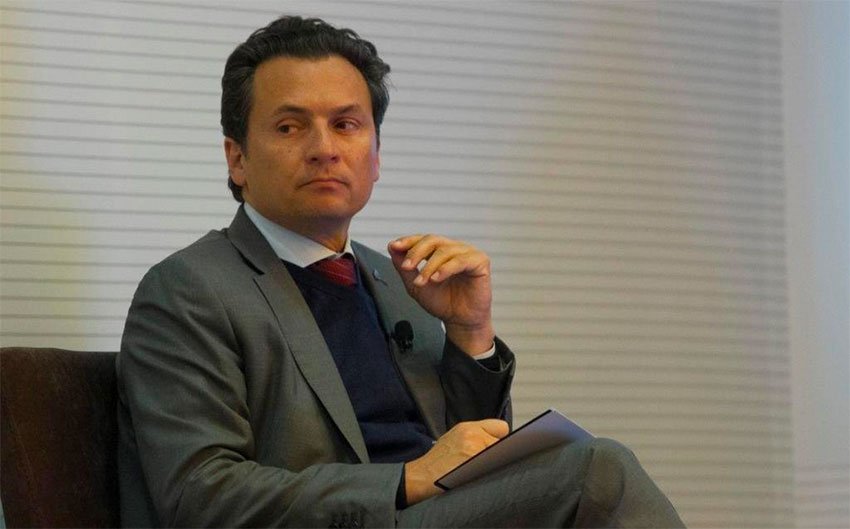
Spanish police have arrested former Pemex CEO Emilio Lozoya, Attorney General Alejandro Gertz Manero said on Wednesday.

Gertz told Radio Fórmula that police acted on an arrest warrant obtained by the Mexican government to detain Lozoya in the southern port city of Málaga on Wednesday.

“Now the lawsuit will commence to bring him to Mexico,” he said.

The Spanish National Police subsequently announced the arrest on Twitter, stating that it was possible thanks to the “excellent relationship” it has with Mexico’s Attorney General’s Office (FGR).

“Together with some family members, [Lozoya] set up a system to defraud public money,” the National Police said.

Former Pemex chief Lozoya.

Lozoya, head of the state oil company between 2012 and 2016, is accused by Mexican authorities of money laundering, accepting bribes and fraud.

He allegedly accepted US $10 million in bribes from Odebrecht, a Brazilian construction conglomerate that became embroiled in corruption scandals in several Latin American countries. Lozoya allegedly took the bribes in exchange for the awarding of a contract for work on the Pemex refinery in Tula, Hidalgo.

Authorities are also investigating Pemex’s 2015 purchase of a fertilizer plant at an allegedly inflated price. Spanish police arrested the owner and president of the company that sold the plant to Pemex in May 2019.

Lozoya has consistently denied all accusations against him but nevertheless went into hiding in Mexico before fleeing to Europe.

After agreeing to work with prosecutors, senior executives at Odebrecht, including the company’s former Mexico director, directly accused the former state oil company chief of receiving bribes. Senior Pemex officials also directly implicated Lozoya in corruption during a secretly recorded 2017 conversation with two Israeli private investigators who passed themselves off as representatives of an investor interested in buying a Mexican oilfield services company.

Describing Lozoya’s case as “iconic,” Gertz said that prosecutors have been pursuing multiple investigations against him. The arrest in Spain today was the result of almost a year’s work with authorities across Europe, he said.

Lozoya’s capture comes nine months after authorities disqualified him from holding public office for 10 years and froze his bank accounts.

Speaking to Radio Fórmula after Gertz’s announcement, Lozoya’s lawyer in Mexico said that the news of the arrest hit him like “a bucket of cold water.”

“We will prepare the defense in Spain and provide the evidence that they didn’t let us present [before],” Javier Coello said.

He said that he hadn’t spoken to Lozoya since his arrest but asserted that his client is convinced that the case against him has no foundation, adding that “he was willing to hand himself in as long as the proceedings are fair.”

The arrest of Lozoya, who was a close associate of former president Enrique Peña Nieto and worked on his 2012 campaign, follows the arrest in Germany in July 2019 of his mother, who is now under house arrest in Mexico City.

Authorities are also seeking to arrest other family members, including Lozoya’s wife and sister, the newspaper El Financiero reported.

Source: El Financiero (sp) 

Panic will get you nowhere: dealing with the coronavirus scare

0
Coronavirus: no need to panic.

When swine flu hit Mexico back in the spring of 2009, I was a high school teacher in Querétaro. School was canceled for two weeks, then for another two weeks. We were told not to travel, though I clearly remember one cool-guy teacher returning after the break looking suspiciously tan and all smiles.

There was quite a bit of panic around the disease, but in the end it actually wasn’t that widespread or deadly. Many people criticized the government for taking such extreme measures like canceling classes and encouraging people to stay indoors, but I’m usually of the idea that an abundance of caution and realizing you’ve been too careful is preferable to a lack of it and being sorry later.

Currently chicken pox is going around my daughter’s school. Yesterday I opened my WhatsApp group of parents to find over 100 panicked messages. “Another fallen soldier!” — we got a play-by-play as each kid was diagnosed.

Some of the more anxious parents declared that they would not be sending their children to school until “something was done,” as if the school administration could 100% control the transmission of disease among biological, social beings with bleach.

Unlike swine flu, chicken pox is a known threat. It’s a common childhood disease for which most children have been vaccinated; they can still get it, but the case would be mild, and it’s better (in terms of how seriously it will affect a healthy person) to get it as a child than as an adult anyway.

In the meantime, we’ll have some very small classes, I suppose.

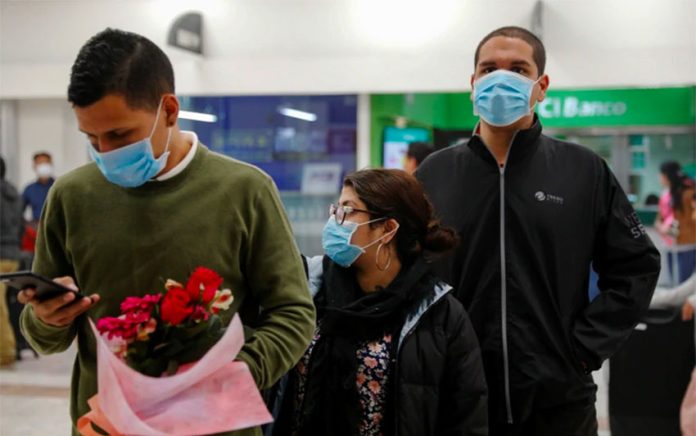
Now a new threat is upon us in the form of coronavirus (what a name!) as health experts from the National Autonomous University say it will certainly arrive in Mexico soon. It’s not a matter of if but when. We’ve had a couple of false alarms but so far are in the clear.

With the panic surrounding this new disease — as happens with all new diseases — it’s important for us to separate the facts from the paranoia. As humans we focus on preventing loss above spurring gain, and it’s well known that we are basically terrible at calibrating our fear (and therefore response) to actual threat.

Think of transportation: the lifetime likelihood that you will die in a car accident is roughly 1 in 100; the odds that you will die in a plane accident are 1 in 205,552. Most of us get in a car several times a day without a second thought but feel real fear when flying.

Humans are naturally programmed to feel disgusted or repelled by the “unclean.” This is especially true when those suffering are part of a different group, and I’ve got to say I’ve never been impressed by the obvious prejudice against Asians that many Mexicans have. More than worry about the disease itself I worry about the social repercussions: will panic trigger danger in the form of violence or forced social isolation?

On this front, however, I feel more optimistic here than if I were in the United States. First, because Mexicans are simply used to danger; with record violence this year, most seem to have settled into a kind of macabre resignation. Life goes on anyway, and you can’t just get off the ride because you’re nervous.

Will Mexico’s hospitals be ready if we need to quarantine those affected? Probably not. We’re basically the polar opposite of China when it comes to organizational speed. That said, we’re probably going to be OK, or at least as OK as we are in the face of other infectious diseases like the seasonal flu.

To put the disease into perspective, National Geographic put together a graph of death rates compared to other well-known outbreaks. When we feel fear creeping up, statistics can be surprisingly comforting, helping us to put our anxiety into perspective.

The World Health Organization has also published some helpful guidelines for protecting oneself, which include practical advice that you’d expect to find for the prevention of any respiratory disease: wash your hands frequently, don’t get too close to people (oh, that one will be hard here!), and if you’re sick, for goodness sake stay home! Cough into your elbow or your shirt and try not to touch your face too much.

And most importantly, don’t panic. We’re going to be OK. Or at least as OK as we are now with the risks we already face.

Sarah DeVries writes from her home in Xalapa, Veracruz.

Trashman held on abuse charge after cart horse dies

0
Garbage collector's horse lies dead in the street in Coacalco, México.

A garbage collector in Coacalco, México state, has been arrested for animal maltreatment after the horse he used to pull his cart fell dead in the street on Monday.

José Luis N. was arrested on Tuesday after neighbors reported the incident to authorities.

Coacalco Mayor Darwin Eslava Gamiño said that despite a ban on using beasts of burden for such tasks that went into effect at the end of last year, many garbage collectors have yet to comply.

He said that the municipal legal authority is reviewing the official documentation, by which some collectors appear to be protected from sanctions for continuing to use horses for their work.

“I don’t want to prohibit them from working,” he said. “The intention is to end the maltreatment of animals and make people comply with the regulation.”

Though many collectors have purchased motorcycles to do their job, the government has provided no financial incentives to that end. “We are not going to negotiate over the maltreatment of animals,” said the Coacalco mayor.

Eslava said that the México state Attorney General’s Office will be the authority to rule in the case. Although 19 garbage collectors using horses have been arrested and gone before a local judge since November, José Luis N.’s case is the first to go before the state authority.

He added that in four of the cases the arrested men handed over their horses to the municipal authorities and that the animals will soon be sent to a refuge for their protection.

Sources: El Sol de Toluca (sp), Milenio (sp)

Security official fired for defying ban on accessing protected area

0
Ex-government official Daniel Mendoza in a restricted area of Nevado de Toluca.

A functionary of the México state police force has paid the seemingly obvious price for posting an illegal act on social media: he was duly dismissed.

Security official Daniel Mendoza López and at least 10 other people drove up to the lagoon area within the volcanic crater of Nevado de Toluca in several vehicles. Although access by car or truck is not allowed there, Mendoza later posted pictures and a video of himself and others partying with music and alcoholic drinks in front of the vehicles.

His Instagram account with the username @danielmendok is now inactive, but in one photo made public, he can be seen smoking a cigarette in front of a Hummer and several ATVs.

The video reportedly showed cans of beer inside the vehicles, and he and the others were seen drinking, conversing and taking photos.

Entrance to this area of the park by motor vehicles has been prohibited by the México State Natural Parks and Fauna Commission since 2008.

Mendoza’s firing was ordered by Security Secretary Maribel Cervantes, who also requested an investigation into the former public official’s conduct while in the position.

“In the [México state] Secretariat of Security public officials are not permitted, and will not be permitted under any circumstances, to misuse or reap personal benefits from their posts. This is in accord with the policy of zero tolerance for corruption and acts of impunity,” Cervantes said.

Apparently the park incident was not the first case of such misuse. According to complaints from social media users on the secretariat’s Facebook page, Mendoza had been charging police officers 500-peso (US $27) fines for arriving late to work.

He has also been accused of charging officers 700 pesos for permission to skip out on work and forcing officers to buy tickets for raffles for bottles of liquor and other items.

Sources: Eje Central (sp), AM (sp)

Maximum penalty to be sought for boyfriend in brutal femicide case

0
Ingrid Escamilla, killed by her 46-year-old boyfriend.

Mexico City prosecutors will seek the maximum penalty for a man who murdered his girlfriend, skinned her body and removed her organs, Mayor Claudia Sheinbaum said on Tuesday.

“Femicide is an absolutely reprehensible crime. When hate reaches the limits like [it did in the case] of Ingrid Escamilla, it’s infuriating,” Sheinbaum wrote on Twitter.

Mexico City police detained the suspect, and the Attorney General’s Office (FGJ) has said that it will demand the maximum sentence, the mayor said.

Erick Francisco Robledo, 46, confessed to killing Escamilla, 25, on Saturday night at their apartment in the northern Mexico City borough of Gustavo A. Madero.

He told police that he got into an argument with Escamilla over his drinking before he stabbed her to death. In an attempt to dispose of the evidence, Robledo skinned and mutilated part of the woman’s body and removed her organs.

Escamilla and confessed killer Robledo.

After being informed of the murder by Robledo’s ex-wife, to whom he reportedly confessed his crime, police arrested him in the apartment on Sunday morning. They found him next to Escamilla’s mutilated body with a knife in his hand and his own body splattered with blood.

A video posted online by media outlets shows Robledo being questioned by police in a patrol car. He tells them that he stabbed his partner to death and disposed of part of her body in a drain near their apartment.

A judge on Tuesday ordered Robledo to stand trial for Escamilla’s murder and remanded him in custody at a psycho-social rehabilitation center rather than a regular jail. His defense team had argued that he has a mental illness and there is a risk that he will take his own life.

The newspaper Milenio reported that the ex-wife of Robledo had filed two complaints against him over the past eight years, including one for domestic violence. Milenio Television reported that Escamilla also filed a complaint against Robledo several months ago but later withdrew it.

News of her violent death triggered outrage in Mexico, where an average 10 women per day were killed last year – many by their partners – and protests against gender-based violence have intensified in recent months.

The anger was further inflamed by the publication of a photo of the victim’s body on the front page of Pásala, a newspaper notorious for salacious headlines, gory stories and graphic images. The photo was accompanied by a headline that read: “It was Cupid’s fault.”

The National Commission to Prevent and Eradicate Violence against Women (Conavim) and the National Institute for Women (Inmujeres) both condemned the publication of the images, which also circulated on social media.

Media that published photos of the victim’s body “re-victimized” Escamilla, they said. Conavim urged authorities to sanction media outlets that publish images of violence against women for commercial purposes.

Inmujeres said in a statement that “Mexico is facing a tremendous challenge with respect to violence against women – we urge the media to work with rigor and professionalism.”

Deputy prosecutor Nelly Monte said Tuesday that the FGJ is investigating six police and public officials to determine who leaked the images of the victim. She also said that the Attorney General’s Office has all the evidence it needs to prove that Robledo acted with the intent of killing his partner.

For her part, Mayor Sheinbaum reasserted her commitment to work tirelessly to eradicate violence against women, while lawmakers observed a minute of silence in the Mexico City Congress to show their respect for the victim.

After her burial Tuesday in her hometown of Nuevo Necaxa, Puebla, a school friend of Escamilla told Milenio that she was shocked by the death because she never had any problems with anyone.

“She was a lover of life, a protector of animals; I can’t say anything bad about her. [She was] a very calm person, always smiling, very kind … When you needed her, she was there [for you],” Vale Jarillo said.

“I’ve got a lot of things in my head, a lot of questions about why he did it. … It’s news that really hits you. … No one has the right to take someone’s life.”

Source: Milenio (sp), Expansión Política (sp), BBC (en), Reuters (en) 

81 dogs seized in Mexico City show signs of abuse

0
Dogs are gathered by officials in Mexico City this week.

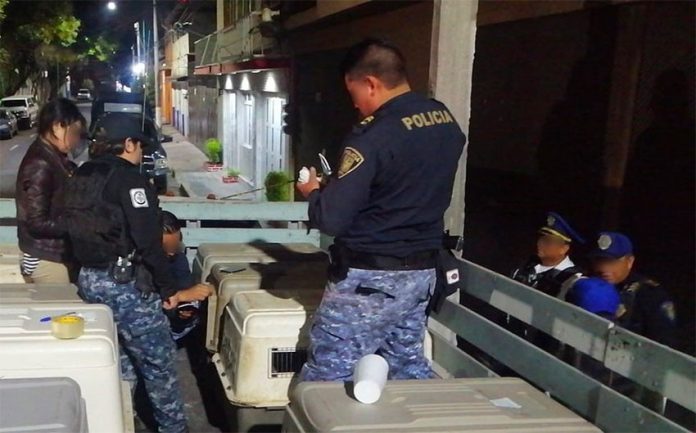
Mexico City officials seized 81 dogs in various states of maltreatment in the Gustavo A. Madero borough on Monday and Tuesday.

The city’s Environmental Attorney General’s Office (POAT) recovered the animals — 63 on Monday and 18 more on Tuesday — for evidence in the case it plans to file against those found responsible for their captivity and treatment.

The dogs were being held in cages in the back of a truck. A report in the newspaper El Universal suggested they were to be used as bait to train other dogs to fight.

The maltreatment of an animal leading to non-life-threatening injuries carries a penalty of six months to two years in prison and fines ranging from 4,344 to 8,688 pesos (US $233-$466) in the capital city.

Those sanctions could go as high as three years in prison and a 13,032-peso fine if the injuries put the animal’s life in danger.

“At POAT we consider it of the utmost importance that the public prosecutor’s office try those responsible in this case of animal maltreatment, which was verified by the physical conditions in which we found the specimens,” said POAT director Mariana Boy.

The 63 dogs found on Monday were sent to veterinary clinics for physical examinations.

They were found to be in states of severe dehydration and malnutrition.

“[The vets] also found signs of skin ailments, signs of anemia, conjunctivitis, severe periodontal disease and dental fistulas. Cases of paraphimosis and non-recent lesions in the limbs and eyes were also observed,” officials said.

Mariana Boy stressed the importance of reviewing and discussing reforms to the city’s animal protection laws that have been proposed by Deputy Leticia Varela to prevent further cases of overcrowding and maltreatment.

Source: El Universal (sp)