Home Blog Page 1870

Guadalajara airport protest resumes; landowners reject appraisal

0
Landowners protest at Guadalajara airport.
Landowners protest in Guadalajara.

Communal landowners in Jalisco are once again protesting to demand “fair” compensation for land that the federal government expropriated almost 70 years ago to build the Guadalajara International Airport.

The El Zapote ejidatarios have protested inside the Miguel Hidalgo y Costilla airport in recent days and maintained a carpark sit-in.

The government expropriated 307 hectares of land for the airport in 1951 although an expropriation decree wasn’t published until 1975.

El Zapote landowners claim they were never adequately compensated for the expropriated land and have maintained that they are still the rightful owners.

Over the years, the ejidatarios have staged scores of protests to pressure the Secretariat of Communications and Transportation to pay them what they say they are owed.

Nicolás Vega Pedroza, a representative for the ejido of El Zapote, told the newspaper El Economista that the current protest is not only to demand payment but also to express opposition to a decision by a federal court in January to appoint Jorge Morett Ramírez as the government appraiser.

Vega accused Morett of wrongfully reducing the amount owed to the landowners.

He said the appraiser valued the land at 1.317 billion pesos (US $68.7 million) but indicated that 600 million pesos must be deducted from that figure because it has already been paid, an assertion that the landowners reject.

They also charge that Morret’s valuation significantly underestimates the true value of the land.

According to appraisals paid for by the landowners, the land is worth more than 3.2 billion pesos (US $166.9 million). The ejidatarios also want an additional 947 million pesos in damages.

“The ejido is willing to negotiate, but something fair,” Vega said.

Source: El Economista (sp) 

Public consultation to decide fate of Sinaloa fertilizer plant

0
'Not here!' declare signs of protesters awaiting AMLO's arrival in Los Mochis.

President López Obrador said Sunday an investigation will determine whether a fertilizer plant in Sinaloa will “harm or benefit citizens,” but he will leave the final decision on the matter to a public consultation.

The president visited Los Mochis, Sinaloa, where he was greeted by hundreds of people protesting the construction of what the previous federal government described as the “most modern fertilizer plant in the world.”

“We have to analyze this, because in issues like this there are always many interests; I was not born yesterday . . . ” he said.

Construction of the US $5-billion plant in Topolobampo began in August last year, just over a year after the federal environmental protection agency reversed an earlier ruling to shut it down.

Three months later, work on the site was suspended by a judge after the Yoreme people living in the region accused the developers of neglecting to consult and inform them about the project, as mandated by law.

In March, a federal judge issued another suspension order over possible effects of the plant on the Santa María, Topolobampo and Ohuira lagoons.

The company building the plant, Gas y Petroquímica de Occidente (GPO), insists that it has complied with all the requirements of the law. It would produce 770,000 tonnes of ammonia and 700,000 tonnes of urea per year for the domestic market.

Source: El Universal (sp)

Homicides up again in Tijuana, overwhelming morgue

0
The Tijuana morgue, overwhelmed again.

Despite a decline in homicides in Tijuana following the implementation of a new security strategy in early February, the total number of murders in the northern border city in the first four months of 2019 increased 24% compared to the same period last year – and the morgue is once again overwhelmed.

There were 633 homicides in the Baja California border city between January and April, according to the National Public Security System, compared to 481 in the first four months of 2018.

Tijuana’s morgue – equipped to store 100 bodies – is currently holding 230.

“We have too many bodies here,” morgue director César González Vaca told the newspaper Milenio.

“We’ve had very high increases year over year and we’re overwhelmed . . . Just in 2018, we had 4,300 admissions [of bodies], which by far exceeded the quantities of other years. There has been a growth in admissions of between 500 and 700 bodies every year,” he explained.

tijuana morgue
There was a surplus of bodies in the morgue a month ago. Today it’s worse.

In January, the reality faced by the morgue was shown starkly in a photograph that circulated on social media.

The disturbing image, which was compared to photos taken in Nazi extermination camps, showed a pile of naked and bloody dead bodies with their legs contorted and tangled together.

González acknowledged that the image was “chilling” but added that it was also “real.”

In addition to a shortage of space, the Tijuana morgue lacks basic materials and equipment.

“We need X-ray machines but also the most basic things: gloves, scalpels . . . chisels to open up skulls . . . stretchers, cold room equipment and especially personnel and software that helps us to [provide] attention to families that come to look for their disappeared relatives,” González said.

Long lines of people searching for their missing loved ones arrive at the morgue every day.

However, photographs and details of the bodies at the morgue aren’t stored on a computer but rather in so-called “books of death.”

The rudimentary corpse register is far from foolproof.

Photocopied photographs of Jonathan Zavala, a 25-year-old man who was murdered and dismembered by a criminal gang in June last year, were included in the “books of death” for more than seven months.

The man’s father perused the books no less than seven times but failed to identify his son.

“My son was in the photographs the whole time but they’re not clear . . . they didn’t look anything like him,” Marcos Zavala said.

He eventually found out in February that Jonathan’s remains had been buried in a common mass grave shortly after arriving at the morgue, a fate that befalls most unidentified bodies.

González explained that the haste with which unidentified bodies are buried is due in large part to the severe overcrowding at the morgue.

After finding out that his son was buried in one of more than 60 common graves in Tijuana, Marcos Zavala was determined to have his remains exhumed.

“I started asking around in funeral parlors to find out how much they’d charge me to remove him and they wanted around 50,000 pesos [US $2,600], 5,000 for each body that was above my son and another 5,000 to get him out,” he said.

Zavala said that state authorities offered to pay the exhumation expenses but ultimately failed to fulfill their promise. Once funeral costs were added, he was left 60,000 pesos out of pocket.

Still, Zavala is happy that he was finally able to locate his son and give him a proper funeral. He advised other people searching for their loved ones to “open your eyes very wide” – especially when looking through the “books of death.”

Source: Milenio (sp) 

Rojos plaza boss suspected of recruiting police arrested in Morelos

0
Rojos plaza chief Vázquez.

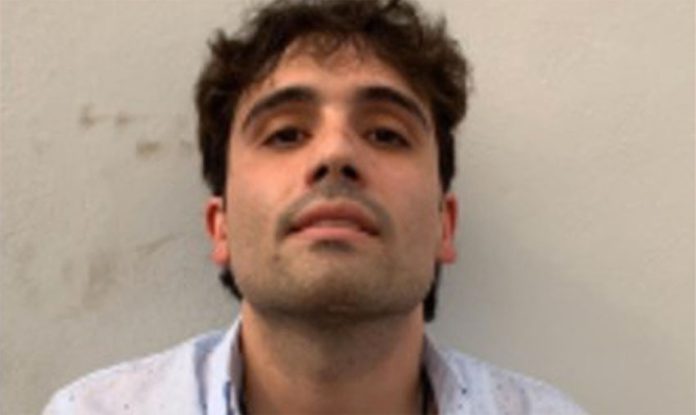
Federal Police have arrested a man they say is a leader of the Los Rojos cartel in southwestern Morelos, where he is suspected of having recruited a network of police officers.

José Ignacio Vázquez Calderón, also known as “El Machín,” faces charges of organized crime, extortion and kidnapping.

Federal prosecutors say he is a member of the inner circle of cartel leader Santiago Mazari Hernández, also known as “El Carrete.” They say they have evidence that Vázquez visited Mazari on several occasions.

Working under Los Rojos plaza boss Manuel Peralta Jaime, Vázquez extorted businesses and local governments and was in charge of a cartel cell that hung narco-banners. Peralta was arrested last May in Zacatepec.

Vázquez is also accused of recruiting and managing a network of corrupt police officers in Morelos who would warn gang members about police operations.

Police located Vázquez with the help of the National Intelligence Center. He was taken into custody in Xochitepec without incident.

Los Rojos is a criminal group that operates mostly in Morelos and Guerrero. According to Morelos officials, fighting between Los Rojos and the Jalisco New Generation Cartel is the cause of much of the violence in Morelos.

Source: Milenio (sp) Excelsior (sp)

Sargassum predicted for Yucatán no longer expected to land

0
Sargassum on a beach at Telchac Puerto, Yucatán.

A mass of sargassum seaweed that was three to four times times larger than Mérida, the capital of Yucatán, was initially forecast to land on the state’s coast on the weekend.

But authorities said yesterday such an occurrence was unlikely.

The Cancún-based sargassum monitoring network predicted that the mass of macroalgae could be pushed toward the Yucatán coast by southerly winds blowing from the Gulf of Mexico, along with ocean currents.

The report also stated that the seaweed could affect more than 120 kilometers of coastline.

Yesterday, the state Sustainable Development Secretariat said the possibility was “very remote.”

It predicted the sargassum will be taken away from the coast in a northward direction toward the Florida peninsula.

Some areas of Yucatán have seen sargassum on the beaches, but nothing comparable to the situation in the neighboring state of Quintana Roo.

Source: El Financiero (sp), El Diario de Yucatán (sp)

As heavy rain floods shopping center, musicians play Titanic theme

0
Music during mall flooding, left, recalls the film Titanic, right.

As Guadalajara weathered torrential rains and hail on Saturday that left fallen trees, roads under water and even a shopping mall flooded in its wake, a group of local musicians took it upon themselves to lighten the mood.

A video that later went viral on social media captured the surreal moment as water cascaded through the roof into a rapidly-expanding pool on the floor of the Plaza Patria mall in Zapopan, Jalisco.

Finding watery inspiration in the hit movie Titanic, musicians that had been hired to play at the mall struck up the 1997 film’s theme song, My Heart Will Go On, to the amusement and delight of assembled shoppers.

It was not the first time Plaza Patria has been under water. The mall was overtaken by a torrential downpour at the beginning of the rainy season last year as well. At least 20 businesses were affected by storm damage.

Source: Milenio (sp), Radio Fórmula (sp)

Trump threatens more tariffs if second, unrevealed accord not approved

0
Ebrard, standing, was man of the moment Saturday in Tijuana.

United States President Donald Trump today threatened to impose tariffs on Mexican exports if Mexico’s Congress doesn’t approve an unrevealed part of the migration agreement that the two countries reached last week.

“We have fully signed and documented another very important part of the immigration and security deal with Mexico, one that the U.S. has been asking about getting for many years. It will be revealed in the not too distant future and will need a vote by Mexico’s legislative body!” Trump said on Twitter.

“We do not anticipate a problem with the vote but, if for any reason the approval is not forthcoming, tariffs will be reinstated!”

But Mexican officials seem unaware of any additional  pact.

Foreign Secretary Marcelo Ebrard said today that there is no unrevealed part of the migration agreement and later posted the text of the deal to his Twitter account.

Ebrard gets a hero's welcome in Tijuana.
Ebrard gets a hero’s welcome in Tijuana.

The new threat comes just three days after Trump announced that the United States and Mexico had reached an agreement that averted a 5% tariff on all Mexican goods that would have taken effect today.

As part of the deal, Mexico committed to sending 6,000 National Guard troops to the southern border and agreed to allow all migrants seeking asylum in the United States to remain in Mexico while they await a decision from authorities in the U.S.

However, the government refused to accept a “safe third country” agreement which would force Central American migrants to seek asylum in Mexico rather than in the United States.

There has also been some mystery over Trump’s claim that Mexico will buy more agricultural products from the U.S.

At the president’s press conference this morning, he was questioned about a tweet by the U.S. president on Saturday that stated “Mexico has agreed to immediately begin buying large quantities of agricultural product from our great patriot farmers!”

Ebrard responded: “I think that he’s referring to what we said at the [negotiating] table, that the impact of the 5% tariff . . . would be a gross domestic product decline of 1.12% this year, exports would fall between 7.7% and 22.1%, likewise imports – one of the most imports are grains. And in Mexico 1.2 million jobs would be lost.

“. . . By not applying the tariffs, he [Trump] must be calculating that there’s going to be a bigger boost to economic growth and with that, grain imports will increase but we don’t have a specific agreement of that nature.”

The foreign secretary stressed that the agreement reached with the United States is about migration, not trade.

Ebrard said the measures Mexico agreed to with respect to reducing the movement of Central American migrants will be evaluated after 45 days.

He explained that there is no specific migration reduction target but noted that United States authorities want to cut the number to zero.

However, Ebrard claimed that any reduction in the number of migrants crossing the northern border would show that the steps taken by Mexico are working.

If the results aren’t favorable, Mexico will once again sit down with the United States as well as Central and South American countries to develop a “regional system” to address migration causes, the foreign secretary said.

López Obrador speaks at Saturday's rally.
López Obrador speaks at Saturday’s rally.

U.S. Customs and Border Protection agents apprehended more than 132,000 people who entered the country between ports of entry in May, the highest monthly level since 2006, and almost 200,000 undocumented migrants were arrested in April and May.

Trump used the rising arrest numbers to justify the escalating tariffs he planned to impose on Mexico, and to pressure the country to do more to stem migration flows.

While there are concerns that the large deployment of the National Guard to the southern border could undermine the new security force’s capacity to combat high levels of violence in other parts of the country, Ebrard has won praise for reaching an agreement that averts a trade war with Mexico’s largest trading partner.

At a large political rally in Tijuana on Saturday, the foreign secretary was given a rousing reception by citizens and the municipal, state and federal politicians who were in attendance, including President López Obrador and 23 governors.

Addressing the crowd, Ebrard said “I’m arriving from Washington . . . if you can tell that I’m a little tired it’s because we worked a lot of hours to avoid . . . the imposition of tariffs on Mexico on Monday.”

“There are no tariffs . . . and we left with our dignity intact,” the foreign secretary declared after which the rally attendees broke into rapturous applause and chanted “Marcelo! Marcelo!”

Ebrard said the tariffs would have been catastrophic for the Mexican economy, charging that foreign investment would have dropped, jobs would have been lost, prices would have risen and that ratification of the new North American trade deal would have been placed in doubt.

While the foreign secretary won widespread acclaim for “defusing Trump” – as one Mexican newspaper headline declared – the praise for Ebrard and the federal government wasn’t universal.

The national president of the opposition National Action Party accused the government of being submissive to the United States.

“It’s good that the threat of tariffs on Mexican products hasn’t materialized but it’s wrong . . . that in exchange for that, Mexico has agreed to do the United States’ dirty work. By submitting to and accepting Trump’s conditions without bargaining, López Obrador sullied our sovereignty,” Marko Cortés said.

“The president owes Mexicans an explanation because with what is known up to now, we’re going to become part of the wall that Donald Trump so desires.”

Nevertheless, López Obrador said today that he was “very happy” with the agreement struck with the United States, declaring that an “economic and financial crisis” was avoided.

The president also said he will meet with his cabinet today to “strengthen all the [government’s] development, well-being and migrant-support policies.”

Source: Reuters (sp), El Financiero (sp), El Universal (sp), Milenio (sp) 

80 murders in just a few hours on Friday, Saturday

0
crime scene
It was a nasty weekend for homicides.

There were at least 70 murders committed in 14 states on Friday and Saturday, not taking into account 11 bags of human remains found in Jalisco.

The highest number of murders were in Guanajuato, where 15 people died violent deaths, including six in the city of León. In 2018, Guanajuato was the most violent states in Mexico, registering the highest number of homicides and the second-highest homicide rate after Colima.

In Oaxaca, nine people were killed in the municipality of Tuxtepec in less than 24 hours. Eight of the victims were found in plastic bags, while another had been decapitated. Another person was murdered in the city of Juchitán.

There were 10 victims in Guerrero, including Omar Justo Vargas, former mayor of the municipality of Azoyu. An entire family was also killed in an Acapulco public housing unit, including a father, mother, daughter and mother-in-law. Some sources told El Universal that the father killed the family before committing suicide, while others said that armed men had chased the man back to his home before killing him and his family.

A shooting in Reynosa, Tamaulipas, early Saturday morning killed four people, while four were also killed in Jalisco. At least 17 people were murdered Nuevo León, Morelos, Veracruz, Chihuahua, Zacatecas, México state and Baja California. In Mexico City, a former city legislator was shot in his car in the borough of Tláhuac.

Meanwhile, 11 bags of human remains were found over the weekend in a waste canal in the municipality of Tlajomulco de Zúñiga, Jalisco. Forensic scientists were working to identify the victims.

The first four months of 2019 was more violent than the same period of any other year on record, with 11,221 homicides. Since President López Obrador took office on December 1, 14,510 people have been murdered.

Source: El Universal (sp), Proceso (sp), Radio Formula (sp)

30,000 homes will use electricity generated by new solar plant

0
The inauguration of new solar plant in Progreso, Yucatán.

A new solar plant in Yucatán has the capacity to produce up to 18 megawatts of electricity and serve up to 5.3% of the state’s households.

The San Ignacio solar plant, which covers 66 hectares in the municipality of Progreso, was inaugurated Friday by Governor Mauricio Vila Dosal. The Chinese company Jinko Solar invested US $30 million to build the plant.

Energy generated by the plant will be consumed in Progreso and the state capital, Mérida.

Speaking at the inauguration, Governor Vila said he hopes Yucatán will continue to invest in renewable energy infrastructure.

“With this kind of action, we’re putting Yucatán on the map as a destination for investment,” he said. “We’re going to keep promoting our state in Mexico and around the world, and above all, we’re going to keep making renewable energy projects a priority.”

Vila added that in addition to the San Ignacio plant, 24 other renewable energy projects are under way in Yucatán, representing investment of as much as $4.5 billion.

“Yucatán consumes 900 megawatts, and I calculate that in three or four years, we will be generating 3,400 megawatts of clean energy,” he said. “We would be the only state in the country to be self-sufficient, and generating more renewable energy than we consume.”

Manuel Mendizábal Quemada, head of Jinko Solar in Mexico, told the newspaper Diario de Yucatán that the company has plans for another plant in state.

“We’re about to start construction on another plant, in Valladolid, which will be bigger,” he said. “We’re investing $100 million in it, and it will generate 79 megawatts of renewable energy. Those are all the plans we have at the moment, but we could build even more plants in the future.”

Mendizábal explained that the San Ignacio plant uses “tracker” technology, which allows its 71,000 panels to follow the light of the sun and absorb more energy.

Founded in 2006, Jinko Solar is the biggest solar panel company in the world. Mexico is Jinko’s second-largest export market, representing over 10% of the company’s total revenue.

Source: El Universal (sp), El Diario de Yucatán (sp), Milenio (sp)

Rock star welcome for ex-governor exonerated of corruption charges

0
Warm welcome for ex-governor.

A former governor of Tabasco who was absolved of corruption charges last month was given a rock star welcome to his home state on Friday.

Andrés Granier Melo, governor of the Gulf coast state between 2007 and 2012, was swamped by well-wishers during his first public appearance in Tabasco since spending more than five years in the medical wing of a Mexico City prison.

The ex-governor was arrested in 2013 and sentenced to almost 11 years in prison in March 2018 for embezzling 196 million pesos (US $10 million at today’s exchange rate) from the public health sector in 2010.

Granier was exonerated by a state court on May 8.

The former Institutional Revolutionary Party governor arrived in Tabasco on Wednesday but wasn’t seen until yesterday morning when he entered a radio station in the state capital, Villahermosa.

Before Granier arrived, around 200 people – mostly women – were already in place to welcome and show support for their beloved erstwhile governor.

Holding balloons and sporting gushing placards, the ex-governor’s supporters gathered around Granier when he appeared and chanted slogans including “the people are with you” and “we love you.”

Among the messages on placards held up by women were: “The best memory of my childhood is called Andrés Granier” and “No one is a prophet in their own land but Andrés Granier is the blessed king.”

Among the former governor’s actions in office that endeared him to some sectors of the Tabasco population was the delivery of aid to the state’s poor and his reportedly heartfelt and hands-on response to a massive flood in 2007.

With regard to his now-overturned corruption conviction, Granier said in an interview that former president Enrique Peña Nieto and his successor as state governor, Arturo Núñez Jiménez, conspired to fabricate all the crimes he was said to have committed, which included money laundering, embezzlement and illicit enrichment.

The ex-governor rejected Núñez’s claim that he left Tabasco in a financial crisis.

The 71-year-old said he has no plans to get involved in politics again, explaining that his priority is to readapt to normal life.

“I’m happy to get to know my grandchildren. I’m happy to sleep in my own home, I’m happy that someone is waiting for me at home.”

Source: El Universal (sp)