Home Blog Page 1892

Tijuana, Guerrero politicians dispute violent cities study findings

0
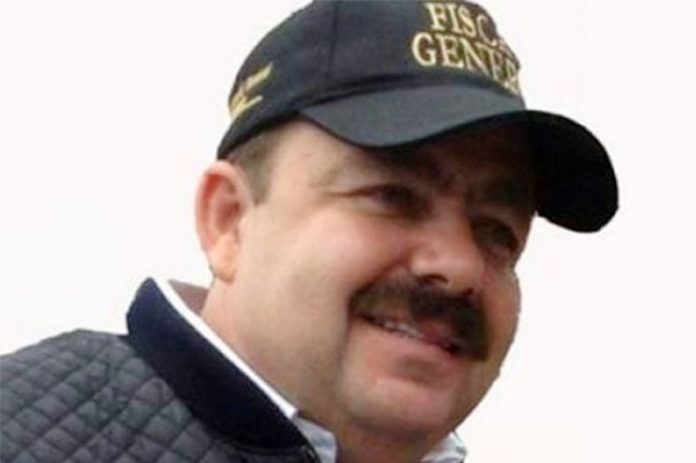
Gastélum, left, and Astudillo challenge study findings.

Politicians in Baja California and Guerrero have rejected a study that found that Tijuana and Acapulco were the two most violent cities in the world outside war zones in 2018.

The Citizens’ Council for Public Security and Criminal Justice (CCSPJP), a non-governmental organization, published a study this week that ranked Tijuana as the most violent city in the world as a result of its homicide rate of just over 138 per 100,000 inhabitants. Acapulco ranked second with a rate of 110.5.

Tijuana Mayor Juan Manuel Gastélum acknowledged that there was a high number of homicides in the city last year but claimed that the study used incorrect data and has a clear “political connotation” because municipal and state elections will be held this year.

“It’s a fraudulent study with a political purpose, I can’t see it any other way. I don’t know who could be behind this, we have to review . . . this entity [the CCSPJP],” he said.

Tijuana Public Security Secretary Marco Antonio Sotomayor contended that the study included homicides in Rosarito even though the coastal city is in another municipality.

Both men pointed out that the number of homicides in Tijuana has fallen in 2019.

In response to the mayor’s claim, CCSPJP president José Antonio Ortega told the newspaper El Sol de Tijuana that the study has no political purpose other than to encourage authorities to implement policies that improve public security.

“We do this [study] with complete methodological rigor precisely so that authorities, the media and the population pay attention to the murderous violence . . . and establish different policies in order to get out of this horrific ranking of the 50 most violent cities in the world,” he said.

In Guerrero, Governor Héctor Astudillo rejected Acapulco’s second-place ranking.

“I reject it because the indicators we have from the National Public Security System tell us that we’re in fourth place [for homicides] per 100,000 inhabitants and sixth place for the [sheer] number of homicides,” he said.

The governor conceded that violence in the faded Pacific coast resort city is an ongoing problem that “requires attention” but charged that authorities are working every day to combat insecurity and that crime rates are already falling.

“I don’t accept that Acapulco is the second most violent city,” Astudillo reiterated.

Acapulco Mayor Adela Román Ocampo expressed a similar sentiment, charging that the CCSPJP didn’t take into account the “hard facts” that show that violence in the port city is going down.

“I categorically reject it [the ranking] because we went down to fourth and sixth place for intentional homicides . . .”

Source: Milenio (sp), Frontera.Info (sp), El Sol de Tijuana (sp) Digital Guerrero (sp)  

Oaxaca state police chief has been held hostage for 3 days

0
Juquila residents gather to protest inaction over highway blockade.

Oaxaca state police chief José Sánchez Saldierna has now been held hostage for three days by residents of a community in the midst of a territorial dispute.

The police chief arrived in Santa Catarina Juquila on Monday to mediate a conflict between residents of Juquila and the neighboring town of Santiago Yaitepec.

But frustrated residents instead took Sánchez and another man hostage, relieving them of their cell phones and locking them up inside municipal headquarters. Citizens also erected barricades to prevent state authorities from rescuing the two captives.

The conflict flared on February 3 when residents of Yaitepec blocked roads leading to Juquila, preventing access to that town’s popular religious shrine, the Virgin of Juquila.

Many Juquila businesses were forced to close due to a lack of supplies and the lack of tourists, who number close to two million every year. Those visitors and the money they bring — some 12 million pesos a year (US $620,000) — are at the heart of the conflict, according to one version of the story.

The municipality of Yaitepec claims ownership of 500 hectares of land within Juquila, including the location of El Pedimento, the shrine to the virgin.

Three days ago, more than 100 Juquila residents gathered to demand that authorities take down the blockades.

In light of the hostage situation, a federal judge authorized Oaxaca authorities to intervene.

Governor Alejandro Murat Hinojosa rejected using state forces to end the blockade and requested assistance instead from federal authorities.

The state Human Rights Comission issued warnings to state and local authorities, urging them to act quickly to take down the blockades to prevent the situation from escalating further.

Officials from the two communities signed a peace pact in the presence of the governor March 1, but it failed to end the conflict.

Source: El Universal (sp)

Guerrero turtle deaths natural phenomenon: biologist

0
Officials check out a dead turtle on a Guerrero beach.

More than 110 sea turtles have been found dead on beaches in Guerrero so far this month, causing widespread alarm. But a marine biologist says it’s a natural phenomenon.

Manuel Salvador Gómez Galeana, a member of the Guerrero Sea Turtle Protection and Investigation Board, explained that the recent wave of deaths of the endangered species was caused principally by microorganisms that live in cold ocean currents.

The marine biologist said that salpa, a zooplankton, sometimes carry high levels of toxins which, when they come in contact with the turtles, paralyze and kill them.

This is not the first time large numbers of sea turtles have washed up dead on the beaches of Guerrero. In 2009 between 500 and 600 dead turtles were found and a similar number perished in the same way in 2016.

Gómez predicted that because of the way climate change affects ocean currents, this year could see a much higher number of sea turtle deaths.

The biologist added that illegal fishing techniques, especially using nets in which turtles get trapped, have also been responsible for many deaths.

Gómez said there was no way to defend the turtles against the phenomenon, but urged authorities to set up a surveillance and rescue operation for paralyzed sea turtles.

“We should be very aware of ocean currents in the high seas in order to detect turtles adrift in the ocean so that we can then organize a rescue . . . .”

The marine biologist said that authorities currently lack an appropriate strategy for handling the dead turtles, often arriving on a beach only to take pictures and conduct a body count. He added that some officials bury them on the beach, but others leave them there to be eaten by vultures.

So far, dead sea turtles have been found in Coyuca de Benítez, San Jerónimo, Tecpan de Galeana, Acapulco and the Costa Chica region in Guerrero.

Source: Milenio (sp)

Company says IMSS sales increase due to new personnel, new strategy

0
Marzam says sales increase due to strategy rather than connections.

Pharmaceutical distribution company Marzam has rejected the suggestion that its sales to the Mexican Social Security Institute (IMSS) increased significantly between 2015 and 2018 because its owner’s father was on the IMSS board.

Reports published earlier this week said that Mexicans Against Corruption and Impunity (MCCI), an anti-graft group, had obtained documents that show that Marzam received contracts in that period for more than 526 million pesos (US $27 million) – an amount more than five times greater than its sales to IMSS between 2002 and 2014.

Luis Doporto Alejandre, son of IMSS board member Héctor Doporto Ramírez, purchased Marzam in 2015.

In a statement, the company said that since October 2015 it has operated under a new administration that “has worked to increase competitiveness and profitability” by employing new personnel and pursuing a new sales strategy.

“This strategy has resulted in an increase in government sales . . . but also to private customers,” Marzam said, adding that 96% of all company income comes from the latter.

It acknowledged that its sales to IMSS have increased and described the government department as an “important customer, but just one more in our current portfolio.”

Marzam added: “We strongly reject any statement that implies that our sales results derive from factors other than the strenuous efforts and dedication of our sales team and all our personnel.”

Marzam’s parent company – Dutch firm Moench Coöperatief – said in a separate statement that its shareholders, including Luis Doporto Alejandre, are not involved in Marzam’s day-to-day operations.

“Marzam’s management team has distinguished itself for its high standards of corporate governance and its effectiveness in identifying new business opportunities, ensuring strict compliance with all legal obligations,” it said.

Mexico News Daily 

Of the 5 most violent cities in the world, 4 are in Mexico

0
The chart shows 2018 homicide totals, population and homicide rate for each of the 10 worst cities.

Four of the five most violent cities in the world outside war zones are in Mexico, according to a study by a Mexican non-governmental organization.

With a homicide rate of just over 138 per 100,000 residents last year, Tijuana, Baja California, was the most violent city in Mexico and the world in 2018, the Citizens’ Council for Public Security and Criminal Justice said.

Acapulco, Guerrero, ranked as the second most violent city in the world; Ciudad Victoria, Tamaulipas, was fourth; and Ciudad Juárez, Chihuahua, was fifth. Caracas, Venezuela, was the only city outside Mexico in the top five most violent.

A further 11 Mexican cities were included among the 50 most violent in the world as a result of their per-capita homicide rate in 2018.

Irapuato, Guanajuato, ranked sixth; Cancún, Quintana Roo, 13th; Culiacán, Sinaloa, 16th; Uruapan, Michoacán, 18th; Ciudad Obregon, Sonora, 20th; Coatzacoalcos, Veracruz, 26th; Celaya, Guanajuato, 32nd; Ensenada, Baja California, 34th; Tepic, Nayarit, 36th; Reynosa, Tamaulipas, 42nd; and Chihuahua, Chihuahua, 49th.

Mexico has the highest number of cities on the list, with 15, followed by Brazil with 14 and Venezuela with six. All but eight of the cities among the 50 most violent are in Latin America.

Citizens’ Council president José Antonio Ortega highlighted that three Mexican cities that featured in the 2017 rankings – Los Cabos and La Paz in Baja California Sur and Mazatlán in Sinaloa – are no longer on the list.

Ortega said that homicide rates had fallen sharply in both La Paz and Los Cabos but not due to any public security policy implemented by authorities but rather because the Jalisco New Generation Cartel (CJNG) has driven its rivals out of the area.

The Citizens’ Council gathered homicide statistics from a range of different sources including the National Public Security System (SNSP) in the case of Mexico.

There were more than 33,000 homicides in Mexico last year, according to the SNSP, making 2018 the most violent year on record.

Source: El Economista (sp) 

When consumers buy fish, they don’t always get what they want

0
What kind of fish is it? You might never know for certain.

Asking for marlin at a market or ordering snapper at a restaurant in Mexico is no guarantee of getting those types of fish, a study has determined.

“Every day, hundreds of consumers in Mexico ask for one species and get another,” said Renata Terrazas, campaign director at Oceana México, an ocean conservation and advocacy organization that carried out the study.

“That’s fraud because . . . there is a cost that ends up being paid by diners, fishermen and the health of the sea,” she added.

Oceana México purchased 400 portions of fish from 133 fish markets, supermarkets and restaurants in Mexico City, Cancún and Mazatlán and found through DNA testing that 31% of the samples were not as advertised.

The non-governmental organization said in a report that the deceit occurs within a context of negligence on the part of fishing and health authorities, and shows that the doors are open to the sale of species whose fishing is illegal by using another name.

A substitute fish was provided in 54% of cases in which red snapper was ordered.

“Today, there are no systems, rules or laws that enable us to have certainty about the issue,” said Oceana México vice-president Pedro Zapata.

Another finding of the DNA study was that the 100 different species of fish among the 400 portions purchased were sold under just 48 different names.

Not revealing the names of so many species could lead to their extinction without people realizing, Oceana México said.

The study also found that 11% of the samples tested were fish that are on the red list of threatened species published by the International Union for Conservation of Nature (IUCN).

The fish that was most frequently replaced with another species was marlin.

In 95% of cases when marlin was requested, Oceana México was given other species such as tuna or silky and thresher shark.

A substitute was given for Pacific sierra, a member of the mackerel family, in 89% of cases; for red snapper in 54% of cases – most frequently by stingray; and for bass in 53% of cases.

Passing off one species of fish as another was most common in Mexico City, occurring in 44.5% of the purchases.

Oceana México said that was particularly concerning because the capital supplies fish to many other states via La Viga market, the second largest seafood market in the world.

Terrazas said the high percentage of substitution is clear evidence that authorities are not doing their job but beyond that, she added, “we need to start to see what is really happening in the [supply] chain that makes regulation difficult.”

To help eliminate the substitution problem, Oceana México recommended that authorities create a guide that lists the scientific and commercial names of different species of fish to help educate consumers, and implement a traceability policy to track fish during the journey through the different stages of the supply chain.

Source: El Economista (sp) 

Mammoth bones found in México state landfill site

0
Mammoth bones found in México state while excavating a new landfill.
The mammoth remains discovered in Tultepec.

Fossilized mammoth bones have been discovered at the site of a new landfall in Tultepec, México state.

Municipal crews were digging at the site when they found the ancient bones buried six meters deep.

Archaeologists from INAH, the National Institute of Anthropology and History, are now coordinating the excavation work at the site.

A team led by Luis Córdoba Barradas is digging up the bones, recording details of each discovery, taking photographs and making drawings of the original position in which the bones were found. This will later allow experts to determine how many bones are missing and to develop a theory about the massive mammal’s fate.

The archaeologists have made a preliminary estimate that the specimen is at least 14,000 years old.

Landfill site is now an archaeological excavation.
Landfill site is now an archaeological dig.

The site is just two kilometers away from another mammoth discovery made in December 2015.

Those bones were found when Tultepec municipal workers were performing drainage work in San Antonio Xahuento.

The area where Tultepec now lies was dominated by a shallow lake system some 12,000 to 14,000 years ago during the late Pleistocene period.

Specialists have theorized that it was common for mammoths to become trapped in the mud of one of those shallow bodies of water due to their huge mass and heavy build. The extinct mammals are believed to have grown as tall as five meters and weighed up to 10 tonnes.

Excavation of the first discovery took over three months, and the bones now reside permanently in the town’s Casa de la Cultura.

Source: El Financiero (sp)

New Guerrero highway expected to boost Costa Chica tourism

0
Playa Ventura, Guerrero.

A ribbon-cutting ceremony in Copala, Guerrero, yesterday heralded the opening of the first stretch of a new coastal highway connecting Playa Azul to Playa Ventura in Guerrero’s Costa Chica region.

Upon completion of the first two of 19 kilometers, the municipality’s mayor said he anticipated that the new highway would be a deciding factor in attracting national and international tourism to the region.

“We are going to finish this highway to attract tourism to Copala and so that lots of people visit the beaches.”

Guerrero infrastructure chief Javier Taja Ramírez explained that the state government had invested 165 million pesos (US $8.5 million) in the project in order to propel sustainable economic growth in Copala and a successful tourism-based economy in the region.

He said the investment will go towards all the necessary infrastructure projects related to the construction of the highway, as well as towards the completion of the remaining 17 kilometers needed to connect the two beach communities.

[wpgmza id=”166″]

State Governor Héctor Astudillo Flores also authorized 50 million pesos for the construction of a bridge along the same route.

Another local official present at the ceremony, Fernando Soriano, expressed his admiration and gratitude for the governor’s initiative.

“You are achieving the unthinkable: you are making possible the transformation of these beaches.”

Guerrero’s Costa Chica region is one of the poorest in Mexico, with an economy mostly based on fishing and subsistence agriculture. The region has also seen high rates of crime and violence in the last decade, due to drug trafficking.

Source: El Universal (sp)

Governor rebukes federal government for freeing suspected gangsters

0
Security forces on patrol in Guanajuato. The state has asked for more.

The governor of Guanajuato has rebuked the federal government for freeing two suspected members of the Santa Rosa de Lima Cartel who were arrested during a security operation last week.

“Here we are dealing heavy blows [to organized crime] only for [the alleged criminals] to be released,” Diego Sinhue Rodríguez Vallejo said, referring to Angélica N. and Javier N., sister-in-law and brother-in-law of suspected cartel leader José Antonio “El Marro” Yépez Ortiz.

Angélica N., allegedly a financial operator for the cartel, and her husband, a Federal Police officer, were arrested by state police last Tuesday.

The governor said yesterday that the state government asked the federal attorney general’s office (FGR) to keep the pair in custody as a case was being built against them. But both were freed Friday due to a lack of evidence, officials told the newspaper Milenio.

Rodríguez said he expressed his disappointment over the release to federal Security Secretary Alfonso Durazo.

Governor Sinhue of Guanajuato.

“I spoke to Secretary Durazo and I let him know the state’s annoyance about this release because we’re working hard here to restore peace and tranquility by arresting targets, and for them to be released so easily doesn’t seem fair to us,” he said.

State and Federal Police and the military started an operation on Monday last week aimed at capturing Yépez, who is believed to be the head of the Santa Rosa Cartel, a gang of fuel thieves based in the municipality of Villagrán.

On the second day of the operation, Rodríguez said that Angélica N. and her husband were arrested at a police blockade as they attempted to flee the town of Santa Rosa de Lima.

The pair were turned over to federal authorities because they were accused of federal crimes, the governor explained.

Five other people were arrested during the operation and two luxury homes were seized but “El Marro” Yépez remains at large.

The Santa Rosa de Lima Cartel is believed to be behind much of the violence that made Guanajuato the most violent state in Mexico last year.

Its members also allegedly perpetrated an attack on a nightclub in Salamanca last week that left 15 people dead.

Rodríguez said yesterday that 14 victims had been identified as members of the Jalisco New Generation Cartel (CJNG), which since 2017 has been engaged in a bitter turf war in Guanajuato with the Santa Rosa Cartel.

In light of the violent incident in Salamanca, the Guanajuato governor yesterday asked Security Secretary Durazo to send an additional 1,000 federal security personnel to the municipality.

Rodríguez also called on Salamanca Mayor Beatriz Hernández to sign the mando único, or single command, policing agreement in order to allow state police officers to carry out patrols in the city, which is home to a Pemex oil refinery.

The governor threatened to withhold 14 million pesos (US $725,000) in security funding should she not agree to the presence of the state police.

Meanwhile, the situation in Santa Rosa de Lima is showing signs of calming down after last week’s operation.

Many residents were allegedly paid to set up blockades, which in many cases were made by setting cars on fire.

But now they are once again going about their day to day lives despite the ongoing presence of state and federal security forces and the inspection of all vehicles that enter and leave the town. Schools reopened Monday.

Residents, however, remain tight-lipped about the events of last week, according to a report published yesterday by Milenio, which also said that locals deny knowing El Marro or the location of the mansion in which he allegedly lived.

Source: Milenio (sp), EFE (sp) 

Plans under way for artificial reef in Progreso, Yucatán

0
One of Reef Ball México's artificial reefs.

The popular port town of Progreso, Yucatán, has announced a marine project to draw more tourists.

Municipal tourism director Manuel Rosado unveiled a plan to install an artificial coral reef six kilometers offshore. He told the newspaper El Financiero that Progreso will officially present the project late this month or in early April.

“We are conducting environmental impact studies and planning the reef, for which we will need 5 million pesos (US $259,000), the amount required to fund this type of project.”

The reef will be made up of more than 1,400 circular structures designed by the Reef Ball Foundation. Reef Ball representative Javier Dajer said artificial reef structures are specially designed to promote marine plant growth and attract fish.

He explained that the structure’s circular design allows the sun’s rays to reach the reef at any angle, promoting photosynthesis. Additionally, the hollow interior pushes water out through the top with a whirlpool effect, generating sounds and movements attractive to marine wildlife. Dajer said the structures tend to become covered in coral within five years, fully blending into the ecosystem.

He added that the artificial reef structures are extremely durable, with an expected lifespan of 500 years. They are made entirely out of a special type of concrete that also contains additives to equalize pH levels with those of the seawater.

Dajer said the project is supported by diving schools and a local biologist.

“We are discussing implementing the project at three different depths with different focuses in mind: there will be a zone for snorkeling and swimming, a second zone for recreational fishing and boating, and a third zone for commercial fishing.”

Other artificial reefs have already been installed in Campeche, Quintana Roo, Colima, Baja California and Veracruz. To date, nearly 25,000 of the structures have been installed off the shores of Mexico.

Source: El Financiero (sp)