Home Blog Page 1907

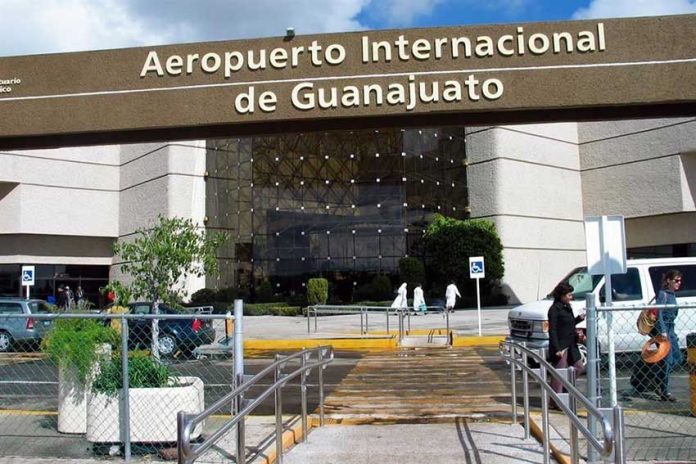
Thieves nab 20 million pesos in cash at Guanajuato airport

0
Thieves entered the airport in a fake Aeroméxico vehicle.

A band of thieves made off with more than 20 million pesos (US $1 million) at the Guanajuato International Airport Wednesday night.

The bags of cash had arrived in a PanAmericano armored truck and placed aboard an airport service vehicle in preparation for loading on to a waiting plane.

But the delivery was intercepted by armed and masked men in a truck disguised with a fake Aeroméxico logo. They relieved the vehicle’s sole guard of the money and fled.

Other guards stayed inside the armored vehicle, where more cash — an estimated 120 million pesos — remained.

After seizing the loot, the thieves left the airport property by knocking over a fence.

They had entered the airport’s restricted area earlier in the evening, successfully passing through a military checkpoint, and waited for the money to arrive.

Later, a group of armed and masked men intercepted an Uber driver on the León-Lagos highway and made off with his vehicle, leaving the driver and his fare on the roadside.

Airport personnel said a cash delivery by armored truck takes place once a month.

Source: Milenio (sp), Reforma (sp)

At some crossings, wait times up to 12 hours, 15-kilometer truck lines

0
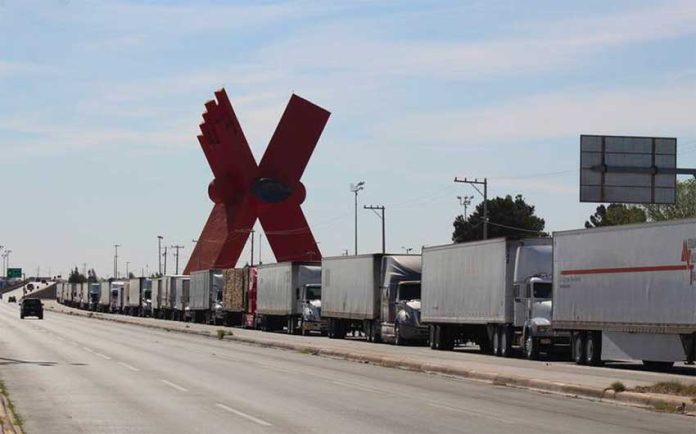
Trucks held up in Ciudad Juárez.

Cars and trucks continue to face long wait times at several border crossings between Mexico and the United States including those in Ciudad Juárez, Chihuahua, and Nuevo Laredo, Tamaulipas, where delays of up to 12 and 11 hours respectively have been reported.

Lines of trucks have been as long as 15 kilometers in both cities, according to the National Chamber of Trucking (Canacar), forcing drivers to endure torturously long waits.

“I’ve never experienced anything like this, in all the time I have worked here,” truck driver Juan Sandoval told the news agency Reuters in Ciudad Juárez this morning.

In Tijuana, Baja California, and Reynosa, Tamaulipas, respective wait times of eight and seven hours have been reported at border crossings and more than 1,000 trucks remain stranded in both cities.

The delays have been attributed to a decision by United States Customs and Border Protection to withdraw personnel from border crossings to help deal with an influx of migrants into the U.S. Some lanes at ports of entry have been closed as a result.

However, the newspaper El Economista reported today that the long delays are the result of more exhaustive inspections of trucks and cars and the people traveling in them.

Thousands of mainly Central American migrants have been stranded in northern border cities in recent months and some have tried to cross illegally into the United States to circumvent long waits for the opportunity to seek asylum.

Border agents appear intent on not allowing illegal entries to occur via legal ports of entry.

Over the past week, United States President Donald Trump has repeatedly threatened to close the border completely if Mexico and the U.S. Congress don’t do more to stem illegal immigration. But he backed down on that threat today, instead giving Mexico a “one-year warning” to halt illegal immigration into the U.S.

However, instead of closing the border he will first impose tariffs on cars. If that doesn’t stop the movement of drugs and illegal immigrants, “we close the border.”

Experts have warned of the dire economic consequences if that were to occur, but the current delays are already causing economic losses – and the frustration of travelers – to mount.

In Reynosa, 1,500 trucks are stranded at the different border crossings, Milenio reported.

The three international bridges in the northeastern city have been at maximum capacity for almost a week, increasing wait times for car and truck drivers as well as pedestrians.

Delays at the Pharr-Reynosa International Bridge have increased to as long as eight hours.

Tamaulipas Governor Francisco García Cabeza de Vaca was critical of the decision to transfer border agents to deal with the migrant influx.

“It’s not the way to do it because it directly damages the economy,” he said, pointing out that Texas is Tamaulipas’ largest trade partner.

Jeff Moseley, president of the Texas Association of Business, said that an estimated 14,000 trucks a day cross the border between Laredo and Nuevo Laredo and that the lengthy delays are causing uncertainty.

He also said that people who live on one side of the border and work on the other have been unable to get to their jobs.

“. . . The Texas economy really depends on the ability to get workers and goods to market,” Moseley said.

At the western extreme of Mexico’s 3,145-kilometer-long border with the United States, cars and trucks are also facing long wait times.

Delays at the Otay Mesa port of entry between Tijuana and San Diego, California, have now swollen to two and a half hours for cars and up to seven hours for trucks. However, some of the latter have been stranded much longer.

More than 3,000 trucks have arrived at border crossings in the Tijuana area over the past three days but only about half that number have made it to the other side. Two of 10 commercial lanes at the Otay Mesa crossing have been closed.

Although there have been no reports of waits in Nogales, Sonora, a decision by Customs and Border Protection to close the port of entry to commercial traffic on Sundays will have a negative impact on the produce industry, a spokesman said.

The Fresh Produce Association of the Americas said the closures will limit the availability of items from Sonora, including squash, grapes, watermelons, green beans and tomatoes. “It’s going to harm the companies involved,” said Lance Jungmeyer.

With multi-million-dollar losses already being incurred on a daily basis, truckers have called on the federal government to reach an urgent agreement with United States authorities to speed up the border crossing process.

Mexico sent exports worth more than US $295 billion across northern land borders last year, according to the United States Department of Transport, a figure that equates to US $808.8 million a day.

Canacar president Enrique González said that the current delays are causing “unprecedented” economic damage for both Mexico and the United States.

Some Mexican exporters are considering sending their goods to the United States by air.

Luis Aguirre Lang, president of the National Council of the Maquiladora Industry (Index Nacional), said that manufacturers of auto parts and medical equipment are among companies contemplating the move in order to avoid penalties for late deliveries to clients in the U.S.

President López Obrador, who has been accused of being timid in the face of President Trump’s threats, said yesterday that “the closure of borders is not in the interest of anyone” and pledged to continue to cooperate with the United States to stop large flows of migrants traveling through Mexico to the northern border.

Source: Milenio (sp), El Economista (sp), Reuters (sp), The Washington Post (en), KTAR News (en)

Man injured in Chihuahua after pet jaguar escapes

0
The jaguar that attacked a Chihuahua construction worker.

Seeing a jaguar prowling in the street is not so unusual for residents of the Las Misiones neighborhood in the city of Chihuahua: the same animal has escaped three times from the house where it is kept as a pet.

Yesterday, it escaped again and attacked a construction worker employed at the house next door.

The man suffered back and arm injuries, and was rushed to a nearby hospital.

Chihuahua Mayor María Eugenia Campos demanded action by the federal environmental protection agency, Profepa, due to the jaguar’s repeated escapes.

Campos said that while the animal’s owner may have all the required permits to keep it in the home, the animal has not been properly contained.

Municipal authorities seized the jaguar and took it to a local zoo.

Source: Milenio (sp)

Plagued with political problems, Oaxaca community threatens armed uprising

0
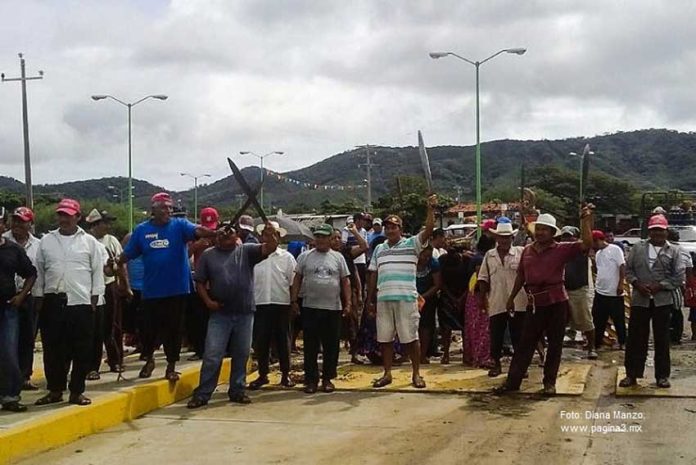
San Dionisio residents raise machetes in protest in 2014.

Residents of a coastal municipality in Oaxaca are prepared to take up arms if the state government doesn’t intervene to adequately solve its political problems, a community leader warns.

Special elections in San Dionisio del Mar, a municipality in the Isthmus of Tehuantepec region of the southern state, were canceled in December due to violence after those scheduled for July were postponed.

Jorge Castellanos Pinos, president of an interim community council, said that San Dionisio residents are sick of being abandoned by the Oaxaca government.

An opposition group known as the Peoples’ Assembly of San Dionisio del Mar has “hijacked” the town, he claimed.

The community council appealed to the Oaxaca Electoral Tribunal for new municipal elections but the court ruled last week that organizing a second special election was not allowed under state law.

[wpgmza id=”108″]

Castellanos criticized the state’s plan to appoint Nahúm Ismael Cruz Hernández as the town’s political commissioner — or de facto mayor – charging that he has “a dark past” and doesn’t have knowledge of the problems San Dionisio is facing.

He warned that if the government goes ahead with the plan to send Cruz to San Dionisio, he could be taken hostage, a fate that befell the Oaxaca state police chief in Santa Catarina Juquila last month.

Castellanos said that there are local men and women capable of leading the community and residents don’t want someone from outside to be imposed on them.

He threatened to lead the uprising himself if the state government didn’t rethink its approach to solving the political problems.

“. . . Now is the time to defend ourselves, if two or three of us fall, we fall . . .”

There have been internal conflicts in the municipality for several years.

Source: El Imparcial (sp) 

Celebrate tacos and Mexican cuisine by wrapping up in a tortilla blanket

0
Tortilla blanket makes a good taco for lounging on.

If you’re as crazy about tacos as most Mexicans you can now take the craze a step further and wrap yourself up in a tortilla.

A microfiber blanket that is one and a half meters in diameter and looks exactly like a flour tortilla has proved popular on Amazon, where it sells for 1,293 pesos plus 400 pesos for shipping (US $88).

“Do you love Mexican food so much you want to reincarnate yourself as a giant burrito?” reads the product description. “With this giant tortilla blanket you can become a taco, quesadilla, tostada, enchilada, burrito, taquito or use your imagination.”

A cozy burrito.
A cozy burrito.

The manufacturer suggests using it as a beach towel, for picnics, camping or lounging on the couch.

The tortilla blanket has earned a 4.5-star rating on Amazon, based on 80 customer reviews.

Mexico News Daily

More cocaine seen moving from Colombia through Quintana Roo

0
The aircraft that was abandoned along with its cargo at the Chetumal airport.

Cocaine production in Colombia is on the rise, and so are accidents involving light aircraft transporting the drug into Mexico.

Two planes that departed the South American country carrying cocaine have crashed in Quintana Roo during the past four months while another was abandoned after landing without authorization at the airport in the state capital, Chetumal.

Most recently, a Cessna light aircraft carrying one and a half tonnes of cocaine crashed on March 10 in El Cedral, a community in the municipality of Othón P. Blanco, which borders Belize.

The plane reportedly skidded along the ground for 100 meters before hitting a tree. A Colombian man died in the accident, while a Sinaloa man who survived was arrested.

The accident followed the crash of a similar plane carrying two tonnes of cocaine in the Othón P. Blanco community of Río Verde last November.

On January 1, two Colombian nationals disembarked from an aircraft after landing in Chetumal and fled, leaving one and a half tonnes of cocaine inside the plane.

Chetumal security official Adrián Sánchez said the plane is believed to have traveled to Mexico from Colombia and that its two crew members abandoned it because it had run out of fuel.

“They preferred to take the risk of being arrested rather than dying in a crash in the jungle as has occurred in other cases,” he said.

According to a report published by the United Nations Office on Drugs and Crime in September, 171,000 hectares of land in Colombia were used to grow the coca plant in 2017, an increase of 25,000 hectares or 17% over the year before.

The same report estimated that enough coca was grown to produce 1,379 tonnes of cocaine, up 31% over 2016.

Javier Oliva, a researcher and professor at the National Autonomous University (UNAM) who specializes in security and intelligence issues, told the newspaper Milenio that drug cartels are desperate to cash in on the high cocaine production levels by getting their product to the United States.

The light plane accidents are a result of that desperation, he contended.

Oliva also provided an analysis of the United Nations statistics.

“The conclusions that we can take away from this astonishing data are firstly, consumption of the drug has increased; secondly . . . the profits of Colombian criminal groups and the organizations where the goods pass through have also gone up; and thirdly . . . [efforts] to eradicate and contain production of coca leaves [in Colombia] are obviously a failure,” he said.

While the use of planes to transport cocaine out of Colombia appears to be on the rise, the drug is more commonly sent to Mexico by sea before continuing its journey to the lucrative United States market by land.

The amount of cocaine shipped northbound by sea through Mexican waters almost tripled between 2014 and 2017, according to estimates by the United States Coast Guard.

Source: Milenio (sp) 

Infestation of fleas closes Acapulco municipal offices

0
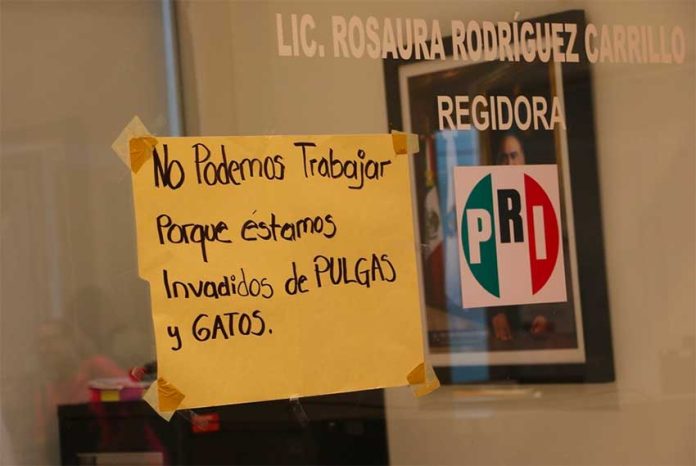
'We cannot work because we have been invaded by fleas and cats,' the sign advises.

An infestation of fleas has closed at least five municipal government offices in Acapulco, Guerrero.

Civil servants told journalists that hundreds of flea-ridden feral cats have taken up residence for several months near the offices of political parties. Workers said that as of two weeks ago, their workplaces have been infested with fleas that cover the furniture in the offices.

On the door of one, a sign went up that reads, “We cannot work because we have been invaded by fleas and cats.”

Municipal employee Tania Martínez Ruiz said she and other workers have been affected by insect bites, which presents a health risk.

“Right now my neck is completely bitten, my legs are full of fleas — these are the conditions all of my coworkers are in, too.”

She added that despite promises to fumigate the offices, local authorities have not intervened. She added that in addition to the fleas and cats, the offices’ air ducts are infested with rats and possums. Despite an official complaint, local authorities have not responded.

Rosaura Rodríguez Carrillo, another municipal employee, said she and other workers abandoned their offices a week ago because of the invasion.

She added that despite the sign warning of the infestation, residents continue to appear to file paperwork at the offices without taking any precautions.

Source: Cultura Colectiva (sp), Milenio (sp)

Police fail to remove illegal squatters in Playa del Carmen

0
Squatters' makeshift dwellings were knocked down.

Quintana Roo state police attempted to evict residents of an illegal settlement in Playa del Carmen yesterday but were forced to withdraw to avoid a violent confrontation.

The police arrived in the community of Nueva Esperanza early yesterday morning to act on an eviction order obtained by the owner of the illegally-occupied land.

A verbal confrontation ensued between the officers and some of the approximately 300 residents who have squatted on the land in the west of the resort city for between one and a half and two years.

Around 10 people were forcibly removed from their homes and heavy machinery was used to tear down some of the makeshift dwellings, but residents retaliated by picking up sticks and stones to repel the police.

The officers left Nueva Esperanza at approximately 8:30am.

Later yesterday morning, about 80 residents arrived at municipal government offices to voice their opposition to the eviction attempt and to seek support to buy the land they are occupying in order to regularize the legal status of their homes.

Mayor Laura Beristain Navarrete met with the disgruntled residents and told them that municipal authorities would seek to mediate between the disputing parties.

She condemned the police’s use of force in a community where women, children and the elderly live.

Beristain also accused the state government of violating its authority by trying to carry out the eviction without notifying municipal authorities.

“. . . We have municipal autonomy, they carried out an improper act using force . . .” she said, adding that Quintana Roo Governor Carlos Joaquín González should come to Playa del Carmen to help the local population instead of sending the police.

Source: Sipse (sp) Noticaribe (sp), Riviera Maya News (en), 24 Horas (sp) 

PETZ devours plastic on beaches in Sonora, Colima and Guerrero

0
This PETZ is gobbling garbage in Acapulco.

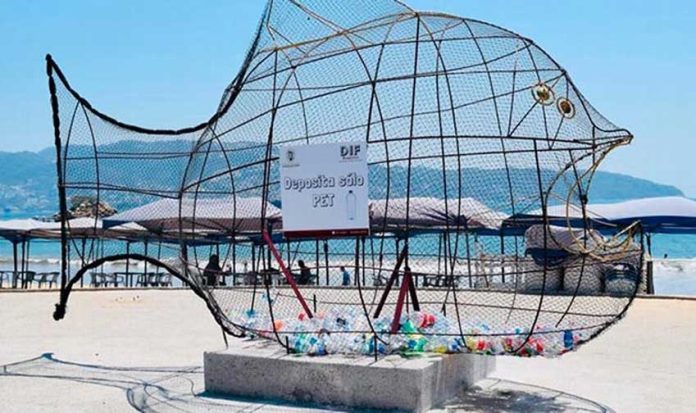
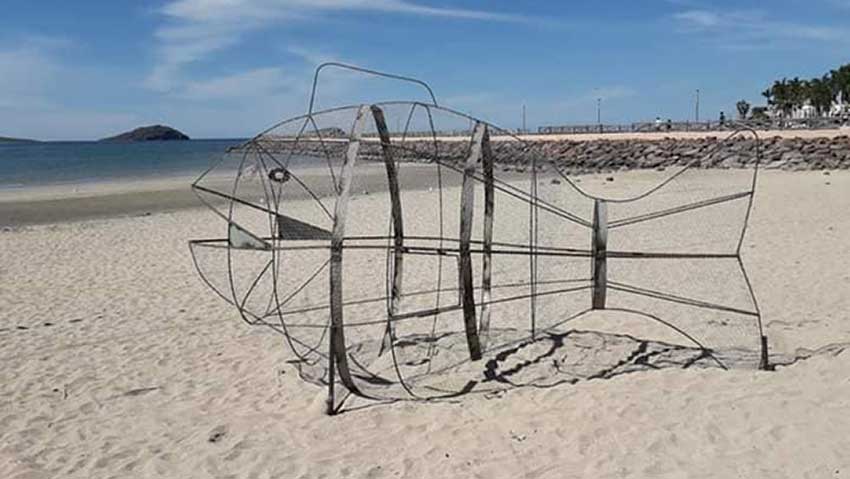
Large fish-shaped containers have been showing up on several Mexican beaches as part of a campaign to promote the recycling of PET plastic bottles and the protection of the marine environment.

The most recent of the containers — called PETZ, a combination of the name PET and pez, Spanish for fish — was installed last month near the Papagayo park in Acapulco, Guerrero.

Beachgoers are encouraged to drop their plastic bottles through the fish’s maw, and keep the waste off the beach.

A PETZ container in Guaymas.

Smaller containers were installed nearby to collect plastic caps, with the purpose of supporting a different campaign. A round of chemotherapy treatment for a child can be funded with 1,000 caps.

Donations from the private sector are funding the PETZ but more money is required for the municipal government to install additional containers. Officials are looking for more local business owners to help out, so it can have more containers ready for the Easter vacation.

PETZ containers have also appeared on beaches in Guaymas, Sonora, where a local business designed them, and Manzanillo, Colima.

Source: Milenio (sp)

Take down statues of Columbus, Cortés, Mexico City lawmaker urges

0
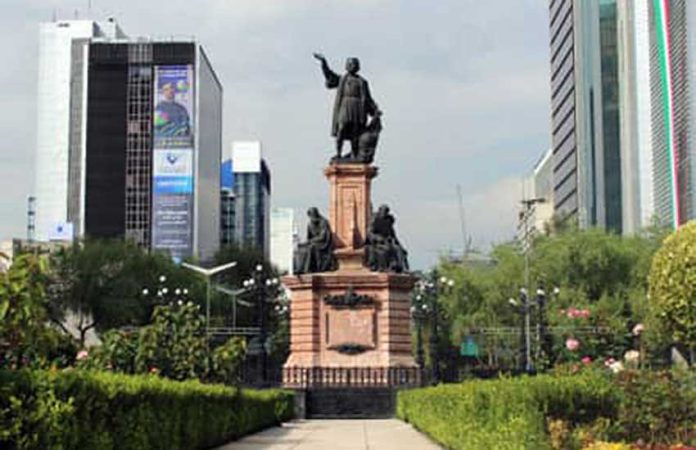
The offending statue, on Paseo de la Reforma.
The offending statue of Columbus, on Paseo de la Reforma.

Another politician is attempting to scrub away the centuries-deep stain of the Spanish conquest of Mexico.

Yesterday, a week after President López Obrador asked Spain for an apology, Mexico City state legislator Teresa Ramos Arreola called on the city government to take down statues of Cristopher Columbus and Hernán Cortés and rename streets dedicated to the two conquerors.

Ramos Arreola said the two figures were not worthy of commemoration because of the atrocities they committed against indigenous peoples.

“Christopher Columbus committed atrocities such as mutilating indigenous people that didn’t think like him. He also ordered the brutal killing of natives that dared to talk about his abuses, and he even ordered some of them dismembered and exhibited to inspire fear in other native peoples.”

The lawmaker said that Hernán Cortés had been even more ruthless during the conquest of Tenochtitlán.

“It is calculated that the number of Mexicas killed by the Spanish exceeded 100,000, including children, women and the elderly, in contrast with just 50 fallen Spaniards.”

She characterized the two men’s actions as a “desire to annihilate and erase their [indigenous peoples’] culture, institutions and languages from the face of the earth.”

Just over a week ago, the Spanish government “vigorously rejected” the president’s request for an apology and urged López Obrador to view the two nations not for the events of hundreds of years ago, but “as free people with a common legacy and an extraordinary future.”

Ramos Arreola’s proposal must go before legislative committees before it can be voted on by the Mexico City Congress.

Source: El Financiero (sp)