Home Blog Page 1906

Wait times worsen at the US border: 10 hours to cross at Ciudad Juárez-El Paso

0
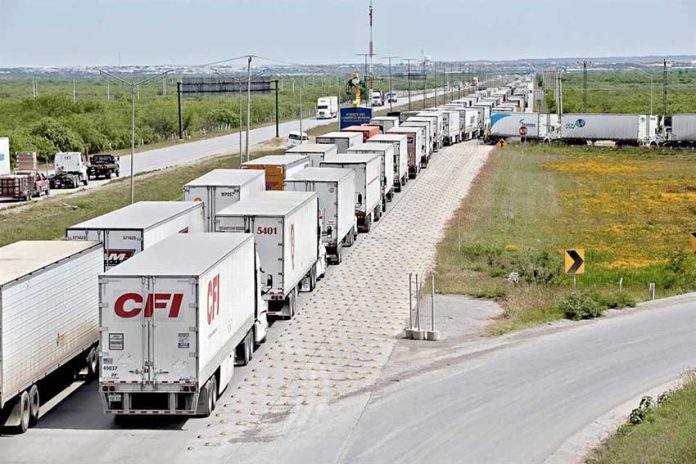
Trucks wait to cross the border in Ciudad Juárez.

Cars and trucks are facing long wait times at several border crossings between Mexico and the United States as a result of a decision to redeploy U.S. border officials to deal with a massive number of migrants.

Drivers are having to wait for up to 10 hours to cross between Ciudad Juárez, Chihuahua, and El Paso, Texas, where long lines in the former are generating chaos and congestion on several main avenues, the newspaper El Universal reported.

Around 350 semi-trailers packed with products manufactured at local factories have been waiting to cross the border since before 1:00am, El Diario de Juárez said.

To reduce the discomfort of motorists trapped in their vehicles for such long periods, Ciudad Juárez authorities have placed portable toilets along the roads leading to the city’s three ports of entry to the United States.

While the media is reporting multi-hour waits to cross into El Paso, United States Custom and Border Protection (CBP) said this morning that the longest wait time at the three ports of entry was two hours at the Zaragoza International Bridge.

Esperan hasta 8 hrs para cruzar frontera
A long line of trucks stalled in Ciudad Juárez.


The delays follow a decision by CBP to withdraw personnel from official border crossings to help process an influx of migrants into the United States. Some lanes at ports of entry have been closed as a result.

Travelers at many other northern border crossings are also experiencing lengthy delays, while only Baja California ports of entry are operating normally.

Capufe, the federal agency responsible for bridges and highways, reported waits of between two and seven hours for motorists attempting to enter the United States from Reynosa, Nuevo Laredo and Matamoros in Tamaulipas and Piedras Negras and Ciudad Acuña in Coahuila.

“They [CBP] are working at 40% [capacity] . . . The Tamaulipas border is half-closed,” said Julio Almanza, president of the Tamaulipas Federation of Chambers of Commerce, Services and Tourism.

Wait times at Nuevo Laredo averaged seven hours yesterday, while all car lanes on the Reynosa-Pharr International Bridge were closed for several hours to allow trucks that had been stranded since Monday to enter the United States.

A protest by Tamaulipas farmers made matters worse. They blocked the port of entry for eight hours on Monday in a campaign calling for more government assistance.

There are fears that congestion at the border will only worsen in the coming weeks as cross-border traffic spikes for the Easter vacation period.

Meanwhile, United States President Donald Trump renewed his threat this morning to close the border but instead of ordering Mexican authorities to do more to stem illegal immigration, he urged the U.S. Congress to support his border plans.

“Congress must get together and immediately eliminate the loopholes at the border! If no action, border, or large sections of border, will close. This is a national emergency!” he wrote on Twitter.

If the border were to close completely, Mexico’s losses in trade revenue could reach as high as US $808.8 million a day.

The figure is based on data from the United States Department of Transport that shows that Mexican exports to the U.S via land borders were worth US $295.2 billion in 2018.

“The impact would be tremendous,” said Francisco Cervantes, president of the Confederation of Industrial Chambers (Concamin).

Pedro Chavira, president of the Chihuahua branch of the National Council of the Maquiladora Industry (Index Nacional), said that huge losses have already been incurred due to the delays at border crossings but claimed that it was impossible to quantify the exact amount.

President López Obrador addressed Trump’s threat to close the border during this morning’s press conference.

“The closure of borders is not in the interest of anyone,” he said.

“It’s not the most advisable thing. I’m pleased that the government of the United States is now recognizing that we are helping [on migration] and we’re going to continue to do it . . .”

Source: El Universal (sp), El Diario (sp), El Mañana (sp), Reforma (sp), Valley Central (en)  
Tuesdays in Taxqueña, the flea market of musical brotherhood

0
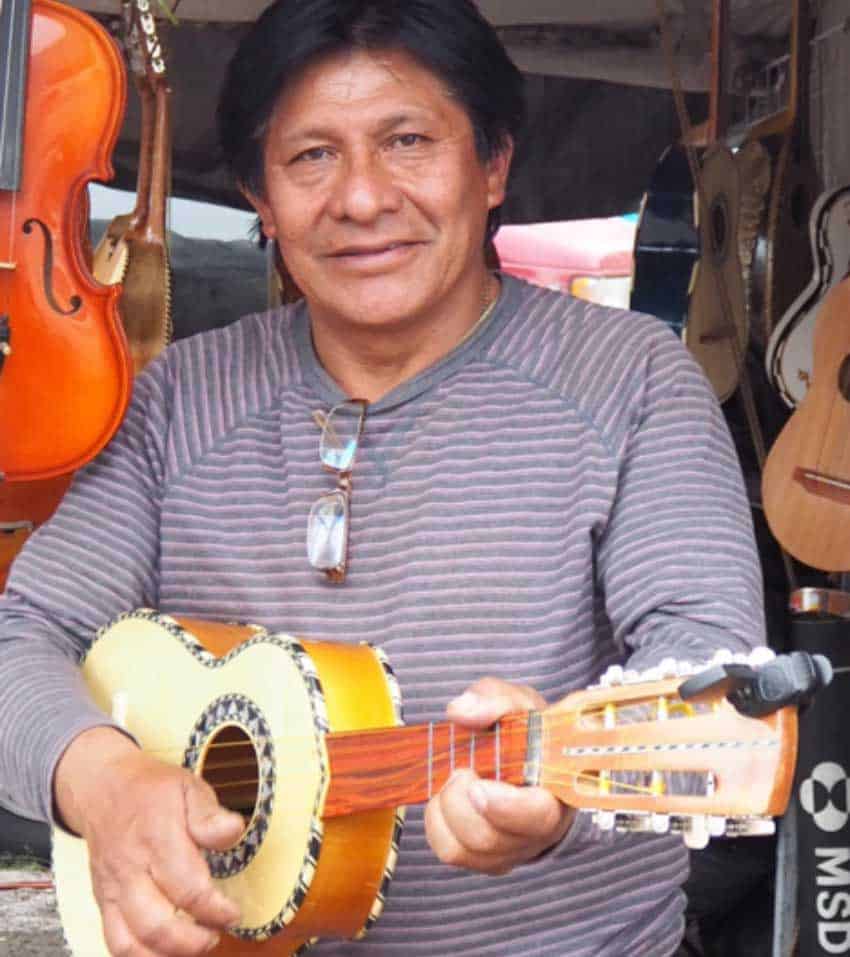
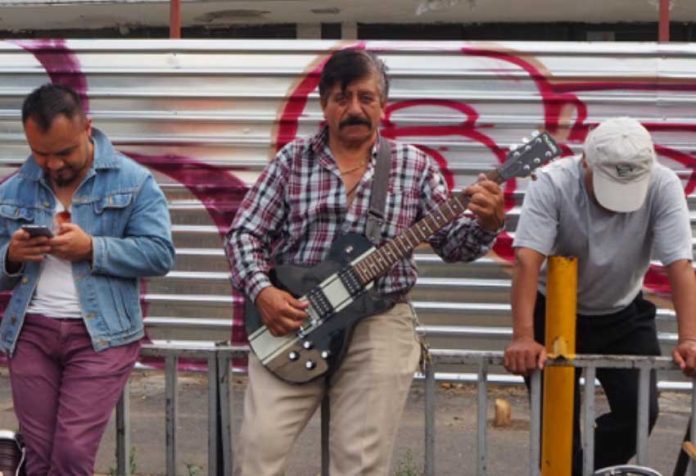
Everyone’s a rock star. Felipe Reyes poses with his guitar.

The blazing sun reflects off hot blacktop outside the Taxqueña Metro where the disciples of tune and tone arrive, noodling unplugged electric guitars slung over their shoulders, flashily twirling drumsticks while nodding along to imaginary beats or lumbering through with amplifiers against their bellies, rock n’ roll-honed biceps exposed from under black tank tops.

They come every Tuesday for the Bazar Músico Cultural de Taxqueña, Mexico City’s mecca for used instruments and musical paraphernalia, over 100 market stalls running on the street alongside the Mexico City Music Workers Union in Campestre Churubusco, Coyoacán.

Native Mexican instruments, electric and acoustic guitars, keyboards, drums, brass and wind and all manner of knobs, switches and tiny pieces needed to make a musician whole.

Some come for the hard-to-find, some because it’s simply cheaper to trade or buy used, and some come just to pass the time speaking the mother tongue with their fluent brethren.

The sales first sprouted up inside the union doors, but merchandise overcame space and in 1997, the swap meet moved to tiny Calle Cerro del Músico, where the temporary vendor tents now stand in a neat, single row partitioned off from trundling bus traffic by ropes tied to traffic cones, baskets and music stands, with the occasional nut and chapulín vendor helping maintain the barrier.

Jorge Rodríguez strums one of the vihuelas he has for sale.

Jorge Rodríguez has been selling at Bazar Músico Cultural for 25 years, 18 of those out here at his personal stand. He specializes in stringed instruments, with the rarer specimens his favorites, like the small, four-stringed vihuela of 15th-century Iberian heritage and the eight-stringed huapanguera from the Huasteca region of Mexico, both common in Mexican mariachi and folk music.

“It’s better to sell what you like,” he tells me. He’s a seasoned musician, having toured in much of Mexico and into the United States around New York City, and his love for the profession is made clear as he walks me through the origin and history of each his instruments.

Rodríguez’s prices run as low as 600 pesos (US $30) for a ukulele to around 3,000 to 4,000 ($150-$200) for a decent vihuela, with prices going up to as much as 12,000 for something of superior quality in maple or ebony.

Some people walk by with only a single guitar pedal or a handful of drumsticks, hoping to go home with a few pesos or trade up for something better. Long-haired heavy-metalers mix with the straight-laced, classically trained.

Suits from the union pass by glad-handing vendors, and it’s unclear to the uninitiated observer whether the hands meet with genuine esteem or generic disdain. Could be a combination of the two.

Francisco Reyes has been selling at the bazaar for 18 years. He sells everything, he says, though the wares are a little slim today: some drum pieces, a melody harp, a couple of keyboards and drumsticks. Reyes doesn’t want to be in a photo but his friend swats him with a newspaper he’d just borrowed, trying to coax him into the frame, while the camera snaps photos of Reyes’ merchandise. A quick lesson that vendors either refuse to appear in photos or insist on holding guitars for them.

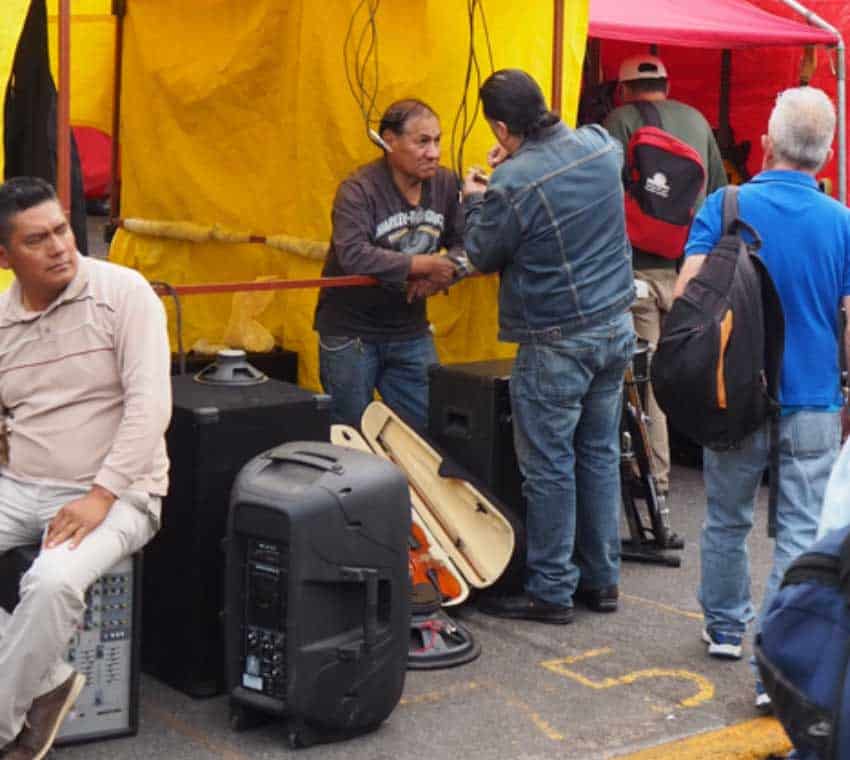
Javier Coyotecatl (back to camera) working out a deal.

One of the few vendors who isn’t a musician herself, Sandra Sánchez sells brass instruments, mostly trumpets and trombones, generally around 3,500 pesos, she reckons.

She got into the instrument trade through friends and has been selling for about three years, simply because she picked up a knack for selling — and the instruments are certainly beautiful.

I’m told that guitars, keyboards and amplifiers are of principal importance to buyers these days. Most of the vendors are working musicians and many are, or once were, members of the union.

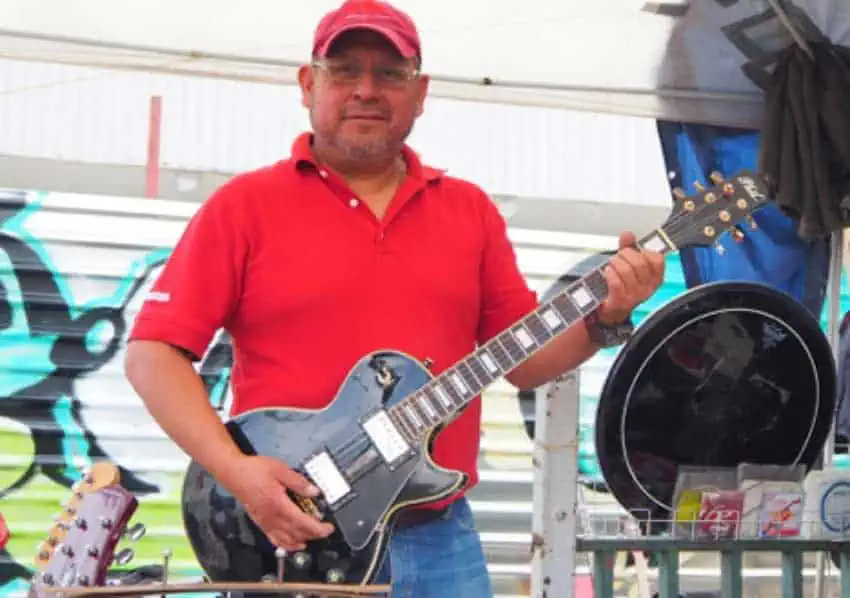
I chat with Guillermo Amaya Espinosa at his stand, an overflowing array of all the tiny hardware, cables, knobs and pieces needed to surgically reassemble dying instruments.

“Right now we do more trading,” Amaya tells me. “We usually sell more, but the economy is a little bit down, so we trade and get a little money.” Amaya gives lessons in guitar, bass, drums and keyboards and volunteers with the Covarrubias Project, a music therapy organization for children with special needs.

His gleeful salesmanship keeps the customers coming, as dozens pass through to peruse his products or display some obscure electronic element in need of replacing. “Something that would cost 20,000 pesos in Centro, you can get from me for 6,000,” he says. “I love music, and I can make a little extra income — and I get the opportunity to hang out at the Bazar.”


Guillermo Amaya poses with a guitar.

When the bargaining heats up, Amaya brings prospective buyers out of the way of general traffic to the back of the tent to get down to the nitty gritty of the transaction. One such negotiation, with Javier Coyotecatl, was over a used banjo head. After about five minutes of back and forth, a deal was made, and both men appeared to leave happy.

Coyotecatl made the long drive up from Cuernavaca. “I repair stringed instruments,” he tells me. “I’m what’s called a luthier.” Coyotecatl has been coming to the market for 25 years or so and only just moved to Cuernavaca about a year ago.

“There’s a good diffusion of culture in Cuernavaca,” he continues. “There’s a lot of work in music. I teach, play, set up events and sell and repair instruments.” But he still comes back to the market because materials are cheaper here, and there are certain things you just can’t get in Cuernavaca.

“Music has given me a lot,” explains Coyotecatl. “I can make trades and sales and it keeps working for me. I studied agronomy, but I liked music better. Then I studied at Bellas Artes. Music is my life. Music gives us everything. It’s like life; it gives us harmony.”

• El Bazar Músico Cultural (or Tianguis del Músico Tasqueña) appears every Tuesday from (approximately) 7:00am to 4:00pm on Cerro del Músico, alongside the Taxqueña Metro stop in Campestre Churubusco.

This is the fourth in a series on the bazaars, flea markets and markets of Mexico City:

Tourist industry declares crisis for lack of marketing, US tourism decline

0
cancun hotels
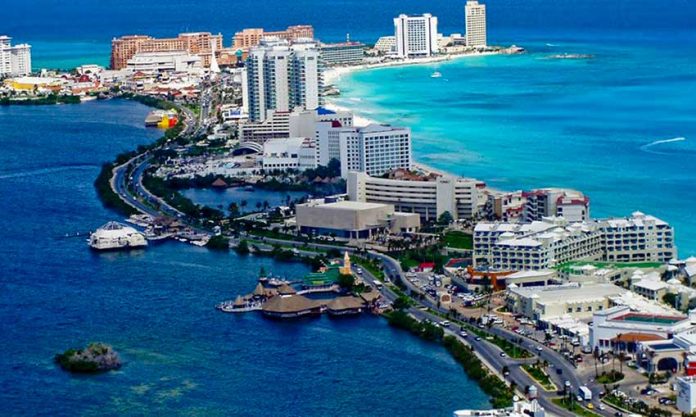
There's room at the inn.

The Mexican tourism industry is in crisis due to a lack of marketing and insecurity, the president of the National Tourism Business Council (CNET) said yesterday.

Speaking at a tourism forum in Mexico City, Pablo Azcárraga warned that the government’s decision to disband the Tourism Promotion Council (CPTM) and high levels of violent crime will cause tourism GDP growth to slow to 1.6% from 3%.

Hotels have suffered a 15% decline in profits in the first quarter of 2019, he said, because they have had to lower their rates to maintain occupancy levels.

In Cancún, the January occupancy rate of 70.7% was the lowest since 2012, according to federal Tourism Secretariat figures, while Mexico City recorded a rate of 54.2%, the lowest since 2013.

The lack of marketing has caused tourism from the United States to decline, Azcárraga claimed.

“The number of people from the United States – our main market – who are traveling outside their country is higher than last year and consequently the competition, like Jamaica, the Dominican Republic and Puerto Rico, have reported [tourism] growth of 16% to 20% when in Mexico there is a decline,” he said.

Hotel operators in Cancún say that decline has been evident for some time but government officials did nothing in response. The president of the Cancún and Puerto Morelos hotels association claimed that it took two years for state Tourism Secretary Marisol Vanegas to even recognize there was a decline in visitors from Canada and the U.S.

Roberto Cintrón said it was time for a change in strategy to counter negative publicity from insecurity and double spending on new marketing campaigns.

But hotel owners in Cancún and the Riviera Maya expressed alarm in interviews with the tourism publication Reportur over the fact that the state has no plan to address the problem, and has shown no leadership.

CNET’s Azcárraga warned that if the situation persists, Mexico will lose tens of billions of pesos in revenue and jobs in the tourism sector will disappear.

“The country’s business sector is worried [but] there’s still time to take decisions that will allow us to turn around what today is a crisis,” he said.

Cancún hotels association president Cintrón.

“The business community has the obligation to insist that our authorities truly seek to defend the [tourism] sector. Today we shout, ‘Help!’ Because we’re in a situation that is not working,” Azcárraga added.

The CNET president was critical of the decision to divert resources that previously funded the CPTM to the Maya Train, President López Obrador’s signature infrastructure project.

Azcárraga said that savings generated by the elimination of the tourism marketing agency that will go to the Yucatán peninsula rail project only represent 4% of the latter’s total cost.

“That makes no difference to the [rail] project” but has a big impact on the tourism sector, he argued.

Azcárraga acknowledged that the Maya Train will “enrich” Mexico’s overall “tourism product” but added that in order for it to be a success, it will also need to be promoted.

The government’s decision to disband the CPTM as part of its policy of austerity has been widely criticized by Mexico’s tourism and business sectors.

Gustavo de Hoyos, president of the Mexican Employers Federation (Coparmex), said in February that the tourism industry “is a victim of the lack of long-term vision on the part of the authorities,” while tourism experts warned last month that other holiday destinations in the region will benefit from Mexico’s withdrawal of tourism marketing funds.

Source: Milenio (sp), El Universal (sp), Reportur (sp)

Nayarit leads in tobacco production but wants to see more

0
Tobacco pickers in Nayarit.

Nayarit is easily the largest tobacco-producing state in Mexico, accounting for 84% of national production, but there is significant potential to grow more.

Tobacco is cultivated on 7,000 hectares of land in the Pacific coast state, a figure that represents less than one-fifth of Nayarit’s estimated capacity of 40,000 hectares.

With that in mind, Governor Antonio Echevarría García appealed yesterday to multinational company British American Tobacco (BAT) – which controls 55% of tobacco production in the state – to increase its investment.

“. . . We want more investment because we want the people of Nayarit to have more money in their pockets. I offer you open arms to continue investing in Nayarit,” Echevarría said at a BAT event.

There are 3,426 tobacco farmers in Nayarit and the harvest season creates 15,000 jobs for jornaleros, or day laborers. The sector generates an annual economic spillover in the state of 950 million pesos (US $49.4 million).

However, Echevarría said that the economic benefits of tobacco cultivation in Nayarit used to be much greater.

“The tobacco industry is an economic activity that was once three or four times greater than what we currently know,” he said, adding that only “traces” of the boom years remain.

Miguel Ángel Navarro, federal senator for the Morena party and president of the upper house’s health committee, said that on the request of Echevarría, he will lobby the government to ensure that legislative changes don’t hurt companies such as British American Tobacco.

He said that higher taxes on cigarettes hadn’t created any health improvements among Mexicans but they had hurt the tobacco sector and caused jobs to be lost in Nayarit.

“I don’t know what is more painful, dying from an illness related to tobacco or dying from hunger . . . I don’t like the idea of tobacco coming from other countries when Nayarit has been a source of extremely high-quality tobacco . . .” Navarro said.

Gastón Zambrano, BAT’s director of legal and corporate affairs in Mexico, said that 70% of the price consumers pays for a pack of cigarettes is made up of taxes but instead of persuading people to stop smoking, they drive many smokers to purchase illegally imported tobacco products from countries such as China, Vietnam and India.

Brands from those countries not only pose greater health risks to smokers but their purchase causes the government to lose billions of pesos in tax revenue, he added.

Zambrano said that BAT will continue to stress to authorities that the current taxes on tobacco products are “more than enough” to send a message that smoking is harmful to health.

He explained that the company plans to continue to increase production in Mexico, pointing out that production in Nayarit has doubled over the past five years.

Chiapas and Veracruz are the only other states in Mexico that produce tobacco, accounting for 9% and 7% of national production respectively.

Source: Milenio (sp) 

Military working on 10 weapons projects, including automatic pistol

0
The army-designed PAX-100 automatic pistol is about to go into production.

The Mexican military is currently undertaking 10 high-tech weapons projects including the imminent manufacture of a new automatic pistol.

Production of the army-designed PAX-100 pistol will begin soon, according to a report in the newspaper Milenio.

The firearm, which will shoot 5.56-millimeter ammunition, is to replace the German-made MP5 submachine gun that is currently carried by high-ranking military officials.

Among the other projects under development is a remote-controlled weapon station that will allow the army to confront enemy fire without the need for soldiers to leave their armored vehicles.

Major David Quintana Mora, director of military industry research and development, told Milenio that by designing and manufacturing its own weapons, the military can both achieve greater autonomy and save money.

He cited local production of the FX-05 rifle, which has replaced the German-made G3 rifle in Mexico’s armed forces, as an example of the kind of savings that can be generated.

Quintana said the Secretariat of National Defense (Sedena) was able to make each FX-05 for 10,000 pesos (US $520) whereas a similar foreign-made rifle sells for 35,000 pesos (US $1,820).

The military has the capacity to make 30,000 FX-05 rifles a year and for more than a decade has produced at least 15,000 annually.

Quintana said the different weapons projects are part of the strategy to modernize Mexico’s armed forces and ensure that members of the military have maximum protection.

He explained that none of the weapons currently under development – which also include a semi-automatic pistol, a light machine gun and a grenade launcher – were designed with the arming of the National Guard in mind.

However, the military industry division of Sedena has the capacity to meet the new security force’s needs if required, Quintana added.

The military makes its own weapons at two arms factories that together employ 402 people. One is located in Lomas de Tecamachalco, México state, and the other is in Santa Fe, Mexico City.

Another future project for the facilities could be the manufacture of high-powered, .50-caliber rifles similar to Barrett rifles such as the M82.

Last month, Sedena presented a request to the Secretariat of Finance (SHCP) for just under 24.2 million pesos (US $1.3 million) so it can carry out research and development and purchase equipment needed for the weapon’s manufacture.

Source: Milenio (sp) 

Sure, there are other pressing matters, but why shouldn’t Spain apologize?

0
One of many memes shows the Aztec Gansopoxtli (ganso is a word associated with AMLO for his use of the phrase 'Me canso ganso' — 'I'm tired, you goose') with Cortés and the latter's ally La Malinche, who says, 'Gansopoxtli says you should apologize.'

While staying at a bed and breakfast in Guanajuato back during the George W. Bush administration, I chatted one morning over breakfast with some Canadian women.

Upon hearing I was from Texas, one of them said, “Really! Well, you Texans have a lot of apologizing to do”.

I was irked, of course, especially since I was (and am) a card-carrying liberal who had voted against and even protested against “W,” and who did these ladies think they were, anyway?

(Disclaimer: I have always been extremely jealous of Canadians, what with their national health care system and smooth social graces.)

President López Obrador’s proposal that Spain owes Mexico an apology for the conquest (and while we’re thinking about apologizing, the Catholic church to the country’s indigenous population) has me thinking about that incident once again. How responsible are we for our past, or for the place and culture that we come from?

“Let bygones be bygones” seems to be built into Mexican culture, possibly out of necessity: if you’re an hour late, they’re at least happy that you made it; if you had a huge fight the last time you were together, well, that was a while back, and maybe a beer and a party will help.

Mexicans don’t seem to spend a lot of time sitting around dwelling on past hurts, which is one of the things I love about them.

That said, there are quite a few “bygones” to get over when it comes to the conquest. Through disease, murder and, as some now believe, a pair of very inconveniently-timed droughts, the indigenous population was decimated.

Alliances with tributaries to Tenochtitlán and the subsequent battles against the Aztecs crippled many indigenous cultures, and weakened status and forced labor became the name of the game for many that were left.

There were plenty of indigenous people, of course, who helped Spain put an end to the Aztec empire. I wonder, if they could see the centuries of after-effects of that, if they’d have made the same decision.

While Cortés and his men were busy with physical conquest, Spanish missionaries set to work winning over the hearts and minds of the populace, though not always peacefully. Through oftenforced “re-education,” the indigenous learned to at least make a show of worshiping the Christian “gods.”

The church was particularly good at comparing saints to already-established indigenous gods, and I often like to imagine them walking to church to pray to “la virgen” (cough-Tonantzín-cough-cough), though my fantasies of subversion could quite possibly be pure imagination.

Though a number of people make a point of honoring their indigenous roots, for the most part, day-to-day indigenous life is decidedly uncool and backwards to most. We celebrate festivities, we love the costumes, we still say “guajolote” for turkey and start sentences with “when they conquered us . . .”

We also consistently find European features to be more attractive than indigenous ones, and it’s obvious that there’s a pretty strong correlation between skin color and socioeconomic status. Grandmothers jokingly encourage their children and grandchildren to “mejorar la raza” (improve the race), and like in most other places of the Americas, the indigenous population is the poorest, the least educated and the most consistently abused and exploited.

The more they can conform to the culture of their conquerers, the better off they do, and this is as true today as it was 500 years ago.

My Facebook feed for the past couple of days has been filled with jokes about AMLO’s request, but I’d argue that apologies for things that happened long ago in which the perpetrators were entire countries are not unprecedented: Germany apologized for the Holocaust, Tony Blair apologized for England’s role in the potato famine of Ireland and former Prime Minister Rudd of Australia apologized for the country’s role in “the lost generation” (the unfortunate habit of white settlers stealing indigenous children).

Ive apologized for many wrongs, intended and not; it’s not a hard thing to do, and it’s healing both for the wronged party and for the released guilt of the perpetrator.

Much to my dismay, AMLO’s detractors have done a fairly good job at making him seem like one big joke. I’ll admit that he’s eccentric and fixated on his self-appointed tasks enough that he doesn’t always help himself recover in that department.

It’s true, there are plenty of pressing matters that are more important than obtaining a 500 years-too-late apology from the country your own culture has been inextricably blended with and the church that over 90% of your citizens now belong to. But why not apologize anyway? Is it so undignified?

As for myself, I officially apologize, on behalf of the state of Texas, for giving the country George W. Bush as president. That said, not everything he did was terrible, and to grow means to accept that even one’s enemies and rivals make good points sometimes.

On the occasion of apologizing for the Japanese internment camps during World War II, Bush said, “No nation can fully understand itself or find its place in the world if it does not look with clear eyes at all the glories and disgraces of its past.”

So hey, New York! Now it’s your turn — apologize for giving us Trump!

Sarah DeVries writes from her home in Xalapa, Veracruz.

Interjet flight cancellations have affected 11,000 passengers

0
Thousands of travelers have been affected by a labor dispute at Interjet.
Thousands of travelers have been affected.

The Mexican airline Interjet cancelled a total of 75 flights between March 25 and 31 due to crew shortages triggered by a labor dispute. As of yesterday, the interruptions in service had affected 11,936 passengers.

Crew members affiliated with the Mexican Confederation of Workers (CTM) haven’t shown up for work as a measure to press for better salaries and working conditions.

According to a source familiar with the airline, Interjet operated at 90% capacity last week, which also contributed to a domino effect of delayed service. However, the source said the flights cancelled only represented a small percentage of the 300 flights the airline operates every day.

The consumer protection agency, Profeco, reported that as of Monday it had assisted 400 customers by phone and at airport help desks whose flights had been cancelled.

“We recovered 1.6 million pesos in flight changes and cancellations, and we have assisted all customers that did not file official complaints.”

According to Ricardo Sheffield Padilla, affected passengers are entitled by law to a refund or rebooking on the next available flight. He added that customers also have the right to phone calls, meals according to the length of the delay, lodging in a nearby hotel if necessary and transportation to and from the airport.

A source close to Interjet said it is working round the clock to resolve the situation before Easter week, the next major vacation period, which falls in the middle of this month.

Source: Milenio (sp)

AMLO announces cultural center for site of Mexico City army barracks

0
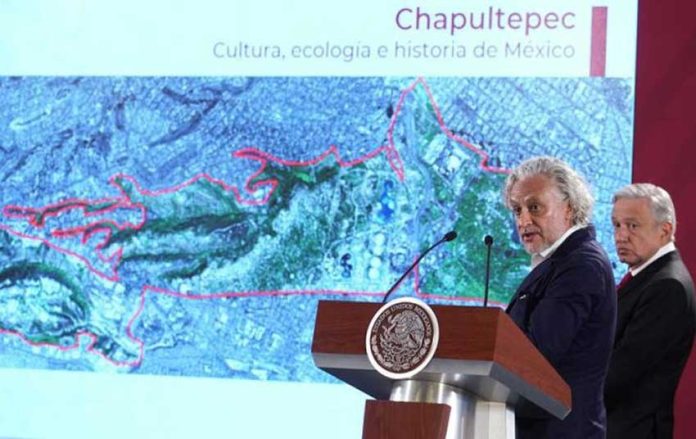
Orozco, left, and López Obrador present plans for the new cultural center.

A new cultural center touted as the biggest in the world will be established on a military site in Mexico City, President López Obrador announced today.

The president said that renowned artist Gabriel Orozco will direct the project in conjunction with the Secretariat of Culture and the Mexico City government.

The center will be built on an 800-hectare former military base that will become the fourth section of the Chapultepec Park.

“It’s going to be the biggest and most important artistic and cultural space in the world,” López Obrador said, adding that Orozco will not charge anything for his services.

A luxury real estate development had been planned for part of the site but López Obrador said last month that idea had been scrapped.

The president said today that the government already has the resources required to build the cultural center although he didn’t specify how much it would cost.

“Not a lot of funds will be needed because the creative side [of the project] is going to be provided voluntarily,” López Obrador said.

“We’ll seek not to waste resources, it’s not [a project of] buildings that will turn into white elephants,” he added.

López Obrador said that a detailed plan of the project, including its cost and how long it will take to complete, will be presented in two or three months.

Orozco, who said in 2015 that Mexico needed a contemporary art museum of the stature of New York’s Museum of Modern Art, Paris’ Centre Pompidou or London’s Tate Museum, described the opportunity to coordinate the cultural center as an “honor.”

The federal government has made a point of returning space formally occupied by the government to the people of Mexico.

The president’s former official residence, Los Pinos, has already been turned into a cultural center, and metal barricades that prevented citizens from getting close to the National Palace were removed shortly after López Obrador took office on December 1.

Protesters with a range of grievances have since established makeshift camps cheek by jowl with the facade of the National Palace, located in Mexico City’s downtown opposite the zócalo, or central square.

Source: El Financiero (sp), Milenio (sp) 

Crocodile captured while wandering in Zihuatanejo

0
Officials in Zihuatanejo prepare to remove crocodile.
Officials prepare to remove crocodile.

Dogs set off the alarm yesterday when an unwelcome visitor took an early-morning ramble in Zihuatanejo, Guerrero.

But the three-meter-long crocodile was soon captured and moved to a more suitable location.

The reptile was on the road between Playa Linda and downtown Zihuatanejo when dogs became aware of its presence and began following it. Their barking alerted nearby residents.

Civil Protection officials arrived at the scene about 7:30am to capture the potentially dangerous crocodile.

It was transported to the nearby Laguna del Negro, in Ixtapa, where it was released. There were no reports of attacks against animals or humans.

It was the second time in a month that crocodiles with wanderlust have been sighted in urban areas of Ixtapa-Zihuatanejo. On March 16, one that measured about four meters long was caught near the airport.

Source: Milenio (sp), DDG Noticias (sp)

Mayor causes a stir with comments about girl’s obesity

0
The mayor chats with the overweight student.

The mayor of Ahome, Sinaloa, has been accused of insensitivity and bullying after he asked what was wrong with a young girl who was overweight.

During a visit to the town of San Miguel Zapotitlán, Guillermo Chapman Moreno visited an elementary school for indigenous students.

In a short clip that has since gone viral on social media, the mayor crouches next to Nancy and asks her what she liked to eat.

“Eggs and lots of candies,” replied the student as classmates watched.

Chapman turned to the student’s teacher and asked, “What’s wrong with this girl? She’s overweight, she’s obese, hideous and horrible.”

The teacher replied that the girl was a single child and that an overbearing mother gave her whatever she wanted, whenever she wanted it.

The mayor has put his foot in it before. In November, he visited a school in Los Mochis and asked students if they knew who he was.

“All of you, every single one of you, have to obey me. I am the political boss.”

Source: El Universal (sp)