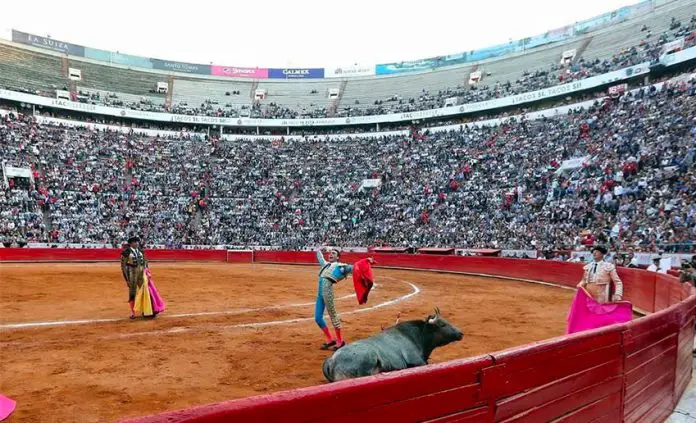
There might be one vote in favor of prohibition here.
Whether bullfighting should be prohibited is a matter for the people to decide, President López Obrador said on Wednesday.
The controversial issue is one that should be resolved with a referendum, a better way of deciding such issues than leaving them to the executive or legislative officials, he said.
“If I make a decision about bullfighting, it would look like an authoritarian act. But if it comes from a consultation and the majority speak, I could say, ‘It’s not me, it’s democracy, it’s law.’ Democracy strengthens authority.”
He noted that for a referendum’s results to be legally binding, the constitution would need to be changed.
“We would need to do a consultation to know everyone’s opinion, they’re controversial issues,” he said. “That’s why I think we need to change Article 35 of the constitution so that citizens can decide with referendums that will be binding.”
López Obrador also said he had instructed Education Secretary Esteban Moctezuma to include material about the mistreatment of animals in public school textbooks, which itself might be considered by some to be an authoritarian act.
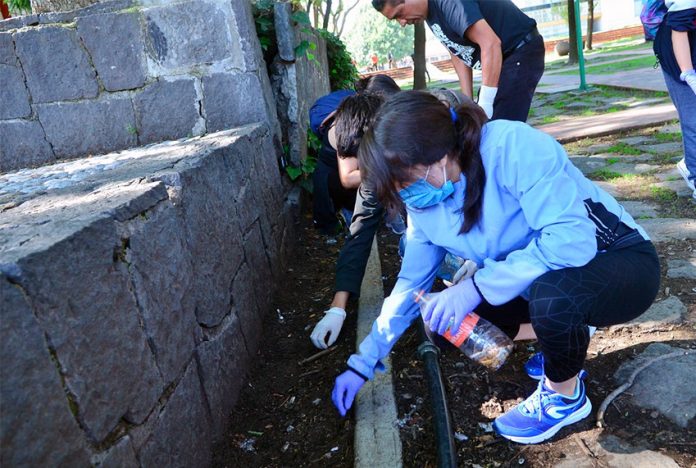
The second edition of an event to clean up cigarette butts at Ciudad Universitaria (University City) in southern Mexico City took place last Saturday.
A Mexico City lawmaker has proposed hefty fines for leaving cigarette butts in the streets.
Green Party coordinator Alessandra Rojo de la Vega proposed a change to the Solid Wastes Law to punish the act with fines ranging from 2,534 to 25,347 pesos (US $128-$1,282).
She also stated that it would be the responsibility of businesses and government offices to provide containers for the disposal of cigarette butts. Not doing so could mean fines ranging from 42,245 to 168,980 pesos.
“I think it’s time we got this problem under control,” said Rojo. “The impact has already begun to be felt, but if we don’t do anything now, in a few years we surely will regret it.”
Around five billion cigarette butts are produced in Mexico each year, and only 41% of them make it into an ashtray or trash can, she said. The remaining 59%, some 2.95 billion butts, end up tossed into the streets and elsewhere.
The legislator said cigarette butts account for 25% of trash on beaches, and that more than half the country’s forest fires are started by carelessly tossed butts.
However, statistics published by the National Forest Commission (Conafor) attribute only 6% of wildfires to discarded cigarette butts. Furthermore, Lilia Manzo, the head of the Institute of Geography at the National Autonomous University, told Mexico News Daily that, while highly probable, she has seen no official scientific evidence that cigarette butts start forest fires.
In 2008, Mexico City passed the Law of Protection for Non-Smokers, which converted all closed public spaces, such as government buildings and bars, cafés, and restaurants, into 100% tobacco-free zones.
Citizens in Tepacaltepec have dusted off their weapons.
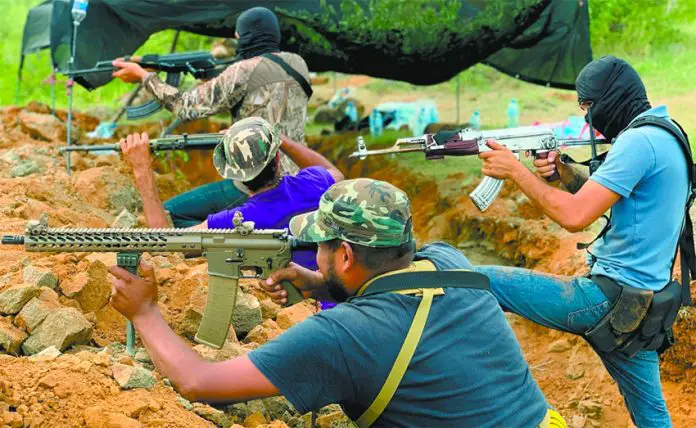
Amid the threat of another cartel attack, residents of Tepalcatepec, Michoacán, have once again taken up arms to protect their town and families.
The sun is not yet up when men both young and old leave their homes to begin the patrols they say are necessary in the absence of support from federal and state authorities to combat the threat posed by the Jalisco New Generation Cartel (CJNG).
“We’re not criminals, we’re farmers, storekeepers, fathers, brothers and sons who . . . are doing the security work that is the responsibility of the government,” a heavily-armed jornalero, or day laborer, told the newspaper El Universal.
Five days ago, Tepalcatepec came under attack by suspected CJNG hitmen apparently intent on taking control of the western Michoacán municipality located on the border with Jalisco.
Mayor Felipe Martínez Pérez said in an interview that both residents and local authorities have asked the Michoacán and federal governments to send police and the armed forces to Tepalcatepec to reinforce security and prevent another incursion by the cartel. But he claims that the requests have fallen on deaf ears.
The self-defense forces keep an eye on the Jalisco border.
In that context, residents say they decided to dust off their weapons and return to their self-defense duties for the first time in five years.
A report published today by the newspaper El Universal said the vigilantes indicated that they would rather die on their feet than be forced to kneel down and watch their loved ones being killed.
The words are a riff on the quote “I’d rather die on my feet than live on my knees,” which is attributed to Mexican revolutionary Emiliano Zapata.
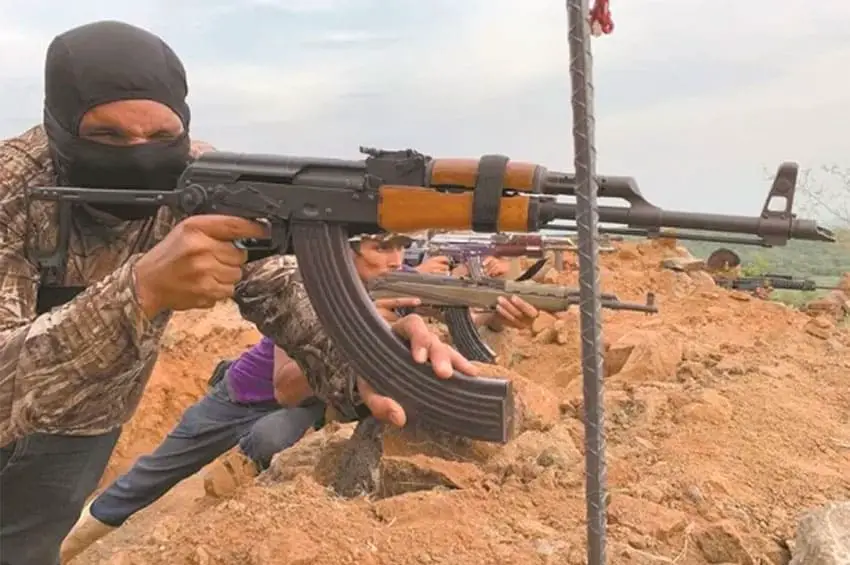
Armed with high-caliber weapons such as AK-47s and AR-15s, the men walk several kilometers early in the morning to a hill on the border with Jalisco, from where the CJNG hitmen reportedly crossed into Michoacán.
[wpgmza id=”20″]
Perched on the hill and using an earthen barricade, bushes and trees for cover, the men keep a careful eye on the land below for any sign that cartel members are on the move towards Tepalcatepec.
They cross themselves frequently, mindful of the danger that they and their family members face.
“This isn’t President [López] Obrador’s land or that of Governor Silvano [Aureoles],” one vigilante said, implying that if citizens don’t take up the fight to the CJNG, no one will.
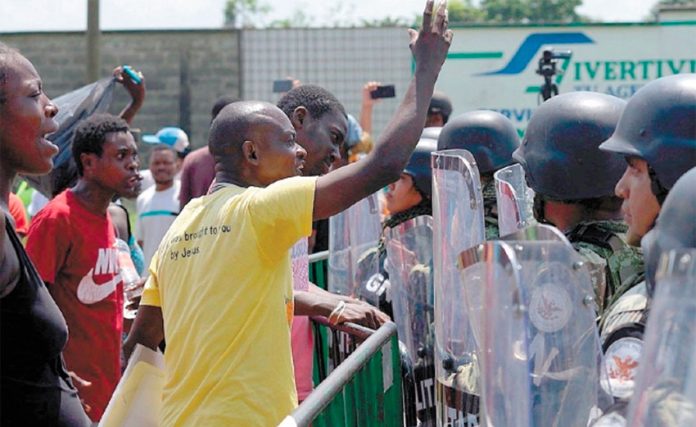
Migrants react in Chiapas after exit visas not forthcoming.
Migrants hoping to travel to the United States damaged a service module set up by the National Immigration Institute (INM) in Tapachula, Chiapas, on Tuesday.
The INM had set up the facility outside the Siglo XXI migrants’ center to review the cases of migrants who are mostly from African countries and Haiti, and have been stranded in Tapachula for five months.
Migrants were hoping that the INM would change their migratory status and allow them to exit the country freely, as most hope to reach the United States or Canada. At present the migrants are only allowed to leave the country through the southern border.
But the INM was only prepared to offer them a limited regularization of their status in Mexico. When the migrants realized they weren’t going to get the exit visas they wanted, they became angry and began throwing the tables and chairs that the INM had put in place for interviews, according to one migrant who spoke with the digital news outlet Animal Político.
“People were hoping that they would call us to give us a solution,” he said. “But they didn’t do anything. They started calling people, one by one, to talk to them. People aren’t happy, they got mad, and grabbed the chairs and everything they have there.”
According to a statement by the INM, the case reviews had to be cancelled because of the clash.
“INM officials, accompanied by translators for various languages, began attending to the first foreign citizens,” the statement said. “However, the service could not continue because some of the migrants started destroying things . . . throwing chairs, tables and portable bathrooms and manifesting their rejection of the services offered by the INM.”
A group of 812 of the African migrants has put their hopes in a legal fight against the exit restrictions. Last month, a judge made a preliminary ruling in the migrants’ favor that the exit restrictions are illegal, but the case will be heard by other courts before the migrants might be allowed to travel north.
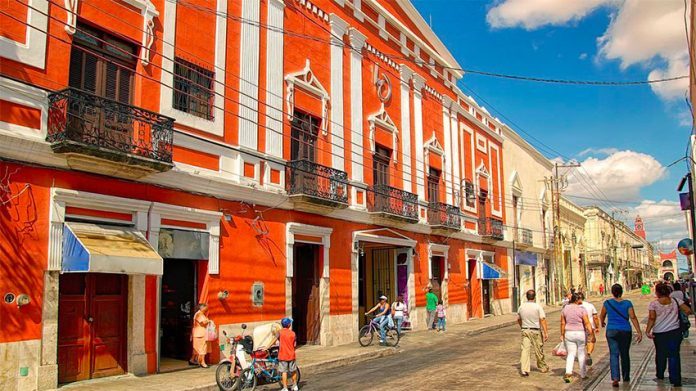
Mérida, Yucatán, ranked one of the world's safest cities.
The capital of Yucatán has been ranked the second safest city in North America by a business magazine.
Outranked only by Quebec City, Canada, Mérida was also ranked as the safest city in Latin America.
The city holds the 21st spot on the worldwide list, ranking higher than cities such as The Hague, Holland, home to the International Court of Justice, and Geneva, Switzerland, European seat of the United Nations.
The list prepared by Ceoworld magazine judged 334 cities across the globe based on crime level indicators.
For the third year in a row, United Arab Emirates capital Abu Dhabi topped the list as the world’s safest city, followed by Doha, capital of Qatar, and Quebec. The following cities rounded out the top 10: Taipei, Munich, Dubai, Zurich, Bern (Switzerland), Eskisehir (Turkey), and Hong Kong.
The top-ranking U.S. city on the list was Salt Lake City, Utah, at No. 53. In Canada, Ottawa came in at 37th and Waterloo at 45th.
Given the unprecedented levels of violence in Mexico, one might expect to find a Mexican city or two at the bottom of the list, but that is not the case.
The five most dangerous cities in the world are Caracas, Venezuela; Pietermaritzburg, South Africa; Port Moresby, Papua New Guinea; Pretoria, South Africa; and San Pedro Sula, Honduras.
Other Mexican cities on the list include Puerto Vallarta, ranked No. 83, Querétaro 115, Monterrey 230, Guadalajara 271, Tijuana 278 and Mexico City 309.
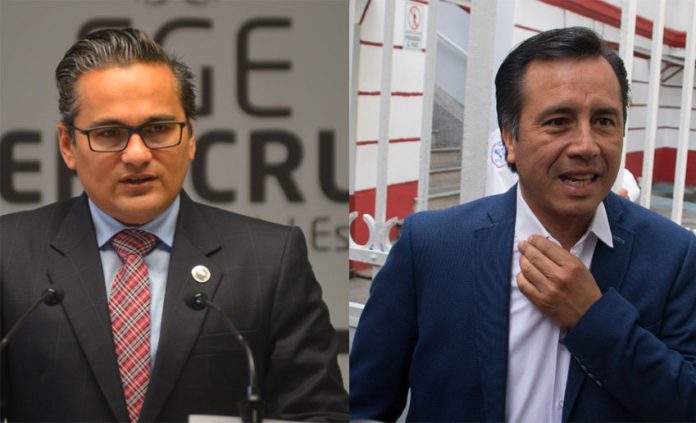
Suspended attorney general Winckler, left, and Governor García: no love lost.
Veracruz Attorney General Jorge Winckler promised to fight a decision by a commission of the state Congress to suspend him temporarily from office on Tuesday, an action he called “a federal crime.”
“This decision is illegal any way you look at it, it violates the constitution and the law of Veracruz,” he said. “I will use every legal resource available to defend myself. Not doing so would be cowardly.”
The permanent commission, which is led by deputies from the Morena party, voted to suspend Winckler because the attorney general had not taken required recertification tests, an accusation denied by Winckler.
“My evaluations are up to date, I passed the control and confidence test,” he said. “If some people don’t want to understand that, they didn’t have the courtesy to ask for the documents. If they want more proof, or if they want to do an investigation, I’ve never hidden anything, I’m not a criminal.”
Winckler was replaced by Verónica Hernández Giadáns, who was sworn in later on Tuesday.
In a joint statement, deputies with the opposition National Action Party (PAN) blasted the decision to suspend Winckler, calling it an undemocratic action by Morena.
“Morena violated the rule of law in Veracruz, unconstitutionally authorizing a motion to remove Attorney General Jorge Winckler from office,” they said.
Winckler was appointed in late 2016 by then-governor Miguel Ángel Yunes, a member of the PAN and a personal friend of the attorney general.
Since Morena Governor Cuitláhuac García took office in 2018, Winckler has been a target for criticism by the governor and President López Obrador.
The conflict between the two officials boiled over after an attack on a bar in Coatzacoalcos, Veracruz, on August 27 which killed 30 people. Governor García accused the Attorney General’s Office of having arrested and released one of the perpetrators before the attack. Winckler said the arrest and release had been the responsibility of the federal government.
The release by a judge of a key suspect in the disappearance of 43 students in Guerrero in 2014 will be subject to a federal investigation.
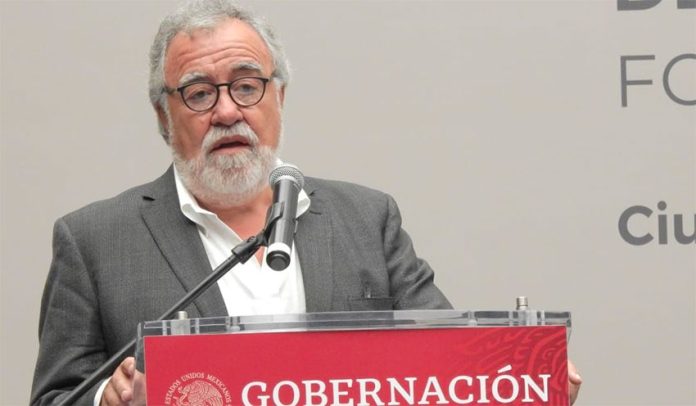
The federal government will ask the Attorney General’s Office (FGR) and the Federal Judiciary Council (CJF) to investigate officials and judges responsible for the release of the suspect and many others in the case, human rights undersecretary Alejandro Encinas said on Wednesday.
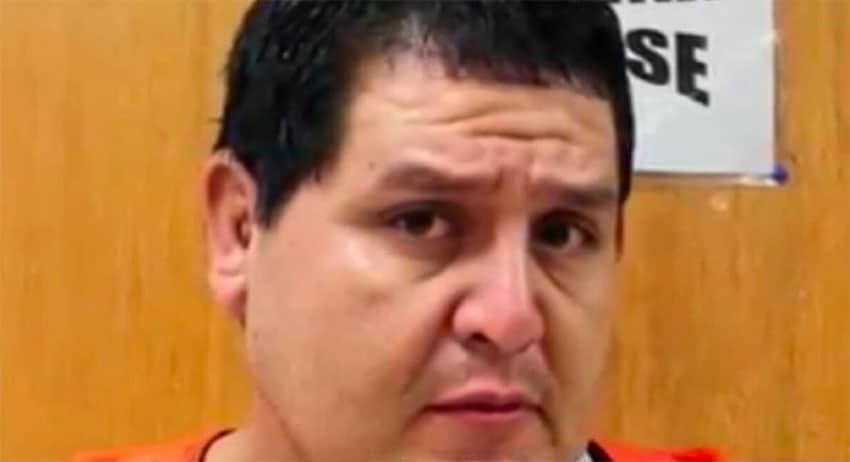
Encinas’ announcement comes a day after news broke that a federal judge acquitted and ordered the release of Gildardo López Astudillo, who was allegedly the plaza chief in Iguala of the Guerreros Unidos gang at the time of the students’ disappearance.
Prosecutors who served during the previous government alleged that López Astudillo ordered the abduction of the Ayotzinapa Rural Teachers’ College students after mistaking them for members of a rival gang.
He was arrested in Taxco in September 2015.
Encinas told reporters at the presidential press conference that on instructions of President López Obrador, the government will request that the FGR and CJF investigate officials and judges who may have acted illegally in relation to the release of Ayotzinapa suspects.
Ayotzinapa suspect ‘El Gil.’
More than 140 people were arrested, many of whom were suspected members of the Guerreros Unidos gang, but more than 50 have been released.
Santiago Aguirre, director of the Prodh human rights center and a lawyer for families of the victims, said on Tuesday that among the suspects who have been released are six people accused of ordering the disappearances.
Encinas charged that “instead of guaranteeing the right to truth and justice for the victims,” judges and officials have favored “silence and impunity.”
The undersecretary said that the release of López Astudillo, who faces no other charges, set “a very grave precedent.”
“It’s an acquittal of one of the main perpetrators of the crime of forced disappearance,” Encinas said, adding that the ruling could be used to release more than 50 other people who are in custody as a result of their alleged involvement in the students’ disappearance.
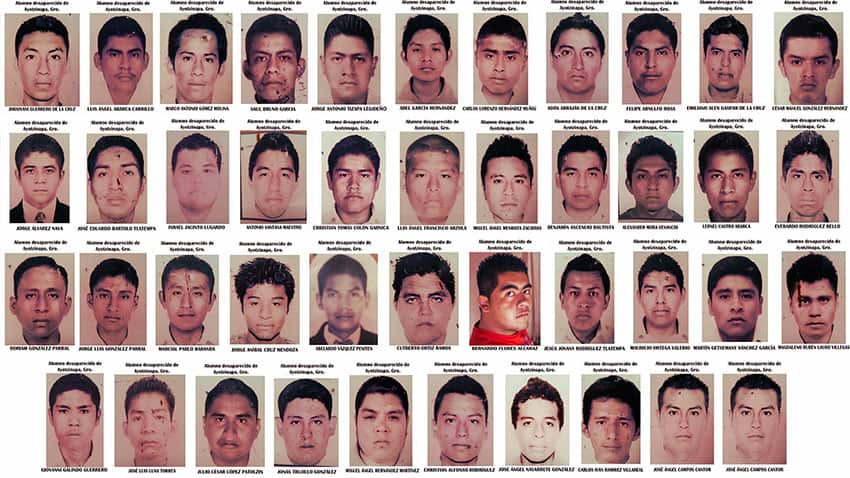
The 43 students who disappeared September 14, 2014 in Guerrero.
According to the judge who released López Astudillo, much of the evidence presented against him by prosecutors of the former government was obtained illegally.
The United Nations said in a 2018 report that 34 people were tortured in connection with the investigation into the disappearance of the 43 students, while a video showing the torture of a suspect was published on YouTube in June.
In November 2018, a federal judge ruled that 83 statements made by the majority of people accused of involvement in the crime must be omitted from the Ayotzinapa investigation due to evidence that their human rights were violated.
According to the former government’s “historical truth,” the 43 students were intercepted by corrupt municipal police in Iguala on September 26, 2014 while traveling on buses they had commandeered to attend a protest march in Mexico City.
The police then handed them over to members of the Guerrero Unidos gang who killed the students, burned their bodies in a municipal dump and scattered their ashes in a nearby river, according to the investigation.
However, the former government’s conclusion was widely questioned both within Mexico and internationally and authorities were heavily criticized for their handling of the case.
Many people suspect that the army played a role in the students’ disappearance and presumed deaths.
Encinas said today that the “poorly-named ‘historical truth’ was built based on simulation, fabrication of evidence [and] torture.”
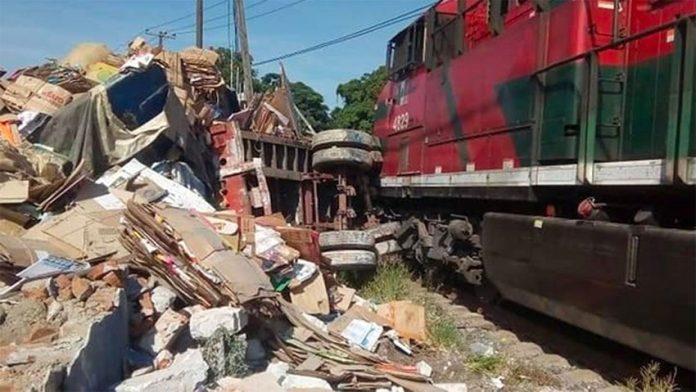
The wreckage in Veracruz after semi failed to cross the tracks in time.
Two people were injured when a train crashed into a tractor-trailer in Amatlán de los Reyes, Veracruz, Tuesday morning.
The driver of the semi attempted to cross the track after the stop signal had sounded at the level crossing and also ignored the train’s whistle as he tried to cross before the train arrived.
The truck was dragged dozens of meters by the train, and its cargo of cardboard and plastic was scattered along the highway and train tracks.
Paramedics extricated the driver and a 20-year-old passenger from the damaged cab of the truck.
The two suffered injuries for which they were taken to a local hospital.
The area was cordoned off by local and state police working with officers of the auxiliary police force of Veracruz (IPAX), and clean-up of the wreckage and cardboard began once the injured parties were taken from the scene.
The crossing was closed to traffic for two hours following the crash.
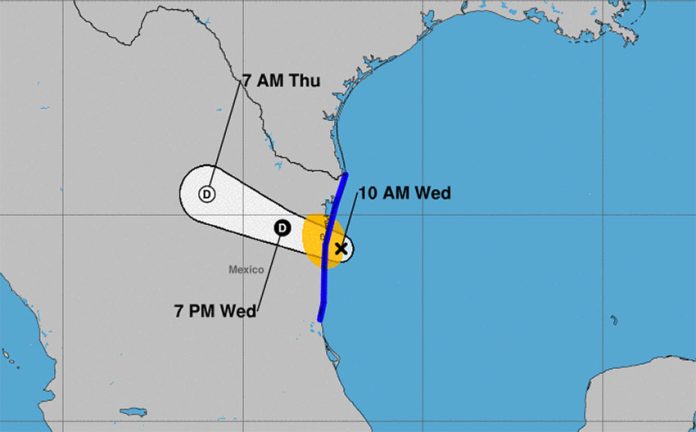
The National Water Commission (Conagua) has issued a warning that Tropical Storm Fernand will cause torrential rains in the states of Tamaulipas, San Luis Potosí and Nuevo León on Wednesday.
Fernand, which formed out of Tropical Depression No. 7 on Tuesday in the Gulf of Mexico, is expected to make landfall on the Tamaulipas coast on Wednesday. But the effects of the storm could be felt all across the country, especially in the states of Veracruz, Nuevo León and San Luis Potosí.
Conagua also warned that Fernand could cause waves as high as three or four meters on the coasts of Tamaulipas and northern Veracruz, and wind gusts of as high as 60 kilometers per hour in nine states. Rain with differing levels of intensity is forecast for all 32 states.
Veracruz Civil Protection chief Guadalupe Osorno forecast intense rain and wind gusts as high as 65 kilometers per hour in the northern area of the state.
“We’ll be monitoring Fernand’s development, and if necessary, we’ll activate evacuation plans for vulnerable communities,” he said.
Nuevo León Governor Jaime Rodríguez Calderón announced on Tuesday that the state’s schools will be closed on Wednesday because of the storm. Tamaulipas will also close schools in 21 municipalities on Wednesday and Thursday.
A historical object recovered after it was stolen.
Historical objects looted from Mexican archaeological sites are often shipped overseas to countries such as the United States, Spain, Germany and Italy, according to the federal government.
Investigations conducted by the Federal Police have found that criminal organizations dedicated to the theft of pre-Hispanic objects use international parcel companies to send their loot to purchasers abroad.
Among the artifacts that are commonly stolen are ceramic figures, arrowheads, stone objects and wooden sculptures made by the Maya, Olmec, Toltec, Mixtec, Teotihuacán and Mexica peoples, among others.
There are no precise figures about how many artifacts have been stolen in Mexico and sold abroad but considering the high incidence of the crime, the number is likely to be significant.
The federal Attorney General’s Office has, however, managed to recover some relics that ended up in the United States and Europe.
Im April, the FBI returned two archaeological pieces that had been stolen from a central Mexican site of the Teotihuacán culture, while last year two wooden Olmec busts were sent back to Mexico from Germany after an almost 10-year-long legal battle.
The latter relics, which date back more than 3,000 years, were stolen from the El Manatí site in Veracruz.
The Attorney General’s Office has also had domestic success in seizing stolen historical objects, recovering at least 634 pieces in Mexico between 2008 and 2018. The highest number of objects were located in the states of Jalisco, Tlaxcala, Mexico City, Nuevo León, Guanajuato and Zacatecas.
More than 40% of Mexico’s archaeological sites and historic monuments have been looted, according to the Institute of Anthropology and History.
Stealing and selling historical objects is a federal crime punishable by a prison term of five to 12 years in addition to a fine.