Thursday, March 5, 2026
Home Blog Page 1950

Pipeline taps soar 45% in first 10 months to 12,581, up from 8,664 last year

0
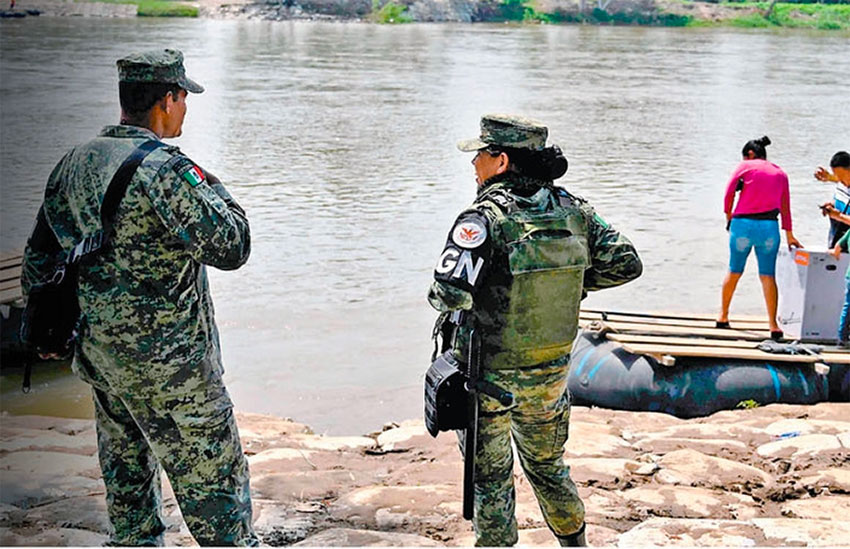
Soldiers on the lookout for pipeline thieves in San Martín Texmelucan, Puebla.

Illegal taps on fuel pipelines increased by 45% in the first 10 months of 2018, according to the state oil company, and the total number of perforations is on track to exceed 15,000 this year.

Pemex’s most recent report on the crime showed that there were 12,581 taps detected on state-owned and private pipelines between January and October compared to 8,664 in the same period last year.

More than half the taps occurred in just four states — Puebla, Hidalgo, Guanajuato and Veracruz.

Puebla recorded the highest number, with 1,815, followed by Hidalgo with 1,726; Guanajuato with 1,547; and Veracruz with 1,338.

More than 1,000 illegal taps were also recorded in the first 10 months of the year in each of México state, Jalisco and Tamaulipas.

On average, 41 new illegal taps were discovered every day between January 1 and October 31.

Former Pemex CEO Carlos Treviño said in October that the crime, committed by gangs of fuel thieves known as huachicoleros, was expected to cost the state oil company 35 billion pesos (US $1.75 billion) this year.

Between 2013, the first full year of the previous government, and October 2018, Pemex reported 41,316 illegal taps, an unprecedented figure for a six-year presidential term.

During Vicente Fox’s presidency from 2000 to 2006, just 890 taps were reported, while during the six-year term of his successor Felipe Calderón, there were 4,865.

The incidence of the crime has continued to rise in recent years despite greater efforts to combat it, including operations involving the army and greater vigilance of pipelines.

In some parts of the country, such as the region of Puebla known as the Red Triangle, pipeline theft is such a common practice that a culture, with its own saint and songs, has formed around it.

The crime is also linked to rising rates of violence in some states, such as Guanajuato, which has been transformed from a relatively peaceful state to one of the most violent in the country this year.

In Puebla, a clash between the army and huachicoleros last year left 10 people dead, including four soldiers.

There is also evidence that Mexico’s notorious drug cartels have moved in on the lucrative illicit fuel market and Pemex employees have come under investigation for alleged involvement in fuel theft.

The new government has pledged to prioritize combatting pipeline theft, a crime that Security Secretary Alfonso Durazo singled out earlier this month as a key contributing factor to the high levels of violence in Mexico.

President López Obrador said this month that his government will legislate to make pipeline theft a “serious crime.”

People arrested for it will no longer be able to be released from custody on bail, he said.

Source: El Universal (sp), Milenio (sp) 

Gold medal for Mexican team at Shanghai robotics competition

0
Mexican robotics students in Shanghai.

Mexican teams dominated the primary school category of the World Educational Robotics (WER) contest held in Shanghai, China, last weekend, taking the top three spots.

Competing against robotic enthusiasts from more than 20 countries, the team representing West Heights International School in Monterrey, Nuevo Léon, was crowned champion after two days of competition in the Chinese city.

The team, competing under the name Warriors, was made up of sixth-grade students Ricardo Gael González Zamudio, Rafael Lua Oliver and Mariana Torrija Arturo and mentored by technology teacher Grace Irela Zamudio.

They have now arrived back at their school in the Nuevo León capital, where they were given a heroes’ welcome.

“. . . They prepared and practiced a lot for this competition and something very special is that there was a lot of unity between the delegation [of Mexican teams],” Grace Zamudio said.

Torrija explained that she and her teammates were responsible for programming their robot to complete all the challenges set during the contest.

“. . . We put in an infrared system, made it go forward and change directions, they gave us two hours [to do it],” she said.

Twelve-year-old Lua Oliver described the competition as very complicated.

“There was a lot of stress because we were up against 500 teams,” he said, adding that the team’s result showed that “there is good education in Mexico.”

The second and third places in the primary school category were taken by the María Fernanda Primary School in La Paz, Baja California Sur, and the Americano Anáhuac School in San Nicolás de los Garza, Nuevo Léon, respectively.

Torrija said that the three teams supported each other during the competition.

“. . . We gave each other tips and advice because we weren’t interested in winning ourselves, we cared more about Mexico winning . . .” she said.

Mexican teams also fared well in the high-school category.

A team from the Subiré school in León, Guanajuato, took fourth spot overall but was first in the international category, while a team from the Silao Conalep Technical School in the same state finished eighth overall but second out of the non-Chinese teams.

A team from another Guanajuato school, the No. 29 Tech. in Pénjamo, finished second in the middle-school international category.

Source: Notimex (sp) 

The transcendental process from tourist to snowbird to expat: what does it take?

0
lineup in Mexico
If you find yourself in one of these it's a good opportunity to brush up on your Spanish skills.

No matter how long one has been an expat living in Mexico, most of us first started as tourists. As a tourist, my interactions with the Mexican culture were sporadic and shallow in nature, but captivating enough to envisage a future asylum in this alluring country.

At that time as a seasoned tourist in Mexico, I was proud of my perfect diction. I would ask “Cerveza más fría?” “Cerveza fría más?” “Más cerveza fría!” Or “Dónde está cerveza fría?” This fine command of the language put me in high regard in the eyes of my wife and children.

Now, however, I realize that during my time as a tourist I learned very little which is now useful in my residential capacity. Learning the language is only one of two very important factors which contribute to a transcendent lifestyle for the average expat.

However, no matter how good your Spanish is, without cultural adjustment your life in Mexico cannot be as culturally rich is it might be. And usually the inability to achieve this elusive cultural adjustment is a direct result of preconceived cultural expectations, unaltered by the physical shift undertaken, and which, given the differences in surroundings, can in time override the pleasure centers of the brain and lead to severe psychological distress.

The transition from tourist to resident can sometimes be a winding path filled with incommodious topes which can hinder the cumbersome process of becoming a true expat. From local, state or federal government agencies with their superfluous imperatives, to a complex and sometimes downright illogical culture which has been shaped by 500 years of bloody turmoil and honed with an overabundance of religion and primal superstitions, nothing is easy or clear-cut about precipitating your expat life.

As a tourist, you view your time in Mexico as a great vacation: poolside margaritas, stunning old-world architecture, beautiful beaches, mystical Mesoamerican sites and so on, you get the idea. Remember? Most tourists know, on one level or another, that what they are enjoying about Mexico is somewhat removed from the life outside their all-inclusive compound.

It is most likely during that period of a tourist’s transition that the seed is planted deep within the folds of the gray matter: “I could live here.” Subsequent vacations to the varied locales of Mexico feed the seed and it grows into a recurring day dream — could it be possible for me (or us) to live in Mexico?

The 1964 film Night of the Iguana put Puerto Vallarta on the tourist map, and repeated visits by John Wayne, Robert Mitchum, John Huston and similar shining stars brought Mazatlán into the tourism spotlight in the late 50s. In fact, John Wayne was such a regular at the Belmar Hotel that there is an old wooden armchair which bears the carved initials JW and has been proudly displayed in the lobby for over 60 years.

Personally, I find it difficult to imagine John Wayne defacing a piece of furniture with his pocket knife. However, several years ago a Canadian man was so taken with the prospect that such a unique and valuable piece of Hollywood memorabilia was not chained to the concrete wall that he stole the chair. When this brazen theft became known, several of the aging Belmar Bohemians bemoaned the loss of this priceless artifact on one of the local internet forums.

After an absence of many months, the fabled chair miraculously reappeared in the Belmar’s lobby in the wee hours of the morning. But going back in time again, so much for the Hollywood crowd: none of them ever became residents.

A great number of Mexico’s tourists are Canadian. So what’s that all a boot? Could it be connected to the fact that unlike some states in the U.S. Canada does not have any provinces with mild winter weather? Regardless of where you live in the provinces, the winters have the potential to kill people. Quickly.

For many Canadians, the risk of frostbite or hypothermia is far greater than the risk of being gunned down by the narcos in Mexico. Many of the Canadians who winter here are quintessential snowbirds who stay in the tropics for several months at a time.

Snowbirds from the U.S., while sharing many traits with their confederates from the frozen north, frequently have as their ultimate commonality a desire never be labeled a tourist.

The transformation from tourist to roosting snowbird is a defining moment in the metamorphic process which leads to life as an expat. As a snowbird rather than a mere tourist, these people are living within the culture several months at a time. They deal with cumbersome and needlessly complex Mexican governmental requirements and procedures: they have learned how to stand in line, they are making slow progress with Spanish, they have learned where and how to shop, they have learned that many locals will be helpful and say yes whether yes is the correct answer or not, and many other things tourists will not grasp during their short visits.

There are a myriad of daily trials and tribulations which tend to buffet a snowbird about, as they search for the perfect life in Mexico.

When faced with the vexing tasks listed above, some of which require days to work through when the same issues could be handled in an hour “back home,” the snowbird is tested. Spending time in chaotic Mexican traffic, coming across spontaneous parades which make roads unusable with no notice, ditto spontaneous street parties, with the same result plus lots of noise, experiencing first-hand the effect of constantly changing immigration regulations, the seeming lack of logic in most things Mexican are just some of the many tests.

The snowbirds who are in Mexico only because it is cheap and warm (as opposed to those who have always yearned to travel to and live in a faraway and completely culturally different place or who have successfully completed the Acme Expat Immersion Therapy and Attitude Modification Program), are the ones who will be more likely to fail most of the daily tests. Frustration as well as exasperation is lurking around every corner and every day for those among us who believe that if Mexico would only make this change or that change, life here would be so much more amenable.

So already, the daily experiences of the snowbirds who have managed so far to maneuver nimbly and successfully through these tests have brought about some level of understanding of the culture. However the climatic stage of evolution, from tourist to expat, begins to unfold when the aspiring expat fully comprehends the adage: you can’t change Mexico, Mexico changes you — and that’s OK.

Only then will the hours or sometimes days it takes to register your car become a cultural adventure rather than a vexatious ordeal. Standing in line becomes a chance to practice your tentative Spanish skills. Scanning the abundant signs that pepper the buildings, while stalled in traffic, becomes an ad hoc opportunity to improve your Spanish comprehension, which is far preferable to capitulating to stress-induced annoyance. When life in Mexico becomes as comfortable as an old shoe, the assimilation process is well under way.

If you can find your way along such a channel, melding into the unique way of life in Mexico is a continuous process which slowly permeates your being until your cultural comfort zone is achieved. Being a gringo in paradise has twists and turns that are obvious and some that possess the enduring element of surprise. But no matter how your days slide by, if you are open-minded, each one will either teach you something or entertain you with an episode that will have you shaking your head in either disbelief or wonderment.

Tourism is a wonderful exercise for those experiencing it and for the city which encourages it. Because the time here is so enjoyable, it is to be expected that large numbers of those tourists are going to turn into stayers for longer periods.

The challenge of becoming an expat can be huge in scope, or just another interesting path in life’s continuing journey; it’s all about stepping away from the inflexible notions that drive our daily lives, and just diving in with an open mind. The culture is fine, you’ll like it.

The writer describes himself as a very middle-aged man who lives full-time in Mazatlán with a captured tourist woman and the ghost of a half wild dog. He can be reached at buscardero@yahoo.com.

Aguascalientes breaks record for largest tree made with recycled materials

0
The record-breaking Christmas tree in Aguascalientes.

Primary and secondary school students in the city of Aguascalientes collected close to 100,000 plastic bottles over the last seven weeks which were then used to create the tallest Christmas tree in the world made with recycled materials.

The record was sanctioned by Guinness World Records and its representative in Latin America, Carlos Tapia Rojas, who measured the tree and officially declared it to be 27.84 meters tall.

“Congratulations, Aguascalientes,” said Tapia, “congratulations, Mexico, you are now officially amazing.”

The plastic collected by students at more than 70 schools, in collaboration with the beverage company Coca-Cola, was used by 120 municipal public works staff to create a structure that, once finished, resembled a Christmas tree.

Following the same theme, the tree was then decorated by municipal staff who reused materials such as cardboard and metal.

Aguascalientes’ record-breaking recycled Christmas tree is now one attraction more at a Christmas Village set up by the state government in the capital city.

Once the festivities are over, the tree will be disassembled and the plastic used to create it will be transported by Coca-Cola to a recycling plant it operates in Toluca, México state.

Source: El Financiero (sp), El Universal (sp)

Actress with links to ‘El Chapo’ Guzmán suing Mexican officials for US $60 million

0
Del Castillo and one of her lawyers at yesterday's press conference.

Actress Kate del Castillo is suing former Mexican officials for US $60 million for “moral and material damages” and implied that she would like to kick Oscar-winning actor Sean Penn in the balls.

Del Castillo, perhaps best known for arranging a secret meeting between Penn and former drug lord Joaquín “El Chapo” Guzmán in 2015, told a press conference in Mexico City yesterday that her treatment by the former “macho” federal government amounted to “political persecution” and was motivated by her gender.

Mexican authorities investigated del Castillo after she arranged the meeting between Penn and the former Sinaloa Cartel chief.

Penn wrote a 10,000-word account of the meeting for the magazine Rolling Stone that was published the day after Guzmán was captured in Los Mochis, Sinaloa, in January 2016.

Del Castillo is reportedly the favorite actress of El Chapo, who is currently on trial in New York.

Penn, left, and Guzmán at a meeting in 2015.

She was never charged but del Castillo claims that her reputation was damaged by information leaked by prosecutors in the administration of former president Enrique Peña Nieto, including the possibility that she might be linked to drug trafficking and that she had a romantic relationship with Guzmán.

“The Mexican government chased me and attacked me for being critical of the government, or for interviewing the most wanted man in the world . . .” she said.

“If I had been a man, that would have been another story, we would not be here. It is a violation of my rights for being a woman and actress; it is sad that in this time we keep having to fight only because we are women.”

In January last year, the actress told the Associated Press: “It’s not been a good year. I couldn’t work because people didn’t want me, because they were afraid.”

Del Castillo explained that she arranged the meeting between Penn and Guzmán because she was considering making a documentary or film about the latter.

But she said yesterday that she now has no plans to work on such a project, adding that she is no longer in contact with Penn and believes that he betrayed her.

“Sean Penn apparently helped in the location and detention” of Guzmán, she said.

“I was not aware of that situation, and that it why I’ve always referred to it as a betrayal . . . I have not talked to him for a long time, but if I saw him face to face, I would kick him in his private parts.”

Del Castillo had not returned to Mexico for three years because of concerns about the past government’s investigation but explained that she was reassured by the December 1 change in government and decided to come home for Christmas.

“I hope that things go incredibly well for the administration headed by Andrés Manuel López Obrador,” she said.

The 46-year-old actress also said that she hadn’t been summoned to give evidence at Guzmán’s trial on trafficking and conspiracy charges and declared: “I have nothing to hide, I didn’t commit any crime.”

Source: Associated Press (en), The Telegraph (en), Animal Político (sp) 

Officials prepare action plan for Popocatépetl volcano

0
An exhalation this week at El Popo.

Federal and state officials are examining evacuation routes and other preventative measures to safeguard the 275,000 people who live in a 30-kilometer radius of one of Mexico’s most active volcanoes.

Civil Protection officials from the five states located around the Popocatépetl volcano met with their federal counterpart and the head of the National Disaster Prevention Center (Cenapred) to design a coordinated response plan in case of a major eruption.

The first item on the agenda is to review the status of the evacuation routes, after which the state governments will ask for the federal funding needed for their maintenance and improvement.

Federal Civil Protection chief David León Romero stressed that current activity at the volcano does not require an emergency alert, and that the motive for the meeting was to “inform the public that we are working as a team, and that we’re doing so as a preventative measure.”

He also remarked that coordination between authorities at the municipal, state and federal levels is ongoing, allowing for the public to be informed about volcanic activity in a timely manner.

[wpgmza id=”122″]

Óscar Zepeda Ramos, general director at Cenapred, said the volcanic alert remains at its usual yellow, phase 2, meaning that the release of water vapor and gas plumes is to be expected, as is the light fall of ash in nearby areas accompanied by incandescent fragments.

The alert level also warns of the possibility of eruptions causing pyroclastic flows and mudslides carrying debris, although at such a small scale that evacuation of neighboring areas is not required.

The volcano’s current period of activity started 25 years ago and has consistently remained at the same alert level with sporadic lower-scale eruptions.

Source: Milenio (sp)

Mexico City allocates 18 billion pesos for public works projects in 2019

0
More sustainable transportation is one goal of Mexico City's new government.

The Mexico City government will allocate 18.1 billion pesos (US $908.1 million) in 2019 to public works projects, the government said yesterday.

Construction work on two bridges, two hospitals and two massive bicycle parking stations will start or continue next year and an extension of one line of the Metrobús system will be completed.

Speaking at a press conference alongside Mayor Claudia Sheinbaum, Public Works Secretary Jesús Antonio Esteva said the government will focus on improving existing public infrastructure and building new public works projects.

It will also aim to make the capital’s public transportation more sustainable and improve the delivery of city services.

One of the new bridges, Esteva said, will be built in the borough of Venustiano Carranza near the Mexico City airport.

The government will initially invest 270 million pesos ($13.5 million) in the project although its final cost is expected to be 900 million pesos ($45.1 million).

The other bridge will be built in front of the Central de Abasto – Mexico City’s huge wholesale market – in the sprawling eastern borough of Iztapalapa. The initial investment will be 180 million pesos (US $9 million).

The Cuajimalpa hospital, one of five large infrastructure projects that the last government left unfinished, will be allocated 350 million pesos ($17.5 million) for work to continue while that in Topilejo, in the southern borough of Tlalpan, will be expanded with a 150-million-peso ($7.5 million) investment.

Eleven health care centers will also be upgraded with an investment of 80 million pesos ($4 million).

A 20-kilometer extension to Line 5 of the Metrobús system is expected to be completed early next year while stations on two other lines will be upgraded.

Mayor Sheinbaum said last month that the same system, which this year began operating London-style red double-decker buses on one if its seven lines, would get 1 billion pesos ($50 million) to build two additional lines as part of a 10.2-billion-peso ($511.1-million) investment in public transportation.

One of the new bicycle parking stations will be built at the Tláhuac subway station, located on Line 12, and the other will be at the Rosario station, where Lines 6 and 7 meet in the northwest of Mexico City. Together they will cost 50 million pesos ($2.5 million).

The leftist Morena party government will also spend 10 million pesos to build two new higher education campuses, 50 million to renovate the run-down Cosmos Cinema, 150 million to complete construction of the Iztapalapa Interactive Children’s Museum and 200 million to upgrade the Santa Martha Social Rehabilitation Center.

Funding for the Secretariat of Public Works will increase by 52% next year compared to this year.

When she took office on December 5, Sheinbaum, like her political ally President López Obrador, pledged that her government will not fail.

Source: Milenio (sp) 

Tax to come off gasoline, diesel in northern border region

0
No IVA for northerners.

The federal government will remove the IVA value-added tax from gasoline and diesel in the northern border region, the economy secretary said yesterday.

The measure will take effect January 1 as part of the introduction of a northern border free zone, where the IVA will be reduced across the board from 16% to 8% and the maximum income tax rate (ISR) will drop to 20%.

Graciela Márquez Colín told a press conference that taking the tax off fuel would “reduce the gap” between gasoline and diesel prices on the Mexican side of the border and those on the United States side.

“. . . What we’re trying to do is close that gap to stimulate companies and provide them with lower energy costs,” she said.

“These measures, [lower] energy prices and tax incentives are accompanied by a twofold increase in the minimum wage . . . The minimum wage on the northern border is going to be 176 pesos [US $8.80] . . .” Márquez added.

A liter of regular gasoline in the northern border region currently costs on average 20.03 pesos (US $1), the newspaper El Sol de Tijuana reported. Without IVA, the same liter of fuel would cost 16.83 pesos (US $0.84).

“. . . The important thing here is the relief on consumers’ hip pockets,” said Alejandro Borja Robles, president of the Tijuana Gas Station Owners’ Association.

“Money that is saved will be used in other businesses, which logically will be a benefit for all. You can see the will of the government to support the border region, something that we hadn’t seen in more than 18 years,” he added.

Borja also said the removal of the IVA from fuel would encourage people who usually fill up their cars in the United States to do so at home.

The president of the Baja California College of Economists praised the government’s decision to eliminate the IVA on gasoline and diesel as well as the implementation of the free zone.

“Everything that can be done to stimulate companies and make them more competitive looks good to me,” Domingo Ramos Medina said.

He added that investment in the border region, consumption and employment would all increase.

The free zone and higher minimum wage area will apply to 43 municipalities in six states.

Source: El Economista (sp), El Financiero (sp), El Sol de Tijuana (sp)  

Capufe toll booths will not accept credit cards as of January 1

0
No more credit cards at Capufe toll booths.
No more credit cards.

The agency responsible for federal highways and bridges will stop accepting credit and debit card payments at toll booths starting January 1.

Capufe, part of the Secretariat of Communications and Transportation (SCT), said the change will reduce wait times at the booths.

“This measure is to provide a better service and streamline the movement of users through the network of bridges and highways the agency runs throughout the country,” said Capufe in a statement.

The agency said that by accepting only cash and its own electronic payment solution, called TAG-IAVE, the time spent by motorists at toll booths will be “significantly reduced.”

It takes six times as long to process a card payment as it does to accept cash, it said.

One pundit saw it as a step backward.

“I do not understand it. It’s in clear opposition to the promotion of banking services in the country,” said Javier Risco of broadcaster W Radio.

Thousands of Mexican and foreign vacationers will soon hit the roads and many will find out about the new accepted payment methods while traveling. But the federal Tourism Secretariat has announced a traveler care program consisting of 34 assistance units that will operate 24/7 throughout the Christmas holiday season. It officially started yesterday and will conclude on January 4.

With Capufe’s TAG IAVE cards motorists can transfer funds from their bank accounts, set up monthly recurring payments or let the TAG-IAVE system debit their bank accounts directly.

More information can be found at Capufe’s dedicated website or by calling toll free 01-800-111-0088.

Source: Infobae (sp)

Spirulina, or ‘Aztec cheese,’ is Mexico’s pre-Hispanic superfood

0
The blue-green slime is good for you.

The indigenous peoples of Mexico apparently had a nose for superfoods. Before the arrival of the Spaniards, they were happily consuming amaranth and chia, both of which have only recently been rediscovered and made available commercially.

Well, they had a third superfood that is also making a comeback. It’s called spirulina and, according to the United States National Institute of Health, it “became famous” after it was successfully used by NASA as a dietary supplement for astronauts on space missions.

Spirulina looks like algae, but it’s something even more primitive. I first heard the word used when I visited the back yard of my neighbor, Rodrigo Orozco. At the far end of his property there is a big hothouse, which I assumed was for growing vegetables.

“Actually, I’m growing something else in here, something blue-green and slimy,” Orozco told me as he opened the hothouse door. Inside I found 24 huge, translucent vats.

“Inside these is spirulina,” said my neighbor. “It’s a cyanobacterium, one of the first living things to exist on our planet and because it’s able to do photosynthesis, it’s green in color. It also produces oxygen, but curiously, can only live in a very alkaline environment. Thousands of years ago, people in Africa and Mexico noticed it. In Mexico, the Aztecs, especially the runners, consumed it regularly. They called it tecuitlatl, which I am sorry to say, translates as something like ‘rock poop.’”

Stirring up the spirulina as it passes through a silk screen.

Orozco told me the Aztecs harvested it by sticking long poles into certain very alkaline lakes and coating the poles with this thick goo which they dried and made into little flat cakes. These cakes were common food in those days and are described by Bernal Díaz del Castillo in his book, The Discovery and Conquest of Mexico. While visiting a market, Díaz observes:

“Fishermen and others were selling little cakes made of something like slime, which they collect from that big lagoon. This they thicken and make into cakes which taste a bit like cheese.”

Just as they frowned upon amaranth (for religious reasons), the Spaniards took a dislike to this “Aztec cheese” and drained many of the alkaline lakes where spirulina grows naturally. So, like many other good native Mexican customs, eating tecuitlatl came to an end after the Conquista and was forgotten.

Orozco went on to describe how a curious event brought spirulina production back to Mexico centuries later. In the 1970s, he says, a company called Sosa Texcoco, the biggest producer of sosa cáustica (caustic soda or lye) in the world, was working in El Lago de Texcoco and at an international convention they complained to other colleagues in the business that they were having problems separating the lye from a pesky green substance growing in the highly alkaline lake.

Hearing this, a Japanese scientist looked at them and said, “You are fools! That green stuff is much more valuable than lye. It’s Arthrospira maxima, commonly called spirulina.”

So, in the early 1970s, Sosa Texcoco gave birth to the company Spirulina Mexicana, which quickly ended up becoming the world’s largest producer of spirulina. But the company was a co-op and suffered from organizational and other problems and eventually went broke.

Interconnected vats of spirulina in a hothouse warmed to 40 C.

“And that,” said Orozco with a wry look, “was the end of modern production of spirulina in Mexico.” Today, he says, the biggest producers are in the U.S., South America and Europe.

I asked Rodrigo Orozco how he learned about this obscure Aztec food.

“My wife is a vegan,” he told me, “and the only protein she gets is from seeds like almonds. Then we heard about something called spirulina and the name sounded funny to me. What is this stuff? I never heard of it before. So I Googled it and found it was an amazing sort of superfood, but I was ashamed to discover it was also something very, very Mexican, and yet I had never heard of it.

“I found out the Aztecs used to eat it every day as a common source of protein, so both my wife and I started taking spirulina . . . and I soon experienced a big change in my life. I had more resistance riding my mountain bike than my compañeros and the next day, instead of feeling sore, I felt great. It turned out spirulina is a potent anti-inflammatory.

“Spirulina also seems to be the richest source of protein on the entire planet. Beef and soybeans are nothing in comparison. I also found out it has all the basic amino acids needed by human beings, and it has iron, calcium, magnesium, copper, beta-carotene and the entire B-group of vitamins.

“And your humor changes: you become more positive. Also, I used to have a terrible memory, but now I’ve only got a bad memory: that’s an improvement, believe it or not!”

[soliloquy id="67850"]

Orozco discovered it was not easy to grow spirulina. “You can’t just throw it into a pond and expect it to grow. It’s not an alga but a cyanobacterium, so named for its bluish-green color. I took a course about spirulina, but found out almost nothing about growing it. So I tried on my own for over a year and it kept dying on me.

“Finally I found somebody who offered courses on the growing of it and today I am harvesting around four kilos per week. Rather than drying it, which I think reduces its benefits, I press it and freeze it in small, thin rectangles which look a bit like Andes Mints. To take one, you just drop the ‘mint’ into a glass of your favorite juice, like an ice cube. Since the spirulina has very little taste of its own, you hardly notice it’s in your drink.”

Rodrigo Orozco’s product is marketed as Corazón de Verde Spirulina Fresca, distributed by Chocolates Costanzo in Guadalajara.

One of the most prominent promoters of Spirulina is Jean-Paul Jourdan, a French professor of history and author of the book Grow Your Own Spirulina. Fascinated with this miraculous micro-algae, Jourdan spent more than 12 years working on the development of low-cost techniques for spirulina production in Africa. It should be noted, by the way, that spirulina is the only foodstuff ever approved by the United Nations for fighting malnutrition.

Jourdan demonstrated that people anywhere could make a hole in the ground, seal it with plastic, fill it with water, and make the water alkaline with easy-to-find ingredients such as urine and rusty iron.

As Rodrigo Orozco found out, growing your own spirulina can be daunting at first, but the Spirulina Academy says, “after a few tries, it gets much easier, and in no time you’ll be growing and eating fresh spirulina!”

While working in Oman, I was shown stromatolites in the limestone. These I was told were the oldest fossils in the world. Now, thanks to my enterprising neighbor, I’ve learned that those were fossils of the oldest foodstuff on earth: microbial mats, mostly composed of cyanobacteria which, to top it all off, are credited with changing the atmosphere of the earth hundreds of millions of years ago from 1% oxygen to around 20%, as it is today.

So I can’t disagree with my neighbor Rodrigo when he says, “¡Como la spirulina, no hay nada más! – there is simply nothing else quite like spirulina.”

The writer has lived near Guadalajara, Jalisco, for more than 30 years and is the author of A Guide to West Mexico’s Guachimontones and Surrounding Area and co-author of Outdoors in Western Mexico. More of his writing can be found on his website.