Wednesday, March 4, 2026
Home Blog Page 1956

It’s a hard hike to Jalisco’s most beautiful cave, but worth the price

0
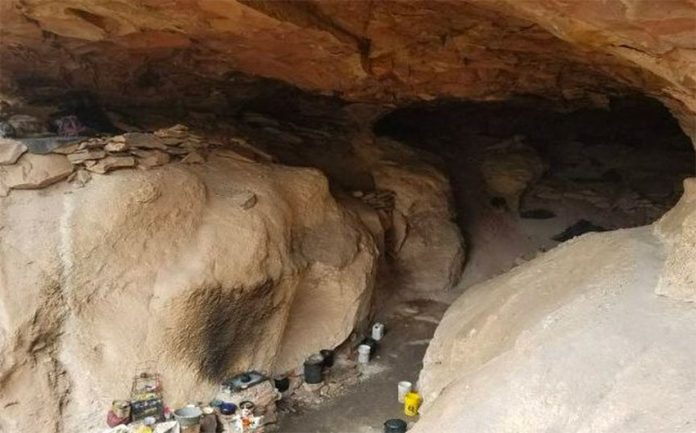
Inside La Cueva de los Monos after a tough hike.

The Sierra de Manantlán Biosphere Reserve, established by UNESCO in 1988, lies along the border of the Mexican states of Jalisco and Colima and includes cloud forests and deciduous, mesophytic and tropical forests within its boundaries.

It also includes hundreds of caves, almost all of them vertical pits.

Ninety-four of these caves are described in the book Las Cavernas de Cerro Grande by Carlos Lazcano, but only one of them was found to contain a notable number of formations such as stalactites and stalagmites. That cave, La Cueva de los Monos, is considered by some to be Jalisco’s most beautiful cave, but hard to reach.

This is the cave we had come to visit and below are a few notes on our expedition:

It’s 7:00am at Rancho El Zapote. The air is full of early-morning sounds. Loudest of all are the roosters that live only meters from my tent and have been trying to wake me up since 4:00am. Then come the chickens, a very large pig and dozens of loudly mooing cows, one of which wears a clanking bell, indicating that she is the leader of the herd. I guess it’s time to get out of my sleeping bag and into my caving pants.

On the trail to the cave.

Today we are going to visit La Cueva de los Monos (Cave of the Figurines), which can only be reached after a long, hard climb up a steep mountainside above the little town of Toxin, which is located 37 kilometers northwest of Colima city. The cave is so named, I understand, because local people claim they found artifacts inside.

Our group obviously considered a good breakfast the key to good caving, so it wasn’t until 10:20 that we finally headed up a north-trending trail which at first struck me as very friendly, after all the horror stories I had been told about the previous visit to this cave: “That climb was a killer,” said Mario Guerrero, leader of both our present trip and the preceding one, “because it was the hottest week of May, which is the hottest month of the year, and we hadn’t brought along nearly enough water.”

Now we were enjoying the relatively cool weather of November and we gained several hundred meters of altitude in a matter of minutes. The higher we rose, the more big, white, rocky outcrops we found along the way. “This is karst,” said a member of our expedition, Spanish geologist Isidoro Ortiz, pointing out the prickly surface, weathered by the rain, indicating that we were inside a calcite zone where beautiful caves were likely to be found.

“At this rate we’ll reach the cave in nothing flat,” I thought, but at that very moment our friendly trail came to an end at the edge of a cornfield. “¡Chin!” said Mario. “No sign of the trail anymore, but all we have to do is keep going north and we’re bound to find the cave.”

Well, the cornfield into which we plunged also happened to be home to billions of well-developed, ripe-for-traveling huizapoles (very prickly burrs) with which we were soon covered head to foot.

At last we got through the cursed cornfield and stopped under a huge ficus tree to pick the burrs off one another. After removing a million or so huizapoles from our clothing, we pushed our way into thick maleza (bush) higher than our heads. “¡Ay ay ay, uña de gato!” I heard someone yell up ahead. This is cat’s claw, just about the nastiest form of thorn you can find anywhere, as it is designed to grab you as you pass by and then tear your skin to shreds. We now had to proceed with great caution.

Lluvia Ramírez admires cave draperies.

It was about this point that our guide, Noé, son of our host at Rancho el Zapote, was forced to start swinging a machete in order to advance, further reducing our forward speed to that of a procession of turtles.

At last, dripping with sweat, well scratched by cat’s claw and covered with a new set of burrs, we arrived at the cave entrance. A crawl of four meters took us into a room so thickly decorated with stalactites, stalagmites and draperies that several hours of photography went by in what seemed like minutes. By the time the last of us crawled out into the sunlight, everyone else in the party was either sleeping or eating.

Well, the route that we had followed to get to the cave had been so unpleasant that we all breathed a sigh of relief when our guide Noé suggested we take a more direct and hopefully easier route back down the mountain.

And easier it was, at the beginning, with very little vegetation between well-separated outcrops of limestone. However, as the hillside grew steeper and the bush grew thicker, our old friends the burrs and cat’s claw reappeared and once again the machete was absolutely necessary for making the slightest progress.

Following this route, however, we had a whole new problem to deal with: the limestone had turned into heaps of sharply pointed rocky rubble which, like chunks of lava, were delicately piled one atop the other, offering the most treacherous footing imaginable.

We soon reached the point where we had only two hours left to get back to our truck before nightfall and at least a kilometer of nearly impenetrable bush to hack our way through. To make things worse, one member of our group, Ivan the biologist, was under attack from some sort of bug and suffering from all those unspeakable intestinal terrors usually reserved only for foreigners in Mexico.

The Sierra de Manantlán Biosphere Reserve.
The Sierra de Manantlán Biosphere Reserve. Elizabeth A. Olson

At last we tore ourselves away from that enticing hole and once again resumed our grim assault on the unforgiving mountainside. Dripping with sweat, disentangling ourselves from thorn bushes and dreaded cat’s claw, scratching some new, mysterious red welts which had suddenly appeared on our skin, and teetering on unstable chunks of prickly rock, we inched our way downward.

Several times we were on the brink of mutiny: “It will take us a year to get down this way; we have to go back up to the cave and return the way we came,” cried some voices.

[soliloquy id="67361"]

Noé, however, kept chopping away calmly and, lo and behold, one hour before sunset, we spotted the infamous huizapol cornfield! But now, oh how friendly and inviting it looked!

To make a long story short, we were soon back on our beloved trail and reached our truck with several minutes of daylight to spare. Was it worth it? Yes, indeed! In all my 33 years of exploring Jalisco’s caves, I haven’t seen another with so many beautiful decorations. So, wearing proper burr-and-thorn-proof clothes, I’d be ready to go back anytime!

The writer has lived near Guadalajara, Jalisco, for more than 30 years and is the author of A Guide to West Mexico’s Guachimontones and Surrounding Area and co-author of Outdoors in Western Mexico. More of his writing can be found on his website.

Inauguration ceremony for Chihuahua-Sinaloa natural gas pipeline

0
Pipeline is described as one of the most ambitious infrastructure projects in the world.

Energy infrastructure firm TransCanada Corp. officially opened a new 560-kilometer natural gas pipeline yesterday that runs between central Chihuahua and the Sinaloa coast.

The 20-billion-peso (US $1-billion) El Encino-Topolobampo pipeline crosses nine municipalities in Chihuahua and three in Sinaloa.

It will supply gas from Waha, Texas, to power plants and industrial and urban markets in the northeast of Mexico.

The 30-inch-diameter pipeline was first placed in service in July and has the capacity to provide 670 million cubic feet of natural gas per day.

More than 150,000 tonnes of steel were used for the project, on which 4,000 employees completed more than 22 million hours of work over a period of four and a half years.

Route of the El Encino-Topolobampo pipeline.

José Carlos Borunda, director of government affairs at TransCanada, said the project is one of the most innovative and ambitious infrastructure projects in the world.

The company faced demanding construction challenges due to the geography along the pipeline’s route, which includes the Tarahumara Sierra.

TransCanada also faced legal obstacles as indigenous groups challenged the project on environmental grounds.

At yesterday’s inauguration ceremony in the municipality of Bocoyna, Borunda said that the project would bring economic and social benefits to the municipalities it passes through.

TransCanada signed an agreement with the state government, pledging to invest 45 million pesos (US $2.2 million) to build 1,445 rainwater harvesting systems that will benefit residents in six Chihuahua municipalities.

Chihuahua Governor Javier Corral said that with the opening of the new project there are now 2,000 kilometers of gas pipelines that cross 29 municipalities in the state.

He acknowledged the importance of investment in the energy sector for the state’s economy and stressed that the government would continue to work to foster investor confidence in order to attract more infrastructure projects, including those in the renewable energy and tourism industries.

Source: El Financiero (sp) 

Hotels expect Christmas holiday season will be the best in 10 years

0
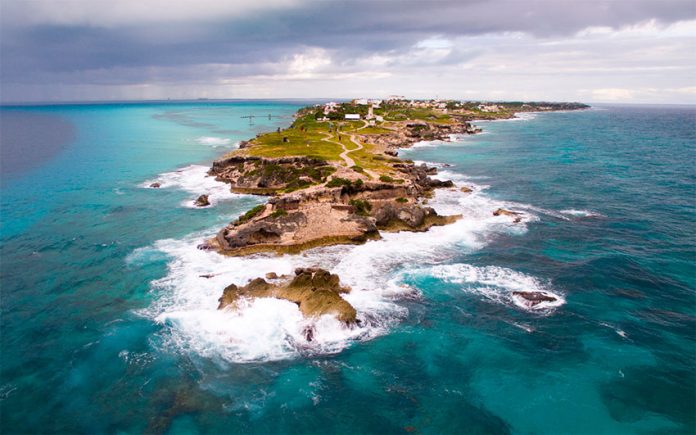
Expect the beaches to be crowded soon.

The hotel sector is expecting average occupancy of 70% during the Christmas vacation season, which would be the highest level in the past decade.

The forecast comes from the Mexican Association of Hotels and Motels (AMHM) whose president, Rafael García, said that occupancy in the winter period last year was just 59%, with the September 2017 earthquakes and United States travel alerts both contributing to the low rate.

But this year is expected to be different.

Hotels in destinations such as Cancún, coastal Nayarit, Ixtapa-Zihuatanejo and Acapulco are predicting even higher occupancy rates — 85% and 90% in the holiday season, while for New Year’s they expect to be full.

“Occupation will increase from December 20 when school holidays start and continue until January 6, but the best [period] is the end of the year when a 100% occupancy rate is expected at the beach. Already, there are very few spaces left,” García said.

Hotel occupancy in Mexico’s three largest cities – Mexico City, Guadalajara and Monterrey – over the same period is forecast to be slightly lower than the national average at 65%.

Santiago Mayoral, corporate finance vice-president at City Express Hotels, told the newspaper El Financiero that fewer business trips are made during the winter break.

Although foreign visitor arrivals remain strong, eight of every 10 visitors to Mexican destinations during the upcoming holidays will be domestic tourists, according to the AMHM.

A weak peso, currently hovering at just over 20 to the US dollar, is a significant factor for many Mexicans in deciding to vacation at home rather than abroad.

However, for foreigners, the weak peso is an added incentive to travel to Mexico and a growing number of flights into and out of the country are also helping to boost international tourism.

Tourism Secretary Miguel Torruco said last week that more than 42 million foreign tourists are expected to have visited Mexico in 2018 by the end of the year, a figure that would represent 8% growth on 2017 numbers.

Beyond the hotel sector, booking websites, airlines and the timeshare industry are also expecting a strong winter holiday period.

Ana Acevedo, Latin America vice-president for development at timeshare company RCI, said that vacation clubs in Mexico are expecting 80% occupancy over the break.

“Timeshares generate higher occupancy of between 10% and 15% above traditional hotels,” Acevedo said, explaining “the average stay is longer . . . timeshare owners stay on average seven nights.”

Cancún, the Riviera Maya, Los Cabos, Puerto Vallarta and Mazatlán account for the greatest number of vacation properties but San Miguel de Allende in Guanajuato and Valle de Guadalupe in Baja California are attracting a growing number of holiday house owners.

Booking website despegar.com and the low-cost airline Viva Aerobus both told El Financiero that they expected an upturn in business over the Christmas-New Year period.

The latter will open seven new seasonal routes including three that will connect Mexican cities to destinations in the United States.

Source: El Financiero (sp) 

Travelers will avoid Mexico City, warns Air Transport Association

0
Airline association has doubts about the Mexico City airport plan.
Airline association has doubts about the Mexico City airport plan that will replace the cancelled airport project (pictured).

Air travelers will avoid Mexico City due to the cancellation of the new airport project, the International Air Transport Association (IATA) has warned.

President López Obrador confirmed in late October that the US $13-billion project at Texcoco, México state, would be scrapped following a public consultation which found 70% support to drop it.

Instead, the Santa Lucía Air Force Base in México state will be converted for commercial use and the existing Mexico City airport will be upgraded.

That means that passengers could face the prospect of traveling 46 kilometers from one terminal to the other to catch a connecting flight.

Speaking yesterday at the IATA global media day in Geneva, Switzerland, the association’s vice-president in the Americas, Peter Cerdá, described that proposition as “extremely complicated.”

He also said that airlines could be dissuaded from operating in Mexico as a result of the cancellation decision.

“Mexico City is the second most important economy in the region, it’s a key point for transfers and connections, [the cancellation of the airport] will be a serious problem. A lot of passengers connect there but now they’ll go to Miami, Houston and Dallas and they’ll avoid Mexico. Hubs like Panama and the United States will take advantage of the limitations,” Cerdá said.

He added that it was still unclear how the existing Mexico City airport, the air force base and the Toluca airport would function simultaneously to serve air travelers to the capital.

“We need to . . . evaluate the efficiency of the project so that airlines can take decisions. It’s been said that [the Santa Lucía base] will be ready in three years, although to us that seems very ambitious . . .” Cerdá said.

After the cancellation of the airport project was announced by López Obrador on October 29, Cerdá said that the decision would cost the Mexican economy US $20 billion annually and 200,000 jobs.

The decision was also slammed by Mexico’s private sector, including Mexican Employers Federation (Coparmex) president Gustavo de Hoyos who called the cancellation “the biggest waste of public resources in the history of the country.”

The new government, which took office on December 1, has been left with the task of appeasing airport contractors and investors.

While López Obrador said last month that companies that have been building the new airport would not take legal action against his government, reaching a deal with investors has so far proven more difficult.

Bondholders yesterday rejected a buyback offer for the second time in as many weeks, contending that the government’s sweetening of the deal didn’t go far enough.

Cerdá said yesterday that the IATA would hold a summit with airline chiefs on February 28 to discuss the future of Mexican aviation. The economic impact of the airport cancellation on both Mexico and the wider region will be a key focus, he added.

“We’ll invite the different secretariats and officials so that the Mexican government has a prominent role at the meeting. We’re seriously concerned about the future of the Mexican aviation industry because of its lack of infrastructure, capacity and the saturation of air space . . .”

Source: El Economista (sp)

Mexico City tops growth in interest for Christmas destinations

0
CDMX a popular Christmas holiday destination.

Mexico City ranks No. 1 on a list of Christmas holiday destinations that have seen the highest growth in interest and bookings this year on the online hospitality service Airbnb.

Out of all the world’s destinations Mexico City recorded a 117% growth based on reservations, searches and the number of site visitors who added it to their wish list.

The capital was not alone on the list of the top 10. Puerto Vallarta ranked third with 92% more interest, while Tulum, Quintana Roo, was fourth with 78% more.

A search conducted by the newspaper El Financiero found that Airbnb lodging rates in the country’s capital range from 400 to 4,200 pesos (US $20 to 210) per person per night.

Hosts offer travel experiences that include tours of the Teotihuacán pyramids, dining on tacos al pastor, mezcal tastings and bar hopping in the borough of Coyoacán and the districts of Polanco and Condesa.

The online service also compiled a list of trending destinations to visit in 2019 and put the city of Puebla, in the state of the same name, in third place. This list too was based on various criteria and comes out as a compilation that skews heavily towards off-the-beaten-path towns and regions.

Airbnb says the list reflects travelers’ increasing focus on sustainable and authentic tourism and helping communities recover from hardships or disasters.

Puebla’s principal attractions for travelers were its museums, culinary hotspots and distinct architecture.

Airbnb explained that the destination “provides a unique alternative to the typical Mexican beach vacation and trip to the capital city, and we’ve seen tremendous inbound growth and wanderlust despite 2017’s earthquake.”

Source: El Financiero (sp) Forbes (en)

Querétaro leads Bajío region with salaries up 7.5% in 2018

0
On the left, states with the highest daily salaries. Those on the right are at the bottom of the scale.

Salaries in the state of Querétaro increased by 7.5% in 2018, according to a review of collective labor agreements at 330 companies.

The pay rise is the highest of any state in the Bajío region this year, state Labor Secretary José Luis Aguilera Rico said.

“. . . With an average 7.5% [increase] in salaries and benefits . . . We can say that it is a good result for the state, that we’re in first place in the Bajío and that generates a lot of investor confidence. In states such as Guanajuato, Aguascalientes and San Luis Potosí, we’re talking about [an increase] of under 6%,” he said.

Aguilera explained that the revision of 330 contracts, conducted by the secretariat he heads, met the state government’s review target and represented a 32% increase on the number of agreements assessed in 2017.

“The goal last year was [to review] the collective agreements of 250 companies; the truth is that we’re ending the year at 100% of the goal,” he said.

The secretary also said there had been no work stoppages in the state this year and that the goal to create 30,000 new jobs was exceeded.

“It gave us a lot of confidence that in spite of the elections [and] the turbulence that was speculated about, Querétaro came out with 7,600 more jobs [to the end of October] than the goal of 30,000. Querétaro surpassed the goal. There was speculation that the change of president . . . [would] stop [the creation of] jobs but Querétaro continued to make progress,” Aguilera said.

He highlighted that Querétaro is in second place nationally in terms of job creation and that employment is more stable than in tourism-oriented states which often feature at the top of the list.

“We create stable employment, unlike Quintana Roo or Baja California Sur, where because of tourism their [job creation statistics] are very high but the vacation period ends and they’re left without a job,” Aguilera said.

Querétaro is the hub of Mexico’s growing aerospace industry and has also attracted investment from automotive companies such as Continental AG, which opened a research and development center in the state earlier this year.

In October, daily wages of its workers with IMSS social security insurance – at 396 pesos (US $19.50) – was the third highest in Mexico behind only Mexico City and Campeche, official statistics show.

Querétaro’s GDP expanded by 3.92% last year, making it the 10th fast growing economy in Mexico.

Source: El Economista (sp) 

New self-defense forces surface in Guerrero coastal region

0
Self-defense militia on the move in Guerrero.

Two new self-defense forces have emerged in two municipalities in the Costa Grande region of Guerrero in response to ongoing violence and insecurity while another may soon be required in a third municipality.

On Monday, a group supported by the Union of Peoples and Organizations of Guerrero (Upoeg) took over security in the municipality of Petatlán by occupying municipal police headquarters and assuming control.

Yesterday, an unrelated self-defense militia force announced itself in nearby El Llano, Tecpan.

“. . . we are prepared to defend ourselves once more from any external threat posed by the presence of criminal groups that have overcome the state government,” it said in a statement.

The state Public Security Secretariat has counted at least eight active criminal organizations operating in the Costa Grande region: the Rodríguez, the Granados, Guardia Guerrerense, Sangre Nueva Guerrerense, the Knights Templar, the Viagras, the Cornudos and the Jalisco New Generation Cartel.

The Costa Grande region extends from Acapulco to the Michoacán border.

The state government says there are 23 self-defense groups operating in over 60% of state territory.

Atoyac, meanwhile, has no self-defense force but its municipal police have gone on strike over unpaid salaries.

The officers have also denounced Mayor Yanelly Hernández Martínez for making unauthorized deductions to their salaries and accused the police chief of violating their labor rights.

Source: La Voz de Michoacán (sp)

Canadian woman’s companion chief suspect in her death

0
Bergeron and St-Onge.

Authorities in Baja California Sur said the traveling companion of a Canadian woman who disappeared December 4 in Los Cabos is the chief suspect in her death.

The body of Christine St-Onge, 41, was found yesterday near the hotel in which she was staying, said the state Attorney General’s office.

The discovery was made after evidence of extreme domestic violence was found in the hotel room where she was staying with another Canadian, 53-year-old Pierre Bergeron.

He had returned to Canada alone on December 5, one day prior to the couple’s scheduled return. He had St-Onge’s ticket in his possession but was carrying no luggage.

Bergeron committed suicide the following day, according to Canadian authorities.

In Mexico, authorities said St-Onge died as a result of cranial trauma and had been dead about five days. Blood stains were found in the hotel room.

Police in Canada said an autopsy would have to be performed to confirm that the remains are those of the Laval, Quebec, woman.

The two had traveled to Mexico on November 29.

Source: Peninsular Digital (sp), Montreal Gazette (en)

López Obrador, Trump chat by phone on migration, job creation

0
López Obrador said at this morning's press conference that the border wall has never come up in talks with US President Trump.

President López Obrador discussed migration and job creation in Mexico and Central America during a telephone call yesterday with United States President Donald Trump.

“In respectful and friendly terms, we spoke about the migration issue and the possibility of implementing a joint program of development and job creation in Central America and our country,” López Obrador wrote on his Twitter account.

The conversation between the two presidents followed an announcement by Foreign Affairs Secretary Marcelo Ebrard earlier this week that Mexico will invest more than US $30 billion over the next five years on a Comprehensive Development Plan with Guatemala, Honduras and El Salvador aimed at curbing migration to the United States.

López Obrador has called on the United States to contribute to the plan, which Ebrard said last month would need to be on the scale of the Marshall Plan that rebuilt western Europe after World War II.

Thousands of Central American migrants have entered Mexico in large groups known as caravans over the past two months to travel to Mexico’s northern border and seek asylum in the United States.

Several thousand are now stranded in Tijuana and other border cities, where many will face a frustratingly long wait for the opportunity to plead their case for protection to United States authorities.

A growing number of migrants are crossing or attempting to cross the border illegally to hand themselves over to U.S. border agents and thus expedite the asylum request process.

Trump has described the caravans as an “invasion” and frequently urged Mexico to do more to stop them from reaching the border.

Interior Secretary Olga Sánchez said yesterday that the government will stop illegal entries at Mexico’s southern border with Guatemala but gave no detail about how it would achieve it.

“In the south there will be only one entry, on the bridge,” she said. “Anyone who wants to enter illegally, we are going to say: ‘Get in line and you can enter our country.”

In spite of the contentious migration issue and their position on opposite sides of the political spectrum, the relationship between López Obrador and Trump has been mostly cordial.

Two days after his swearing-in on December 1, Trump congratulated López Obrador in a Twitter message and declared that “we will work well together for many years to come!”

Mexico’s first leftist president in a generation has stressed the importance of the relationship with the United States and said that he wants to maintain respectful dialogue.

Neither the United States president nor the White House commented on yesterday’s telephone conversation but Trump returned to Twitter this morning to comment on the issue that has come to characterize the strained relations with Mexico during his administration.

“I often stated, ‘One way or the other, Mexico is going to pay for the Wall.’ This has never changed. Our new [trade] deal with Mexico (and Canada), the USMCA, is so much better than the old, very costly & anti-USA NAFTA deal, that just by the money we save, MEXICO IS PAYING FOR THE WALL!” he wrote.

At his daily press conference this morning, López Obrador said he has never spoken to Trump about the border wall issue.

He echoed the sentiment in his Twitter message yesterday, stating that his conversation with the U.S. president was “good” and “friendly” and stressing his intent to maintain a relationship of respect.

López Obrador also said that Trump had invited him to Washington and that there was a possibility he would go but added that “there must be a motive” for any meeting.

Source: Associated Press (en), Milenio (sp) 

Government sweetens offer to airport investors but to no avail

0
The cancelled airport project.

The federal government sweetened its buyback offer this week for bonds issued for the cancelled Mexico City airport project but investors once again rejected it, although they said it was an improvement on last week’s proposal.

The Secretariat of Finance presented the new offer Tuesday, increasing the repurchase price for US $1.8 billion in bonds from US $900 for US $1,000 invested to an even US $1,000 plus accrued and unpaid interest.

It also said that a consent payment would be made to investors who agree to the deal by December 19.

The offer, which closes on January 4, also added a new default trigger if any new airport begins operations within a 70-kilometer radius of Mexico City’s existing airport.

The offer was well received by bond markets with the US $3-billion bond due in 2047 spiking to as high as 93 cents to the dollar yesterday compared to 83 cents after the original December 3 offer.

But an ad hoc group representing holders of bonds worth more than half the US $6 billion in debt issued by the Mexico City Airport Trust (MexCAT) to partially fund the now-scrapped US $13-billion project said in a statement yesterday that while “the amended proposal makes incremental improvements, fundamental problems . . . .”

It also objected to a new timetable that is half that of the original proposal issued on December 3, suggesting that the early-tender deadline should be extended to at least December 21.

The group, represented by international law firm Hogan Lovells, claimed that it was not consulted on the amended offer.

President López Obrador confirmed at the end of October that the airport project at Texcoco, México state, would be scrapped after a four-day public consultation found 70% support to kill it.

Instead, the Santa Lucía Airforce Base in México state is to be converted for commercial aviation use and the existing Mexico City airport and that in Toluca will be upgraded.

Deputy finance secretary Arturo Herrera told reporters after this week’s offer was made that the bonds were to be repaid via funds collected in passenger taxes and that the default clause was designed to ensure that there would be enough passenger revenue to do so even with a multi-airport system in operation.

But the ad hoc group of bondholders said that the new proposal’s terms “are insufficient to compensate for the reduction or complete elimination of passenger volume at the [Mexico City] Benito Juárez airport to be expected over time as a result of the opening of such alternative airports.”

It argued that without “additional collateral (such as from alternative airports or otherwise) to compensate for the removal of the originally agreed Texcoco collateral protection, bondholders remain without effective substitute sources of payment.”

The statement concluded by saying that “the Ad Hoc Bondholder Group, consisting of a group of large international investment institutions, still desires, and looks forward to, discussing its concerns and proposed resolutions with MexCAT.”

Mario Castro, an economist and vice-president at Nomura Securities, said “the new deal shows a willingness to negotiate by the Mexican government and will likely prevent a further deterioration of sentiment, but it doesn’t fix the damage that was done by the initial cancellation of the airport.”

Source: El Financiero (sp), Financial Times (en)