Home Blog Page 1975

University of California grad dies after lethal mix of alcohol, eye drops

0
The law school grad police say might have been poisoned.

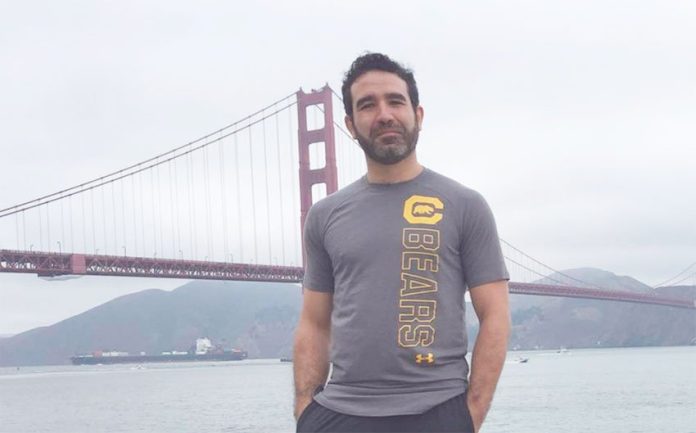
A recent graduate of the University of California Law School was found dead last weekend in the Nápoles neighborhood of Mexico City after ingesting a mixture of alcohol and cyclopentolate, a drug commonly used in eye drops, in what police say could have been an attempted robbery.

Mexico City native Pablo González Kúsulas had returned home three weeks ago after finishing a degree in Berkeley with a specialty in energy law. His family says that on Friday night he and a friend went to Palmas Karaoke in Lomas de Chapultepec.

González left the bar in a car around 4:00am Saturday with unknown subjects, who later removed his body from the car and abandoned it around 4:50 in Nápoles.

An autopsy determined that the cause of death was a mixture of alcohol and cyclopentolate.

Mexico City police told the newspaper Milenio that the case has similarities to those involving criminal groups called goteras, which are made up of women who slip eye drops into their victims’ drinks with the intention of knocking them out and robbing them. However, sometimes the mixture can be deadly, as was the case with González.

But his family is not convinced about the cause of death. Rodrigo Gurza, a lawyer for the family, told Imagen Noticias that there is no clear evidence that González was a victim of the goteras.

“It’s not fair that the prosecutors . . . are getting in the way of the investigation by making false statements and affirming things that there is no proof of, because toxicology and pathology tests take longer than three days,” he said.

“They are defaming a dead person, a Mexican citizen who was killed because of the insecurity that exists in this country and the failure of the government of Mexico City to provide security and justice.”

Source: Milenio (sp), Excelsior (sp)

Money and social class: the implications of being among top 5% of earners

0
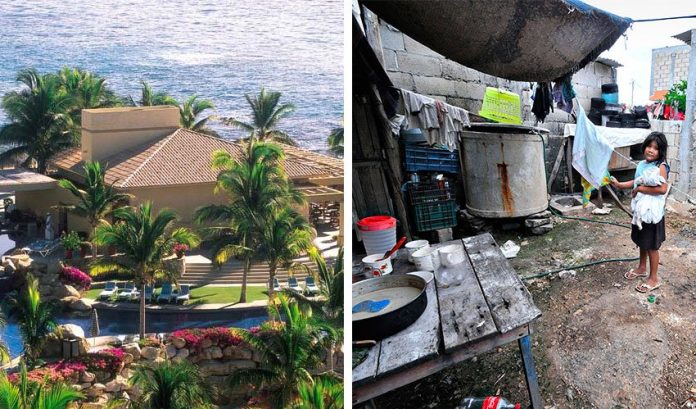
Contrasts in Los Cabos.

When it comes to money and social class, I’m never really sure where I fit in here. I grew up in a somewhat uncommon situation, with well-educated parents who, for the most part, lived paycheck to paycheck for the duration of my childhood.

My grandmother paid for some of the traditional markers of the upper-middle class like braces and ballet classes, but I didn’t learn to drive until I was almost 20: the $100 needed for driver’s ed class was always needed for something more pressing, and I didn’t want to ask my rich uncle (whose trust fund was the reason I was able to go to college).

There was one summer when my mom had lost her job that we ate once or twice a day and relied heavily on the charity of friends and church members before she found something in another city, where we promptly moved.

These aren’t complaints — I had wonderful parents and consider myself to have had a happy and loving childhood. But it’s made for a rather confusing identity when it comes to socio-economic status, especially living now in a country with a quite different system where I’m suddenly in a very different space financially than I’m used to.

Here in Mexico, I’m rich. Not rich rich, but relatively rich compared to most of the population. This doesn’t mean that we never struggle with money problems, but even if it’s somewhat precarious (like many people’s incomes are these days), I live very well compared to how I’d live in the U.S. on the same income. There, I’d be in the bottom 35% of all earners; here, I’m in the top 5%.

Plenty of my paisanos have figured this out too, and the largest “feeder country” of immigrants to Mexico by far is the United States. I feel certain that if more people in the U.S.  understood what things were really like down here, that number would be much higher (hey, thanks, fear-mongering news coverage!)

All that said, I can’t help but feel pangs of guilt and whatever the opposite of entitlement is as I see my Mexican friends with similar and greater education, talent and work ethic struggle and hustle to make even half of what I do.

Going to places like San Miguel de Allende, where gringos have been both a boon to the local economy and simultaneously a driver of sky-rocketing housing prices, puts me in an uncomfortable state of mind. Many local economies depend on us, and many hard-working people in those places are priced out of certain luxuries they might otherwise be able to afford as a result of those higher prices.

I found Los Cabos to be a particularly shocking example: opulent wealth of a mostly foreign population on one end, and stagnating poverty on the other, with a very small bilingual merchant middle class between them.

The differences in color were impossible to ignore: for the most part, it was dark brown people serving mostly white people who didn’t speak Spanish. My friend’s husband, who is Mexican and fairly light-skinned (at least in his native Veracruz), was continually being offered tours for “his clients” — my friend and I — as we wondered around an artisans’ market (he’s a highly-respected doctor).

When we spoke Spanish, no one there guessed that we were American, because no one expected Americans to speak Spanish.

I’m not trying to blame my fellow expats; most from the U.S. and Canada that I’ve met down here are lovely, well-meaning people. And of course, the wide gap between the rich and poor is not a new problem, and is certainly not unique to Mexico.

Most foreigners here that I know go out of their way to be fair and kind to those that serve them (dare I say, in a way that’s much more obvious than their similarly-moneyed domestic counterparts).

But the question we need to consistently reflect on is this: what is fair? Is there a way to counteract the latent functions of a booming tourist industry with low-wage workers that provide so many aspects of what for most of us is an extremely privileged life?

When a taxi driver or an artisan purposefully overcharges me, I often wonder if there’s an element of cosmic justice in it. If someone gets 20 extra pesos out of me that make a difference for them but not really for me, is it something I should bother fighting on principle, or let go?

These aren’t questions I have the answers to, and the oceanic force of the globalization of markets is obviously not something we as individuals have much control over. But as drops in the ocean I often wonder: what are our responsibilities as good immigrants to a system that unfairly favors us on a number of fronts?

When people ask me for specific phrases in Spanish, I usually tell them the most polite version possible. I believe it’s important to always risk being too polite rather than too casual, and I think this is a good rule of thumb for immigrants in general.

How can we do this? First, for goodness’ sake, learn Spanish. Don’t “jump the line,” literally or metaphorically, just because you can and people let you. Try to keep most of your complaints about Mexico to yourself, or at least out of earshot of your hosts. Make local friends and join in community events. Support local business that don’t just cater to tourists.

As immigrants all over the world will tell you, we become automatic representatives for everyone from our respective countries. We can’t always alleviate the built-in injustices inherent in our privileged positions, but we can at least be gracious and grateful.

Sarah DeVries writes from her home in Xalapa, Veracruz.

Forces have no orders to detain migrants, AMLO says, after photos create a stir

0
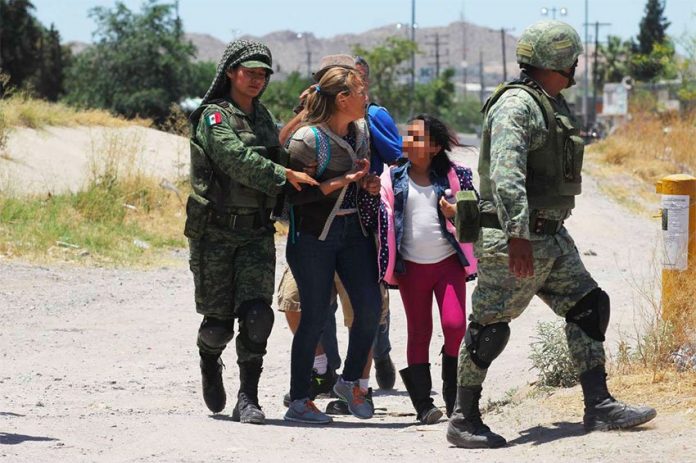
Soldiers detain migrants at northern border Friday but president says they have no orders to do so.

Federal security forces deployed to the northern border have no orders to detain migrants, President López Obrador said yesterday.

The president’s assertion came in response to questioning over photographs published by the news agency AFP that show heavily armed National Guard troops stopping two migrant women and a girl from crossing the border into the United States from Ciudad Juárez, Chihuahua.

Under international law, migrants have the right to cross borders to seek asylum, and Mexico had not typically prevented them from doing so at the border with the United States.

Speaking at his daily press conference, López Obrador denied that the National Guard or the army have been issued with orders to arrest migrants trying to cross the northern border.

“No such order has been issued, and we are going to review that case, so that it doesn’t happen again, because that’s not our job,” he said.

Defense Secretary Sandoval said forces are detaining migrants, but president says they have no orders to do so.
Defense Secretary Sandoval said forces are detaining migrants, contradicting the president.

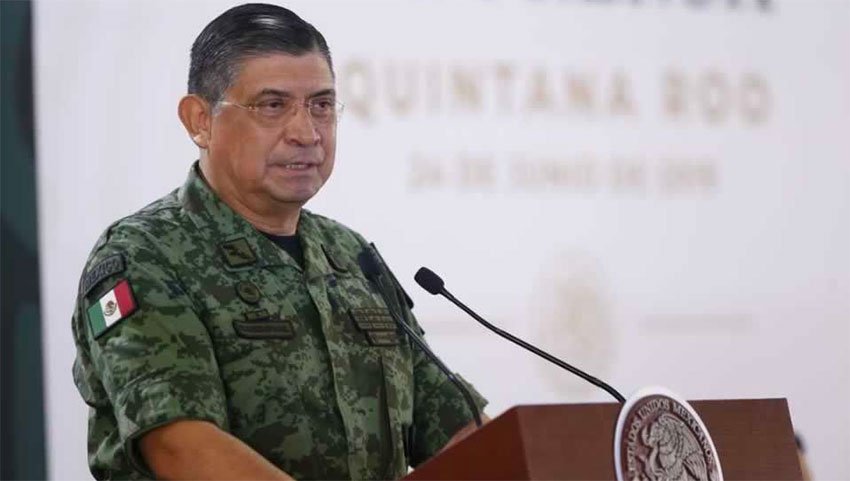
The president’s statement contradicts remarks made Monday by National Defense Secretary Luis Cresencio Sandoval, who said that almost 15,000 troops have been deployed to the northern border and that they are detaining migrants.

Members of the National Guard who spoke to AFP in Ciudad Juárez on Monday confirmed that their superiors had given them orders to stop migrants attempting to cross into the United States.

“They tell us we’re not detaining enough, that migration levels are the same,” one guardsman said.

“When they saw the photo [of the migrant detention], they told us we can’t touch the migrants. But at the same time, they order us to detain them and produce results,” he added.

Another National Guard member told AFP that migrants sometimes cry and beg to be released after they have been arrested.

“But I can’t do that. They’ll punish me if I do that. I have to [detain them] to do my job, to finish my deployment here and see my family again soon.”

Mexico has stepped up enforcement against undocumented migrants after reaching an agreement with the United States on June 7 that ended President Donald Trump’s threat to impose escalating tariffs on all Mexican goods.

If 45 days after the deal was signed the United States decides that measures to stem migration are not achieving the desired results, Mexico will take “all necessary steps under domestic law” to implement a safe third country agreement, according to a supplementary agreement between the two countries.

With the aim of achieving the results sought by the United States and thereby avoiding the enactment of the appended pact as well as the possibility of the reinstatement of the suspended tariffs, the government last week completed a deployment of 6,000 National Guard troops to the southern border, a strategy that recent polls show has strong support.

However, using the new security force to stem migration, a function that is incongruent with the purpose for which it was created — to fight violent crime – has drawn criticism.

“What’s happening in terms of migration policy is a disgrace – the absence of a plan, the improvisation, the lack of a strategy,” researcher Javier Urbano of the Iberoamerican University told AFP.

The academic charged that using the National Guard to enforce immigration policies will only push migrants to seek “more dangerous, more remote routes,” creating a scenario in which human traffickers will find greater demand for their services.

Source: AFP (en) 

Highway shut down to protest shortage of medical services

0
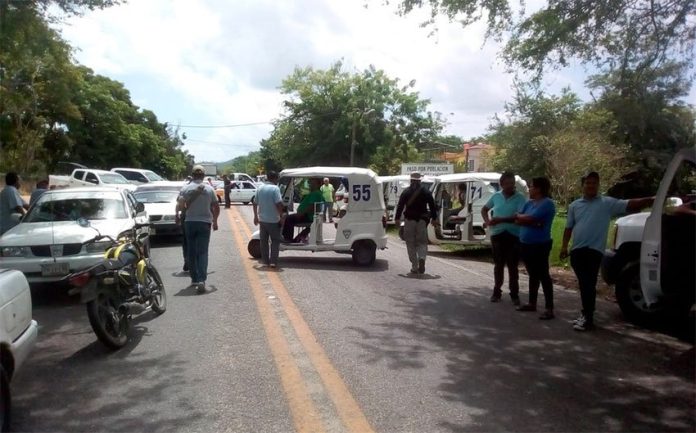
Highway blockade protests shortage of doctors, medications.

Close to 100 protesters set up a blockade of the Acapulco-Chilpancingo highway in Guerrero early Tuesday morning to demand the return of normal medical services in their community.

Residents of Xaltianguis and community police gathered at 9:30 am to seal off the major highway’s access through the town, part of the municipality of Acapulco, using mototaxis, taxis, police vans and personal vehicles.

The spokesperson for a community group said that although the town’s medical facilities are adequate, there are not enough doctors to meet the community’s needs. Daniel Adame Pompa also complained that the municipal director of health, Agustín Flores, has not visited the community for several weeks and has not responded to repeated requests for a meeting.

“We don’t have medical attention like we did before; seven years ago there were even two shifts [at the medical clinic] and we had medical attention, but that has all disappeared now, and we want them to tell us why . . . . We’re not asking for anything new; we’re asking them to observe what we once had, but no one wants to give us an answer.”

Another community leader, Primo Chávez Morales, said the community also lacks medications.

“If the people are currently blocking the highway, it is because we need them to stock the hospital with all of the different medicines we need. The town has many inhabitants, which is why the number of medical consultations has increased. We also need specialists so that patients can receive proper treatment.”

He added that Xaltianguis needs at least five doctors to be able to adequately attend the town’s population of 25,000.

Adame said the town previously received additional aid that the municipal government abruptly stopped when residents formed their own citizens’ defense group.

The spokesperson said the blockade would continue until Flores agreed to meet with community leaders. He also demanded the health director’s resignation for his failure to attend to the public’s needs.

Behind him, Adame’s demand was echoed on handwritten signs held by frustrated residents while vehicles continued to arrive at the growing line at the entrance to the town.

Source: Milenio (sp), Quadratín Guerrero (sp), El Sol de Acapulco (sp)

Another stray bullet kills a child while en route to school

0
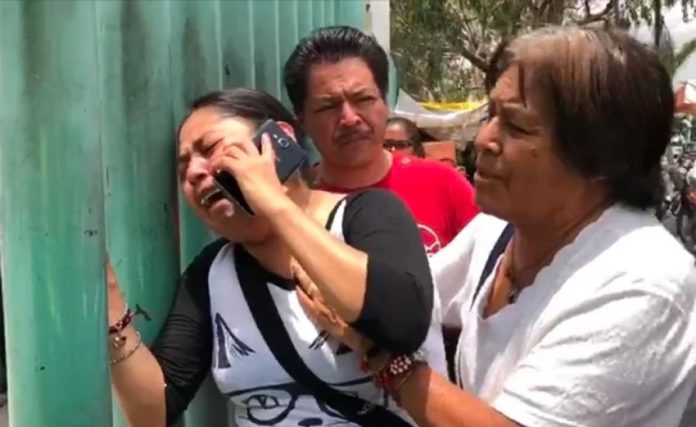
The mother of the eight-year-old victim of a stray bullet.

Another child has died in a drive-by shooting, this time in Nezahualcóyotl, México state, part of the greater Mexico City metropolitan area.

The incident happened yesterday morning just before 8:00am, when classes start at the Manuel Hinojosa primary school in the Virgencitas neighborhood.

Eight-year-old Lenin was walking to school with his parents when two men opened fire from a motorcycle. Their target was a 27-year-old man who died on the spot.

The boy was rushed to hospital, but died a few hours after the shooting.

Thursday would have been Lenin’s last day in fourth grade and he was looking forward to spending his summer vacation in Aguascalientes, relatives said.

The shooters fled the scene of the crime and remain at large, but Lenin’s family is demanding their arrest.

A six-year-old girl was killed last week in a similar attack in Ciudad Juárez, Chihuahua.

Source: El Universal (sp)

2 dead, thousands of homes flooded in Reynosa rain storm

0
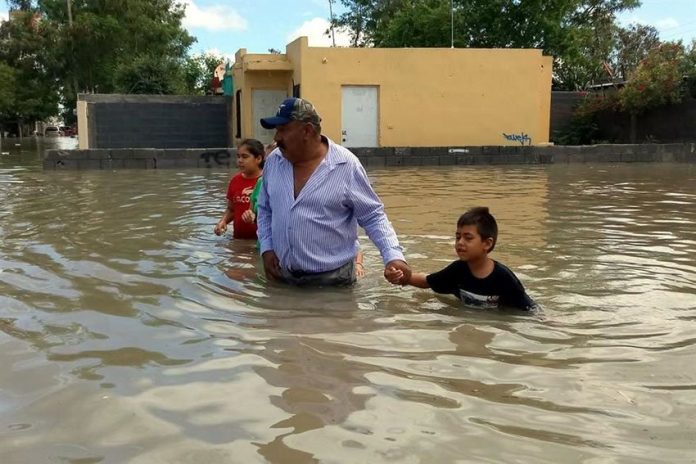
Floodwaters in Reynosa.

The toll from a rainstorm that hit the city of Reynosa on Monday night is two deaths and 57 flooded neighborhoods, authorities say.

The intense rains flooded thousands of homes across the Tamaulipas border city, and in some places floodwaters were over a meter and a half deep.

United States authorities had warned that the storm could affect cities in the Río Grande Valley. But Mexico’s National Meteorological Service had only forecast moderate to intense rains.

As the water began to rise, the army responded to rescue people from their homes. A total of 92 people were taken to temporary shelters set up in the municipal auditorium, the stadium and the Rodhe campus of the Autonomous University of Tamaulipas.

The rains also damaged Reynosa’s electrical grid, leaving 100,000 people without power for 12 hours.

Reynosa: Bajo Emergencia

Governor Francisco Javier García Cabeza de Vaca said that municipal governments need to take measures to prevent similar flooding from happening again.

“When the hurricane season started, we were working with Civil Defense in the state, and they recommended that every municipal government should work on preventative measures, especially cleaning out drains,” he said. “Because when drains are full of trash, the water level rises, and it leads to flooding.”

Source: El Universal (sp), El Mañana (sp)

Some vehicles were almost completely submerged after Monday's storm.
Some vehicles were almost completely submerged after Monday’s storm.

Senior Morena lawmaker slams ‘unacceptable’ migrant policy

0
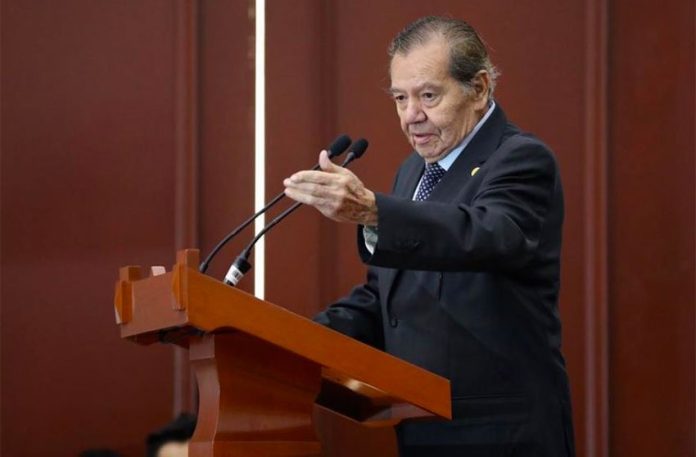
Morena party Deputy Muñoz.

A senior lawmaker with the ruling Morena party has slammed the government’s strict enforcement of immigration policy, describing it as “unacceptable” and unconstitutional and declaring that the approach must change.

In an interview with the newspaper Milenio, Porfirio Muñoz Ledo, president of the lower house of Congress, said the deployment of federal forces to both the southern and northern borders to contain the flow of migrants – “in obedience” to United States President Donald Trump’s requests – is a flagrant violation of the constitution.

“What’s happening in the country is unacceptable . . . you can’t hand over human flesh because of pressure from the great power [the United States] . . .” he said.

The lawmaker argued that the anti-migration operations of the National Guard and the army violate Article 11 of the constitution of Mexico, which states that “everyone has the right to enter and leave the republic, to travel through its territory and to change his residence without necessity of a letter of security, passport, safe-conduct or any other similar requirement.”

Article 11 continues: “The exercise of this right shall be subordinated to the powers of the judiciary, in cases of civil or criminal liability, and to those of the administrative authorities insofar as concerns the limitations imposed by the laws regarding emigration, immigration and public health of the country, or in regard to undesirable aliens resident in the country.”

Muñoz said that migrants can seek legal protection of their constitutional right by filing requests for injunctions that, if granted, would preclude their arrest by security forces or immigration authorities as they travel through the country.

To that end, he said, migrant advocacy organizations have begun distributing a standardized form that migrants can use to file such requests, copies of which are circulating on social networks.

“Of course, that’s the solution, because the act [of arresting migrants] is unconstitutional. Migrants can be [legally] protected. . .” he said.

Mexico has adopted a tougher approach to dealing with undocumented migrants after reaching an agreement with the United States on June 7 that ended President Trump’s threat to impose escalating tariffs on all Mexican goods.

The government committed to sending 6,000 National Guard troops to the southern border, a deployment that Foreign Secretary Marcelo Ebrard said was completed on Friday, and migrants have been arrested in several states in recent days including the southern state of Chiapas.

National Defense Secretary Luis Cresencio Sandoval said Monday that almost 15,000 federal security force members have been deployed to the northern border, where he confirmed that migrants trying to cross illegally into the United States are being detained, although President López Obrador said yesterday that troops have no orders to do so.

“This policy has to change,” Muñoz declared. “Something very serious could happen. I read the newspaper this morning and the army has already arrived in the north and the south. How far will we go?”

The Chamber of Deputies president said that in speaking out against the hardline approach to dealing with migrants his intention is not to tell the government what to do but rather to follow his moral instinct.

“I’m not calling on anyone to rectify [the situation] because I’m not anyone’s teacher and because everyone has their responsibility. As a Mexican, I have the obligation to condemn the acts. I’ve worked too many years on immigration matters to keep quiet today,” Muñoz said.

He also charged that his opposition to the strict migration policy enforcement is in defense of the national interest, stating “politician is spelt today with a P as in patriot.”

Over the last six or seven decades, Muñoz said, Mexico has had a humanitarian immigration policy and has been a country where the persecuted have found asylum.

But the government has now abandoned that time-honored approach at the behest of the United States president, the lawmaker charged.

“. . . Trump is showing that he has Mexico in a little cage . . .”

Source: Milenio (sp) 

Mérida airport move considered so as to connect it with Maya Train station

0
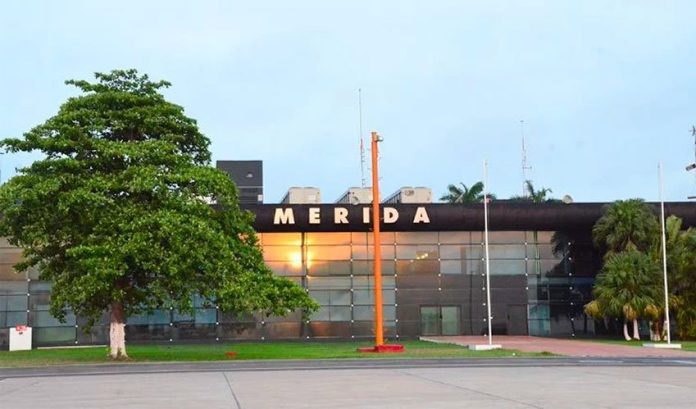
Mérida's airport could be relocated to the south of the city.

Relocation of the Mérida, Yucatán, airport in order to simplify connections with the Maya Train is under consideration by the National Tourism Promotion Fund (Fonatur).

Fund director Rogelio Jiménez Pons said Mérida International Airport would be moved to the southern part of the city so that it will be accessible by a stop on the new passenger train.

Jiménez made the announcement on Tuesday at the third annual Sustainable and Social Tourism Summit in Cancún. He said the new airport would not add any costs to the train project because it would be financed by private real estate companies, with Fonatur only acting as manager.

Jiménez noted that the airport move is still only a proposal, and that Yucatán Governor Mauricio Vila Dosal will have the final say on whether it goes ahead. In an interview with the newspaper El Economista, Jiménez said he had talked to Vila and the governor is inclined to support the project.

“We’re working on it, and we can’t hide that we’re working on it,” he said. “Our role in this project is to get people enthusiastic about it, including investors because, as I said, it’s a completely private project.”

He added that the current Mérida airport, while successful, is creating problems because it has been absorbed by the city’s growth, and that Mérida could be better served by a new facility.

If the move goes ahead, the Maya Train would have two stops in Mérida, one at the airport and one closer to the city center, near Paseo Montejo. The new terminal would be designed by Mexican architect Enrique Norten, and managed by the Grupo Aeroportuario del Sureste.

According to the Communications and Transportation Secretariat, the Mérida airport was the seventh-busiest airport in the country by passenger traffic in 2018, and is the fifth fastest-growing airport this year.

Source: El Economista (sp)

New electrical plant in Yucatán is not part of CFE’s strategic plan

0
The president and his wife, Beatriz Gutiérrez, in Yucatán Saturday.

The construction of a new electrical generation plant in Yucatán as promised by President López Obrador is not part of the strategic plan of the Federal Electricity Commission (CFE), according to an energy sector expert.

During a visit to Mérida on Saturday, López Obrador said he had already spoken to CFE director Manuel Bartlett Díaz about his plan and that it had been decided that a new plant will be built in the region “so that there are no more blackouts on the Yucatán peninsula.”

But Santiago Casillas Arzac, a partner at KPA Energy Solutions, said that “as far as we know, the CFE’s generation capacity expansion program includes the opening of six plants in the country, none of which are in Yucatán.”

The six locations where the CFE has plans to build new combined-cycle power plants are Tuxpan, Veracruz; Salamanca, Guanajuato; San Luis Río Colorado, Sonora; Lerdo, Durango; Baja California Sur; and San Luis Potosí, he said.

Casillas also pointed out that Bartlett has consistently said that to combat the electricity supply shortage on the Yucatán peninsula – where there have been three major power outages this year – the CFE’s plan is to improve the energy generation capacity of existing plants and to strengthen the electricity-carrying capacity of transmission lines.

The CFE announced in April that it is investing 2 billion pesos (US $104 million) to strengthen the electricity-carrying capacity of transmission lines between Ticul, Yucatán, and Escárcega, Campeche.

Casillas said his company believes that increasing transmission capacity is a viable option to solve the Yucatán peninsula’s power problems.

Jorge García Valladares, national secretary of Fecime, a national confederation of mechanical engineers and electricians, also expressed doubt that López Obrador’s promised power plant will become reality.

“It’s something that’s in limbo. First it has to be seen what kind of fuel it will use because if it’s going to be fuel oil or coal obviously it’s ruled out. It could be natural gas because combined-cycle plants are classified in the energy transition law as efficient energy [sources]. The problem is that we don’t have gas, we’re left with [the question], what comes first the gas or the plant?” he said.

In an interview with the newspaper El Financiero, García asserted that supply of the former must be guaranteed before the latter can be built, adding that if there is insufficient gas for energy generation purposes “we have to take advantage of what we do have, which is sun and wind.”

He acknowledged that electricity supply from renewable energy sources is unpredictable but added that “backup systems” are being developed on the Yucatán peninsula so that “when there is no wind or no light” continuity of service can be guaranteed.

There has been ample debate and concern this year about the availability of energy supply – or lack thereof – on the Yucatán peninsula, and the National Energy Control Center announced last Monday that it intended to declare a state of emergency for the region due to a lack of natural gas to generate energy.

However, it backed away from its warning the next day, stating that there was no foundation for it.

Nevertheless, there is still anger and concern about the future possibility of power outages and natural gas shortages in the region and the effect they will have both on residents and the business sector.

Source: Diario de Yucatán (sp), El Financiero (sp) 

Bacterial infection claims fourth baby in Tamaulipas; 5 others infected

0
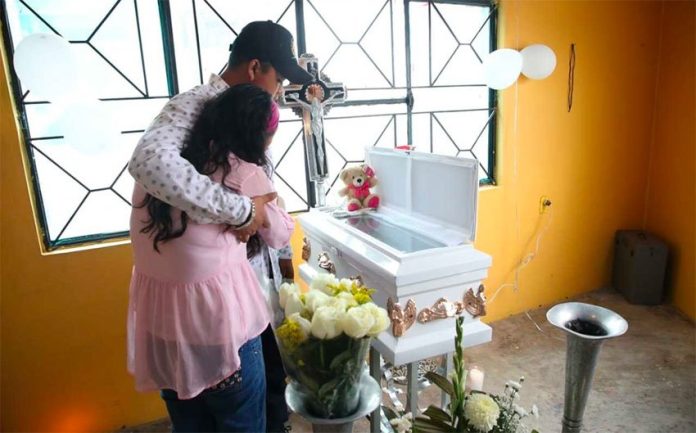
Parents grieve at the coffin of one of the victims of a bacterial infection.

An aggressive bacterial infection has claimed the life of a fourth baby at a hospital in Tampico, Tamaulipas.

A one-month-old baby girl died at the Dr. Carlos Canseco General Hospital on Sunday. State health authorities revealed last week that three other babies had died at the same facility after becoming infected with Acinetobacter baumannii, an almost round-shaped bacterium that is especially dangerous to people with compromised or undeveloped immune systems.

Blanca Patricia Santos González, the 25-year-old mother of the infant who passed away two days ago, accused the hospital of negligence, claiming that staff mistreated her daughter and didn’t use all the medications she was asked to buy.

Santos said she detected bruises on her daughter’s body and that doctors changed their story about the cause of death.

They first said that the bacterial infection had killed Blanca Guadalupe, she claimed, but subsequently contradicted themselves and blamed her and her husband for infecting their daughter with a virus.

Santos said she will file a criminal complaint with the relevant authorities.

Last week, Tamaulipas Health Secretariat undersecretary Mario Cantú revealed that three premature babies had died at the Carlos Canseco Hospital since May 21 as a result of an A. baumannii infection.

He added that five other babies were also infected with the bacterium, which is becoming an increasingly common nosocomial, or hospital-derived, infection.

“The microorganism is very aggressive. Fifteen years ago, very little was heard about these kinds of contaminations but now it’s becoming increasingly common. The reason for this is the indiscriminate use of antibiotics that have become resistant to these microorganisms,” Cantú said.

The official defended hygiene standards in Tamaulipas hospitals, stating “we have very strict handling protocols in intensive care units” that require medical personnel to wash their hands frequently and to change gloves when treating each different patient.

“It’s all very strict, the problem we face in intensive care units is that a pathogen that in your hands or mine doesn’t cause any illness can cause a problem in patients who are immunosuppressed.”

In the aftermath of the first three deaths, the Tamaulipas government suspended both the director of the Carlos Canseco hospital, Luis Antonio Núñez, and the head of epidemiology pending an investigation.

The State Comptroller’s Office said the reason for the employees’ suspension was to guarantee the objectivity, transparency and impartiality of the investigations into the origin and spread of the infection.

The Tampico hospital is not the only health care facility where A. baumannii bacteria has been detected and caused fatalities this year.

The same bacterial infection was blamed for the deaths of three people at the Dr. Juan Graham Casasús Hospital in Villahermosa, Tabasco, and was also detected in patients at public hospitals in Chihuahua.

Source: Milenio (sp), El Universal (sp), Gaceta (sp)