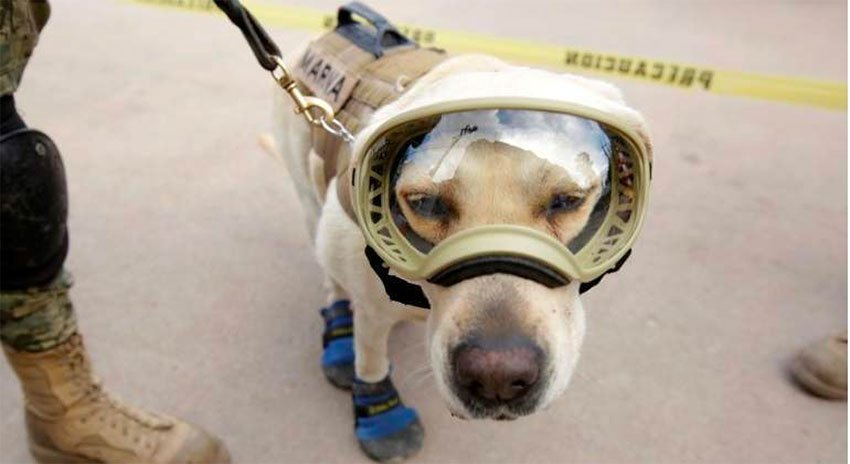
Frida celebrates her retirement from rescue work today.
Frida, the famous rescue dog that won millions of hearts and minds in Mexico and abroad for her efforts searching for earthquake victims, officially retired today after nine years of service.
The navy held a ceremony to honor the work of the 10-year-old yellow Labrador, best known for her participation in search efforts following the powerful September 19, 2017 earthquake that devastated Mexico City and other parts of central Mexico.
Frida was also involved in the search for earthquake victims in Haiti in 2010, in Ecuador in 2016 and in Juchitán, Oaxaca, in September 2017.
In addition, she searched for landslide victims in Guatemala in 2012 and people buried under rubble after an explosion at the Pemex tower in Mexico City in early 2013.
All told, Frida is credited with finding 12 people alive – all of whom were victims of the Haiti quake – and 41 bodies.
Frida on the job.
While her active service ends today, it’s not a final farewell for Frida from the navy’s canine unit.
The rescue dog’s trainer said that his star pupil will now become a teacher for the next generation of Fridas and Fidos.
Israel Arauz Salinas described working with the famous canine for five years as a “very special” and “rewarding” experience.
“I’m happy because Frida is retiring completely healthy. She’s earned her rest as a result of the work she’s done,” Arauz said.
The trainer said there have been plenty of offers to adopt Frida but for the time being she will continue to live at navy facilities in the southern Mexico City borough of Coyoacán.
“She will have the care and love of the handlers who work in the canine unit,” Arauz said.
Both he and Frida were honored with statues in their likeness that were unveiled in Puebla last year, while a mural in Roma, a Mexico City neighborhood that was hit hard by the 2017 earthquake, depicts the beloved Labrador as a saint-like figure.
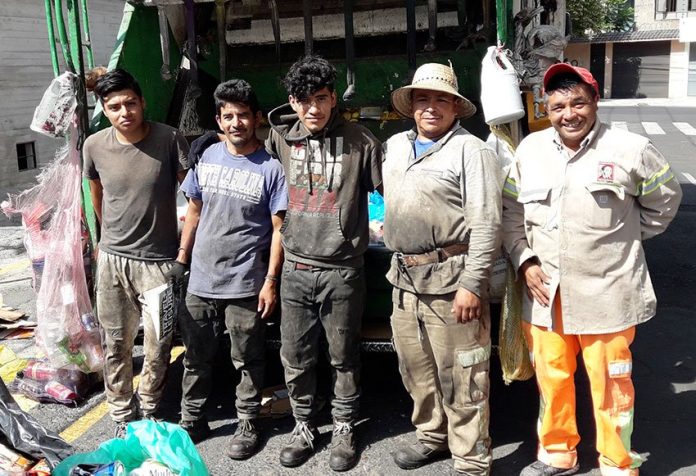
Mexico City’s sanitation workers are not government employees, but volunteers, subsisting on tips and what little money they get from recycling plants after separating recyclable materials by hand.
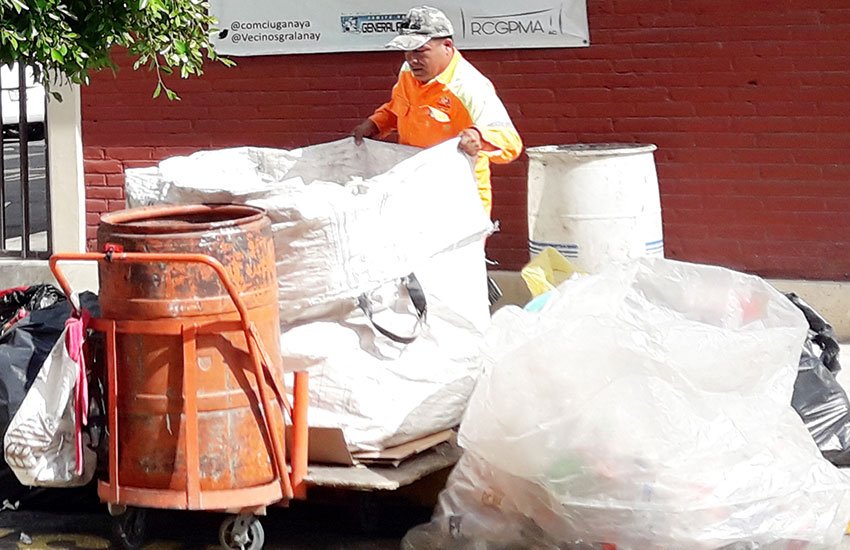
Mexico News Daily spoke to Israel Martínez, 40, on a Saturday morning in General Anaya, Benito Juárez, as he was separating garbage. Martínez has been doing this work for 25 years.
He wears an orange reflective uniform that he bought himself: “This way, people on the street can identify you, and they trust you more,” he said.
There are many dangers in his line of work. “You can cut yourself on glass or sharp metal, or a nail might stab you in the hand. You might get hit by a car, now that everyone’s on their cell phone while they’re driving.”
He does not wear gloves or any protective equipment. “I’ve been doing this for so long that I’m used to it.”
Mexico City sanitation worker Martínez.
He points out that when people separate their recyclables, his job is much easier, even if they still have a bit of liquid inside.
“I can pour out the liquid, no problem. When there are other things inside, like syringes, that makes it more difficult.” He works Monday to Saturday, starting at 7:00am, usually finishing around 4:00pm or 5:00pm. “There are no fixed hours, so it’s all about how much work you put in.”
There are many types of materials that can be recycled. “Plastic, like PET [polyethylene terephthalate], and metal goes to a processing plant in Ecatepec, in México state. Glass is sorted by color and recycled in a plant in Iztapalapa. The organic trash goes all the way to Chalco [México state]. There are four trucks a day that take it from here in Benito Juárez out to the plants.”
He explains the different materials and their separation. “Let’s say you have one of those plastic domes that a cake or pie comes in. The black base is one type of plastic, the transparent dome is PET. So those need to get separated so that the plant will accept them. A plastic Coca-Cola bottle is also PET, but the red top is a different plastic.”
On the Saturday that we spoke to him he was working alone with a wheeled cart that he uses to push around the enormous bags of garbage. During the week, he also volunteers on the garbage trucks. None of the workers on those trucks has a government salary, or a retirement package, health care or any other benefits. The government leases the truck to one person, and the rest of the workers come along to help sort the garbage in exchange for a share of the tips and payment from the plants.
Apart from paying for the gasoline, the government offers no other assistance to these essential workers.
The worst garbage, said, Martínez, are adult diapers and kitty litter. “They throw them in with everything else, and they smell awful. Also, they can make you sick.” He wishes more people would separate their recycling from their organic trash, and especially separate the dangerous and hazardous materials.
We asked Martínez if he would like to become an employee of the government. He told us that he prefers to stay independent. He also told us that he has two children, aged 11 and 14, and he would not like them to continue in their father’s footsteps. “It’s dangerous out here. I want them to finish school and look for more opportunities.” He finished secundaria (middle school) when he was 18.
On a single day. Martínez collects three giant white bags of garbage. “I’ve never weighed it, but I’d say it’s about 150 kilograms per day.” He earns between 120 and 150 pesos a day (US $6.25 to $7.80) for his efforts. When he finds anything in good condition that he can sell, he takes it to his puesto (a street market stall) in his local tianguis (a traditional Mexican flea market) in El Peñón, México state, a two and a half-hour drive from where we spoke to him.
He used to sell these items in a tianguis in Benito Juárez on Avenida Popocatépetl in Ermita, but it was recently removed by the government.
For these workers, the days are long and the work is hard. Only with the support of their community can they begin to get ahead.
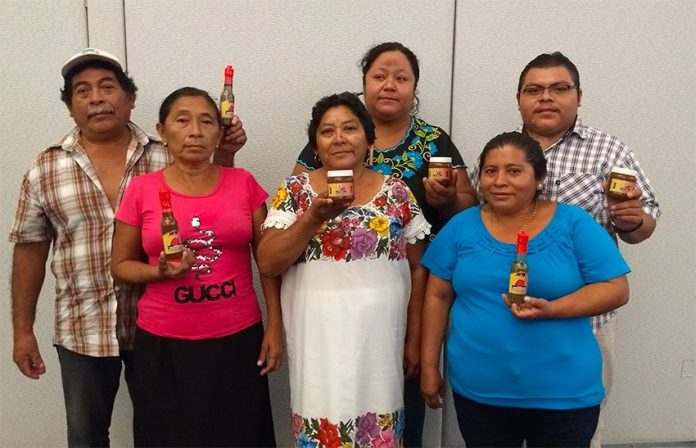
Salsa and jam makers from Tekax at the Mérida Facebook course.
A Mérida art gallery that does 40% of its sales on Facebook was one of the success stories presented at a free training course for about 2,000 entrepreneurs and small business owners.
The social media network offered the course to entrepreneurs wishing to learn how to use the network for their businesses.
Mérida is the third city visited so far this year by the Boost your Business with Facebook program. Last year the program visited 33 cities across Mexico and offered training to over 10,000 small business owners. This year, training will be held in 35 cities.
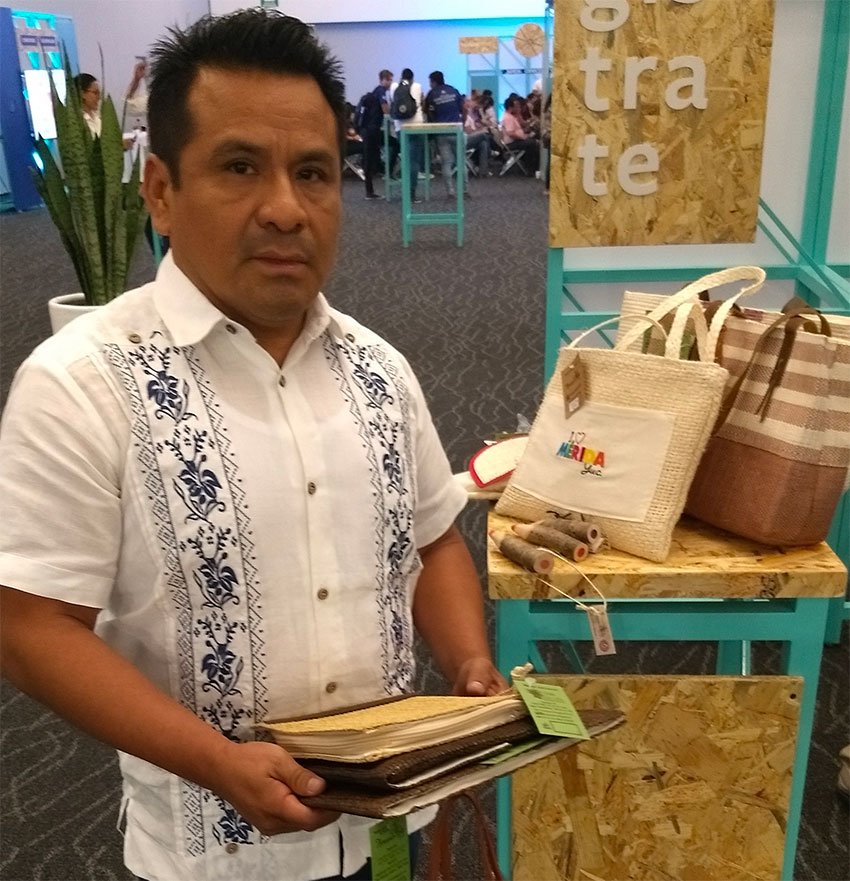
The success story presented at the event was that of Pedro Cab Kuk, an artisan who owns the Henequén art gallery. He has been able to take advantage of Facebook to promote and sell his products.
“The business of social networks is promotion, people knowing you, you being credible, them believing that what you make is good and that it works, because the things we make are to be used, not just for decoration,” he told El Financiero.
Cab Kuk of the Henequén Arte Galería.
The Henequén art gallery has more than 700 clients, including hotels, stores and individuals. Sales on Facebook represent 40% of the company’s income, making the social network “the spinal column of the business.”
“I used to spend a lot of money going to expos, traveling and everything, but now I’m spending less on that,” he said.
Another entrepreneur who attended the training was Mayela Contreras, who took a three-hour bus ride with her partners from Tekax, a municipality in southern Yucatán.
Originally from Oaxaca, Contreras founded the “La Sultana” brand in Tekax, which produces salsas and pineapple preserves with habanero chiles.
“These are traditional products of Tekax,” she told El Financiero. “All of our products are made in the traditional way; the washing, the peeling, the roasting.”
Contreras and her 15 partners sell the products from door to door, but they hope to be able to use the skills they learned at the Boost your Business training to make sales on Facebook.
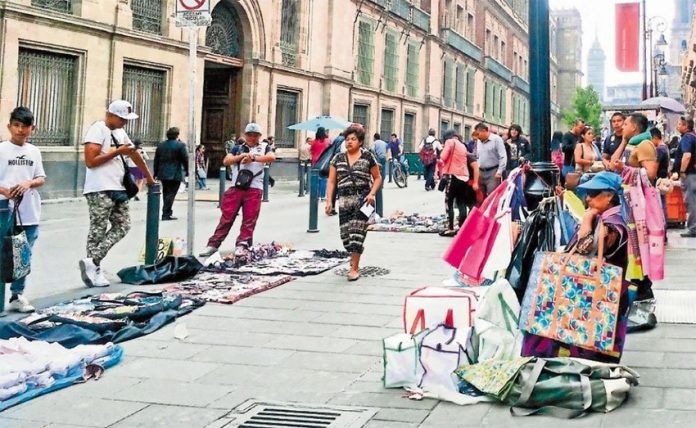
A photo can bring a fine for illegal use of public spaces.
The chances of being punished for drinking or urinating in public in Mexico City are higher than ever before.
Under the new Civic Culture Law, photographs and videos taken by citizens on mobile phones can be considered sufficient evidence to sanction people for committing a range of administrative offenses on the capital’s streets.
Until two weeks ago, unless a person was caught red-handed by police, there was no possibility of a fine or other punishment being imposed.
Now, 24 civic judges have the authority to impose fines, order arrests and hand down community service sentences to people who have been caught on camera in the act of committing a range of offenses.
They include drinking alcoholic beverages on the street, urinating or defecating in public, not picking up a pet’s feces, verbally or physically attacking a person and using offensive language.
Héctor Villegas, a Mexico City legal official, explained that the new law was introduced to increase the probability of people facing legal consequences for their wrongdoings.
In recent years, there have been numerous cases in which social media users have uploaded footage filmed on mobile phones in order to publicly shame people who have acted in illegal, questionable or controversial ways.
Now, Mexico City residents can refer such footage to police with the knowledge that the evidence they supply could lead to a conviction.
Since the new Mexico City government took office in December, police have detected 94,463 administrative offenses, of which 90% were committed by men.
Using public spaces or streets for private events without obtaining consent, drinking in public, causing damage to public or private property and peeing in the street were among the most commonly committed infractions.
Almost 40% of the offenses were committed in the central borough of Cuauhtémoc, while people in Miguel Hidalgo and Coyoacán were responsible for 13% and 7.5% of the infringements respectively.
Monterrey has a large population of street dogs, according to estimates.
Although Mexico is one of the most pet-loving countries in the world, millions of homeless dogs and cats abandoned by their owners roam the streets in cities and towns across the country.
In Monterrey, Nuevo León, for example, for every pet that lives in a house two more live in the street.
According to Daniel Carrillo, human development secretary of the Monterrey municipality of San Nicolás de la Garza, the population of stray animals in the metropolitan area includes 1.5 million cats and 500,000 dogs.
In an interview with Milenio, Carrillo said that San Nicolás fields 70 reports every week about violence against animals. He thinks better education is needed to address the problem, as well as new legislation that distinguishes between different species.
“We are in diapers when it comes to education about how to take care of animals,” he said. “According to the most recent data, which isn’t official but comes from civil society organizations, there are half a million dogs and a million and a half cats on the streets. The uncontrolled population is bigger than the controlled population.”
Carrillo said that policy towards stray animals can be improved by cooperation between municipal and state governments, and with better resources to diagnose the problem.
An NGO says the banks of the Santa Catarina river, which flows through metropolitan Monterrey, have become infested with stray dogs, as people who no longer want their animals abandon them near the river.
Member Cristina Marmolejo told Milenio that around 500 dogs are living along a 30-kilometer stretch.
“It’s a dump for dogs, people come here and drop them off,” she said. “. . . We need sterilization to bring the numbers down. Now, people just sterilize their dogs if they want to, because it’s not in the law.”
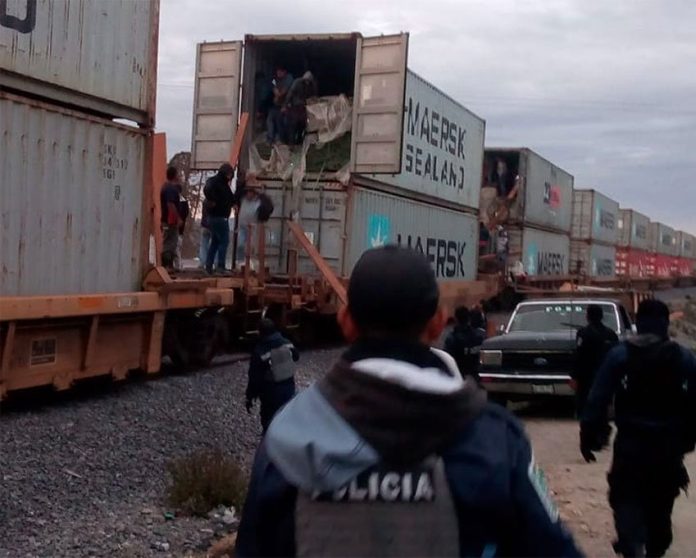
Police watch a train robbery in progress on Sunday.
Train robberies were up almost 33% in the first three months of 2019 compared to the same period of 2018, according to the most recent report by the Rail Transport Regulatory Agency.
There were 1,057 incidents of theft and 2,637 incidents of vandalism, an increase of about 21% compared to the previous year.
There were 613 incidents in which cargo was stolen from trains, and 72 where rolling stock itself was stolen. Grains, seeds, automotive parts and construction materials are among the most popular goods stolen.
There were also 371 thefts of sections of rail or signage.
The highest numbers of thefts occurred in the states of Sonora, Tlaxcala and Puebla.
Growth in railway theft began in the first quarter of 2018 but saw a significant decline in the last quarter of the year.
In 2018, the Federal Police launched an operation against a rail theft gang led by Roberto de los Santos de Jesús, also known as “El Bukanans.” Santos allegedly leads Sangre Nueva Zeta, a group that broke off from the Zetas cartel, and is believed responsible for much of the rail theft and fuel theft around the Puebla-Veracruz border.
The most recent train robbery took place on Sunday morning when a train was robbed in the Puebla municipality of Cañada Morelos, near the Veracruz border. The thieves put up barriers to force the train to stop, and then caused mechanical damage to the train to prevent it from moving.
The private security and police officers who were escorting the train were outnumbered by thieves and could only stand by and watch as the thieves loaded the cargo off the train and on to pickup trucks.
The federal government sold nine of 27 properties confiscated from narcotics traffickers and raised 57 million pesos (US $3 million), well short of the anticipated 167 million pesos (US $8.7 million) that was projected.
But head of the agency responsible insisted that the auction was in fact a success.
“In a property auction it would have been unprecedented to have sold everything,” Ricardo Rodríguez Vargas said. “We are in the normal range, or actually a little bit above normal for a property auction. What was not sold will be sold in future auctions.”
Among the narco-properties not sold were some of the most expensive and luxurious properties listed, which seemed directly proportional to the infamy of their previous owners.
These included:
• The luxury apartment in Cuernavaca, Morelos, where Arturo Beltrán Leyva, one of the founders of the Beltrán Leyva Cartel, was killed by marines in 2009, which was valued at 3.6 million pesos (US $188,000).
• The Naucalpan, México state, ranch of Carlos Montemayor González, also a Beltrán Leyva operator and father-in-law of infamous drug lord Édgar “La Barbie” Valdés Villarreal, valued at 32 million pesos.
• The 15.3-million-peso, Los Cabos, Baja California Sur, beach property of former Gulf Cartel leader Mario Armando Ramírez Treviño.
On the other hand, the government was able to sell the luxury Mexico City residence of Francisco Javier Arellano Félix, former leader of the Tijuana Cartel, for 14.3 million pesos, as well as the former home of Raydel López Uriarte, another Tijuana Cartel operator, in Rosarito, Baja California, for 1.1 million pesos.
Asked if he believed that the failure to more than three-quarters of the properties might be due to the nature of their former owners, Rodríguez Vargas replied, “No, no, that has nothing to do with it. Actually, the auction was a success.”
He added that nearly all proceeds will go towards some of the country’s poorest communities, located in the Guerrero mountains.
Next up is an auction of narco-jewelry confiscated from traffickers, with all proceeds benefiting the National Addictions Commission.
President López Obrador has announced that the government will spend 500 million pesos (US $26 million) on urban improvement projects in Playa del Carmen, Quintana Roo.
López Obrador and Urban Development Secretary Román Meyer Falcón said the objective of the investment – part of the Mi México Late (My Mexico Beats) program – is to improve infrastructure in disadvantaged areas of the resort city.
Among the neighborhoods set to benefit are Ejidal, 28 de Julio and Bellavista.
At an event in the Caribbean coast city, the president said the government decided to allocate the funding because the contrast between luxury hotels and underprivileged neighborhoods, “where people don’t even have the most essential services,” is unacceptable.
Meyer explained that 30 million pesos will go to the Ciudad Juventud youth center project in Ejidal and that an additional 90 million pesos will be allocated to build a children’s development center and a cultural center in the same neighborhood, as well as to rehabilitate a community center and the Playa del Carmen Polyforum center.
More than 80 million pesos has been earmarked for the Bellavista neighborhood, where a medical rehabilitation center and a new park and market will be built, while 11 million pesos will go to improvement projects at sporting facilities and a community center in the 28 de Julio district.
Money has also been set aside for water projects, the paving of roads, sidewalks, street lights and the construction of 500 new homes.
“With a strict sense of justice and social conscience, these resources are returning to the families and neighborhoods of Playa del Carmen that have been left in oblivion. We have the goal of turning Playa del Carmen into a fairer, safer and much more prosperous city,” Meyer said.
“. . . Playa del Carmen isn’t just [the upmarket hotel and residential areas of] Playacar and Mayakoba, neighborhoods such as Ejidal, Bellavista, 28 de Julio and Forjadores are also Playa del Carmen, they’re also the heart of the Riviera Maya.”
The central objective of the 8-billion-peso (US $416.9-million) Mi México Late program is to build much-needed infrastructure in the working-class neighborhoods of Mexico’s leading tourism destinations.
Among the other cities that will benefit are Los Cabos, Cancún, Acapulco and Puerto Vallarta.
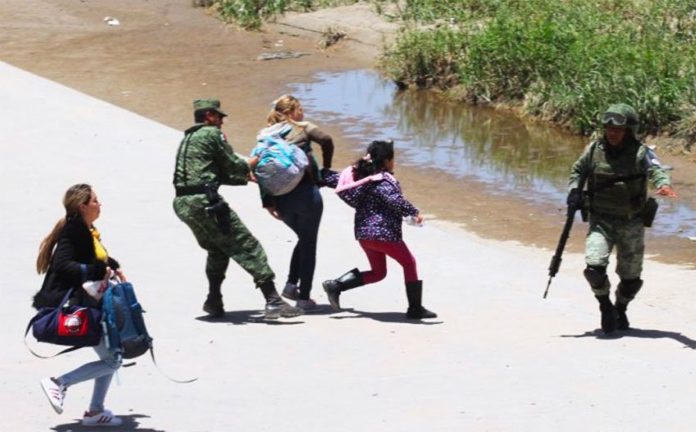
Soldiers nab migrants attempting to cross the northern border into the US.
Mexico is arresting undocumented migrants at both ends of the country.
The government said today that almost 15,000 federal security force members have been deployed to the northern border to stop migrants crossing illegally into the United States.
As part of an agreement with the U.S. that ended a threat from President Donald Trump to impose tariffs on all Mexican goods, the government last week completed a deployment of 6,000 National Guard troops to the southern border, which tens of thousands of migrants have crossed to enter Mexico since late last year.
Speaking at the president’s press conference in Cancún, Quintana Roo, this morning, National Defense Secretary Luis Cresencio Sandoval said that members of both the National Guard and the armed forces are carrying out operations to stop undocumented migrants crossing into the United States.
Asked whether the strategy involved arresting migrants, he said it did.
However, Cresencio added: “migration isn’t a crime, it’s an administrative offense, so we only arrest them [and] turn them over to authorities so that they do the normal paperwork that must be done.”
He explained that the same strategy is being implemented both at the northern border and the southern border with Guatemala and Belize, adding that a military deployment to the Isthmus of Tehuantepec region is also assisting the efforts.
Over the weekend, members of the National Guard carrying assault rifles were seen turning back migrants in Ciudad Juárez, Chihuahua.
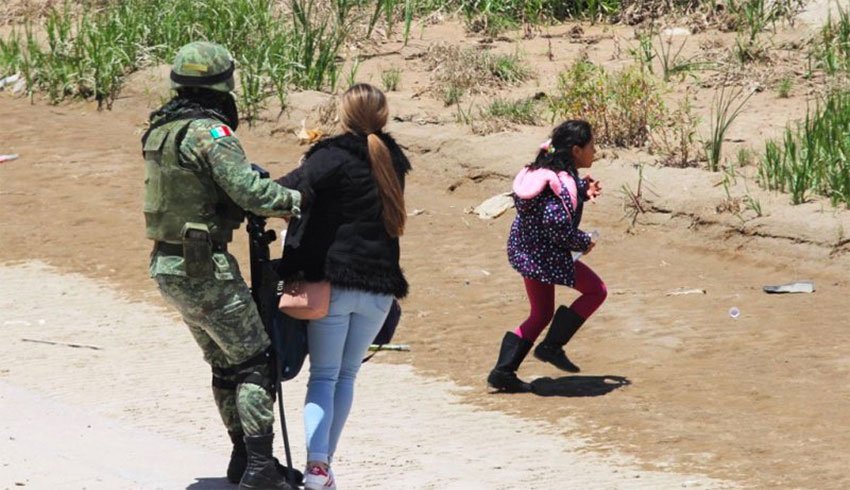
A photograph taken in the northern border city and published by the news agency AFP showed one guardsman pulling back a woman who was holding the hand of a young girl while another agent was poised to intercept the path of a third female migrant.
The image triggered criticism of Mexico’s enforcement of stricter immigration policies.
“This is how Mexico is becoming Trump’s immigration police and the United States’ waiting room,” wrote journalist Jorge Ramos on Twitter.
A soldier holds on to a woman while a girl appears to make a run for it.
“The National Guard, in theory, shouldn’t be repressing those who want to cross to the United States,” said Isabel Sánchez, coordinator for a Ciudad Juárez civic group with a focus on security and justice.
Almost two-thirds of respondents said that the government should close the southern border to migrants, and an even higher percentage supported the deployment of the National Guard to enforce stricter immigration policies.
The Associated Press reported that about 100 migrants were transported yesterday to a detention center in Arriaga, Chiapas, while Milenio TV said that 146 people were detained in a private home in Querétaro and more than 100 migrants were taken away from a hotel in Veracruz.
More than 74,000 migrants have been arrested since the new government took office in December, and over 53,000 were deported.
However, the number of undocumented migrants arrested in the United States after crossing the border between ports of entry has risen sharply this year and last month exceeded 144,000.
However, President Trump said on Thursday that Mexico’s stricter immigration enforcement was already yielding results.
“The flow [of migrants] has very substantially slowed down,” he said. “It’s already had a big impact.”
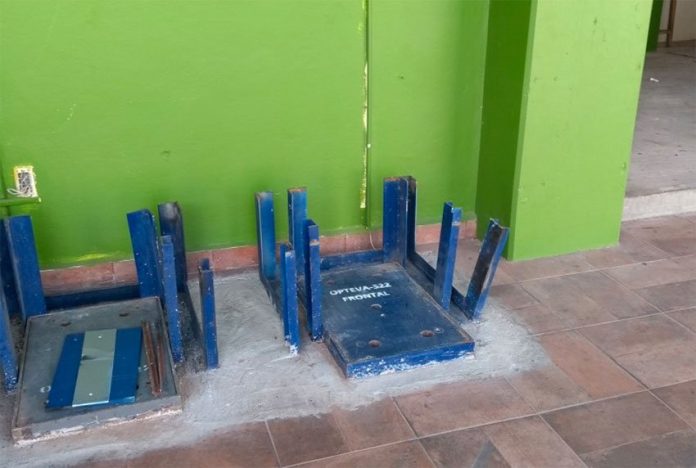
This was all that remained after thieves stole two ATMs in Ciudad Asunción.
It’s been open season on automated teller machines since January in the Isthmus of Tehuantepec region of Oaxaca.
Two ATMS were stolen January 3 from a Banamex branch in Asunción Ixtaltepec. Six weeks later, thieves removed a Banamex ATM from the IMSS hospital in Salina Cruz.
Another ATM theft was foiled March 7 when police received a 911 call advising that someone was trying to remove a machine from the Santander branch in Tehuantepec.
That was followed by an incident June 7 in Juchitán in which thieves successfully spirited away an ATM located outside the office of the Federal Electricity Commission.
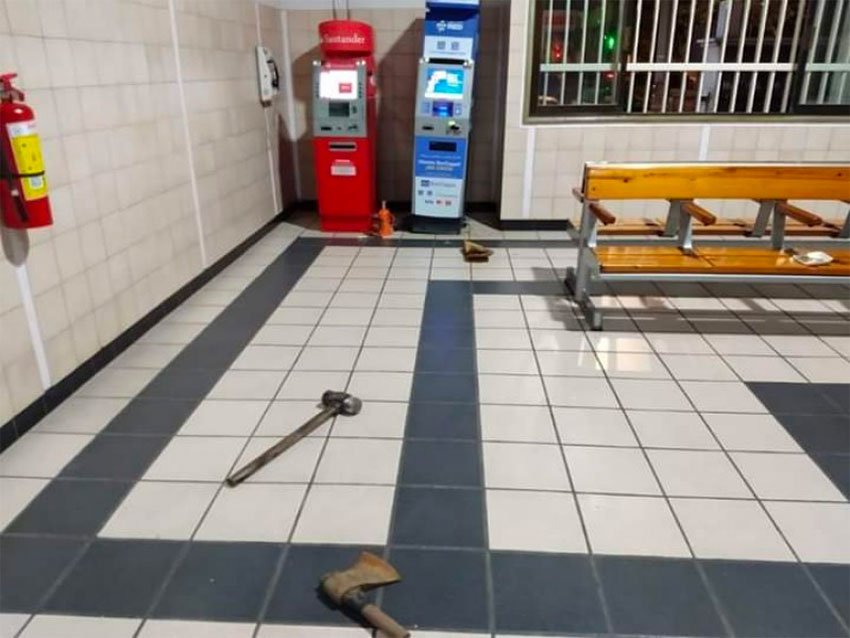
There was another failed attempt last Tuesday at the first-class bus terminal in Juchitán. Armed civilians entered the building and held passengers and staff at gunpoint while trying to free a BBVA Bancomer ATM.
A sledge hammer, an axe and a lopsided ATM are evidence of a failed robbery attempt in Juchitán.
After struggling unsuccessfully with their task for a few minutes, the men gave up and fled.
The most recent incident took place early Saturday morning when a cargo truck approached a hospital in Salina Cruz, carrying thieves whose sights were set on a Banorte ATM.
But they were caught unawares while attempting to pry the money machine free. They fled the scene, leaving their truck — and the ATM — behind.