Home Blog Page 1983

Government introduces reading strategy as bid to strengthen values

0
Taibo (arm raised) next to AMLO and Gutiérrez at launch of reading strategy.
Taibo (arm raised) next to AMLO, center, and Gutiérrez at launch of reading strategy.

President López Obrador launched the government’s National Reading Strategy yesterday, declaring that it will strengthen Mexico’s cultural and moral values.

At an event in Mocorito, Sinaloa, López Obrador said that his government’s agenda aims not just to improve people’s lives at home and at work but also strengthen their values, explaining that if it only focused on the former “our politics would be lame, standing on one foot, and both are needed, the material and the spiritual.”

Eduardo Villegas Mejía, coordinator of the government’s Historical and Cultural Memory of Mexico initiative, explained that the reading strategy will be made up of three key pillars.

The first, he said, will be of a formative nature and involve developing the habit of reading from a young age.

The Secretariat of Public Education (SEP) and the National Network of Libraries will play a central role in encouraging children and teenagers to read.

Villegas said that the second pillar of the strategy will be of a sociocultural nature and involve making books accessible to the nation’s citizens.

Paco Ignacio Taibo II, a writer and head of the government affiliated non-profit publishing group Fondo de Cultura Ecónomica (FCE), elaborated on the pillar during his address.

“There won’t be campaigns of ‘you have to read’, no, no, no, none of this ‘you have to’,” he said.

“Doors will be opened so that there is access to reading for millions of Mexicans who today don’t have access for different reasons. We’re going to make books extremely cheap, we’re going to give books away. And not just that, we’re going to force the whole of the publishing industry to lower their prices,” Taibo said.

The third pillar of the strategy, Villegas said, will be of an informative nature and include media campaigns that promote reading as a habit that can develop people’s critical thinking beyond the here and now.

López Obrador’s wife, Beatriz Gutiérrez Müller, also attended yesterday’s event and will play a central role in promoting the reading strategy.

“A book can be a path to become better people, better Mexicans, reading awakens the conscience and the imagination, it invites us to reflect, to feel, it allows us to enjoy ourselves, it makes us remember to cry,” the writer, academic and First Lady said.

“Reading can bring us peace, it’s a vehicle for peace, nobody who’s reading is hitting, kicking or attacking anyone so read, read everything you can,” Gutiérrez added.

In a 2013 survey by UNESCO that looked at the reading habits of people in 108 countries, Mexico ranked 107th.

Source: El Financiero (sp), Noticieros Televisa (sp) 

US to invest US $130 million in new consulate in Mérida

0
Artist's rendering of the new US embassy in Mexico City.

The United States has begun the process of building a US $130-million consulate in Mérida, Yucatán.

The U.S. Department of State began a selection process on January 18 to find a construction company to build the multi-building complex on a three-hectare site in the Vía Montejo development.

Located in the north of the Yucatán capital, the development is already home to the new Harbor Mérida shopping center.

The Department of State said in a statement that Miller Hull Partnership of Seattle, Washington, had been selected as the design architect for the project.

The consulate will have a 5,250-square-meter office building with space for 63 employees as well as auxiliary buildings, a warehouse and a parking lot, the newspaper Reforma reported.

The United States government is also investing US $943 million to build a new embassy in the Nuevo Polanco district of Mexico City. The project is being built by Alabama company Caddell Construction and is expected to open in 2022.

In addition, new U.S. consulates will be built in the border city of Nogales, Sonora, in that state’s capital, Hermosillo, and in Guadalajara, Jalisco. The combined cost of the three projects is US $520 million.

BL Harbert International, a construction company based in Birmingham, Alabama, was awarded the contracts to build all three consulates.

Although it is investing heavily in infrastructure in Mexico, the United States doesn’t currently have an ambassador in the country.

The position has been vacant since Roberta Jacobson resigned and left the post last May.

Source: Reforma (sp) 

CORRECTION: The original photo that accompanied this story — which depicted the new U.S. embassy in London, England — has been replaced with the right one, thanks to a notification by an alert reader. 

Yucatán radio station aims to diffuse and encourage Mayan language

0
María del Socorro Cauich Caamal hosts the weekly Radio Yuuyum show in Yucatecan Maya.
María del Socorro Cauich Caamal hosts the weekly Radio Yuuyum show in Yucatecan Maya. megan frye

It’s all there, laid out in the popular vernacular of Mexico. The Mayan Riviera. Mayan food. Mayan pyramids. Mayan traditional clothing. Mayan people. Mayan design, etc.

But while the Mexican government has done a tremendous job at promoting Mayan cultural heritage for the consumption of both national and international tourism, there are members of Yucatán’s Mayan community who see hypocrisy in spreading the term Maya without any focus on preserving the Mayan language.

There are about 30 Mayan languages currently spoken by about 5 million people across southern Mexico, Guatemala, Belize and Honduras. The languages are considered endangered, according to Oxford University Press, because there are documented cases of children in some communities who are not learning them.

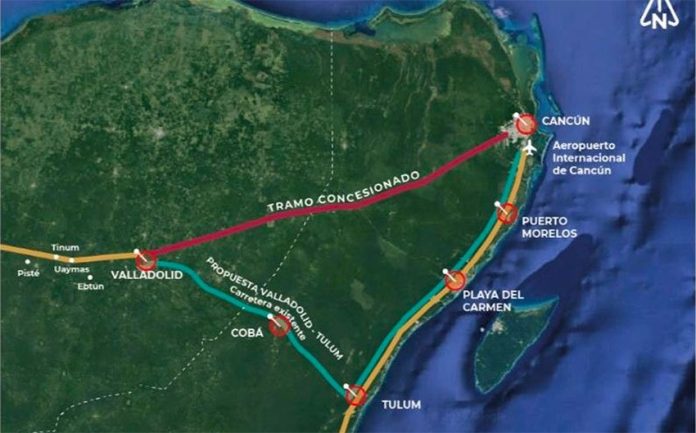
And some Yucatán locals say interest in their language, Yucatecan Maya, is dwindling, even while tourism numbers soar in places such as Tulum, a resort town built around a sacred Mayan archeological site. There’s even a project for a high-speed train emblazoned with the name “Tren Maya” that’s in the works right now, with its proposed trajectory shredding through portions of Mayan jungle to allow tourists easier access to currently remote Mayan sacred sites.

But there are efforts under way to save the language from extinction.

Teresa Pool Ix is a retired teacher who volunteers at Radio Yuuyum.
Teresa Pool Ix is a retired teacher who volunteers at Radio Yuuyum. megan frye

Teresa Pool Ix is a retired preschool teacher and language preservation advocate and one of the 10 volunteers that make up Radio Yuuyum, a Mayan language radio station based in downtown Mérida, the Yucatán peninsula’s most booming metropolis.

“The problem of Yucatecan Maya is there really isn’t much family transmission anymore,” Pool Ix said. “Parents aren’t really speaking with their children in Maya. I don’t know why there is still this resistance; that our language isn’t valid or interesting or important, when we know that our language is very complex and beautiful. It would be a shame for us not to do anything against its loss.”

Around the Yucatán peninsula it’s estimated that about 800,000 people speak Yucatecan Maya. Some families teach the language to their children, and it becomes their native tongue. Later, the kids learn Spanish in school and in society outside of the smaller pueblos. But Pool Ix says this is not as common as it used to be.

“Older people speak it, but what happens when they start to die?” Pool Ix said. “The language loses speakers and Spanish gets stronger. There is this attitude of disinterest on the part of the government, both local and federal, so the materials that are emitted are very limited and they don’t arrive in the more remote communities.”

Radio Yuuyum broadcasts every Monday from 5:00-10:00pm CT and has for the past three years, and online at www.radioyuyuum.org. The programming includes Mayan language music such as rapper Patboy, discussions, language lessons and an hour of news which is selected each week by the station manager and translated into Mayan. The news deals with issues facing the state of Yucatán and the peninsula.

“What we’re doing here right now doesn’t seem like we’re doing much,” Pool Ix said. “Here we are 10 crazy people, but behind this there is something more. We want to grow, we want more people to get excited to participate. This is the truth of why we do this. We love our language. We love our culture. Though I know this will not bring me any economic benefit.”

Mayan language activisit Yazmín Novelo of Radio Yuuyum.

And while Maya is never a requirement for any job or school in the region, knowledge of English has become obligatory. Many young people are even studying Mandarin in expectation that it might become the world’s next imperial language. It all stems from economic pressures, Pool Ix said.

“Sometimes we think that, well, we don’t get any work if we speak Maya,” Pool Ix said. “But me as a person, I will be rich because I will transmit what I know. I will know more about my culture and language. People say the Mayans disappeared. No, they didn’t disappear. We are still here.

“Sure, we don’t live in the pyramids anymore. Everything changes, even the language. The language is a living thing. We have to accept the the changes of the language. But people lack knowledge of their origins.”

Just up the road from Radio Yuuyum’s broadcasting space in Mérida’s colonial center is the Gran Museo del Mundo Maya, a 22,600-square-meter space which tells the story of the Mayan people, starting with the crash of a meteor off the coast of Yucatán.

Many scientists believe that event ultimately led to the extinction of dinosaurs and the formation of the Yucatán peninsula and its abundant underground freshwater rivers which pool into cenotes, considered sacred to the Mayan people and now a popular tourist attraction.

The museum is immense and touches on the beginning, prime and current Mayan civilization, with heavy focus on the Classic period of Mayan culture, the Spanish invasion and subsequent colonization whose effects, Pool Ix says, are still clearly felt to this day.

“There was an event recently at the Gran Museo Maya, and it was called the ‘Pueblo Maya’ though the least-represented group there was that of the Mayan people,” Pool Ix said. “They just use our name. They sell our name. They sell our culture. But only certain aspects, because the language doesn’t interest them. They see it as something that doesn’t serve them.

“But when it comes to doing a special ritual, they want it in Maya; they hire people and they do it in Maya because it’s lovely, and then they applaud for us. But that’s it. We are like actors, nothing else. The people should occupy these spaces. And the people who occupy the spaces the least are us. Unfortunately, they sell all of this under the name of the Maya, the very people who continue to live in difficult situations economically, who continue to be forgotten and abandoned.”

Throughout the years, the Yucatán peninsula has featured a number of television and radio programs, but the number has dwindled. Radio Yuuyum operates out of a space donated by Instituto Universitario del Pueblo. The radio is also supported by some listener and other donations. Pool Ix says that television has been the best way to reach the pueblos, but they hope that with the increase in internet availability they will be able to reach more communities.

“We can’t close our eyes to our own identity,” Pool Ix said. “ If people really knew their culture, they would defend the language. We hope that people wake up and start to worry about the language and start to speak the language.”

Socorro Cauich is a high school teacher and Radio Yuuyum volunteer host. She says her hometown is about 20 minutes away from Chichen Itzá, arguably the most visited archaeological site in Mexico. She learned Mayan when she was about eight years old.

“The goal in some communities is that whenever you speak, you try to speak in Maya,” she said. “Eventually, the kids will understand and be able to speak. I am applying this as well within my community and the places where I go. In my community, I started to learn Maya in certain places.

“But when I’m in the city, people know that I speak Spanish so they speak Spanish to me. Outside of the communities, there is the issue of people discriminating against it. If someone speaks Maya, there’s the idea that they are poor, or they are ignorant. So what people do is decide not to speak it for fear that others will make fun of them and they will undervalue them.

“In the school where I teach, many of the students more or less speak and understand Maya. But it’s always a challenge to really get them to converse in it. I generally convince my students to speak Maya after two and a half years of trying, then they come to the third year and now they think it’s cool. They like it. They want to speak Maya. But the process dies because then they finish high school and in many cases move away. But there is life in this language, it’s not something that has passed us by.”

Megan Frye is a writer, photographer and translator living in Mexico City. She has a history of newsroom journalism as well as non-profit administration and has been published by several international publications.

14 employers agree to union demands in Tamaulipas

0
Workers at a Tamaulipas factory.

Twenty-four hours after a strike shut down dozens of factories in Matamoros, Tamaulipas, on Friday, 14 employers agreed to union demands for a 20% increase in workers’ salaries and a 32,242-peso bonus (US $1,700).

Some of the remaining maquiladoras, as the factories are known, are expected leave Tamaulipas.

NP Mexico Company, A.F.X Industries, Matamoros Glass and Doors, Core Composites Mexico, CTS Electric, Polytech Netting Industries Mexico, Inteva Mexico and Tidi Mexico were among the companies that ceded to the demands of more than 32,000 workers belonging to the Union of Laborers and Industrial Workers of the Maquiladora Industry (SJOIIM) who went on strike on Friday afternoon.

SJOIIM president Juan Villafuerte Morales told reporters that the bonus will be paid to workers in four parts in February, May, August and November. Villafuerte said the union’s demands are independent of the federal government’s recent doubling of the minimum wage in the region.

Despite negotiations between the union and several companies, the strike is expected to have negative repercussions at a national and international level. Villafuerte said the he expects at least three maquiladoras to leave Tamaulipas.

The state Conciliation and Arbitration Board recused itself from talks between 13 companies that have not reached agreements and union leaders, referring the negotiations to federal authorities.

There are 115 maquiladoras in Matamoros, Tamaulipas, that employ 131,920 workers, according to statistics from the Mexican Social Security Institute (IMSS).

Source: El Financiero (sp)

Teachers get another 800mn pesos but Michoacán rail blockades continue

0
Teachers on the tracks in Michoacán.

The federal government will give Michoacán teachers another 800 million pesos today, President López Obrador said this morning, as rail blockades in the state cost the economy an estimated 1 billion pesos a day.

“On Friday, 205 million pesos was delivered and today 800 million pesos is going to the teachers in Michoacán, in other words a billion pesos [US $52.5 million] . . .” López Obrador told reporters at his daily press conference.

Teachers have maintained railroad blockades in Michoacán since January 14 to demand payment of salaries, benefits and bonuses they say they are owed by the state government.

CNTE teachers’ union leaders said last week that they want 5 billion pesos before they will end their blockades and return to the classroom.

While that amount of money appears unlikely to be forthcoming, López Obrador reiterated that the government would not forcibly remove the teachers from the railway tracks, stating that repression wasn’t an option.

“I hope that they [the teachers] take notice that they have already been attended to and they take the decision to free the tracks . . .” López Obrador said.

The president said that CNTE members participating in the protest “have to understand that these are other times,” asserting that “we’re not against the people, nor are we oppressors.”

However, he added that the government wouldn’t allow itself to be blackmailed by the teachers’ union.

López Obrador also said that it was ultimately up to the state government to end the dispute with teachers.

“It’s not the federal government’s responsibility, we can’t deal with something that corresponds to the state [government]. We’re helping by transferring those funds to the state government and I hope things are resolved,” he said.

However, Michoacán Governor Silvano Aureoles believes that the rail blockade is an issue for which the federal government is responsible.

After the Secretary of Communications and Transportation, Javier Jiménez Espriú, took to Twitter yesterday to assert that “the labor conflict between the CNTE and the government of Michoacán is damaging the national economy” and to exhort “the parties to consider the national interest,” Aureoles responded that that the federal government cannot wash its hands of the matter.

“Michoacán is grateful for your ‘exhortation’ but also we remind you that the railway lines fall under federal jurisdiction, in other words, they’re your responsibility as secretary of communications and transportation,” he wrote.

“We ask you to assume [the responsibility] that corresponds to you and for the good of the residents of Michoacán and the economy of the state and nation, to formally intervene to guarantee the immediate clearing of the railway lines,” Aureoles said in a second tweet.

Today, the governor launched legal action against the blockades in the Supreme Court, declaring “it may be that the [federal] government decides not to use public force [to clear the tracks] but a judge can order it.”

Meanwhile, the economic losses from the rail blockades continue to mount.

The Confederation of Industrial Chambers (Concamin) estimates that the blockades are costing around 1 billion pesos a day, a figure with which the spokeswoman for rail operator Ferromex agreed.

Lourdes Aranda said that a total of 200 trains have been halted, explaining that auto parts, gasoline and imported grains are among the products that have been unable to reach their intended destination.

Concamin president Francisco Cervantes said that 8,600 shipping containers have been affected by the blockades.

The steel industry, which reported losses of more than 800 million pesos, is just one of several sectors that have taken an economic hit from the blockades.

In light of the growing financial damage, the president of the Michoacán branch of the Business Coordinating Council (CCE) urged the federal government to change its approach to dealing with the blockades, telling the newspaper Milenio that the current strategy won’t clear Michoacán’s railroads.

“This [strategy] of continuing to talk and if the dialogue ends to keep talking some more [won’t work]. We’re not calling for repression . . . but we are calling for the complete application of the rule of law. It’s an issue that has already exceeded the limit of tolerance, it’s having a very large economic impact that is hitting the whole country,” Agustín Arriaga said.

The CCE leader said it was unacceptable that teachers should stop the economy and that force could be used without violating their rights.

“Remove them, let the dialogue continue [but] they have to remove them, that’s what you have the rule of law for,” Arriaga said.

Some teachers claimed that the losses caused by the blockades are not being incurred by Mexico but by foreign businesses.

Source: Milenio (sp), El Financiero (sp), El Universal (sp) 

Frustrated passengers occupy airline ticket counters in Veracruz

0
Eight Viva Aerobus planes were grounded.

A number of passengers of the low-cost airline Viva Aerobus occupied the ticket counters of the Veracruz airport Saturday after flights were cancelled due to an engine problem.

The cancellation of flights between the cities of Veracruz and Monterrey and vice versa was announced on Friday. The airline explained they had been rescheduled for early the following morning.

But come Saturday morning there were no flights, which triggered the anger of passengers. In protest they occupied all the ticket counters at the Veracruz airport, affecting an even larger number of passengers.

Viva Aerobus later informed customers that the flights had been rescheduled once more, and would take off at 4:00pm. The airline explained that a preventative security alert had triggered an unscheduled technical revision of its aircraft based at the Monterrey airport.

The website Transponder 1200, which specializes in aviation news, published a report yesterday saying the security alert affected eight of the airline’s 30 Airbus A320 aircraft. After consulting with the manufacturer the company decided to keep the aircraft on the ground until the problem was resolved.

Close to 500 travelers in Veracruz, Monterrey and Cancún were affected.

On Sunday the Monterrey-based airline chartered two planes to move customers from those three cities, along with those departing that day from Acapulco, Culiacán, Ciudad Juárez and Guadalajara, to their destinations. The chartered flights were expected to continue until early today.

Source: Milenio (sp), Transponder 1200 (sp)

University employee implicated in human trafficking network

0
The trafficking suspect was employed at this Guerrero university.

Police have uncovered a human trafficking ring in Chilpancingo, Guerrero, that used a university employee’s access to school records to select victims.

Police arrested Lorenzo N., who worked in administration department at the Autonomous University of Guerrero. It is the only arrest in the case so far.

Police learned of the ring after one of its victims escaped on January 18. Identified only as Gloria, the woman managed to escape from the safe house where she had been held. Based on the information she provided, authorities raided the house and freed five other women, three of whom were minors.

Chilpancingo Police chief Edgar Caín Pérez reported that members of the raid discovered sedatives in the safe house along with video recording equipment. The six rescued women testified that their captors had forced them to record pornographic videos and perform sexual acts for customers.

State authorities are currently working to uncover the extent of Lorenzo N.’s role in the human trafficking network and to identify others who were involved. The president of the university encouraged police to fully investigate the former employee: “If the young man was involved in anything illegal, let him be investigated.”

The six women, five of whom are high school students, may not have been the trafficking operation’s only victims.

Police are investigating a possible link between the network and the disappearance of undergraduate student Unali Monserrath Nava Landín, who was studying in the school of public management, where Lorenzo N. was an administrative employee.

Source: Milenio (sp)

Clash between community police, self-defense force kills 10 in Guerrero

0
Security forces at the scene of yesterday's gunfight in Guerrero.

Ten people died and two more were wounded in a gunfight yesterday between a community police force and a self-defense group in Chilapa, Guerrero.

Paraíso Tepila community police, affiliated with the regional community organization CRAC, clashed with a self-defense group believed to be connected with the Ardillos crime gang.

The confrontation took place when the self-defense group attempted to enter the town.

CRAC spokesman Jesús Plácido Galindo reported that the showdown lasted about three hours.

The state government said when the army and state police arrived at the scene they found a truck with the 10 bodies in it, along with two people with bullet wounds.

[wpgmza id=”138″]

Yesterday’s is the latest and most intense confrontation between both groups in recent weeks.

On December 19, CRAC members reported that the self-defense group had blocked the roads connecting the towns of Rincón de Chautla, Zacapexco, San Jerónimo Palantla and Tepila.

After local residents requested the intervention of the state government, army and state police traveled to the area a week later, only to be repelled by the self-defense group.

After yesterday’s clash, Plácido said the latter has the four towns in a virtual state of siege. He also said that members of a family from Tepila, including three young girls, were kidnapped yesterday. Their whereabouts are unknown.

The spokesman said the kidnapping followed a plea for the intervention of federal authorities. “. . . these are the consequences.”

Source: Reforma (sp)

Mayors threatened by huachicoleros, warned not to interfere in pipeline taps

0
Petroleum thieves
Petroleum thieves to mayors: 'Leave us alone.'

At least 15 mayors have received threats from gangs of fuel thieves, according to a political party official, who is calling on the federal government to cooperate more with state and municipal authorities to combat them.

Ángel Ávila Romero, a member of the national executive of the Democratic Revolution Party (PRD), told reporters Saturday that fuel thieves, known as huachicoleros, warn mayors “not to interfere” and to “let them work.”

He said that among those who have been threatened is Pedro Porras, mayor of Tezontepec de Aldama, a municipality in Hidalgo that adjoins Tlahuelilpan, where more than 100 people were killed in a petroleum pipeline explosion on January 18.

“Other mayors have approached mainly state authorities [to report the threats] but they don’t get a clear answer,” Ávila said.

The party official charged that the federal government’s strategy to fight fuel theft is not well-coordinated with municipal and state-level authorities.

“The federal government has forgotten that a large part of the preventative strategy against fuel theft has to do with state and municipal coordination and protection of mayors who have been threatened by the fuel theft cartels,” Ávila said.

“. . . It’s a good thing that the army is patrolling the pipelines, but it’s not enough,” he said.

Ávila described the threats as “extremely serious,” adding that “hopefully there’s a response” from the federal government and better coordination of the anti-fuel theft strategy between all three levels of government.

If President López Obrador doesn’t work with mayors his strategy will fail, he said.

Ávila also contended that authorities in states where López Obrador’s Morena party is in power have had “direct access to members of the federal cabinet” to discuss the strategy and the government’s response to the gasoline shortages that affected a large part of the country.

He pointed out that Mexico City Mayor Claudia Sheinbaum was also afforded a meeting with Pemex CEO Octavio Romero.

However, in states such as Jalisco, Michoacán, Guanajuato and Querétaro, all of which suffered from the shortages, governors haven’t had the same level of access to federal authorities, Ávila claimed.

“. . . What I see is unequal treatment,” he said.

Source: El Universal (sp) 

Gas stations use plug-in to distort sales volumes and sell stolen fuel

0
pemex gas station
Plug-in allows stations to fudge their sales volumes.

Scores of gas stations in Mexico allegedly use an illegal software plug-in that allows them to manipulate the sales figures they report to Pemex and tax authorities, and conceal the sale of stolen fuel.

As many as one-third of Mexico’s 12,000 gas stations use a software program called ControlGas, which was created by the company Atio Group in 1997.

Installed on a gas stations’ pumps, the software precisely records the amount of fuel that is purchased and sold, and sends the data to the state oil company and the Federal Tax Administration (SAT) on a daily basis as required by law.

But according to two former unnamed company employees, Atio Group – which is owned by Pablo César Gualdi, a former president of the Mexican Association of Service Station Suppliers (Ampes) –  doesn’t just sell ControlGas but also an illegal plug-in known as El Rastrillo (The Razor).

The plug-in allows the pumps’ volume controls to be altered, with gas station owners choosing between options that enable them to report sales that are 5%, 10% or 15% below their real level.

“Basically, it’s a program that’s added to ControlGas to shave off liters and fudge the numbers that are reported to the government,” one employee told the newspaper Milenio.

“This parallel software allows the reports that are sent to Pemex, of purchases, sales and stock, to be altered . . . if you shave off or cut off liters, you can sell stolen fuel,” said the other employee, who was fired for refusing to sell the illegal plug-in.

“I was able to see how the system was used in several gas stations,” he added.

Both former employees have received death threats, Milenio reported. Atio Group management didn’t respond to requests for an interview, the newspaper said.

The illicit scheme hasn’t gone unnoticed by the federal government, which is currently cracking down on fuel theft by deploying the military to protect Pemex infrastructure and closing several major petroleum pipelines.

Santiago Nieto, chief of the Finance Secretariat’s Financial Intelligence Unit (UIF), said recently that 194 gas stations are under investigation for altering their pumps’ volume controls and reporting income and expenditure that don’t add up.

On January 14 he said that many gas stations located near petroleum pipelines sell stolen fuel, explaining that the UIF had detected 10 billion pesos (US $526.5 million) in funds that are linked to the commercialization of stolen fuel and “laundered in the Mexican financial system.”

Source: Milenio (sp)