Tuesday, March 3, 2026
Home Blog Page 1984

Architects criticize ‘fake, unlawful’ referendum on Mexico City airport

0
The partially finished airport: signature infrastructure project or boondoggle?

Mexico City architects have joined the chorus of criticism against president-elect López Obrador’s decision to scrap the partially-built Mexico City International Airport.

López Obrador confirmed Monday that the 285-billion-peso (US $14 billion) project would be canceled after about 70% of people who participated in a public consultation voted to build two new runways at an air force base and upgrade the existing airport and that in Toluca rather than continue with the new airport.

Only one of 90 voters on the electoral list cast a ballot in the four-day public vote, which concluded Sunday.

“The outcome confirms Mexico is lacking democratic processes,” architect Fernanda Canales told architecture and design magazine Dezeen.

“It’s an example that reveals projects in Mexico are based on short-term, personal and political issues and corruption,” she added.

“It was not a public referendum, it was fake, completely against the law. The Supreme Court should approve it and the National Electoral Institute should be in charge. Instead, it was not a transparent process.”

The new airport, located on an ancient lakebed in the México state municipality of Texcoco, is somewhere between 20% and 35% complete.

It was designed by British architectural firm Foster + Partners in collaboration with Mexican studio Fernando Romero Enterprise.

Romero is the son-in-law of Carlos Slim, Mexico’s richest man and a key investor in the airport project.

The private sector also slammed the move to scrap the airport, considered outgoing President Enrique Peña Nieto’s signature infrastructure project.

Canales charged that López Obrador’s decision was politically motivated.

“[The public consultation] does not reveal the desires of the population, but rather of the future president and battles among political parties,” she said.

“It only alerts us that decisions will not be based on information, research, long-term views, sustainable development, economy . . . but rather on personal interests.”

Christopher Koehn, who is also an architect in the capital, said “the main reason for López Obrador to take [the airport] down is to justify himself,” adding that placing the fate in the hands of a largely uninformed public was unwise.

“Political or public referendums shouldn’t be part of this decision. Most voters don’t really know about urbanism, city planning or architectural design, or in this case, the real airport necessities.”

Gabriela Carillo, a partner at the firm Taller de Arquitectura, agreed, saying that “a decision at that scale shouldn’t be taken by people without information — and I’m included there.”

Isabel Martínez Abascal of Lanza Atelier said the vote was a “brave and democratic initiative” but added that more should have been done to educate citizens about the relevant issues.

“Recognizing the right of citizens to opine should go hand in hand with providing them with the basic tools to do so,” she said.

“That includes technical information adapted to people who are not necessarily architects or urban planners, with a sociological approach and that considers the benefits and problems in the short, medium and long term.”

During the early part of the election campaign, López Obrador frequently railed against the airport project, charging that it was corrupt, too expensive and being built in an unsuitable place.

However, a project manager at the National Autonomous University (UNAM) Faculty of Architecture said that López Obrador’s criticism was “propaganda.”

“Most of the propaganda that [soon-to-be ruling party] Morena has used to convince its sympathizers has to do with those arguments about the so called ‘lake’, swindling people into believing that those wetlands have ecological significance, and that 0.77 per cent of Mexico’s population decided for the greater good,” Diego Guerra said.

“We are all worried, inside the school and outside, being that this [decision] doesn’t adhere to any of the correct practices we work towards.”

Source: Dezeen (en) 

Extortionists targeted 6.6 million last year; Mexico City urges victims to report cases

0
The suspected leader of the Unión de Tepito, a Mexico City gang involved in extortion.
El Pistache, suspected leader of the Unión de Tepito, a Mexico City gang believed to be involved in extortion.

The Mexico City government is urging victims of extortion to report the crime to authorities.

There were 6.6 million victims of extortion or attempted extortion in Mexico last year, according to the National Statistics Institute (Inegi). In Mexico City, criminals collect at least 483 million pesos (US $24.1 million) annually in cobro de piso payments, data from the business organization Canacope shows.

Three of every 10 businesses in Mexico City are targeted by extortionists for regular payments that allow them to continue to operate.

La Unión de Tepito, whose suspected leader was arrested this week, is believed to be one of the criminal groups that engage in the practice.

In an interview with the newspaper Milenio, Mexico City Mayor José Ramón Amieva called on all small businesses that have been targeted by extortionists not to be intimidated into silence but to file complaints with the city’s Attorney General’s office (PGJ).

The vast majority of extortion cases in Mexico — 97.4% according to Inegi — are not reported to authorities.

The mayor said the government, which only has a month left in office, is determined to combat extortion but “for that to be done, it is necessary to ask victims to report [the crime] and trust the authorities.”

Mexico City Attorney General Edmundo Garrido and police chief Raymundo Collins echoed Amieva’s call for businesses to report extortion and extortion attempts.

“The lines are open for shopkeepers and business people so that they can denounce [the crime] . . . We are constantly visiting [affected businesses] with investigative police,” Garrido said, adding that complaints are dealt with immediately.

“We’ve carried out operations in which several people have been arrested. We’ve worked on this matter and in a very prompt manner we have been attending to businesses in the whole city and also the general public.”

Although the incidence of extortion is high, the attorney general said that Mexico’s most notorious drug cartels have not set up shop in the capital to get in on the lucrative racket as they have done in other cities around the country.

For his part, Collins said he understood that people might be afraid to report extortion or lack faith in authorities but nevertheless urged people to come forward.

“If you . . . are threatened, come and tell me that such-and-such a man on the corner threatened you. We have the capacity to go and arrest him. But if . . . you’re not going to make a report, that man is automatically free. The law needs a report,” he said.

Collins also repeated Garrido’s cartel assertion, stating that “there are no cartels here [but] there are criminal groups.”

Source: Milenio (sp) 

Exploring Amatitán, Jalisco, the town that made tequila famous

0
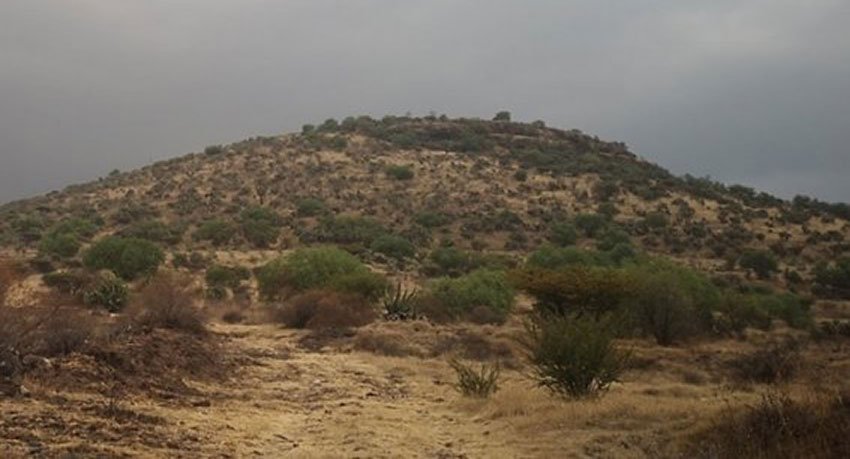
View of the town from El Cerro de Amatitán.

The small Jalisco town of Amatitán is not designated a Pueblo Mágico (magical town) but it seems every time I visit it I discover something curious and interesting.

Amatitán is located 33 kilometers northwest of Guadalajara. The first time I went there I was surprised to find the plaza at its far eastern end. “Why isn’t the town square in the middle of the town, like everywhere else in Mexico?” I asked the local public relations man, Ezequiel García.

“It’s because of the water,” he said, guiding me to a rustic pool at one end of the plaza. “In bygone days this was the only source of water in all of Amatitán and people came here to fetch it. By the way, you might be interested to know that this water flows out of several man-made tunnels dug into the hill next to the plaza.”

This interested me greatly because I have had several opportunities to study some of the underground aqueducts or qanats that have been used all over Mexico to bring water to dry pueblos.

García showed me a plaque near the pool, which explained that qanats were invented in Persia thousands of years ago and the qanat technology proved so successful that it literally spread across the world to Arabia, to China, to the Roman Empire and via Spain to the Americas.

When I discovered that no one had ever mapped the passages of the qanat de Amatitán, I offered to survey it using techniques I had long employed for mapping caves. Here are my notes on that experience:

“Our survey moved along quickly because these man-made passages — unlike those of a natural cave — went in straight lines. We had hoped our boots would keep us dry, but the water on the floor turned out to be knee-deep and a cool 17 C. After 64 meters, the flooded main passage turned right and got a bit deeper.

“That’s when we spotted live wires, connected to the electric lights installed in this tourist attraction, disappearing into the water we were standing in. Well, over the years cave exploration may have presented us with certain problems, such as puddles of evil-smelling vampire guano and ‘lakes’ of suffocating carbon dioxide, but at least we’d never been in danger of being electrocuted while standing in two feet of water!

“In the end, though, we survived and our survey showed that this qanat has four passages totaling 113 meters, with an air temperature of 18 degrees and 83% humidity, should anyone be interested.”

“We have another tunnel like this in town,” Garcia casually mentioned when I presented him with a map of the qanat — and that is how we discovered a second fascinating spot in Amatitán called El Chimulco. This tunnel was most interesting because its waters were channeled to a pool inside a “casco de hacienda” (mini-hacienda?) which had been built by the leading local families for swimming, dining and relaxing.

A few years ago, these scenic ruins were transformed into “Restaurante Ruinas de Chimulco,” which is open Friday to Sunday. When we went to eat there — after touring the qanat, of course — we were visited at our table by one of the owners of the place, Mayra Rosales.

“These ruins are almost 300 years old,” she told us. “They go back to 1729. As you can see, the style here is Arabian. You can find pools like this, enclosed by four walls, in Morocco. The roof above us is vaulted and no beams were used to support it. I came to this place when I was eight years old with my mother, who would bring a tubful of clothes here to wash. All along the river that flows out of here were rustic ‘lavaderos de piedra,’ flat rocks set up for washing clothes with a brush and soap and I helped my mother do this chore with a little bucket I would fill up and pour out.”

She pointed to two tall pitayos (cacti) growing on the wall above the pool. “I remember looking up at those pitayos as a little girl — and they are still here! When my family bought this land, my husband said we have to remove those pitayos because they could fall on top of somebody. But I replied, ‘Look, if they haven’t fallen down during 50 years, they’re never going to fall down.’ So they are still here.”

After enjoying a meal at the picturesque ruins of Chimulco, you may want to stroll over to Amatitán’s Museo de las Tabernas, located just north of the plaza. To my delight, I found things explained here both in Spanish and in English.

Tabernas, I learned, is the word first used to describe mezcal distilleries in this area, and Amatitán is surrounded by them. Local researchers point out that it was their ancestors who first employed the famed blue agave tequilana to make spirits. “That agave is native to our Tecuane Canyon,” they insist, “and what is now called tequila was first made here.”

One of the surprising things about this museum turned out to be its gift shop where, for the first time, I was able to see in one panoramic view all 18 brands of tequila which are being produced in and around this little town.

After visiting the Museo de Tabernas, plan some time for wandering around the town’s beautiful back streets which, in my opinion, are charming enough to qualify Amatitán as a Pueblo Mágico. In the most unexpected places you will find plaques, again in both Spanish and English, like the following, written in 1795, which describes the benefits of drinking tequila:

[soliloquy id="64603"]

“Is this drink bad for you? It is not. (At worse, it) inebriates and causes lethargy. The same happens with the finest wines from Spain and no one has said that is harmful to your health. Drinking mezcal in moderation, as one should . . . is good for the stomach, comforting and medicinal and as such is recommended by doctors. I have tried it and know that it is helpful.”

Who wrote this? Anyone reading the often curious and interesting plaques along the streets of Amatitán would know it was none other than Esteban Lorénzo de Tristán, bishop of Guadalajara, in a letter to the Spanish viceroy.

[wpgmza id=”105″]

By now you may think that I have surely exhausted all the charms of Amatitán, but in reality I haven’t had a chance to talk about the great Mexican architect Luis Barragán, who just happened to have an aunt living in this town. He consequently created numerous obras in the local church and elsewhere, each well worth visiting.

Oh, and did I forget to mention that Barragán dragged his friend, the famed muralist José Clemente Orozco, to Amatitán, insisting he do a few paintings in the church? Well, I won’t go into it, because they say Orozco was so put off by the unfriendly attitude of the local priest (“I’d rather leave these spaces blank than let you paint anything here!” the padre supposedly said) that he ripped up his sketches and marched out of the church. As a result, Orozco’s grandson told me, “My grandpa never painted anything in Amatitán.”

All of this could make you suspect that Amatitán has more to offer than first meets the eye. If you want to see for yourself, you’ll find the church listed on Google Maps as “Inmaculada Concepción Parish.” The Museo de Tabernas is called “Museo Interpretativo del Paisaje Agavero” and the qanat-cum-restaurant is “Ruinas Chimulco Restaurante.”

As for the claim that Amatitán is the birthplace of tequila, it’s necessary to examine a few of those old tabernas in the valleys and canyons outside the town, and this I propose to do in my next article.

The writer has lived near Guadalajara, Jalisco, for more than 30 years and is the author of A Guide to West Mexico’s Guachimontones and Surrounding Area and co-author of Outdoors in Western Mexico. More of his writing can be found on his website.

Gymnast makes history in vault with first-ever medal for Mexico

0
Moreno, right, on the podium today in Qatar.

Gymnast Alexa Moreno — mocked for the shape of her body during the 2016 Olympic Games — made history today as the first woman to win a medal for Mexico in artistic gymnastics.

The Tijuana athlete won bronze in vault at the world gymnastics championships in Doha, Qatar.

Participating in vault, Moreno’s jumps earned her 14.508 points, less than a point behind artistic gymnastics champion Simone Biles from the United States, and a mere 0.008 points behind Shallon Olsen from Canada.

It was the fourth world championship for Moreno, 24, but her first medal win.

She was also part of Mexico’s team at the 2016 Olympics in Brazil, where she competed in uneven bars, floor exercise, beam, vault and all-around gymnastic heats, but failed to qualify for the final rounds, finishing in 31st place.

Instead of winning a medal, Moreno won fame on Twitter where she was subjected to body-shaming by people critical of her physique.

But her supporters rushed to her defense and outnumbered the critical trolls.

Source: Esto (sp), Marca (sp)


Caravan No. 4 brings more migrants to border; others head home after warnings

0
North-bound migrants arrive at Guatemala's border with Mexico.
North-bound migrants in Guatemala.

A fourth migrant caravan made up of around 2,000 people has arrived at the Guatemalan side of Mexico’s southern border.

The migrants, mainly Salvadorans fleeing poverty and violence, plan to enter Mexico Monday via the same Chiapas border crossing where the other three caravans entered.

The group is mainly made up of young men but there are also smaller numbers of women, children and elderly people.

They are currently camping out in the central square of Tecún Umán, Guatemala, a small town directly across the Suchiate river from Ciudad Hidalgo, Chiapas.

Migrants’ spokesman Ramón Torres said yesterday that they rejected a proposal from Mexican authorities to enter Mexico in small groups in order to register with the National Immigration Institute (INM) and be taken to a shelter in Tapachula.

“That’s a strategy that the Mexican government is using to . . . break up the caravan. But they won’t be able to do it because we’re going to enter all together,” he said, without specifying if they planned to do so legally.

Once in Mexico, the fourth caravan is expected to wait for yet more migrants who are still traveling through Guatemala or have only just left El Salvador.

The first migrant caravan, made up of around 4,000 Central Americans, reached Matías Romero, Oaxaca, yesterday after failing to secure mass transportation to Mexico City.

More than 500 children aged under 10 are suffering from respiratory illnesses, a Oaxaca human rights organization said.

The caravan was planning to travel via Veracruz but Governor Miguel Ángel Yunes Linares sought to dissuade the migrants by saying that state authorities would only offer security and not food or shelter.

“We can’t welcome a significant number of people. There are already migrants in Veracruz who have been here some time, the vast majority are asking for money in the street,” he said.

The second caravan, which clashed with Federal Police at the border last Sunday, is still in Chiapas.

Immigration officials and Federal Police detained and deported 160 members of the group Wednesday because they entered Mexico illegally.

The remaining members of the caravan, still numbering close to 2,000, are traveling today from Huixtla to Mapastepec.

The third caravan of around 450 Salvadoran migrants entered Mexico legally Tuesday and filed asylum requests with the INM. They are still in Tapachula awaiting immigration papers.

While most migrants remain determined to reach the United States’ southern border where they intend to request asylum, some have heeded warnings that danger awaits them and are heading home.

One migrant turning around is a Salvadoran man identified only as Raúl who has only traveled 250 kilometers from his home.

While on the road, Raúl received a call from his wife in El Salvador who told him that messages were circulating on WhatsApp chat groups — which were used to organize at least one caravan — saying that migrants are in danger of being killed as they travel through Mexico.

Criminal groups have long preyed on Central Americans transiting Mexico, forcing men into working for them and pushing women into prostitution. Those who refuse to cooperate run the risk of being killed.

Another potential danger awaits the migrants if they manage to cross Mexico and reach the United States.

U.S. President Trump said in a speech this week that migrants throwing rocks at U.S. forces will be treated as armed.

“They want to throw rocks at our military, our military fights back. We’ll consider — and I told them — consider it a rifle. When they throw rocks like they did at the Mexico military and police, I say consider it a rifle.”

Raúl told the newspaper Milenio that in addition to the risks posed by traveling through Mexico, Trump’s threats had also influenced his decision to head home.

“It seems dangerous, people are saying that Trump is going to shoot us when we get to the border and I don’t want that, I want to work there, I don’t want to get shot,” he said.

Source: El Universal (sp), Milenio (sp)

Morena prepares legislation to legalize recreational use of marijuana

0
Future interior secretary Sánchez: celebrating Supreme Court ruling.

Legislation to legalize marijuana is coming after rulings this week by the Supreme Court regarding its recreational use.

Morena party Senator and future interior secretary Olga Sánchez Cordero said the party is preparing legislation that would regulate the production, sale and distribution of marijuana.

“We’re moving that way . . . toward the legalization of the use, not only medicinal but recreational, of marijuana. And I say this from my heart, we are celebrating it. The court set a marvelous precedent that will allow us to move forward,” said Sánchez.

In the lower house of Congress, party leader Mario Delgado Carrillo said his fellow lawmakers will go ahead with Sánchez’s proposal.

“The court set a precedent . . . allowing us to make a great step forward in terms of regulation that would allow the recreational consumption of marijuana . . . .” he said.

Jalisco Governor Aristóteles Sandoval Díaz agreed with the move, declaring before the state Congress that “it is time for a change . . . because what is killing our youth is drug trafficking, not drug use. Let’s put an end to taboos, legalize it now!”

“In the coming years, Jalisco will continue to have a progressive government and Congress that will be an example for the nation in terms of liberties and freedoms,” said the Institutional Revolutionary Party governor.

Not so enamored with the idea is the National Action Party, whose secretary general expressed concern about the Supreme Court ruling. Fernando Rodríguez Doval said it worried about the risk of greater addiction problems.

He also predicted that legalization would have little effect on organized crime activities.

Source: Reforma (sp), ABC Noticias (sp)

Honduran migrant abandons caravan to study law in Guerrero

0
The young migrant who wants to study law.

A young man from Honduras who was part of the first caravan of migrants to enter Mexico in October has had a change of heart about making a new life in the United States: he is considering staying in Guerrero.

Jefferson Rodríguez, 21, left what little he had to flee drug violence, unemployment and a lack of opportunities.

Rodríguez abandoned his travel companions in the first and largest of the migrants’ caravans after he met with representatives from the Chilpancingo-based Minerva Bello Center for Human Rights while in the southern state of Chiapas.

The non-governmental organization told Rodríguez that it could help him get established in Mexico and become a law student in the capital of Guerrero.

He told the newspaper Milenio that to demand change in his home country was impossible because “if you confront the government, they make you disappear.”

He said most of his friends are dead or have disappeared.

“There they do not look for those who have disappeared like they do here. When you disappear there you disappear and no one sees anything. Most of my childhood friends were killed and disappeared.”

And no one can do anything about the government, “no one can.”

Source: Milenio (sp)

AMLO says he will fulfill promises with macroeconomic stability and no deficit

0
Future finance secretary Urzúa: reserves won't be touched.

President-elect López Obrador has pledged that his government will maintain macroeconomic stability and not put Mexico into debt while fulfilling its campaign commitments.

The leftist political veteran, who will be sworn in as president on December 1, made the promises in a video message uploaded to social media in which he looked ahead to expenditure that will formally be announced in the 2019 federal budget.

“We’re going to fulfill our campaign commitments. Income will be sufficient to finance the budget and spending next year. We’re going to maintain macroeconomic stability, in other words, we’re not going to spend more than what comes in, there won’t be a deficit, we’re not going to put the country into debt, debt isn’t going to grow in real terms,” López Obrador said.

The president-elect said there are five expense items that absorb a large part of the budget but are “untouchable.”

They are overall debt, debt from previous fiscal years (known as ADEFAS), personal services including remuneration of government officials, old-age pensions and budgetary allocations to state and municipal governments.

Together the five items have a projected cost of more than 3.6 trillion pesos (US $182 billion) next year, 153.7 billion pesos (US $7.7 billion) more than the budget approved for this year.

However, López Obrador said that combating corruption will enable the new government to put an end to “leaks” in the budget and make significant savings.

“A lot of money goes down the drain of corruption,” he declared.

The president-elect, who will head a government led by the leftist Morena party, previously announced that seven urgent infrastructure projects will be prioritized with an investment of 500 billion pesos (US $24.9 billion).

They include building the Maya train on the Yucatán peninsula, developing a trade corridor in the Isthmus of Tehuantepec region and earthquake reconstruction.

The president-elect has also announced a plan to “rescue” the energy sector which includes building a new 160-billion-peso (US $8-billion) refinery and upgrading the six existing ones.

Earlier this week, López Obrador said the decision to cancel the new Mexico City International Airport will save the federal government around 100 billion pesos (US $5 billion) and that converting the Santa Lucía Air Force Base for commercial aviation will cost 70 billion pesos (US $3.5 billion).

The decision was slammed by business leaders including Mexican Employers Federation (Coparmex) president Gustavo de Hoyos, who said killing the airport would be “the biggest waste of public resources in the history of the country.”

With regard to the next federal budget, De Hoyos said that López Obrador must ensure that three essential criteria are met: don’t increase debt, maintain the primary surplus and don’t raise taxes.

“The most important thing is for the federal budget . . . to be balanced . . .” he told the newspaper El Financiero after López Obrador’s video message was published.

Some financial analysts and Mexican media have speculated that the López Obrador government could seek to use Bank of México international reserves to fund public spending and investment and even hold another public consultation to greenlight the idea.

But future finance secretary Carlos Urzúa yesterday rejected the claims.

“No, no, no, the international reserves won’t be touched, they’re the central bank’s,” he said.

Source: El Financiero (sp) 

Family services agency buries food supplies, claims they were contaminated

0
Residents inspect food packages dumped by family services agency.
Residents inspect food packages dumped and buried on private property.

The DIF family services agency in Guerrero buried at least 5,000 packages of food on a property believed to be owned by the family of the organization’s director.

Residents of Rodecia and Tenexpa, located in the municipality of Tecpan de Galeana, said that four DIF trucks filled with food passed through both towns last Saturday and unloaded the supplies into a large hole on an estate allegedly owned by the family of Francisco Solís Solís.

The items buried included rice, beans, tuna, sardines, canned vegetables, milk and powdered milk, none of which had passed their best-before date.

While local residents accused Solís of attempting to steal the food, DIF Guerrero said the items were contaminated by flooding.

“On August 9, 2017, due to heavy rain in the city of Tecpan de Galeana . . . our regional storage facilities were flooded and the number three warehouse was affected by water and mud. In said warehouse, there were 10,395 food packages . . .” the agency said in a statement issued in January.

A relative of Solís also claimed this week that the food was buried because it wasn’t fit for human consumption.

However, residents of both Rodecia and Tenexpa who went to the property presumably owned by Solís to dig up the buried items say there is nothing wrong with the food.

It’s not the first time that DIF Guerrero has been caught up in a scandal.

In January 2017 DIF staff delivered breakfast packages to primary and secondary schools in the state capital Chilpancingo. Students who ate the food contracted food poisoning.

Source: Reforma (sp), Milenio (sp) 

AMLO’s new immigration chief vows kinder attitude toward migrants

0
Guillén: kinder, more receptive strategies required.

North of the border the United States government is warning that its armed forces will fire on migrants who throw rocks at them, but in Mexico a kinder and gentler approach is coming.

The future chief of the National Immigration Institute (INM) has vowed that Central American migrants will receive kinder attention during the administration of the incoming federal government.

Tonatiuh Guillén told the newspaper Reforma that he would reform the INM so that it is fully respectful of migrants’ human rights.

The current government’s decision to send the Federal Police to Mexico’s southern border to try to contain the migrant caravans was a “serious mistake,” he said, citing their clash with the second migrant caravan, in which a Honduran man was killed as evidence of his claim.

“. . . [The presence of police] put girls, boys, women and all the people who were on the border bridge at risk, making the situation tenser and more difficult . . .” Guillén said.

“. . . Another strategy should have been used, a much kinder and more receptive one . . . [the situation] would have ended in a better, more humane and more civilized way . . .”

The social sciences academic and former head of the College of the Northern Border, who was announced this week as the new INM chief, said that under a Andrés Manuel López Obrador presidency migrants won’t be stigmatized nor will their personal situations be ignored.

“We have to assume that the flow [of migrants] coming from Central America, and especially Honduras, are people who have been forced to leave their country for reasons such as violence, poverty and exclusion and that this situation is going to continue at least in the medium and short term,” Guillén said.

He added that INM detention centers will be converted into spaces that attend to the needs of migrants as part of a reform intended to address frequent complaints filed with the National Human Rights Commission (CNDH) against the immigration institute.

“There must be a complete reconceptualization of the centers, we need to carry out a very thorough review of what they are [and] what their purpose is . . .” Guillén said.

“We have to make the [immigration] institute much more protective, caring and humane.”

U.S. President Trump said in a speech this week that migrants throwing rocks will be treated as armed.

“They want to throw rocks at our military, our military fights back. We’ll consider — and I told them — consider it a rifle. When they throw rocks like they did at the Mexico military and police, I say consider it a rifle.”

Trump has ordered 5,200 troops to the border to stop the caravans of migrants heading that way, and has suggested he might increase the number to 15,000. He said all migrants arrested at the border will be detained and held in “massive cities of tents.”

Source: Reforma (sp)