Home Blog Page 2022

Petroleum theft a ‘socialized’ problem for 45 Hidalgo communities

0
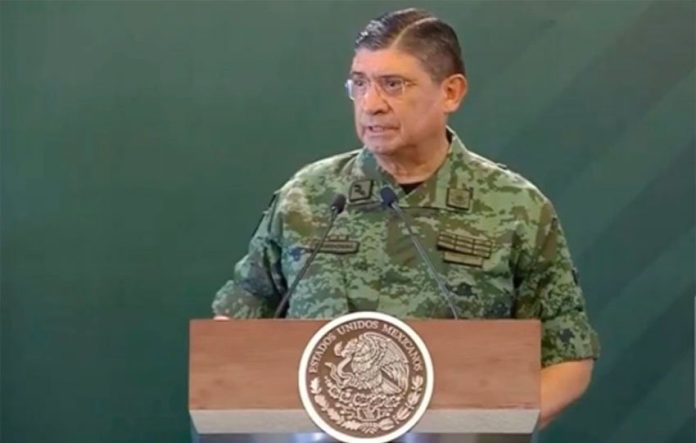
Defense Secretary Sandoval in Pachuca this morning.

Seven criminal organizations engaged in fuel theft are active in 45 communities in the state of Hidalgo, where the practice has become “socialized” and involves residents in both stealing fuel and shielding criminal gangs, the defense secretary said today.

At a press conference this morning in the capital, Pachuca, Luis Crescencio Sandoval González said authorities have found 886 illegal fuel taps, which have since been sealed with concrete, a measure that has been successful in preventing repeat taps at the same site.

He said 3,142 personnel have been posted to key locations around the state to carry out surveillance and security protocols. Sandoval said 227,560 liters of petroleum have been recuperated thanks to security operations.

President López Obrador told the press conference that his administration will increase support to anti-petroleum theft efforts in Hidalgo, and celebrated the success of those efforts to date, having reduced theft in the state by 53%.

Nationwide, he said, the number of barrels of petroleum stolen daily has dropped from 80,000 in November of last year to 4,000.

The president admitted that the government has had only limited success in persuading residents not to collaborate with petroleum thieves, but urged citizens from other parts of the state not to stigmatize people whose towns are plagued by the crime.

Source: Quadratín Hidalgo (sp), La Jornada San Luís (sp)

Lawmaker proposes sterilizing women who have a second abortion

0
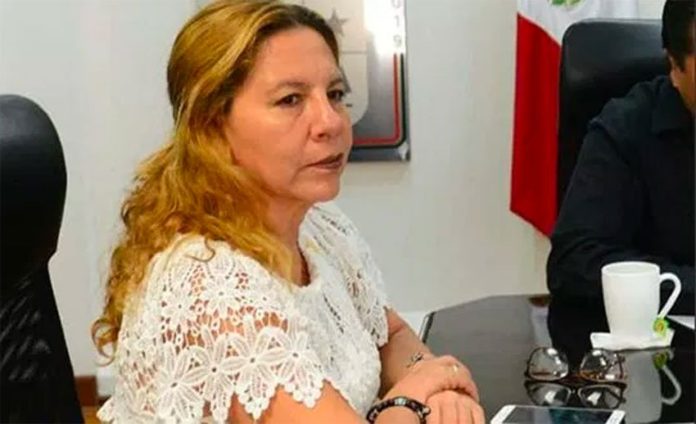
Quintana Roo Deputy López.

A lawmaker in Quintana Roo has come under fire after proposing the sterilization of women who abort a child for a second time.

On March 13, independent Deputy Sonia López Cardiel proposed a reform to the criminal code that would force women who want to have a second abortion to sign a document giving their consent to having a permanent contraception procedure.

Pregnancy termination in Quintana Roo is only legal in cases of rape, genetic disorders and health risks to the mother.

López argued that her proposal would be beneficial to women’s health because abortion is “exhausting for physical and mental health.”

The lawmaker also contended that preventing third abortions would reduce the number of children who are homeless, illiterate and live in situations of extreme poverty.

The proposal was referred to a parliamentary committee and will eventually be put to a congressional vote, although no date for that to occur has been set.

The Quintana Roo Human Rights Commission (CEDHQROO) and a range of other groups slammed López’s plan, describing it as discriminatory because women’s rights to make decisions about their own bodies would be limited.

“It’s a punitive and discriminatory measure that reflects gender stereotypes and prejudices as it would punish a woman for having an abortion . . .” CEDHQROO said.

The Quintana Roo Sexual and Reproductive Rights Network, an umbrella organization of 14 separate groups, said yesterday the proposal “fosters hate toward women by criminalizing them for their condition of unwanted pregnancy.”

It also said that enforced sterilization is a crime against in humanity as specified in Articles 7 and 8 of the Rome Statute of the International Criminal Court.

Mexico City is the only state in the country that allows abortions in all cases regardless of a woman’s motive, although a pregnancy must be terminated during the first 12 weeks.

In the 12 years that abortion has been legal in the capital, more than 209,000 pregnancies have been terminated, according to Mexico City health authorities.

In March, women’s rights activists rejected a suggestion from President López Obrador that the legalization of abortion could be put to a public vote.

“Rights are not up for consultation,” they shouted while the president spoke at an event to mark International Women’s Day.

Source: Infobae (sp) 

Veracruz files criminal complaint against its attorney general

0
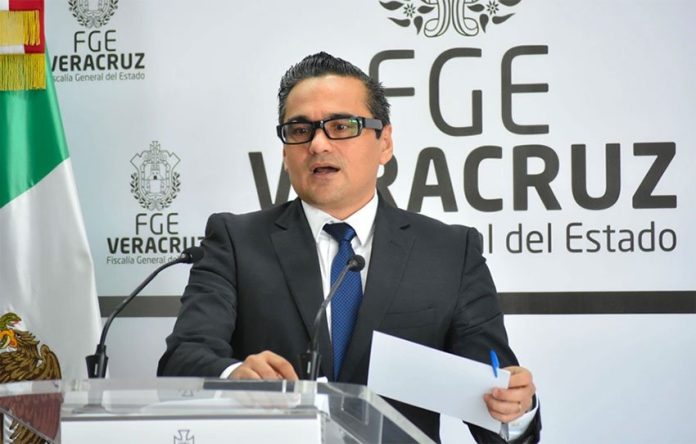
Attorney General Winckler faces criminal charges.

The government of Veracruz today filed a criminal complaint with federal authorities against the state attorney general for probable involvement in crimes that effectively amount to collusion and the obstruction of justice.

State Interior Secretary Erick Patrocinio Cisneros Burgos said Jorge Winckler Ortiz had concealed more than 150 arrest warrants over a period of two years, including some issued against suspects believed to have committed high-impact offenses such as homicide.

“In these two years, those high-impact criminals enjoyed total impunity in Veracruz and the country,” Cisneros said.

“This cannot be, the law says that once an arrest warrant is issued, it has to be uploaded to the Plataforma México [criminal database] within 24 hours so that it’s visible to state and federal authorities.”

However, Winckler took up to eight days to publish the warrants, Cisneros said.

The interior secretary asserted that the government has all the proof necessary for federal authorities to pursue the case against the attorney general.

Winckler was appointed to his current role during the administration of former governor Miguel Ángel Yunes Linares and has continued to serve in the government of Morena party Governor Cuitláhuac García, who took office in December.

The attorney general has recently been under pressure to resign as a result of accusations of corruption and collusion with organized crime and the former governor. Winckler is also accused of manipulating crime statistics.

President López Obrador said last month that “if he’s linked to the past governor, we have to look at things carefully because Veracruz had a problem with crime being supported by the government.”

He also said that Winckler “is not highly recommended.”

After the criminal complaint was filed today at a branch of the federal Attorney General’s Office (FGR) in Veracruz, state Public Security Secretary Hugo Gutiérrez Maldonado charged that Winckler is in cahoots with organized crime.

He contended that it will be difficult to fix the security situation in Veracruz if Winckler remains attorney general, charging that the Secretariat of Public Security (SSP) arrests criminals and turns them over to the state Attorney General’s Office (FGE), which instead of prosecuting them, sets them free.

“We can’t put up with so much impunity in Veracruz. It’s double the work but it doesn’t matter. If we have to arrest them five times, we’ll do it,” Gutiérrez said.

“We came to file this complaint and we’re going to follow it up. We’re sure that when we have an attorney general who is impartial to all residents of Veracruz, a lot of justice issues will significantly improve.”

Source: El Democrata (sp), La Jornada (sp), Al Calor Político (sp) 

Spanish firm to invest US $1.3 billion in five electrical plants

0
Two wind farms are part of Iberdrola investment.

The Spanish electric utility company Iberdrola is planning to invest US $1.3 billion in five new power generation plants that will market electricity to private enterprise.

Iberdrola México CEO Enrique Alba explained that the new facilities — two combined heat and power plants, two wind farms and a combined-cycle power plant — will be built this year and the next, and will meet the growing demands of the country’s manufacturing and industrial sector.

The investment is part of Iberdrola’s plan to invest a total of $5 billion in Mexico over the next six years.

“Mexico is a growing market, we see an important potential,” said Alba during the signing of an agreement with the Confederation of Industrial Chambers (Concamin).

The confederation’s chairman said that deals like the one reached with Iberdrola are aimed at resolving the blackouts that have been affecting parts of the country, like those on the Yucatán peninsula.

“We are doing our part to propel the growth of Mexico . . . ” said Francisco Cervantes, adding that agreements like this allow the industry to be more participatory.

Source: El Financiero (sp)

Navy will head up strategy to combat sargassum invasion

0
One estimate says a million tonnes of sargassum can be expected this year.

The Mexican navy will lead efforts to combat the expected arrival of as much as one million tonnes of sargassum this year, President López Obrador announced today.

Speaking at his morning press conference, the president said there was no need to contract with a private company that specializes in the removal of the unsightly and smelly seaweed because the Secretariat of the Navy (Semar) has its own “very good” experts and equipment.

He said the strategy would avoid additional costs and more efficient.

López Obrador pointed out that the navy also has low-flying planes that are used to detect the transportation of drug shipments at sea and “first-class technical vessels,” assets which would be useful to spot and remove sargassum before it washes up on the white-sand beaches of Quintana Roo.

He also said that there are naval bases in the area and that the navy “knows the whole region very well.”

“We’re asking the Secretariat of the Navy to help us, they have the equipment, they have experience and this problem is going to be solved,” López Obrador declared.

The president explained that the government’s anti-sargassum plan will be presented next week and that he would ask the Secretariat of Finance (SHCP) to draw up an economic plan to fund the removal efforts.

The secretariats of the Environment (Semarnat) and Tourism (Sectur) as well as the National Tourism Promotion Fund (Fonatur), state and municipal authorities and the private sector will contribute to the overall strategy to keep Quintana Roo’s beaches clean.

The Cancún-Puerto Morelos hotels association has estimated that cleaning the beaches of sargassum will cost at least 700 million pesos (US $36.7 million) this year.

Large amounts of the weed have been forecast to arrive on much of the Quintana Roo coast this week.

Source: El Financiero (sp), El Economista (sp) 

Best Buy plans to open eight new stores, expand to 15 states

0
The electronics retailer Best Buy will extend its reach this year.

The big-box consumer electronics retailer Best Buy has announced it will add eight new stores in Mexico this year, bringing the total number to 42.

Best Buy México CEO Fernando Silva told the newspaper Milenio that the firm “is very committed to Mexico, we have grown a lot in the 10 years we have been in the country, we are going to have over 40 stores.”

He said online sales have also been on the rise.

Five of the new stores will open in five cities that will be new for the retailer, which will extend its presence to 15 states. The goal of reaching all 32 states, Silva said, is still a distant one.

Best Buy intends to invest heavily in distribution centers and electronic control systems.

Speaking of online sales, Silva said that the arrival in Mexico of e-commerce giant Amazon “was very good for Mexican consumers,” who not only have more options but are becoming accustomed to shopping online.

“Our [business] model is very different,” he continued, as its physical and online retail sales “are so integrated it’s hard to separate them; that is an advantage we have in the market.”

Source: Milenio (sp)

Amid ongoing tension, foreign affairs secretary flies to Washington

0
tomatoes
If they're going to the US they're now subject to a 17.5% duty.

Amid ongoing tension between Mexico and the United States, Foreign Affairs Secretary Marcelo Ebrard is in Washington today for the 49th Conference on the Americas alongside U.S. Vice-President Mike Pence and other government officials.

Ebrard will give an address on Mexico-United States relations, the new North American trade deal and Mexico’s foreign policy agenda, according to the official schedule for the event.

While the conference – which this year is titled Disruption and Transformation in the Americas – will focus on issues that affect the entire western hemisphere, Mexican and United States officials won’t have a shortage of bilateral matters to discuss should the opportunity arise.

With record numbers of migrants entering Mexico in recent months, most seeking asylum in the United States, migration continues to be a key – and contentious – bilateral issue.

Andrew Selee, president of the Migration Policy Institute in Washington D.C., said the discussion of migration will be a priority for Ebrard during today’s conference.

While there are signs that the number of Central Americans crossing Mexico to the United States will decline this month, migration continues to be a “hot-button issue,” he said.

Trade matters including the outstanding ratification of the United States-Mexico-Canada Agreement (USMCA), recent delays at the border and an ongoing dispute over tomatoes could also be on the agenda in any two-way talks between Mexican and U.S. officials.

The new trade pact was signed by the respective leaders of the three countries last November but must be approved by all three national legislatures before it takes effect.

The lower house of Mexico’s Congress last month approved a landmark labor reform package, legislation that is considered crucial for the ratification of the USMCA in the United States.

While the labor reform approval represented progress towards ratification of the USMCA, long wait times at the Mexico-United States border caused by the redeployment of U.S. border agents to deal with large numbers of migrants only served to complicate the relationship, and cost Mexican exporters millions of dollars.

Bank of America Merrill Lynch economist Stephen Juneau said in a report Friday that the delays are costing U.S. companies US $5.5 million a month.

Last week, the Mexican government said it was considering retaliatory tariffs for U.S. border slowdowns although foreign trade undersecretary Luz María de la Mora expressed confidence such a move won’t be necessary due to the dialogue Mexico has with Washington.

However, communication between the governments of the two countries was unable to stop the United States from imposing a 17.5% tariff on Mexican tomatoes starting today.

De la Mora said the new duties were the result of a failure to renew a 2013 agreement that suspended a U.S. anti-dumping investigation.

The United States said in February that it intended to withdraw from the Suspension Agreement on Fresh Tomatoes from Mexico after a 90-day notification period, which expires today.

Secretary of Commerce Wilbur Ross said at the time that the withdrawal decision followed complaints from United States tomato producers, including the Florida Tomato Exchange, that they are being undercut by Mexican imports.

Mexico exports around US $2 billion worth of tomatoes to the U.S. annually, according to de la Mora, meaning that the new tariff could cost producers US $350 million.

“. . . It’s expected that a lot of small and medium-sized exporters will be unable to cope with this heavy financial burden,” the Secretariat of Economy (SE) said in a statement.

“We’re very disappointed,” de la Mora said.

“But the good news is that negotiations continue, looking for a solution. And we hope that in the coming weeks we can in fact reach an agreement.”

Source: Milenio (sp), Reuters (sp) 

Interpol red notice issued for ex-Puebla governor: attorney general

0
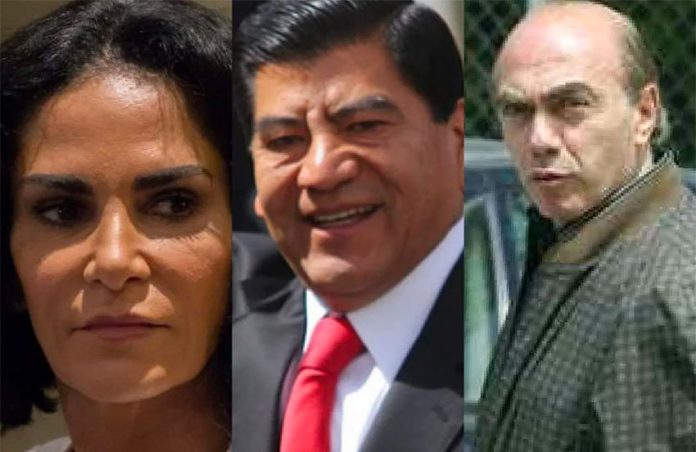
Journalist Cacho, ex-governor Marín and businessman Nacif.

Federal authorities requested a “red alert” from Interpol for the arrest of former Puebla governor Mario Marín, the attorney general said yesterday.

Alejandro Gertz Manero told a press conference that a federal court made the request at the same time that arrest warrants for the ex-governor and four accomplices were issued on April 11 in connection with the 2005 torture of investigative journalist Lydia Cacho.

He said Interpol has been actively searching in the 194 member countries affiliated with the international police organization.

“The same day that we received the arrest warrant that we asked for, [Interpol] issued the red alert, and whoever says differently is not telling the truth.”

However, there is no notice listed for Marín on the Interpol website nor does his name turn up anywhere on the site.

Cacho was detained by Puebla police in Cancún in 2005 on defamation charges following the release of her book, The Demons of Eden, which exposed a pedophilia ring.

Cacho faced torture and abuse while in custody, and the case became a national scandal when a tape was leaked of a conversation between one of the supposed leaders of the pedophilia ring, Kamel Nacif, and Marín plotting to punish the journalist.

Last week, police apprehended Juan Sánchez Moreno, a former official in the Puebla Attorney General’s Office and one of the key suspects in the investigation, but Cacho accused federal authorities on Twitter of allowing Marín, Nacif and their accomplices time to escape by not requesting the alert from Interpol at the same time as the arrest warrant.

The attorney general declined to comment on the search’s progress and whether authorities know the current location of the fugitive former governor.

Source: El Financiero (sp)

Odebrecht, Ayotzinapa, government corruption on attorney general’s agenda

0
Attorney General Gertz.
Attorney General Gertz reports on his first 100 days.

A new criminal probe into Brazilian construction company Odebrecht will be launched within 60 days, Attorney General Alejandro Gertz Manero told a press conference yesterday.

“Using recently gathered information and within a period of no more than 60 days, a case will be brought,” he said, adding that the company’s alleged corruption in Mexico could be prosecuted as “organized crime.”

Former Pemex CEO Emilio Lozoya will be a clear focus of the investigation as he has been accused of receiving US $10 million in bribes in exchange for awarding contracts to Odebrecht, which has been at the center of corruption scandals in several Latin American countries. Lozoya has repeatedly denied the allegations.

Mexico’s state-owned companies, including Pemex, have been banned from doing business with the Brazilian conglomerate for a period of three years.

Reporting on his first 100 days in office, the attorney general also announced that he had ordered a restructuring of the investigation into the so-called master fraud case in which 11 federal agencies are believed to have diverted billions of pesos via public universities and shell companies during 2013 and 2014.

Gertz revealed that the FGR sought the assistance of the FBI to investigate the explosion of a petroleum pipeline in Hidalgo in January that killed more than 130 people, and said that his department will fully support the work of the super commission created by López Obrador in December to find the truth about what happened to the 43 missing students of the Ayotzinapa Rural Teachers’ College.

The PGR’s “historical truth” about the case – that corrupt police handed over the students to a Guerrero criminal gang which subsequently killed them before burning their bodies in a municipal dump and disposing of the ashes in a nearby river – has been widely rejected.

Meanwhile, the Attorney General’s Office has demonstrated newfound zeal in identifying corruption within the government.

Statistics reveal that going after government officials who have allegedly been involved in corruption or committed other criminal offenses is now a priority.

Between January and March, 1,163 new probes were initiated into the conduct of civil servants, the highest number ever in the first quarter of a year.

The officials under investigation are accused of a range of crimes including fraud, bribery, embezzlement, petroleum theft, extortion, kidnapping and even homicide.

Source: Milenio (sp), El Financiero (sp) 

300,000 incomplete investigations, anarchy and extravagant spending in AGO

0
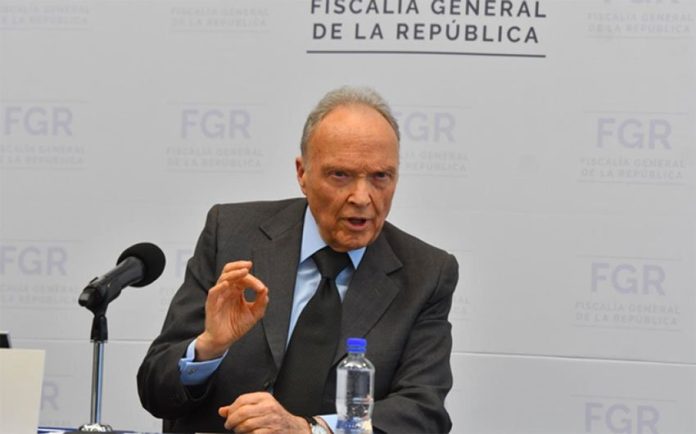
Attorney General Gertz.

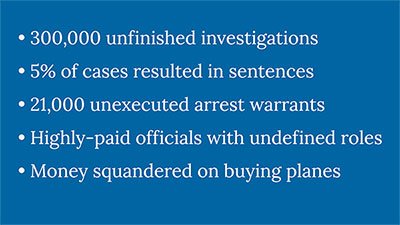
A backlog of more than 300,000 investigations, anarchy, a disproportionate number of high-ranking officials and unjustified extravagant spending are among a range of irregularities detected in the old federal Attorney General’s Office by the chief of the new department that replaced it.

Earlier this year, a new Attorney General’s Office called the Fiscalía General de la Republica (FGR) was created to succeed the previous office known as the Procuraduría General de la Republica (PGR).

The latter was heavily criticized during the six-year term of former president Enrique Peña Nieto, especially for its alleged mishandling of the 2014 Iguala case in which 43 young teaching students disappeared and were presumably killed in the state of Guerrero.

Attorney General Alejandro Gertz Manero, a veteran lawman and ally of President López Obrador who was elected as the FGR chief in January, yesterday offered details about the chaos he discovered in the now-defunct PGR.

He said the accumulation of more than 300,000 incomplete investigations was unjustifiable, adding that no more than 5% of cases examined by the PGR were completed and resulted in sentences.

Gertz also said there was no scheme in place to assess the number of investigations assigned to individual PGR officials, a shortcoming that resulted in a “disproportionate and illogical” allocation of cases.

One person could have responsibility for 1,000 cases while other similarly-ranked officials weren’t assigned a single file, he explained.

As there was no system in place to verify compliance with court orders and directives from other government departments, more than 21,000 arrest warrants went unexecuted and more than 28,000 ministerial commands were ignored, the attorney general said.

Gertz added that he found a backlog of more than 3,000 unissued forensic reports and charged that the PGR acted to protect the Peña Nieto-led government, stating that it became “an executioner of its political enemies while it permanently provided cover for the accomplices of power.”

He also said that the distribution of personnel within the PGR was flawed.

“There were areas of attention for citizens with a serious shortage of support personnel while on the other hand there were non-priority areas with an excess of wasted personnel,” Gertz said.

In addition, the attorney general found “a disproportionate number of high-ranking officials . . . with high salaries” whose roles within the PGR were not clearly defined.

Gertz said that money had been squandered on the purchase of planes at “obviously inflated prices” whose necessity and cost-benefit were not justified, and that the PGR rented substandard buildings at exorbitant prices while some of the department’s properties were unoccupied.

Gertz added that there was a lack of control over the use of the PGR’s fleet of 4,000 vehicles including a large number of armored cars, and that the department’s spending on security was “irrational and suspicious.”

Source: Milenio (sp), El Financiero (sp)