Home Blog Page 2046

AMLO announces 1.1 billion pesos for trans-isthmus train project

0
isthmus of tehuantepec plans
Big plans were announced for the isthmus in 2015 but little came of them.

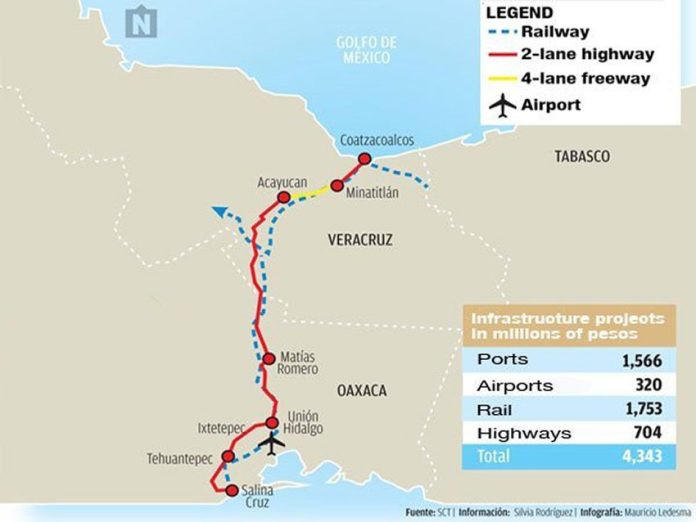
Improving train service across Oaxaca’s Isthmus of Tehuantepec has been announced a few times in recent years but nothing much has ever come of them beyond the actual reactivation of the route earlier this year.

Today there was another announcement.

President-elect Andrés Manuel López Obrador, on a tour of the region today, pledged an investment of 1.1 billion pesos (US $58.55 million) next year in the trans-isthmus train project.

Speaking in Juchitán, where he was met by residents unhappy about the aid provided for earthquake reconstruction, López Obrador said the existing train moves at a turtle’s pace due to the poor condition of the track and curves in the mountains.

The new train will not only be faster but at some point in the future will provide a passenger service as well as freight, he said.

The route, between Salina Cruz, Oaxaca, on the Pacific coast and Coatzacoalcos, Veracruz, on the Gulf of Mexico, has frequently been described as a potential rival to the Panama Canal because of the freight it might carry from coast to coast.

Source: El Financiero (sp)

US donation to aid restoration of Puebla monastery’s murals

0
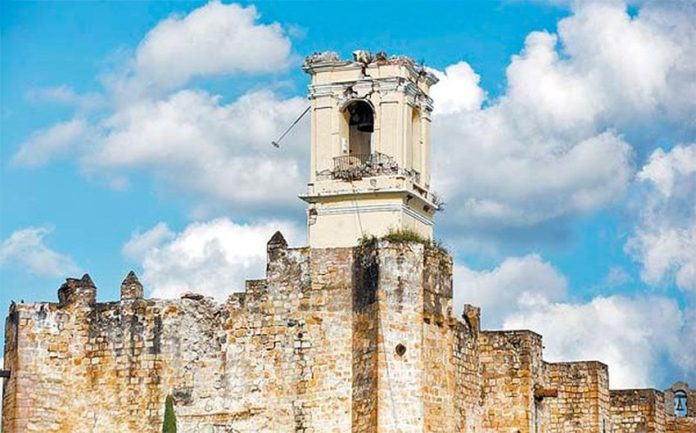
The Puebla monastery that was damaged in the earthquake one year ago.

The United States Embassy has donated US $200,000 to the National Institute of Anthropology and History (INAH) to help restore a 16th-century monastery in Huaquechula, Puebla.

Construction of the monastery of San Martín de Tours begun in 1531 and was finished in 1580. Built by the Franciscan order, the monastery’s walls are still adorned by remnants of rich murals.

But the building was damaged in the September 19 earthquake last year.

The donation by the U.S. Ambassador’s Fund for Cultural Preservation means that INAH will be able to restore a large area of “excellently crafted mural paintings with a great aesthetic, pictorial and historical importance,” said Diego Prieto, the institute’s director.

Restoring the murals began in June and is expected to be completed next year.

Established in the year 2000, the ambassador’s fund has financed the conservation of cultural sites and objects in 120 countries around the world.

Another recent contribution in Mexico was a $500,000 donation for the restoration of a Mayan archaeological site in Palenque, Chiapas.

Source: Milenio (sp)

Military, police executed 2, planted weapons in Puebla confrontation last year

0
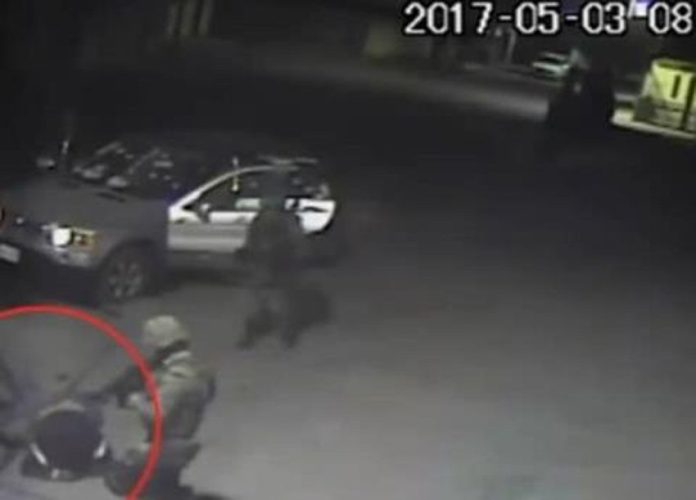
Clip from video footage of the confrontation in Puebla last year.

Soldiers and state police arbitrarily executed two people and planted weapons on two bodies during clashes with suspected fuel thieves in Puebla last year, according to an investigation by the National Human Rights Commission (CNDH).

Two confrontations on May 3, 2017 in Palmarito, a community in the municipality of Quecholac, left four soldiers and six presumed criminals dead as well as a further 26 people wounded. Nine adults and four minors were arrested.

The CNDH also said that military and police mistreated 12 people, including three minors, arbitrarily detained two children and manipulated a corpse.

The investigation revealed “serious violations of human rights, personal liberty and presumption of innocence . . .” the commission’s report said.

It also charged that the federal Attorney General’s office (PGR), the state oil company Pemex, the Puebla Attorney General’s office, the Puebla Secretariat of Public Security and a Puebla state court violated their legal responsibilities in relation to the case.

The PGR, it said, failed to submit copies of its relevant files to the CNDH, which amounts to an “obstruction of the right of access to justice to the detriment of victims, their families and society.”

The CNDH said it was concerned about the “prevailing impunity” of the crime of pipeline theft, stating that those arrested are not referred to the relevant authorities and don’t ultimately face justice.

In addition to outlining its findings, the government-backed but fully independent commission also made a series of recommendations to authorities.

Among those were instructions to the head of the Secretariat of National Defense (Sedena) and the governor of Puebla to pay compensation to all victims and to cooperate with investigations into the military and police personnel involved.

The CNDH said the PGR must continue its investigations into the homicides and injuries that occurred on May 3, 2017, and address complaints about irregularities relating to the investigation into the extrajudicial killings of two people.

Pemex should also cooperate with the PGR’s investigations and its facilities shouldn’t be used to hold people who have been arrested, the commission said.

It also called on the governor of Puebla to implement policies to combat pipeline theft in the area known as the Red Triangle, which is notorious for the presence of fuel thieves known as huachicoleros, and to take steps to professionalize the state’s police forces.

Source: Milenio (sp) 

Two semi-trailers used to store bodies in Jalisco: fired forensics director

0
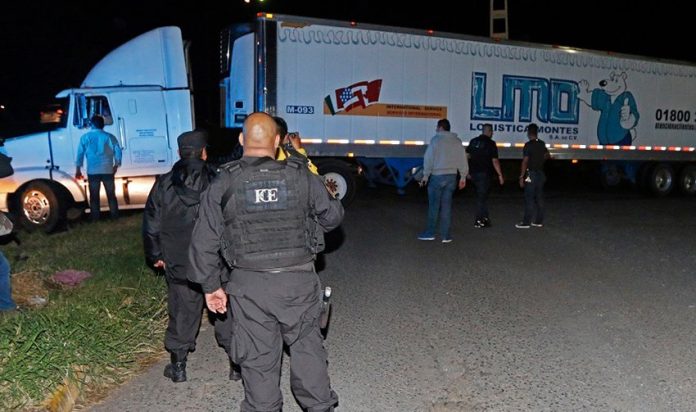
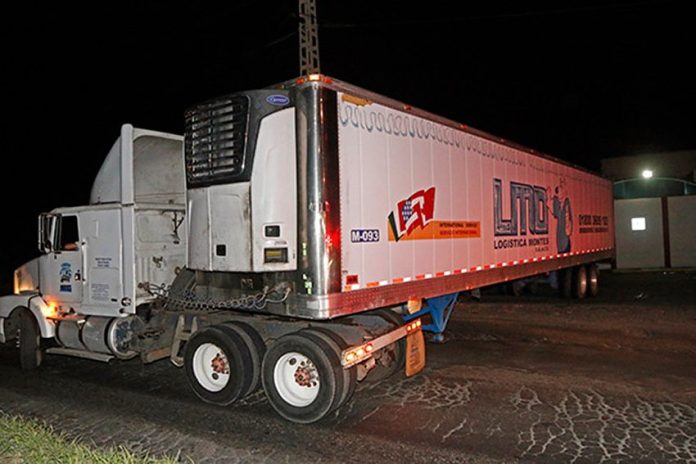
One of two trailers used to store bodies.

There is not just one but two trailers full of unclaimed bodies in Guadalajara, the former head of the Jalisco Institute of Forensic Sciences (IJCF) has revealed.

Jalisco Governor Jorge Sandoval Díaz announced Monday the dismissal of forensics chief Luis Octavio Cotero Bernal for his role in the case of the refrigerated trailer full of bodies. It was shuffled around the Guadalajara metropolitan area last weekend, drawing the ire of residents who complained of fetid odors.

But yesterday, Cotero confirmed the existence of a second trailer that was also used to store corpses due to a lack of space in state-run morgues but unlike the first one it was not removed from IJCF facilities.

“I calculate that there were around 250 [bodies] in the two trailers,” the ex-official told broadcaster Imagén Televisión, although he told the news agency EFE the number could be as high as 300.

Cotero said the first trailer was rented by the Jalisco Attorney General’s office (FGE) in 2013 and that it stored some bodies from 2004 and 2005.

The second was rented three months ago to store more bodies after a surge in deaths due to rising levels of violent crime overwhelmed state morgues.

“They were in a hurry to put a lot [of bodies into the trailer] because the National Human Rights Commission was coming and they were going to hide them in the new trailer,” Cotero said.

Upon dismissing Cotero, Sandoval said that the sanction imposed should be an example for all public servants involved in the custody, transportation and handling of unclaimed corpses, adding that he would not “tolerate dehumanizing treatment or alterations of established procedures.”

But in a radio interview, Cotero denied responsibility both for the decision to acquire the first trailer and for ordering it to leave government facilities and be parked in residential areas of the municipalities of Tlaquepaque and Tlajomulco de Zúñiga.

“Who hired it, who pays the rent, who pays for the maintenance of the motor that cools it, all that is charged to the Attorney General’s office,” he said.

“Even though I had [the bodies] there, by law it’s the Attorney General’s office that has the sole and exclusive power [in the matter]. I don’t have the authority to move them anywhere.”

Source: El Financiero (sp), Animal Político (sp) 

Business group’s study gives green light to existing airport project

0
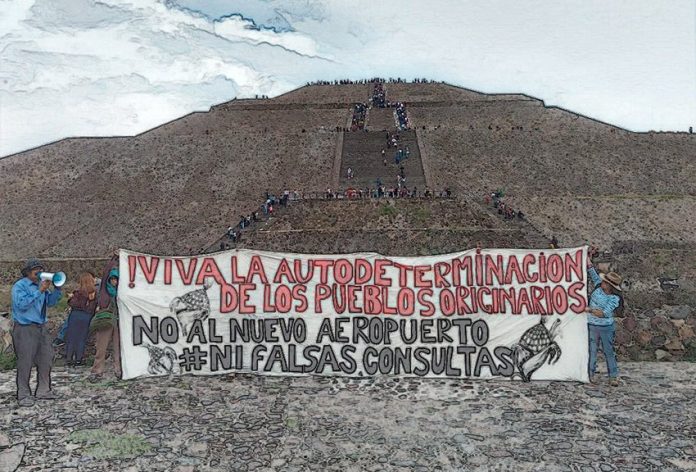
Airport opponents erected a sign in Teotihuacán on Sunday to voice their opposition.
Airport opponents erected a sign in Teotihuacán on Sunday to express their opposition.

The new Mexico City International Airport (NAICM) project has been given the green light by a study completed by the influential Business Coordinating Council (CCE).

At a press conference today, CCE president Juan Pablo Castañón presented six key recommendations of its analysis:

1. Continue the project at its current site (Texcoco, México state) in order to meet the demand for air travel now and over the next 50 years.

2. Review the cost of materials used in the construction of the project as long as it doesn’t compromise the functionality of the airport.

“We don’t want a sumptuous airport but we do want one that is functional . . .” Castañón said.

3. Review the project’s funding via the securitization of debt.

4. Increase the project’s social impact through development and job creation in surrounding municipalities, all of which are highly-marginalized areas.

“The Texcoco airport’s transformational potential is an opportunity that we must consider,” the CCE chief stated.

5. Don’t suspend the project.

“The cost of suspension [in terms of] time and finances is very high. In addition, the solution to the saturation of the current airport and the benefits for the population would be delayed.”

6. Consider the legal and financial implications of canceling the airport currently under construction, the consequences with creditors and contractors and the resultant reputational risk.

“The NAICM is a project with which all Mexicans win, with a multiplying effect . . . one that will enable new employment opportunities through trade and tourism,” Castañón said.

The CCE president outlined advantages of the new airport such as its projected capacity of up to 135 million passengers a year, which he said was more than double the combined capacity of the current airport and an air force base in México state which president-elect Andrés Manuel López Obrador has proposed as an alternative.

Castañón also said the new airport will help airlines cut costs that can be passed on to passengers in the form of cheaper fares.

Javier Jiménez Espriú, López Obrador’s nominee for secretary of communications and transportation, appeared alongside Castañón at today’s conference. He said the incoming government would analyze the CCE study with a view to informing the public about the pros and cons of keeping or scrapping the project.

He also said that the president-elect’s transition team is waiting for a report from the International Civil Aviation Organization about the viability of operating the current airport at the same time as commercial flights leave and take off from the Santa Lucía Air Base.

López Obrador, who will be sworn in as president on December 1, railed against the airport project during the election campaign period and threatened to scrap it, placing him at loggerheads with the private sector.

However, he later softened his stance and said last month that a public consultation, which could take the form of a national survey or referendum, will be held in the late October to decide the fate of the US $13 billion airport project.

Source: El Financiero (sp) 

Duarte and his wife built a real estate empire with more than 90 homes

0
A $7-million mansion in Miami allegedly owned by Karime Macías.

Former Veracruz governor Javier Duarte and his wife Karime Macías built a multi-million-dollar real estate empire made up of more than 90 properties, according to an analysis completed by the newspaper Reforma.

Through the examination of investigations conducted by the federal Attorney General’s office (PGR) and prosecutors in the ex-governor’s home state, Reforma counted more than 40 properties purchased by the couple in Mexico as well as more than 50 additional real estate assets acquired in the United States and Spain.

Duarte is currently in prison awaiting trial on charges of corruption and organized crime after being extradited to Mexico from Guatemala in July 2017, while Macías is reportedly living a life of luxury in London.

From the British capital it is just a short flight to Spain, where according to the Veracruz Attorney General’s office, the couple own apartments in both Madrid and Bilbao.

In the Spanish capital, Duarte and Macías own a 100-square-meter apartment worth more than 5 million euros (US $5.8 million) just meters from the Buen Retiro Park, Reforma said.

However, it’s Florida in the United States where the husband and wife really spent big, purchasing 23 houses, apartments and commercial buildings in Miami alone as well as a further 18 properties in the nearby cities of Homestead, Florida City, Cutler Bay and Coral Gables.

Duarte and Macías’ other U.S. properties, purchased either in their names or those of prestanombres or front men, are located in the exclusive Woodlands residential estate north of Houston, Texas, and in Scottsdale, Arizona. The couple also own five timeshare condominiums in the St. Regis Hotel in New York, Reforma said.

In Mexico, Duarte and Macías reportedly own land, houses and apartments in Cancún, Campeche, Ixtapa, Boca del Río, Valle de Bravo and three affluent neighborhoods of Mexico City.

Twenty-one parcels of land the couple acquired in Campeche are valued at 200,000 pesos (US$10,600) but, according to Reforma, the ex-governor paid 253 million pesos (US $13.45 million) for them through a shell company.

The newspaper said that Duarte’s former “financial mastermind,” José Juan Janeiro Rodríguez, is cooperating with the PGR and in January 2017 supplied the federal department with information detailing bank transfers made by Duarte’s administration that together total 1.39 billion pesos (US $73.9 million at today’s exchange rate).

It also said that Janeiro had promised to provide more evidence in exchange for the cancelation of any arrest warrants issued against him.

In a message accompanying evidence sent to the PGR on a USB flash drive, Janeiro says that as far as he is aware, he was the only person in possession of the information he was supplying.

The information, he said, detailed the origin and destination of some of the public funds allegedly embezzled by Duarte, who was in office from 2010 to 2016 before fleeing the country.

The so-called financial mastermind also said that he was prepared to testify in court if required but added “that can only occur once the arrest warrant or warrants against me have been canceled.”

On February 2, 2017, an arrest warrant against Janeiro on charges of money laundering and organized crime was revoked, Reforma said, but a PGR investigation into tax fraud was not suspended.


Source: Reforma (sp)

One year after earthquakes, 1,000 buildings at high risk of collapse

0
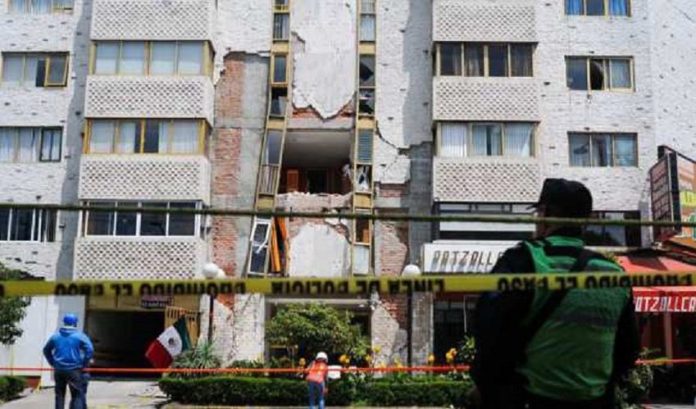
A building damaged in the September 19 earthquake.

A year after the second of last September’s two devastating earthquakes, more than 1,000 buildings in Mexico City remain at a high risk of collapse, according to information lodged by residents on a government website.

According to Plataforma CDMX, 434 damaged buildings have been demolished in the 12 months since the September 19, 2017 quake rocked the capital but 1,008 buildings still standing are at “high risk” of collapse, 1,638 are at “medium risk” and 1,833 present a “low risk” of collapse.

The figures are based on expert reports and structural analyses filed on the Mexico City government portal by affected residents, many of whom were forced to abandon their homes.

Tláhuac, a borough in the southeast of the capital, has the largest number of high-risk buildings with 280, followed by the central borough of Cuauhtémoc with 196.

The sprawling eastern borough of Iztapalapa, Mexico City’s poorest and most populous, houses 139 high-risk buildings, the more affluent Benito Juárez to its west has 103, while 98 are located in the southern borough of Xochimilco, where one entire neighborhood was virtually flattened.

All 16 of the capital’s boroughs have buildings at a high risk of collapse, although three — Álvaro Obregón, Cuajimalpa and Milpa Alta — have just two buildings in the most precarious category.

Plataforma CDMX, an initiative of the city government’s Reconstruction Commission, says that buildings in the highest risk category “cannot be occupied and must undergo a project of reconstruction and structural reinforcement.”

However, organizations representing victims of the 7.1-magnitude quake, which struck 32 years to the day after the even more devastating 1985 earthquake, say that one of the biggest barriers they have faced in accessing government support for reconstruction efforts is that many homeowners, especially in apartment buildings, don’t have title deeds.

In response, the Mexico City government has announced that free legal assistance is available to quake victims to ensure that their rights as homeowners are protected.

The government has a 2018 budget of 6.85 billion pesos (US $365.3 million) for reconstruction efforts but according to the newspaper El Financiero, there is a lack of clarity about how the money is being used.

Scores of buildings fell in the capital during the earthquake that struck at 1:14pm on September 19 with an epicenter in the state of Puebla, and according to the organization Mexicans Against Corruption and Impunity (MCCI), corruption played a role in more than 40 collapses.

Source: El Financiero (sp) 

Articulated buses to serve new Cancún-Tulum route

0
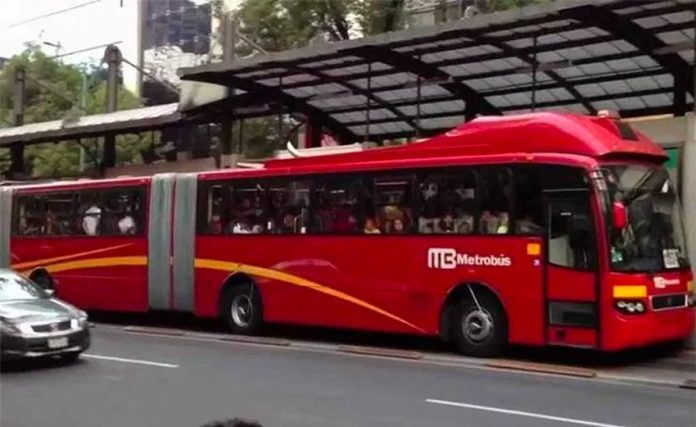
Articulated buses will provide a new service in Quintana Roo.

Four urban transportation companies have announced a new bus route for the Riviera Maya in Quintana Roo, connecting Tulum and Cancún.

With an initial investment of 250 million pesos (US $13.3 million), Turicún, Autocar, Maya Caribe and Cooperativa Bonfil intend to start operating a fleet of 140 articulated buses later this year.

One hundred buses will be based in Cancún, while the remaining 40 will operate out of Tulum. Each will have a capacity of 160 passengers. Promoters of the new service expect to cater to an average of 50,000 users per day, both residents and tourists.

Expected to create 1,500 new jobs, the first service of its kind in Quintana Roo will also implement environmentally-friendly technologies.

The 16 to 18-meter-long, natural gas-powered buses will also be equipped with wifi and “top quality services” intended to provide modern, comfortable, safe and efficient service at a price that is accessible to local passengers and tourists, the companies said.

The 104-kilometer route starts in downtown Cancún and includes the hotel zone. Buses will make stops at cities along the way, including Puerto Morelos, Playa del Carmen and Akumal.

Source: El Universal (sp), Noticaribe (sp)

520-room hotel near Tulum turned down for environmental reasons

0
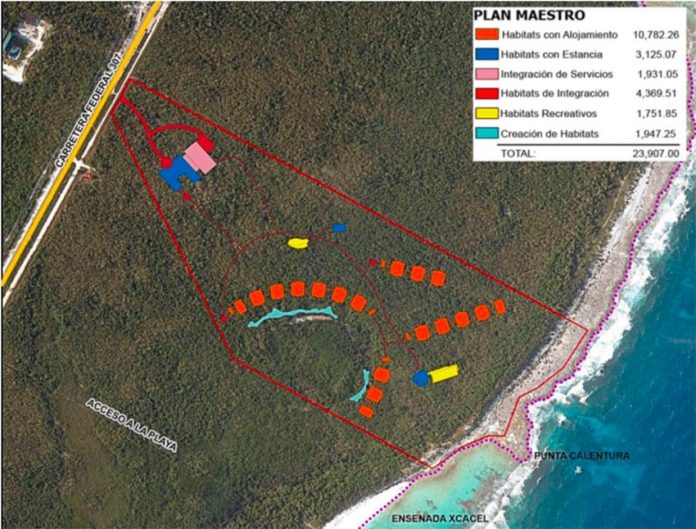
Site plan for hotel development turned down by Semarnat.

The federal Secretariat of the Environment (Semarnat) has blocked the construction of a 520-room resort between Playa del Carmen and Tulum, Quintana Roo, due to ecological concerns.

The company Palmares del Country was planning to build a project known as La Calma on land fronting Xcacel-Xcaleito bay, located in the municipality of Tulum but just 25 kilometers south of Playa del Carmen.

The 26-hectare development was to feature 520 rooms spread across 23 buildings as well as an artificial lake, its own network of roads, a parking lot, a lobby and a water treatment plant.

But Semarnat denied the required environmental permits on the grounds that the project would place both land and marine ecosystems at risk and have a negative impact on three endangered species of sea turtles, which feed, breed and nest in the turtle sanctuary adjoining the proposed development.

Several citizens’ groups officially registered their opposition to the project as soon as they became aware of it, submitting a complaint to Semarnat’s environmental risk division on February 19, the newspaper El Universal reported.

The same groups held at least two protests against the project and created an online petition calling on President Enrique Peña Nieto to reject the environmental permission sought.

The federal department formally ruled against granting environmental permission to the project on August 31 and notified the applicant of its decision on September 11.

Semarnat previously refused to authorize a smaller 75-room development on the same site, also citing concerns about the impact on sea turtles.

The Xcacel-Xcaleito Sea Turtle Sanctuary has been designated as a natural protected area and is the largest observed turtle nesting area on the entire Yucatán Peninsula, receiving green, loggerhead and hawksbill sea turtles.

Source: El Universal (sp) 

Forensic institute head dismissed over Jalisco’s ‘morgue-on-wheels’

0
Morgue on the move: trailer carrying bodies was shuffled around a few times on the weekend.

The head of the Jalisco Institute of Forensic Sciences has been dismissed for his role in the case of the refrigerated trailer carrying 157 bodies that was shuffled around the Guadalajara metropolitan area on the weekend.

There was no room for the semi-trailer’s cargo in overrun state morgues so it was first parked in a Tlaquepaque neighborhood until its foul odors triggered complaints that sent the trailer to another residential area in Tlajomulco de Zúñiga.

The offensive smells followed the trailer and its decomposing cargo, forcing authorities to send it to a warehouse in an industrial area of Guadalajara.

Yesterday Jalisco Governor Jorge Sandoval Díaz announced the dismissal of forensics chief Luis Octavio Cotero Bernal. He said the investigation into the morgue-on-wheels case was not closed and more dismissals could follow,

” . . . I understand and heartily regret the uncertainty caused by this kind of erratic action on the part of authorities,” the governor said.

He pledged that unidentified, unclaimed bodies would be treated with dignity at all times. “I promise to make up for this episode by providing an assurance that we will hire the best qualified staff . . . to avoid instances of negligence and indifference.”

The sanction imposed on Cotero should be an example for all public servants involved in the custody, transportation and handling of unreclaimed corpses, continued Sandoval, adding that he would not “tolerate dehumanizing treatment or alterations of established procedures.”

Source: El Financiero (sp)