Home Blog Page 2051

High risk of explosion due to gas leak created Puebla’s biggest emergency ever

0
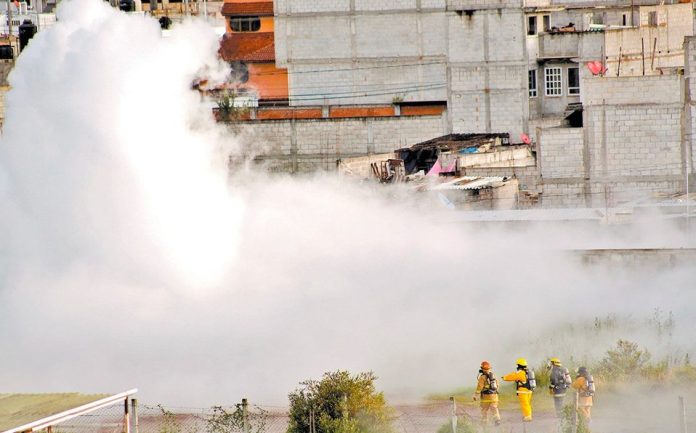
Firefighters and a cloud of gas yesterday in Puebla.

The gas leak in Puebla yesterday that forced the evacuation of 1,800 families was the first time the city has faced such a large emergency, according to the municipal Civil Protection director.

“. . . There was a very high risk [of explosion] . . .” said Gustavo Ariza Salvatori, adding that the emergency response followed established protocols and was both quick and proportionate to the danger posed.

At 3:00am yesterday, security authorities began receiving reports that gas was leaking from a Pemex pipeline in the neighborhood of Villa Frontera, around six kilometers north of the state capital’s historic center.

The leak is believed to have been the result of an illegal tap on the duct, a common practice of fuel thieves known as huachicoleros.

With the city still under the cover of darkness, municipal police broke the pre-dawn quiet by using their patrol car loudspeakers to order residents in Villa Frontera and other nearby neighborhoods to get out of bed and evacuate their homes.

Soldiers and officers of the Federal Police’s National Gendarmerie division also assisted in the evacuation efforts.

A cloud of gas had already begun accumulating above the affected area and threatened to explode at any moment.

Some residents were quicker to leave than others but eventually seven neighborhoods in the north of Puebla were left deserted.

All residents left on foot, many clutching their children, pets and important documents, because Pemex prohibited the use of cars out of fear that starting an engine could trigger an explosion.

In the end there was no explosion but residents can consider themselves fortunate to have been alerted. Due to the culture surrounding pipeline theft many pipeline perforations go unreported, said Civil Protection’s Ariza Salvatori.

“The most worrying thing is that people don’t make reports. There are more than 25 houses that adjoin the lot where the illegal tap occurred. It shouldn’t be possible that [in front of] more than 25 families, [fuel thieves] open up pipelines to steal gas,” he said.

State Civil Protection officials said just before 9:00am that Pemex personnel had successfully sealed the leak but it was almost midday, when the gas cloud had dissipated due to wind and the efforts of firefighters to suffocate it, that residents were allowed to return to their homes.

In addition to the evacuation of residents, classes were suspended in 95 schools, 180 patients were evacuated from a hospital and the Central de Abasto market was cleared of occupants.

More than 1,000 companies and small businesses were forced to shut their doors for at least part of the day.

Puebla Governor José Antonio Gali Fayad said that authorities have used security camera footage to identify vehicles believed to have been used by the huachicoleros responsible for the illegal tap.

Tools left next to the punctured pipeline could provide further clues to authorities.

Theft of liquefied petroleum gas is a growing problem in Mexico.

An industry group estimates that the crime has cost Pemex and private gas suppliers as much as 8 billion pesos (US $415.9 million) in lost revenue this year.

Source: El Universal (sp) Milenio (sp)
Liverpool store chain says adiós to the Fábricas de Francia brand

0
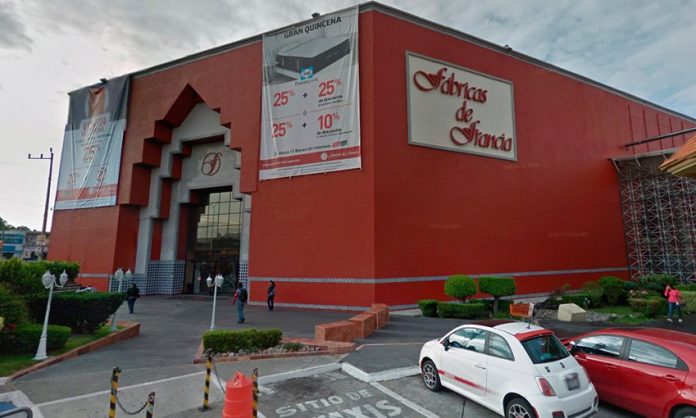
A Fábrica de Francia store, soon to disappear.

The department store brand Fábricas de Francia is about to disappear after its owner, the Liverpool department store chain, decided to consolidate its operations under the Liverpool and Suburbia brands.

The decision follows Liverpool’s 15.7-billion-peso (US $837.8-million) acquisition of the Suburbia chain of stores from Walmart in April last year.

Yesterday, Liverpool announced that the 41 Fábricas de Francia stores will be converted either to Liverpool or Suburbia stores. The process will start later this year and will continue throughout 2019.

The mid to high-end retailer intends to “simplify supply channels and boost profitability . . .” said Carlos Hermosillo, an analyst at the financial services firm Actinver.

He said the Suburbia brand has greater loyalty and recognition than Fábricas de Francia.

The analyst said expectations were positive after the announcement, which “confirmed the final phase of the integration of Suburbia into the . . . Liverpool platform. It is yet uncertain if [the decision] will add profitability, but it is a fact that going from three to two brands will simplify the supply chain and marketing efforts.”

Source: El Financiero (sp)

El Chapo’s son added to the list of drug agency’s most wanted

0
'Alfredillo' Guzmán, now on US most-wanted list.
Alleged narco 'Alfredillo' Guzmán, now on US most-wanted list.

The son of Joaquín “El Chapo” Guzmán, Mexico’s most notorious drug lord, has been included on the United States Drug Enforcement Administration’s (DEA) 10 most wanted fugitives list.

Jesús Alfredo Guzmán Salazar, also known as Alfredillo, is wanted for conspiracy to possess, distribute, import and export controlled substances.

In 2009, the 35-year-old was indicted by a district court in the state of Illinois for drug trafficking.

The DEA profile of Guzmán Salazar identifies the suspect as having brown hair and eyes but lists his height, weight and last known address as unknown.

El Chapo, the former head of the Sinaloa Cartel who is currently incarcerated in New York awaiting trial, allegedly entrusted his son with the control of several drug routes from Mexico into the United States, whose primary final destination was Chicago.

In 2015, the Office of Foreign Assets Control (OFAC), a financial intelligence and enforcement agency of the U.S. Treasury Department, ordered that any assets Guzmán Salazar holds in the United States be frozen.

The following year, Guzmán Salazar and five other Sinaloa Cartel members were kidnapped in Puerto Vallarta, Jalisco, by sicarios or hitmen of the Jalisco New Generation Cartel (CJNG) but all six men were later released.

Guzmán Salazar also gained notoriety for his clashes with Sinaloa Cartel boss Dámaso “El Licenciado” López Núñez, who was extradited to the United States in July and could potentially be a key witness against El Chapo in the trial scheduled to take place in November.

The DEA-listed fugitive was born in Zapopan, Jalisco, in 1983 and is the youngest child of Joaquín Guzmán and his first wife, Alejandrina María Salazar Hernández.

Guzmán Salazar is now one of four Mexicans on the DEA’s most wanted list along with CJNG leader Nemesio “El Mencho” Oseguera Cervantes, Sinaloa Cartel drug lord Ismael “El Mayo” Zambada and Guadalajara Cartel founder Rafael Caro Quintero, who kidnapped and murdered DEA agent Enrique Camarena Salazar in 1985.

Source: Milenio (sp)

The Tupperware transformation: some senators bring their own lunch

0
Senator Batres and his Tupperware.

Being a lawmaker in Mexico in a new age of austerity means giving up some perks that in times past were taken for granted.

No longer are cups of gourmet coffee and delicious sandwiches available free of charge in the Senate cafe, as they were when the upper house of Congress was located in the historic center of Mexico City, nor are there attendants known as edecanes or waiters at the ready to respond to lawmakers’ every whim.

In Mexico’s 64th federal legislature it’s back to basics: water, tea and coffee and whoever’s thirsty can serve themselves.

To overcome the newfound frugality, Senate president Martí Batres Guadarrama has come up with a suggestion that, while hardly groundbreaking, could quite likely seem novel to self-important lawmakers of yesteryear — or this year.

The idea: a Tupperware transformation, or for a new generation of tech-savvy politicians, a #TupperChallenge.

That is — shock horror! — bring your own lunch in a plastic container.

Batres himself has led by example, showing up for work with his red lunchbox tucked under his arm.

But while it’s still early days in the life of the new Congress, the idea hasn’t proven to be overly popular, except among lawmakers with special dietary requirements or those intent on maintaining a svelte figure.

In a recent sitting day in the Senate, employees of some senators were seen rushing into the chamber to deliver meals to their bosses from chain restaurants such as VIPS and Los Bisquets Obregón. The Senate doesn’t pause for lunch.

For others, such as former presidential candidate and National Action Party (PAN) Senator Josefina Vazquéz Mota, bringing a Tupperware container to work is nothing new.

For the past 12 years, she has packed a lunch of chicken, vegetables and jicama and swears that she never bores of eating the same thing every day or goes hungry.

However, getting all of her colleagues to take on the #TupperChallenge appears at this stage to be very near a mission impossible.

Having to ensure hunger pangs during long Senate proceedings could, however, bring about a change of heart.

The food and beverage-related austerity measures in the Senate were proposed and implemented by lawmakers of the soon-to-be ruling Morena party, which yesterday also presented an austerity bill in the lower house. 

Source: El Universal (sp)

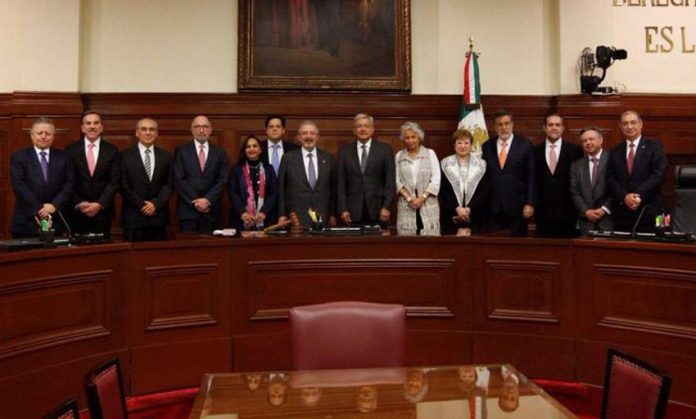
Supreme Court joins the austerity movement, trims spending by 15%

0
Judges of the Supreme Court have climbed aboard the austerity bandwagon.

The Supreme Court (SCJN) will aim to cut its spending by 15% next year in line with austerity measures announced by the court’s president last month.

The SCJN will ask the federal government for 4.78 billion pesos (US $251.4 million) for its 2019 budget, just over 850 million pesos (US $44.7 million) less than the 5.63 billion pesos (US $296.2 million) it was allocated this year, according to a financial projection.

Cost-cutting measures proposed by court president Luis María Aguilar Morales, including reducing costs related to protocols, the organization of congresses and conventions, travel, cultural activities and vehicle purchases, are all proposed in the document, to which the newspaper El Universal had access.

No judges or court officials will travel by private plane or helicopter, severance insurance will be halved, and judges and officials will be prevented from taking their families on trips paid for by the court under the court’s financial plan.

Aguilar Morales said last month that the SCJN, the Federal Judiciary Council (CJF) and the Federal Electoral Tribunal (TEPJF) all need to implement actions that enable “greater efficiency, effectiveness, rationality and austerity” in the use of public money.

He stressed, however, that the cost-cutting strategies would not “compromise the independence and autonomy of the jurisdictional bodies.”

The financial document, which will be submitted to the Secretariat of Finance (SHCP) for analysis, said that a significant effort will be made to ensure that future funding the SCJN receives goes to the delivery of justice and the protection of human rights and guarantees enshrined in the Mexican legal system.

The document doesn’t propose any change to the monthly salary of 266,841 pesos (US $14,020) that the 11 Supreme Court judges currently receive.

By comparison, justices of the United States Supreme Court are paid a salary of US $21,275 per month.

Source: El Universal (sp)

Veracruz fishing town houses narco-cemetery, though government denies it

0
Families of missing persons line up to see if they can identify clothing and other articles found in hidden graves.

Arbolillo, Veracruz, will no longer only be known as a sleepy fishing village on the Gulf of Mexico with fantastic food and friendly people.

It will now have to endure the unenviable attention that comes with being dubbed a favorite narco burial ground after a collective made up of families of kidnapping victims identified the town as the location of a series of recently-excavated mass graves.

The Veracruz Attorney General’s office said last week that 166 skulls had been exhumed from 32 hidden graves on a property in the state.

However, citing security reasons, Attorney General Jorge Winckler Ortiz didn’t disclose the location of the property, where a total of 174 craniums have now been found.

Arbolillo residents, known as alvaradeños due to the town’s location on the Alvarado Lagoon, have witnessed the presence of suspected members of the Gulf and Zetas drug cartels in the area, located around 60 kilometers south of the port city of Veracruz.

[wpgmza id=”78″]

But finding out that a property on the outskirts of their town has allegedly been used as a dumping ground for so many victims of violent crime has come as no less of a shock to the usually jovial locals.

In March 2017, members of the Solecito Collective alerted Winckler Ortiz to the suspected presence of hidden graves in Arbolillo and requested permission to carry out a search of the area.

The state government, however, denies that the coastal community is the location of the hidden graves, a position that Solecito founder Lucía Díaz rejects.

“We went there [the alleged site of the mass graves in Arbolillo] and saw that they had left clothes and other things there. It was clear to us that they [investigators] did a quick and bad job,” she said.

Journalists from the newspaper El Universal also traveled to the alleged location of the mass graves, which they reported is cordoned off and guarded by police.

Díaz is convinced that some of the human remains belong to people who have disappeared during the administration of current Governor Miguel Ángel Yunes Linares, who assumed office in December 2016.

“There are [victims relating to] three Solecito Collective cases who appeared in the graves and they disappeared during the government of Yunes.”

The collective has also accused the Attorney General of violating national and international protocols in the process of exhuming the graves, and violating the rights of families by not informing them first when graves are discovered.

In a radio interview yesterday, Yunes Linares rejected the claim that Arbolillo is the location of the graves containing 174 skulls and accused Díaz of being a liar.

“It’s a complete lie of the woman who said it, that the discovery is in Arbolillo . . . It forms part of this whole discourse of lies that this woman constantly tells, that she constantly makes public to feel important,” he said.

The governor added that the real location of the discovery will be announced at a later date and that members of victims’ collectives will be given access to the site at that time.

Díaz, who has been searching for her missing son since 2013, fired back today, describing the governor as “indifferent, insensitive and lacking principles” and accused him of failing to deliver campaign promises with regard to searching for and identifying remains.

Her organization has been active in identifying grave sites, often through anonymous tips from people with connections to organized crime, leading authorities to mass graves.

She said politicians will come and go but the parents of the missing will continue to search.

“You want your sons to be governors,” she said, addressing Yunes. “We just want to know where our sons are.”

Source: El Universal (sp), Xeu (sp)

1 mayor-elect missing, another is in a coma as election violence continues

0
Mayor-elect González: had received threats by telephone.

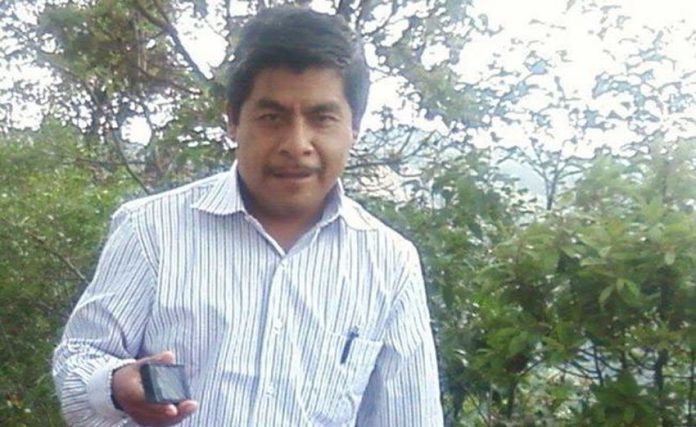
Pursuing a political career as a mayor in Mexico continues to be hazardous. A mayor-elect has been missing in Guerrero for the past 10 days while another is in a coma in Chihuahua.

On September 2 Daniel Esteban González, mayor-elect of Cochoapa El Grande, Guerrero, disappeared along with his driver after attending a meeting with a Morena party deputy in the municipality of Tlapa.

Before his disappearance Esteban had been fighting a challenge to the results of the July 1 election but the federal electoral court had recently ruled in his favor, formalizing his win.

The mayor-elect’s wife has declared that Esteban had received anonymous calls in which he was ordered to stop fighting the challenge to the election results.

Meanwhile, in the northern state of Chihuahua the winner of the municipal election in Gómez Farías remains in a medically induced coma.

[wpgmza id=”77″]

Blas Godínez Ortega was attacked on September 8 by a lone gunman who shot him in the head.

The doctor was placed in a coma prior to surgery on his left eye and optical nerve, saving both. But a similar procedure failed to save his left ear. Surgeons also had to remove a section of brain mass damaged by the gunshot.

Godínez is expected to come out of the coma soon. No prognosis has been given due to the severity of his injuries, although a full recovery has not been discarded.

Preliminary investigations by the state Attorney General’s office have discounted the involvement of organized crime in the attack because the bullet extracted from his skull belongs to a low-caliber gun that does not match those used by regional gangs.

Godínez ran for mayor and won on July 1. He was motivated by high levels of criminal violence in the municipality and the disappearance last year of his father, also a doctor, believed to have been kidnapped by a crime gang to treat gangsters wounded in gunfights.

He has not been seen since.

The 2018 election period was one of the most violent in Mexico’s history, when 175 politicians were assassinated between September 1 last year and August 31.

Since the July 1 elections there have been 63 acts of aggression against politicians, of which 21 were intentional homicides. Most of the victims were members of the Morena party, which swept most polls, and most occurred in Jalisco, Colima, Michoacán, Oaxaca, Puebla and Guanajuato, according to the risk consultancy Etellekt.

The Mayors of Mexico website also keeps tabs on such numbers. It reported yesterday that there have been 132 assassinations of mayors, mayors-elect or ex-mayors in the last 12 years. Forty-nine of those occurred during the Felipe Calderón administration and 83 since Enrique Peña Nieto took office in 2012.

Source: Tribuna Noticias (sp), El Heraldo de Chihuahua (sp), El Economista (sp)

Narcos throw half a tonne of cocaine overboard

0
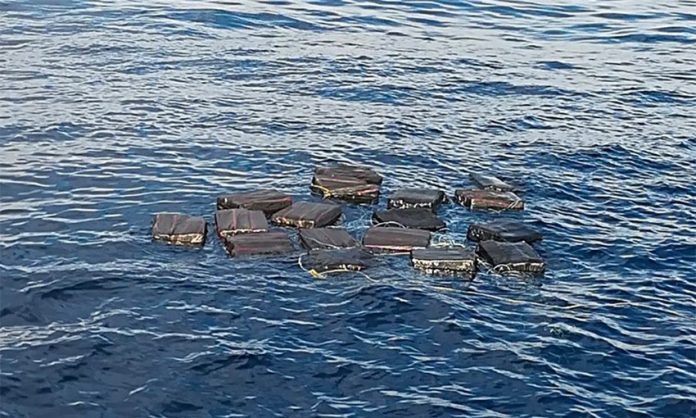
Packages jettisoned by narcos off Chiapas coast.
Packages jettisoned by smugglers off Chiapas coast.

Army and navy personnel retrieved over half a tonne of cocaine off the coast of Chiapas yesterday after narcos threw it overboard and made a fast getaway.

A suspicious-looking boat was sighted during aerial surveillance. The boat’s occupants, having been exposed, resorted to deep-sixing their illegal cargo and fleeing the scene to avoid arrest.

Security forces seized 17 packages containing 520 kilograms of a white powder believed to be cocaine.

More than 12 tonnes of cocaine have been seized off the Mexican Pacific coast this year, along with 23,000 liters of fuel, the navy said.

Source: Quadratín (sp), Milenio (sp)

8 arrested in lynching; 24-year-old dead after child snatching accusation

0
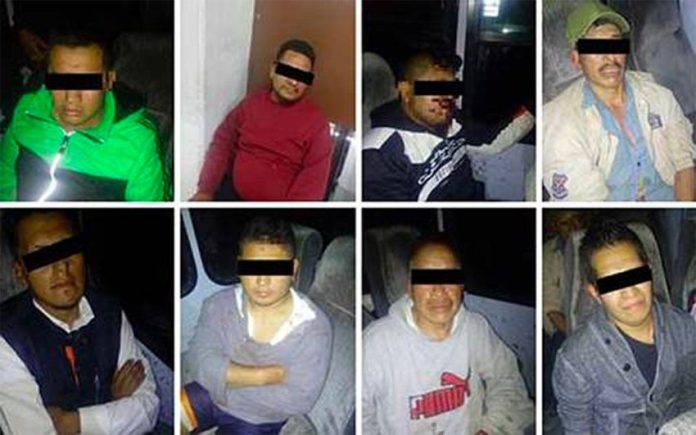
The eight people arrested after Monday's lynching.

Eight people have been arrested in connection with the death of a 24-year-old man Monday night at the hands of a lynch mob in Cuajimalpa, Mexico City, wrongly accused of being a robachicos, or child snatcher.

The city’s Public Security Secretariat said in a statement that it received the report of a citizens’ arrest in the town of San Mateo Tlaltenango at around 9:30pm.

Upon arrival, police found that the alleged child snatcher had been seized by a mob and taken to a church, where he was detained and beaten.

The officers requested backup before attempting to rescue the man, but the mob fought back while continuing to beat the victim inside the church.

Police were eventually able to rescue the victim but he died soon after.

However, he gave police a statement before he died, explaining he was in the town visiting a relative. While he was waiting, he said, a young boy saw him on the street and ran away scared, triggering the child-snatcher accusation.

State police arrested eight people between 20 and 59 years of age for obstructing police and medical personnel and resisting arrest.

Source: El Sol de México (sp)

Lawmakers in lower house cut remuneration by 28% with austerity package

0
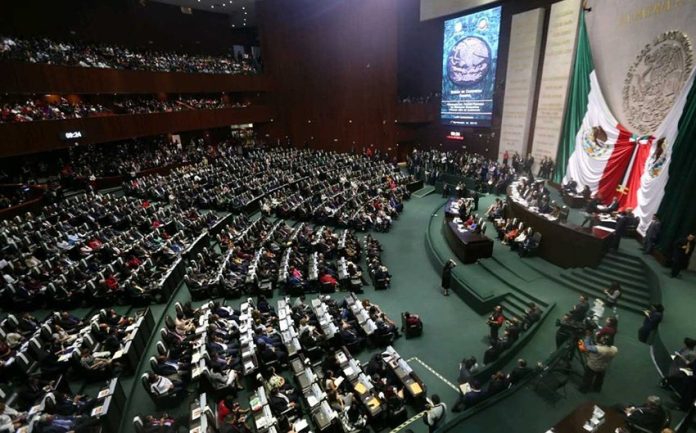
The federal Chamber of Deputies
The federal Chamber of Deputies: new austerity measures.

Lawmakers from Mexico’s soon-to-be ruling party yesterday presented an austerity bill in the lower house of Congress that will reduce politician and public sector salaries and benefits among other cost-cutting measures.

The Republican Austerity Law is an initiative of the National Regeneration Movement or Morena party, which dominated the July 1 elections and now, with its coalition partners, has a majority in both houses of Congress.

Party leader Andrés Manuel López Obrador will be sworn in as president on December 1.

Mario Delgado, Morena’s leader in the Chamber of Deputies, said the austerity law will reduce the monthly remuneration packages of the 500 lawmakers in the lower house by 28% from 128,230 pesos (US $6,720) to 91,507 pesos (US $4,795).

Under the proposed law, deputies’ base salary will remain the same but they will no longer have major medical, life or severance insurance and they won’t receive contributions to individual savings funds.

The legislation also seeks to reduce government spending by cutting the salaries and benefits of high-ranking officials.

All government officials will be incorporated in the public social security system instead of being covered by private insurance benefits.

Other measures proposed by the austerity bill include:

  • Introducing a moratorium on the creation of new government jobs to avoid the federal bureaucracy increasing in size.
  • Restricting the use of bodyguards and other personal security measures to occasions or situations in which they are strictly justified.
  • Limiting the use of government-owned vehicles to tasks and duties that fulfill a justified public function.
  • Restricting spending on government publicity.
  • Establishing limits on the number of overseas trips officials can take and prohibiting first-class travel.
  • Establishing spending limits for a range of expenses including telephone services, electricity, meals and fuel.
  • Eliminating pensions for past presidents.

The legislation, which has already been unanimously approved by the political coordination committee, a group made up of the coordinators of each parliamentary party, aims to generate savings of 409 million pesos (US $21.5 million) in the final four-month period of 2018.

López Obrador has already said that he intends to adopt personal austerity measures, which include largely eschewing personal security, traveling on commercial flights and slashing his own salary by 60%.

The president-elect, who won 53% of the vote following a campaign based largely on promises to stamp out corruption, has also pledged to sell the presidential plane and convert the president’s official residence into an arts and culture center.

Source: Reporte Indigo (sp), El Financiero (sp)