Home Blog Page 2058

Luxury vehicle sales up 13% in first seven months

0
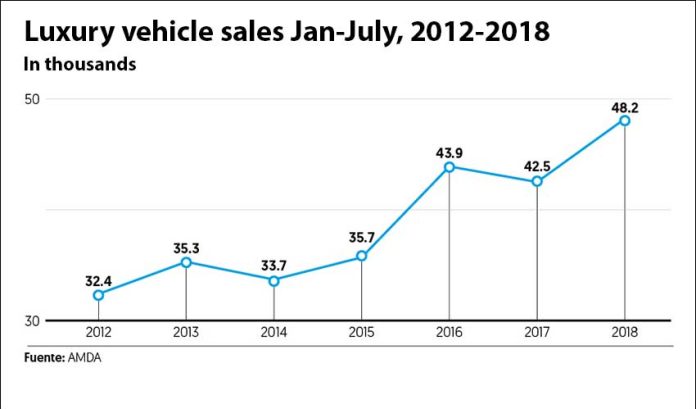
The upward trend in luxury vehicle sales.

Luxury vehicle sales hit a record 48,241 units in the first seven months of the year, up 13.4% over the same period last year.

The Mexican Automotive Dealers Association (AMDA) said buyers of luxury vehicles have high purchasing power and are therefore less vulnerable to macroeconomic shifts and economic uncertainty.

“These clients . . . are less sensitive to changing credit situations and prices,” AMDA official Guillermo Rosales told the newspaper El Financiero.

BMV and Mercedes Benz, whose sales between January and July grew by 20.1% and 10.2%, respectively, when compared to the same period of 2017.

Raúl Peñafiel, managing director of Jaguar/Land Rover Mexico, told a press conference in July that Mexico continues to be one of the most attractive markets for his company.

The upward trend in luxury vehicle sales contrasted with an 8% drop in automotive sales in general in July. Suzuki Mexico marketing director David Hernández Sánchez said poor sales of vehicular fleets had a negative impact.

Source: El Financiero (sp)

‘Builders’ took the money from Oaxaca earthquake victims and ran

0
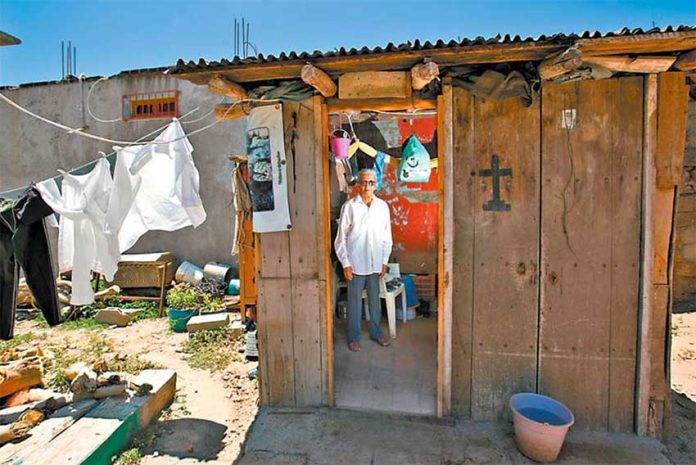
Castillo in his makeshift home.

Two hundred residents of Juchitán, Oaxaca, who lost their homes in the first of two major September 2017 earthquakes have reported being defrauded of financial aid money by unscrupulous construction companies, local officials say.

In the aftermath of the September 7 and September 19 quakes that devastated parts of central and southern Mexico, the federal government granted 120,000 pesos (US $6,200 at today’s exchange rate) to people whose homes sustained total damage.

Victims received stored-value bank cards loaded with 90,000 pesos to pay for labor and 30,000 pesos in cash to buy construction materials.

In Juchitán, the commercial hub of the Isthmus of Tehuantepec region where houses fell like dominoes in the powerful 8.2-magnitude quake, 200 people who received the government aid handed their cards and money over to construction companies who committed to build them new homes but failed to deliver on their promises.

In other words, the “builders” took the money and ran, without completing any or all of the work they promised.

Meanwhile, their victims are still without adequate housing just shy of the first anniversary of the tragic disaster.

Juchitán Mayor Gloria Sánchez told the newspaper Milenio that municipal authorities have received 200 complaints from duped residents.

“What happened is that a lot of people who were sleeping in the street were driven to despair and in these companies they saw a chance to have a home quickly. They never imagined that these men would disappear with their money. What’s certain is that it’s a very serious problem because if the 200 complaints are confirmed, we’re talking about fraud of around 24 million pesos [US $1.2 million],” she said.

One of the earthquake — and fraud — victims is Juan Castillo, an 85-year-old man whose home collapsed when the quake struck just before midnight on September 7.

Rendered homeless and desperate, Castillo gave all the aid money he received to Federico Irán Cabrera, director of the construction company Hiram Habif, who committed to building him a single-story, two-room home with a bathroom and all finishings included. But all he got was a shoddily-built, half-finished home with a leaky roof.

“He offered us everything, a decent house and that’s why I gave him my card with the 90,000 pesos and 30,000 more in cash but this bad person only took the card and the money and left, he disappeared. I’ve gone to look for him and I call the telephone number he gave us but nothing. It seems that the earth swallowed him up,” Castillo said.

“I worked in construction for a long time, I was a builder but an injury left me all twisted out of shape, that’s why I left that job. Before this tragedy, I said: ‘what am I pushing myself for if I already have a home?’ I never imagined that at the age of 85 I would have to start from zero, or even worse, that I would be chasing after an opportunist,” he added.

Castillo said that he fears that the half-completed home could also collapse in another strong earthquake and is living instead in a small, makeshift wooden home his neighbor helped him build.

“. . . While there’s no solution and they don’t catch up with that man, I’ll stay here,” he said.

According to data from the Secretariat of Agrarian Development and Urban Planning (Sedatu) — the federal department that deposited the aid funds —at least 30 complaints have been filed against Hiram Habif and Grupo Delta, another construction company, but despite being ordered by state authorities to complete the work they committed to, they have failed to do so.

A municipal government official in charge of fraud complaints told Milenio that many residents have also tried to file complaints with a municipal judge but they haven’t been accepted based on the argument that what they are victims of cannot be classified as a criminal offense.

“So where can people go to complain? Who can protect them? Nobody, the authorities themselves say that it’s not a serious crime. So what can we do?” Manuel Vázquez asked.

Complicating the situation, he explained, is that the contracts many quake victims signed with construction companies were not certified by a notary public, meaning they can’t legally prove that they handed over their aid money.

Vázquez said it was reprehensible that companies had defrauded people who lost everything in the earthquake, adding that they should be firmly punished for their actions.

“The people who do this are perverse, taking advantage of the tragedy of these poor people and making a mockery of their needs. It’s astonishing that in the middle of a tragedy, there are people who want to do more harm.”

Source: Milenio (sp)

Tourists struck and killed by train while taking selfie

0
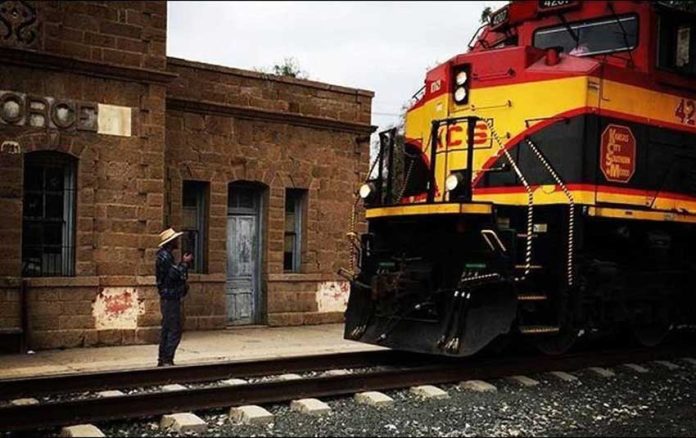
A locomotive at the Real de Catorce station.

Two women taking a selfie on railway tracks died when they were struck by a train on Sunday in San Luis Potosí.

The two victims, aged 12 and 27, were visiting Real de Catorce from Santa Catarina, Nuevo León, with other members of their family.

While touring the old train station, known as Estación Catorce, they heard the train approaching and decided to step on the tracks to take a self-portrait with their cell phones.

But they under-estimated the train’s speed and despite repeated whistles from the locomotive were struck and killed instantly.

Source: El Universal (sp), Pulso (sp)

6 police gunned down in Guadalajara in one day

0
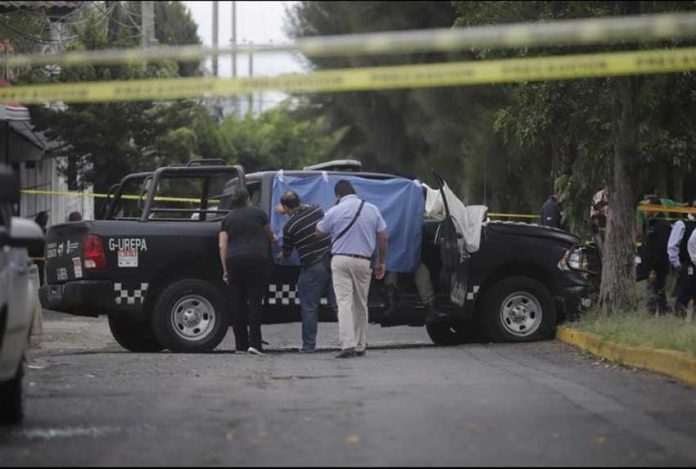
Investigators at the scene of yesterday's shooting in which four police officers died.

Six police officers have been shot and killed in the space of less than 24 hours in the Guadalajara Metropolitan Area.

The first incident took place yesterday morning in the Loma Dorada neighborhood of Tonalá when armed civilians attacked a senior police officer and his three bodyguards. The senior officer, who was third in command of the Guadalajara police, had just left his home when the attack took place.

The police returned the fire and wounded some of the attackers, but all four officers died at the scene and the aggressors escaped.

The mayor-elect of Guadalajara said the attack was in response to “the good job” that Eduardo Plazola had been doing to combat crime.

“He was a commander who was at the head of all the operations in which there had been arrests; he had produced results . . .” said Ismael del Toro.

The police force said the same in a statement. The attack was a result of “important arrests of members of organized crime groups” in recent weeks.

Two more officers were killed late last night in Zapopan while investigating the theft of a vehicle. After a chase, they caught up with the suspects in El Mante. But the latter opened fire, killing one officer at the scene. The second died later in hospital.

Source: Informador (sp), Milenio (sp)

Peña Nieto points to structural reforms as his greatest achievement

0
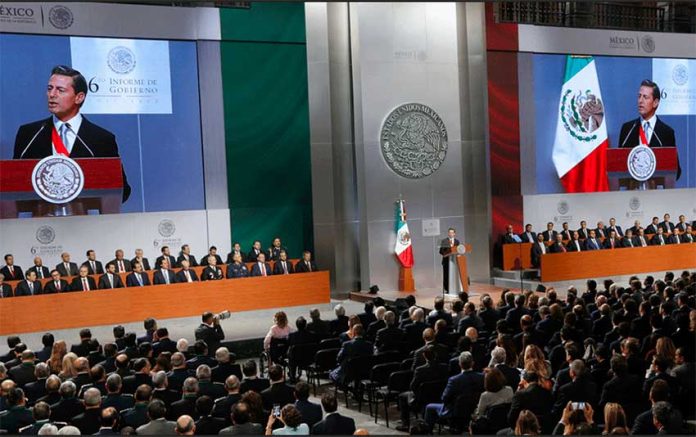
Peña Nieto gives his last report at the National Palace today.

President Enrique Peña Nieto declared today that the structural reforms put in place by the current federal government are the greatest achievements of his administration but conceded that security was not a strong suit.

The president made the remarks during an address to lawmakers — and the nation — in which he presented his sixth and final government report.

“Important areas of national life were transformed as a result of labor, energy, economic competition, telecommunications, budgetary, financial, educational, transparency and regulatory reforms,” Peña Nieto said.

“The structural reforms are without doubt the biggest success of this administration, and are our contribution to the country’s future growth.”

He also noted that last year the Organization for Economic Co-operation and Development (OECD) described the package of reforms as the most ambitious reform agenda any member country has undertaken in recent years.

On security, Peña Nieto said “we didn’t achieve the objective of restoring peace and security for all Mexicans in every corner [of the country].”

He added that “to make that desire a reality, a sustained effort for a long period supported by public resources will be required.”

However, the president sidestepped total responsibility for the security situation, instead blaming high levels of violence on the inability of municipal and state police forces to combat small criminal gangs that emerged after cartel leaders, such as Joaquín “El Chapo” Guzmán, were captured.

He highlighted that his administration had proposed a reform to have single command police forces in each state but it didn’t pass Congress.

Peña Nieto described the new accusatory justice system as “the most important [legal] change in more than a century” although he conceded it was “perfectible.”

In contrast, a report published by the Washington Post last December said the system was in turmoil.

Turning to social policy achievements, Peña Nieto said that more than two million people had come out of extreme poverty during his six-year term, adding that if the same rate of poverty eradication continues to be maintained, no Mexicans would live in extreme poverty by the end of the next decade.

On education, Peña Nieto defended the highly-controversial reform his administration implemented, stating that the government sought to put students at the center of education.

“We planted the most important seed of change in public education in Mexico in the last 60 years,” he said.

With regard to the economy, Peña Nieto said that financial, telecommunications and energy reforms are starting to produce results and have opened up new opportunities, while he also stressed that the trade agreement reached last week with the United States reduced economic uncertainty.

In addition, he cited the trade agreement with the European Union, the Trans-Pacific Partnership and the strengthening of trade relations in Latin America as achievements of his administration along with investment in infrastructure, tourism and agriculture.

However, a devaluation of the peso of almost 50% during his term and anemic average economic growth of 2.1% during his first five years in office provided nothing to brag about.

Peña Nieto said that he was leaving “a manageable and declining level of debt” although government debt as a percentage of gross domestic product (GDP) actually increased during his administration from 33.8% in 2012 to 45.4% by mid-2018.

The president, who will leave office at the end of November, also congratulated his successor, Andrés Manuel López Obrador, who will be sworn in on December 1 and has pledged to stamp out corruption and review or change some of Peña Nieto’s key reforms.

Although he faced historically low approval ratings — resulting in a crushing defeat for the Institutional Revolutionary Party at the July 1 elections — and led an administration that was plagued with corruption scandals and record levels of violence, Peña Nieto charged that he has delivered on the vast majority of his public pledges.

“When my administration ends, I will have fulfilled 97% of the promises I made to the public.”

Source: El Economista (sp), El Financiero (sp), Associated Press (en)

More than 4mn turtles arrived last year in Oaxaca, thanks to conservation

0
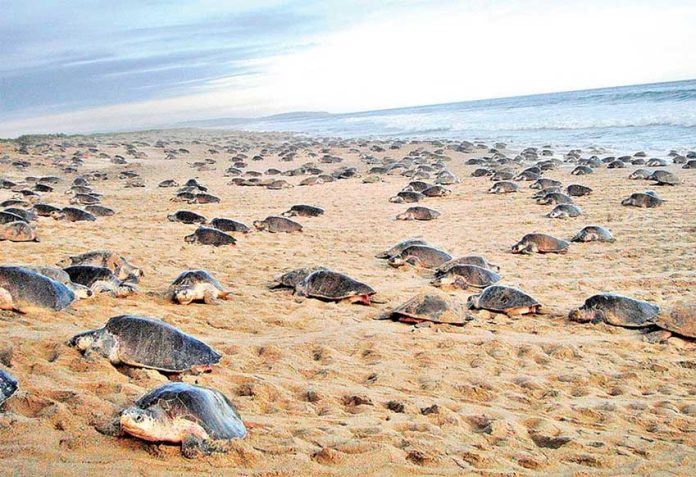
Turtles arrive on a Oaxaca beach to lay their eggs.

The number of olive ridley sea turtles arriving on Oaxaca beaches continued to increase the last nesting season thanks to a ban on turtle hunting in place since 1990 and other conservation efforts aimed at protecting the species.

Laura Sarti Martínez, coordinator of the National Sea Turtle Program at the Natural Protected Areas Commission (Conanp), told the newspaper Milenio that more than 4.6 million turtles came ashore at the Playa Escobilla and Morro Ayuta sanctuaries during the 2017-2018 nesting season, which ended in February.

The two beaches are considered the most important in the world for the reproduction of the species known in Mexico as the tortuga golfina.

The number of arrivals last season represents a massive increase on the number of turtles nesting at the beaches in the 1980s before the hunting ban was enforced.

“The olive ridley turtle was hunted legally in the 70s, they were captured in quotas by certain fishing cooperatives in Michoacán, Guerrero, Oaxaca, Colima and Jalisco. In 1990, the ban was declared due to the decline of turtles nesting on the beaches of the Mexican Pacific. Currently the [Oaxaca] population is the biggest in the country. From 120,000 nests in the 80s to . . . four million is a clear trend,” Sarti said.

[wpgmza id=”71″]

The number of hatchlings reaching the water has also increased exponentially, from 3.7 million in 2012 to 79.2 million last season.

But despite the turtle’s impressive recovery, the golfina is still considered in danger of extinction.

Valeria Towns, a Conanp director who coordinates conservation efforts, said that more needs to be done to raise awareness about the risks sea turtles face.

“. . . Yes, in recent years, we have managed to increase the number of turtles that are nesting, the population has increased but that doesn’t mean that risks have decreased and that their removal from the endangered species list could be considered,” she said.

One of those risks — fishing nets — last week caused the death of as many as 380 olive ridley turtles off the coast at Barra de Colotepec, a community near Puerto Escondido.

The Environmental Protection Agency (Profepa) said Wednesday that the nets that trapped the turtles belonged to coastal fisherman and not a tuna or shrimp boat as initially thought, while the coordinator of the Mexican Turtle Center in Mazunte alleges that the turtles were deliberately targeted.

Source: Milenio (sp)

The answer for photo radar fines and fees: get out-of-state license plates

0
license plates
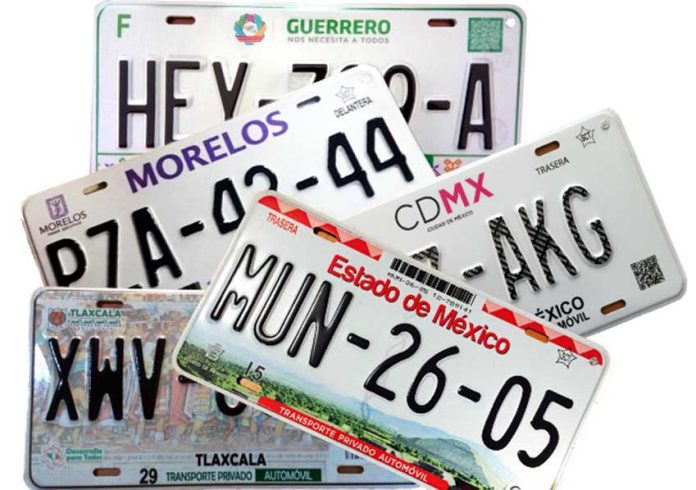
Pick your plates and save.

Want to avoid paying photo radar speeding tickets and expensive vehicle taxes? Getting license plates from another state could be the answer.

In many states, including Mexico City, Jalisco and San Luis Potosí, authorities don’t have arrangements in place that allow them to collect fines from motorists who are caught speeding when their vehicles are registered in another state.

Having that kind of immunity has proven to be too tempting to resist for some drivers, and to cater to the growing demand an informal license plate market of questionable legality has sprung up. It doesn’t require customers to go to the state from which they want new plates or, for that matter, even leave the comfort of their homes.

All one needs to do is log on to Facebook, go into one of several virtual license plate marketplaces and find a “gestor de trámite” (procedure agent), known colloquially as a “coyote,” with whom to do business.

According to a report published today by the journalism alliance par.mx, the cheapest plates are generally those from Guerrero and Mexico City, which can be had for as little as 3,200 pesos (US $166), while those wishing to pass themselves off as motorists from Michoacán will need to part with up to 7,000 pesos (US $364).

“The most viable ones are those from Mexico City and Guerrero. With Guerrero plates, they almost don’t stop you at all,” said Luis, one of the self-styled “procedure agents.”

Another, identified only as Alonso, guaranteed that photo radar tickets, known in Mexico as fotomultas, would be a thing of the past as long as motorists stay out of the state indicated by their license plates.

“Only federal fines will affect you, he said.

Tempted?

The so-called coyotes say that the procedure is simple: provide copies of evidence of vehicle ownership and ID and the new plates will arrive in no more than three days.

Another gestor de trámite operating under the name of José promises even greater efficiency.

“If you submit your documents today before two in the afternoon, tomorrow I’ll have plates from Guerrero for you,” he said.

One person who has used the services of a license plate coyote is Mexico City vendor Roberto, who admitted that he changed his local plates to ones from the state of Morelos.

“The truth is that paying the car tax here is expensive and I also avoid fotomultas,” he said, adding that the “agent” he dealt with assured him that there was no sharing of information between transport authorities in the capital and those in Morelos.

All of the coyotes consulted by par.mx said that all the plates are authentic — that is, none are forged or stolen.

But it’s worth noting that some state authorities are taking steps to ensure that they can impose fines on interstate drivers — genuine or otherwise — while federal authorities are acting to make the sharing of information between government departments in different states easier and faster.

Some state governments have also proposed restricting the hours within which interstate-plated cars can circulate.

So the days of immunity and freedom for the drivers of vehicles with plates from other states could well be numbered.

Perhaps the best way to avoid getting a fotomulta is not to speed in the first place.

Source: par.mx (sp)

Dead turtles were prey of fishermen, accuses turtle center chief

0
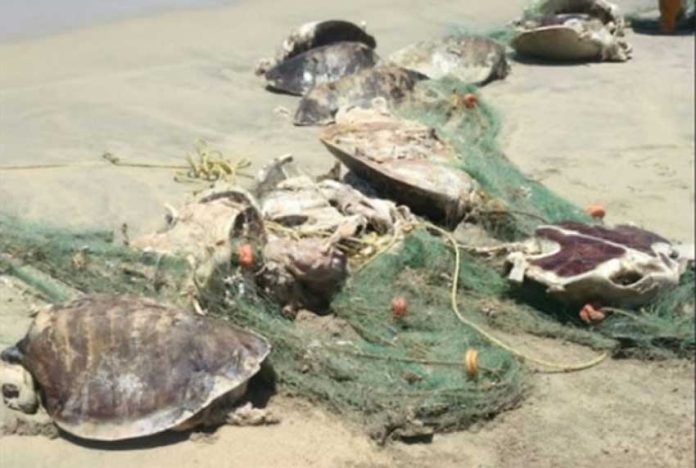
Turtles that were trapped in fishing nets in Oaxaca.

More than 300 olive ridley sea turtles that were found dead last week off the coast of Oaxaca after they became trapped in fishing nets were deliberately targeted by fishermen, a conservationist alleges.

Ivonne Chacón Romo, coordinator of the Mexican Turtle Center in Mazunte, Oaxaca, said the investigation into the turtles’ deaths showed that they had been captured a week before they were found but rough sea conditions at the same time prevented the turtle hunters from retrieving their illegal catch.

“The fishing was targeted at getting the meat, skin and eggs. However, the mar de fondo [large swells] reported a week ago caused those responsible to abandon them because they couldn’t get them out,” she told the newspaper Excélsior.

The Environmental Protection Agency (Profepa) said in a statement Wednesday that the fishing nets that killed the turtles belonged to coastal fishermen, not a tuna or shrimp boat as initially thought.

It didn’t explicitly apportion blame to illegal turtle hunters but said “the presence of this net in sea waters might be due to an irresponsible fishing practice or an incident that forced fishermen to abandon it.”

Profepa also said that it would file a criminal complaint with the federal Attorney General’s office and maintain permanent patrols of the area to avoid the repeat of any similar incident.

Those responsible for the turtles’ deaths could face up to nine years’ imprisonment in addition to a fine.

Chacón said that a similar event occurred on the same stretch of coastline in 2012, when another bale of female turtles was swimming towards Oaxaca’s Escobilla Beach, one of the world’s major nesting grounds for the olive ridley turtle.

However, that incident didn’t garner the same attention because “communications and social networks weren’t as developed as they are today,” she added.

Chacón said that such incidents pose a considerable threat to the olive ridley turtle, known in Mexico as tortuga golfina, as well as other species such as the leatherback and the Pacific green, which also nest on the coastline of the Mexican Pacific.

Source: Excélsior (sp)

‘Go-fast’ boat was carrying 3,000 liters of fuel off Oaxaca coast

0
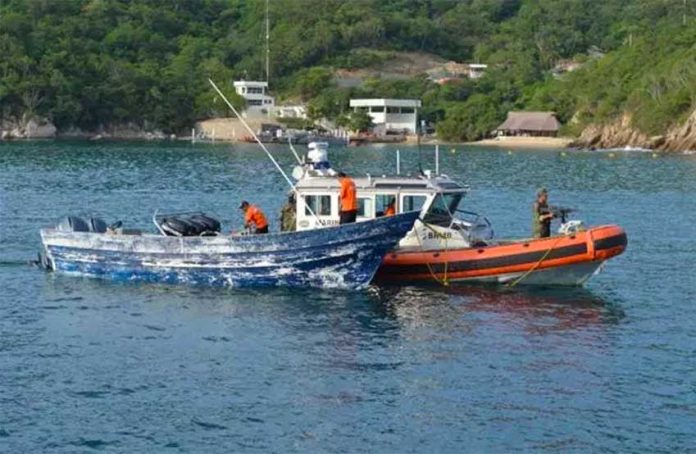
Navy vessel and the 'go-fast' boat.

An aerial patrol off the coast of Puerto Escondido, Oaxaca, led to the arrest of five men aboard a small boat carrying 3,000 liters of fuel.

A statement issued by the Navy Secretariat (Semar) said a patrol detected a “go-fast” boat carrying a suspicious cargo about 137 kilometers to the southwest of the resort town.

A navy vessel, an airplane and helicopter were deployed to intercept and secure the boat, “and thereby prevent presumed criminal activity,” said Semar.

The navy said that as marines approached the high-speed boat, its occupants threw their illicit cargo overboard.

Marines arrested the five men, all Mexicans, and secured 44 plastic fuel containers.

The occupants of the boat were unable to show any documentation or justification for their cargo, leading authorities to presume that the fuel “was to be used to supply vessels performing illicit acts at sea, specifically those transporting illegal cargo.”

The navy said in July it had identified fuel storage facilities at distinct locations on the Pacific coast. It suspects their purpose is to supply drug smugglers traveling up the coast in international waters.

Source: El Universal (sp)

Supply chains won’t function well under bilateral pact: trade negotiator

0
Aerospace is an important beneficiary of NAFTA production chains.

Failure to reach a trilateral trade agreement in North America would make the region less attractive to foreign investors, drive up production costs and have a negative impact on consumers, according to a former Mexican trade official.

Antonio Ortiz Mena, a member of the Mexican team that negotiated the 1994 North American Free Trade Agreement (NAFTA), told the newspaper Milenio that if Canada isn’t brought into the deal already reached by Mexico and the United States, production chains will face higher costs and lose efficiency.

“Production chains that have been established in North America have operated for a quarter of a century with regional rules in the automotive sector but also in the aerospace sector and the manufacturing sector in general. If you change the trilateral rules for a collection of bilateral ones, that will bring problems,” he said.

Ortiz, now a senior vice-president at the business strategy firm Albright Stonebridge Group, explained that reduced efficiency and higher costs would result in a loss of export markets for North American-made products due to strong competition from other regions of the world, especially Asia and Europe.

“One additional negative consequence is that North America would be less attractive for foreign investment from outside the region,” he added, explaining that foreign companies that make products in one of the three NAFTA countries operate under the same regional trade rules as a Mexican, American or Canadian company.

United States President Donald Trump notified the U.S. Congress Friday that his administration intends to sign a revised trade agreement in 90 days with Mexico — and Canada, if the latter “is willing” — after talks aimed at including Canada in the pact failed to meet the Friday deadline he set.

Talks are set to continue this week but Trump has signaled that if Canada wants to be part of a new trilateral pact, it will have to accept U.S. terms that appear non-negotiable.

The U.S. president said on Twitter Saturday that “there is no political necessity to keep Canada in the new NAFTA deal.”

In the same tweet, Trump added: “If we don’t make a fair deal for the U.S. after decades of abuse, Canada will be out. Congress should not interfere w/ these negotiations or I will simply terminate NAFTA entirely & we will be far better off . . .”

In a second continuing tweet, he reiterated his view that “NAFTA was one of the WORST trade deals ever made” and charged “we make new deal or we go back to pre-NAFTA!”

Unnamed Canadian officials told the Canadian Broadcasting Corporation that they wouldn’t respond to Trump’s Twitter tirade, adding that it wasn’t the first time he has used intimidatory tactics during trade talks.

The comments are “designed to pressure us and it’s not going to work,” they said.

A spokesman for Canadian Prime Minister Justin Trudeau, asked to comment on Trump’s threats, declined to address them directly.

“As we’ve said all week, we’re working toward a modernized NAFTA, a modernized NAFTA that will be good for Canada and the middle class,” Cameron Ahmad said. “We will only sign a good deal and we will not negotiate in public.”

Canada’s opposition Conservative Party was critical of the absence of a new trade deal with the United States, charging that the Canadian government’s negotiation was “botched” and that Canada had been left on the sidelines in talks between Mexico and the U.S.

“The Mexicans simply outhustled us,” said Lisa Raitt, the party’s deputy leader.

“They knew they needed to get a deal, how important it was to their country. And when they had the opportunity to move their auto talks on bilateral standards — or auto tariffs — to the next level of talking about everything else, including intellectual property and sunset clauses, they took the opportunity.”

However, Canadian Chamber of Commerce president Perrin Beatty took a different view, stressing that Mexico had negotiated with the United States for five weeks whereas Canada only had four days last week to try to resolve the differences with its neighbor. He added that Canada should continue to work towards reaching a successful deal.

Mexican officials, and president-elect Andrés Manuel López Obrador and members of his team, have said consistently that Canada should be included in an updated NAFTA.

The Secretariat of Foreign Affairs and the Secretariat of Economy said in a joint statement Friday that the “government of Mexico will continue to closely monitor” the negotiations between the United States and Canada and “it would continue promoting an agreement of which Canada is part.”

Source: Milenio (sp), El Financiero (sp)