Home Blog Page 2060

Go placidly amid the noise: it’s Mexico’s background soundtrack

0
This ought to get some attention.

In most of my life before Mexico I lived in a rural setting where it was dark at night and relatively quiet both day and night.

We caught the sound of a train whistle several times during any 24-hour period, but it was at a distance I considered quaint and therefore did not qualify as an obnoxious intrusion into my peace of mind. Coyotes singing in the meadows and the baritone burps of the bullfrogs I also considered to be a melodic backdrop essential for a life harmonious with nature and my inner being.

Then I moved to Mexico, where life goes forward with a cacophonous assault on the senses unimaginable to anyone north of the border. This culture embraces sound in all its forms from celebratory to martial to music to honking horns to blaring stereos to crowing roosters and barking dogs; if it’s loud it’s loved.

Of course, different areas of the country produce different sounds, but the continuous soundtrack that is exclusively Mexico’s is prevalent wherever you go.

The metropolitan areas have their own brand of a multi-layered sonic assault which differ in quality and quantity throughout any 24-hour period. The background thrum of life in smaller towns is certainly more subdued in its insistence to be heard, while the village culture creates a sonority more in tune with the natural world, that is, the natural world of Mexico where the sound of silence is non-existent.


A number of years ago I went with a friend to spend a couple of days in a mountain village with the thought of escaping the hubbub of Mazatlán’s city life, and immerse myself in the sounds of nature once again. It was this foray into the Sierra Madre which taught me there was no escaping the background soundtrack that is Mexico.

I had simply changed the channel from city noise to country noise; barking dogs, roosters stuck in a time warp and burros impersonating the terminal stages of whooping cough — all night long.

The next morning when I subtly questioned a couple of the villagers about the incessant caterwauling of the animals during the night, their brows wrinkled with incomprehension. They simply said, “But señor, how would we know? We are asleep during the nighttime.”

It was then I realized that the natives are equipped with a volume control to modulate the soundtracks of their lives. Turn it up for fiestas, and then off at night; a very convenient trait of cultural evolution refined over the last 487 years.

Anyone who has walked down a street in a Mexican town or city can attest to the fact that many retailers believe large speakers, blaring music into the streets, will attract shoppers like sailors to sirens. They are appealing to the fiesta side of the instinctive volume control to lure shoppers through their doors.

Apparently the unsuspecting person will automatically tune out bus horns, traffic noise, screeching brakes, shouting vendors and home in on the blaring speakers which will transport them into retail bliss.

It took me a few years to fully appreciate the level of indoctrination the average Mexican has endured over a lifetime, and it is significant. But where did this propensity for life at full volume arise? And how is it that so many people can sleep so soundly through so much noise?

By the time the Spanish arrived in 1531, the natives of this country had been pleasing large crowds by publicly cutting the hearts from living people for several centuries. As the ancestral genetics of the brutal Spaniards mingled with what was left of the population of bloodthirsty natives, a culture was forged by conflict, carnage, strife, revolutions and wars over the following centuries.

All these violent activities produced a tremendous amount of noise: cannons, bombs, rifles, pistols, the screams of the dying and the cries of the living; large-scale slaughter is a very noisy business. And, to preserve what little sanity the peoples of the past possessed, they learned to shut out the deleterious noise of their difficult lives while still embracing the raucous fanfare of their celebratory occasions, even in the grimmest of times.

With this selective auditory capability also came the resourcefulness of this culture to achieve a considerable amount of noise when called upon to do so. Before living in Mexico, I had never contemplated the multitudinous ways noise could be generated by just one resolute person, let alone the capabilities of a serious group.

When Mexicans celebrate one of their many martial or religious holidays, the population does not sit quietly while reflecting on the horrors of war (or the glorious successes of insurgencies) or contemplating God. No, they celebrate these milestones with a stunning array of ways to create as much noise as humanly possible and then parade it through the center of town.

Mexican parades can be extravagant affairs with lavish floats sporting huge sound arrays, or with simply a single truck with speakers in the back, followed by a group of villagers thoroughly enjoying their homespun spectacle. But in either case, you can bet the speakers will be abundant, and maxed out.

This inimitable relationship Mexicans have with sound/noise manifests itself in some interesting ways. Throughout Mexico, roving venders drive through neighborhoods, six days a week, hawking their goods through amplified loudspeakers. Sometimes it is rapid-fire Spanish, incomprehensible to my muddled gringo mind, or it might be a dreadfully catchy tune on a short tape loop.

For example, when I hear the theme from The Good, The Bad & The Ugly I know the gas truck is coming through the neighborhood. The vendors have identified themselves, each with their own high-decibel, signature noise. As a gringo, I hear each and every one of the vendors plying our neighborhood.

However, I now know that my Mexican neighbors only perceive the sound of vendors whom they wish to deal with. This selective hearing thing is quite clever, because this grade of neighborhood disturbance would draw fire in any place in the U.S.A.

There are also several types of panhandlers who produce noise with the expectation of a monetary reward for something far from melodious. One of my favorites is a twisted gnome of a man with a Coke bottle and a stick who wanders the beaches of the tourist zone. He will approach tourists with a sparsely-toothed grin, place the bottle on his shoulder violin style, and then proceed to run the stick up and down his glass instrument while barking out words of some tune only known to him.

A Oaxaca gas truck plays its distinctive tune, preceded by a mooing cow.


Religious holidays will bring out a family act with a husband, wife and a couple of small children. These wandering minstrels, dressed in threads and patches, are armed with a battered bugle, a snare drum and a rusty tambourine.

This mendicant clan makes no attempt at music, they simply wander into a neighborhood and begin making as much discordant noise as possible. Then one of the children is sent door to door with hat in hand.

I thought that by this time of life I would be living at least the first part of the Desiderata: “Go placidly amid the noise and haste, and remember what peace there may be in silence.”

I’m not. But at least I am looking forward to getting older so that my hearing is no longer so acute. And besides, life in Mexico would be boring without the definitive soundtracks which accompany us on a daily basis.

The writer describes himself as a very middle-aged man who lives full-time in Mazatlán with a captured tourist woman and the ghost of a half wild dog. He can be reached at buscardero@yahoo.com.

New trade pact goes to Congress as talks with Canada fail to reach agreement

0
Canadian Foreign Minister Freeland at a press conference in Washington.

United States President Donald Trump told the U.S. Congress today that his administration intends to sign a revised trade agreement in 90 days with Mexico — and Canada, if the latter “is willing.”

But Canada’s willingness appears to depend on whether it will accept U.S. terms that appear non-negotiable.

Trump announced Monday that the United States and Mexico had reached an updated pact that he said could exclude Canada.

Negotiations to bring Canada into the deal followed but failed to meet the deadline Trump set for today. However, United States and Canadian officials will return to the bargaining table next week.

United States Trade Representative (USTR) Robert Lighthizer announced Trump’s notification to Congress via a statement.

“Today the president notified the Congress of his intent to sign a trade agreement with Mexico – and Canada, if it is willing – 90 days from now. The agreement is the most advanced and high-standard trade agreement in the world. Over the next few weeks, Congress and cleared advisors from civil society and the private sector will be able to examine the agreement. They will find it has huge benefits for our workers, farmers, ranchers, and businesses,” Lighthizer said.

“We have also been negotiating with Canada throughout this year-long process. This week those meetings continued at all levels. The talks were constructive, and we made progress. Our officials are continuing to work toward agreement. The USTR team will meet with [Foreign] Minister [Chrystia] Freeland and her colleagues Wednesday of next week.”

Seemingly at odds with Lighthizer’s “constructive” claim was a transcript of off-the-record remarks President Trump made to the Bloomberg news agency yesterday. It was obtained by Canadian newspaper The Toronto Star, and indicated that no compromises will be offered to Canada.

Trump said a deal with Canada would be “totally on our terms,” according to The Star, citing an anonymous source, and that Canadians would have “no choice” but to go along with the deal because they would fear Trump might impose auto tariffs.

Today, Trump responded to the leak on Twitter, writing:

“Wow, I made OFF THE RECORD COMMENTS to Bloomberg concerning Canada, and this powerful understanding was BLATANTLY VIOLATED. Oh well, just more dishonest reporting. I am used to it. At least Canada knows where I stand!”

Trump’s remarks to Bloomberg further complicated today’s talks between the United States and Canada but it is unclear whether they had any bearing on the failure to reach an agreement.

Some analysts said earlier in the week that the notion that the two countries could reach a deal today after less than a week of separate talks was too ambitious.

Mexico’s Secretariat of Foreign Affairs (SRE) and the Secretariat of Economy (SE) said in a joint statement that “the notification sent by the United States represents a step forward in the understandings reached between Mexico and the U.S. in relation to NAFTA.”

They also said the “government of Mexico will continue to closely monitor” the negotiations between the United States and Canada and “it would continue promoting an agreement of which Canada is part.”

The statement concluded by saying that “the understandings reached with respect to NAFTA will promote employment, competitiveness and trade in the North American region.”

Dispute settlement, Canada’s cultural exception and access to its dairy markets remain obstacles to a trilateral deal, the Canadian newspaper The National Post reported today.

Negotiations reportedly ran into trouble late last night when Lighthizer would not give in to Canada’s demand to maintain an independent trade dispute mechanism despite offers to make concessions on intellectual property and to give more open access to the Canadian dairy market.

Mexico agreed to its elimination but the Canadian government sees it as a vital means with which to fight U.S. duties it sees as unfair, especially those on softwood lumber and paper.

A source told the newspaper The Globe and Mail that “Canada will need some sort of understanding with the U.S. on the dispute resolution procedure in order to reach a high-level agreement.”

Foreign Minister Freeland told a press conference this afternoon that a “win-win-win” agreement is within reach.

“As we have said from the outset, our objective in these talks is to update and modernize NAFTA in a way that is good for Canadians, good for Americans, and good for Mexicans,” she said.

“With goodwill and flexibility on all sides I know we can get there but . . . I’m paid in Canadian dollars and my job is to ensure that this agreement works for Canadian workers, Canadian families and Canadian business,” Freeland continued.

Source: The Globe and Mail (en), El Financiero (sp), The National Post (en)

Entrepreneurs’ platform links small agricultural producers with buyers

0
Helping small producers grow is Nuup's goal.

Linking small agricultural producers to buyers is the aim of an online platform developed by three Mexican entrepreneurs.

Called Nuup, the platform serves as a virtual meeting space where farmers can not only sell their produce to buyers directly but also learn more about the demands of the market in terms of quality, presentation and packaging.

“For example, if I’m a honey producer in Yucatán looking for a market, I can find different buyers who need the product as I offer it . . .” said Vincent Lagacé, one of the founders.

María Luisa Luque left behind a career with investment bank Goldman Sachs in London to move to Mexico where, along with Lagacé and Iván Córdova Morales, she founded Nuup in 2016.

“We want producers to have the information [they need] to approach buyers,” Luque said.

“It’s not necessarily a price issue, it’s a matter of the product being fresher and having greater traceability. More and more consumers want to know where their products come from,” she added.

By cutting out intermediaries and better tailoring their products as a result of information they glean from the platform, small producers can increase their profits.

Nuup focuses on producers who work on farms smaller than five hectares, which account for around 70% of all farmers in Mexico.

The social enterprise start-up also helps small-scale farmers and cooperatives to link up and work together in real life.

“We’re talking about very small producers, for whom it’s very difficult to access markets on their own . . . but grouped together we’re talking about micro-enterprises that can be very interesting,” Luque said.

Nuup currently collaborates with just over 6,000 growers of products such as coffee, honey, fruits and vegetables.

The platform was recently selected to be part of the MassChallenge non-profit start-up accelerator program, which provides funding and mentoring among other benefits.

Among the 17 states where producers are using the online platform are Oaxaca, Chiapas, Yucatán, Michoacán and Coahuila.

Source: El Financiero (sp)

Memorial for victims of ‘El Pozolero,’ whose bodies were cooked in lye

0
The memorial wall where hundreds of bodies were disposed of.

One of the darkest criminal chapters in Mexican history came to an end yesterday with the installation of a memorial dedicated to the victims of Santiago “El Pozolero” Meza López, who was employed by drug cartels to dispose of bodies by dissolving them in lye.

Meza’s grisly activities were conducted over a nine-year period on a piece of land known as La Gallera, in the ejido, or communal lands, of Maclovio Rojas, located in the La Presa district of Tijuana, Baja California.

Hundreds of bodies are believed to have been disposed of by Meza’s hand.

Yesterday, several plaques with the names of people missing in the state since 1984 were installed on two perimeter walls on the property by an advocacy organization for missing persons.

The dedication ceremony coincided with the International Day of the Disappeared and was attended by relatives of the missing, who mounted signs with the names and photos of their loved ones.

Many of the names were read aloud during the ceremony, after which a Catholic priest blessed a new chapel adjoining La Gallera.

Rocío Castel was one of the family members who attended. She recalled that after one of her sons disappeared, she “forgot to live, and I forgot I had other children, I forgot about everything . . . I only wanted the one who had gone missing,” she told the newspaper Milenio.

“I then realized my other children were dying, I no longer hugged them or asked them to cry with me. It was then that I decided to do something and I understood that I wasn’t effecting any change by putting my life on standby,” she added.

State Interior Secretary Francisco Rueda Gómez pledged that the government would not leave the relatives of the disappeared alone, and that a commission will be created to search for the missing.

Meza was captured in 2009, after which details about his activities began to come out.

Source: Milenio (sp)

2 more suspected child-snatchers dead after lynching in Hidalgo

0
Investigators at the scene of yesterday's lynching in Hidalgo.

Two suspected child snatchers met the same nasty end yesterday in Hidalgo as two others in Puebla met the day before: they were beaten and burned alive by angry citizens.

The lynching occurred in Santa Ana Ahuehuepan, a town in the municipality of Tula. The victims were a 42-year-old man and a 50-year-old woman who, as in the Puebla case, are believed to be innocent.

Local and state authorities said that the vigilante justice was triggered by an alleged incident in the neighboring municipality of Tepetitlán, where the occupants of a pickup truck supposedly attempted to abduct a child in the town of Pedro María Anaya.

When a similar pickup truck appeared in Santa Ana Ahuehuepan, hysteria broke out among residents and they blocked its path and forced the man and woman to get out. The couple pleaded their innocence but citizens refused to listen.

Municipal police arrived at the scene and attempted to rescue the two victims but they too were attacked and forced to retreat, Tula Mayor Ismael Gadoth Tapia said.

The residents then proceeded to beat the man and woman before dousing them in gasoline and setting them on fire.

The man died at the scene of the crime while the woman died en route to hospital of a cardiac arrest occasioned by the burns she suffered, the newspaper El Universal reported.

Hidalgo Interior Secretary Simón Vargas Aguilar told a press conference later that there had been no recent reports of kidnappings in the state and rejected claims circulating on social media to the contrary.

“These are unfounded rumors. Until now there has been no report of a criminal act of that nature. Moreover, nobody should carry out justice by their own hand. That’s what the relevant authorities are for,” he said.

State Public Security Secretary Mauricio Delmar said that cyber police have traced the origin of messages and photos circulating online which claim that kidnappings are occurring — including for the purpose of organ trafficking —  and determined that they have no basis in truth.

Authorities in Puebla, where two men — an uncle and his nephew — were beaten and burned alive Wednesday, also said that preliminary inquiries had revealed no evidence that the two victims had committed a crime.

Relatives of the two men are demanding that justice be served for those involved in the lynching.

The men, who were reported drunk at the time, were taken into police custody after they were accosted by residents, who accused them of kidnapping three children.

But the residents took the men from police by force, tied them up, doused them with gasoline and set them on fire in front of the police station.

Martha Flores, sister of the older of the two victims, said that neither of the two men were criminals but rather farm and construction workers. The younger man was also a law student at a university in Xalapa, Veracruz, she added.

“Their mistake, if that’s the way you want to look at it, was to stop and drink a few beers . . . They didn’t do anything wrong, they weren’t child snatchers, they weren’t criminals. They just drank a few beers but because they were next to the school, they said that they were snatching children,” Flores said.

Source: El Universal (sp) Reforma (sp)

Chemical tests prove Mayan codex not a fake, say INAH researchers

0
mayan codex
The codex is for real, researchers have decided.

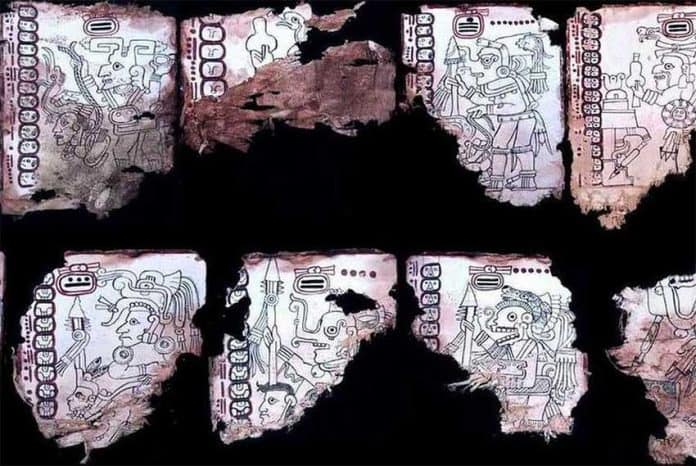
An almost 1,000-year-old Mayan codex is the real deal, the National Institute of Anthropology and History (INAH) announced yesterday, dispelling long-held doubts over the pictographic text’s authenticity 54 years after it was sold by looters.

An expert team made up of historians, archaeologists, anthropologists and scientists among others, judged the codex authentic and said that the calendar-style text is the oldest known legible pre-Hispanic document.

It is estimated to have been made between 1021 and 1154 AD.

The codex was bought by Mexican collector Josúe Sáenz in 1964 and first exhibited in 1971 at the Grolier Club in New York, which led it to becoming known as the Grolier Codex.

Sáenz returned the codex, which contains a series of predictions and observations related to the astral movement of Venus, to Mexican authorities in 1974.

The authenticity of the tree-bark folding “book,” which will now be known as the Mexico Maya Codex, had been doubted due to the fact that it was looted and because its design was simpler than other surviving pre-Hispanic texts.

In a statement issued yesterday, INAH said the codex’s “austerity” was due to the time in which it was written, predating other works that have been found.

Chemical tests proved the authenticity both of the pages and the pre-Hispanic inks used to write it, the institute said.

Prior to its discovery, the codex spent hundreds of years in a cave in Chiapas, during which time as many as 10 pages may have been lost, INAH explained.

The expert judgement ends decades of speculation about the document’s authenticity.

“For a long time, critics of the codex said the style wasn’t Mayan and that it was ‘the ugliest’ of them in terms of figures and color,” said INAH researcher Sofía Martínez del Campo.

“But the austerity of the work is explained by its epoch; when things are scarce one uses what one has at hand.”

The full results of the expert team’s analysis of the codex are being discussed at a symposium currently taking place at the National Museum of Anthropology in Mexico City.

Mayan texts are written using syllabic glyphs, a form of writing that has been compared to Egyptian hieroglyphs in which stylized painted figures represent a syllable.

Source: Milenio (sp), Associated Press (en)

Nearly-drained lagoon is recovering in Quintana Roo

0
Chakanbakán lagoon in Quintana Roo.
Chakanbakán lagoon in Quintana Roo. sipse

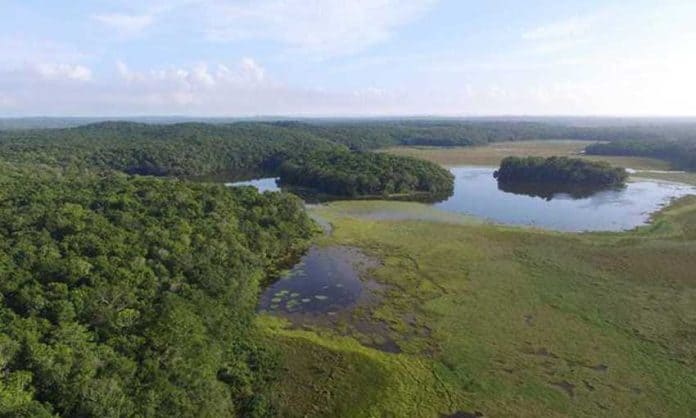
The Chakanbakán lagoon in Quintana Roo all but disappeared after six sinkholes appeared underneath it. Twelve days later, rains have contributed to its recovery.

State Civil Protection chief Norman McLiberty Pacheco said three of the sinkholes have been filling up naturally.

“The lagoon is on its way to full recovery; that is very good news for plant and animal species. Early estimates indicated that the process could last between three and six months, but the lagoon is improving every day,” he told the news agency Grupo SIPSE.

While favorable rains for the lagoon are expected to continue on the Yucatán peninsula — September being the month with the most rainfall in the region, McLiberty explained that the situation that caused the loss of 75% of the lagoon’s water continues to be studied by specialists.

José María Ayala, a member of the security council of the Laguna Om ejido, or communal lands, told SIPSE they have decided to keep the Chakanbakán lagoon off limits to visitors due to security concerns.

He explained that several cracks appeared on roads leading to the lagoon and that the settling of the land is still a risk to be considered.

The downtime at Chakanbakán will give residents a chance to prepare the roads and entrances to the lagoon area for the installation of a Wildlife Management Unit (UMA) dedicated to crocodile breeding.

The lagoon is located in the municipality of Othón P. Blanco, about 90 kilometers to the east of the city of Chetumal.

Source: SIPSE (sp)

After a shaky start, US $5-billion fertilizer plant under way in Sinaloa

0
Heavy equipment to be used in the plant's construction arrived in May in Topolobampo.

The “world’s safest and most modern” fertilizer plant is under construction in Topolobampo, Sinaloa, although a campaign was launched earlier this month to stop the project.

State Economy Secretary Javier Lizárraga Mercado told a press conference yesterday that US $1 billion will be invested in the first stage of the project, which will allow the plant to produce 770,000 tonnes of ammonia and 700,000 tonnes of urea per year for state and national markets.

The 202-hectare plant will represent a $5-billion investment by the Swiss-German engineering, procurement and construction group Proman AG and its Mexican subsidiary, Gas y Petroquímica de Occidente.

The project was first initiated several years ago but was shut down by the environmental protection agency, Profepa, in 2015 following complaints that a wetlands area — three coastal lagoons around Topoloambpo — was being damaged. The wetlands have been declared a Ramsar site, a World Heritage Site and a UNESCO biosphere reserve.

But Profepa re-approved the plant in April last year.

Now there is opposition once again. An organization called Citizen Vigilantes for Transparency in Sinaloa has begun an information campaign called “Aquí no!” (Not here) to advise the public it believes the project has risks.

President Guillermo Padilla Montiel said Topolobampo bay is already polluted by discharges from plants operated by Pemex and the Federal Electricity Commission (CFE) and insufficient sewage treatment. “They tell us that there will be no pollution but that’s what they told us about the Pemex and CFE plants,” he said, charging that dead fish and dolphins are being found on the beach.

Lizárraga said the plant represents the largest industrial investment ever seen in the state “and perhaps one of the most biggest in the country.”

Local production of high volumes of fertilizer, which can represent up to 40% of a farmer’s costs, will bring those costs down, he continued.

“This is a strategic project because the yield and competitiveness of the agricultural sector will go up. Our country will stop importing [fertilizers] and will become a net exporter.”

The plant is expected be operating at full capacity by 2021 and sell fertilizers on the international market.

Source: El Universal (sp)

New councilor assassinated in Cortázar, Guanajuato

0
Homicides have almost doubled this year in Guanajuato.

A newly-elected municipal councilor in Cortázar, Guanajuato, was shot and killed outside his home yesterday.

Agustín Banda Olivares, social development director and councilor-elect for 2018-2021, died in in a hail of gunfire as he stepped out of his vehicle.

Alternate federal Deputy Ramiro Zaragoza Ramírez, who was with Banda, was wounded in the attack but reported to be in stable condition.

Both are members of the Democratic Revolution Party.

A municipal official said neither of the two men had received any threats prior to the attack.

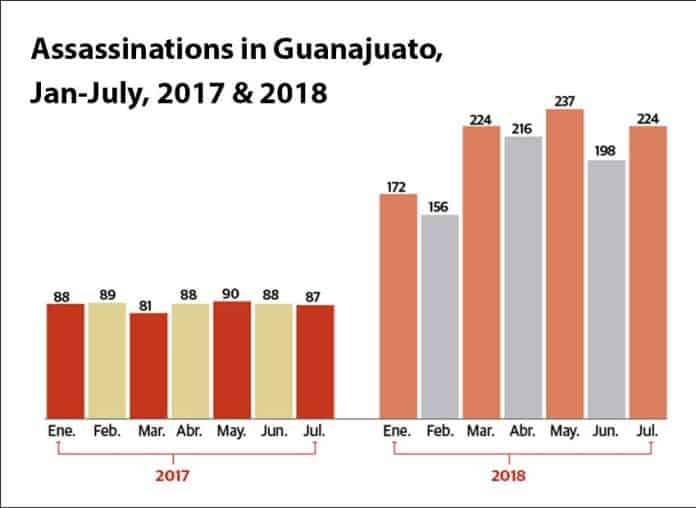
There have been 69 homicides in Cortázar in the first seven months of the year but several other municipalities have seen far worse numbers.

León leads with 189 and Salamanca follows with 128.

Homicides have almost doubled so far this year over 2017.

Source: El Universal (sp)

Train, track robberies soared almost 300% in first half of year

0
Police guard the scene of a train robbery.

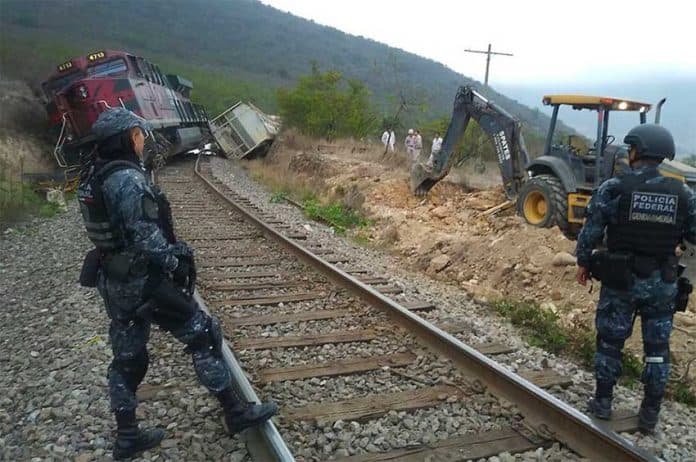
Train and track robberies increased almost fourfold in the first half of 2018 compared to the same period last year, according to data gathered by the Rail Transport Regulatory Agency (ARTF).

There were 1,965 robberies on Mexico’s railroads in the first six months of the year, 294% more than the 497 incidents recorded from January to June of 2017.

The 2018 figure exceeds the entire number of train and track robberies recorded in all of 2017, which totaled 1,752.

Puebla was the worst affected state with a total of 293 robberies in the first half of 2018. Guanajuato and Jalisco were next with 175 robberies each followed by México state and Sonora with 151 each.

The four most affected railroads were Valley of Mexico-Ciudad Juárez, Valley of Mexico-Nuevo Laredo, Puebla-Oaxaca and Valley of Mexico-Veracruz.

Grains, flour, auto parts and cement were the most frequently stolen products.

Of robberies committed in the second quarter of 2018, trains were targeted on 679 occasions while 330 incidents involved theft of parts of the track or railroad signals.

The latter figure is the highest ever recorded in a three-month period.

Freight was stolen in 92% of the attacks on trains while the theft of rolling stock accounted for the remaining 8% of incidents.

During the first half of the year, the ARTF also recorded 4,927 acts of vandalism to both trains and tracks.

Tampering with a train’s brakes was the most frequent form of vandalism reported.

Obstructing the railroad by setting up barricades with materials such as rocks or tires — a tactic used to halt and subsequently rob trains — was the most frequent form of vandalism affecting tracks.

A report published by the newspaper Reforma in May said that criminal gangs operating in Puebla and Veracruz “push” local residents into robbing trains “in exchange for a payment.”

Women, children and even grandmothers work with the gangs to stop and rob trains on the railroad between the two states, official reports and video evidence revealed.

Source: Milenio (sp)