Making phone calls in Mexico will become less complicated next summer with the implementation of a new and simplified dialing system.
First announced by the Federal Telecommunications Institute (IFT) in the fall of 2017, the new system will standardize phone numbers, making them all 10 digits long.
Starting August 3, dialing a phone number will only require the input of 10 digits, whether the call is local or domestic long distance or connecting to a landline or mobile phone.
The prefixes being phased out include the 01 entered before long-distance calls or non-geographical numbers (think 01-800 numbers), and 044 and 045, used to make local and long-distance calls to a mobile phone from a landline.
A long-distance call from abroad to a mobile number in Mexico will no longer need the number 1 before the area code.
The new updated system also means that IFT guarantees equal phone number availability for all telecommunications services providers.
The agency said the system will allow for a more streamlined and standardized dialing procedure and a more efficient administration of numeric resources.
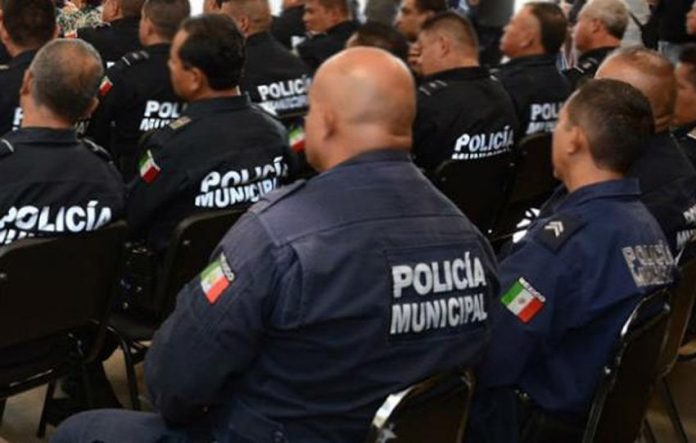
Guanajuato’s new governor promised in July to address last year’s surge in violent crime with a new security strategy that would increase the salaries of police officers.
But four months after Diego Sinhué Rodríguez was sworn in, many officers are earning less than domestic workers, according to a survey by the newspaper Milenio.
On average, it found, people employed to clean houses earn an average of 250 pesos (close to US $13) for working four hours a day, or 6,000 pesos per month. Yet a municipal police officer in Pueblo Nuevo is paid 4,800 pesos.
A welder can earn 10,000 pesos per month, while the municipal police force in Apaseo el Grande pays its officers 9,500.
Conditions are also inadequate, according to police interviewed in Apaseo el Grande, Apaseo el Alto, Celaya, León, Irapuato and Pueblo Nuevo.
A patrol car in Apaseo el Alto bears evidence of the criminal violence in the municipality with more than five bullet holes scoring the bodywork, and is missing one of its windows.
He added that life as a police officer is complicated and risky, yet they don’t always have what they need to perform their jobs properly. “We sometimes have to lend each other [bulletproof] vests, we buy our own shoes and mend our uniforms.”
His colleagues in the neighboring municipality of Apaseo el Grande have it even more complicated: average monthly salaries are 6,000 pesos.
Mayor María del Carmen Ortíz Terrazas says she plans to change that and offer salaries between 11,000 and 13,000 pesos per month.
At the other end of the salary scale are police officers in Celaya and Irapuato.
Lower-ranking police officials in Celaya earn about 12,000 pesos, while their superiors can earn over 30,000. In Irapuato, average salaries are above the 14,000-peso mark, but police officers report that they still have to pay for their uniforms and shoes.
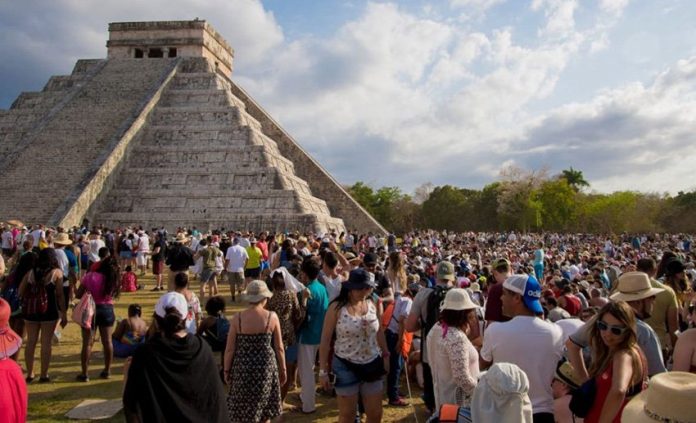
Authorities in Yucatán doubled the admission fee for the Mayan city of Chichén Itzá from 242 to 480 pesos (US $12 to $24) effective today, drawing criticism from the tourism sector.
Several state tourism and hotel associations warned in a letter to lawmakers that the new fee will cause financial losses for tourist service providers and a drop in the number of visitors to the state.
They explained that travel agencies, tour companies and cruise lines have yearly agreements with local tour companies. Those agreements were based on the previous admission fee.
The president of Cetur, the Tourist Business Council of Yucatán, asserted that 90% of tourists visiting Chichén Itzá are foreigners, and that 90% of them travel from the neighboring state of Quintana Roo, meaning that the new fee will negatively impact the tourist industry in both states.
Jaime Solís Garza warned that if the new fee is not rolled back tourist service providers will take their clients to the archaeological site at Tulum, where the price of a ticket is 75 pesos (US $3.80).
He said tour companies were not notified of the plan to increase the admission charge.
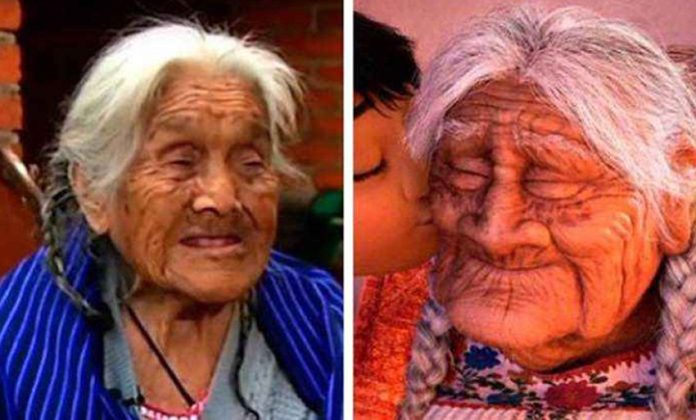
'Mamá Coco,' left, and the character in the movie. (File photo)
María Salud Ramírez Caballero has become the face of Santa Fe de la Laguna, a town of Purépecha potters in Quiroga, Michoacán, thanks to the 2017 Disney-Pixar animated film Coco.
Family and friends claim that the character of Mamá Coco, a warm-hearted, supportive and kind great-grandmother was based on the 105-year-old Salud.
Granddaughter Patricia Pérez Hernández told the newspaper El Universal that Mamá Coco’s appearance, gait, way of speaking and other mannerisms are based on those of Salud and that it is a mistake that the film’s producers have not given her official recognition.
Whether Nana Salud, as the woman is affectionately called, is the single source of inspiration for the filmmakers is a matter for another day. In the meantime, the residents of her hometown have embraced her and municipal authorities have gone as far as giving her official recognition and appointing her ambassador of the region’s artisans.
The film did draw inspiration from the town of Santa Fe as it did from towns across the Mexican southeast, and a young potter asserted that sales have improved since Coco’s release.
The film “has benefitted us a lot, because more tourists come. The town is known due to [Salud’s] fame, and [visitors] buy our handicrafts, all our handmade products . . . ” said Gabriela Gabriel Fabián, 23.
[wpgmza id=”124″]
Even though she was diagnosed with chronic obstructive pulmonary disease three years ago and prescribed oxygen tanks to help her breathe, Salud remains an active woman, briskly walking the streets of Santa Fe.
After Coco was screened in her hometown, a steady flow of visitors has arrived at her doorstep looking to meet her and get their picture taken with her.
Salud has declared that she is not looking for recognition or money, and that the way her life has changed after the release of Coco has made her happy. Still, more visitors mean that she can sell more of her pottery creations and earn “a few more centavos.”
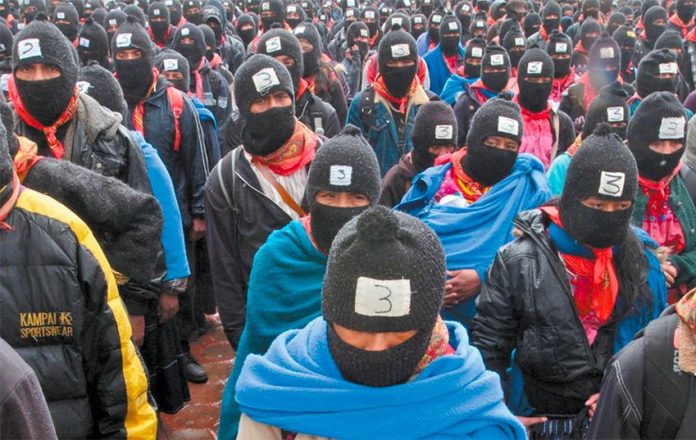
Zapatistas and indigenous groups create Networks of Resistance and Rebellion.
January 1 will mark 24 years since the Zapatista Army of National Liberation (EZLN) emerged from the rainforests of Chiapas to declare war on the Mexican government.
Now they plan to mount another protest movement, this time against President Andrés Manuel López Obrador and his Maya Train project.
The former army is now a political movement and is preparing to raise its voice against the train and other development projects on the first day of the new year, according to a report by the newspaper Milenio.
The organization and two indigenous groups met in October and drafted a text that claimed the new federal government represented a threat to indigenous communities with the Cancún-Palenque train, its trans-Isthmus projects and expansion of the economic zones.
In response, they said, they would create the Networks of Resistance and Rebellion to fight the federal government’s plans.
They also expressed opposition to López Obrador’s plan to plant a million hectares with fruit and other trees in the south of the country, a project intended to promote economic development, the government’s support for mining, its plans to incorporate 50,000 youths into the armed forces and its approval of the new trade agreement that replaces NAFTA.
Pedro Faro Navarro, director of the Frayba Human Rights Center explained that the networks would not only try to bring together indigenous peoples, as it has in the past, but anyone who opposes the country’s system of government.
He said the Maya Train project is only “the tip of the iceberg” for the EZLN and its allies because bringing such a project into Chiapas represents “the dispossession of the indigenous peoples’ lands” and will translate into “confrontations between the government of the ‘Fourth Transformation’ and the native peoples of southern Mexico.”
Large-scale public works projects like the Maya Train provoke the exclusion of the autonomous organized peoples who outright oppose the project, the activist said.
López Obrador has won support for his plans from some indigenous communities and was even honored by indigenous representatives at his official inauguration as president.
But not all see the new president and his Morena party as their political home.
Residents of Chautla, Guerrero, say they are being prevented from leaving their town.
As families around the country enjoy the Christmas holiday, residents of the Guerrero town of Rincón de Chautla in Chilapa have been trapped for nearly two weeks since an armed gang arrived.
It started on December 19 when a self-defense group known as Community Police for Peace and Justice — which authorities have linked to the Los Ardillos gang — broke up a quarrel between two groups of local residents.
Some residents say that under the pretext of maintaining the peace, the community police deployed 200 of its members to Chautla where they remain, preventing people from entering or leaving the town. Public transportation and freight deliveries have been halted since December 27.
Residents also claim the community police are constantly threatening them, and that food supplies are falling short.
The state Public Security Secretariat said military and state police were sent to Chautla but withdrew when the community police asked them to leave.
It is suspected that the Peace and Justice Police, and by extension Los Ardillos, are attempting to get the upper hand over the established local community police, which belongs to the Regional Coordination of Community Authorities (CRAC). It has been attempting to stop the gang’s activities.
According to the same sources, the Los Ardillos gnag controls 18 towns in Chilapa and are behind homicides and kidnappings.
Its influence reaches into the neighboring municipality of José Joaquín Herrera, where gang leader Constantino “Chino” García operates. He was was singled out for ordering “dozens of disappearances.”
The Community Police for Peace and Justice has also been held responsible for an armed invasion of the city of Chilapa in 2015 in which at least 16 youths were kidnapped, never to be heard from again.
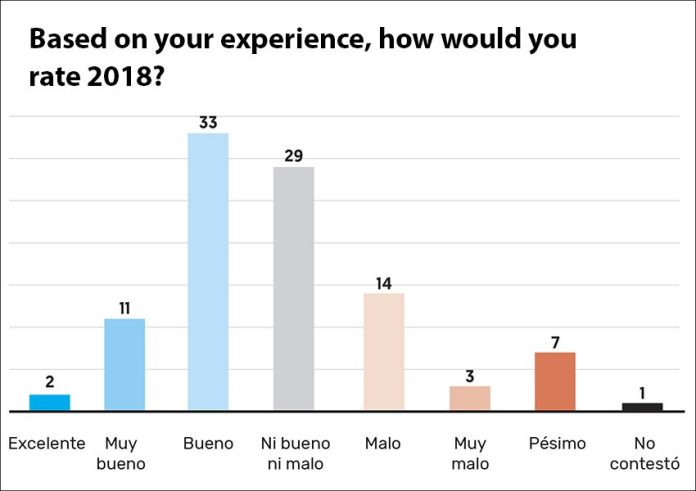
From excellent to awful, this is how respondents rated 2018. el financiero
Mexico’s president today characterized 2018 as “a good year” and nearly half of Mexicans are in agreement, according to a new poll.
Andrés Manuel López Obrador said in a year-end video message that it has been “the year of hope” because Mexicans chose “transformation and true change,” referring to the July 1 election results that put him and his Morena party in power.
But 2018 has not been easy nor has it been “all happiness,” he said, citing the deaths of Puebla Governor Martha Érika Alonso and her husband the ex-governor, Senator Rafael Moreno Valle.
The two were among five people killed when the helicopter in which they were traveling crashed near the city of Puebla on December 24.
The president repeated his pledge for a full and independent investigation, a probe that is being conducted by investigators from the United States and Canada.
Meanwhile, a national telephone poll by the newspaper El Financiero revealed that 46% of Mexicans believe 2018 has been good if not better. Neither good nor bad was the opinion of 29% while 24% said it was bad, very bad or awful.
The positive assessment was probably fueled by the conclusion by 49% that their lives in general had improved while 13% felt things had gone backwards.
Thirty-eight per cent saw advances in their personal finances; 17% saw a reversal.
For 39% the best thing that happened in 2018 was the conclusion of former president Enrique Peña Nieto’s six-year term, and for 38% it was the election of López Obrador.
The latter was also selected as man of the year by 47%, followed by filmmaker Alfonso Cuarón (Roma) with 15% and Argentinean soccer player Lionel Messi with 10%. Russian President Vladimir Putin made the list, with 9%, well ahead of United States President Donald Trump, who was selected by 2%.
The worst thing about the year for 46% of respondents was insecurity. For 26% corruption was the worst and for 19% the economy.
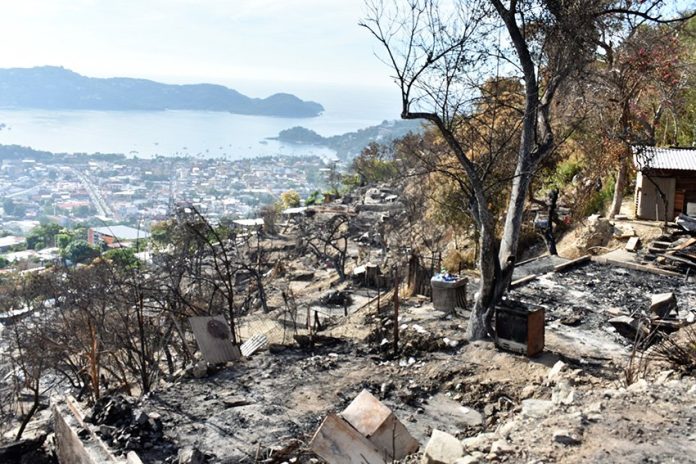
Devastation left by last week's fire in Zihuatanejo.
Once again Zihuatanejo shines.
Fire broke out high above the city of Zihuatanejo in the Buena Vista and Linda Vista neighborhoods on December 23, affecting some 150 homes and approximately 290 people.
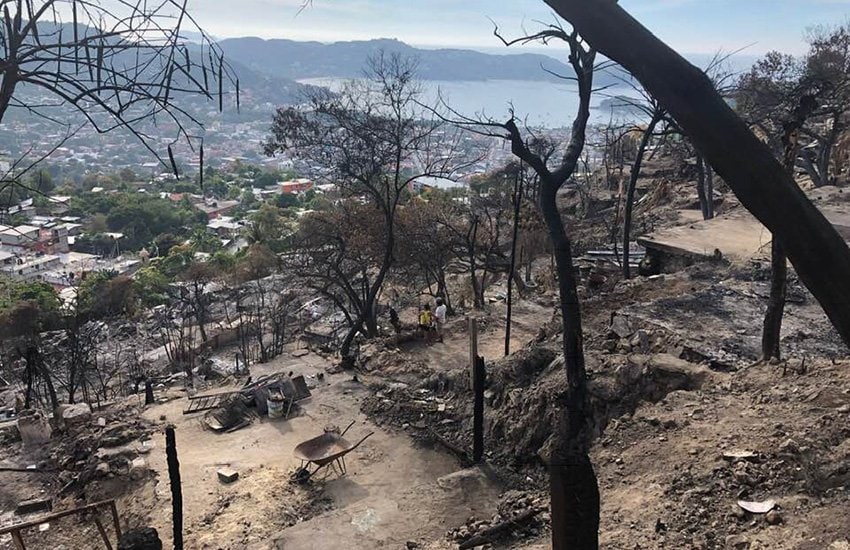
I climbed to the top of the mountain to view the devastation first-hand and was met by friendly neighbors whose homes had not been touched. Climbing higher still I saw people not so fortunate, but already hard at work clearing their land of debris and charred household belongings in anticipation of rebuilding their homes.
Municipal government workers were also on site, with heavy equipment to level the ground and remove some of the larger piles of garbage and remains of lost homes lost. It seemed to me that much had been accomplished in just five short days.
Later, I had the opportunity to interview Zihuatanejo’s first lady, Lizette Tapia Castro, head of the DIF family services agency and wife of Mayor Jorge Sánchez.
With so many rumors flying as to the cause of the fire, I hoped to find a definitive answer to the question on many people’s minds. Officially, the cause has not yet been determined until the authorities make their final report. Unofficially however, it is believed and reported by neighbors in the area to have been caused by young children playing with firecrackers.
Millions of pesos in damage on the hill overlooking Zihuatanejo.
Regardless, efforts to contain the fire seemed to me to be swift and efficient. Led by the municipal government and coordinated by the DIF, people were housed and organized in the Municipal Auditorium of Zihuatanejo near the central part of town within hours. In the first few days, 400 volunteers from the community assisted victims to make sure they were given food, water and clothing, and that their animals were rescued and cared for.
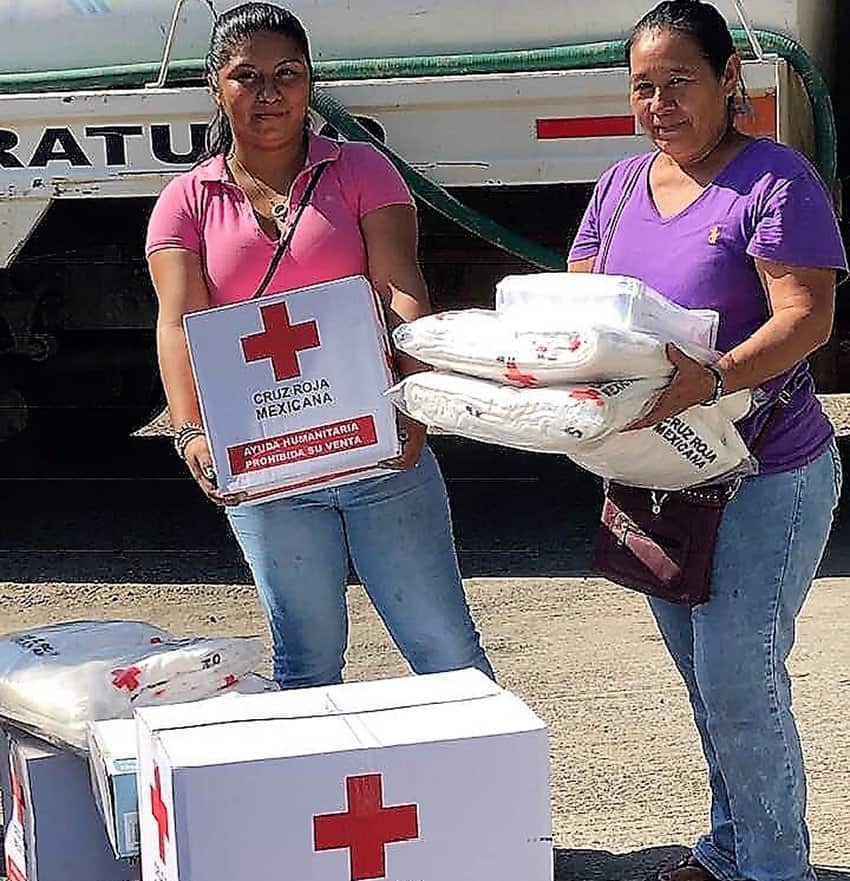
Families carved out space on the floor of the auditorium and were immediately tended to by Red Cross workers, as well as DIF staff of 10 and a small army of volunteers. Supplies such as blankets, inflatables mattresses and sheets and personal hygiene products, to name a few, were distributed by the Red Cross as well another kit containing pots and pans, dishes and cleaning supplies.
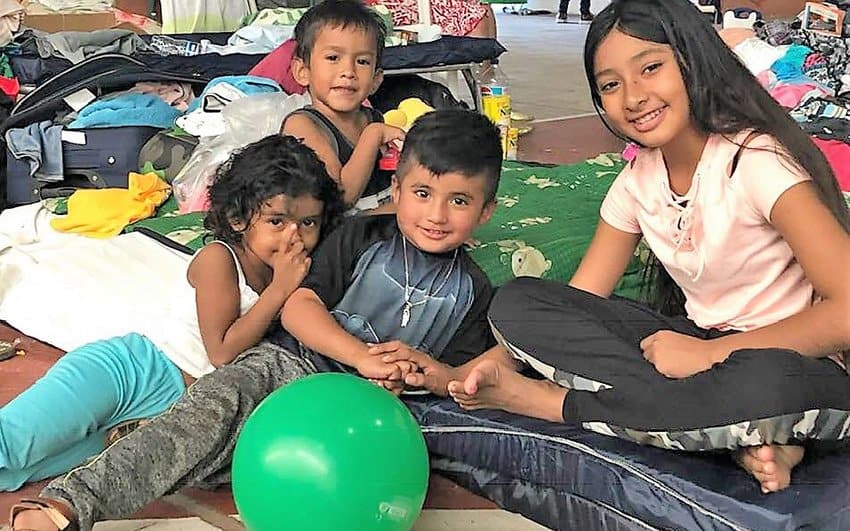
Over the next couple of days, I spent a few hours sorting through mounds of clothing that poured into the shelter, chatting with other volunteers and recipients while they tried to get some semblance of order. For the most part, people were upbeat and cheerful, surprising considering the trauma they had just experienced. Of course, the numerous children seemed unfazed as they played together.
Inside the municipal building, several long tables laden with pharmaceuticals and personal hygiene items were set up and manned by pharmacists and medical personnel who dispensed what was needed.
Lizette Tapia also explained that within the week the state of Guerrero will supply families with construction materials including galvanized metal roofing, a sturdier option then the tar paper roofs they had before. As well, each family will receive a brand-new mattress, including a base to set it on, a refrigerator and a full stove.
Red Cross workers with aid for victims.
The state has pledged 2,500 pesos (US $127) to each family immediately and an additional 2,500 pesos a week later so they can begin construction of their homes. The plan is to have the municipal building vacated by the first week of January.
Before the fire, many of the victims lived in houses made of cardboard and plastic and cooked on tiny two-burner stoves or even open fires. Some had never owned a mattress or fridge. For everyone, 5,000 pesos is a lot of money, and there will be opportunities down the road to apply for grants to continue to build with concrete.
The foreign community pulled together, as they always do in Zihuatanejo. Various groups and individuals started fundraising, including the organization known as Por Los Niños, which raised over 153,000 pesos (US $7,800) in less than two days with the promise of more to come.
The money is earmarked for school supplies, uniforms, backpacks and shoes, while other cash donated will purchase propane tanks and water storage tanks. These, too, are luxuries not everyone owned before the fire. Additional cash, if any, will be used on an ongoing basis as people struggle with health issues from the contaminants that polluted the air during the fire.
There were many takeaways that have resulted from the tragedy. Perhaps the best for me is how the community and government have pulled together in an obviously well run and professionally executed manner that all can be proud of.
Children play at the municipal shelter.
And I for one couldn’t help but think that for many people affected, this could well be a blessing in disguise.
If you wish to donate, you may do so directly with the DIF. The account name is Municipio de Zihuatanejo de Azueta DIF Municipal Apoyo, Bancomer account number 0112356473.
To help with educational supplies you can donate through Por Los Niños.
The writer is a Canadian who has lived and worked in Mexico for many years.
Buy some grapes, pack a suitcase and take care choosing the color of your underwear on Monday. Those are just three New Year’s Eve traditions in Mexico with which you can kick off the new year.
The idea of starting afresh is appealing to many who see the new year as a chance for a clean slate and a new start. Many will be thinking of resolutions to guide them into the coming year.
All over the world there are traditions with which to see in the new year and Mexico is no exception, with a number of rituals to clear out the old and bring in the new. Here are a few that you may want to try.
The 12 grapes of new year
Stock up on seedless grapes before your New Year’s Eve party to take part in the 12-grape ritual common in many parts of the country. It is likely that the tradition came to Mexico from Spain, but nonetheless the practice of eating 12 grapes in the countdown to midnight (or some say at the stroke of midnight) remains incredibly popular.
Take each grape and make a wish on each one as you pop them into your mouth. Some say that if the grape is sweet you will get your wish but if it is bitter you might be in for a tricky month, so pay attention to the flavor of each fruit as you chomp them down.
The empty suitcase
If you want travel to be in your future in 2019 get some suitcases ready on New Year’s Eve. Don’t pack the suitcases, however, because for this ritual they should be empty. As the clock strikes midnight, grab your bags and head out for a walk around the block under the light of the moon. The belief is that this ritual will ensure that you get to enjoy new horizons in the coming year.
The color of your underwear matters
You might notice that markets and supermarkets in Mexico are selling lots of underwear in bright red, yellow and green colors in the lead-up to New Year’s. This is because according to tradition the color of your New Year’s Eve panties can help you attract what you are most looking for in the coming year.
Don a red pair if you are looking for love, yellow if you want to attract wealth and green if you want good health. You may also choose to wear white underwear if you are looking for a more peaceful 12 months in 2019.
Sweep out the old to make space for abundance
Grab a broom and get ready to sweep out the old. On New Year’s Eve, a common ritual is to ceremoniously sweep dirt out from the front door of the house before throwing some coins outside the door and then sweeping them back inside. The symbolism of this ritual is rather obvious: letting go of the old and welcoming in the wealth. Get your brooms and coins ready if wealth and abundance are what you are after in the coming year.
Burning of the old year
In Quintana Roo and some other parts of Mexico there is a tradition, likely Spanish in origin as well, that involves making a doll that acts like an effigy of all the bad or stagnant energies of things from the previous year. The doll sometimes represents a political figure but can just be a symbolistic representation of all of the negative occurrences from the last 12 months.
At midnight the doll is burned. As it goes up in smoke and disappears it takes all of those bad things from the previous year with it.
Bringing light into the new year
The universal symbolism of light plays a role in this New Year’s tradition. Light up your house by turning on all the lights before midnight so that your home is as bright as possible. The idea is that the light will attract prosperity and abundance in the year to come.
Pick the color of your candles wisely
Another tradition related to light is to burn a particular color candle depending on what you are hoping to attract in the new year. If you want a peaceful year light a blue candle, if you are looking for abundance find yourself a yellow one, for love light a red one or to rid yourself of negative energies, a purple candle is for you.
Green candles are said to bring good health, orange ones attract success and if things are a little muddled and you need some clarity, light up a white candle to help clear the way in 2019. Once lit, it is believed that your candle should not be put out until it has burned all the way down so that all the positive energy fills your home.
Let there be lentils
If you are hoping for an abundant 2019 make sure to cook up some lentils on December 31.At the stroke of midnight, grab a spoonful of the cooked lentils and eat them. It is quite likely that this tradition comes from Roman times when a purse of lentils would be given to friends or family with the idea that they would become gold coins.
The abundant sheep
You may have seen a number of stores and market stalls around Mexico selling sheep figurines alongside things like candles, crystals, potions and lotions. This is because sheep are believed to bring abundance. Once purchased, place your sheep by the front door, maybe with a gold coin or two, and wait for the money to come rolling in in 2019.
Wear something new while enjoying your New Year’s dinner
Another tradition is to wear a new item of clothing or accessory to your New Year’s dinner or festivities. It is said that this will help attract abundance in the coming year. Out with the old, in with the new, as they say.
Whatever form your New Year’s Eve takes, here’s hoping that all your wishes come true.
Susannah Rigg is a freelance writer and Mexico specialist based in Mexico City. Her work has been published by BBC Travel, Condé Nast Traveler, CNN Travel and The Independent UK among others. Find out more about Susannah on her website.
Two years after an explosion that killed 42 people, the San Pablito fireworks market in México state has reopened.
Between Thursday night and Friday morning, the Secretariat of National Defense (Sedena) approved applications for operating permits from 168 stallholders at the market, located about 40 kilometers north of Mexico City in the municipality of Tultepec.
A further 89 stallholders are still waiting for permits to be granted.
All licenses held by vendors who worked at the market were suspended after the December 20, 2016 explosion that in addition to claiming the lives of 42, left more than 60 people injured and completely destroyed the market.
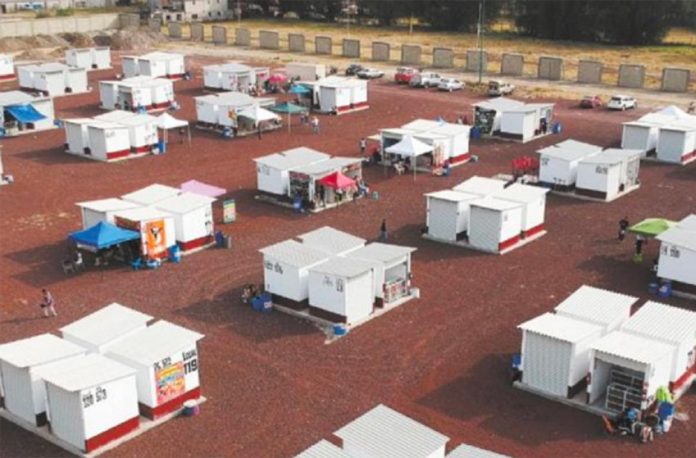
Tultepec Mayor Armando Cervantes Punzo said the new permits allow up to 25 kilograms of fireworks to be stored in each of the 300 new stalls.
“It’s a great release of pressure that the permit suspensions have been lifted . . . [The new market] is a regulated sales space that complies with all the applicable regulations,” he said.
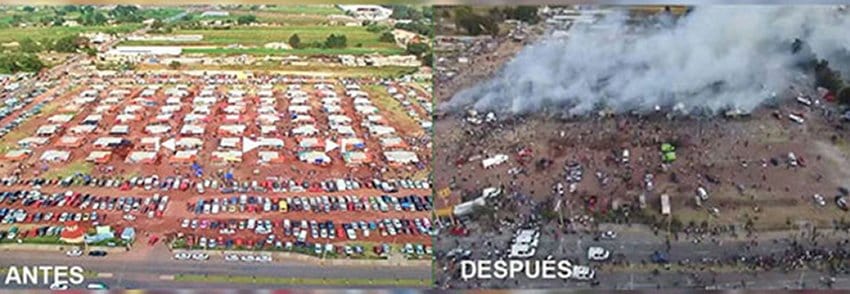
San Pablito, after and before the 2016 explosion.
Cervantes told the newspaper El Sol de México that the market met all the relevant safety requirements in October but the granting of the new permits was delayed by bureaucracy that was further complicated by the change of federal government.
He said the new market was built in accordance with state government and Sedena safety guidelines, adding that vendors now have no excuse for selling fireworks illegally.
Market manager Germán Galicia Cortez said the market was built using a special explosion-resistant cement produced by Mexican cement company Cemex.
The México state government contributed 35 million pesos (US $1.8 million) for the construction of 150 stores within the market while the Tultepec municipal government chipped in seven million pesos (US $356,000) towards building the remaining 150.
Around 10,000 people in Tultepec depend on the fireworks industry for their livelihoods.