Home Blog Page 2126

Mexico will take back migrants awaiting asylum after US changes policy

0
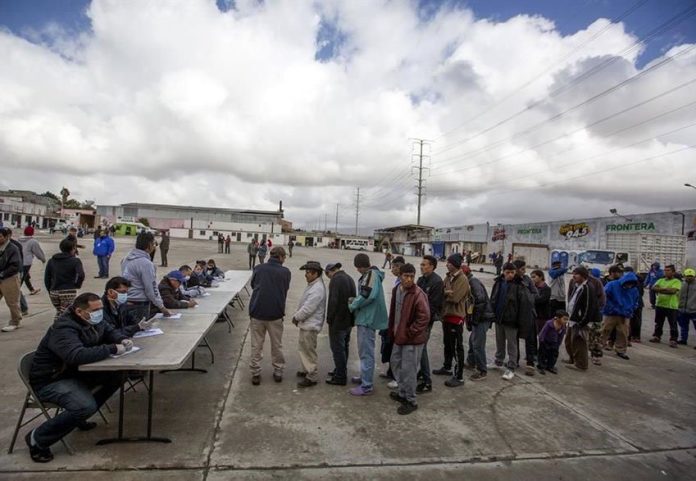
Central American migrants in Tijuana.

The United States has found a willing collaborator in Mexico’s new government for its “Remain in Mexico” plan for Central American asylum seekers.

The Secretariat of Foreign Affairs (SRE) announced today that it would take back some non-Mexican migrants who have requested asylum in the United States while they await the outcome of their claims.

The announcement came in response to a major change in United States immigration policy, announced today by the U.S. Department of Homeland Security (DHS).

“Aliens trying to game the system to get into our country illegally will no longer be able to disappear into the United States, where many skip their court dates,” Homeland Security Secretary Kirstjen Nielsen said in a statement.

“Instead, they will wait for an immigration court decision while they are in Mexico. ‘Catch and release’ will be replaced with ‘catch and return.’ In doing so, we will reduce illegal migration by removing one of the key incentives that encourages people from taking the dangerous journey to the United States in the first place. This will also allow us to focus more attention on those who are actually fleeing persecution,” she added.

The SRE said in a statement the Mexican government will “authorize, for humanitarian reasons and temporarily, the entry from the United States of certain foreign persons that have entered that country through a port of entry or have been apprehended between ports of entry,” adding that they must have already been interviewed by U.S. authorities and given an appointment to appear before an immigration judge.

It added that it will retain the right to reject or admit the entry of foreigners into its territory but its position will nevertheless be seen by many as a major concession to the United States government.

“Mexico’s government has decided to take the following actions to benefit migrants, in particular unaccompanied and accompanied minors, and to protect the rights of those who want to start an asylum process in the United States,” the statement said.

The SRE clarified that the actions taken by the Mexican and United States governments “don’t constitute a safe third country scheme,” in which migrants would have to seek asylum in the United States while in Mexico.

The rights and freedoms of migrants who return to Mexico will be guaranteed, the statement said, and they will have the opportunity to request a work visa.

Just how many migrants will be shipped back to Mexico is unclear but the head of the National Immigration Institute (INM) said his agency would not be able to receive them in the short term.

Tonatiuh Guillén told a press conference today the institute faces two obstacles. It is not only incapable of handling the additional work, he said, but more importantly the initiative falls outside the Immigration Law.

The New York Times reported that Mexico will be forced to house thousands of people from other countries, particularly Central America. However, Foreign Affairs spokesman Roberto Velasco said the new rule applies only to new asylum applicants and not those who have already entered the U.S.

He also observed there was no agreement on the issue between the two countries. Instead, it was “a unilateral move by the United States that we have to respond to.”

Several migrant caravans have crossed Mexico’s southern border over the past two months, bringing thousands of Central Americans to the country. Many are now in Tijuana or other border cities waiting for an opportunity to request asylum in the United States.

United States President Donald Trump bolstered security at the border in response to what he described as an “invasion,” deploying the army and reinforcing the border fence with concertina wire while implementing a daily “metering” system that limits the number of asylum cases U.S. border authorities will hear.

Stranded on the border, an increasing number of migrants have crossed or attempted to cross the border illegally to turn themselves in to border patrol agents and circumvent the lengthy wait for an opportunity to apply for asylum.

The DHS said today that as it implements its new immigration policy “illegal immigration and false asylum claims are expected to decline” as “fraudsters” will be “disincentivized from making the journey” to the United States southern border.

“Precious border security personnel and resources will be freed up to focus on protecting our territory and clearing the massive asylum backlog” and “vulnerable populations will get the protection they need while they await a determination in Mexico,” it added.

But Amnesty International has a different assessment.

A statement from the United States executive director of the organization, Margaret Huang, said that “this deal is a stark violation of international law, flies in the face of U.S. laws passed by Congress, and is a callous response to the families and individuals running for their lives.”

Published under the heading “Remain in Mexico plan could prove deadly to vulnerable families,” Huang’s response continues:

“While mothers, fathers, and children leave everything behind in search of protection, the U.S. and Mexican governments are collaborating to shut down their access to safety. The end result could be the endangerment of thousands of families and individuals seeking protection.

“Make no mistake — Mexico is not a safe country for all people seeking protection. Many people seeking asylum in the United States face discrimination, exploitation, sexual assault, murder, or the possibility of being disappeared while traveling through Mexico or while forced to wait for extraordinarily long times in Mexican border towns. Women, children, and LGBTI people could face heightened and unacceptable risks.”

Source: Reforma (sp), Reuters (en), The New York Times (en)

Nestlé plant gets cool welcome from coffee growers in Veracruz

0
Coffee growers say no to Nestlé.

Tuesday’s announcement by Swiss food and drinks company Nestlé that it will invest US $154 million in a coffee processing plant in Veracruz has been met with disdain by some coffee growers.

Representatives from several growers’ associations in the state rejected the company’s plan at a press conference yesterday, declaring that it won’t benefit small producers and will damage the environment.

The president of the Coatepec Regional Coffee Council said that Nestlé and other companies such as Starbucks have long exploited and manipulated local coffee producers and that the installation of a new plant would only perpetuate the situation.

“They make an announcement that for us is nothing new because Nestlé has always controlled coffee prices, they’ve exploited coffee growers for decades, not just Mexicans but at a worldwide level,” Cirilo Elothán Díaz said.

Members of the Plan de Ayala National Coordination (CNPA), a group which defends farmers’ rights, said that before the federal government reached an agreement with Nestlé it should have consulted with Mexico’s coffee producers.

President López Obrador met Tuesday with Nestlé México CEO Fausto Costa, who said that the new plant – with a capacity to process 20,000 tonnes of coffee beans every year – will make Mexico the company’s most important coffee-producing country.

The CNPA members also said that any government incentives should go directly to growers rather than the multinational company.

“We have to review what they’re doing, the agreements, and promote [the work of] the coffee producer, give [government] money to the producers,” CNPA representative Ramón Pino Méndez said.

“. . . The way in which Nestlé is going to come in won’t have any benefit at all. It’s a million-dollar investment but it’s for them because the producer isn’t going to get any benefit . . . If Nestlé really made a plan . . . that lifted coffee growers out of poverty we’d be with them but in advance we know that they . . . [will] exploit the coffee growers,” he added.

Pino also said that Nestlé has “a very bad reputation for wreaking havoc on the environment because it promotes cultivation of robusta coffee, which is a crop that grows without shade and therefore causes deforestation.”

Coffee growers are also angry that the federal government slashed funding for Mexico’s coffee sector by more than 50% in its 2019 budget, which was presented Saturday.

The economic package set aside 346 million pesos (US $17.4 million) for the implementation of the government’s Integrated Coffee Plan next year compared to 783 million pesos (US $39.4 million) this year.

Source: Milenio (sp) 

Nissan will cut 1,000 jobs as sales decline

0
Jobs will be lost at Nissan's plants in Aguascalientes and Morelos.

Nissan México will lay off 1,000 workers in Aguascalientes and Morelos in response to a decline in sales.

“In response to the challenging market conditions in Mexico, Nissan is adjusting its production levels in its Morelos and Aguascalientes plants,” the Japanese automotive manufacturer said in a statement.

The dismissals will begin in January and affect assembly line workers.

The company did not specify how much it will reduce production, but the Mexican Automotive Industry Association said Nissan’s production was down 9% between January and November, during which time sales declined 14.3%.

The auto maker assembles its Kicks, March, Versa and Sentra models at the plants located in the cities of Aguascalientes and Cuernavaca.

Nisan has invested more than US $5 billion in the two plants over the last 13 years, and annual production has grown from 349,000 units to 829,000.

Source: El Universal (sp)

Presumed boss of Acapulco gang caught for the second time

0
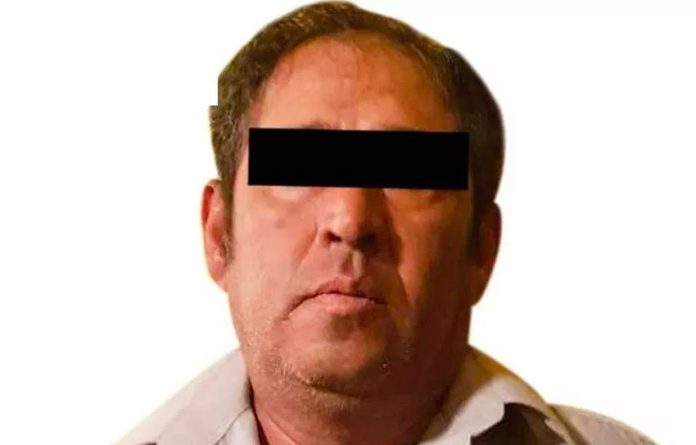
Suspected leader of the Independent Cartel of Acapulco, José Galeana.

A suspected gang leader believed to be one of the main instigators of violence in Acapulco was recaptured yesterday in the state of México.

José Galeana Galeana has ties with the Beltrán Leyva cartel but is better known as the leader of the Independent Cartel of Acapulco (CIDA).

The federal Attorney General’s office said Galeana, also known as “El Tete Galeana” and “El Viejón,” was arrested in the city of Toluca for the sale and distribution of drugs in Acapulco along with homicide, extortion and kidnapping.

Galeana has already served some time in prison.

He was arrested in 2013 and accused of kidnapping, homicide, carrying unauthorized weapons, being in possession of illegal drugs and organized crime.

The day after his arrest, some 300 people — mostly youths — mounted a blockade in protest on Miguel Alemán avenue in Acapulco.

Galeana was later tried and convicted but despite the severity of his crimes was held in Acapulco’s municipal minimum security penitentiary instead of being transported to a federal prison. There, he rose as one of the main leaders within the inmates’ internal self-governance structure, which was already infiltrated by other cartel members.

Galeana was soon coordinating drug trafficking networks within the jail.

Then, with little explanation, he was released in June 2015, and a new wave of violence followed as he fought for territorial control of Acapulco.

Source: Eje Central (sp)

Bond buyback declared a success, ‘clears the way’ for Santa Lucía airport

0
Artist's conception of Santa Lucía airport.

The federal government’s offer to buy back US $1.8 billion in bonds issued to fund the cancelled Mexico City airport project has received “overwhelming support” from bondholders, the Secretariat of Finance (SHCP) said yesterday.

In a statement, the SHCP said the Mexico City Airport Trust (MexCAT) had received the consent of a “substantial majority” of the bondholders with regard to the offer, which the federal government sweetened last week only to see investors initially reject it.

According to the news agency Bloomberg, over 70% of bondholders have now approved the deal, which includes a buyback price of par plus accrued and unpaid interest.

This morning, President López Obrador praised the success of the buyback offer and declared that it “clears the way” for construction of a new airport at the Santa Lucía Air Force Base in México state.

He added that the government was concerned that it could face legal action from the bondholders, which would have delayed plans to “definitively solve the saturation problem at the current airport,” Latin America’s busiest in 2017.

Before he took office, the new president held a widely-criticized public consultation on the future of the partially-built US $13 billion airport at Texcoco, México state, and found 70% support to cancel it.

Two new runways will be built at Santa Lucía under the plan the government put to the people and the existing Mexico City airport and that in Toluca will be upgraded.

López Obrador told reporters at his morning press conference that “the army will build the Santa Lucía runways,” explaining “they have the capacity and they’re already being allocated resources for that proposal,” referring to funding in the 2019 budget.

In his inaugural speech as president after being sworn in on December 1, López Obrador pledged that the air force base will be operating as Mexico City’s new airport in three years.

The peso rallied this morning as investors gained confidence that the government had solved the bond buyback issue, gaining 1.3% to trade just under 19.9 to the US dollar.

Source: El Financiero (sp), Milenio (sp) 

Diver dies after suspected shark attack off Sonora

0
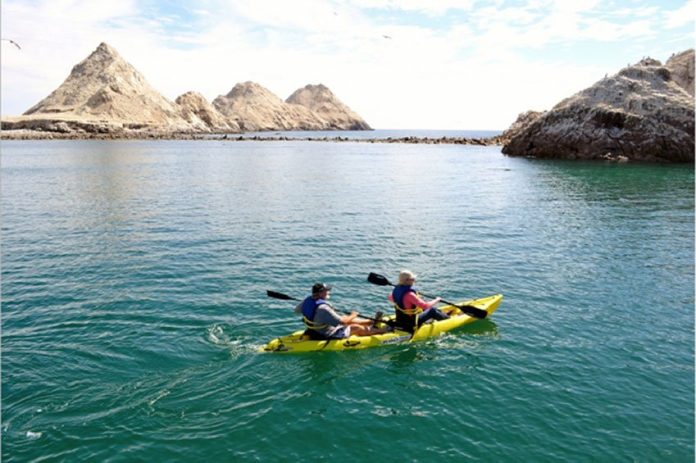
Isla San Jorge, the area in which a diver lost his life this week.

A scuba diver is dead after he was attacked by what is believed to have been a shark in the waters off Puerto Peñasco, Sonora, on Tuesday.

Nahum Verdugo, 37, had gone fishing with friends in an area known as Haway, 10 kilometers southeast of Isla San Jorge. Local police said he was attacked as soon as he entered the water.

His companions saw his body floating on the surface and when they brought him on board their boat realized he was missing a leg.

They rushed him to Puerto Peñasco where he was pronounced dead.

The victim, a resident of Puerto Peñasco, was a commercial and sport fishing diver.

Source: El Sol de Hermosillo (sp)

Works of art, furniture, bedding, historic spoons missing from Los Pinos

0
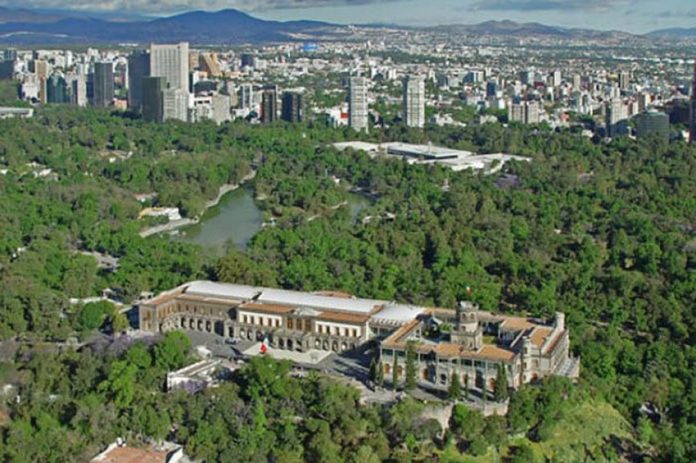
Los Pinos: missing paintings, furnishings sought.

Art, historically-significant furniture, household goods and bedding are among the items missing from Los Pinos, the former official residence of the Mexican president.

Government sources told the news website Sin Embargo that the list of missing items could grow even longer as a review of the enormous and opulent Mexico City residence and its grounds continues.

Located in the Chapultepec Forest, Los Pinos was home to every Mexican president since Lázaro Cárdenas took office in 1934 but President López Obrador has instead opened its doors to the public as a cultural center.

Among the household items that can’t be located is a set of spoons that dates back to the presidency of Porfirio Díaz, a source said, adding “they [former President Enrique Peña Nieto and his family] didn’t leave pillows, comforters or sheets . . . maybe some of them were theirs but not all of them.”

A group of artists who completed paintings on commission for then-president Carlos Salinas 25 years ago sent a letter to authorities asking about the whereabouts of their work, the same source said.

However, other government sources said that the missing items aren’t “necessarily lost.”

Authorities of the new government, which took office on December 1, are currently trying to locate the absent artworks and other articles, they explained.

There is a legal obligation for the office of the outgoing president to report what items remain in Los Pinos and what has been taken but according to a Sin Embargo source “no inventory has been found.”

Past presidents including Vicente Fox and Felipe Calderón have returned paintings hung at Los Pinos during their presidency to public art galleries but it is not yet clear whether Peña Nieto did the same.

Since the former presidential residence opened to the public on the day of López Obrador’s inauguration, thousands of people have flocked to see where their past 14 presidents lived.

Last week, a special screening of the new Mexican film Roma was held on the grounds of Los Pinos, with more than 3,000 in attendance.

Source: Sin Embargo (sp) 

Hunger crusade money made its way into eight foreign countries

0
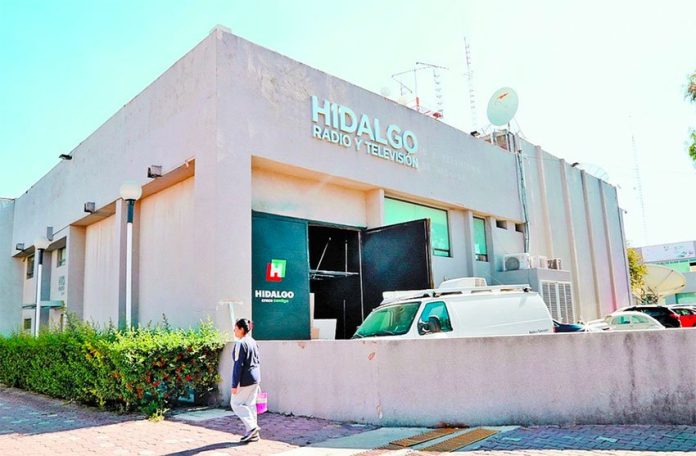
Missing hunger crusade money went through this state broadcaster and disappeared.
Money went through this state broadcaster and disappeared.

More than 66 million pesos allocated to the previous government’s anti-hunger initiative was converted to dollars and transferred to bank accounts in eight foreign countries, audits show.

Between 2014 and 2015, the federal Secretariat of Social Development (Sedesol) paid public broadcaster Radio y Televisión de Hidalgo (RTVH) more than 955 million pesos (US $47.5 million at today’s exchange rate) to conduct surveys about the impact of its social programs and to produce and broadcast commercials detailing progress of the National Crusade Against Hunger (CNCH).

But instead of carrying out the work it was contracted to do, RTVH disbursed the money to dozens of different companies and 66.1 million pesos (US $3.3 million at today’s exchange rate) ended up in bank accounts in China, Pakistan, South Korea, Israel, Denmark, Belgium, Ecuador and the United States.

The Federal Auditor’s Office (ASF) filed two criminal complaints with the federal Attorney General’s office (PGR) in relation to the case, one in October 2017 and another in October this year.

When the ASF detected that the money had been sent overseas, it sought the assistance of the Financial Intelligence Unit (UIF), a division of the Secretariat of Finance (SHCP), in order to conduct an investigation to determine who were the ultimate beneficiaries of the funds, according to information obtained by the media organizations Milenio and La Silla Rota.

But whether the UIF did in fact conduct an investigation is uncertain, according to SHCP officials of the new federal government who are now making inquiries into the case.

Santiago Nieto, a former chief electoral crimes prosecutor who was dismissed by the past government, now heads up the UIF and has pledged to combat corruption and impunity.

The UIF chief during the time in question was Alberto Bazbaz, who served under former finance secretaries Luis Videgaray, who later became foreign secretary, and José Antonio Meade, who left the role to contend this year’s presidential election.

According to ASF investigations, the Sedesol official responsible for orchestrating the allegedly corrupt agreements with RTVH was Claudia Morones Sánchez.

The social development secretary at the time was Rosario Robles, who has been embroiled in several corruption scandals but denies any wrongdoing.

A month after Robles left Sedesol to become the secretary of agrarian development and urban planning, Morones took up a management position in a government body with links to the secretariat her former boss moved to.

Radio y Televisión de Hidalgo, a broadcaster owned by the government of Hidalgo, claimed that it didn’t have the capacity to carry out the work Sedesol contracted it for and consequently subcontracted a total of 61 companies during 2014 and 2015.

However, the ASF detected a range of irregularities related to the contracts, including the companies’ failure to complete the work for which they were contracted.

The money RTVH received gradually disappeared as it outsourced more and more work and made more and more bank transfers. Several companies that received the money made the transfers to the foreign bank accounts, according to the ASF investigation.

Former RTVH officials who made statements to the ASF claim that the Hidalgo state broadcaster was forced to enter into two separate agreements with Sedesol and Morones decided which subcontractors the money would be directed to.

Two former RTVH directors were arrested in relation to the scheme. One of them is now a fugitive from justice.

But Robles, a cabinet secretary during the entirety of former president Enrique Peña Nieto’s six-year term, has not faced any criminal charges.

During a defiant appearance before Congress in October, she rejected all allegations of corruption against her, declaring “my hands are clean and my conscience is clear.”

Asked by a Milenio journalist this week whether in two or three years “we won’t find out” that she has millions of dollars to her name, Robles responded: “Unless I win the lottery, I don’t think you’ll hear about that.”

The anti-poverty program she was charged with implementing failed to achieve its ambitious goal of eradicating hunger and yet more of its funds were allegedly embezzled through corruption schemes.

Source: Milenio/La Silla Rota

Nestlé announces US $154-million plant in Veracruz

0
López Obrador, left, and Nestlé president Costa.

The Swiss food and drinks company Nestlé announced a US $154-million investment in Veracruz during a meeting yesterday with President López Obrador.

The company plans to install a coffee processing plant that will create 2,750 direct and indirect jobs and have the capacity to process 20,000 tonnes of coffee beans every year.

The facility will be equipped with water treatment and recirculation plants and will make use of 100% of the coffee husks to generate power. All the electricity it uses will be 100% renewable energy.

Nestlé said its buys raw materials from more than 10,000 producers annually in Veracruz. During the 2017-2018 harvest season, the company bought 340,000 69-kilogram bags of coffee in the state and provided technical support to more than 5,000 producers.

Nestlé México CEO Fausto Costa said: “We are very pleased to share joint objectives with president Andrés Manuel López Obrador and his team. We both believe in supporting young people, where Nestlé has been a pioneer in the country. We also both believe in the strengthening of the Mexican countryside and the importance of accelerating the growth of the southeast region.

“This new investment in Veracruz confirms our commitment to Mexico and its people; the country’s economic stability and competitiveness have been fundamental factors to strengthen us as Nestlé’s fifth largest market worldwide,” added Costa.

“Nestlé’s newest global investment comes to Mexico and will boost the country’s coffee production, a priority item for the new [federal] government,” he continued, remarking also that the announcement was proof of the firm’s trust in the country and its future.

With the new plant, Costa said, Mexico will become Nestlé’s most important coffee-producing country.

Source: El Financiero (sp), FoodBev Media (en)

Border zone minimum wage hike affects 43 municipalities

0
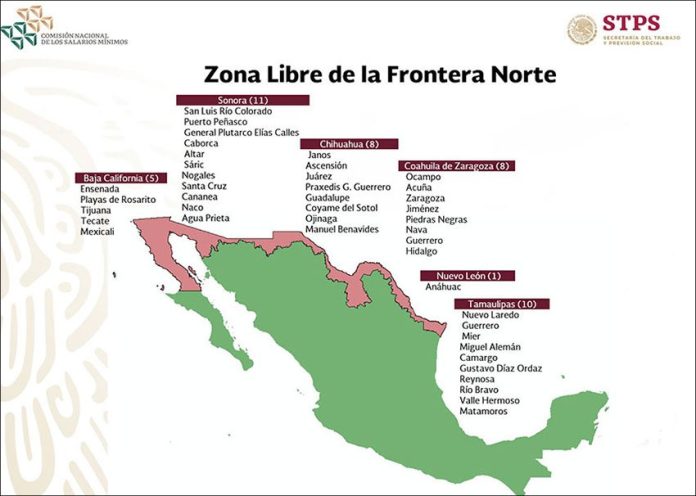
The northern border free zone: higher minimum wage and lower taxes.

The higher minimum wage for the northern border area announced this week by the federal government will apply to 43 municipalities in six states.

Labor Secretary Luisa María Alcalde announced Monday that the minimum daily wage in the border zone would rise to 176.72 pesos (US $8.80) on January 1, whereas a new rate of 102.68 pesos (US $5.10) will apply to the rest of the country.

All municipalities that adjoin the United States border in Baja California, Sonora, Chihuahua, Coahuila, Nuevo León and Tamaulipas will be included in the higher wage zone.

Workers in Ensenada and Playas de Rosarito, which are located farther south of the border, will also benefit from the new arrangement.

The two municipalities will also be included in the northern border free zone, where lower income and value-added tax rates will come into force on New Year’s Day.

President López Obrador has justified the creation of the zone by saying that the border area is the “last curtain of development to keep our compatriots in Mexican territory.” He waxes often that migration “should be optional, not obligatory.”

Meanwhile, Baja California Sur (BCS) Governor Carlos Mendoza has expressed his disappointment that the state he governs was not included in the free zone and higher wage area.

“[It’s] regrettable that BCS hasn’t been included in the free zone proposal like the rest of the [Baja California] peninsula. Not only will we not benefit from a lower IVA [value-added tax] and ISR [income tax], we won’t benefit from the minimum salary rise either. We demand reconsideration!” he wrote on Twitter.

The 43 municipalities included in the free zone and higher wage area are:

Baja California: Ensenada, Playas de Rosarito, Tijuana, Tecate and Mexicali.

Sonora: San Luis Río Colorado, Puerto Peñasco, General Plutarco Elías Calles, Caborca, Altar, Sáric, Nogales, Santa Cruz Cananea, Naco and Agua Prieta.

Chihuahua: Janos, Ascensión, Juárez, Praxedis G. Guerrero, Guadalupe, Coyame del Sotol, Ojinagua and Manuel Benavides.

Coahuila: Ocampo, Acuña, Zaragoza, Jiménez, Piedras Negras, Nava, Guerrero and Hidalgo.

Nuevo León: Anáhuac.

Tamaulipas: Nuevo Laredo, Guerrero, Mier, Miguel Alemán, Camargo, Gustavo Díaz Ordaz, Reynosa, Río Bravo, Valle Hermoso and Matamoros.

Source: El Universal (sp), BCS Noticias (sp)