Home Blog Page 2127

Constellation Brands challenges Baja California brewery consultation

0
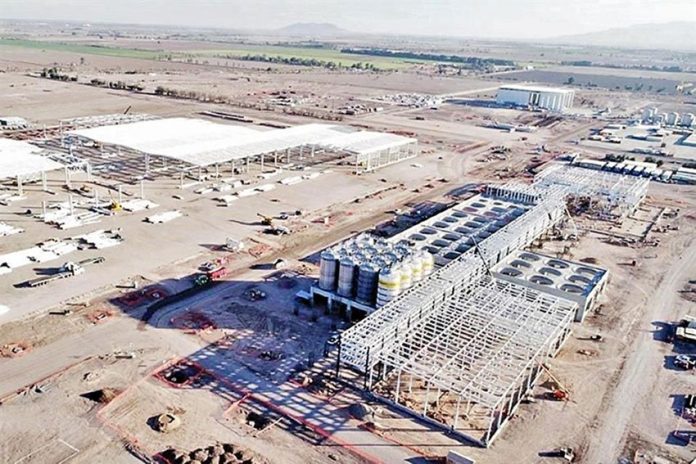
The brewery that is under construction in Baja California.

The international beverage company Constellation Brands is fighting off another attempt to stop the construction of its US $1.5-billion brewery in the Mexicali valley in Baja California.

The company has filed a legal challenge against a decision by state electoral authorities to allow a public consultation on the brewery project, demanding it be suspended.

A civil organization had filed a request for the plebiscite on December 9 to gauge public opinion on the controversial brewery.

A ruling is expected before the end of the month on the company’s challenge of the vote, which would be held next June.

Constellation spokesman Julio Portales said if the vote goes against the brewery it will mean having to dismantle $700 million worth of investment and go elsewhere. The amount represents what the company will have invested by June 1.

He warned that foreign investors would think again before investing in Mexico if the brewery is forced to move.

“If on June 1 the citizens vote that we move, imagine the signal we are sending to the world, to all the investors on the planet: that in Mexico your investment can be put to a vote . . . .”

A state senator agrees. Gina Cruz Blackledge has described the consultation as politically motivated and warned it would scare off investment. She said there are studies showing the brewery does not pose a threat to the Mexicali valley.

But critics charge that high water consumption by the brewery will affect the drinking water supply. Naturally, Constellation disputes that.

It claims its annual water consumption will be 1.8 million cubic meters, which the company says is equivalent to the amount of water extracted from one of more than 2,000 wells in the valley.

Source: Reforma (sp), El Sol de México (sp)

Ex-attorney general denies accepting bribes from Colombian narco

0
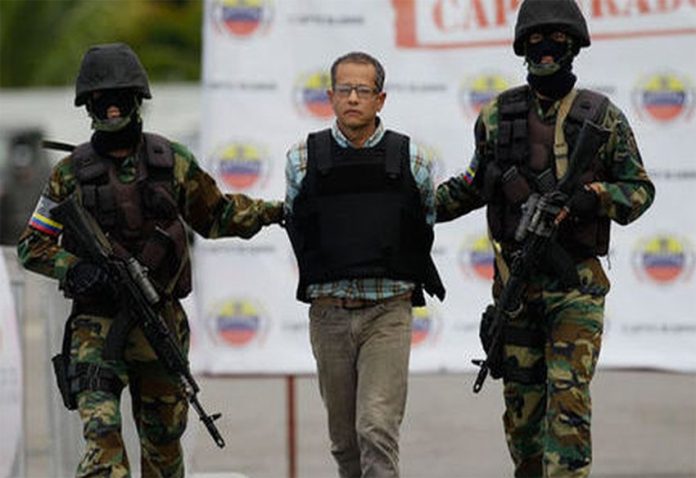
Colombian narco Cifuentes.
Colombian cocaine trafficker Cifuentes.

More testimony of wrongdoing by former high-ranking officials in the Mexican government has emerged in the trial against former Sinaloa Cartel capo Joaquín “El Chapo” Guzmán in New York.

Ignacio Morales Lechuga is the latest ex-politician to be implicated after Colombian drug trafficker and witness Jorge Milton Cifuentes Villa declared that he had been on his payroll.

Morales is now a notary public in Mexico City but was the federal attorney general between 1991 and 1993 in the latter years of president Carlos Salinas de Gortari’s administration.

In his deposition, Cifuentes declared that he had bribed attorneys general in Mexico along with 70 Federal Police who protected his drug trafficking operations in the country.

Cifuentes, who used to be the principal supplier of cocaine to the Sinaloa Cartel, added that the officials on his payroll did not know they were employed by him because they dealt with a front man.

Morales declared the accusations were “completely false and defamatory.”

He has asked the federal Attorney General’s office to request a certified copy of the witness’s statement from the government of the United States.

Cifuentes told the court that his front man, Juan de Dios Rodríguez Valladares, operated the warehouse where the cocaine was stored in Mexico City. But things turned sour after the Colombian suspected Rodríguez of stealing their product and the latter attempted to kill Cifuentes.

The Colombian paid two police officers US $500,000 to apprehend Rodríguez and turn him over to the cartel. He was subsequently stabbed to death.

Guzmán’s trial was told at the start that the Sinaloa Cartel had bribed ex-presidents Enrique Peña Nieto and Felipe Calderón. Several other former officials have been identified by witnesses as having accepted cartel payoffs.

Source: El Universal (sp), Milenio (sp)

Health care workers hold governor’s wife hostage in Tabasco

0
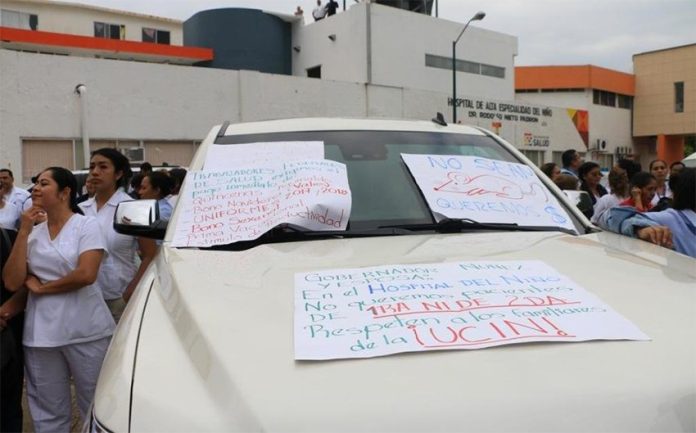
Health care workers surround the vehicle belonging to the governor's wife.
The vehicle in which the governor's wife was held in Villahermosa.

The Tabasco governor’s wife was trapped inside her car for more than six hours yesterday after disgruntled health workers confronted her at a Villahermosa hospital and prevented her from leaving.

Martha Lilia López Aguilera, wife of Democratic Revolutionary Party (PRD) Governor Arturo Núñez Jiménez, went to the state capital’s Children’s Hospital to visit her grandson, a patient in the hospital.

As she was leaving, a group of medical personnel, supported by patients’ family members, approached López in the hospital parking lot to demand overdue salary and bonus payments as well as additional funding to purchase medical equipment and supplies and to employ more staff.

López didn’t engage with the protesting workers, but instead got into her SUV and turned on the ignition in an attempt to make a quick exit. However, her car was quickly surrounded by health care workers shouting “Pay us!”

They demanded that the state’s first lady get out of the vehicle and explain how the hospital’s issues would be resolved.

The incident came amid a four-day strike by hospital workers and as Núñez reaches the end of his six-year term as governor. A new governor representing President López Obrador’s Morena party will be sworn in on January 1.

The state’s secretaries of public security and health, Jorge Alberto Aguirre Carbajal and Rommel Cerna Leeder, arrived at the hospital to try to defuse the situation but failed to convince the protesters to withdraw.

Local media reported that 20 police vehicles and a helicopter as well as members of the governor’s personal security detail were later sent to monitor the situation.

At approximately 6:30pm, amid pushing and shoving from the protesters, state police managed to clear a path to allow López to leave in her vehicle.

State Interior Secretary Rosendo Gómez Piedra subsequently announced that outstanding payments owed to health care workers would be made today.

He said the payments had been scheduled to be paid today and denied that it was a consequence of the Tabasco first lady’s ordeal.

Source: Infobae (sp), Milenio (sp) 

Unfinished Sonora-Arizona border tunnel found

0
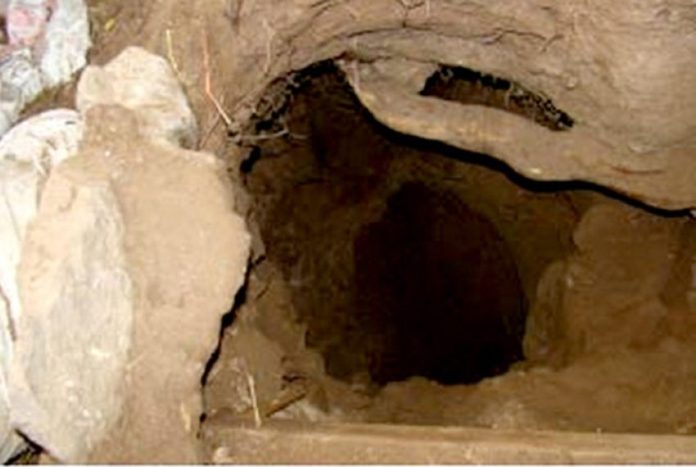
The unfinished tunnel discovered between Sonora and Arizona.

Mexican and United States authorities have discovered an incomplete illegal cross-border tunnel between the cities of Nogales, Sonora, and Nogales, Arizona.

The United States Customs and Border Protection (CBP) said in a statement issued yesterday that Tucson sector Border Patrol agents and Mexican law enforcement found the tunnel “during a routine binational tunnel sweep Monday afternoon.”

The CBP said “the entry point was found submerged along the international waterway channel constructed below both cities of Nogales.”

The tunnel measured approximately 15.2 meters in length and extended 13.4 meters into the United States before coming to “an abrupt stop underneath a parking lot in Nogales, Arizona.”

The statement added that agents found digging tools and structural shoring within the tunnel, indicating that “excavation was still in progress and incomplete.”

Smuggling tunnels linking cities on both sides of the Mexico-United States border are found relatively frequently.

The Mexican army found a 230-meter narco-tunnel between San Luis Río Colorado, Sonora, and San Luis, Arizona, in August after receiving an anonymous tip and in September, Mexican authorities discovered a sophisticated although incomplete solar-powered tunnel between Tecate, Baja California, and San Diego County, California.

Cross-border tunnels are most commonly used to transport drugs into the United States but migrants have also been known to use them to enter the U.S. illegally.

The CBP said that agents will continue to “monitor and inspect” the tunnel that was found Monday until it is properly secured and filled with concrete.

It also said that “Tucson sector Border Patrol continues to work closely with strategic partners in Mexico to detect tunnels under construction to prevent the movement of illegal contraband or persons across the border.”

Migration to the United States from Mexico is a hot button issue currently, with thousands of Central Americans waiting at the border to request asylum.

An increasing number of migrants are crossing or attempting to cross the border illegally to hand themselves into U.S. border agents and thus circumvent the lengthy wait to plead their case from Mexico.

Mexico and the United States announced yesterday that they would cooperate on a development plan in southern Mexico and Central America to curb migration.

Mexico News Daily

Mexico, US agree on US $35.6-billion development plan to curb migration

0
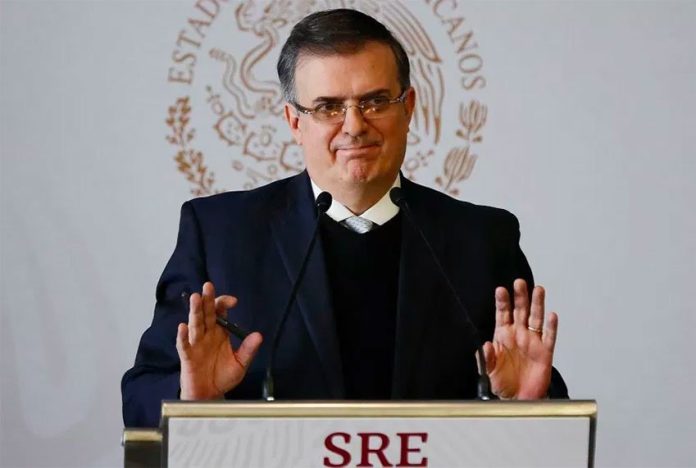
Foreign Affairs Secretary Ebrard
Foreign Affairs Secretary Ebrard: 'good news for Mexico.'

The governments of Mexico and the United States have agreed to work together on a development plan in southern Mexico and Central America to curb migration.

The Secretariat of Foreign Affairs (SRE) and the United States Department of State issued a joint statement yesterday under the title “Mexico-United States Declaration of Principles on Economic Development and Cooperation in Southern Mexico and Central America,” which outlined both countries’ monetary contributions to the plan.

Mexico will invest US $25 billion in southern states over the next five years while the United States will contribute US $10.6 billion: $5.8 billion to the Northern Triangle (Guatemala, Honduras, El Salvador) of Central America and $4.8 billion to Mexico.

However, most of the United States funding is not new as it will be allocated from existing aid programs.

The Washington Post reported that “it appears the only new figure is the $4.5 billion in potential loans, loan guarantees and related services through OPIC,” which is the Overseas Private Investment Corporation, a U.S. federal government agency.

The new money the U.S. provides would have to be repaid, unlike traditional assistance provided through the United States Agency for International Development (USAID).

Announcing the new agreement in Mexico City, Foreign Affairs Secretary Marcelo Ebrard nevertheless said that “in sum, I think that this is good news, very good news for Mexico.”

He explained that Mexico’s US $25-billion five-year commitment, $5 billion less than the figure announced last week, would more than double the government’s current investment in southern Mexico.

Several migrant caravans have crossed Mexico’s southern border over the past two months, bringing thousands of Central Americans to the country, many of whom are now in Tijuana or other border cities waiting for an opportunity to request asylum with United States authorities.

Migration continues to be central to the Mexico-United States relationship but so far the personal relationship between President López Obrador and President Donald Trump doesn’t appear to have suffered as a consequence.

Trump reiterated on Twitter today that “Mexico is paying (indirectly) for the wall through the new USMCA,” referring to the new North American trade agreement that replaces NAFTA, but at his morning press conference López Obrador remained diplomatic, stating “we have no complaints about the United States government.”

Yesterday’s joint declaration, which The Post described as largely symbolic, “reflects the importance both countries attach to our bilateral relationship,” the respective governments said.

“The United States and Mexico today commit to strengthen and expand our bilateral cooperation to foster development and increase investment in southern Mexico and in Central America to create a zone of prosperity. Both countries recognize the strong links between promoting development and economic growth in southern Mexico and the success of promoting prosperity, good governance, and security in Central America,” the declaration said.

It added that “the United States and Mexico will lead in working with regional and international partners to build a more prosperous and secure Central America to address the underlying causes of migration, and so that citizens of the region can build better lives for themselves and their families at home.”

The U.S. funding for Mexico includes “committing $2 billion for suitable projects in southern Mexico,” the declaration said, adding that “the United States will seek to leverage public and private investment in Mexico and is exploring options of further investment in dialogue with the government of Mexico.”

A bilateral business summit that will seek to increase investment and business opportunities in southern Mexico and Central America will be held in the first quarter of next year, the SRE and Department of State said.

But will the joint development plan, and specifically the Trump administration’s contribution to it, ultimately succeed in stopping Central American migrants fleeing violence and poverty in their homelands and showing up on the United States’ doorstep?

Adam Isacson, director for defense oversight at the Washington Office on Latin America, is skeptical.

In a post on his personal website under the title “This isn’t an aid package,” Isacson writes that the only new U.S. money “is loans, not aid,” adding “it all has to be paid back.”

He continues: “And they’re loans to the private sector — which are not going to address root causes of mass migration from Central America. They won’t reform police, fight corruption, fix justice systems, or anything else that makes threatened people safer from gangs.

“Private sector loans are hugely unlikely to help struggling small farmers in the Northern Triangle’s countryside. (Unless they choose to leave the countryside and get low-wage jobs in OPIC-financed factories.) These loans will mainly help a tiny elite get wealthier in one of the most unequal regions on the planet.”

But this morning, after announcing again the money that both Mexico and the United States will invest in southern states and the Northern Triangle region, López Obrador expressed confidence that the plan would work.

“We celebrate it because it means confronting the migratory phenomenon by dealing with its causes. We have always said that people don’t leave their communities, don’t abandon their towns, their families out of pleasure. They do it out of necessity,” he said.

“If we manage to create work opportunities in the south with good incomes, if there is well-being . . . the problem of forced migration will be resolved.”

Source: El Financiero (sp), Milenio (sp), The Washington Post (en) 

Demand rises for dinosaur egg-shaped earthquake protection capsule

0
Vela and his earthquake capsule.

Demand for a Mexican-designed earthquake protection capsule is on the rise, according to its creator.

Reynaldo Vela told the newspaper El Universal that he is currently filling 15 orders a month for his Cápsula K107, inside which he says a person could survive for up to a month while trapped under earthquake rubble.

Before the September 19, 2017 earthquake that devastated parts of central Mexico, the 32-year-old inventor had only sold a grand total of three capsules.

Based on the shape of a velociraptor dinosaur egg, each capsule comes replete with food and water supplies for 30 days and is equipped with an oxygen tank, seismic alert sensors, seatbelts, a radio, a GPS beacon and a compartment for fecal matter.

They are made in Vela’s plant in the Mexico City borough of Iztacalco.

Protection for up to 30 days.

The capsules are custom made to client’s individual specifications and have a capacity for resistance of between 40 and 600 tonnes.

“The most basic capsule [is designed] for a house and is made out of steel and other alloys. The most resistant could have titanium, fiberglass rods, resins and polyurethane,” Vela said.

Prices range from 40,000 pesos (US $2,000) to 260,000 pesos (US $13,000).

Vela explained that all the capsules he makes are designed to withstand the force of a building collapsing on top of them but the most expensive model could withstand the weight of a skyscraper such as Mexico City’s Torre Mayor.

The capsules he has made so far are capable of protecting as many as three people, depending on their body size, but Vela said that it would be possible to make one for as many as 30 people, which would be ideal for use in a school classroom.

The Cápsula K107 is the result of eight years of research during which a variety of different shapes were tested to determine which was most resistant to the force of a falling building.

“. . . We tested parallelepipeds, cubes, all sorts of geometric shapes until we got to the shape of an egg – a conventional bird one. That allowed us to say that it was the best geometric shape to resist the force of an impact,” he said.

However, Vela explained that the shape still wasn’t as strong as he wanted but on the advice of a paleontologist he tried out the shape of a velociraptor egg.

“The paleontologist gave us a fossil from which we made a mold, with which we were able to carry out a test . . .[The velociraptor egg shape] is more resistant than a conventional egg because its more elliptic and under that principle the Cápsula K107 was built . . . With this we can guarantee . . . [that it will resist] all the force of a collapsing building,” he said.

Although it has never been tested in a real earthquake, Vela is confident that his invention won’t fail when the next big one strikes.

“It’s an investment to save your life,” he said.

Source: El Universal (sp) 

Firm looks at multi-billion-peso medical-residential project in Quintana Roo

0
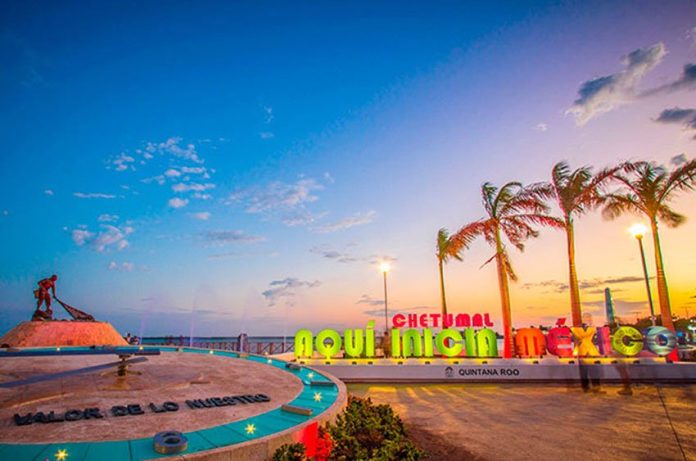
Chetumal considered for medical-residential project.

A Canadian company appears committed to building a multi-billion-peso medical-residential project in Quintana Roo that would cater to the needs of Canadian retirees.

The head of the state’s Institute for Development and Funding (Idefin), Bernardo Cueto Riestra, said K & A Associates CEO Marc Kealy had expressed the firm’s intention to go ahead with the project in the state capital of Chetumal during a meeting on December 11.

“In the context of this visit . . . Marc Kealy reaffirmed K & A’s projection to develop an investment project worth close to 4.5 billion pesos [US $224.2 million] . . .” he said.

Idefin, K & A and the Quintana Roo Strategic Projects Agency (Agepro) also met in Toronto, Canada, in November to discuss the ways in which the state government can participate in the project, Cueto said.

“A project of this magnitude will mark a before and after for the south of the state, specifically for our capital. In recent weeks, we’ve been working hand in hand with the Strategic Projects Agency . . . and thanks to that cooperation we’ve found a way to provide the conditions that generate the confidence of K & A,” he added.

Agepro director Eduardo Ortiz Jasso said the project would help to close the economic gap between the north and south of Quintana Roo and provide more and better employment opportunities for local families.

Kealy, a former CEO of the Ontario Pharmacists Association, said during his visit to Mexico that “the Canadian community is increasingly aware of the favorable environment that the south of this beautiful Mexican state offers and it’s pleasing to see the willingness of the Quintana Roo government to make this project a reality in the medium term.”

No commencement dates for the project appear to have been set at this stage.

Source: El Economista (sp), La Verdad (sp), La Jornada (sp) 

A star is born: Roma’s Yalitza Aparicio featured on cover of Vogue México

0
Aparacio at the Toronto International Film Festival in September.

The life of Yalitza Aparicio, a 26-year-old Mixtec teacher from Oaxaca, has taken the most dramatic of turns. She used to spend her days in a classroom, but now she finds herself surrounded by fans asking for her autograph or gracefully posing for the cameras of fashion magazines.

Aparicio is the star of Mexican filmmaker Alfonso Cuarón’s latest film, Roma, an intimate and touching look at the life of a well-off middle-class family in Mexico City in the early 1970s. Aparicio’s first-ever role on camera is that of Cleo, an indigenous domestic worker whose character was inspired by Cuarón’s own childhood nanny.

The accolades the film has received have taken its cast around the world and now that the film has been officially released by distributor Netflix, Aparicio’s face has become widely known.

The novice actress visited Toronto and New York this week where she was sought for autographs and selfies by crowds of fans, cold temperatures and rainy weather notwithstanding.

Aparicio is also on the cover of the January issue of Vogue México, sitting in a vintage chair, dressed in a monochrome lace dress from Dior’s latest collection and gazing at the camera.

Oaxaca actress Aparicio on Vogue's January cover.
Oaxaca actress Aparicio on Vogue’s January cover.

“In tiu’n ntav’i,” the cover reads in Mixtec, “A Star Is Born.”

The cover has been praised by readers on social media where one described Aparicio’s presence as “A cover for the history books.”

Another commented: “This breakthrough gives me the chills.”

And a third wrote: “This is the best cover in the history of Vogue México! Congratulations, Vogue!”

The magazine also released a short video in which the actor discusses everything from her dreams to her fear of being in front of the camera to diversity.

“Certain stereotypes are being broken: that only people with a certain profile can be actresses or be on the cover of magazines,” Aparicio says in the video.

“Other faces are now being recognized. It is something that makes me so happy and proud of my roots.”

Source: El Universal (sp), The Independent (en)

Oaxaca wins a round in mezcal denomination of origin challenge

0
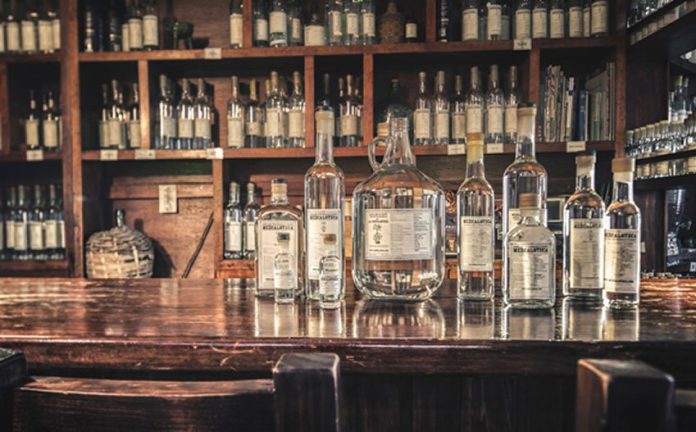
A mezcal bar in Oaxaca city.

Oaxaca won a round this week in its efforts to limit the denomination of origin for mezcal, the state’s staple spirit.

The state Economy Secretariat said yesterday that a federal judge had ordered the suspension of an expansion of the beverage’s denomination of origin that included several municipalities in the state of Aguascalientes.

The Mexican Institute of Industrial Property (IMPI) decided in August to expand mezcal’s denomination of origin region to include municipalities in the states of Aguascalientes, México, Morelos and Puebla. Oaxaca announced a week later it would fight the move.

Aguascalientes is now off the list and the issue of the remaining three states is still being considered by the judge, said the government of Oaxaca in a statement.

The state continues to work to “strengthen the commercialization of the Oaxacan beverage” in domestic and international events, “because mezcal is an ancestral state beverage.”

Despite that claim, regions of eight other states — Durango, Guanajuato, Guerrero, Michoacán, San Luis Potosí, Puebla, Tamaulipas and Zacatecas — are included in the current denomination of origin, meaning that the nine states can produce and sell the distilled maguey beverage and call it mezcal.

Source: El Universal (sp)

Businesses denounce ‘fake news’ extortion in Baja California

0
Extortionists call their victims and threaten them with fake news stories.

A criminal gang is targeting business owners in Baja California and California with an extortion scam in which it threatens to spread fake news about them if they refuse to comply with its demands.

The newspaper Reforma reported today that a source close to the criminal investigation into the scheme had revealed that more than 100 business owners as well as professionals such as doctors and lawyers in Tijuana, Rosarito and San Diego have reported being targeted.

Mexican authorities as well as the United States Federal Bureau of Investigation (FBI) are investigating the scam, Reforma said.

The extortion racket allegedly operates by demanding an initial payment and subsequent monthly payments from those it targets.

The demands come with the threat that non-compliance will result in false information — that they have criminal records for drug trafficking, weapons offenses, robbery or other crimes — being disseminated online.

At least six people are believed to have been involved in carrying out of the scheme including the gang’s suspected leader, identified as José Santiago N., who was arrested last weekend, Reforma said.

He had allegedly disseminated phony information about business owners and politicians on a website masquerading as an online newspaper called Noticias de México.

The source close to the case told Reforma that the extortionists also tell business owners that they will target their families and assets if they don’t succumb to their demands.

The source added that that it was possible that the criminals were obtaining information about their targets from social media as “they mention the names of family and friends, the schools of their children and other details.”

Preliminary investigations into the modus operandi of the extortion racket indicate that its members initially contact their targets, presumably via email, and offer to sell them online advertising.

The targets are left with a telephone number to call should they be interested in the service offered.

The telephone numbers of those who call a purported advertising agency are recorded and passed on to the extortionists who then begin their scam.

If the targets don’t immediately comply, fake news about them, including videos, is published online on phony news websites and social media until they cave in.

Investigations into the racket indicate that some of its members operate the fraudulent websites, others identify future targets and one person is responsible for making the fake news videos.

The criminal group has also allegedly planned to target customs personnel in Tijuana.

The Reforma source said that investigators have obtained filmed statements in which former accomplices of the extortion racket have detailed its activities and links to organized crime.

Source: Reforma (sp)