Home Blog Page 2152

Communal landowners in Coahuila take their fight to Mexico City

0
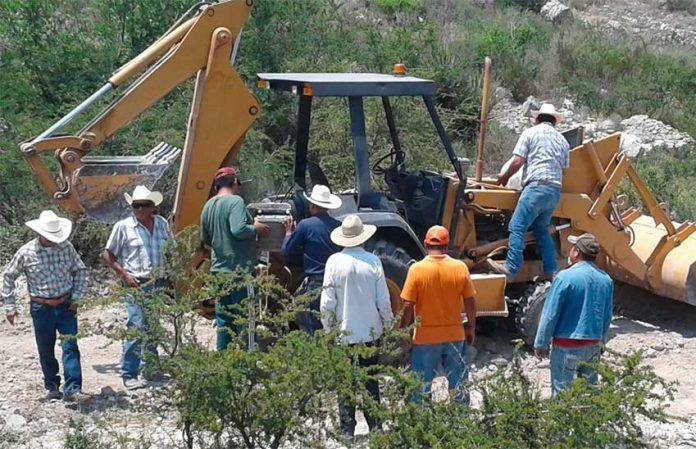
Communal landowners block a road during a protest over the land issue last year.

A group of communal landowners from Coahuila has pledged to take the fight to defend their land to Mexico City, charging that municipal authorities in their home state have acted corruptly and allowed impunity to prosper.

The landowners, or comuneros, from Cerro de la Gloria in the municipality of Monclova charge that local authorities have allowed the dispossession of their lands even though they have title deeds and a 1923 presidential resolution that prove they are the rightful owners.

The group said it has filed 10 criminal complaints against the brothers Arturo and Alfredo González Palma, who they claim have illegally entered their property and removed their livestock.

The complaints relate to assault, property damage, dispossession of land and falsification of documents among other crimes, but none has been acted upon.

The comuneros said they will seek an audience with the transition team of president-elect Andrés Manuel López Obrador in the capital and also take their case to the central offices of the Secretariat of Agrarian Development and Urban Planning (Sedatu) in order to show that they are the legitimate owners of the land.

If necessary, the landowners said, they would stage a protest or go on a hunger strike in order to be heard.

The comuneros claim that the former mayor of Monclova, Gerardo García, and the ex-director of the city’s land registry office colluded with the González Palma brothers by providing them with local government plans and authorizations that allowed them to falsify ownership documents that supposedly superseded their titles.

However, when they asked for access to the same plans at municipal offices, the landowners said that their requests were denied.

They also said that García is the owner of a water park located between their land and a property owned by the González Palma brothers, adding that they would like to know how he acquired the property, what price he paid for it, what commitments he made and what his future plans for the land are.

Source: Noticias del Sol de la Laguna (sp)

Indigenous leader kidnapped, assassinated in Oaxaca

0
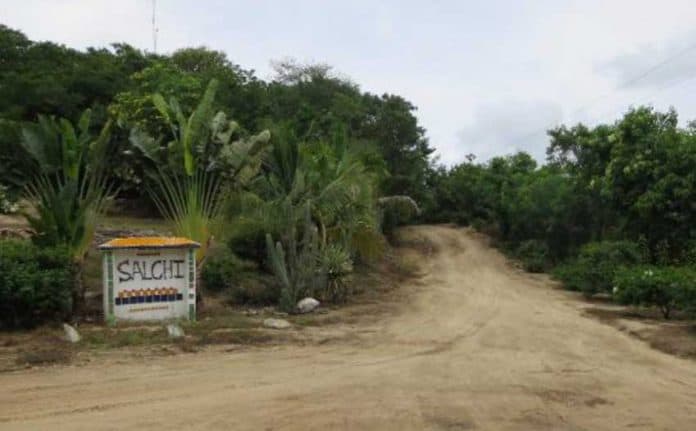
Salchi, Oaxaca, where an indigenous leader was killed yesterday.

The regional coordinator of an indigenous rights association was kidnapped and murdered yesterday in Oaxaca.

Abraham Hernández González of the Committee for the Defense of Indigenous Rights (Codedi) was kidnapped in the town of Salchi in the coastal municipality of San Pedro Pochutla.

Witnesses said masked men carrying arms and wearing military-like uniforms abducted the human rights activist at around 11:30 yesterday morning at a hotel where he worked as manager.

Codedi leader Abraham Ramírez Vázquez said a body that was later found on a vacant lot in the neighboring town of Cuatunalco had been positively identified as González by his daughter.

Ramírez suggested that the incident might have been linked to a dispute between the hotel and a group of people that claim ownership of the property.

It was the second attack against Codedi members this year. In February, three members of the non-governmental organization were traveling from the city of Oaxaca to the town of Santiago Xanica, in Miahuatlán, when they were ambushed by armed civilians.

The crime remains unsolved but Codedi has claimed that the state government of Alejandro Murat Hinojosa was behind it.

Codedi member Cristóbal Ramírez said at the time that the government of Oaxaca was targeting social leaders who oppose the extraction of the state’s natural resources, development projects and the creation of special economic zones.

The rights activist also said it was “no coincidence” that the three men were murdered after leaving a meeting with state officials.

Source: NVI Noticias (sp), Despertar de Oaxaca (sp)

Disposable plastic bags, utensils will be banned in Ensenada

0
Volunteers clean up litter from a beach in Manzanillo, Colima.

Disposable plastic bags and utensils will be banned at commercial establishments in the municipality of Ensenada, Baja California, starting next year.

The new environmental policy will be implemented in tandem with an awareness campaign to inform the public about its benefits.

Its purpose is to help address the problem of plastics accumulating in the world’s oceans, and to promote the creation of more public policies aimed at the reduction and elimination of the use of plastic.

Mayor Marco Novelo commended council member Jorge Emilio Martínez for coming up with the environmentally-friendly policy, adding that it will contribute to improving the environment and the wellbeing of Ensenada.

The ban of single-use plastic items is part of a broader array of environmental actions undertaken by the municipal council.

In May, it joined the global Clean Seas campaign, launched in February 2017 by the United Nations Environment Programme (UNEP) to engage governments, the general public, civil society and the private sector in the fight against plastic marine litter.

Source: Reforma (sp)

Why doesn’t Mexico grow? New book blames misallocation of resources

0
taxi driver
It's possible he has a degree in engineering.

The persistent misallocation of resources is the main reason why productivity in Mexico has stagnated and, in turn, why economic growth has been disappointingly low, according to a new book published by the Inter-American Development Bank (IDB).

People working outside their field of expertise, such as an engineer driving a taxi, are representative of how that misallocation plays out in the real world, contends Under-Rewarded Efforts: The Elusive Quest for Prosperity in Mexico.

The survival of unproductive businesses because they receive government support while more productive ones that are left to their own devices consequently fail in the longer term also serve as an example of what happens when government funds are improperly used, author Santiago Levy charges.

Over the past 20 years, growth per capita in Mexico has been slower than that of any other country in the region apart from Venezuela despite Mexico integrating itself in the global economy through trade agreements and exporting more manufactured goods than the rest of Latin America combined, Levy told the Financial Times.

“It’s a real paradox . . . All the things you expect economies to do, Mexico has done, yet its performance has been very, very disappointing. The reason is at a micro level,” he said.

A vice-president at IDB and a deputy finance secretary in the Mexican government between 1994 and 2000, Levy says that the answer to the economic malaise is to address tax, labor and social insurance rules that hold back productivity and undermine higher levels of investment in education.

“More of the same will not do.”

He is especially critical of the high prevalence of businesses that operate in Mexico’s vast informal sector and charges that governments have encouraged their presence by paying social insurance contributions for unsalaried workers whereas large, formal businesses have to pay contributions for their employees themselves.

In 2013, informal sector enterprises made up 90% of all businesses in the Mexican economy and absorbed more than 40% of capital stock and 55% of all employment.

The problem with that situation is emphasized by the fact that businesses that pay their workers set salaries are between 40% and 80% more productive than those that don’t, Levy wrote.

By offering incentives to small businesses that are less productive, the productivity of the entire country is held back and the increased investment in education that yields higher-skilled workers is wasted.

“Under misallocation some low-productivity firms attract more capital and labor than they should, while more productive ones fail to receive sufficient resources,” Levy wrote.

“What Mexican workers need most are productive firms that can offer them stable jobs where they can take advantage of the education that they have invested in, and where they can learn on the job and increase their earnings over their lifetime.”

The author argues that policies that are specifically designed to help small companies that employ unsalaried workers are the result of the poor management and functioning of Mexico’s key institutions.

“Some of the policies and institutions that generate misallocation in Mexico have been part and parcel of the country’s landscape for decades, and have not been the subject of systematic reform efforts,” he wrote.

Levy is also critical of the efficacy of Mexico’s value-added tax (IVA) as an instrument of redistribution of income and wealth, charging that the sector of the economy that is most productive is highly taxed whereas the low-productivity segment is heavily subsidized.

Corruption and impunity stemming from a prevailing weak rule of law are other factors that have resulted in the misallocation of resources.

While president-elect Andrés Manuel López Obrador has pledged to stamp out corruption and put an end to impunity, Levy believes that the prudent economic management the incoming government has been at pains to stress it will implement won’t change the status quo of sluggish growth.

“Respect for the central bank’s autonomy, continued flexibility of the exchange rate, a commitment to low inflation and prudent fiscal management . . . won’t make Mexico grow. It will just make sure Mexico won’t get any worse,” he said.

In the book’s conclusion, Levy wrote that the “most effective route to raise productivity and accelerate growth in Mexico is to reform the main policies and institutions that stand behind misallocation.”

Among the measures he proposed are that government-funded social insurance “should be provided to all workers with equal scope and quality” and that severance pay regulations should be replaced with “proper unemployment insurance.”

Levy also said that all exemptions to the IVA should be eliminated and that the autonomy of judicial institutions in charge of contract enforcement should be increased.

Source: Animal Político (sp), Financial Times (en)

Bot will be able to detect suicide risk among Facebook Messenger users

0
suicide prevention bot

Two graduate students at the University of Guadalajara are developing a bot that will be capable of detecting potential suicide risks among users of Facebook’s popular Messenger application.

Manuel Santana Castolo and Patricia Brand said in a statement issued by the National Council for Science and Technology (Conacyt) that the aim of their automated program is to interact with users on the social media site and refer them to medical professionals if suicide warning signs are detected.

Brand, who has a degree in psychology and is now studying biomedical engineering, is responsible for developing the methodology the bot will use to detect suicide risks.

Santana, a biomedical engineering graduate and PhD student in computer science, said the bot will function by asking users questions that are based on medical knowledge and practice.

Artificial intelligence algorithms he is developing will help the bot to interpret the responses it receives and over time it will be able to better understand them.

The bot also has a database that it can access to respond to the social media user in a relevant way.

Certain words that have been identified among those commonly used by people with depression could act as warning signs that alert the bot to the possibility that the user is suffering from that condition.

If artificial intelligence built into the so-called chatbot detects suicide risk factors, users will be provided with the contact details of medical facilities where they can be assessed and/or treated for mental illness.

The students said they hope to start testing a pilot version of the bot in the middle of October. People with and without a history of mental illness are slated to participate.

Santana and Brand said a future function might allow it to analyze speech and pick up on additional potential warning signs of mental illness such as tone of voice.

According to the National Institute of Statistics and Geography (Inegi), there were 6,285 suicides in Mexico in 2015, a rate of 5.2 per 100,000 inhabitants.

Source: EFE (sp)

Trump gears up to declare what would be US’ fourth war against Mexico

0
apples
The US ones are more pricey now.

United States President Donald Trump appears to be gearing up to “declare war” on Mexico; it would be the fourth time the United States has made war — declared and undeclared — with our next-door neighbor.

In the first war between the United States and Mexico in 1846, President James C. Polk lied to the American people by claiming Mexicans troops had invaded American soil and drew “American blood.”

Countering President Polk was Illinois’ congressman and future President Abraham Lincoln, who contested the causes for the war and demanded to know exactly where (Americans) had been attacked and American blood was shed. “Show me the spot,” he demanded.

During the second “war” in 1914, American President Woodrow Wilson ordered the occupation of Mexico’s port at Tampico (and the port of Veracruz) after Mexican forces had detained a dozen American sailors for a brief hour. The Mexicans refused to fly an American flag and fire a 21-gun salute as an “apology.”

The real reason was to occupy both ports so a load of millions of Mauser rifle bullets bought by the “government” of General Victoriano Huerta could not land. Though Huerta took over the government with help from President Woodrow Wilson’s ambassador to Mexico, Henry Lane Wilson, President Wilson wanted Huerta out.

His orders to the navy: “Seize customs house. Do not permit war supplies to be delivered to Huerta government or to any other [Mexican] party.”

When General Huerta was replaced by “President” Carranza, whom President Woodrow Wilson barely supported, the Americans left Mexico, only to return within two years.

On March 9, 1916, horse soldiers of Mexican revolutionary Francisco (Pancho) Villa entered the United States and attacked the New Mexico town of Columbus; they killed 17 Americans. Villa’s men suffered many dead and wounded when troops from a nearby U.S. Army encampment arrived armed with machine guns.

Americans were incensed. President Wilson knew a good thing when he saw it; so, with a view of helping our British cousins in the Great European War by abandoning neutrality, Wilson called up the nascent 100,000-man “National Guard” and sent them to the Mexican border to train.

He sent 10,000 soldiers with airplanes into Mexico to hunt and kill Pancho Villa. They were commanded by Brigadier General John J. Pershing. They were in Mexico for 11 months. They failed.

In a firefight at Carrizal on June 2, 1916, with Mexican federal troops of President Carranza, American soldiers died and a group of them were captured and held until Americans left in 1917.

The current strain between the United States and Mexico is the worst of any since the failed hunt for Pancho Villa.

All of it has been fomented by President Donald J. Trump, starting with his announcement as candidate for president in June 2016 by declaring Mexicans “rapists,” “drug smugglers” and “criminals.”

Trump, without a scintilla of knowledge about international trade, calls the most successful trade agreement in American history, that with Canada and Mexico – the North American Free Trade Agreement (NAFTA) — the worst deal ever made by the United States. His solution: gigantic tariffs on steel and aluminum imported from NAFTA partners Mexico and Canada.

When parsing the word “worst” as Trump uses it, we must use it to display the “worst” decision ever made by a president who imposed a 25% tariff on Mexican steel. The decision was made without proof Mexican steel imports are, in fact, taking advantage of the United States.

Fact: “According to Mexico’s steel industry association, the United States sold $3.6 billion more to Mexico over the past two years than Mexico sold to the United States.” Steel, that is.

The fourth “war” with Mexico is on. President Trump ordered it. Mexico strikes back with “. . . tariffs (that) will be applied to U.S. agricultural products, including apples, cranberries, cheeses, potatoes, pork and whiskey. The products will be hit with a tariff of between 15 and 25% . . .”

Of course, despite the U.S. selling Mexico more steel than it buys from Mexico, and selling Mexico many products produced in Trump-supporting states, Mexico hits back.

Trump voters in Iowa and Wisconsin that raise hogs, Kentuckians that make whiskey, Missourians that make nails from Mexican steel, Michiganders that raise apples and make auto parts from Mexican steel will all suffer. Many, like Missouri nail-makers, will lose their jobs.

This isn’t 1916. Many jobs held by Americans are being threatened by the imposition of Trump tariffs on our next-door neighbor.

Raoul Lowery-Contreras is the author of The Armenian Lobby and U.S. Foreign Policy and Murder in the Mountains: War Crime in Khojaly. He also wrote for the New American News Service of the New York Times Syndicate.


Puebla led with 801 pipeline taps during first four months

0
A cache of stolen fuel.

The state of Puebla recorded more illegal taps on its fuel pipelines than any other state in the first four months of 2018, while its homicide rate has also spiked sharply this year compared to 2017.

Authorities detected 801 unlawful perforations of Pemex-owned ducts in Puebla between January and April, 32% more than Hidalgo, where 606 were found.

Guanajuato recorded the third highest number of taps with 563 followed by Veracruz with 551; Jalisco with 481; Tamaulipas with 462; and México state with 418.

The increase in petroleum theft has been accompanied by more frequent clashes between gangs of fuel thieves known as huachicoleros — and security authorities — both of which have contributed to the escalating murder rate.

There were 464 homicide investigations in Puebla between January and May, a 41% increase over the number of cases reported in the same period of 2017.

The 104 intentional homicides reported in April makes that month the most violent the state has experienced since the National Public Security System started keeping comparable statistics in 1997.

Among the killings related to petroleum theft were the June 15 murders of six municipal police officers in the community of San Salvador Chachapa — located about 20 kilometers east of the state capital — by armed civilians suspected to be huachicoleros.

There has also been an increase in fuel-theft related homicides in the northern sierra region of Puebla that borders Veracruz where, according to army sources, huachicoleros from the latter state control the illicit activity.

A 304-kilometer-long pipeline that transports gasoline, diesel and other fuels between Tuxpan, Veracruz, and the Pemex refinery at Tula, Hidalgo, runs through the sierra region.

The state oil company increased its spending on security by 42% in the first three months of the year and has continued to implement a joint strategy with the federal Attorney General’s office, military forces, state authorities and the Federal Tax Administration to combat petroleum theft.

But despite the efforts, the prevalence of the crime has not dropped.

Pemex CEO Carlos Treviño said in April that fuel theft costs the company 30 billion pesos (almost US $1.6 billion) a year and some of Mexico’s notorious drug cartels have reportedly moved into the lucrative market.

Source: Reforma (sp)

Rarámuri runner places second in Chihuahua ultramarathon

0
Flooding on the course: Ramírez, left, during some inclement weather at Canyons Ultramarathon.
Flooding on the course: Ramírez, left, during some inclement weather.

Well-known Rarámuri runner Lorena Ramírez took second place in the Canyons Ultramarathon held Saturday in her home state of Chihuahua.

Wearing a traditional long dress and her customary pair of sandals, Ramírez completed the 100-kilometer course in 13 hours and 26 minutes, just one minute behind Mexico City-based runner Carmela Martinez.

Traversing the steep and rough terrain in the municipality of Guachochi was made even more challenging than normal for runners in this year’s race due to heavy rain and hail that fell during the event.

The difficulty of the conditions was reflected in Ramírez’s time, which was 42 minutes slower than the time she achieved when she won last year’s event. At one stage of the race, she was forced to run through ankle-deep water.

Nevertheless, the second placing caps a successful couple of months for the 23-year-old athlete.

Last month, she placed third in her category in the Cajamar Tenerife Bluetrail ultramarathon in Spain, at which her brother and sister also competed, while last year she won a 50-kilometer event in Puebla.

[wpgmza id=”38″]

Prior to last weekend’s event, the municipal government presented awards to Lorena and other members of her family in recognition of their long association with the Canyons Ultramarathon and their outstanding running ability.

The male category of the 100-kilometer race was won by Guachochi runner Pedro Parra Cruz in a time of 10 hours and two minutes.

Rarámuri runners finished second and third in that event and local runners also took first place in both the men’s and women’s 63-kilometer races.

Source: Notimex (sp)

Economics triggers temporary shutdown of Canadian-owned silver mine

0
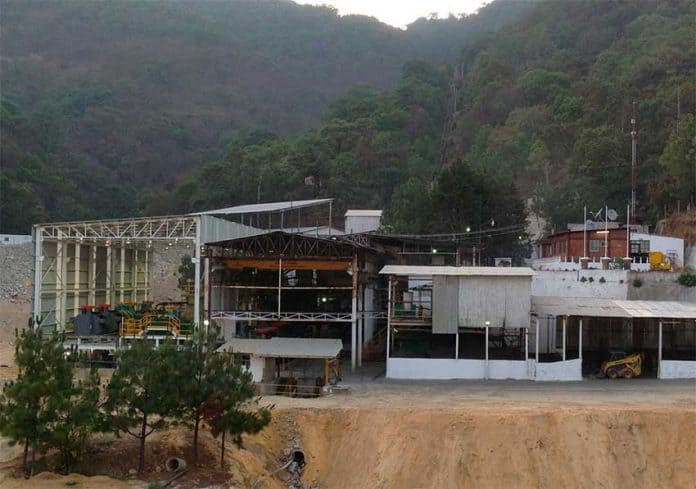
La Guitarra silver mine in México state.

The Canadian mining firm First Majestic Silver Corporation has announced the temporary suspension of work at its México state silver mine La Guitarra, located in the municipality of Temascaltepec.

The suspension is scheduled to start on August 1 and will continue until economic conditions improve or the property is sold.

The company said the allocation of capital and resources to projects with better economics were taking priority.

Production began to drop in 2016, at a time when operation costs surged and silver prices plunged, leading to an “unsustainable” situation.

A skeleton crew will be kept on to perform maintenance.

“We value our relationship with our employees and local communities,” said the firm. “Taking this decision has not been easy. During this period, we will honor the terms of the agreements we have with nearby communities and will work with them to manage this situation in the best way possible.”

The firm will also offer its laid off employees guidance and training so that they can find employment quickly elsewhere.

“As part of our permanent commitment with transparency and legality, we will continue to report in a timely manner on the conditions and situation at the mine, as well as all processes related to this suspension,” concluded the statement.

The mine was founded in 2003 and purchased by the Canadian firm nine years later.

Source: Milenio (sp)

Narcos implicated in kidnapping of 44 migrants get 18, 37 years

0
Flores Soto took orders from former Zetas boss Treviño, above.

Two narcos implicated in the kidnapping of 44 undocumented migrants were found guilty and sentenced yesterday to prison terms of 18 and 37 years.

Mario Alberto “El Comandante Chacas” Flores Soto was found guilty of drug trafficking, organized crime, human trafficking and carrying unauthorized weapons.

The federal Attorney General’s office said in a statement that Flores was sentenced to 37 years and six months and ordered to pay a fine of almost 304,000 pesos, close to US $16,100.

One of Flores’ accomplices, Armando Velázquez Cantú, was found guilty of the same crimes and sentenced to 18 years and 9 months behind bars, and ordered to pay a fine of just under 30,000 pesos, or about $1,550.

The two men were arrested almost 11 years ago in southern Mexico between the port cities of Salina Cruz and Coatzacoalcos as they traveled through the town of San Juan Guichicovi, Oaxaca.

Flores was a high-ranking member of the Gulf Cartel in 2005 when he was ordered to kidnap the migrants in the Tamaulipas city of Nuevo Laredo.

Flores received orders from Miguel Treviño Morales, also known as El Z-40, whom he served as a close collaborator. Back then the Zetas organization had yet to split off and form its own cartel, and served as the armed branch of the Gulf Cartel.

Source: Reforma (sp)