Home Blog Page 2153

Regulator okays propane gas sales at México state Walmart stores

0
Now at Walmart.
Now at Walmart.

A supermarket chain has been authorized by the federal energy regulator to sell propane gas.

It is the first time that a business other than a licensed gas distributor has been awarded permission to do so.

The Energy Regulatory Commission (CRE) gave the permit to Walmart, which as of yesterday could offer propane, or LP (liquefied petroleum) gas, to its customers in six México state municipalities.

Walmart will sell and fill propane tanks of up to 10 kilograms through its Bodega de Expendio in Ecatepec de Morelos, Tlalnepantla de Baz, Cuautitlán Izcalli, Otumba, Nextlalpan and Coacalco, where the retailer has a potential market of 4,000 households.

“This alternative is additional to the traditional sale of fuel from delivery trucks or through supply lines,” said the CRE in a statement.

Granting the permit is part of a broader CRE plan intended to increase the availability of propane through fixed points of sale in easily accessible locations.

The permit granted to Walmart is valid for 30 years.

According to a survey on household income and expenses conducted in 2016 by the National Institute of Statistics and Geography (Inegi), over three-quarters of Mexicans use propane as their main energy source.

The same survey also found out that 15.6% of households in Mexico still use firewood, a practice that in the long term is deemed detrimental to a family’s health.

Source: El Financiero (sp), El Universal (sp)

Justice system bottleneck blamed for conviction rate that remains low

0
There have been persistent calls for an end to impunity but the end is still not in sight.

The probability of a crime being reported, investigated and solved in Mexico is just 1.14%, according to an investigation conducted by the organization Impunidad Cero (Zero Impunity).

At the presentation of the study State Index of the Performance of Attorney Generals’ Offices 2018, researcher Guillermo Zepeda Lecuona explained that the 1.14% figure was obtained through data that shows that only 6.8% of crimes in Mexico are reported and that just 18% of those cases are solved.

Zepeda said the statistics come from surveys conducted by the National Institute of Statistics and Geography (Inegi) in 2017, meaning that they mainly relate to crimes committed and reported in 2016.

The Impunidad Cero index improved slightly compared to the previous results, which showed that the probability of a crime being solved was 1.09%, but Zepeda said the conviction rate is “still very poor” and charged that it is due to a bottleneck in the justice system.

The overall impunity rate in Mexico is almost 99%, while for intentional homicide it is 83.4% and for kidnapping it is 69%.

“The impunity [rate] for kidnapping is the lowest [of high-impact crimes] but it’s still very high for such a serious crime,” Zepeda said.

Oaxaca has the highest impunity rate for intentional homicide in Mexico, at 97%, while Yucatán has the lowest rate at 26%.

Nearly 70% of murders go unpunished in Mexico City, the investigation found.

The Impunidad Cero study showed that Sonora is the most overburdened state in terms of the average number of investigations each prosecutor’s office is conducting at any given time — 544, while filing a complaint takes longest in Guerrero, where the process takes an average of three and a half hours.

In contrast, the same process takes on average just an hour and 25 minutes in Chihuahua, making it the most efficient state in which to file a criminal report. The national average is two and a quarter hours.

Mexico City spends more on law enforcement and the provision of justice than any other state in the country, with an outlay of 696 pesos (US $37) per person, while Tlaxcala spends the least, with per-capita expenditure of just 93 pesos (US $5).

Nevertheless, just 2% of residents in the capital said they had confidence in local judges.

At a national level, 10.3% of people surveyed by Impunidad Cero said they had a high level of confidence in their state’s attorney general’s office, with trust highest in Yucatán at 17.8%.

The investigation also found that only half of arrest warrants issued by judges in state courts are successfully executed.

Coahuila has the best record in that respect, executing 76.5% of all warrants, while Nayarit has the lowest rate at just 12.7%.

When criminals are prosecuted, in 53% of cases they receive prison terms of three years or less, which the Impunidad Cero study said is indicative of “poorly focused criminal policy.”

Irene Arista, executive director of the anti-impunity group, agreed with Zepeda that there is a bottleneck in the justice system, charging that state-based attorney general’s offices are focusing their efforts on achieving political autonomy to the detriment of their core functions.

Source: Sin Embargo (sp)

A line chef in Mexico’s top restaurants found his passion was gelato

0
José Luis Cervantes: Mexican products and Italian techniques.

Does blue corn flavor gelato sound appealing? How about avocado? Those are just two of the many unusual flavors being dreamed up by Mexican “gelatician” José Luis Cervantes.

The “blue corn flavor is quite unusual, rather like an atole . . . with hints of cinnamon,” Cervantes told Mexico News Daily. The tall 28-year-old is clearly passionate about ice cream: he lights up when he discusses his work and how his gelato shop in the up-and-coming Juárez neighborhood of Mexico City came to be.

Cervantes started his career working as a line chef in some of Mexico City’s best restaurants, notably Pujol and Quintonil, both of which feature consistently in Latin America’s 50 best restaurant lists.

His time in those restaurants served to convince him of his love for desserts and he took himself to Italy to specialize in making confectionary, obtaining a masters degree at ALMA (La Scuola Internazionale di Cucina Italiana).

He then went on to work with one of Italy’s best chefs, Massimiliano Alajmo, at the three Michelin-starred Le Calandre where he made desserts and gelatos. Cervantes’ time at Le Calandre ignited his interest in gelatos and he went on to study “gelateria” at Carpigiani Gelato University.

Returning to Mexico in 2015, Cervantes opened his own restaurant in the exclusive Santa Fe district of Mexico City. But later he decided to scale down and focus simply on his passion for gelato, opening Joe Gelato in early 2018.

Cervantes is serious about producing ice cream made from natural, locally sourced ingredients. His goal is to “support local Mexican producers while using Italian techniques.” The result is a very Italian product with an unmistakable Mexican touch.

Apart from a few set flavors that include olive oil — it’s surprisingly delicious, a water-based cacao option and a coconut flavor made with vegetable milk, the rest of the flavors change every three days.

“This assures that the gelato is fresh and that my clients don’t get bored,” said Cervantes.

This freshness is further assured by the fact that Cervantes doesn’t use a recipe as such for many of his flavors. He explains that the amount of sugar needed for a fruit-based ice cream will depend on the fruit when he buys it from Mexico’s huge central market, the Central de Abasto. During every visit to the market he asks the sellers “what is good today?” and that will be the base from which he creates his gelatos.

“When we make the mixture, we will analyze how much sugar, fiber and water the fruit contains” and from there the recipe will be formulated to suit that specific batch of fruit.  This serves to ensure that every flavor in the store is perfectly balanced.

Cervantes also never uses any pre-made or part-prepared ingredients. If an ice cream is rose flavored, it will contain roses not rose essence, for example, and the cacao ice cream is made from pure cacao, not chocolate solids or powder.

Joe and his team search far and wide for the best ingredients. They might go to the state of Tlaxcala to find the best honey producer or Oaxaca for the best chocolate.  “The more we can obtain our products from small, national producers the better,” said Cervantes, stating the importance of supporting those around you.

One ingredient that is currently imported is the olive oil but Cervantes explained that he is currently looking into options from Baja California and as soon as he finds one that meets his standards he will certainly be buying it.

Cervantes’ way of making ice cream is time-consuming. He works from what he refers to as the “laboratory” —which conjures up wonderful images of Charlie and the Chocolate Factory — and can spend a whole day just perfecting the formula for one new gelato flavor.

Gelato is slightly healthier than ice cream since it contains less fat on average and less sugar, and Cervantes plays close attention to the amount of sugar that he adds. “If you add too much, you lose the flavor,” he explained, his knowledge, expertise and dedication to creating the best tasting gelatos clear to see.

For Cervantes, the idea of using Mexican ingredients that many Mexicans are unaware of and promoting all the incredible flavors available in the country is an important one.

As an example he explained that many customers don’t know that “vanilla is native to Mexico,” and some customers are a little unsure about a vanilla gelato being white with the dark dots of the vanilla seeds, because they are used to it being yellow.

Once they have a taste, however, they can see the difference that natural ingredients make. His very Mexican flavors include pinole, tejate, tepache, pan de muerto, (bread from the Day of the Dead), watermelon with mezcal and cacao with guajillo chile among many others.

Cervantes also has a number of unusual flavors such as miso and honey, red tea, beer and lavender that while not Mexican as such are, where possible, all made from locally sourced ingredients.

As insects become ever more popular on the menus of Mexico´s cutting-edge eateries, Cervantes attempted an ice cream using grasshoppers. He said it had a similar flavor to the chile peanuts that are commonly served in Mexico.

It wasn’t a popular flavor with customers, however, because they couldn’t get their head around the idea of grasshoppers combined with milk. Cervantes is open to creating new flavors using other insects, though, and is hoping to make a gelato using the flying ants called chicatanas “due to their coffee-like flavor.”

Cervantes’ expertise has led to his gelatos being sought out by a number of the best restaurants in Mexico City, and he makes flavors at the request of the chefs. He listed off the names of close to a dozen restaurants in the city where his gelatos are on the menu, including Nicos, another restaurant that made the top-50 list, and Hidden Kitchen, a new concept in pop-up dining experiences that recently hit the capital.

Given his training and his passion, it is not hyperbole to say that Cervantes is likely one of the best, if not the best gelato-maker in the city. It is not surprising, then, that these chefs are entrusting him with their flavor ideas.

As for the future, Cervantes hopes to have a number of small stores around the city, but for now he is extremely happy with his store in La Juárez. He is ambitious but the quality of his product is what is most important to him and he won’t expand until he can guarantee the quality across more than one location. What’s for sure, however, is that we will be seeing ever more unusual and exciting flavors popping up every three days in Joe Gelato.

• Find Joe Gelato at Versalles 78. Juárez, 06600, Mexico City, and online at Instagram.

Susannah Rigg is a freelance writer and Mexico specialist based in Mexico City. Her work has been published by BBC Travel, Condé Nast Traveler, CNN Travel and The Independent UK among others. Find out more about Susannah on her website.


13 massacred in Oaxaca in decades-old dispute over land

0
Remains of a truck that was set on fire during yesterday's attack in Oaxaca.

Thirteen people from a community in the Sierra of Oaxaca were killed, one was wounded and at least five are missing following a massacre by residents of a neighboring community yesterday.

The attack was allegedly perpetrated by residents of San Lucas Ixcotepec against their neighbors from Santa María Ecatepec in a land dispute that has been going on for years, said the Oaxaca Attorney General’s office.

Some 25 residents of Ecatepec had traveled to the disputed area in a truck to work on the land when they were ambushed, it said. The truck was set on fire and burned in the process.

[wpgmza id=”37″]

Attorney General Rubén Vasconcelos said there had been a resolution in favor of one of the two communities but the conflict continues regardless. They don’t accept the resolutions, he said of such disputes.

State police have assumed responsibility for security in the region with 43 officers.

Santa María Ecatepec has three outstanding conflicts with neighboring communities. That with Ixcotepec is over the ownership of 3,660 hectares of forest land. Another dispute is over 9,775 hectares and the third concerns 4,409.

State authorities say there are 364 such conflicts over land ownership outstanding.

Source: Milenio (sp), El Financiero (sp)

Sargassum invasion continues on beaches in Quintana Roo

0
A truck is loaded with sargassum on a Quintana Roo beach.

Sargassum is still washing up on the beaches of Quintana Roo and the invasion is expected to continue intermittently until the beginning of August, according to the state government.

Subtropical Storm Alberto left tonnes of the brown seaweed on beaches in seven municipalities of the Caribbean coast state in late May, to which authorities responded with a federally-funded 62-million-peso (US $3.3 million) removal project.

Clean-up efforts, carried out by hand and with the help of light machinery, removed 13,000 cubic meters of sargassum between June 22 and July 6 but after some respite last week, more sargassum is now arriving.

“Last week was very quiet. This week we have a bit more sargassum again and we will probably have this pattern sporadically throughout the month of July and maybe early August, according to the satellite images we have,” state Tourism Secretary Marisol Venegas told the newspaper Reforma.

Venegas said that a report by the University of South Florida indicated that the masses of seaweed currently afflicting the Quintana Roo coast form in the north of Brazil before moving northwards through the Atlantic Ocean to Mexico.

Former Cancún Hotels Association president Carlos Gosselin said that “practically the entire Caribbean is contaminated by sargassum.”

He told Reforma that authorization is being sought to place barriers in the sea to prevent the seaweed from washing up on beaches, adding that the large quantities that have been arriving recently are “atypical.”

Fernando Orozco, director of Tulum National Park, said there are machines that have the capacity to remove sargassum from the sea before it reaches the shore but authorities have not yet approved them for use.

Apart from sullying the appearance of beaches, sargassum also emits a foul odor when it decomposes, meaning that it is a double whammy for Quintana Roo’s tourism sector.

Source: Reforma (sp), Sipse (sp)

IMF cuts its 2019 economic growth outlook for Mexico to 2.7%

0
imf and mexico

The International Monetary Fund (IMF) has cut its 2019 growth forecast for the Mexican economy from 3% to 2.7% due to prolonged uncertainty surrounding the renegotiation of the North American Free Trade Agreement (NAFTA).

In its latest World Economic Outlook Update, the IMF also said that “the recently announced and anticipated tariff increases by the United States and retaliatory measures by trading partners” could “depress medium-term growth prospects both through their direct impact on resource allocation and productivity and by raising uncertainty and taking a toll on investment.”

Mexico struck back swiftly after the United States announced that it would impose 25% and 10% duties on steel and aluminum, introducing its own tariffs on a range of U.S. products including pork, apples, some steel products, a range of cheeses and bourbon.

Despite introducing tit-for-tat measures on their neighbor, both Mexico and Canada also reaffirmed their commitment to reaching a new NAFTA deal but the United States hasn’t expressed the same level of support. President Donald Trump has even suggested that separate bilateral agreements could be sought with the two countries.

The IMF warned generally that “an escalation of trade tensions could undermine business and financial market sentiment, denting investment and trade.”

It also cited uncertainty about “the policy agenda” of Mexico’s new government as an additional factor that it considered in its downgraded growth forecast.

Andrés Manuel López Obrador won the July 1 presidential election in a landslide and he and his prospective cabinet have subsequently sought to calm fears surrounding the incoming administration’s economic plans.

Future finance secretary Carlos Urzúa has been particular outspoken, reassuring investors that the 2019 budget will keep the nation’s finances under control and stressing that the independence of the central bank will be respected.

In the week after López Obrador’s election, the peso recorded its biggest single-week gain in more than six years and analysts partially attributed the currency’s strong performance to the efforts to quell economic concerns. The new president will be sworn in on December 1.

For 2018, the IMF maintained its growth forecast for Mexico at 2.3%.

The intergovernmental organization also maintained its global growth projection for both 2018 and 2019 at 3.9% but noted that “the expansion is becoming less even, and risks to the outlook are mounting.”

For the wider region of which Mexico is part — Latin America and the Caribbean — the IMF is predicting 1.6% and 2.6% growth for 2018 and 2019 respectively. The former forecast was cut by 0.4% and the latter by 0.2% compared to April figures.

The IMF will announce its next World Economic Outlook Update in October.

Source: El Economista (sp)

Environmental group prepares criminal complaint over Tijuana sewage

0
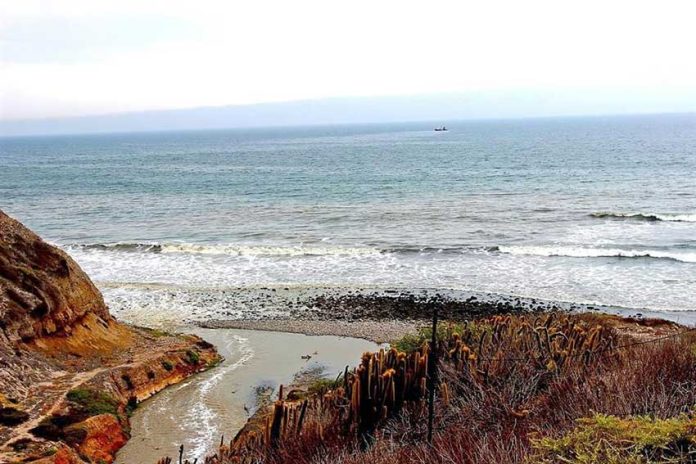
Waters off Tijuana are polluted by a sewage treatment plant.

A binational environmental group is preparing a criminal complaint against the Baja California state government for negligence in the discharge of sewage from a Tijuana treatment plant that pollutes waters off the coasts of both Mexico and the United States.

Paloma Aguirre, coastal and marine director for Wildcoast, told the newspaper Reforma that the complaint will be made collectively in the names of Baja California residents and that separate legal action will also be initiated across the border.

Aguirre charged that the Tijuana wastewater treatment plant, known as San Antonio de los Buenos, or Punta Bandera, is dumping 1,750 liters of untreated sewage into the Pacific Ocean per second.

She said that in addition to causing environmental damage, the pollution also poses a risk to human health.

A recent study by the organization Proyecto Fronterizo de Educación Ambiental (Border Project for Environmental Education) found that the wastewater discharged by the Punta Bandera plant exceeds permitted fecal coliform levels by as much as 12,000%, or 120 times the legal level.

In March, the Californian cities of Chula Vista, Imperial Beach and San Diego jointly filed their own lawsuit against the United States section of the International Boundary and Water Commission (IBWC) and its contractor, Veolia Water North America, charging that they repeatedly failed to take measures to address “devastating pollution discharges” in violation of U.S. law.

A San Diego border patrol agents’ union has also said that it will file a complaint over Tijuana’s pollution.

More than 50 border agents fell ill last year due to exposure to contaminants while working in the vicinity of the border.

For its part, the Tijuana office of the state Public Services Commission (Cespt), which operates the treatment plant, said in a statement that it is lobbying the federal government and organizations including the United States Environmental Protection Agency and the IBWC to obtain funding that would allow it to increase capacity.

An investment of around 1.5 billion pesos (US$79.7 million) is needed to upgrade the plant and four pumping stations, Cespt director Germán Lizola Márquez said.

However, he added, a study must first determine exactly what needs to be done, adding that the first stage of the 10-million-peso analysis is slated to be completed in October.

Sewage from the Punta Bandera plant has been contaminating ocean waters and beaches on both sides of the border for years.

Pollution in the Tijuana river, including viral pathogens, toxic waste and chemicals, also runs into the ocean, further angering politicians and residents of southern California.

Imperial Beach Mayor and Wild Coast executive director Serge Dedina has been particularly critical of Mexican authorities for failing to stem the tide of sewage and other contaminants flowing across the border.

Source: Reforma (sp)

There were more soldiers on the streets than ever last year

0
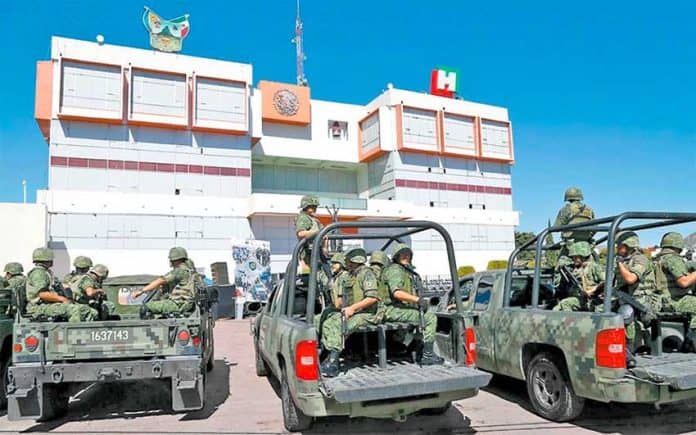
Military on patrol.
Military on patrol.

The federal government deployed 52,807 soldiers to fight Mexico’s notorious drug cartels last year, the highest number in the 12-year war on drugs, statistics show.

The record deployment was spread across several states in various regions of the country.

The Secretariat of Defense sent more than 6,000 soldiers to Guerrero, where criminal groups such as the Guerreros Unidos, Los Ardillos and Los Rojos operate. The southern state is one of Mexico’s poorest and most violent and is also a large opium poppy producer.

In Jalisco, the main target of a deployment made up of 5,535 soldiers was the Jalisco New Generation Cartel (CJNG), which was allegedly responsible for torturing and killing three film students near Guadalajara in March of this year.

The same cartel was blamed for an attack in May on Luis Carlos Nájera, the former attorney general of Jalisco who is now the state’s labor secretary.

In 2017, the army was also sent to carry out public security duties in Tamaulipas, Nuevo León and San Luis Potosí among other states.

Former president Felipe Calderón launched the military-based crime-fighting strategy shortly after he took office in December 2006 by sending 6,500 troops into his home state of Michoacán.

During 2007 — his first full year in office — 45,000 soldiers were deployed across the country.

The size of the deployment was increased to 48,650 in 2009 as the number of soldiers, marines and Federal Police losing their lives in confrontations with organized crime continued to grow.

That number was maintained until the end of Calderón’s six-year term in 2012.

The highest concentration of troops during the National Action Party (PAN) administration was in the northern border city of Ciudad Juárez, Chihuahua, which had been considered the most dangerous city in the world.

During 2013 — current President Enrique Peña Nieto’s first full year in office — the number of deployed troops shrank to just over 34,500 but the number grew by more than 50% over the following years to reach the 2017 figure.

With more than 29,000 homicides, 2017 was also the most violent year in at least two decades while more than 200,000 people have been murdered in the 12 years since the crackdown on cartels began, leading many observers to conclude that the war on drugs strategy has failed.

In addition, more than 30,000 people are missing and federal security forces, including the army and navy, have been suspected of being involved in enforced disappearances and other human rights abuses.

The disappearance of 43 students in Guerrero in 2014, a massacre that left 22 civilians dead in Tlatlaya, México state, the same year and the abduction this year of 23 people in Tamaulipas are among the cases in which the role of the military has been called into question.

The incoming Andrés Manuel López Obrador government has said that it plans to gradually withdraw the military from public security duties on the nation’s streets.

The next government’s strategy — which also proposes better training, pay and conditions for police — was applauded by a security collective earlier this month, which said that the measures are in accordance with what national and international organizations have recommended.

Source: Milenio (sp)

There will be no more spying on opponents, president-elect declares

0
López Obrador and his wife, Beatriz Gutiérrez: they were trailed by federal spies.

There will be no more internal spying on opposition politicians, incoming president Andrés Manuel López Obrador said on Saturday, recalling that he was tailed for years by federally-employed spies.

There will be no more Center for Investigation and National Security (Cisen) either, following its dissolution as part of the new government’s austerity measures.

The newly-appointed public security secretary, Alfonso Durazo Montaño, announced the move on Saturday.

“Cisen disappears because it has been discredited due to the political use that was made of it,” Durazo said.

The incoming secretary said a new organization, the National Intelligence Agency, will replace it.

López Obrador told reporters that the new agency will not perform espionage operations.

“There will be no more spying on the opposition . . . what we suffered for years, when I was opposition. When I was in Tabasco . . . there was a car parked in front of my house, day and night, watching. If I went to the market with my wife, there they were behind me; if we went to the movies, there they were, watching the movie too,” he said.

The new president explained that Cisen employees will be transferred to other areas where they will continue investigations against organized crime.

López Obrador added that he personally has known many Cisen agents for years: “Imagine, 30 years [as the opposition], many of them are ready to retire.”

Of the new intelligence agency, he affirmed that phone tapping would come to an end and that the private lives of everyone will be respected.

“[The National Intelligence Agency] will be tasked with looking after national security and providing information about criminal organizations; it will no longer use government resources to spy.”

Source: El Universal (sp)

Senator named to human rights post will conduct Ayotzinapa probe

0
Encinas: will conduct investigation into the 43 missing Ayotzinapa students.

México state senator and longtime leftist politician Alejandro Encinas will head up a probe into the Ayotzinapa case as the new undersecretary of human rights at the Interior Secretariat, or Segob.

“We are committed to investigating and finding out what really happened to the youths from Ayotzinapa . . .” López Obrador said on Saturday.

The probe will be conducted in collaboration with international organizations, he said. Among them will be the Inter-American Commission on Human Rights.

“The doors of the country will be open . . . there are going to be zero obstacles, the truth in the Ayotzinapa case will be known and justice will be served.”

Forty-three students of the Ayotzinapa teacher training college in Guerrero disappeared during a night of violence in Iguala, Guerrero, in September 2014. It remains unclear what happened, but evidence shows that municipal officials and police were involved. The students would have graduated last Friday.

López Obrador also announced that a series of forums intended to curb surging violence will begin August 7 in Ciudad Juárez, Chihuahua.

The meetings will take place throughout the country between August and October, and will include the participation of international organizations.

“We want to invite not only [non-governmental] organizations and religions, but authorities too,” the president-elect said. The secretaries of National Defense and the Navy will participate, as well as relatives of victims of crime.

“We can’t go on like this, there’s too much suffering. We are going to listen to everyone. There are no limits, nothing will be ruled out. There are no boundaries. Everything will be discussed.”

López Obrador said he has asked for help from the United Nations with regard to human rights and accountability in the fight against corruption.

Source: Milenio (sp), Sin Embargo (sp)