Home Blog Page 2170

Mexican fans’ soccer chant is no longer ‘Eh, puto!’ but ‘Eh, México!’

0
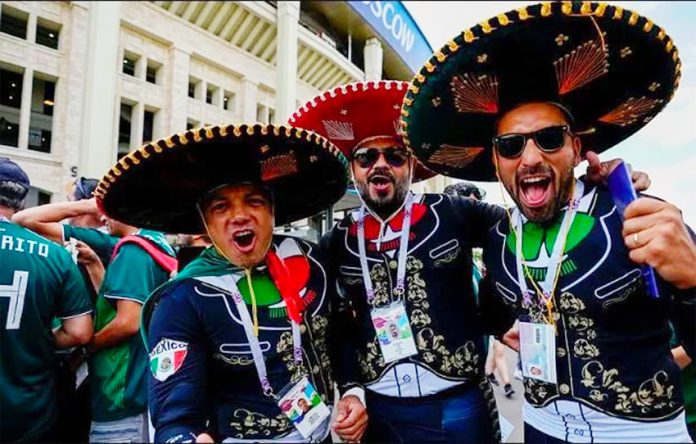
Some eager Mexican soccer fans.

As the South Korean goalkeeper approaches the ball to take a goal kick in Mexico’s second World Cup match in Russia tomorrow, fans have pledged that they will chant “Eh, México!instead of the familiar cry of “Eh, puto!”

Earlier this week, the Mexican team known as El Tri issued a plea via social media to its supporters to drop the popular chant after FIFA, international soccer’s governing body, announced disciplinary procedures on Monday following its use during the first-round victory against Germany in Moscow last Sunday.

The Mexican Football Federation was slapped with a fine of 10,000 Swiss Francs (US $10,120) Wednesday after FIFA reviewed evidence of the puto chant, which is used to taunt the opposing team’s goalie. Puto means faggot or male prostitute.

Outside the Mexican team’s hotel in Rostov-On-Don, where tomorrow’s match will kick off at 10:00am CDT, a group of El Tri fans assured a reporter from the newspaper El Universal that they won’t be using the “Eh, Puto!” chant.

“It’s not fun anymore. Instead of helping, it’s harmful,” they said. “It’s not a matter of being fined or that they could take our fan ID away, it’s a question of culture, that’s clear now.”

Asked what would replace the chant, the fans broke into an elongated cry of “Eh, México!”

If, on the contrary, the homophobic chant is heard at the stadium during tomorrow’s match or during upcoming encounters, the size of the fine could increase or in a worst-case scenario it could even lead to a deduction of points from the team or its expulsion from the tournament.

Three observers are attending every match at this year’s World Cup to report discriminatory behavior by spectators.

There were an estimated 30,000 Mexican supporters at the Luzhniki Stadium for Mexico’s first match and there is no doubt the team’s passionate fans will turn out in force again tomorrow.

The leader of one group of fans called “Más unidos que Nunca” (More united than ever) said that only a small minority of Mexican fans are responsible for starting the chant but added that they incite others around them.

“They’re small groups that continue to insist on doing it. They get caught up in the excitement . . .  they start shouting and other people follow them and that’s how it becomes so big,” Eric Gómez said.

On the pitch, a win against South Korea tomorrow would almost guarantee Mexico’s qualification to the knockout stage of the tournament.

El Tri will play its third and final group match against Sweden on Wednesday.

Source: El Universal (sp)

Home Depot’s new store in Querétaro is No. 123 in Mexico

0
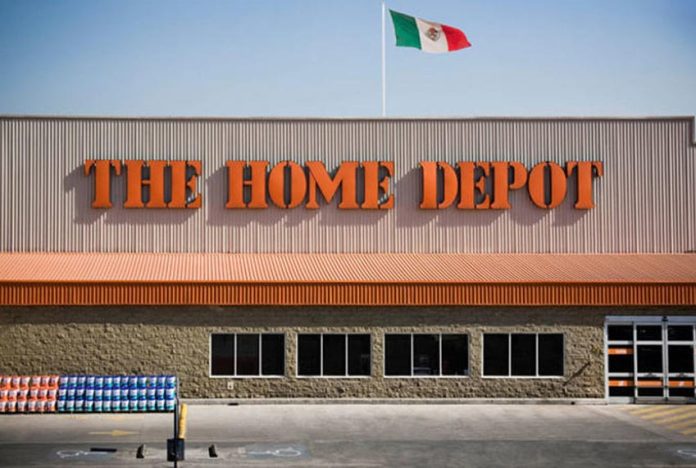
Home Depot's new store in Querétaro is its fourth in the state.

The Home Depot’s new store in Juriquilla, Querétaro, an investment of 203 million pesos (US $10.1 million), is its 123rd in Mexico.

The store is the company’s fourth in the state and will generate 100 jobs.

“With this opening, The Home Depot achieves a total investment of 613 million pesos ($30.6 million) in the state of Querétaro. We continue with the commitment we’ve had for 14 years since we arrived in the state . . .” said Sergio Guitierrez Osuna, president and CEO of The Home Depot México.

New outlets are under consideration in the municipalities of Querétaro and Corregidora.

The company of the orange apron is planning to invest 1.7 billion pesos ($84.9 million) this year on the upkeep and modernization of existing stores and distribution centers and the construction of new ones.

Over the last 17 years the company has invested 31 billion pesos ($1.6 billion) in Mexico, creating more than 15,000 direct jobs throughout the country.

The company plans to invest $10 million over the next decade.

Sales in Mexico, where it has 15,000 employees, are more than US $1 billion a year.

Source: El Financiero (sp), El Economista (sp)

15 trucking firms have ceased operating due to insecurity: Canacar

0
Tanker trucks are petroleum thieves' prey.

Mexico’s trucking industry is shrinking due to insecurity on the nation’s highways.

The president of a national trucking association told a press conference yesterday that 15 trucking companies that hauled fuel for the state oil company Pemex have ceased operations due to insecurity.

Canacar chief Enrique González Muñoz said the number of firms had declined by 15% to 145.

He explained that truckers are subject to assault with weapons against drivers, paint thrown at windscreens to force the drivers to stop, rocks thrown at the trucks and and false checkpoints manned by thieves posing as police officers.

The situation has steadily worsened, taking approximately 700 trucks out of circulation between 2014 and 2017. Tanker truck theft rose 92% in that period. In the first five months of this year, robberies were up 14% over the same period last year.

González said each truck generates five jobs, meaning that 3,500 direct sources of employment were lost. The figure can be up to four times higher if indirect jobs are taken into consideration.

Canacar members explained that on average 16 tanker trucks carrying Pemex fuels are targeted every month by thieves. Each tanker carries 62,000 liters of fuel with a value of about US $1 million.

The truckers charged that the party least concerned with resolving the situation is Pemex itself. It receives the insurance money covering the lost fuel but the truckers must pay the deductible of $10,000 per event.

“Pemex doesn’t lose anything, and that’s why it doesn’t care; it is the only client we pay the deductible for, as if we were responsible,” said Canacar vice-president Refugio Muñoz López.

He added that elevated operating costs have to be added to the losses caused by insecurity because Pemex has made minimal adjustments to its payment structure.

Uriel Joffre Vega, a member of the hydrocarbons committee at Canacar, said the situation has not improved despite the association having “reported in a timely manner” the routes where most robberies occur.

Gónzález added that the thefts put the country’s fuel supply at risk, as his members distribute 30% of it.

Source: El Universal (sp), Milenio (sp)

Veracruz recovers Texas properties purchased with stolen funds

0
Governor Yunes in front of a house recovered by his government.

The government of Veracruz has recovered properties in Texas it says were bought with embezzled public funds, and is negotiating to recover more real estate in the Houston area whose owner was a cabinet secretary during the Javier Duarte Ochoa administration.

Governor Miguel Ángel Yunes Linares revealed in Houston yesterday that the five-bedroom lakefront house and an office complex in Woodlands were worth some 40 million pesos (US $2 million). The money had been stolen by his predecessor and close collaborators, he charged.

Another 21 properties are owned by a former unidentified secretary who lives in Houston, the governor said, and should be turned over to the state government.

Should he refuse, Yunes warned, the case will go to the courts and the former official will be incarcerated.

“There is someone who was a secretary in the Duarte cabinet who owns 21 residences. We’re already talking seriously with him, and if [the real estate] is not returned, he’s going to jail. I say this clearly, he’s going to jail,” the governor said.

An office complex was one of the properties recovered.

He said there are other properties owned by Duarte and his collaborators that the state is attempting to recover, including a house in Woodlands owned by Duarte’s sister-in-law, Mónica Macías Tubilla.

There is also real estate in Miami and New York and the state of Arizona and a condominium in Spain valued at 120 million pesos (US $5.9 million).

Yunes said the newly-recovered house in Houston will be sold and the proceeds invested in health infrastructure.

“We’re going to sell it and we’ll allocate it to health projects; it’s very probable that what we obtain here will be used to finish building the Nautla or Perote hospitals, or to build a clinic needed in the poorest area of Veracruz,” he said.

Yunes’ government filed civil lawsuits in Houston in February alleging that money diverted from state coffers had been laundered through real estate purchases in Texas.

Source: El Financiero (sp), Expansión (sp)

State takes over policing in Ciudad Serdán, identifies 15 fake cops

0
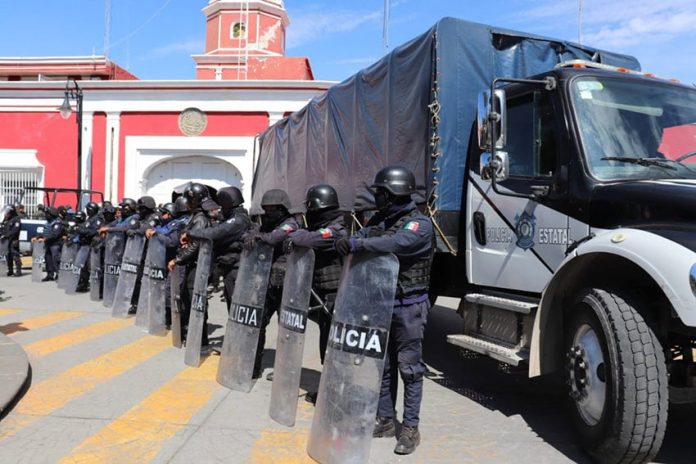
State police stand guard outside police headquarters in Ciudad Serdán.
State police stand guard outside municipal police headquarters.

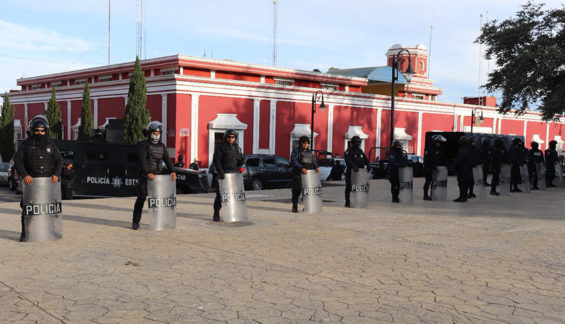
The Puebla state government assumed control of public security in Ciudad Serdán by constitutional decree yesterday and identified 15 fake police officers in the process.

In response to a wave of homicides, robberies and kidnappings in Chalchicomula de Sesma — of which Ciudad Serdán is the municipal seat — state police raided municipal police headquarters and arrested 36 of the municipal force’s 40 officers.

Among them was the force’s supposed supervisor, who had been fraudulently appointed to a role that shouldn’t have existed and for whom two arrest warrants had been issued.

The newspaper El Universal reported that “the false supervisor” had assumed the position after the mayor of Serdán signed off on his credentials.

Prior to the raid, several more unregistered police officers tendered their resignations and consequently avoided arrest.

[wpgmza id=”30″]

Following the operation, state Public Security Secretary Jesús Morales Rodríguez told a press conference that the detained officers and chief were transferred to the state capital where they were subjected to confidence tests.

At least 15 of the officers didn’t have police identification numbers and had not been registered with the National Public Security System, he said.

The remaining officers were released after they passed the tests and it was determined that their documentation was in order.

The phony supervisor, identified as Ignacio Tobón, was handed over to the state Attorney General’s office as warrants for his arrest on charges of assault and abuse of authority had already been issued. In addition, Tobón had a 5.56-caliber rifle in his possession, a weapon that is not authorized for police use.

Chalchicomula de Sesma is the third Puebla municipality where state police have recently taken over responsibility for policing.

On May 2, state prosecutors and soldiers raided the offices of the San Martín Texmelucan municipal police, turning up more than 100 fake officers.

That operation took place after months of inaction on the part of authorities despite the mayor having written 60 letters in which he asked the state and federal governments for help in the face of rising levels of violent crime.

State police officers yesterday in Ciudad Serdán.

On Wednesday of this week, the state government also took control of the Amozoc municipal force.

That operation came less than a week after the force’s commander and commissioner were arrested in connection with the murder last Friday of six municipal police officers. Two state police commanders are now in charge of the force.

All three municipalities where the state government has intervened in law enforcement are located in parts of the state where criminal gangs are involved in petroleum theft from state-owned pipelines.

Source: e-consulta (sp), El Universal (sp), El Financiero (sp)

Congress proposes suspending bilateral cooperation with US

0
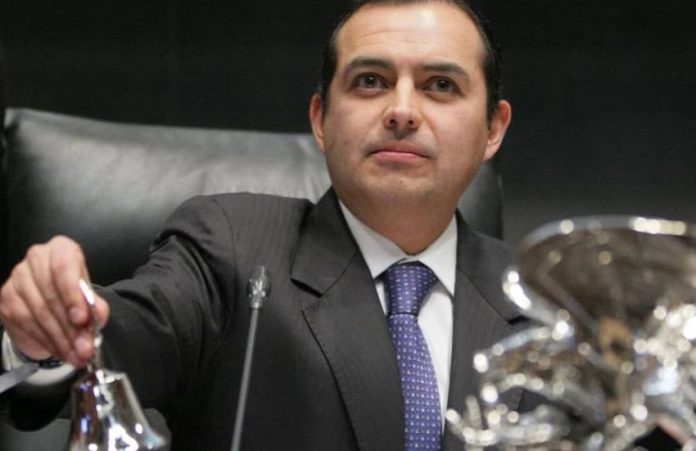
Senator Cordero: urges withdraw from bilateral collaboration.
Senator Cordero: urges withdrawal from bilateral collaboration.

Mexico’s Congress made a bold proposal to the government’s executive branch this week in response to the United States’ separation of migrant children from their parents at its southern border: suspend cooperation with the U.S. on migration, counter-terrorism and the fight against organized crime.

In a Permanent Commission session Wednesday, Senate president Ernesto Cordero read a pronouncement that condemned the United States government’s zero-tolerance policy which led to the separation of more than 2,000 children from their parents after they crossed into the United States without going through an authorized port of entry.

The pronouncement called on the federal government to “withdraw from any scheme of bilateral cooperation with the United States of America on matters of migration, the fight against terrorism and the fight against organized crime as long as President Donald Trump doesn’t behave with the respect that migrants deserve.”

The Permanent Commission also called on international organizations to condemn the United States’ immigration policy and said it would send a letter to every member of the U.S. Congress urging them to put an end to the “cruel and inhumane” practice.

The same day, Trump succumbed to domestic pressure and signed an executive order aimed at ending the separation of families at the border.

Prior to signing the order, Trump maintained that the United States’ southern border would not be jeopardized by the decision.

“We’re going to have strong — very strong — borders, but we are going to keep the families together,” he said.

“I didn’t like the sight or the feeling of families being separated . . .  [the policy] continues to be a zero-tolerance, we have zero tolerance for people that enter our country illegally.”

Trump’s signing of the executive order came just days after he said that the only way to stop the separation of families was through the actions of Congress because “you can’t do it through an executive order.”

However, after an onslaught of criticism he changed his mind.

Foreign Affairs Secretary Luis Videgaray, who earlier described the practice of separating children from their parents as “cruel and inhumane,” welcomed the decision in a Twitter post but added that the Mexican government would continue to provide consular protection to all children in vulnerable situations.

The president of the foreign affairs committee of the lower house of Congress, however, said that the executive order signed by Trump doesn’t go far enough to protect the rights of migrant children.

Víctor Manuel Giorgana of the ruling Institutional Revolutionary Party (PRI) told the newspaper Milenio that even though the new order meant that children wouldn’t be separated from their parents, they would still be subjected to inhumane conditions in United States detention centers.

He also said that Trump’s decision was only taken due to the international and domestic pressure the U.S. president came under and charged that the treatment of migrant children should be in strict accordance with the United Nations Convention on the Rights of the Child.

A delegation of Congress members traveled to Washington D.C. yesterday in order to meet with their United States counterparts to discuss the treatment of migrants and lobby them to protect their rights.

Source: El Universal (sp), Milenio (sp), The New York Times (en)

Mexico City market mural project enters second stage

0
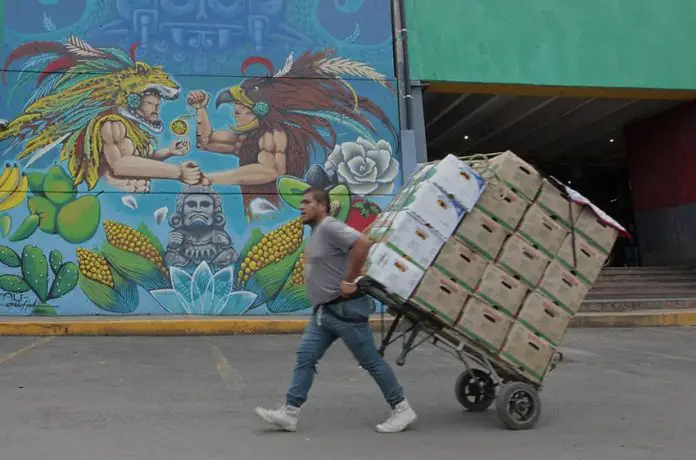
A man pulls a produce cart past one of the existing murals at the Mexico City market.

The second stage of an ambitious mural project that will turn the walls of Mexico City’s largest wholesale market into Latin America’s largest open-air art gallery is under way in earnest.

When the Central de Muros project is completed, 9,000 square meters of walls at the Central de Abasto (Supply Center) will be covered with colorful urban art.

Itze González, director of the We Do Things collective — which is coordinating the project — said that a total of 50 Mexican and international artists will complete 39 murals as part of the second phase.

The paintings will be between 20 and 26 meters wide and six meters high and are expected to be completed by the beginning of August.

The United Nations (UN) is also participating in the project and each of the murals will in some way integrate the organization’s 17 sustainable development goals in order to raise awareness of them.

Experienced Mexican artist Gabriel Macotela has been designated goal 16 — Peace, Justice and Strong Institutions — while other themes that will be featured include life below water, climate action, gender equality, clean water and and end to hunger.

“The aim of these global goals is to eradicate poverty, protect the planet and ensure the prosperity of everyone as part of a new agenda of sustainable development,” said Giancarlo Summa of the UN Mexico Information Center.

The first stage of the project started last September and involved the painting of 24 murals that celebrated the 35th anniversary of the market.

The head of the Central de Abasto Trust, Sergio Palacios Trejo, said the impact of the project had been positive because people have stopped throwing trash against the painted walls and none of the murals had been vandalized. It has also made the market more colorful and welcoming.

González said the murals have also made the market safer and that because members of the community participated in their creation, they have also helped to protect them from vandalism.

As part of the project’s second stage, two art workshops will be held including one in which children will have the opportunity to learn about and try their hand at creating urban art.

Artists that will paint new murals at the market, which is located in the eastern borough of Iztapalapa, include Hows, BeoHake, UNEG, Chula Records, Los Calladitos and Japanese artist Kenta Torii.

Source: Milenio (sp), El Universal (sp)

Banxico raises interest rate to 7.75% in move anticipated by markets

0
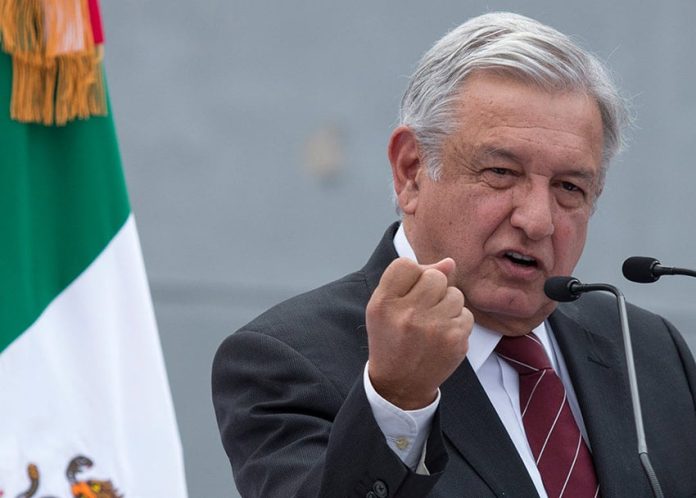
Peso may have already priced in an election win by AMLO.

The Bank of México increased its benchmark interest rate by 25 basis points today to 7.75%, the highest level since December 2008.

The rate hike is the second this year after the central bank, also known as Banxico, raised its key rate by the same margin in February. The decision, taken unanimously by the Banxico board, was widely anticipated by financial markets.

“It is forecast that the economy will continue to transit through a complex panorama, both externally and internally, which makes it particularly important that, in addition to pursuing a prudent and firm monetary policy, measures are adopted that encourage greater productivity and sustainably consolidate public finances,” the bank said in a statement.

In its final monetary policy announcement before the July 1 presidential election, Banxico also said it would not hesitate to make further moves if necessary.

Inflation decreased slightly in May to an annual rate of 4.51% compared to 4.55% in April but Banxico said that some previously identified upside risks have begun to materialize, meaning that the downward trend is likely to slow or stagnate.

“In particular, there has been a greater depreciation of the exchange rate and pressures on the price of gasoline and LP gas associated with increases in their international benchmarks. If these factors persist, the rate of decline in inflation would be affected,” Banxico said.

With regard to the United States’ recent decision to impose tariffs on Mexican steel and aluminum imports, Banxico said it expected that the duties would only have a short-term and limited impact on inflation.

However, if monetary policy was not modified, the tariffs too could contribute to a slowing of convergence towards the inflation target of 3%, the bank said.

Marco Oviedo, chief economist for financial services company Barclays in Mexico, told the newspaper El Financiero that he expected that today’s interest rate increase would be the last adjustment for the year before a downward adjustment is made next year.

Oviedo also said that he expected inflation to remain stable at around 4%, which he noted was above the central bank’s target and therefore would obviously “keep Banxico on the prudent side.”

Benito Berber, a strategist from Japanese financial company Nomura Securities, said that future monetary policy decisions will be heavily dependent on the prevailing exchange rate and inflationary pressures.

The peso has declined 12% against the U.S. dollar during the course of the second quarter of this year but rallied slightly to gain 0.85% this afternoon and is currently trading at around 20.2 to the dollar.

The currency has come under pressure this year due to uncertainty about the future of the North American Free Trade Agreement and the outcome of the July 1 presidential election.

Presidential candidate Andrés Manuel López Obrador has a commanding lead in the polls and according to an analyst from Exotix Capital, it’s likely that the peso has already priced in the “near certainty of an AMLO victory.”

However, Rafael Ellis added that “a period of heightened volatility” for the peso is expected “between AMLO’s likely election victory on 1 July and inauguration day on 1 December, since it will be during that period that investors will get to know AMLO’s likely cabinet.”

Source: El Financiero (sp), Business Insider (en)

In downtown Guadalajara, a revival of the art of handmade books

0
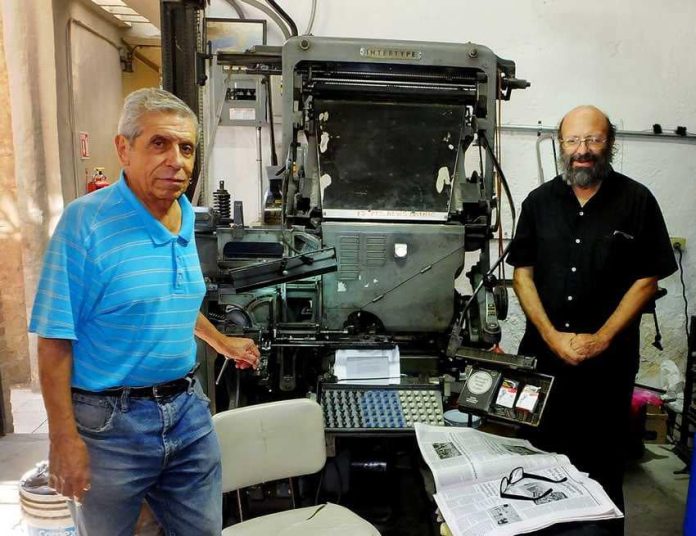
Villegas, left, and Orozco-Farias at Impronta.
Villegas, left, and Orozco Farías with a Linotype machine.

José Clemente Orozco Farías is the grandson of one of Mexico’s greatest muralists and bears his name.

“He’s also one of my best customers,” the owner of an English bookstore told me, “and you should see what he’s doing over at his place, which is called Impronta. I think you’ll find it interesting.”

The other day I did just that. The word impronta means impression in English, which didn’t give me too clear an idea of what sort of establishment it was, but I figured it was going to be plenty noisy inside, judging from its location right in the heart of the city of Guadalajara.

Wrong on that score! A little passage led us into a marvelously quiet patio with tables and chairs and a menu offering coffee and imaginative desserts like Ganache de Pistache (Pistachio Fudge). “Well, well,” I told my wife, “Impronta is a café.”

José Clemente Orozco Farias was there waiting for us, the most peaceful of men with the bushiest of beards. “Let me show you around,” he said, leading us into a room filled with bookshelves.

On a table were some of the most unusual books I’ve ever seen: the paper was beautiful, each letter was beautiful, the bindings were beautiful. Some of the books were large-format collections of fine art, while others were thin but elegant printings of a single poem.

“We made all these and we sell them here,” explained Orozco, who told us to call him Clemente. Just when I had concluded that Impronta is a bookstore, Clemente took us into another room, a big one, filled with very large machines. It was like walking into a museum of the history of printing, only most of these machines were in use, operated by the few old-timers left in town who not only knew what typesetting meant, but were experts in the craft.

“This is Rafael Villegas,” said Clemente. “He’s going to print your names the good old way.” Don Rafael sat down in front of a strange-looking keyboard with 90 pre-QWERTY keys, punched out some letters, pulled a few levers and PSHHH! With a release of steam out popped a little lead ingot saying “John and Susy Pint,” mirror-image of course.

“Careful, it’s hot,” said Don Rafa as he placed it in my hand. Clemente then put the ingot face up on another machine, inked it by hand, ran a drum over it, and out came our names in the center of a fine sheet of expensive paper.

“This,” I thought, “is something every new millennial needs to experience,” and, in fact, Clemente told us, Impronta regularly offers workshops on the forgotten kind of printing that actually lets you feel the letters on the other side of the paper.

Our tour took us through several more rooms containing creaking cabinets and chests of drawers filled with wooden and zinc engravings of every style of letter imaginable, some of enormous size.

At last we returned to the café where I asked José Clemente Orozco Farías just how he got interested in the art of book making.

“I grew up in Mexico City and came to Guadalajara when I was 17 to finish high school,” he told me in excellent English. “I was thinking of going into architecture, but then I went  off to the U.S.A. for college, to Dartmouth, where I got very interested in art history. One thing I liked was that I could take all kinds of courses and explore other disciplines.

“Well, I was in a work-study program and they sent me to a studio that produced posters for one of the cultural centers. They commissioned me to design posters for silk screening and I first learned about typography here. I had always done drawing — it’s in the family, from both sides, in fact — but here I focused on print making.”

Dartmouth’s library, I should mention, houses one of the most famous murals by Clemente’s grandfather, José Clemente Orozco, entitled The Epic of American Civilization, a U.S. National Historic Landmark.

Clemente ended up studying at the Rhode Island School of Design. “At that time they weren’t using computers; everything was done photomechanically, so that’s where I first came into contact with lead type and I learned typesetting.” Later he accepted a fellowship at the University of Texas Press in Austin “where I learned the more specialized craft of book design. In fact, I designed 20 books for them.”

In 2008 Orozco Farías and friends rescued their first cast-off Linotype machine and, the following year, started up the predecessor of Impronta in a garage, printing little booklets “in order to keep the machine running.”

Famed Mexican muralist José Clemente Orozco was one of the 20th century’s major artists, but few remember that he was also a skilled and versatile print maker. So is his grandson, Clemente, who is doing marvelous things in downtown Guadalajara.

The newspaper El Informador calls Impronta “a unique space in the city,” where one can find gorgeously printed and bound works available nowhere else.

An example is Impronta’s first book, Caminar – Walking by Henry David Thoreau, 92 pages. This is a bilingual edition — English and Spanish — of Thoreau’s most popular lecture, which discusses the importance of nature to mankind and how, in Thoreau’s words, “people cannot survive without nature, physically, mentally, and spiritually, yet we seem to be spending more and more time entrenched by society.”

This beautifully bound book is a collector’s item, printed on 100-gram Corolla Damasco paper. You can see what it looks like by visiting Impronta’s elegant web page.  You can also see a short video clip of the Impronta linotype machine in action here.

Sarah Smith of Dartmouth’s Book Arts Program says Orozco Farías and Impronta Casa Editora are part of a worldwide revival in handmade books.

The next time you’re in Guadalajara, you can discover for yourself what Clemente is doing by visiting Impronta and Café Diamante at Penitenciaría 414, between Libertad and La Paz. Their telephone number is 38252641 and they are open weekdays 9:00am to 5:00pm.

The writer has lived near Guadalajara, Jalisco, for more than 30 years and is the author of A Guide to West Mexico’s Guachimontones and Surrounding Area and co-author of Outdoors in Western Mexico. More of his writing can be found on his website.

[soliloquy id="54934"]

Ex-president Fox named to board of marijuana magazine

0
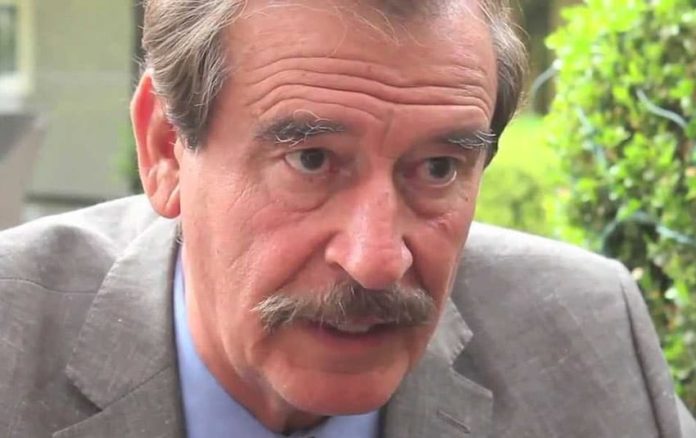
Legalization advocate Fox.
Legalization advocate Fox. high times

An ex-president and supporter of the legalization of marijuana has joined the board of directors of the company that owns the United States marijuana magazine High Times.

Vicente Fox, who served as Mexico’s president from 2000 to 2006, joins the board just as Hightimes Holding Corp prepares for an initial public offering on the Nasdaq exchange later this year.

High Times CEO Adam Levin said Fox was an invaluable addition to the board: “Vicente Fox brings international relationships and decades of experience in business, politics and policy to the company.”

Fox has been a vocal proponent of the global legalization of marijuana for a number of years.

In an interview with the Associated Press he said he believed a robust and legitimate marketplace in the U.S. and Mexico will inevitably curtail the latter’s cartel violence by hurting their profits and limiting their ability to buy weapons. He also expected it will create jobs and medicines.

Of High Times Fox said, “It’s very rare to see an organization in a growing industry that has already established so much strength and significance — especially before the industry was even truly born.”

He praised the publication, which was established in 1974, for building “an empire in the dark,” adding that “there’s never been a better opportunity to join the fight.”

Fox suggested that cannabis trade could someday fall under the parameters of the North American Free Trade Agreement (NAFTA). Canada approved legislation this week that legalizes marijuana.

“I don’t think that governments will ever have the capacity to impose behaviors, to impose conduct, to human beings,” Fox told the AP. “At the very end, prohibitions don’t work. What works is your own free decision.”

Like Fox, High Times has long advocated the legalization of cannabis.

Source: NPR (en)