Home Blog Page 51

Chinese car imports drop steeply under Mexico’s new tariffs, even as sales surge

6
A BYD car dealership
Though Chinese cars from companies like BYD, MG and Changan have surged in popularity in Mexico in recent years, imports have slowed since Mexico implemented new tariffs in January. (Shutterstock)

The 50% tariff that Mexico imposed on Chinese-made cars on Jan. 1 appears to be working as intended, with imports falling sharply in the first month of 2026.

Data from China’s General Administration of Customs (GACC) shows that Chinese-made cars worth US $188 million were exported to Mexico in January, a 45.3% reduction compared to the same month of last year.
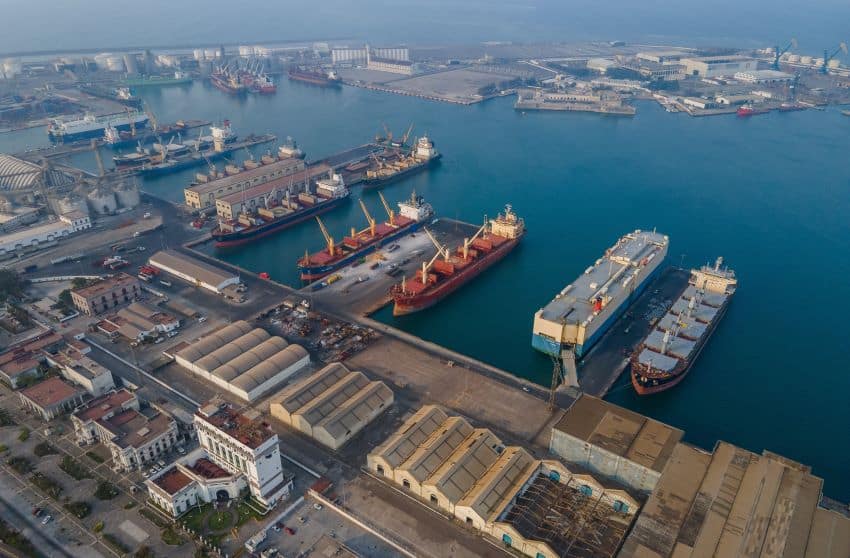
The port of Veracruz, which moves over 30 million tonnes of cargo each year, will receive 10.2 billion pesos in public investment and 10.44 billion pesos in private investment, according to Mexico's Naval Ministry.
Chinese vehicle imports into Mexico dropped by more than half the month Mexico’s new tariffs took effect. Pictured: Cargo ships in the port of Veracruz. (Shutterstock)

The newspaper El Economista, which first reported the GACC’s January data, wrote that imports of Chinese-made cars to Mexico peaked last November, with vehicles worth $1.06 billion brought into the country.

Compared to November, the slump in January was 82.3%.

On Jan. 1, Mexico imposed new and higher tariffs on a wide range of goods from China and other countries with which it doesn’t have free trade agreements. The Mexican Congress approved the tariffs — including an increase of the duty on Chinese-made vehicles from 20% to 50% — late last year.

According to the federal government, the main aim of the duties is to protect Mexican industry — including the country’s large auto sector — and jobs. The imposition of the tariffs on Chinese goods could help the Mexican government in this year’s USMCA review negotiations with the Trump administration, which has escalated the China-United States trade war and pressured Mexico to increase protectionism against China.

The government of China said late last month that it has the right to take countermeasures to the new tariffs Mexico imposed on Chinese goods at the start of the year. China’s Commerce Ministry said that Mexico’s new and increased tariffs affect more than US $30 billion of Chinese exports to Mexico. It said that around $9 billion of those losses would be borne by China’s automobile and auto parts sectors as Mexico was the biggest export destination for Chinese vehicles in 2025.

From top importer of Chinese-made cars to No. 16 in just 2 months

Last November, El Economista reported, Mexico was the world’s top importer of Chinese-made cars — an import category that includes vehicles made by Chinese automakers such as BYD and GWM as well as cars manufactured in China by foreign companies such as General Motors and Ford.

Just two months later, Mexico slumped to 16th on the list of the world’s largest importers of Chinese-made cars.

In January, imports of Chinese-made cars to Mexico accounted for just 1.7% of China’s total car exports, which were worth $11.12 billion, according to GACC data.

GACC data compiled by El Economista also shows that exports of Chinese-made cars to Mexico increased significantly during the past five years.

In 2021, imports of Chinese-made cars averaged $69 million per month before increasing to an average of $184 million per month in 2022. The average monthly outlay increased to $321 million in 2023, $365 million in 2024 and $529 million in 2025. The percentage increase in the average monthly value of Mexico’s Chinese-made car imports between 2021 and 2025 was 666%.

Chinese car sales surge despite import slump 

Despite the decline in the import of Chinese-made cars in January, the sale of Chinese cars increased significantly in the first quarter of 2026, according to data from national statistics agency INEGI.

Sales of nine Chinese car brands — including Chirey, Geely, MG, JAC, Changan and GWM — increased 25.3% annually to 42,808 units between January and March. The figure doesn’t include sales by BYD, which doesn’t report to INEGI, or sales of cars made in China by non-Chinese automakers. The Chinese cars sold in Mexico in the first quarter of the year were, in all likelihood, imported to Mexico before the higher tariff took effect.

Among the nine Chinese automakers that report to INEGI, MG sold the highest number of cars in Mexico in the first quarter of the year. It sold 14,504 cars, a 30.5% increase compared to the first three months of 2025.

Geely recorded the largest increase in sales among Chinese automakers. It sold 10,782 cars in Mexico between January and March, an annual increase of 272.2%.

Around one in five cars sold in Mexico in 2025 was made in China, according to data from INEGI and industry groups.

Imports of Chinese cargo vehicles fall 15.7% 

Mexico’s imports of Chinese-made cargo vehicles (i.e. trucks and other large vehicles used to move freight) also fell in January. GACC data shows that imports were worth $70 million in January, a 15.7% annual reduction.

Mexico was the fourth largest importer of Chinese-made cargo vehicles in January, after Indonesia, Vietnam and Australia.

With reports from El Economista 
Sinaloa mine collapse: Second miner rescued, third found dead, fourth still missing

0
recuse team at SInaloa mine
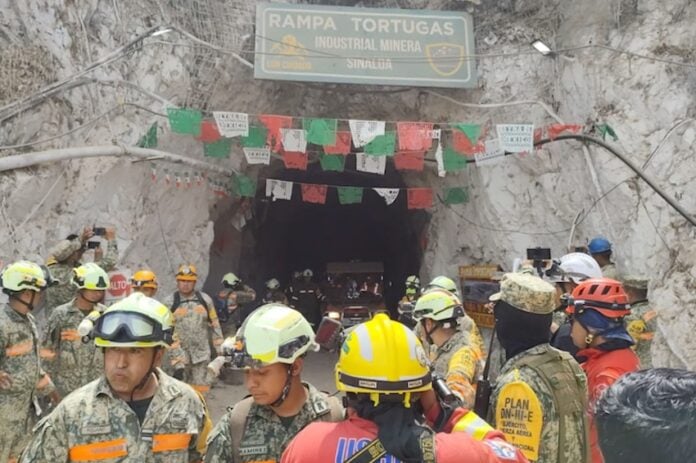
Francisco Zapata Nájera, 42, was found alive and painstakingly brought to the surface after being trapped for 13 days in the Sinaloa mine where he had been working when it collapsed on March 26. (Coordinación Nacional de Protección Civil/Cuartoscuro.com)

Nearly two weeks after a mine collapsed in the northwestern state of Sinaloa, a second miner has been rescued, while authorities confirmed that the body of a third was discovered.

Efforts continue to locate a fourth miner, who has been trapped since March 25.

Francisco Zapata Nájera, 42, was pulled from the Santa Fe mine in the municipality of Rosario before dawn on Wednesday morning. He was located at a depth of 300 meters surrounded by large quantities of water.

A team of divers reached Zapata on Tuesday afternoon. He was afforded basic medical attention while rescuers used a pump capable of extracting 9 liters of water per second to clear a path to safety.

The process of extricating him from the mine took nearly half a day. Once reaching the surface, he was swiftly airlifted to a hospital in Mazatlán about 70 kilometers north of the site.

Shortly thereafter, the rescuers found the body of a third miner. The location and condition of the fourth victim remain unknown.

Twenty-five employees were deep inside the mine owned by Industrial Mineral Sinaloa on March 25 when disaster struck. It is believed that a tailings dam, used to store waste generated inside mines, collapsed. 

Twenty-one of the miners were close enough to the surface to escape, but José Alejandro Cáustulo — rescued four days later — was believed to be at a depth of 100 meters, while the other three were known to be in the deepest part of the mine.

The accident released large quantities of mud and water over an area 300 meters deep and 3.2 kilometers long, converting tunnels into underground rivers.

The flooded tunnels required the use of divers who faced virtually zero visibility as they raced against time to find the missing miners.

The 300-man rescue team used an extraction system capable of pumping out 34,000 liters per hour, while also using cement compounds and expanding resin to reinforce the structure to secure an escape route.

Hours before Zapata was located, the Command Post reported technical adjustments to expedite the work, including optimizing the drainage system by installing a second pipeline on the main pump. This modification included a dual-discharge adapter and the installation of a third pipeline to increase drainage capacity.

Federal and state agencies say that the operation will not stop until the fourth worker is located, while officials are maintaining constant communication with the victims’ families.

With reports from La Jornada, El País, Aristegui Noticias and El Economista

Mexico in Numbers: The 10 largest companies in Mexico

5
State-owned oil company Pemex topped the ranking, which also included the Mexican subsidiaries of several well-known multinational corporations. (Shutterstock)

In this “Mexico in Numbers” article we turn our attention to companies, specifically the largest firms operating in the country.

Who are these companies? How much revenue do they generate? Did their income increase or decrease in 2024?

The data cited in this article comes from Grupo Expansión’s 2025 list of “the 500 most important companies in Mexico.” Expansión created the list based on companies’ revenue in 2024.

1.  Petróleos Mexicanos (Pemex)

Mexico’s largest company is the heavily-indebted, state-owned oil company Pemex.

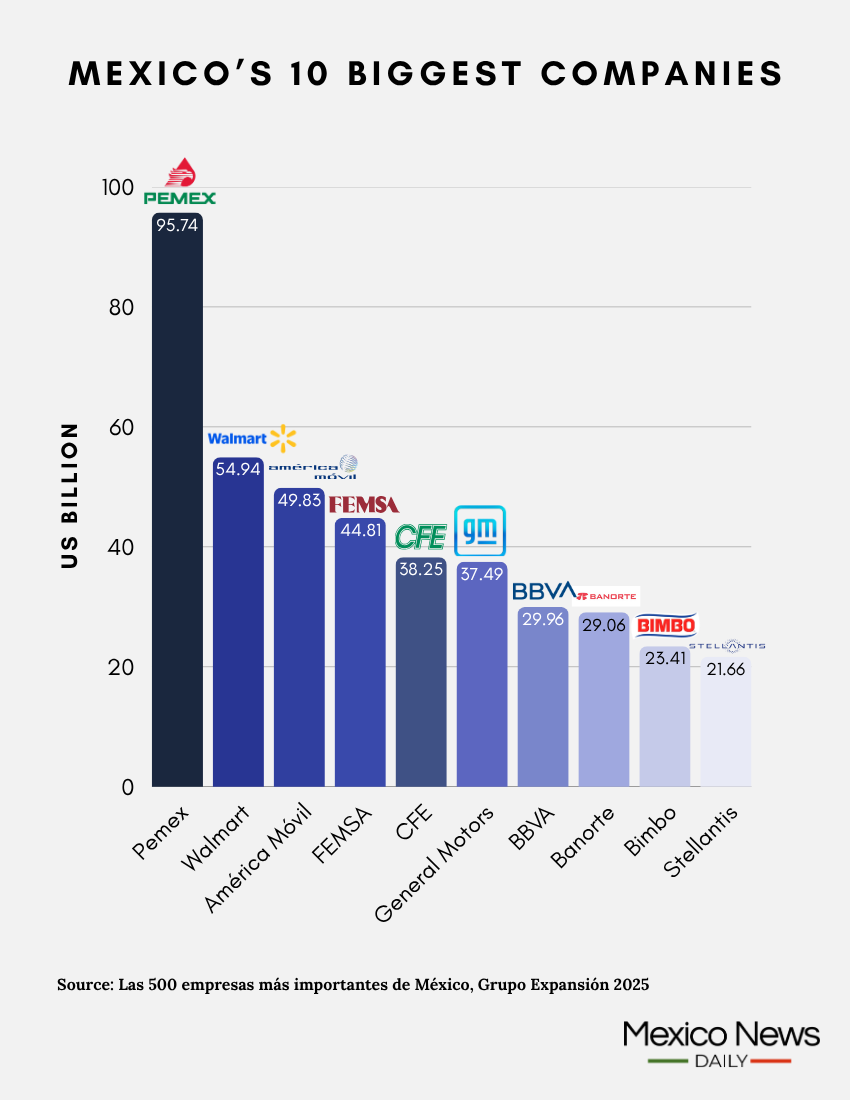
In 2024, Pemex’s revenue totaled just over 1.67 trillion pesos (US $95.74 billion at the current exchange rate), a decrease of 2.7% compared to 2023.

Pemex is a multi-faceted company, spanning the entire petroleum chain from exploring and drilling for crude oil, to refining it into fuels, to selling gasoline and diesel directly to motorists at service stations across the country. It also has gas and petrochemical interests.

A chart showing the earnings of Mexico's 10 largest companies

2. Walmart de México y Centroamérica

This retail behemoth — a subsidiary of the U.S.-owned Walmart Inc. — is Mexico’s second largest company, with revenue of 958.5 billion pesos (US $54.94 billion) in 2024, an increase of 8.1% compared to 2023.

Walmart de México y Centroamérica announced in late March that it will invest 43 billion pesos across Mexico and Central America in 2026 as part of an ambitious push to reach 99% of Mexican households within three years.

3. América Móvil

América Móvil, the parent company of Telcel, Telmex and Claro Video, is Mexico’s third largest firm, with revenue of 869.2 billion pesos (US $49.83 billion) in 2024, an increase of 6.5% compared to 2023.

The company is owned by Carlos Slim, Mexico’s richest person.

4. FEMSA 

Femsa, the world’s largest independent Coca-Cola bottler and owner of the convenience store chain OXXO, is Mexico’s fourth largest company. It had revenue of 781.58 billion pesos (US $44.81 billion) in 2024, an annual increase of 11.2%.

5. Federal Electricity Commission (CFE) 

Mexico’s fifth largest company is the state-owned Federal Electricity Commission.

The CFE — which by law has a 54% share of the electricity generation market in Mexico — had revenue of 667.24 billion pesos (US $38.25 billion) in 2024, up 4.3% from the previous year.

6. General Motors de México

The Mexican subsidiary of Detroit-based General Motors is Mexico’s sixth largest company. Revenue in 2024 totaled 654 billion pesos (US $37.49 billion), up 31.9% from the previous year.

GM has four plants in Mexico.

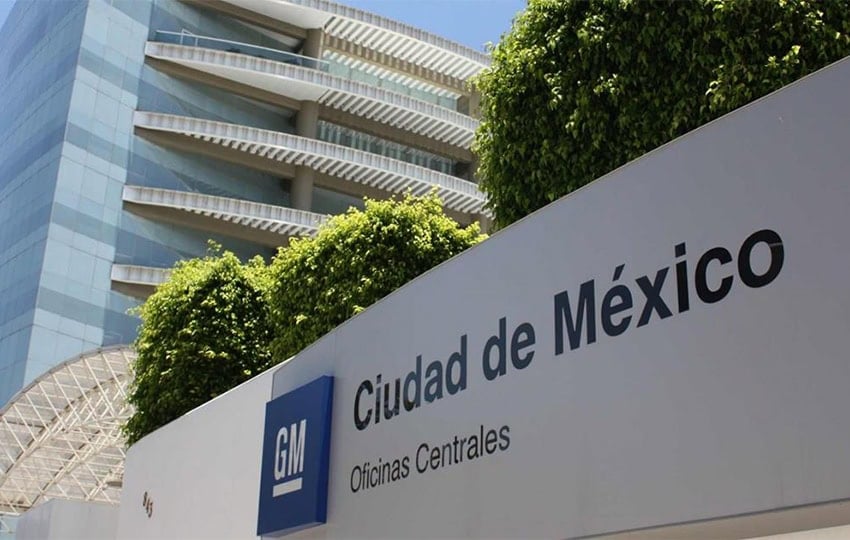
GM México headquarters in Mexico City
GM México, the country’s sixth largest company, brought in over US $35 billion in revenue in 2024. (General Motors)

7. BBVA México

Mexico’s seventh largest company is BBVA México, a division of Spanish bank BBVA.

The bank had revenue of 522.7 billion pesos (US $29.96 billion) in 2024, an annual increase of 13.8%.

8. Banorte 

The Mexican bank Banorte ranks as Mexico’s eight largest company with 506.96 billion pesos (US $29.06 billion) in revenue in 2024, a year-over-year increase of 9.6%.

The bank was established in 1986 via the amalgamation of Banco Mercantil de Monterrey and Banco Regional del Norte.

9. Grupo Bimbo 

The multinational bakery Grupo Bimbo is Mexico’s ninth largest company. Bimbo had revenue of 408.33 billion pesos (US $23.41 billion) in 2024, an annual increase of 2.1%.

Bimbo is the largest baking company in the world.

10. Stellantis México

Rounding out the top 10 of the largest companies in Mexico is Stellantis México, the Mexican subsidiary of the Netherlands-based automaker. Stellantis México had revenue of 377.97 billion pesos (US $21.66 billion) in 2024, a decrease of 3.1% compared to 2023.

Late last year, Stellantis announced plans to expand operations at plants in Saltillo and Toluca.

Mexico News Daily 

What to do with millions of liters of stolen fuel? Thursday’s mañanera recapped

0
President Sheinbaum
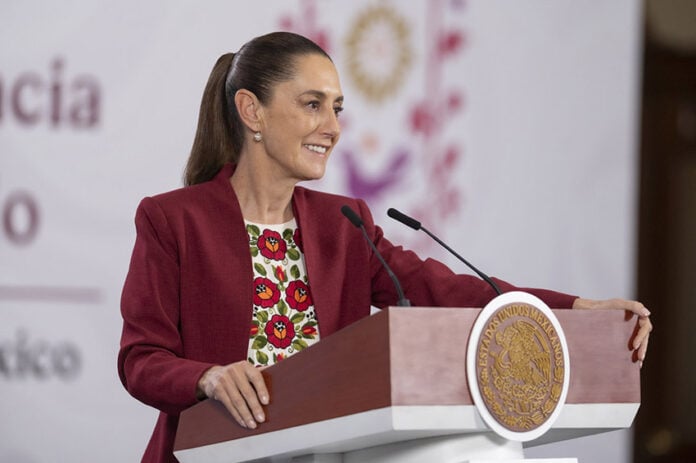
Fuel smuggling, popularity polls and judicial elections were topics of discussion at Thursday's morning presser. (Saúl López / Presidencia)

Sheinbaum’s mañanera in 60 seconds

  • 📈 Government adversaries fuming over polls: Sheinbaum quipped that “every time a poll comes out, our political adversaries get very angry” — with opponents even claiming her government has bought all the polling companies. “Just imagine how much we would have spent,” she fired back.

  • Illicit fuel in limbo: Millions of liters of stolen or illegally imported fuel are sitting in FGR storage. Sheinbaum said the FGR is exploring ways to put it to use — though no batch can be released until its related criminal case is closed.

  • ⚖️ Judges on the ballot — again? Sheinbaum endorsed the idea of recall elections for Mexico’s newly elected judges, saying parties are welcome to formally propose it, while noting citizens can already file complaints against judges with the Tribunal of Judicial Discipline.


Why today’s mañanera matters

President Claudia Sheinbaum revealed on Thursday morning that she is open to the idea of elected judges facing recall elections. A hallmark of the “fourth transformation” political movement led by Sheinbaum and backed by the ruling Morena party is support for giving citizens the opportunity to have their say at the ballot box on a wide range of issues, including the future of a partially built airport, whether a brewery project should go ahead and who the nation’s judges should be. Former President Andrés Manuel López Obrador faced a recall election in 2022, and Sheinbaum will also be subjected to a “revocation of mandate” vote later in her term if enough citizens request one.

Also of note at Thursday’s mañanera was the president’s reference to political polarization in Mexico, and her comments about the potential legitimate use of the large quantities of illicit fuel that authorities have seized in numerous huachicol busts.

Sheinbaum: ‘Every time a poll comes out, our political adversaries get very angry’

A reporter asked the president her opinion about the results of a FactoMétrica/Reporte Índigo poll that found she had a record high approval rating of 79.5% in March.

In response, Sheinbaum declared that “every time a poll comes out, our political adversaries get very angry.”

She subsequently said that the government’s opponents claim that “we’ve bought all the polling companies.”

“Just imagine how much the government would have spent if we’d bought all the polling companies,” Sheinbaum said.

The president noted that various polls have found that she has an approval rating of around 70% or higher, although she didn’t mention a poll conducted for Bloomberg News in March that yielded an approval rating of just 53.9%.

“What’s true is that there is public approval of the government of Mexico,” Sheinbaum said.

“There are those who don’t agree with us and that’s good because that’s democracy,” she added.

“[But] the majority of Mexicans are happy with the government of Mexico, and we’re never going to betray the people,” Sheinbaum said.

What happens to the large quantities of illicit fuel seized in Mexico?

Sheinbaum told reporters that millions of liters of seized illicit fuel — i.e. fuel that has been stolen or illegally imported into Mexico — is stored by the Federal Attorney General’s Office (FGR).

She said that the FGR is looking at ways the fuel can be used “so that it doesn’t remain in storage.”

Sheinbaum didn’t offer details about how the fuel could be used, or say whether it could be sold. However, she did note that a batch of illicit fuel cannot be released by the FGR before any related criminal investigation is finished.

Sheinbaum also said that the theft and illegal importation of fuel has declined significantly.

Anti-corruption chief reveals sophisticated fuel tax evasion network costing Mexico billions

“We see that in the increase of the sales of Pemex and private companies, which also import gasoline,” she said.

Could elected judges face recall elections?

Asked about the possibility of elected judges facing recall elections, Sheinbaum expressed support for the idea.

“It’s a good proposal,” she said.

Sheinbaum said that if someone wants to formally propose the idea, they should do so.

“Parties can propose it,” she added.

Sheinbaum noted that citizens can already file complaints against judges with the Tribunal of Judicial Discipline, a recently-created federal court.

Mexico held its first ever judicial elections last June, with voters electing almost 900 judges including nine Supreme Court justices.

By Mexico News Daily chief staff writer Peter Davies (peter.davies@mexiconewsdaily.com)

Andrea Bocelli teams up with Los Ángeles Azules for the next free Zócalo concert

0
Poster for a free Zócalo concert in Mexico by Andrea Bocielli and Los Ángeles Azules
Italian opera star Andrea Bocelli will perform alongside Los Ángeles Azules and other Mexican groups in a free Zócalo concert. (Banco Plata)

Mexico City’s Zócalo, the country’s main public square known for transforming into a musical venue for massive and emblematic events, will once again delight capitalinos with a free show featuring Italian opera singer Andrea Bocelli with special guests Los Ángeles Azules, Mexican pop singer Ximena Sariñana and the Minería Symphonic Orchestra.

The celebrated tenor, who has recorded 15 solo opera and pop albums throughout his career, will bring his crossover success to Mexico City with an unusual concert that combines opera, cumbia, classical music and pop music.

Formed in Mexico City in the late 1970s by the Mejía Ávila family, Los Ángeles Azules have spent nearly five decades building one of the most beloved catalogs in Mexican popular music. The group experienced a dramatic resurgence in the 2010s, drawing a new generation of fans to the danceable rhythms of cumbia sonidera. Today they are widely regarded as Mexico’s foremost ambassadors of cumbia, and have collaborated with artists including Natalia Lafourcade, Sariñana and Bad Bunny.

The event, sponsored by recently licensed bank Banco Plata in collaboration with Mexico City’s government, promises a unique experience for a diverse audience. 

“Mexico has a new bank and we will celebrate with a simply wonderful concert,” Banco Plata announced in a social media post. “Can you imagine this fusion? Neither can we, but we can’t wait to hear what it will sound like.”

With this event, Banco Plata celebrates its transition to a bank — after previously operating as a digital institution — while looking to position itself as a relevant player in consumer banking.

The event is set to take place April 18 at 7 p.m., just over a month after Shakira’s performance at the iconic square, in a free event that drew over 400,000 fans.

Authorities have called on fans to arrive a few hours before the show starts, as large crowds are expected.

With reports from El Universal

Why does the Legion of Christ continue to have so many followers in Mexico?

2
Legionaries of Christ school
Legionaries of Christ run schools continue to be popular with conservative Catholic parents in Mexico. (Legion of Christ)

As someone who grew up in a conservative Mexican Catholic family, attended an all-girls Catholic school and whose social circle was mostly made up of individuals who also attended Catholic schools, I’m very aware of the scandal surrounding Father Marcial Maciel, the late founder of the Legion of Christ

That’s why I wondered why so many people still trust the legionaries with their children’s education. 

Marcial Maciel
The founder of the Legion of Christ, Marcial Maciel, was so disgraced by unseemly behavior that a television show was made about the scandal. (Prime Video)

Legionaries of Christ in Mexico

The Legion of Christ was founded by Maciel in Mexico City in 1941. Over time, it grew to an international organization spanning over 70 private schools across 19 countries, with 50 schools in Mexico alone. Instead of calling them the Legionarios de Cristo, their detractors would call them the Millionarios de Cristo (“Millionaires of Christ”), as Maciel built a charismatic reputation, creating close ties to wealthy families within conservative Catholic circles. 

However, Maciel’s legacy was overshadowed by numerous accusations of sexual abuse against minors, as well as revelations of different identities, secret marriages and even children of his own. 

He was never prosecuted in Mexico nor in any of the countries where his organization operated. Instead, the Vatican ordered him to step down as leader of the Legion of Christ in 2005 and withdraw from public ministry “into a life of prayer and penitence,” during which time he died at age 86 in Florida. 

And yet, despite years of scandal, the 51 private schools run by the Legion of Christ in Mexico have not only survived but continue to thrive.

Why would parents enroll their children in Legion of Christ schools?

I witnessed this phenomenon first-hand while attending a Christmas festival organized by one of these schools in Guadalajara last December. As I sat there among family members and hundreds of parents proudly watching their kids perform, I couldn’t help but wonder why so many families are attracted to the legionaries. 

So, I asked people in my circle who decided to enroll their children in these schools why they did it. Two moms agreed to speak to me about the matter.

Legion of Christ school
Why do parents still enroll their children in Legion of Christ schools? They still believe in the values they espouse. (Legionaries of Christ)

“It was very important for me that my children attended a Catholic school,” Sofía Rosas, who’s originally from Guadalajara but has lived in Monterrey for over a decade because her husband is from there, told me. “It was also very important for us to find like-minded families and a like-minded community.”

Rosas said that her husband and everyone in her husband’s family attended a Legion of Christ school in Monterrey, so it made sense to continue within that social circle. But the main reason, she says, is the opportunity the school gives them to get involved in their children’s lives.   

The scandal isn’t as important a consideration as other factors

“The school makes a lot of effort to integrate families. Parents are extremely involved in the school and that’s what my husband and I wanted. I mean, we want to know who our kids befriend and who the families of those children are,” she said. 

For Rosas, the scandal was never a factor in their decision.  

“I didn’t know about the scandal. I attended a school run by the Opus Dei, so I wasn’t aware of all the details. I knew he (Maciel) had been found to have a wife and kids, but it wasn’t until I watched the HBO Max series on the life of Maciel that I found out about everything. But it doesn’t change our decision. I’m extremely happy with the school and so are my children,” she said. 

Meanwhile, a woman who asked only to be identified as María, a graduate from a Legion of Christ school in Guadalajara, told me that she and her husband had two schools in mind: a boys and girls school run by the Jesuits, and a girls-only and boys-only school run by the Legion of Christ. They ultimately chose the school operated by the Legion of Christ because they considered it to have an outstanding level of English, in addition to great academics. 

Legion of Christ students
Besides promulgating Catholic values, Legion of Christ schools are noted for their academics and English instruction. (Legionaries of Christ)

“Academically, we knew that the schools excel in English compared to others. They also hold certifications that align with our intention of giving our children the best education available,” María added. 

 Conservative values

The network of schools run by the Legion of Christ operates under the Latin slogan Semper Altus (“Always the Tallest”) and has, according to school websites, collaborations with institutions like National Geographic Learning, Oxford and Pearson Education, among others. Beyond the academic input, the Legion says it educates students to become leaders with Christian values like humility, generosity and compassion — values conservative families in Mexico are looking for. 

María said that comparing her experience as a former student to those of current students, the schools have “really stepped up their game to avoid falling apart and to overcome what they unfortunately faced due to Father Maciel,” she said.  

“As with any institution, there are things they could do better, but overall, we are very happy,” María added. 

Overcoming scandal

On the school’s website, there’s no mention of Maciel, except for a specific page that addresses the founder’s biography, acknowledges the crimes he and other members of the Legion committed, and explains how the organization has moved forward despite the founder’s “immoral acts.”

“Given the seriousness of his offenses, we cannot view him as a model of Christian or priestly life,” the Legion of Christ acknowledges. 

Legionaries of Christ school in Monterrey
Basketball court at the Legionaries of Christ’s picturesque school property in Monterrey, Nuevo León. (Legionaries of Christ)

The testimonies of María and Rosas, and the community spirit I witnessed at the Christmas festival back in December, reveal that the organization has managed to overcome the scandal and operate based on the Christian values Mexican families appreciate — values that the founder himself failed to follow.

Gabriela Solis is a Mexican lawyer turned full-time writer. She was born and raised in Guadalajara and covers business, culture, lifestyle and travel for Mexico News Daily. You can follow her lifestyle blog Dunas y Palmeras.

The Lake Chapala Orchestra is sustained by devotion

5
Lake Chapala Orchestra
The 60-musician strong Lake Chapala Orchestra is made up of both foreign and Mexican musicians from the local community. (Lake Chapala Orchestra)

They say music has a way of rearranging a room. I used to think that was just a poetic way to talk about acoustics; how a violin’s tremolo slips into the corners, or how a timpani rolls and the walls seem to breathe with it. 

I’ve come to learn, though, that rearrangement is something social as well as sonic. It’s how shared attention can change how strangers hold themselves in a place. The modern orchestra of Lake Chapala is close to 60 players strong, a mix of career professionals and talented retirees who keep their chops and their passions sharp. They manage a full season of six or more concerts, drawing 300 or more listeners without a single peso of government subsidy.

Lake Chapala Orquestra
The Lake Chapala Orchestra isn’t sustained by subsidy, but by dedicated residents and appreciative locals. (Lake Chapala Orchestra)

It’s astonishing that an ensemble of this size not only survives but runs in the black, supported largely by ticket sales and local donations. The sound they produce could stand toetotoe with offerings from orchestras in Guadalajara, Dallas or Washington, D.C., yet this one takes shape in a town of around 10,000 foreign residents living alongside 50,000 Mexicans.

Many of those foreigners prefer easylistening favorites to symphonic staples, and still, the orchestra thrives. How did this come to be?

How Lake Chapala sustains an orchestra

The answer winds through personalities, small gatherings and stubborn devotion. Much of it starts with Michael Reason, the artistic director and conductor who planted roots in Lake Chapala just as a few retired musicians were gathering in homes to play the music they loved.

Those weekly gatherings, baroque suites passed around livingroom chairs, an almost obsessive attention to phrasing and breath, were small and intimate. A private rescue of skills that retirement otherwise threatened to lose.

Michael arrived at the cusp of that movement and helped shape it into something larger: an organized, professional ensemble that nonetheless keeps the atmosphere of those house concerts. His approach felt less like institutionbuilding and more like tending in how he coaxed players toward a shared ideal of sound while preserving the generosity that had first drawn them together.

Rehearsals carried the warmth of friends sorting a passage over coffee, even as sectionals demanded the focus of a conservatory room.

People making music

Michael Reason and the Lake Chapala Orchestra
Artistic Director Michael Reason leads the Lake Chapala area’s local symphony. (Lake Chapala Orchestra)

The human stories are the heart of this orchestra. Take Joyce Noriega, a 92yearold oboist who still plays with a steady, luminous tone. Joyce has subbed with the Jalisco Philharmonic and is cherished by musicians and audiences who know her. She and her friends used to meet at each other’s houses to play.

Those sessions were less about performance and more about preserving a life’s habit; the daily, necessary act of making music with friends. There’s a smallness and an intimacy in people who simply want to play, without the infrastructure of a concert hall or the pressure of a career.

Susanne Bullock is another linchpin. She’s the principal clarinet and a driving force on the executive board. Susanne gave up professional music when she moved to Mexico 10 years ago. Her return to active musicmaking saw a renewed commitment to rehearsal schedules, auditions and administrative work, and it filled an essential gap.

Her leadership helped turn hobbyist sessions into a structured orchestra that could attract audiences and funding from private sources. The work she and others do, the scheduling, fundraising and recruiting, reads like a kind of civic musicmaking in itself. Not glamorous, but essential.

The ensemble’s makeup reflects this duality, with roughly 80% foreign and 20% Mexican musicians. That split sparks a question: how did a mostly foreign group in a small lakeside town build an orchestra of this caliber? The answer is partly community network and partly sheer devotion.

How the orchestra came together

It’s about musicians who migrated and who brought training, experience and a desire to keep playing. They found one another, traded contacts and slowly moved from kitchentable quartets to a staged orchestra, rehearsing in community halls, churches and anywhere a piano and a few chairs could be set up.

As the venture matured, more professional standards were applied. Some community members who initially played were replaced by those with more recent orchestral experience to ensure a consistent, polished sound. That growth was sometimes painful, but it was instrumental in allowing the orchestra to present works that matched the technical and expressive demands of full symphonic repertoire.

The tension between inclusivity and artistic ambition is a familiar one in keeping doors open while also honoring the music’s demands. In Lake Chapala, that tension has shaped a pragmatic compromise of retaining community spirit, raising standards where necessary, and keeping the music honest.

Community support

Performances draw a fascinating crosssection of people. There are foreigners hungry for cultured evenings, longtime Mexican residents curious about orchestral textures, and visitors who stumble upon a concert and stay for the whole thing.

The orchestra has learned to balance accessibility and artistic integrity, offering programs that can surprise and satisfy both casual and committed listeners. The result is an audience that supports the organisation financially and emotionally, buying tickets and spreading the word, sustaining a professional ensemble without municipal funds.

There are practical challenges, of course. Keeping an orchestra viable means booking venues, contracting professional players for demanding parts, managing payroll, transporting instruments and cultivating donors who see cultural value in a smalltown symphony. It means board meetings, logistics and the kind of detailed work that most audiences never hear beneath the music.

But these behindthescenes efforts are driven by people like Susanne, Joyce and Michael. People who not only love music but are willing to do the administrative and social labor that keeps it alive.

Lake Chapala Orchestra
Despite practical challenges, the Lake Chapala Orchestra can toot its own horn for the quality of its offerings. (Lake Chapala Orchestra)

It’s also worth noting how regional dynamics thread into this picture.

A symphony of stories

The Jalisco Philharmonic, for instance, has its own complex story. Many of its players are refugees from Venezuela, a reminder of how politics and migration reshuffle cultural life. For Lake Chapala, the interplay is smallerscale but no less meaningful.

Musicians move, retire and reconfigure their careers, and in doing so create a microcosm of global musical shifts. They create an orchestra that, in miniature, mirrors larger changes in professional networks and cultural exchange.

I haven’t had the time to make the drive and experience a concert firsthand. But I will. I want to sit close enough to feel the timpani in my chest, to watch the conductor’s hand sketch questions into the air, and to hear Joyce’s oboe thread a solo line like a conversation across decades.

I want to be part of that communal attention, and to see how music can make strangers feel like neighbors and stretch the shape of a town until everyone fits. Until then, I treasure the stories I’ve learned about this merry band. The livingroom rehearsals that became concerts, the retired professionals who refused to let their art go silent, the board members who balanced budgets and ambitions, and the conductor who turned friendship into an institution.

Lake Chapala’s orchestra is proof that culture doesn’t need a metropolis to flourish. It only needs people who refuse to stop listening and playing. When I finally make it down to the shore, I’ll be ready to hear how the lake replies.

Charlotte Smith is a writer and journalist based in Mexico. Her work focuses on travel, politics, and community. You can follow along with her travel stories at www.salsaandserendipity.com.

National Guard arrests truck driver hauling 66,000 liters of illegal fuel

1
truck driver with truck of stolen fuel
The driver, pictured here, was unable to produce the permit and had no documentation stating where the fuel came from. (Guardia Nacional)

The National Guard (GN) detained the driver of a truck traveling on the Mexico City-Puebla highway with a load of 66,000 liters of alleged huachicol, as stolen fuel is colloquially known in Mexico.

GN officers stopped the truck in México state and asked the driver to show his permit for transporting dangerous materials, the newspaper La Prensa reported on Wednesday.

The driver was unable to produce the permit and had no documentation stating where the fuel came from. He was consequently arrested and turned over to a local prosecutor’s office.

The GN also seized the truck, which will remain in the possession of authorities as the investigation into the driver and his cargo proceeds. The National Guard supplied a photo of the driver and his truck to La Prensa.

Fuel theft has long been a problem in Mexico, including in México state and the Red Triangle region of the neighboring state of Puebla. One way thieves steal fuel is by perforating Pemex pipelines that transport gasoline and diesel around the country. In 2025, Pemex, Mexico’s state oil company, detected 10,591 illegal taps on pipelines, according to data obtained by the newspaper Excélsior. That figure represented a 10% decline compared to 2024.

Explosions at the location of pipeline taps have occurred on numerous occasions, causing both injuries and fatalities. In Tlahuelilpan, Hidalgo, in 2019, a pipeline explosion claimed the lives of at least 137 people.

With reports from La Prensa and N+

Deloitte report: Mexico’s economic benefits from hosting World Cup could reach US $2.25B

0
World Cup merch dealer
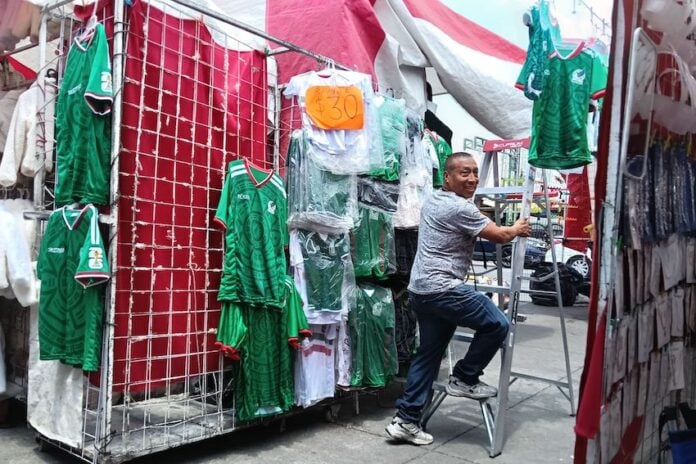
The economic benefits from the World Cup can be direct, indirect or induced, but overall they will total as much as US $2.25 billion or more, according to the global consulting firm Deloitte. (Edgar Negrete Lira/Cuartoscuro.com)

Mexico’s much-anticipated economic windfall from hosting the FIFA 2026 World Cup could be as much as $2.25 billion in added value across the country, according to a February report from the consulting firm Deloitte. 

Such an economic contribution would be the equivalent of around 0.14% of Mexico’s GDP, according to Deloitte Spanish Latin America’s Chief Economist Daniel Zaga. The World Cup is also expected to create 92,700 temporary jobs countrywide, which equates to around 0.19% of Mexico’s total employment.

TV game at bar
Restaurants, bars and clubs that can offer patrons World Cup games on TV are indirect recipients of the event´s economic benefits. (Unsplash)

The positive economic effects in Mexico will mostly go to the three World Cup host cities, with Mexico City expected to enjoy an economic boost of $847 million, as well as the generation of 33,280 jobs. Jalisco will get $385 million in revenue and 15,100 jobs, and Nuevo León $350 million and 13,870 jobs.

However, the rest of the country will likely share in the spillover effects, as friends, family and international visitors gather in bars, restaurants and fan fests to watch the sports event, particularly in tourist destinations. The World Cup is expected to have an economic impact of around $668 million in non-host states and support the creation of 31,200 jobs. 

In Mexico’s western Jalisco state, where four World Cup matches will be played in Guadalajara, the sports event is expected to add 0.37 percentage points to the state’s projected economic growth for 2026, according to the managing partner of the Guadalajara Cluster at Deloitte Spanish Latin America, Javier Kuan. 

The direct economic impact of the World Cup in Jalisco is expected to amount to 4 billion pesos (US $229 million), with an indirect economic impact of 1.6 billion pesos ($91.6 million).

“The direct impact is the direct investment in infrastructure; the indirect impact is that generated by the commercial chain; and the induced impact is that generated through events and investments, both now and in the future,” Kuan said. 

Sectors such as food and hospitality, as well as urban mobility, are expected to see the greatest economic return from the event, followed by the retail and entertainment sectors. 

The Deloitte report suggests that long-term planning, facilitating the visitor experience around the event and preparing for higher levels of consumer demand could help drive even better economic results for Mexico. 

With reports from El Economista and Informador
A win for whales in their suit against huge vessels in the Gulf of California

4
whale
An objective of the whales' legal team is to establish a legal principle, based on the Mexican Constitution. and Mexican law, as well as international treaties, that whales have an inalienable right to a safe and liveable habitat. (Unsplash)

A federal judge in the northern state of Sonora has blocked mega-ship traffic in the Gulf of California tied to a planned liquefied natural gas (LNG) export terminal, giving whales at the center of a novel legal case a major — if temporary — victory.

Last fall, a coalition of organizations filed a lawsuit on behalf of Gulf of California whales, saying they deserved their right to a livable habitat and legal protections equivalent to human rights.

tanker
Collisions with oversized tankers, such as those that would carry LNG across the Gulf of California, are a major cause of whale deaths, according to the whales’ legal staff. (Chris Pagan/Unsplash)

The suit cited Mexico’s General Wildlife Law, the Mexican Constitution and international treaties in seeking to have the area declared a “critical habitat.”

On Tuesday, the judge approved an amparo (a type of constitutional injunction) granting a suspension that blocks tankers over 300 meters long — and linked to the planned Saguaro LNG export terminal at Puerto Libertad, Sonora — from transiting the Gulf of California until a final judgment in the case is issued.

Since the plant hasn’t been built yet and there is no liquefied gas being shipped from it, the ruling — a definitive suspension that replaces a weaker provisional injunction from 2024 — is about halting future Saguaro-related ships, not stopping any current traffic.

“The whales sued and today they are winning,” lawyer Nora Cabrera Velasco proclaimed in the digital news outlet Expansión.

She is the co-founder and director of Nuestro Futuro, a Mexican youth-led environmental and climate-justice organization that has led the lawsuit on behalf of the whales and all marine mammals that inhabit, transit or reproduce in the Gulf of California.

“The number one cause of whale deaths worldwide is collisions with LNG mega-tankers,” marine mammal specialist Omar García said in the digital news outlet Infobae, adding that crews often “don’t even feel” an impact.

The LNG export terminal — planned by the private energy company Mexico Pacific — would receive natural gas piped from the United States to Puerto Libertad, liquefy it and then ship it to Asian markets. The 800-kilometer pipeline would begin in the oil-rich Permian Basin in Texas.

Mexico Pacific has said it is in the process of transitioning its headquarters from Houston to Mexico City.

Media coverage has cited the cost of the project, which would be Mexico’s largest LNG terminal, at roughly US $15 billion.

Planning documents indicate it would initially be capable of exporting more than 15 million tonnes of U.S. gas a year to Asia via the gulf, sometimes called the “Aquarium of the World.” The body of water is also known as the Sea of Cortés.

According to the Ohio-based Institute for Energy Economics and Financial Analysis, “delays, turmoil and permitting errors have stymied” the project.

In arguing for the cancellation of the proposed plant, activists, environmental groups and scientists have warned that ship strikes and noise from large vessels are a leading cause of whale deaths and can disrupt communication and migration in a region that hosts dozens of cetacean species. 

With reports from El Financiero, Expansión and Infobae