



Let us know how you did!
Help: The canine plague is now sweeping Mexico

I walked into the gym the other and immediately noticed something: a tiny dog in a gym bag.
The dog, at least, was chill. It sat there, albeit nervously, while its owner worked out.

Oh no, I thought. It’s starting here, too.
Pets and reason are often mutually exclusive
This story — in my mind, anyway — begins several years ago. A friend of another good friend of mine went to visit her for a few days with his small dog.
The situation quickly turned into a nightmare for my friend: the dog peed and pooped everywhere in the apartment. And the owner? He simply didn’t think it was a big deal and saw no need to clean it up. Really, what on earth was my friend so upset about?
I start with this anecdote to remind us of something important: you cannot count on people to behave reasonably. Especially when it comes to their pets.
Run-ins with pet owners
I’ve personally had several run-ins with dog owners here, something I’m not proud to admit. But my goodness, common sense seems to just leave the room completely sometimes! Usually, my run-ins have been at parks when I’m with my own dog.

My dog is chill. She obeys; she comes when called; she doesn’t bark hysterically for stupid reasons at other people or animals. I don’t let her jump on people, and I immediately pick up her poop so no one has to risk stepping in it. If parents let their kid run up to pet her (a very stupid thing to let one’s kid do if you don’t know the dog), I gently explain to them the best and safest way to get close to a dog.
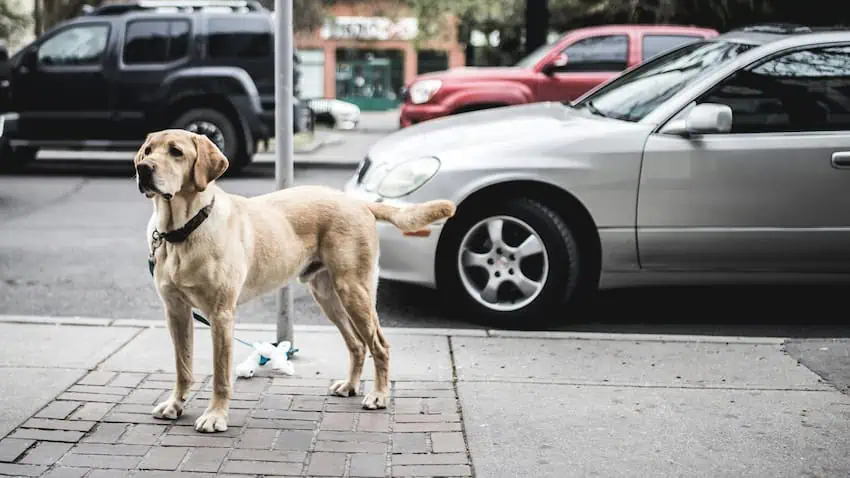
Even so, I would not dream of letting her wander off-leash in a public place. Plenty of people, though, do — hence my conflicts with strangers. Most of my fights with other dog owners have been because they let their own dogs off-leash. These dogs are usually about as well-trained as tantruming toddlers, and often run toward mine, barking and being generally aggressive. “Stoooop it!” they might whine at their dogs half-heartedly as I rush to scoop my dog up before their teeth meet her jugular.
And then it begins: me griping at them for not having their dogs on a leash, and them ignoring me, sometimes with a derisive laugh. “Señora histérica.”
Losing friends and not influencing people
I even lost a friend once because I told her it was her responsibility to get her wandering dog fixed before it was her neighbor’s responsibility to keep her own dog inside.
Really, what is it with people?
Sigh.
My own base assumption, therefore, is this: the general public cannot be trusted to be considerate of other dogs or people when it comes to their own animals.
Business owners know this and keep strict rules about their acceptance of dogs or pets. Many cafés, for example, will only accept dogs on a leash and only allow them at outside tables. This is smart. The idea is to make sure the presence of one’s dog is a privilege, not a right, and one that can be taken away if it bothers workers or other guests.
OMG: Dogs at the mall
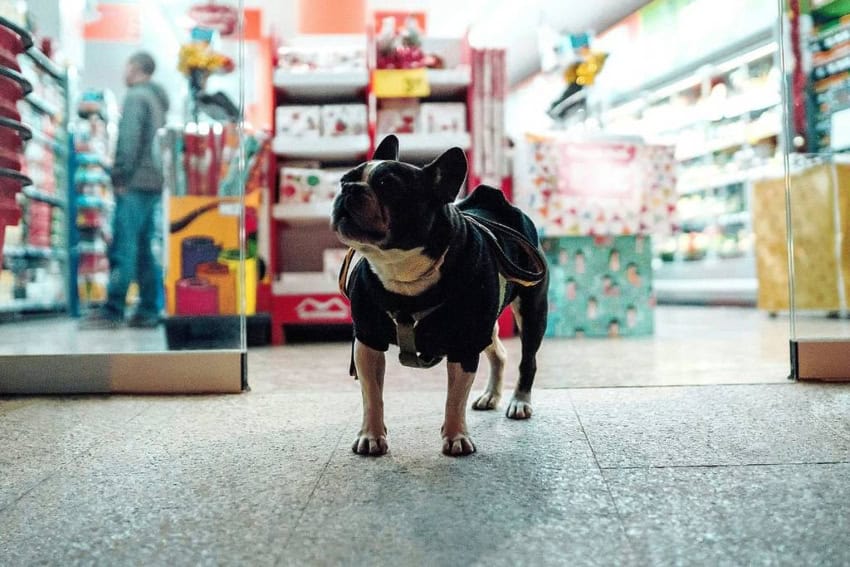
So imagine my surprise when I began seeing, on a regular basis, dogs at the mall. Inside.
Usually, the dogs are small. Occasionally, they’re in a stylish bag or even a stroller, but more often than not, they’re simply being walked on a leash. Again, inside.
Now, don’t get me wrong: I love dogs. I’ve pretty much always had a dog, and I probably always will.
But part of caring for one’s dog is not jumping to the conclusion that every other person you come across will also love and be good to your dog. You’d think that fact alone would make people think twice about walking them in a crowded mall. What if someone kicks them? What if someone scares them, or rushes at them and gets bitten?
What if someone’s allergic and has to simply go home because you won’t? What if the dog suddenly darts to the side and someone trips over its leash and hurts themselves?
What if the dog pees on the floor (because what choice would it have?)? Do dog owners come armed with paper towels, trash bags and Fabuloso in a spray bottle? I mean, dogs are mostly angels, but they’re gross angels. Peeing is literally their handshake and their signature. Dog gods forbid a bunch of dogs start “marking” in the same spot.
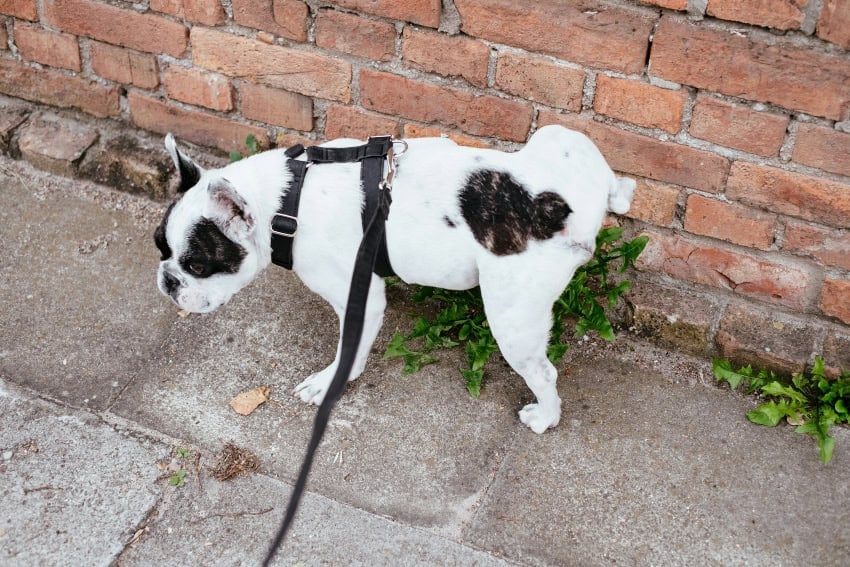
Gross.
Consider the perspective of dogs
Then there’s the dog itself to think about: an outing to the mall with their owner is most likely not the fun, carefree experience they think it is. Dogs get stressed easily, especially when surrounded by an assault of new people, smells and seemingly endless space. Most of the ones I’ve seen in the malls look downright terrified, jumping at every new sound.
I don’t even want to know what happens if two people walking their dogs at the mall run into each other. With all these dogs suddenly appearing in places that were not built for them, there’s bound to be trouble.
But more than anything, I’m simply flabbergasted that anyone thinks it’s a good idea to take their dogs everywhere with them.
Mexico has come a long way over the past few decades when it comes to how they treat their animals. When I first arrived, pretty much everyone kept their dogs on their roofs or on their patios. They were for keeping places safe, much more than for the emotional comfort of their owners.
Mexico is changing fast when it comes to dogs
I should have guessed how much was changing when the first Petco came to town and actually stayed in business.

The concept of perrijos is now a familiar one — a combination of the words perro and hijo (“dog” and “son or daughter”).
It works because dogs can be super annoying, the same way other people’s kids can be super annoying. And “dog parents” can be just as inconsiderate about letting their animals terrorize a space the way regular parents allow their kids to do.
The difference, of course, is that we’re all collectively training kids to become part of civilization. It’s part of our job as a society.
It is not part of our job to help socialize one’s dog, especially in a place not made to accommodate them.
Remain calm … for now
So why am I suddenly seeing dogs at the mall?
Partially, I believe, it is that people like to see what they can get away with, and then keep doing it if they can. Having gotten away with it before becomes a justification for continuing a behavior. “But I brought my dog here last month and no one said a thing!”

I’ve been looking for information, actually, on whether or not the malls in my city are pet-friendly, and it’s inconclusive. AI says they are, but it’s drawing information from other places, not where I’m looking. And at a mall, who’s stopping people at the doors?
For now, I’m trying to remain calm as I wonder what went wrong. Did the isolation of the pandemic make us forget how to be considerate of others? Do people simply sense the world is falling apart and they’re going to do what makes them happy, other people be damned? Are we becoming the absolute opposite of Japan?
It’s hard to say. For the moment, I’ll simply leave you with a simple plea: for the love of Dog — leave your furry friends at home when you’re going to the mall!
Sarah DeVries is a writer and translator based in Xalapa, Veracruz. She can be reached through her website, sarahedevries.substack.com.
How safe really is Mexico for expats? A message from Travis Bembenek, CEO of Mexico News Daily
The first quarter of 2026 is over, and the team at MND is very proud of what we have accomplished so far this year. Before I get to something I genuinely need your help with, let me share one number that stopped me in my tracks this week.
In the first three months of 2026, MND’s website, YouTube channel and social media platforms combined for over 10 MILLION reads and views. To put that in perspective, that’s a 10X increase in our reach since my wife and I acquired MND three years ago. Our goal from Day 1 was to reach 10 million people per month — and we are well on our way to hitting it. Thank you for supporting our independent, advertisement-free, agenda-free news platform.
Now — here’s why I’m writing today.
You’ve been asked the question by family and friends. You know the one. Do you feel safe living in, traveling to, or doing business in Mexico? For me personally, it is the single most common question I get asked. I’d be willing to bet it’s the same for you. Think about your own experience — has it come up at dinner tables, on phone calls, in text threads with worried relatives?
And here’s the question I keep coming back to: Would those same people ask you that if you lived in France? Or Italy? Almost certainly not. In fact, not long ago, a friend from Israel told me that even as conflict consumed the Middle East region, his friends kept asking him if he felt safe living in Mexico. Let that sink in for a moment.
So why does Mexico have this narrative? I think it comes down to two things.
First — Mexico does have elevated crime rates in certain cities and states. That’s real and it deserves honest acknowledgment. We at MND have never shied away from covering it, including our coverage of the fall of El Mencho in February, when foreign headlines ranged from alarmist to outright fabricated — including AI-generated images of burning airports that never happened.
Second — and this is where it gets frustrating — international media consistently and selectively focuses on violence in Mexico while often stripping away the context. The result is that millions of people carry a mental picture of Mexico’s safety that bears almost no resemblance to the lived experience of the people actually here. This is, in fact, the reason my wife and I bought Mexico News Daily in the first place. As I wrote in 2024, many media outlets have abandoned impartial coverage in favor of sensationalist stories and opinion masquerading as news. Mexico has been one of the greatest victims of that trend. And as Charlotte Smith wrote powerfully on MND just weeks ago — after watching lies outpace truth on social media in real time — “you don’t get to lie about my home.”
The Mexican government publishes detailed crime and safety perception statistics — but logically and understandably, the focus is on Mexicans living in Mexico. But what about the 2 million-plus expats who call Mexico home? What about the 30 million-plus foreigners who visit each year? What are their real risks? What do they actually perceive? Where are those risks highest — and what does daily life genuinely feel like for the people living it?
Nobody was systematically answering those questions. Until now. MND is launching the MND Expat Safety Perceptions Index™ — a quarterly survey conducted exclusively with expats, immigrants, and foreign nationals living in Mexico. Every quarter, we’ll ask the same questions to thousands of expats living across the country, then analyze and publish the findings as a formal, citable index. This is the kind of fact-based, context-rich resource that I believe the expat community has needed for years — and that the broader conversation about Mexico desperately lacks.
Here is what this will give you:
- Real data on what expats across Mexico are actually experiencing and perceiving — not what headlines say, not what government surveys of Mexican citizens show.
- City-by-city breakdowns so you can see how your community compares to others.
- Trend tracking over time — so we can all see whether things are genuinely getting better, worse, or staying the same.
- A fact-based resource you can share with worried family and friends — something credible to point to when the question comes up at the next dinner table.
But this only works if you participate. The more expats we hear from across more cities, the more powerful and representative this index becomes. And it takes you less than 5 minutes, four times a year.
If you are an expat, immigrant or foreign national living in Mexico:
CLICK HERE TO JOIN THE MND Expat Perceptions Index SURVEY PANEL — THE FIRST SURVEY GOES OUT NEXT WEEK
(It’s anonymous, takes under 5 minutes, and you can opt out at any time.)
And one more request: Please share this column with expat friends living in Mexico. The strength of this index is directly proportional to how many voices it includes. Your network will help make this index truly representative of the expat experience nationwide.
I’ve spent nearly 30 years living, working and building things in Mexico. I started a podcast named “Confidently Wrong” precisely because I’ve watched smart, well-intentioned people be confidently, completely wrong about this country — about its cities, its people, its risks and its rewards. This is our most direct attempt yet to replace confident wrongness with something better: real data from real people living real lives here. As I noted when examining the narrative being pushed around cartel violence, mainstream media continues to make Mexico sound more dangerous than it is — and in an era where AI can fabricate images of burning airports and deepfakes can manufacture “eyewitness” video of events that never occurred, the only reliable antidote is hard data collected from real people on the ground.
Imagine a world where the conversation about safety in Mexico is actually grounded in reality. A world where your family and friends asking “But is it safe?” can be pointed to hard data from thousands of expats, instead of an influencer looking for clicks.
Thank you for reading MND — and for helping us build something that will benefit every expat in this country, every future expat considering the move, and Mexico itself.
Travis Bembenek is the CEO of Mexico News Daily and has been living, working or playing in Mexico for nearly 30 years.
Campo Alto at Querencia: How a golf course is built in Los Cabos

Great golf courses are years in the making. That was certainly the case with the first golf course at Querencia in Los Cabos, Campo Bajo, which opened to acclaim in 2001, thanks to the first international design from legendary course architect Tom Fazio.
“Once I experienced this land, I knew it was an extraordinary setting for world-class golf,” Fazio told Golf.com in 2019. “I’ve designed the course to maximize views of downtown San José del Cabo and the Sea of Cortés and provide a fair balance of risks and rewards.”
Golf Digest agreed when it declared Campo Bajo No. 73 of the World’s 100 Greatest Golf Courses for 2022-2023, noting that the routing “wanders the rugged terrain and low-growth vegetation of a high desert plateau above the Sea of Cortés. Holes jump across or sidle up to the edges of rocky canyons and arroyos, with rippling, humpbacked fairways and a number of greens tucked behind stone outcroppings.”
By then, however, another course was also under construction at Querencia, and it too has now been years in the making.
The differences between Campo Bajo and Campo Alto
When I recently visited Campo Alto, the course, as one might imagine, given its expected opening by the end of this year, was a hive of activity. Some 80 or so workers swarmed across the property, busying themselves in projects large and small with a bewildering variety of machinery. The first 13 holes on the course have already been grassed and look almost ready to play. Not so the five dramatic finishing holes, which are still very much a work in progress.
Given Campo Bajo’s world-class reputation and Tom Fazio’s return, one might think that Campo Alto will be something of a sequel. But that was never the plan. While Campo Bajo is immaculately landscaped, from its colorful bougainvillea to the palm trees that artfully frame many greens, Campo Alto will showcase more of the natural sweep of Baja California Sur terrain, including voluminous elevation changes, as the course winds through ridgeways, valleys and canyons.
What sets Campo Alto apart
According to Fazio, Campo Alto will also be more of a second-shot golf course than Campo Bajo, with smaller and less undulating greens. Even the grass will be different. Campo Baja has, since its 2018 renovation, featured Tifgreen 328 Bermuda for its fairways, TifEagle Bermuda on the greens. These are excellent fine-textured choices, but Campo Alto’s Bermuda TifTuf, a hybrid developed in 2014 at the University of Georgia, has an even better sustainability profile and requires significantly lower water usage.
The two courses do have commonalities. Where the water comes from, for example. Querencia has an agreement with the city of San José del Cabo to receive its gently used wastewater, which it then filters and recycles as “greywater” for irrigation. So there are no demands on local water resources from Campos Alto or Bajo.
Each course also boasts spectacular ocean views. Campo Bajo, famously, has ocean views from every hole on its front nine. Campo Alto, meanwhile, promises jaw-dropping vistas of its own.
2022
How does one start work on a golf course in Los Cabos? The team at Querencia began the process for Campo Alto in early 2022, when it hosted Tom Fazio and his team for the initial site visits and the development of a routing plan.
“What I really do is to first analyze whether a piece of land is good or bad,” Fazio said of this initial phase in an interview with Cigar Aficionado. “I don’t immediately see golf holes with bunkers, greens, etc. Instead, I see a piece of paper that has natural contour lines on it, that has restrictions, property lines on it; then I start to think, ‘Where do the holes go? If they have elevation, valleys, how should they be sculptured, and where should the green settings or tees be?’ Determining where holes fit the best is easy, like breathing to me. I just do it, for it’s life, living, surviving.”
2024
The land for Campo Alto, like that at Campo Baja — sourced from the 2,000 available acres at Querencia, just outside San José del Cabo — is extraordinary. However, work could not begin in earnest until the permits were approved, which happened in early 2024. With this crucial stage completed, heavy machinery was purchased and the routing and irrigation plans finalized as clearing began. Then came the heavy earthworks, moving and shaping the landscape to bring Fazio’s vision to life.
“On every hole, you want people to say, ‘Wow, I can’t wait to play this,’” Fazio enthused to Golf.com in 2024. “And when they’re finished, you want their first thought to be, ‘Can we go play again?’”
2025
In addition to grassing the first nine holes, drainage and irrigation works began in early 2025. They wouldn’t be complete until a year later. Part of this process was the pump station start-up, which can pull from water stores and push water through the network of pipes to any part of the golf course. This crucial step was accomplished at Campo Alto in July 2025.
2026
More remains to be done before Campo Alto opens later this year. Irrigation and drainage works have to be completed, the final five holes have to be grassed (which they will be in May), and numerous details and finishing touches have to be added — including the comfort stations, a Los Cabos specialty.
Once all the work is finished and Campo Alto at Querencia is ready, then it can start earning its own acclaim. The first and most important part of this is winning over Querencia residents, who now have two courses on-site to choose from. That should be easy.
“Because there are a lot of elevation changes through valleys and ridges, there is a lot of movement to the land and natural definition to the holes,” Fazio explains. “That creates interesting drama and variety.”
In fact, the new course is sure to attract new residents to the private master-planned community, including at the 54 new homesites in La Cresta, which feature striking ridgeline views of Campo Alto as well as the picturesque surrounding landscape.
Step two is garnering the good opinion of the golf world at large. Links Magazine has already named Campo Alto one of the top international course openings for 2026. More raves are sure to follow.
“As an architect, you never want to repeat yourself, and we haven’t here. The common denominator is the ocean. That’s what’s really special.”
Chris Sands is a writer and editor for Mexico News Daily, and the former Cabo San Lucas local expert for the USA Today travel website 10 Best and writer of Fodor’s Los Cabos travel guidebook. He’s a contributor to numerous websites and publications, including The San Diego Union-Tribune, Marriott Bonvoy Traveler, Forbes Travel Guide, Porthole Cruise and Travel, and Cabo Living.


The Holy Week tradition that keeps Mexican residents united in San Miguel de Allende
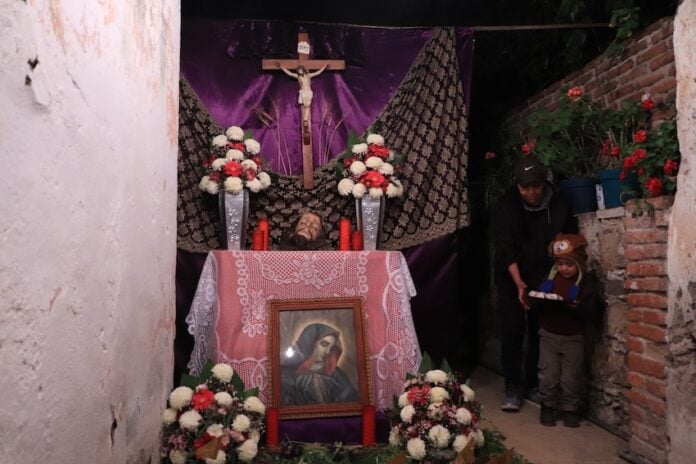
Each year, at the beginning of Holy Week, the homes of San Miguel residents get ready to open their doors to visitors on the day known to Catholics as the Friday of Sorrows, or Viernes de Dolores. On this day, two days before Palm Sunday, the scent of chamomile mingles with that of tuberoses and the white and purple flowers that decorate the altars.
At the center of each display — carefully assembled by the families — stands the image of Our Lady of Sorrows, the undisputed protagonist of this celebration.
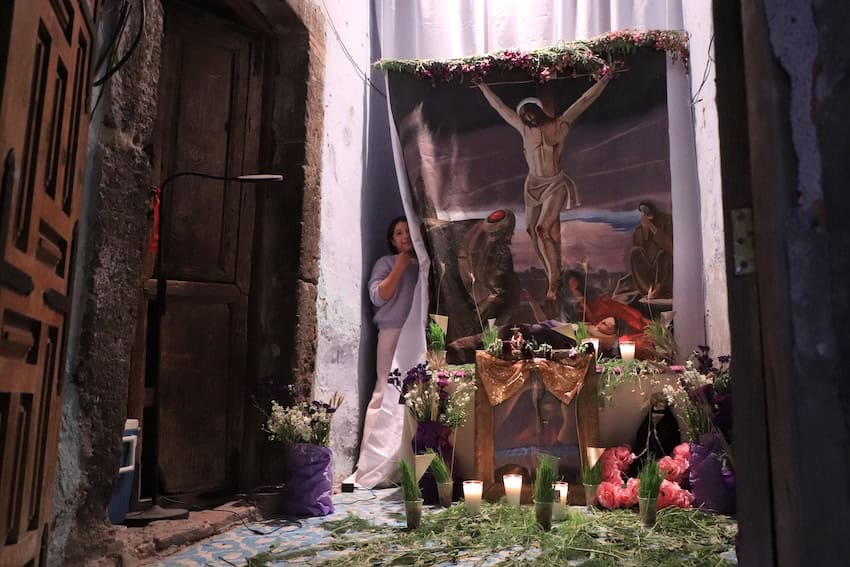
A tradition binding a displaced community
In the afternoon, neighbors go out to walk the streets, visiting house after house to admire the altars. In exchange for their visit, they receive a refreshing treat: a glass of flavored water, a popsicle, an ice cream cone, a piece of candied chilacayote squash, or a delicious capirotada bread pudding. In this way, Friday of Sorrows becomes not only an act of faith, but also a ritual of togetherness that has kept San Miguel families united for generations.
For as long as I can remember, this has been one of my favorite traditions. At first, I was excited about the idea of collecting popsicles for every altar I visited. Over the years, however, I learned to appreciate its mystical essence: the warmth of the candles, the fragrance of the flowers, the songs playing over the loudspeakers and that unique feeling of being invited into the intimacy of a neighbor opening their home to you.
Today, the tradition faces new challenges: Rising housing costs, tourism and gentrification have displaced many San Miguel de Allende families from the downtown area and, with them, part of Holy Week’s original spirit.
Although some houses — such as those on Aldama, Terraplén, or Tenerías streets — still preserve the magic, other emblematic ones, like that of the Dobarganes family — which had their altar in the patio of their house on Correo and Recreo, with its famous hand on the door — are now hotels that no longer set up their altar.
This year, the atmosphere changed even more with a salsa show organized in the city’s main plaza, the Jardín Principal, breaking with the calm and mysticism that characterize the Friday of Sorrows. While tourists enjoyed an ordinary Friday in San Miguel, locals tried to find their identity amid the hubbub.
And then an inevitable question arises: how can we keep this tradition and its deeper meaning alive? To understand this, I spoke with Francisco Mota, creator of the page Memoria San Miguel, who completed a graduate degree in Territory, Tourism and Heritage at Benemérita Universidad Autonoma de Puebla and is a San Miguel de Allende native. He shared with me the history, the symbols and the value that this celebration holds for the community.
What is the Friday of Sorrows?
Viernes de Dolores (Friday of Sorrows) is a Catholic tradition that recalls the seven sorrows suffered by the Virgin Mary during the passion and death of Jesus Christ. Celebrated on the Friday before Palm Sunday, it marks the beginning of Holy Week in the liturgical calendar. This practice arrived in Mexico during the Viceregal period and took root especially in the central states — Guanajuato, Querétaro, Aguascalientes, Tlaxcala and Jalisco — while also remaining very strong in regions of Oaxaca and Chihuahua.
In San Miguel de Allende, the tradition has been documented since the 18th century, when the city was one of the main textile centers of New Spain and Our Lady of Sorrows was named patron saint of the weavers’ guild. It is no coincidence that the chapel of Our Lady of Sorrows is located precisely in the old neighborhood of shawlmakers and cambaya weavers, which extended around Barranca Street.
According to Mota, the altars for Viernes de Dolores have preserved their essential elements, although they have also incorporated new ones in recent decades. A distinctive hallmark of San Miguel is its use of “carpets” made of thousands of aromatic herbs in altars and processions. Relatively recently, if we consider that this has been a living tradition in the city for three centuries, carpets of painted sawdust have also been added.
Our Lady of Sorrows’ altars: Each detail a symbol
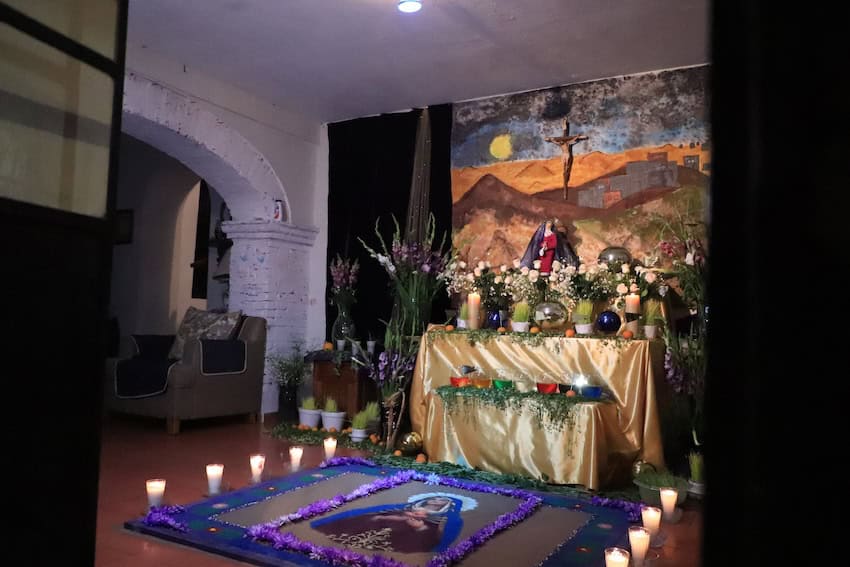
Our Lady of Sorrows is the main figure of the altar. This is an image of Mary dressed in mourning, wearing a blue or purple mantle and a sorrowful expression and, often, bearing one or seven daggers that pierce her heart, symbolizing the sorrows that accompanied the passion of Jesus. This imagery was very widespread in the 18th-century Hispanic world.
The altar is set on a table covered with a cloth and enriched with a series of symbolic elements:
- Bitter oranges with little flags of golden paper allude to Mary’s heart pierced by bitterness.
- Wheat sprouted in the dark, which must appear yellow, represents Christ as the hope of life and resurrection.
- The purple color in cloths, backdrops and papel picado expresses mourning and penitence. In San Miguel, the use of carpets made of chamomile, fennel and mastranto — aromatic and medicinal herbs that fill the space with fragrance — is also typical.
Finally, the altar is lit with candles or votive candles, a metaphor for the light of faith that accompanies sorrow. The altars are opened to the public in the afternoon of the Friday before Palm Sunday. Hosts offer a glass of fresh water, ice cream, an ice pop, capirotada or candied chilacayote — small delicacies that transform Mary’s sorrow into shared sweetness.
Tourism, gentrification and displacement
Viernes de Dolores is, above all, a popular and domestic celebration: It survives wherever the families of San Miguel live. Each altar reflects the personality of a household and the fabric of a neighborhood.
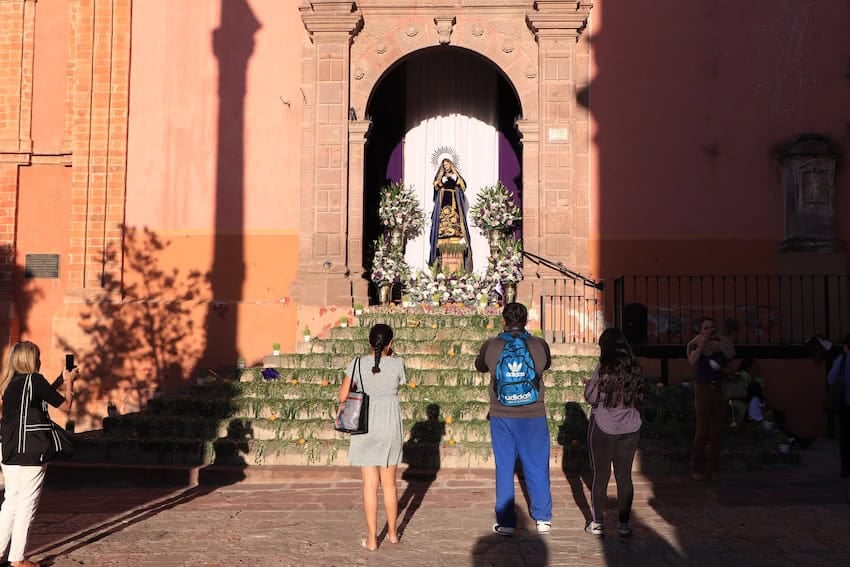
As San Miguel’s Historic Center has emptied of residents and is increasingly oriented toward tourism and short‑term rentals, home altars have decreased in this part of the city. Many of the most beloved ones now persist only in memory. However, the tradition does not disappear: It moves.
In recent decades, altars have flourished in neighborhoods outside the city center, such as Guadalupe, San Antonio, San Rafael and Infonavit Allende. Viernes de Dolores moves with its people and seeks new spaces where it can take root once again.
Viernes de Dolores offers anyone the chance to experience San Miguel in a hospitable, family atmosphere. Opening one’s front door to strangers and offering them something to eat or drink, without expecting anything in return, is a simple gesture that reminds us how urgent it is to trust one another, to weave bonds with our neighbors, to acknowledge each other and greet each other.
It also invites us to look back and acknowledge the work of the wool and cotton weavers who gave renown and prosperity to this viceregal city. Without their craft, the architectural beauty of San Miguel simply would not exist as we know it.
Today, few of these artists remain, and it is urgent to create spaces where their guild is recognized as one of the fundamental pillars of the city’s history.
What the day represents
Residents preparing San Miguel de Allende’s streets with colorful carpets of flower petals, sawdust and other materials last week in the city center, in honor of Viernes de Dolores. (Siente San Miguel/Facebook)
In many cities, traditions like Viernes de Dolores survive only behind museum glass. San Miguel de Allende, by contrast, still celebrates its traditions in the streets, in patios and in living rooms, with festivities that are two, three or even four centuries old.
This speaks to the deep roots of its inhabitants and to a capacity for resilience that has carried them through wars, epidemics, droughts, migration and crises that at various points nearly turned the town into an empty place. Keeping these practices alive is not just a matter of nostalgia: It means caring for a community network, a tradition that has allowed the city to rise again and again.
“Setting up the altar means continuing a chain of family memory. It means preserving a custom that my mother, Guadalupe, instilled in me when I was a child and that she, in turn, learned from aunts and grandmothers who lived on Loreto and Barranca Streets,” said Mota. “As I prepare the altar, I remember the afternoons when I helped her; although she is no longer here, I feel her presence among the flowers, the scents of the herbs and the wax sculpture she commissioned for our home.”
Tourist cities like San Miguel de Allende run the risk of sacrificing their identity in exchange for pretty but empty backdrops, designed for the perfect photo rather than for everyday life. When traditions are shaped only to please visitors, they cease to be community rituals and become mere scenery.
This phenomenon is not unique to San Miguel: it is repeated in many destinations around the world. That is why, faced with the city’s enormous popularity, the community must remain firm in protecting what makes it unique and what, paradoxically, is what attracts those who choose to live here.
In times marked by media saturation, war, climate crisis, political uncertainty, the irruption of artificial intelligence and an excess of digital life, it is vital to have real spaces in which to disconnect from the noise and return to what is essential. Traditions like Viernes de Dolores offer exactly that: a reason to go out into the street, look others in the eye, share food, stories and silences. Ultimately, they are a way to remember that we are not alone.
Voir cette publication sur Instagram
María Ruiz is the Director of Digital Marketing at Mexico News Daily. She enjoys photographing her hometown of San Miguel de Allende in her spare time.
Dueling skyscrapers: Monterrey’s Torre Rise will soon pass the T.OP Tower 1 as Mexico’s tallest building
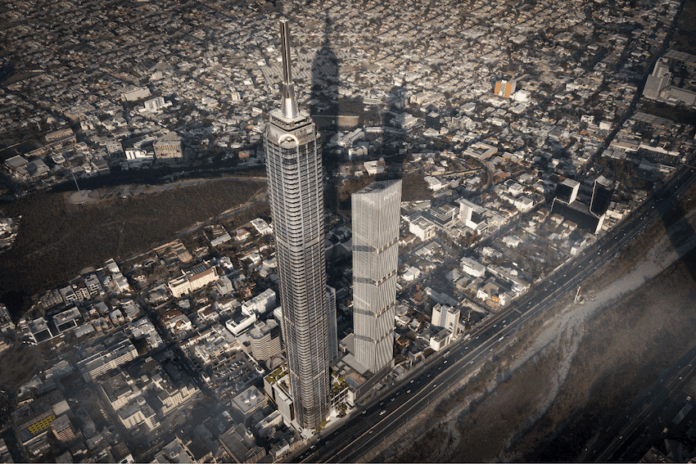
Three years and nine months after its builders went to work, the under-construction Monterrey skyscraper known as Torre Rise has reached the height (305 meters) of its established neighbor, the T.OP Tower 1, until now the tallest building in Mexico.
To the naked ground-level eye, the two towers appear equal in height for now, rising parallel to each other over the western part of the Nuevo León capital.
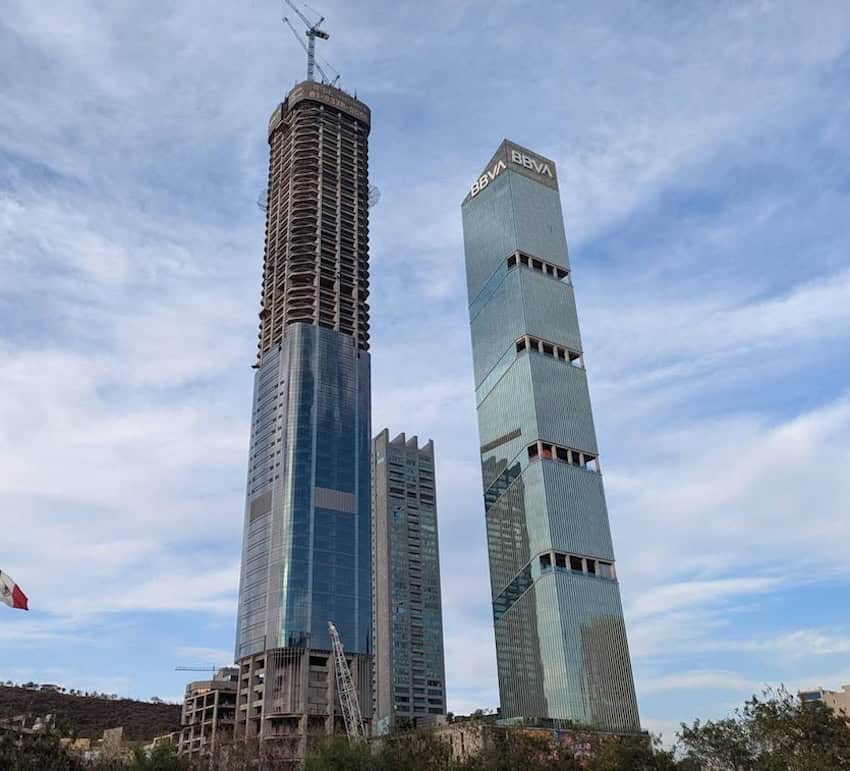
Torre Rise, being built alongside its rival as though in planned competition, will become the tallest skyscraper in Mexico and Latin America, its projected 101 stories and 484 meters leaving T.OP Tower 1 far below, and making it the second-highest building in the Americas (behind One World Trade Center in New York City) and the 13th-highest in the world.
Currently, the two towers (both developed by the same consortium) dominate the urban landscape of the Nuevo León state capital, competing with the Cerro de Obispado, the landmark hill in the middle of the city that houses the 18th-century Bishopric Palace.
Construction of Torre Rise, which began in May 2022 as a private investment project, is expected to be finished before the start of the 2026 FIFA World Cup, an event for which Monterrey will serve as a host city beginning with the June 14 Sweden-Tunisia match.
The new tower — being built by Nest development group and designed by architect Esteban Ramos of the Ancore Group — will consist of a hotel with 10 floors, 40 floors of offices and 20 floors of apartments. It will also feature an observation deck, a restaurant, a space for cultural exhibitions, two floors of shops and 14 floors of parking.
The Torre Rise is being touted as a symbol of competitiveness, capital attraction and urban modernization. It is hoped that the new tower will have a direct impact on attracting real estate investment, generating employment and enhancing Monterrey’s international profile.
“It signals a shift toward high-density, sustainable growth in Monterrey, driving economic opportunity and city-center repopulation,” a Nest spokesman told the digital magazine Dezeen.
Last year, Nuevo León Governor Samuel García posted on his Facebook page an animation of how the new, rectilinear skyscraper will look.
With reports from El Norte, Lider Empresarial, Top Seven and Dezeen
Mexico rejects UN findings that country’s enforced disappearances are crimes against humanity
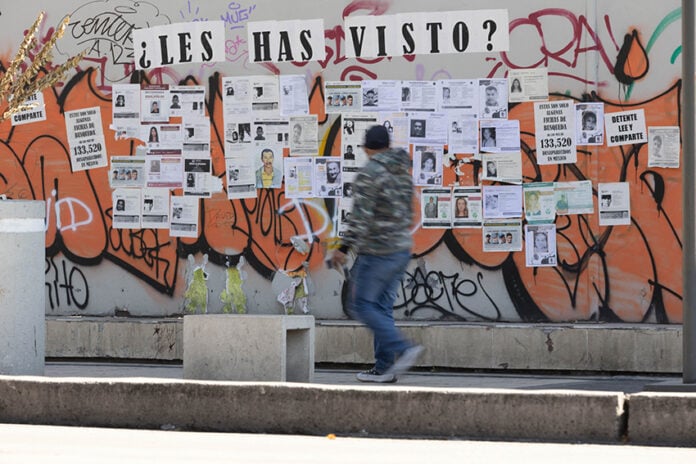
Mexico is pushing back against a U.N. report that asks the General Assembly to examine the situation of forced disappearances in the country, concluding that crimes against humanity have been and continue to be committed here.
The U.N. Committee against Enforced Disappearances said it has “well-founded indications that … multiple widespread or systematic attacks against the civilian population have taken place at different moments and in different parts of the country.”
In an unprecedented move, the committee requested that U.N. Secretary-General Antonio Guterres “urgently refer” the issue to the General Assembly so that it may consider measures to support Mexico in the prevention, investigation, punishment and eradication of this crime.
The Mexican government issued a statement strenuously rejecting the findings, describing the committee’s resolution as “biased” and lacking legal rigor, while also insisting it ignored “the institutional progress achieved since 2019.”
Almost immediately thereafter, human rights activists and relatives of the disappeared condemned the official response, demanding that the government accept international aid to face a crisis that has resulted in more than 132,400 missing persons in Mexico, more than 4,500 clandestine graves and nearly 72,000 unidentified human remains.
The committee report does not seek to establish individual criminal responsibilities, but instead issues an urgent call for technical and financial cooperation for forensic and search work.
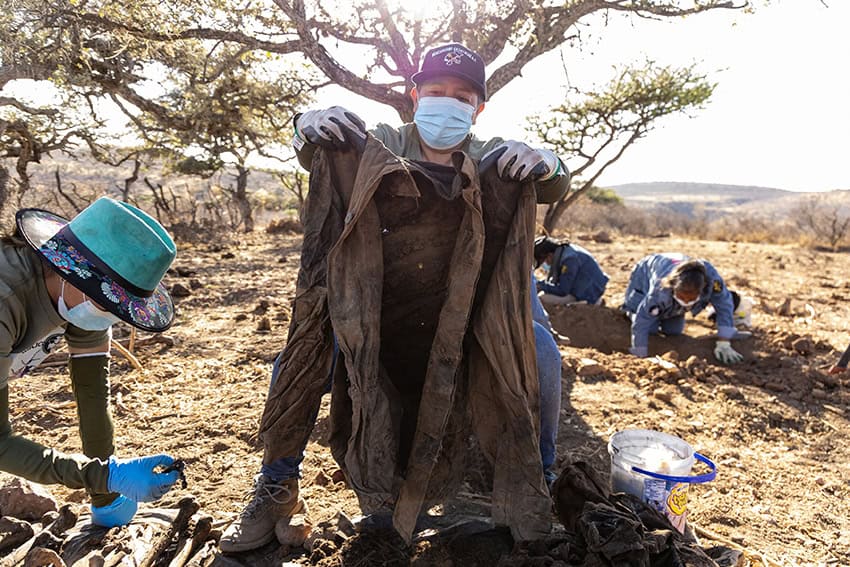
While asserting that its report is informed by more than a decade of monitoring and contributions from civil society, the U.N. clearly states that it found no evidence of a deliberate federal policy to commit disappearances.
Even so, it provides considerable documented evidence of regular patterns of disappearances perpetrated by organized crime with the direct participation, support or acquiescence of public officials at the municipal, state and federal levels.
“Authorities remain overwhelmed by the scale of the crisis,” it said, suggesting that the virtually absolute impunity with regard to disappearances encourages the proliferation of these crimes.
In a joint statement issued by the Foreign Affairs and Interior ministries, the government rejected the report, saying it “failed to consider the observations, analyses and updates submitted by the government, which demonstrate that the arguments do not align with either the Committee’s own definition of enforced disappearance or the institutional progress achieved since 2019 and particularly since 2025.”
While acknowledging that the report mainly refers to events that occurred from 2009-2017 and is limited to four states, it called the committee’s decision “partial and biased.”
The joint statement claims that the committee refused to “study updated information before publishing its resolution” and also ignored new tools such as the National Search Alert, improvements to the National Forensic Data Bank and the creation of special prosecutors’ offices.
Signs of life found for 40,000 of Mexico’s 132,000 missing persons
Human rights groups and civic organizations were quick to decry the government reply.
In a social media post, the Centro Prodh, a prominent Mexican non-profit human rights organization, criticized the government’s condemnation of the report.
“We regret the State’s response to this determination … [which] does not rise to the level of the crisis the country is experiencing in terms of disappearances,” it said.
The rights group added that the government is “repeating previous actions by various administrations that have disparaged international organizations when they have revealed the reality of human rights violations in the country.”
The Jesuit University System also backed U.N. General Assembly involvement, saying in a statement that “[f]or years, there has been a profound crisis regarding the disappearance of people.”
Guadalupe Fernández, a member of the United Forces for Our Disappeared in Coahuila search collective, expressed sadness regarding the government’s response.
“You can see the intolerance, you can see the denigration of what is happening,” she told the digital news outlet Animal Político.
With reports from La Jornada, Proceso, Animal Político and El Universal
Highest housing prices in Mexico? That would be Mexico City, Baja California Sur and Querétaro
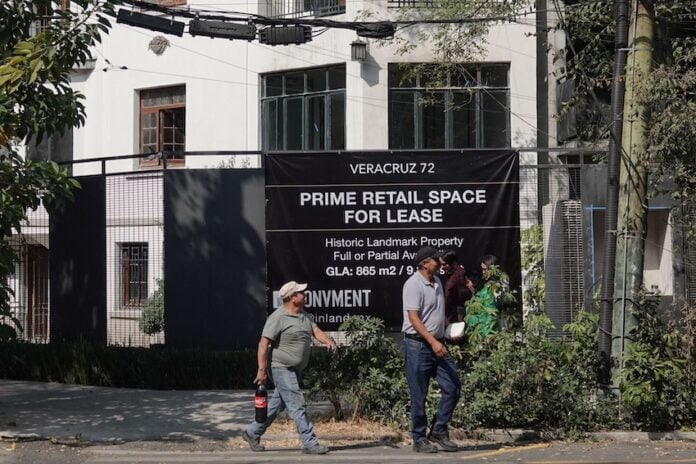
It should come as no surprise that the foundational real estate motto “Location, location, location” is just as valid in Mexico as anywhere else.
And the locations of the highest housing prices are Mexico City, Baja California Sur and Querétaro.
So says a survey of records compiled by the Federal Mortgage Society (SHF), a state-run development bank created in 2001 to boost the housing market.
It also confirmed that popular tourist hubs like Cancún, Los Cabos and Playa del Carmen tend to be more expensive due to high demand.
In a survey, the newspaper El Economista found that the average appraised value of a home in Mexico was 1.86 million pesos (US $104,323), whereas the average price of a house in the capital was more than double that at nearly 4 million pesos (US $222,088).
In Baja California Sur, the average hovered just above 2.5 million pesos (US $144,911) and in Querétaro it exceeded 2.3 million pesos (US $130,077).
The states of Yucatán and Nayarit — both featuring desirable beach locations — were also well above the average, with the former coming in at nearly 2.26 million pesos (US $126,000) and the latter just above 2.2 million pesos (US $124,339).
More moderate homes, with prices hovering just above 1 million pesos (US $56,000), can be found in the northern states of Tamaulipas and Durango, as well as to the east of the capital in the states of Tlaxcala and Veracruz (under US $72,000).
The Global Property Guide reported last month that “sales prices in the Mexican housing market exhibit a resilient but moderating growth trend,” attributing the affordability to a slowing economy and a gradually improving supply outlook.
El Economista found that 21 states registered increases above the average appraised value of a home in 2025. The Caribbean state of Quintana Roo showed the largest cumulative annual increase (14.3%), followed by Baja California Sur (12.9%) and Nayarit (12.2%).
Conversely, the most modest increases were those recorded in Durango (4.7%), Mexico City (4.7%) and México state (5.2%).
With regard to metropolitan areas, Guadalajara showed the biggest increase (11.3%), with Tijuana (10.6%) and León (10.1%) also surpassing double digits, with Monterrey (9.4%), Puebla-Tlaxcala (8.7%) and Querétaro (7.2%) rounding out the top five.
With reports from El Economista, Global Property Guide and Remitly
Iztapalapa’s 183-year-old annual Passion Play returns with its new UNESCO World Heritage status
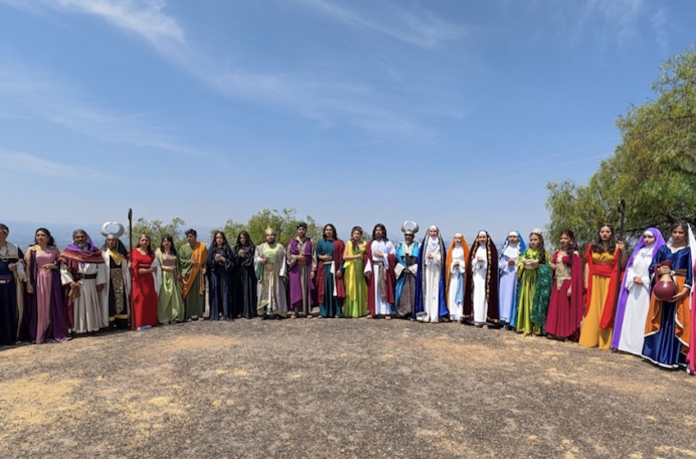
Mexico City’s biggest borough turned into a vast open-air stage Friday as Iztapalapa held its famous Passion Play for the first time since winning UNESCO recognition as a piece of world cultural heritage.
“It feels different this year,” local resident Juan López commented. “There are more people coming from outside, as if the news has opened the door to the world.”
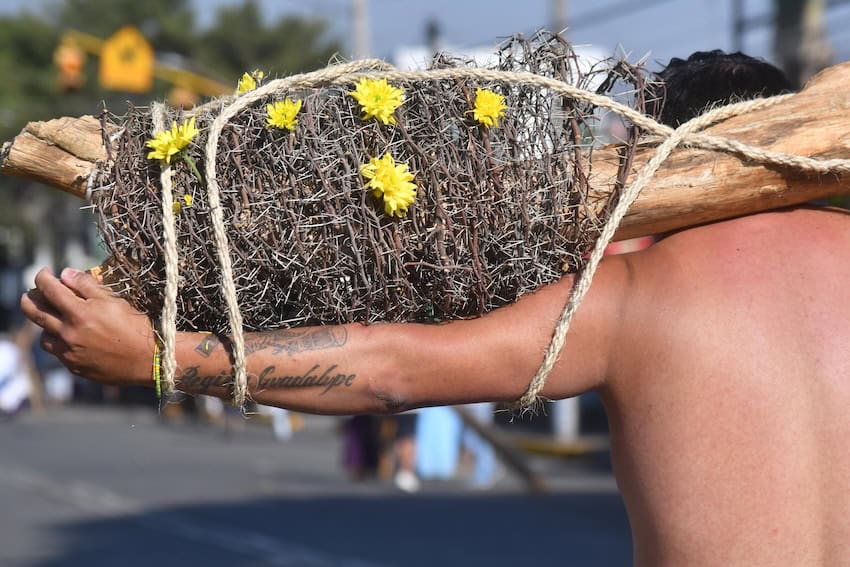
Iztapalapa, a densely populated, working-class area in the city’s east, hosts one of the world’s largest reenactments of Christ’s trial, crucifixion and resurrection.
The Holy Week play, now in its 183rd year, draws crowds that local officials say can top 2 million people over Good Friday.
UNESCO added the “Representation of the Passion, Death and Resurrection of Christ in Iztapalapa” to its Representative List of the Intangible Cultural Heritage of Humanity in December.
The designation recognizes the event as a living community tradition and highlights nearly two centuries of neighborhood organizing, faith and local identity.
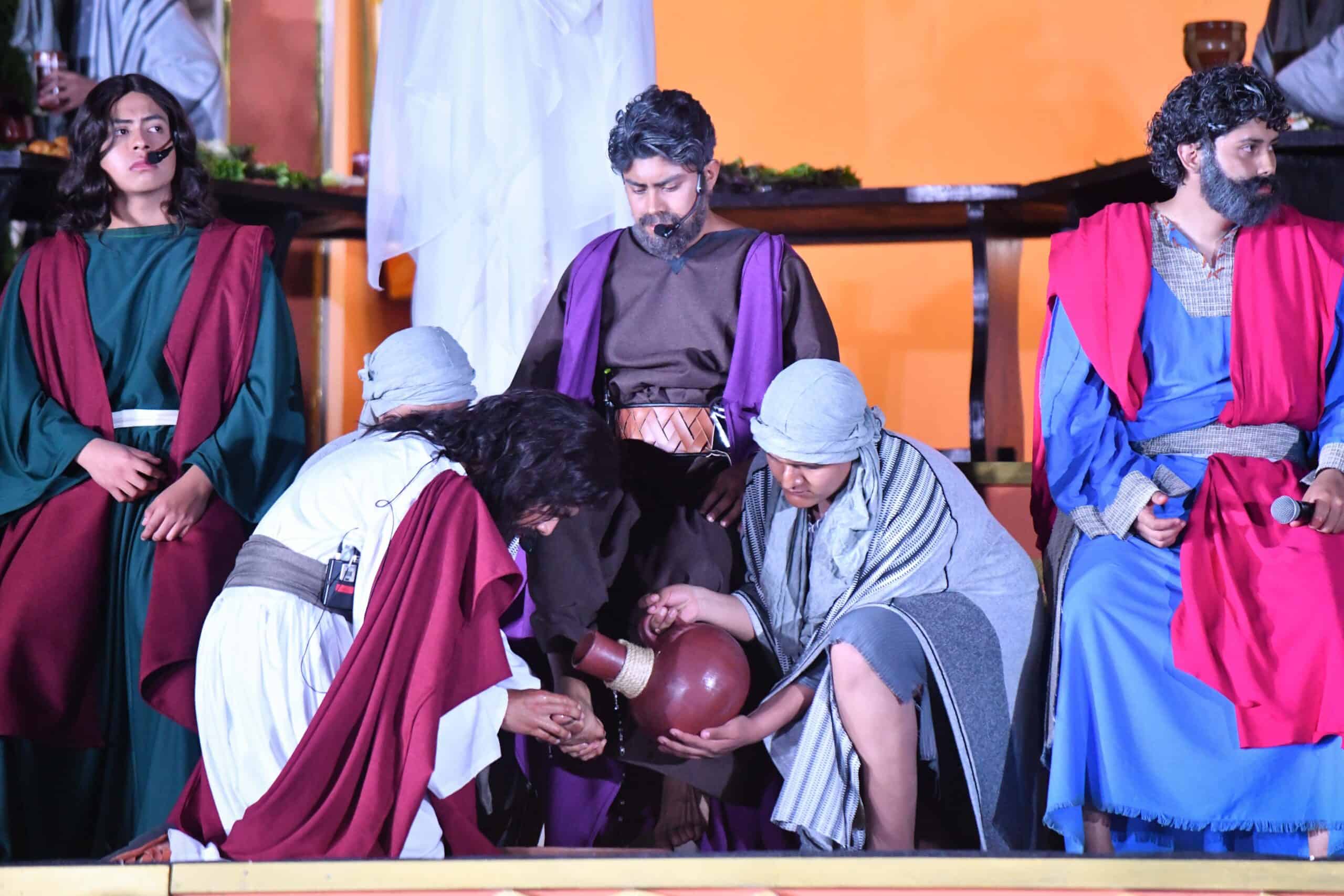
On Good Friday, streets fill with Nazarenes in purple robes, barefoot penitents and costumed Roman soldiers moving in a procession that covers more than 10 kilometers.
The route winds through Iztapalapa’s eight historic neighborhoods before climbing Cerro de la Estrella, a hill overlooking the borough that becomes a symbolic Mount Calvary for the crucifixion scene.
Portraying Jesus this year is 25-year-old Arnulfo Morales Galicia, described by the news source Infobae as a medical surgeon and a graduate of the National Autonomous University of Mexico (UNAM).
He was chosen after a demanding selection process that tests physical endurance, discipline and conduct. On Friday, he is actually bound to the cross for 20 minutes at around 3 p.m., said to be the time at which Jesus was crucified.
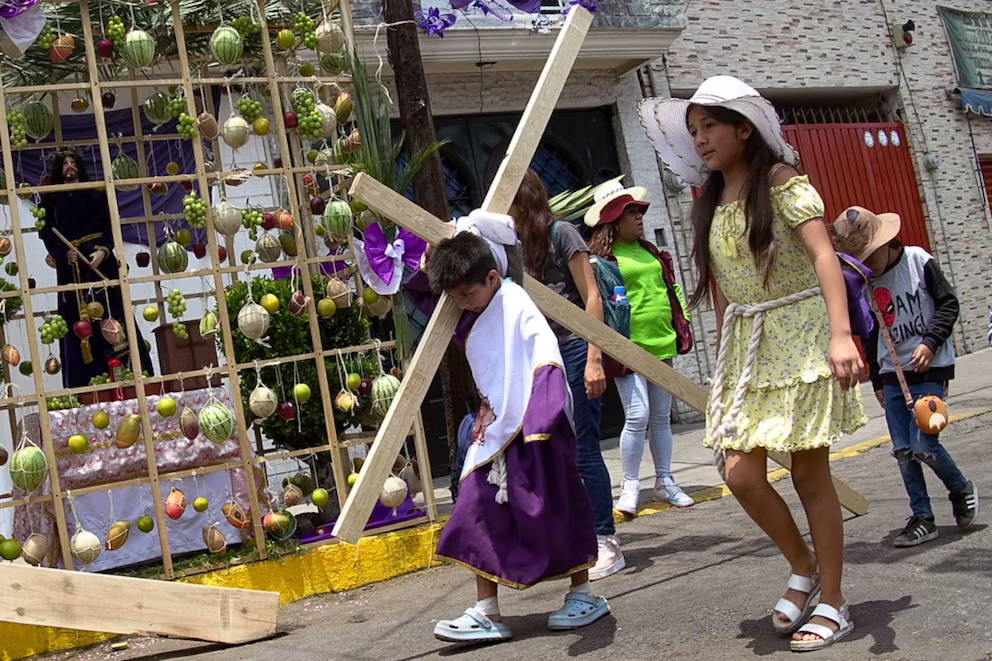
Actress Erika Morales Hernández has stepped up to play the Virgin Mary after last year portraying a different character, the play’s “adulterous woman.”
Both actors come from the borough and are part of a cast drawn from local families.
Mexico City authorities have deployed more than 9,000 police officers, along with paramedics, patrol vehicles and helicopters, and shut key avenues around the borough to manage the influx.
For residents, the new UNESCO label adds global prestige, but the core remains local: a promise made during a mid-1800s cholera outbreak that has grown into one of Mexico’s most emblematic Holy Week rituals.
The Passion Play runs across Holy Week, typically beginning on Palm Sunday with Jesus’s entry into Jerusalem, continuing on Tuesday and Holy Thursday, and peaking on Good Friday with the Via Crucis and crucifixion.
The narrative usually concludes on Holy Saturday (also called Black Saturday) with the resurrection and final curtain call — one day before Easter Sunday.
With reports from La Jornada, Infobae and N+
