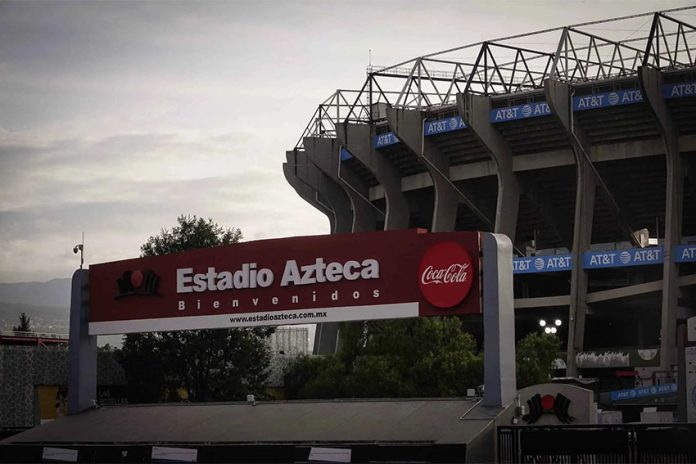
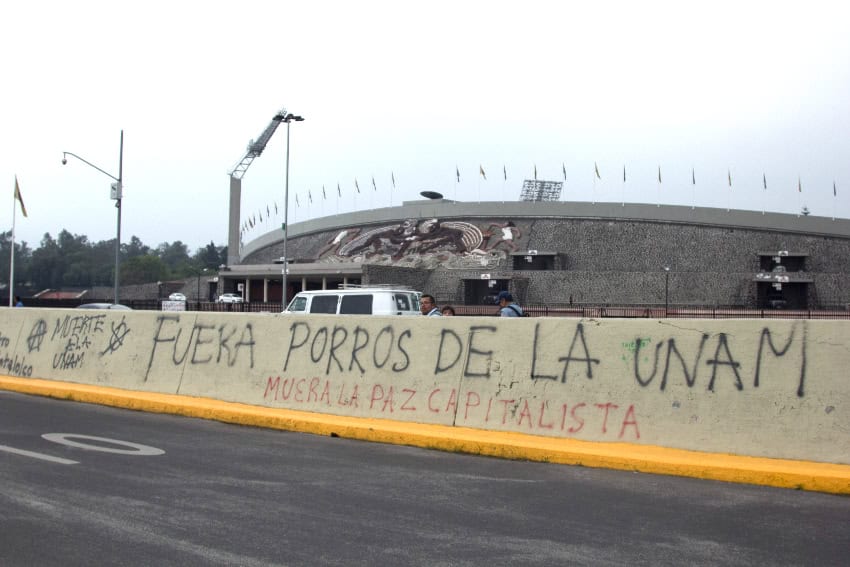
Mexico City's Azteca Stadium has found itself at the center of a World Cup 2026 controversy as box owners at the stadium said that they won't cede to FIFA's demand it sell their seats for World Cup matches being hosted there. (Rogelio Morales/Cuartoscuro)
In late March, the Sipse news agency revealed that FIFA — soccer’s world governing body — was disappointed with the pace of the required stadium renovations. One source claimed Azteca was six months behind schedule, in part because Club América resisted changing stadiums mid-season.
The stadium has hosted the World Cup finals twice, in 1970 and 1986. Azteca Stadium box owners say FIFA has never demanded their seats at these past events. Here, Brazilian soccer legend Pelé celebrates his team’s win at Azteca Stadium in 1970. (Wikimedia Commons)
This prompted speculation that Azteca Stadium could be replaced as a venue for the 2026 World Cup. The Cup will be hosted together by Mexico, the United States and Canada.
Now, this week, a new controversy has burst into full view.
FIFA typically demands full control of all World Cup stadiums, and for the matches that Azteca Stadium will host, an agreement was signed granting that power. However, an association of 134 box seat owners are determined to maintain access to their seats, claiming contractual rights.
The dispute is rooted in how the stadium’s construction was financed back in the 1960s. The Associated Press reported this week that “boxes were sold to private investors for 115,000 pesos” (about US $9,000 at the time), “giving the owners rights to use them for 99 years. That included access to soccer matches, concerts and other events, including the 1970 and 1986 World Cups in Mexico.”
The box owners formed their association about nine months ago.
Association spokesman Roberto Ruano recalls that the box seats were not an issue during the 1970 World Cup and that FIFA allowed box owners full access during the 1986 World Cup. Although he expects FIFA to respect the contracts, the Mexican Soccer Federation (FMF) has stepped in to act as an intermediary.
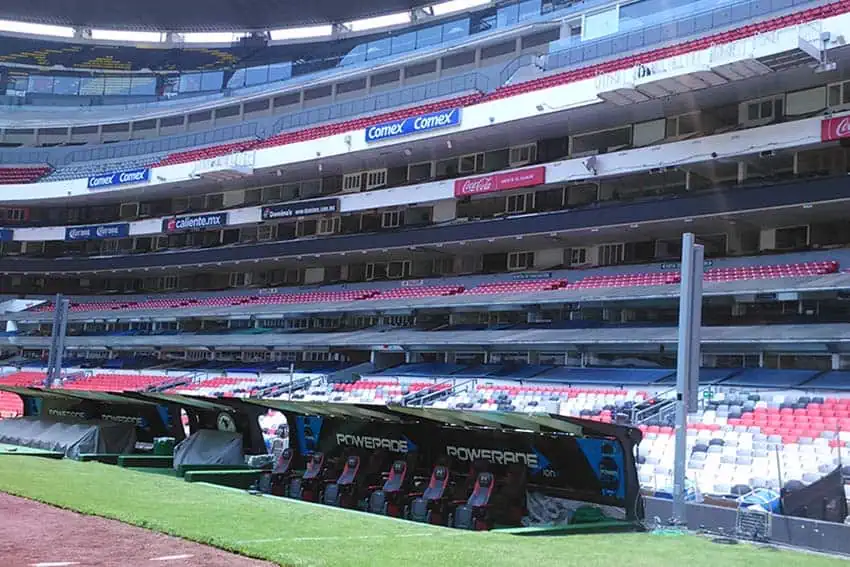
Azteca Stadium’s box seats (see top of photo) were sold to investors back in the 1960s when the stadium was built. They were given exclusive rights to the luxury seats for 99 years, including during World Cup matches. (Wikimedia Commons()
News magazine Proceso reported that former FMF president Justino Compean has been arranging compensatory payments to box owners that voluntarily cede control of their boxes. Ruano confirmed this but said that those owners are not members of his association.
Attorneys told Proceso that forcing box owners to cede their rights is illegal, but FIFA has been known to pressure host nations to bend their laws. In 2014, FIFA convinced Brazil to suspend a law prohibiting beer sales at stadiums, and the same thing occurred in 2022 in Dubai.
When asked by the AP about the controversy, FIFA said: “Specific details on fan access and other match information will be announced in due course.”
The FMF declined to comment, while Grupo Televisa — the owner of Azteca Stadium through the public limited company Ollamani — said it could not discuss ongoing negotiations but expressed confidence that a satisfactory agreement would be reached.
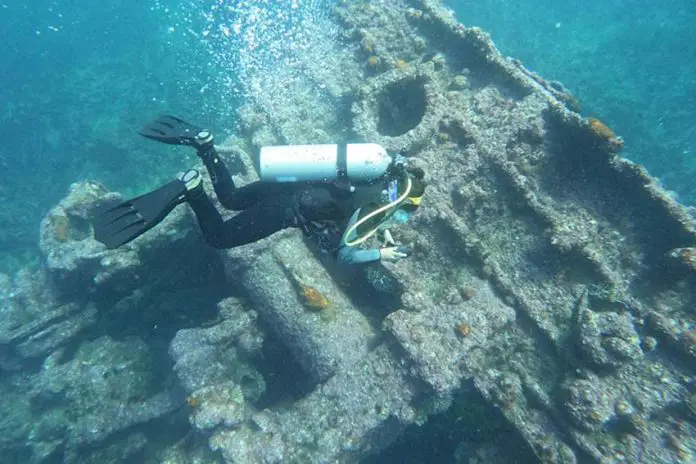
Mexico's National Institute of History and Anthropology (INAH) divers initially investigated the area off the Baja California coast during 2021-2022 after fishermen reported seeing a sunken ship. The discovery prompted INAH to do searches for more sunken ships in the area, a project that begins later this month. (INAH)
Mexico’s National Institute of Anthropology and History (INAH) this week announced a long-term project to discover and register sunken ships off Baja California’s Pacific coast.
Once underway, one of the project’s main targets will be the SS Sacramento, a sidewheel steamer built in 1864 that made passenger and cargo trips from New York to San Francisco until 1872, when it sank about 250 kilometers south of Ensenada.
A rare image published in 1866 of the Sacramento, a passenger steamship based in San Francisco that passed through Baja California waters regularly on its route between San Francisco and New York. (Laurence & Houseworth/Library of Congress
The area in Baja California where the ship went down is now called Sacramento Reef, and officials with INAH’s Underwater Archaeology Department (SAS) believe there could be up to five sunken ships in that area.
“Between the end of May and early June, we will begin the inventory with emphasis on two areas: the Todos Santos Islands, in Ensenada Bay, and the Sacramento Reef, in Rosario Bay,” said Mariana Piña Cetina, the project’s lead underwater archaeologist.
SAS conducted a series of explorations in 2021–2022 after fishermen reported a sunken vessel believed to be the 82-meter long SS Sacramento. After those probes, Pina said, “We realized the need to explore these areas due to the richness.”
The project is called “Archaeological Inventory of Wrecks from the 19th and 20th centuries in the Mexican Pacific.” Ships from various regions and eras are expected to be located and registered.
Piña Cetina noted that the Sacramento — which had to travel all the way around the tip of South America back before the Panama Canal’s creation — lies in waters off Isla San Geronimo that are only 5 meters deep.
The area is “more dangerous,” she said, because “the currents are stronger there.”
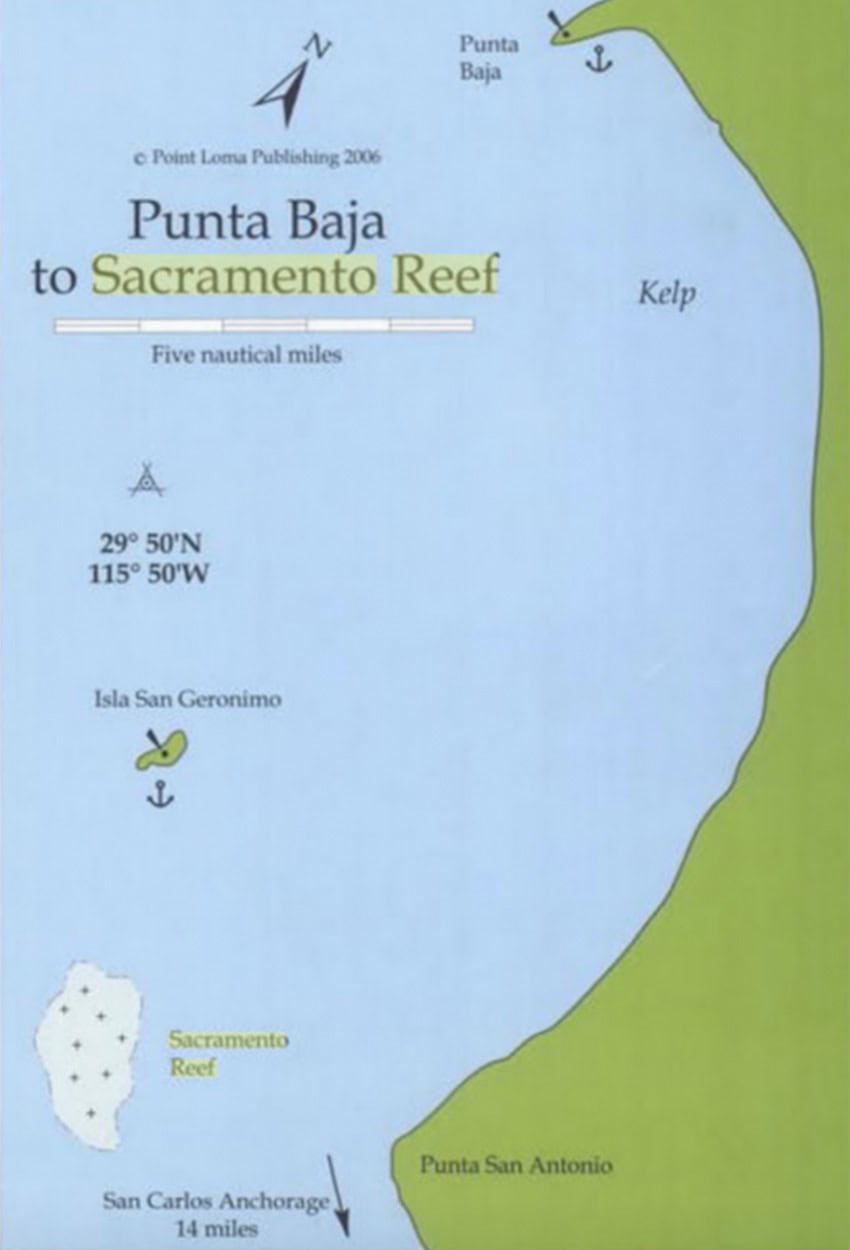
One of the spots INAH will investigate is an area called the Sacramento Reef, where the SS Sacramento went down. (Islapedia)
The ship apparently sank when it hit an uncharted reef, but the captain, crew and all 145 passengers were able to make it safely to the island, where they were later picked up by the SS Montana.
Ships of all kinds have been sailing by the Baja Peninsula since soon after Mexico’s colonization, and tales of sunken ships in the waters around it have existed for almost as long. However, the Sacremento was just one of multiple ships reported sunken in this area during the 19th century.
According to an INAH press release issued Wednesday, sunken ships off the coast of Mexico are underwater treasures that, to a great extent, have not been explored or even discovered.
“The deep, sandy surface contains an immense time capsule with intact stories of ships from different times and latitudes,” INAH noted.
Although shipwrecks off Baja California have been sporadically recorded over the past decade, the SAS will now be using modern technology and strategies, such as the use of geographic information systems and photogrammetry.
Still, the area presents obstacles and finding any sunken ships will require a “full season of exploration,” according to INAH, “due to the currents, sediments and the difficulties in reaching the diving spots on the reef.”
Piña Cetina said the project will be “responsible and sustainable” and that INAH is forming strong bonds with local fishing communities — not only in the name of ecology but also for assistance in locating the sunken ships.
For more than 300 years, ships used the waters off Baja California on their main routes, but they had to contend with islands, reefs, sandy shoals and other challenging elements. These areas were also used for hunting sea lions and other animals that were marketed by U.S., Canadian and even Russian whalers.
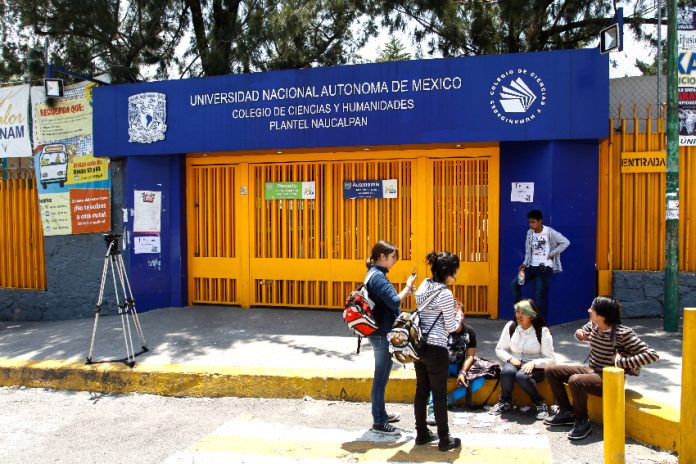
The clashes occurred outside the campus of the College of Sciences and Humanities (CCH) in Naucalpan, a municipality in the Mexico City metropolitan area. (Cuartoscuro/2015)
Nine people were arrested in connection with an outbreak of violence outside a university campus in México state on Wednesday.
A 19-year-old man died at the scene, but authorities attributed his death to a fall rather than the clash between students from different educational institutions.
The government of Naucalpan, a municipality in the metropolitan area of greater Mexico City, said in a statement that municipal police arrested eight men and a woman “for their probable participation” in the “violent events” that occurred outside the Naucalpan campus of the National Autonomous University’s College of Sciences and Humanities (CCH).
It said that the clash was between “grupos porriles,” incendiary student groups that, according to the El País newspaper, are made up of “people who tend to respond to specific interests, and through organized violence generally seek to sabotage student life and break the dynamics inside [educational] institutions to achieve their objectives.”
Members of such groups are called porros.
In 2018, there was violence caused by “porros” at UNAM campuses and student protests followed. (Cuartoscuro)
At least two people were injured during Wednesday’s clash, and the 19-year-old man identified as a student at the Faculty of Superior Studies Acatlán, another National Autonomous University (UNAM) campus, was found dead near the entrance to CCH Naucalpan. He had reportedly gone to the CCH campus to assist his 17-year-old brother.
Initial reports said that the deceased man, identified as Óscar Yael, was beaten to death by porros, but later on Wednesday night UNAM issued a statement saying that he died as a result of a fall from a “vehicular bridge.”
A number of students challenged that claim, pointing out that the bridge from which the man supposedly fell is some distance from the entrance to the CCH campus, where the clash began.
One person described UNAM’s statement as “incongruent” and “harmful” and asserted that Óscar Yael was beaten to death “in front of the campus.”
The news website Infobae reported that the man managed to get up after falling from the bridge and walked to the entrance of the CCH campus with the assistance of his brother. He then reportedly collapsed and died.
¡Fatal!
Muere estudiante de FES Acatlán atacado a golpes por porros en CCH Naucalpan
🔴 Hay 15 lesionados
🔴 Grupo porril lanzó petardos
🔴 Detienen a 7
🔴 UNAM informa que joven murió tras caer de un puente vehicular
🔴 Suspenden clases hasta el lunes 13 de mayo pic.twitter.com/b1pAjSw2gY
In this security camera footage, students are seen running away from the clashes.
UNAM modified its statement later on Wednesday night, saying once again that the man died due to injuries caused by a fall but removing the reference to a bridge.
The university said that two other young people were injured, although some media reports placed the figure at 10 or higher. UNAM said that those injured received immediate assistance from medical personnel.
“Due to what happened, the campus authorities shielded the facilities to provide greater security to the university community and the decision was taken to suspend activities tomorrow, Thursday [May] 9, in order to facilitate the investigations of the México state Attorney General’s Office,” UNAM said.
The university said that the confrontation was between “two groups of young people presumably from different education institutions,” but it didn’t cite a specific reason for the clash.
The newspaper Milenio reported that “according to witnesses,” a group of approximately 150 porros from Colegio de Bachilleres 5 arrived outside the CCH Naucalpan campus “and hit all the students they encountered.”
The El Universal newspaper said that students from Bachilleres 5 and another school known as Voca 2 are “rivals” of CCH students.
In its statement, the Naucalpan government said that those involved in the clash “were identified as porros by the students themselves.”
President Andrés Manuel López Obrador said Thursday that an investigation into the events outside the CCH Naucalpan campus was underway.
“Regrettably a young man died in this clash between groups and the investigation is already being carried out,” he told reporters at his morning press conference.
Grupos porriles have existed in Mexico for more than 100 years. The name is reportedly derived from the word porra, which can mean (the often boisterous) fans of a sports team.
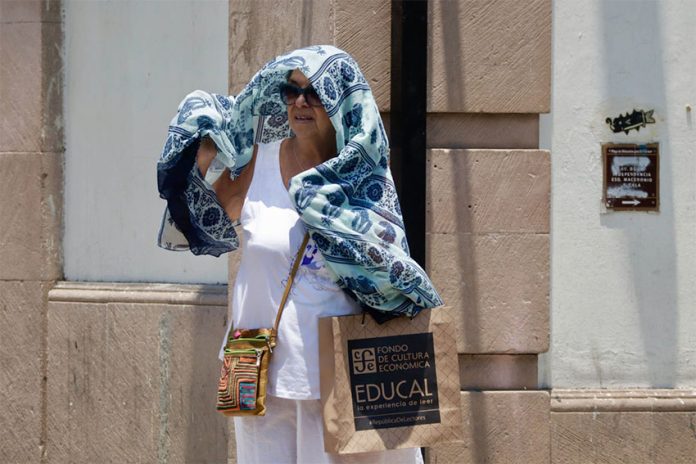
A woman shields herself from the sun in Oaxaca city. A heat wave across Mexico was expected to bring up to 50 C (122 F) temperatures to parts of the state Thursday. (Carolina Jiménez/Cuartoscuro)
With Thursday turning out to be another scorcher, people across Mexico are hoping for relief from a heat wave that has already been blamed for at least two deaths and has strained the national power grid.
The heat wave’s soaring temperatures have prompted greater demand for electricity throughout Mexico and mass power outages affected many cities on Tuesday and Wednesday.
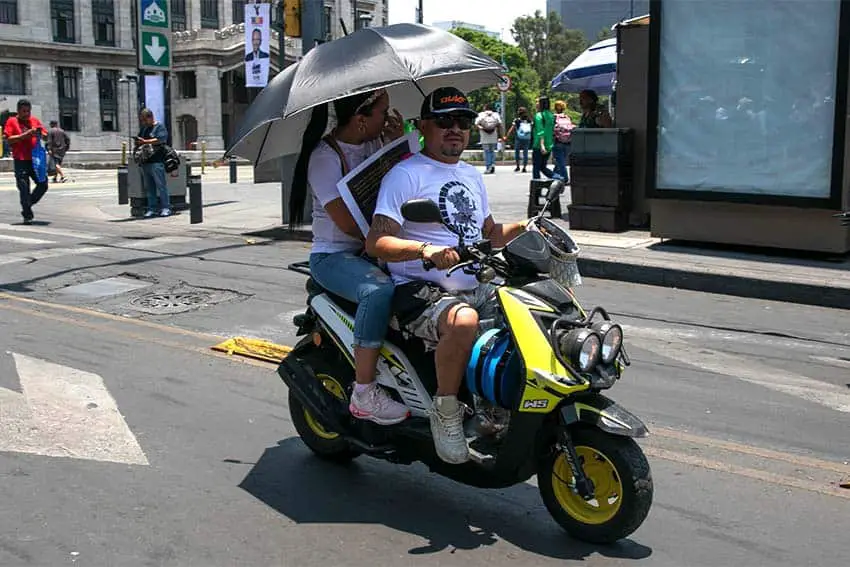
Moped riders in Mexico City beat the heat wave with an umbrella to shield themselves from record-breaking temperatures in Mexico Wednesday. (Moisés Pablo Nava/Cuartoscuro)
The high temperatures have been fatal in Oaxaca — state authorities are investigating the death on Wednesday of a 9-year-old boy which, if attributed to heat stroke, would be the third heat wave-related death in Oaxaca in as many days.
Mexico City set a new temperature record on Tuesday, but record highs could be set again elsewhere today as meteorologists were forecasting temps between 45 C and 50 C (115 F to 122 F) in the northeast, along the Gulf coast and in Morelos, Oaxaca and Guerrero.
Highs of 35 C to 40 C (95 F to 104 F) plagued parts of the northwest, the Pacific Coast and the Bajío region Thursday. At the same time, the Mexico City metro area saw temperatures ranging from 30 C to 35 C (86 F to 95 F).
The National Energy Control Center (Cenace) declared a state of emergency Wednesday afternoon and evening, as 14 states from Tamaulipas to Chiapas suffered blackouts.
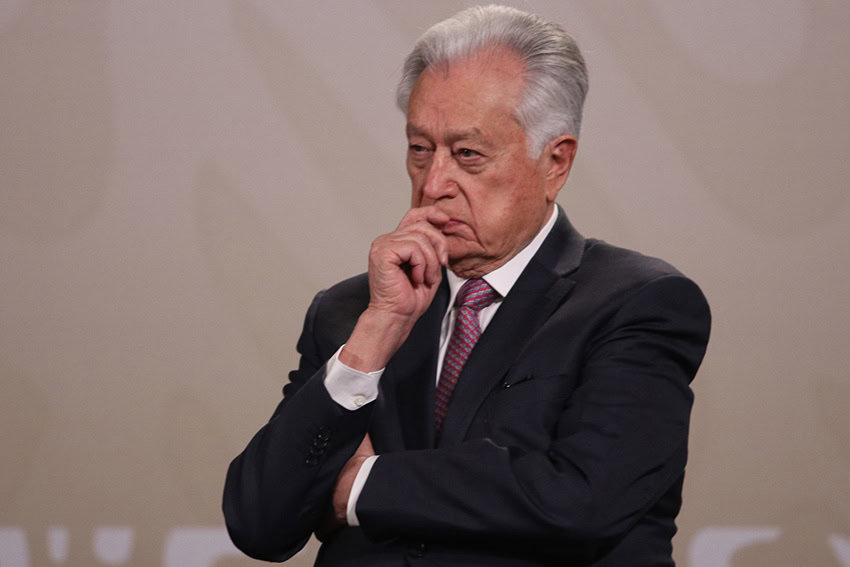
After power outages occurred across Mexico this week, head of the Federal Electricity Commission (CFE) Manuel Bartlett was summoned to the National Palace for a meeting with President López Obrador. (Cuartoscuro)
President Andrés Manuel López Obrador summoned CFE director Manuel Bartlett to the National Palace on Wednesday night to discuss the situation, though neither has issued a statement.
At his Thursday morning press conference, López Obrador said Cenace and the CFE were working to prevent further blackouts. While the president said that there wouldn’t be more blackouts — suggesting that the power outages were a fluke due to the intense temperatures the nation has been experiencing this week — he also appeared to acknowledge that there are issues with power generation capacity, which he blamed on the use of private energy companies.
“Half of the [grid’s] generation of electricity is produced by private companies, and we have to come to agreements so that the [generation] plants are in good condition,” López Obrador said.
With the heat wave and subsequent power outages, criticism is mounting regarding the management of the nation’s power grid. Energy analysts interviewed by the newspaper Reforma accuse the federal government of abandoning the country’s electricity system, arguing that it has been “ideological” and “political” in its energy policy.
El Universal columnist Mario Maldonado noted that Cenace had issued “alerts” — one step below a state of emergency — on 22 occasions in April, suggesting that the power grid is struggling and that blackouts could be a recurring problem this summer.
The country can expect a bit of relief from the heat by the weekend, according to the National Meteorological Service (SMN), which has forecast a cold front coming down from the north. Along with the lower temperatures, a band of precipitation can be expected from the northwest down to the central highlands beginning on Friday.
Mexico's annual headline inflation rate crept up to 4.65% in April, the highest level since January. (Cuartoscuro)
Headline inflation in Mexico increased for a second consecutive month in April to reach its highest level since January.
The national statistics agency INEGI reported Thursday that the annual headline rate was 4.65% in April, up from 4.42% in March.
The rate — the highest since a 4.88% reading in January — was slightly above the 4.63% consensus forecast of analysts surveyed by Citibanamex.
Month-over-month inflation was 0.20% in April, while the closely watched annual core inflation rate, which excludes volatile food and energy prices, declined for a 15th consecutive month to reach 4.37%, down from 4.55% in March. The core rate was slightly lower that expected.
The publication of the inflation data for April comes ahead of the monetary policy meeting of the Bank of Mexico’s governing board on Thursday.
“This is likely not the type of print that gives the central bank great comfort,” said Alberto Ramos, chief Latin America economist at Goldman Sachs. “We expect the board to hold interest rates at 11%.”
Fruit and vegetable prices soar
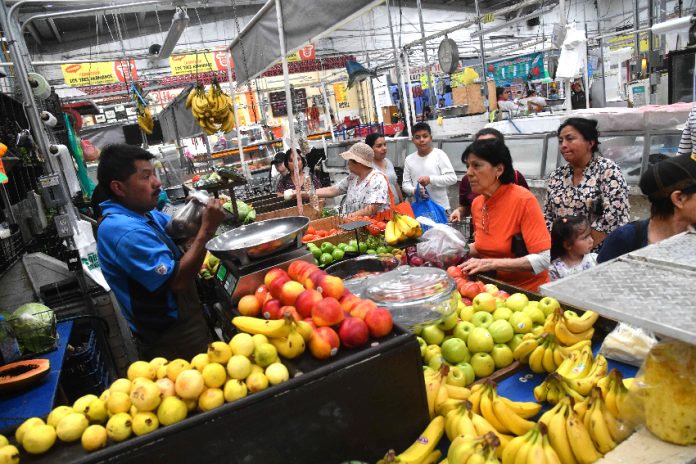
INEGI data shows that fruit and vegetables were 18.57% more expensive in April than in the same month a year earlier, up from a 12.25% annual increase in March. Prices rose 3.94% compared to March.
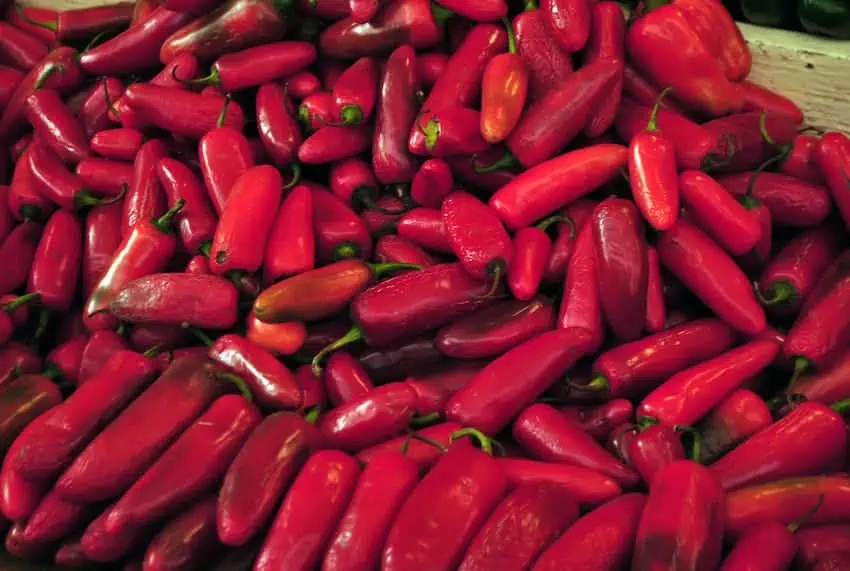
INEGI reported that serrano peppers were 64.42% more expensive in April than in March, while prices for “other fresh chilis” rose 33.56%. Green tomatoes were 24.25% dearer than a month earlier, while shoppers paid 13.67% more for regular tomatoes.
The price of chili peppers ballooned in April, with some varieties increasing as much as 64% compared to March. (Wikimedia Commons)
Prices for oranges and avocados also rose by double-digit percentages.
Vegetable lovers would have been better off buying onions, cucumbers, potatoes and beans last month as prices for those products all declined compared to March.
Economic consultancy Pantheon Macroeconomics noted that “poor climatic conditions” — including drought — are having an impact on prices for fresh food and are thus “limiting the disinflationary trend at a general level.”
Other inflation data in detail
Prices for agricultural products — fruit and vegetables and meat — increased 7.35% in April on a year-over-year basis. The increase was tempered by a 1.13% decline in meat prices.
Services were 5.21% more expensive than a year earlier. Within that category, housing costs increased 3.73%, school fees rose 6.36% and “other services” were 6.19% more expensive.
Processed food, beverages and tobacco were 4.79% more expensive than in April 2023.
The cost of non-food goods rose 2.34% on an annual basis.
Energy prices, including those for gasoline and electricity, increased 3.98% annually, but declined 1.64% compared to March as lower “hot season” electricity rates took effect in a number of cities.
There's something for everyone in the Yucatán capital. Find out which neighbourhood is right for you. (Geovanny Alvarado/Unsplash)
Mérida, the vibrant, sweltering capital of the state of Yucatán, is currently experiencing a booming real estate market, attractive to local and foreign investors alike. Potential buyers are lured by the city’s cultural wealth, its ranking as the safest city in the safest state in Mexico and its proximity to the Mayan ruins, cenotes, and beaches that highlight the peninsula. As a result, Mérida real estate is proving to be extremely desirable for those seeking a new life in the sun.
With over 1 million residents and counting, Mérida retains a uniquely yucatense charm, with a vibrant cultural scene and a slower, almost pueblo-like pace when compared to other similarly-sized Mexican cities. Expat immigrants in Mérida typically cite its colonial architecture, dynamic culinary scene, and proximity to other attractions (such as cenotes and beaches) for their choice.
So, where are the most attractive neighbourhoods in the city found?
The charming colonial center of Mérida is amongst the most pleasant in all of Mexico. (Elelicht/Wikimedia)
Mérida’s Real Estate Landscape
Mérida’s central district, known as Centro has a strong claim as the most beautiful in Mexico. It is home to colonial architecture, incredible food, culture and nightlife. As beautiful as the area is, however, most long-term residents prefer to live outside of the traffic snarls and parking issues of the downtown.
Heading north from Centro, Mérida’s most famous street is the Paseo de Montejo, a beautiful, leafy artery. The avenue is lined with hip shops, restaurants and seventeenth-century palacios of the era’s agricultural barons.
Keep heading north from Montejo and you encounter some of Mérida’s most desirable neighborhoods where you can find modern homes, easy parking and access to the best schools and higher-end shopping.
Also of note: The Mérida Norte area boasts some of Yucatán’s most modern hospitals, such as Star Médica and El Faro de Mayab.
Which suburbs are best for real estate in Mérida?
If you’re looking outside of Centro, there are many suburbs that can offer your a luxurious life in the Yucatán sun. (Mike Juarez/Unsplash)
Some of the neighborhoods of note in this area include:
Montebello. A tranquil residential area known for its tree-lined streets and upscale homes, a world away from the bustle of the centro.
Price range US$175,000 to $474,000
Altabrisa. A lively residential and shopping area characterized by modern amenities and high-end living options.
Price range: US$295,000 to US$1.2 million
Montes de Ame. A family-friendly neighborhood with a mix of parks, schools, and shopping.
Price range: US$150,000 to $350,000
Temozón Norte. A rapidly-growing area with easy access to the infrastructure and amenities of all the northern areas of Mérida.
Price range: US$240,000 to $700,000 for larger estates.
San Ramón Norte. A blend of the old and the new, where the buyer can find a mix of modern residences and restored colonial buildings.
Price range: US$120,000 to $300,000
City limits
Further north, outside of the periferíco (a freeway that rings the city), you have a chance to spread out on a bigger-sized lot as much of what was once farmland has been taken over by modern townhouse developments and houses with small lots. The east, south, and far west of the city are places where you can find far more economical properties that still retain an authentic charm, though these areas see far less foreign investment. For those in search of the idea “fixer-upper” this area is perfect, as many of the charming colonial homes of Centro have been renovated according to the views of previous owners.
Insider tips for investors
Finding your ideal property is one thing, but what else can you do to make your Mérida dream a success? (Alan Morales/Unsplash)
The adjustments for expats in Mérida are similar to the adjustments that come with life in other Mexican cities.
“Building connections within the local community is key to finding your dream home in Mérida,” says James, 34, a longtime Mérida transplant. “Engage with expat groups [and] local real estate agents and fellow residents to gain valuable insights and recommendations.”
“It is important to understand your and your family’s priorities before making a purchase,” says Ryan, 53.
Mérida is an exceptionally safe city with a wide selection of international bilingual schools for youngsters. One thing to consider, however, is that Yucatan’s flat topography means there is little in the way of views here. Unless you count gazing westward at sunset and drinking in the rich patina of cotton-candy-colored skies, there are no homes with views — unless one finds a third-floor-or-higher condo.
Local Meridana Andrea Campos is a real estate agent in the city. She advises potential buyers to find an agent with experience abroad or with foreigners.
Buying through a licensed realtor can provide expert local knowledge, legal security and the best chance of securing the Mexican home you’ve always wanted. (Ruben Hanssen/Unsplash)
“And read their CV carefully to make sure they have relevant education — such as a master’s in real estate development or [something] similar — so you know you’ll be getting a higher standard of service.”
According to Campos, a big help for many is contracting a “personal shopper” who can do much of the legwork in finding properties and adapting to the needs of a foreign buyer.
Why choose Mérida?
Mérida, in general, is a welcoming place for expat residents, but it is important to be aware of a few potential challenges to making a move here. The heat, for one, is punishing, and potential residents should be prepared to bear it year-round. Another challenge is the daily traffic, as Mérida is a growing city and lacks the infrastructure to handle so many daily drivers. The local government is making efforts to alleviate the problem with electric bus services.
There is a lack of topographic scenery, and a lack of opportunity to surf, as the ocean holds no more swell than a ripple. The windy conditions are ideal for kitesurfing, however, and most days, one can spot the harnessed riders silhouetted against the sunset, tearing across the choppy water of the gulf.
Mérida remains a popular hotspot for real estate investment, not just for expats but also for Mexicans fleeing the hustle and bustle of cities like Monterrey, Guadalajara and Mexico City. The lifestyle here is undeniably attractive for expats: vibrant culture, friendly locals, plenty of sunshine, well-connected flights, a surfeit of local tourist attractions and superlative regional food.
Look past the heat, the flat landscape, and the flat water of the beach, and you’ve found yourself a slice of paradise.
Stewart Merritt is a professor and freelance writer based in Mérida. A native of California, he has been visiting Mexico his entire life, especially the Pacific coast, where he likes to surf. This summer he will marry his Yucatecan fiancé.
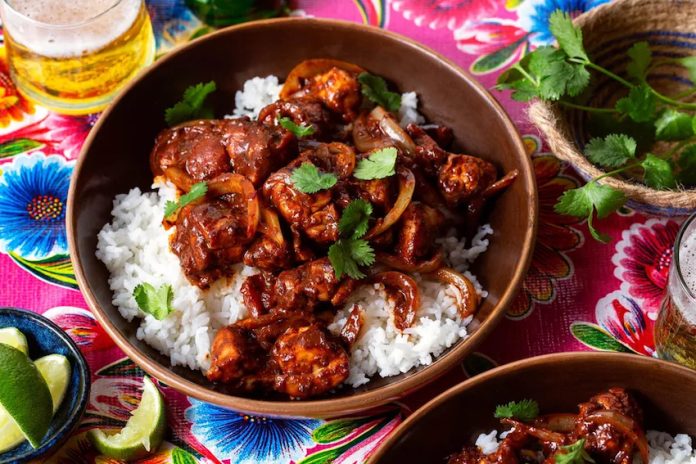
Mole is great, but its use in Mexican food can often be very traditional. Push the boundaries of what is possible with some of our alternative mole recipes. (sunbasket)
Mole, a rich and complex sauce deeply embedded in Mexican culture, stands as a culinary “sacred cow” for many reasons. Historically, mole is more than just a dish; it’s a cultural artifact, tracing back to the pre-Hispanic era and evolving through the centuries under the influence of both Indigenous and Spanish culinary traditions. The word “mole” originates from the Nahuatl word “mōlli,” meaning sauce or concoction. This term reflects the complex, blended nature of the dish, which is a cornerstone of traditional Mexican cuisine, rich in ingredients and cultural significance.
The preparation of mole is a labor-intensive process, often reserved for special occasions like weddings, birthdays and major holidays, which underscores its cultural significance. Making mole involves a ceremonial-like devotion to selecting and handling its numerous ingredients — sometimes up to 30, including chilies, spices, herbs and chocolate. This painstaking process is a rite passed down through generations, imbued with familial and regional pride.
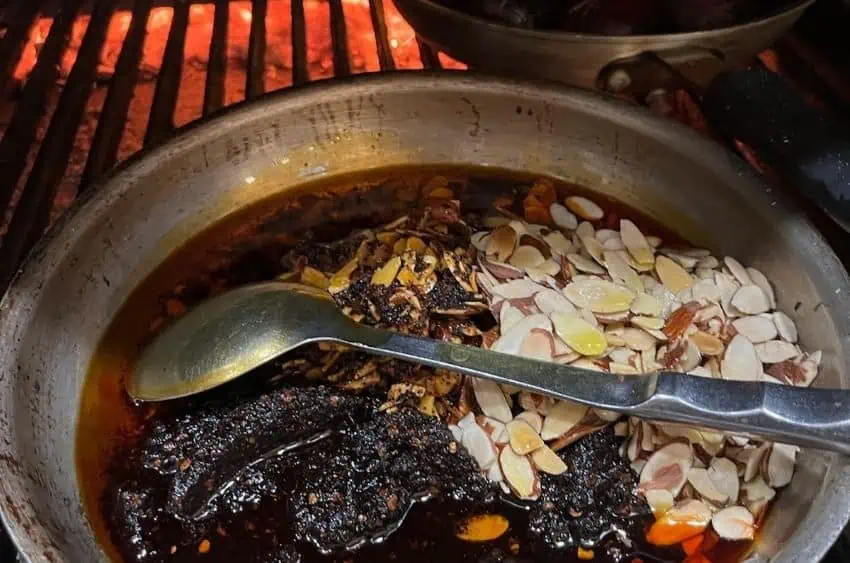
Even at high end establishments, mole can often be treated as a time honored and traditional affair. (Bombera Oakland/Facebook)
Reinventing a Mexican classic
There are some Mexican chefs who dare to experiment with this sacred cow of a sauce, like Elena Reygadas of Rosetta in Mexico City, named World’s Best Female Chef in 2023. Her recipe for pink mole with beets and radicchio infuses contemporary flair into classic mole. By experimenting with local herbs and ingredients, her menu creatively reflects the dynamic changes of the seasons. Then there’s Ricardo Muñoz Zurita, with his roasted duck enchiladas with black mole. A chef and culinary historian, Muñoz Zurita delves into Mexico’s diverse mole traditions at his restaurant Azul, blending rare regional ingredients and forgotten techniques to both preserve and innovate the heritage of mole.
In the spirit of these innovative chefs, I’d like to offer up two of my favorite mole recipes that are, let’s say, off the beaten path.
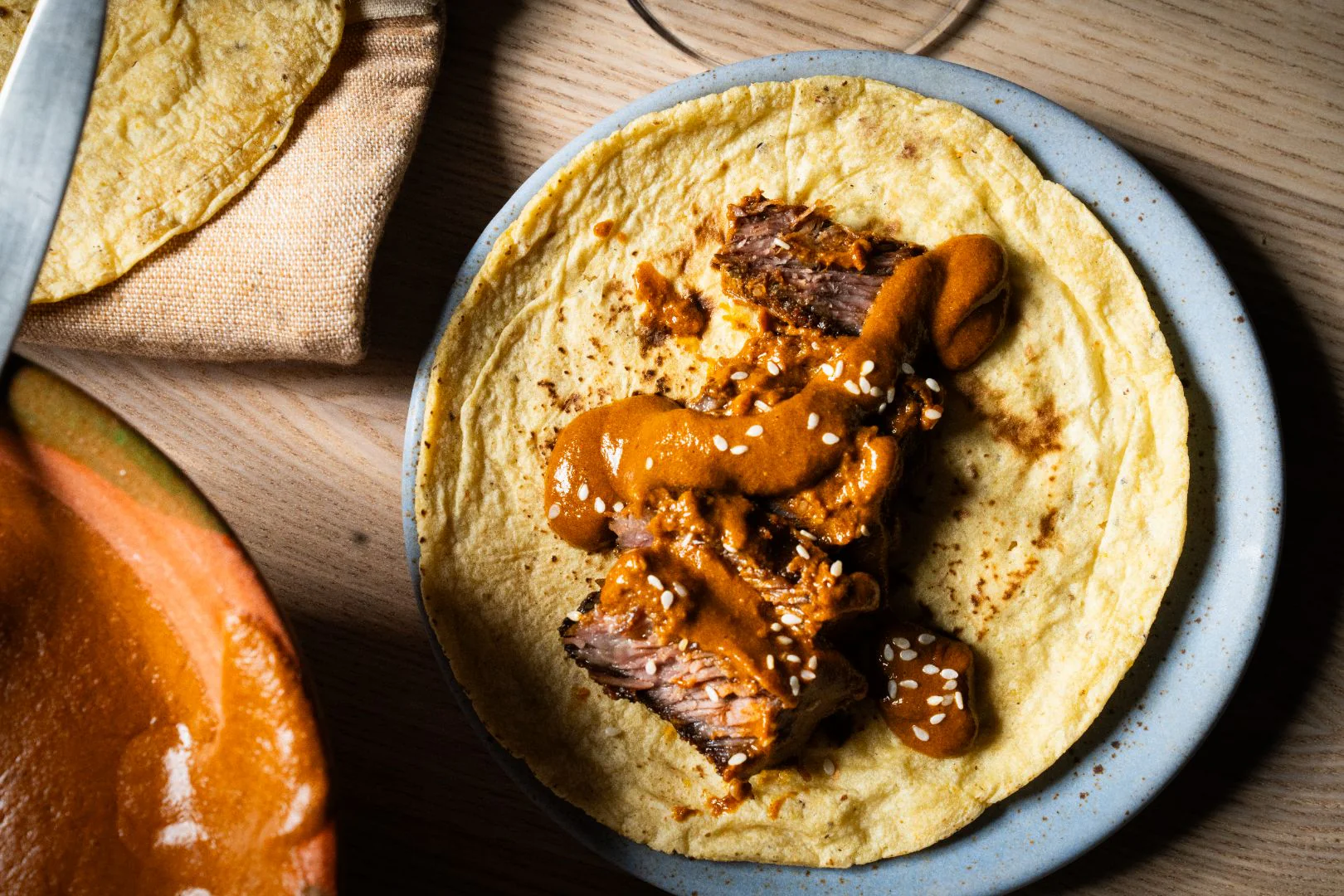
Mole ribs represent an incredible fusion between U.S. and Mexican culture… (Miguel Guerrero/Masienda)
Mole Poblano Ribs
Ingredients:
2 racks of pork ribs (about 4-5 pounds)
Salt and black pepper to taste
1 tablespoon olive oil
1 onion, finely chopped
3 cloves garlic, minced
1 cup prepared mole Poblano paste
2 cups beef broth
1 tablespoon apple cider vinegar
1 tablespoon brown sugar
1/2 teaspoon smoked paprika (optional)
Directions:
Preheat your oven to 300 F (150 C).
Remove the membrane from the back of the ribs if it’s still attached. Season both sides of the ribs generously with salt and black pepper.
To make the mole sauce, heat the olive oil in a large saucepan over medium heat. Add the chopped onion and garlic, sautéing until they are soft and translucent.
Stir in the mole paste, mixing well with the onions and garlic.
Slowly add the beef broth, apple cider vinegar, brown sugar, and smoked paprika if using. Bring the mixture to a simmer and cook it until slightly thickened, about 10-15 minutes.
Place the ribs in a large roasting pan or on a baking sheet lined with foil.
Pour the mole sauce over the ribs, making sure they are well coated.
Cover the ribs with another piece of foil and seal the edges to create a tight wrap. This will keep the moisture in and allow the ribs to steam in the mole sauce.
Bake in the preheated oven for about 2.5 to 3 hours, or until the ribs are tender and the meat easily pulls away from the bone.
Optional:
For a caramelized finish, preheat an outdoor grill to medium-high heat.
Remove the ribs from the oven and place them on the grill. Grill for about 5 minutes on each side, basting frequently with any remaining mole sauce, until they are nicely caramelized.
Let the ribs rest for a few minutes before cutting between the bones. Serve hot, garnished with fresh cilantro and sesame seeds if desired.
Enjoy your mole ribs as a fusion of traditional barbecue and Mexican cuisine, bringing a unique and flavorful twist to your dining table!
…the mole milkshake however? Delicious, but tantamount to treason in the eyes of some Mexicans. (Pratiksha Mohanty/Unsplash)
Mole Milkshake
(I’m going to lose some friends over this one but it is absolutely a new take on traditional mole recipes!)
Ingredients:
2 cups vanilla ice cream
1/2 cup milk
1 tablespoon prepared mole paste (see note)
1 teaspoon cocoa powder
1/2 teaspoon cinnamon
Whipped cream (for topping)
Chocolate shavings or a sprinkle of sesame seeds (for garnish)
Note: I recommend choosing a darker mole, as they tend to be sweeter — a good match for this recipe.
Directions:
In a small bowl, mix the mole paste with cocoa powder and cinnamon. Add a small amount of milk to make it easier to blend.
In a blender, combine the vanilla ice cream, the remaining milk and the mole flavor base. Blend until smooth.
If the milkshake is too thick, add a bit more milk and blend again. Taste and adjust the seasoning, adding more cinnamon or cocoa if desired. To serve, pour the milkshake into a tall glass. Top with whipped cream and garnish with chocolate shavings or sesame seeds for an extra layer of mole flavor.
Serve immediately. Optional: tell your Mexican friends of the sin you just committed — or don’t, and we can just keep this between you and me.
Stephen Randall has lived in Mexico since 2018 by way of Kentucky, and before that, Germany. He’s an enthusiastic amateur chef who takes inspiration from many different cuisines, with favorites including Mexican and Mediterranean.
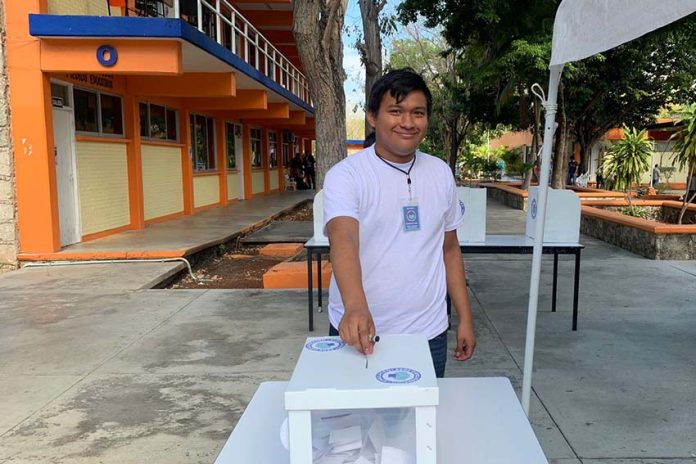
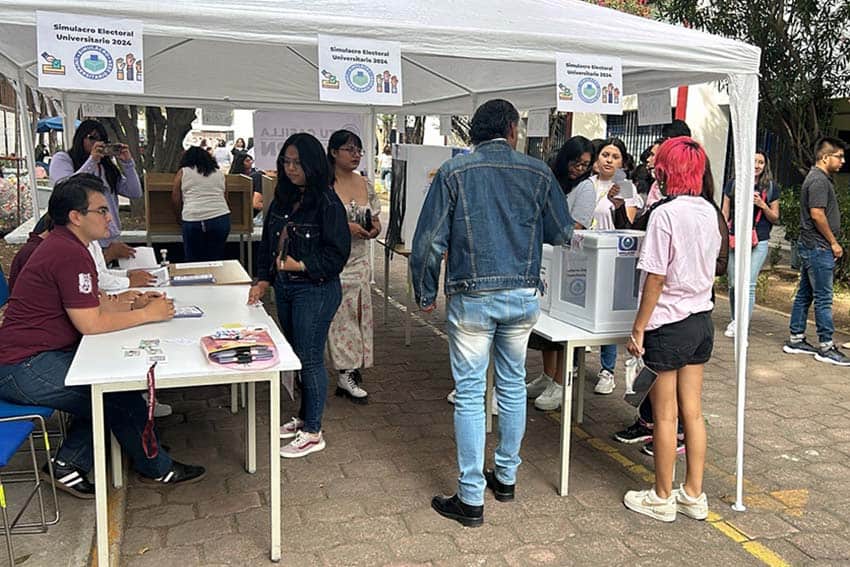
Students at 400 college campuses across Mexico participated in the Simulacro Electoral Universitario, or university mock presidential election. This student voted at Chetumal Technological Institute in Quintana Roo. (SEU/Twitter)
Claudia Sheinbaum was the clear winner of a mock presidential election in Mexico held Tuesday at university campuses across the country, suggesting that the ruling Morena party candidate can expect strong support from young voters when the real deal takes place on June 2.
Students and university staff cast a total of 255,707 ballots in the Simulacro Electoral Universitario (SEU), or the University Electoral Simulation, which took place on around 400 campuses in all 32 of Mexico’s federal entities.
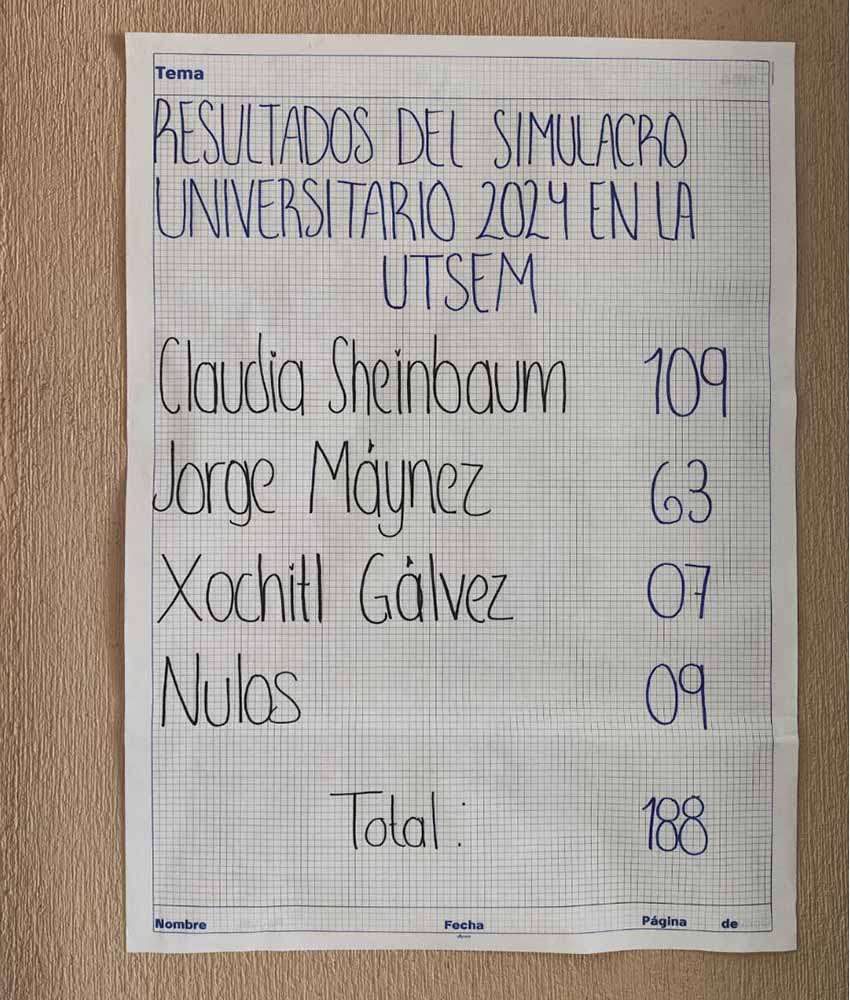
Results of SEU’s mock election at the Technological University of Southern México State mirrored results at several universities across Mexico, with candidate Claudia Sheinbaum achieving a wide lead. (SEU/Twitter)
A spokesperson for the SEU organizers told a press conference on Wednesday that Sheinbaum – a close ally of President Andrés Manuel López Obrador and heavy favorite to prevail on June 2 – won 63.5% of the vote, while Jorge Álvarez Máynez, candidate for the Citizens Movement party, attracted the support of 23.1% of participants to finish second.
Xóchitl Gálvez, candidate for an opposition bloc made up of the National Action Party, the Institutional Revolutionary Party and the Democratic Revolution Party, attracted the support of just 8.5% of voters. Just under 5% of the votes cast were invalid.
Álvarez Máynez, who is a distant third in most polls, took to the X social media platform to acknowledge the results of the SEU.
“I feel very grateful to the more than 59,000 university students who voted for me yesterday in the #SimulacroElectoral2024,” he wrote on X.
“In just nine weeks of campaigning, and without dirty money, we’ve managed to ignite the hope of a generation,” Álvarez added.
Young voters are a key cohort in the June 2 elections, at which Mexicans will elect a new president and thousands of other federal, state and municipal representatives.
Students at the Autonomous University of the Northeast show off their thumbs bearing indelible ink — mimicking how polling stations in real Mexican elections mark a person to show that they have already voted. (SEU/Twitter)
According to the National Electoral Institute, 26.2 million Mexicans aged 18 to 29 are eligible to vote. That figure represents close to 30% of all voters on the electoral roll.
Atabeira Villegas, a sociology student at the Azcapotzalco campus of Mexico City’s Autonomous Metropolitan University (UAM), told the news website Animal Político that the mock election was an opportunity to show the three presidential candidates that “the university communities are the strength and engine of this country and deserve to be listened to.”
Arturo Gómez, another UAM student, said that the SEU was an “important activity” because “young people are a vital force for democracy and the [kind of] critical thinking that strengthens the development of the country.”
Animal Político reported that most students it spoke to at several Mexico City university campuses indicated they would vote for “the left” — Claudia Sheinbaum, in other words, in the real presidential election.
“I’m in favor of a woman for president, and obviously, that’s Dr. Claudia Sheinbaum because she is the most qualified,” said a law student identified only as Marín.
“One on side, we have oppression, the old regime: Atenco, Ayotzinapa, Aguas Blancas, 1968, 1971,” he said, referring to massacres in which authorities were involved or allegedly involved.
“On the other side we have a project that has worked, that has taken resources to the people who need them the most,” Marín said, referring to the current government and its welfare and social programs.
“I just want Mexico to do well and to make progress,” said Arturo Gómez, adding that he also wants the presidential candidates to be “authentic” and “help young people.”
“I’ve always considered myself someone who fights, so I’ll vote for the representative of the left this election,” he said.
Another student, Osvaldo de la O, told Animal Político that he believes “we should keep giving the benefit of the doubt” to Morena because it has only been in office for one term and “not a lot can be done” in just six years.
Students and university staff cast a total of 255,707 ballots in all of Mexico’s 32 states at the Simulacro Electoral Universitario 2024, Mexico’s mock election event where students cast their votes for a presidential candidate. (SEU/X)
“So it’s necessary to see what they can do in 12 years. Claudia Sheinbaum is going to win, but what remains to be seen is how she can improve or fix some of the bad things that the government of [López] Obrador has left,” he said.
Pamela Guevara, a political science student at UAM’s Xochimilco campus and one of the SEU organizers, urged the three presidential candidates to “turn around and look at the young people” of Mexico.
The candidates should listen to the demands of young people and work to meet them, she told the Reforma newspaper. “We deserve to be seen,” Guevara added.
Analyst Vidal Romero says that the past three administrations have failed the country in improving security, and considers how the next one could do better. (Cuartoscuro)
Mexico’s forthcoming national election is a great opportunity to take a step back and rethink the bigger picture of public insecurity in Mexico. Crime incidence data shows that the policies and actions of the last three administrations — Calderón, Peña Nieto and López Obrador — have not significantly reduced most crime and violence indicators. If insecurity is to improve in Mexico, understanding what has gone wrong in security policy is of utmost importance. A good starting point is to question the core public premises behind the actions of the different administrations. We could plausibly state that the Calderón administration assumed that “winning the war” was a matter of relative coercive power, which implies that a sufficiently powerful and well-designed intervention by state forces would reduce criminal organizations’ activities. This was clearly not the case. Other variables proved to have a greater effect, such as the inelastic demand for drugs and corruption by public officials. The Peña Nieto administration was not fully explicit in its approach to fighting insecurity, which seemed to be a lighter version of Calderon’s policy but with less initiative and more reactivity in the use of public force. The results were no better. The López Obrador government changed the core premise, at least in the discourse. It assumed that individuals — especially young people — commit crimes and join criminal organizations because of economic necessity. Massive amounts of unconditional cash were allocated to disincentivize criminal activity, coupled with a more passive role by state forces, mainly the military, which took control of public safety. Again, the problem of insecurity has not improved in Mexico. Contrary to what the AMLO administration assumed, the government’s allocations have become a complement to other types of incomes — including that from criminal activities — rather than a substitute. And there is no solid evidence showing that necessity has a linear relationship with the likelihood of committing a crime, as the policy seems to assume.
Reducing the state’s use of force has not reduced criminal violence either because most of that violence is related to confrontations among criminal organizations in which the state is merely a spectator. The above paragraphs are obviously a massive simplification but provide a useful guide on how not to think about the solutions to Mexico’s insecurity problems. The security strategy of the new administration, whether headed by Claudia Sheinbaum or Xóchitl Gálvez, should learn from past failures and ask the right questions when designing policy interventions. Increasing the state’s coercive power is a necessary but not sufficient condition to effectively reduce crime and violence. We need to think beyond what the different administrations have already implemented.
Here are two key questions we should be asking ourselves when designing the new administration’s security policy. First, how can the current public insecurity problem be turned into something more manageable? It is clear that state organizations are overwhelmed. When a problem is as big and complex as public insecurity in Mexico, a useful approach is to first consider how to make the problem smaller before thinking about potential solutions.
An obvious option to simplify the fight is to legalize drugs in order to minimize black markets and the conflict surrounding them. This will not solve the problem by itself but will free a lot of budgetary and human resources to fight “easier” crimes and will reduce the incentives for corruption.
Obviously, legalization is not trivial, but we should start thinking about and working on it. Second, how can we reduce the lethality of criminal organizations’ confrontations? Criminal organizations and conflicts among them exist in most countries, but not all confrontations are equally lethal. The variance is strongly related to the sort of weapons that these organizations utilize to confront each other. In this respect, illegal arms trafficking from the United States is a key problem to tackle. The current administration has taken an important step by explicitly including the topic in the agenda and acting upon it. It should now be a priority. Overall, the very least we should ask is that the new policies and actions be based on evidence. There is already significant knowledge on the matter, which should be used.
Vidal Romero is a professor in the Political Science Department at the Instituto Tecnológico Autónomo de México (ITAM), Codirector of ITAM’s Center for the Study of Security, Intelligence and Governance (CESIG), and a faculty affiliate at ITAM’s Center on Energy and Natural Resources. He holds a Ph.D. in political science from Stanford University.
Disclaimer: The views expressed in this article are solely those of the author and do not necessarily reflect the views of Mexico News Daily, its owner or its employees.
The Pacific hurricane season last year was particularly intense in Mexico, but this year more are expected to develop in the Atlantic Ocean. (Alto Nivel/X)
Mexico’s National Meteorological Service (SMN) announced the hurricane forecast for 2024 on Saturday. The tropical cyclone season will begin on May 15 in the Northeast Pacific Ocean and June 1 in the Atlantic Ocean (includes the Caribbean and Gulf of Mexico).
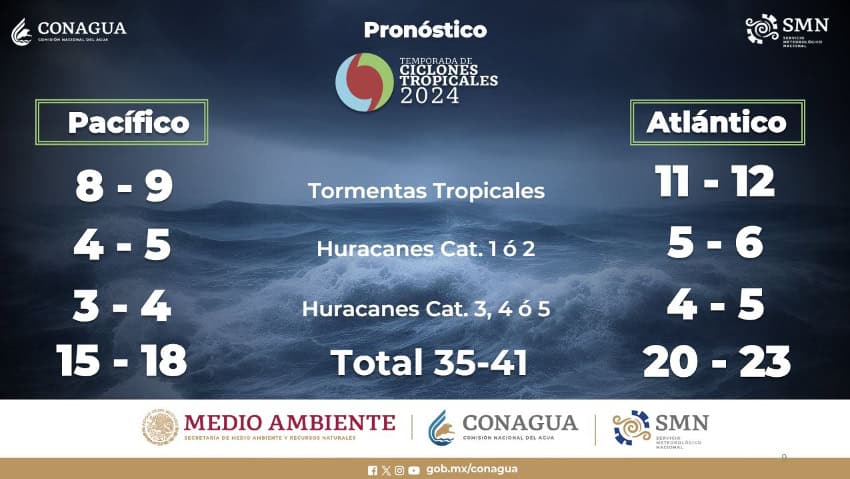
The weather agency predicts a more intense hurricane season in 2024 in the Atlantic Ocean, where hurricane activity is expected to increase by up to 50%, with 14 potential storm systems. Meanwhile, the Pacific Ocean will see around 10% more systems than average.
The 2024 hurricane forecast for Mexico includes a total of up to 41 storms, though only some of these will make landfall. (@mariablackmoon/X)
The meteorologists predict 15 to 18 storm systems in the Pacific Ocean — of these, four to five could be Category 1 or 2 hurricanes, and three to four could be Category 3 to 5 hurricanes.
Meanwhile, the Atlantic Ocean is expected to see 20 to 23 total systems, with five to six Category 1 or 2 hurricanes, and four to five Category 3 to 5 hurricanes.
However, not all of these hurricanes and storms are expected to make landfall on the Mexican mainland. Alejandra Méndez Girón, general coordinator of the National Meteorological Service (SMN), predicts that at least five hurricanes will make landfall during the season.
According to the national weather agency, the 2023 hurricane season was one of Mexico’s most active in the last 50 years, with 37 systems. Eight of these made landfall on national territory — 48% more than the average recorded over 50 years (5.4 cyclones per year).
The national weather agency predicts between 35-41 storms in the hurricane season in Mexico this year. (Conagua Clima/X)
How does the El Niño/La Niña system affect hurricane season?
The El Niño cyclical weather phenomenon, which started in June 2023, has been associated with widespread drought in Mexico, as well as a particularly intense Pacific hurricane season.
However, El Niño is weakening and predicted by the NOAA to end between April and June, with a 60% chance of being followed by La Niña, beginning between June and August.
With La Niña, the tropical cyclone season in the Atlantic is expected to intensify. This is particularly true for this year, as the ocean’s surface temperature is expected to be warmer than usual.
Most regions in Mexico are predicted to receive more rain this year if La Niña develops, which would bring welcome relief — nearly 70% of national territory is experiencing some degree of drought as of April 30, according to the national drought monitor.