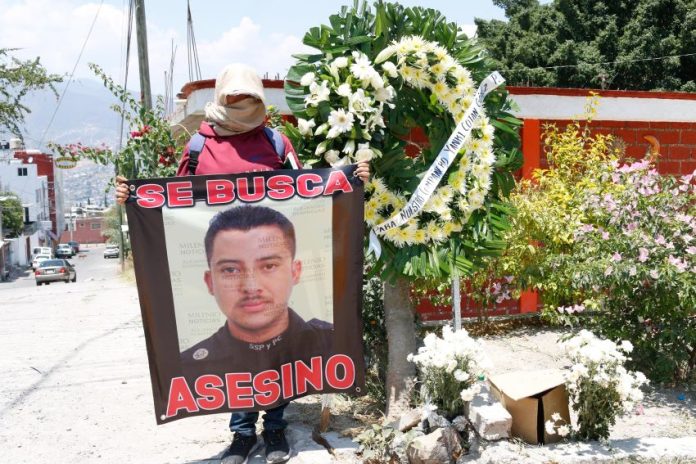
Family members held up a poster of the fugitive police officer on Sunday at the site of the student's murder, demanding action from authorities. (Dassaev Téllez Adame/Cuartoscuro)
A state police officer accused of killing a 23-year-old student in Chilpancingo, Guerrero, last month was arrested on Wednesday morning, authorities said.
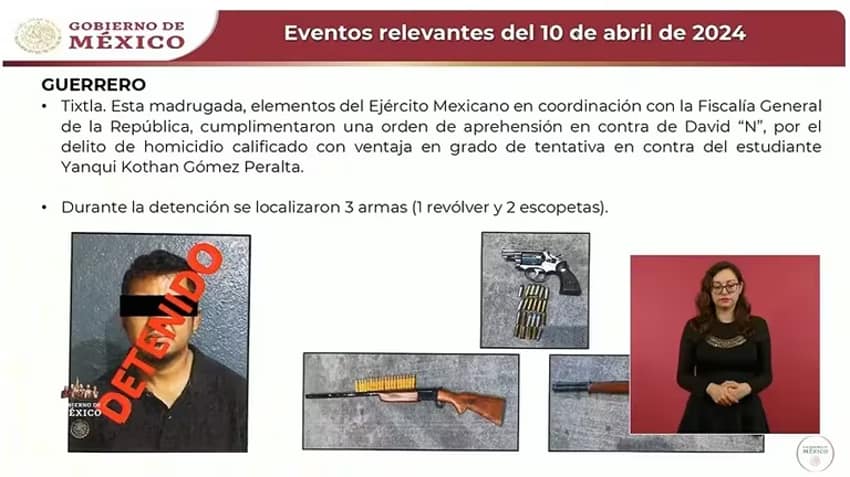
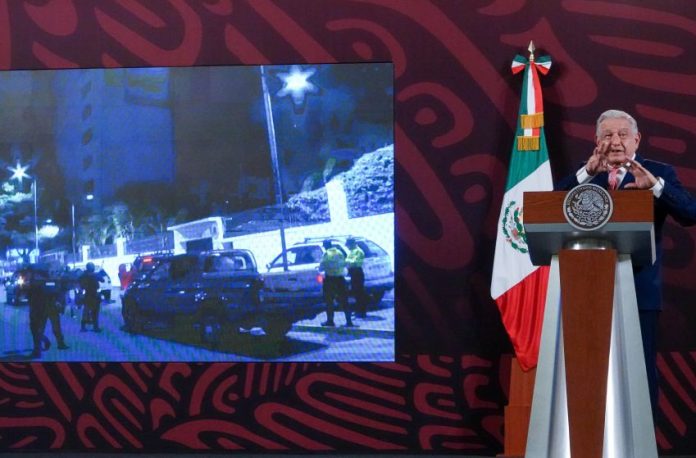
At his Wednesday morning press conference, President López Obrador said the police officer had been detained near Acapulco. Three firearms were also seized at the property. (Presidencia)
The officer, identified as David “N,” is accused of firing the shots that killed Gómez. He was arrested shortly after the incident, but escaped custody on March 11 — allegedly with the assistance of state authorities. Two other officers with him at the time of the alleged murder were arrested on March 13.
López Obrador said that the officer detained on Wednesday was on a ranch owned by another police officer who was apparently protecting him. Security forces seized three firearms at the property, he said.
The Guerrero Attorney General’s Office said in a statement that state police collaborated with soldiers and members of the National Guard on the operation to arrest the suspect. David “N” is accused of murder and the attempted murder of another Ayotzinapa student who was traveling with Gómez in the same car in Chilpancingo.
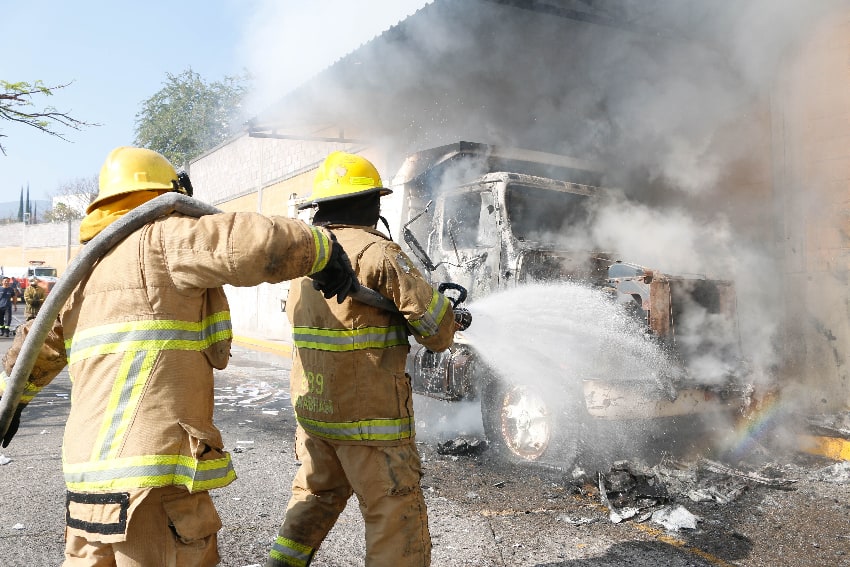
On Monday, Ayotzinapa student protesters attacked government buildings in Chilpancingo, causing a fire in one of the buildings. (Cuartoscuro)
Governor Evelyn Salgado said on the X social media platform on Wednesday morning that the arrest of the police officer confirms authorities’ “commitment” to achieving justice for Gómez.
The arrest came two days after Ayotzinapa students carried out an attack on the Government Palace complex in Chilpancingo that caused a fire on the second floor of one building.
Students from the school have protested on numerous occasions since the death of their fellow trainee teacher, and have attacked other state government offices in recent weeks.
Located near Chilpancingo in the municipality of Tixtla, the Ayotzinapa Rural Teachers’ College is the school attended by the 43 young men who were abducted and presumably killed in 2014.
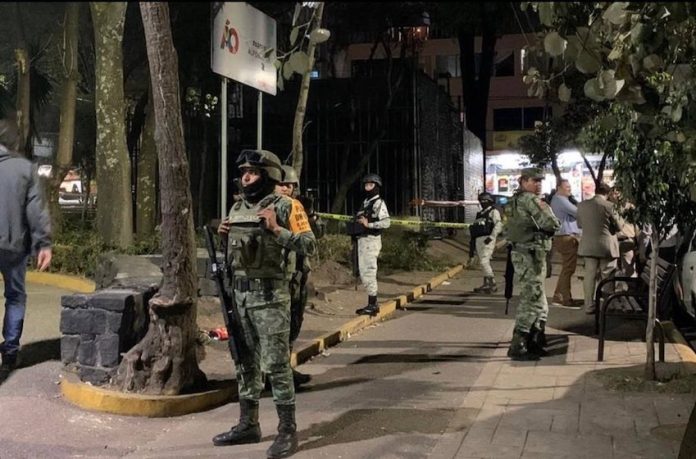
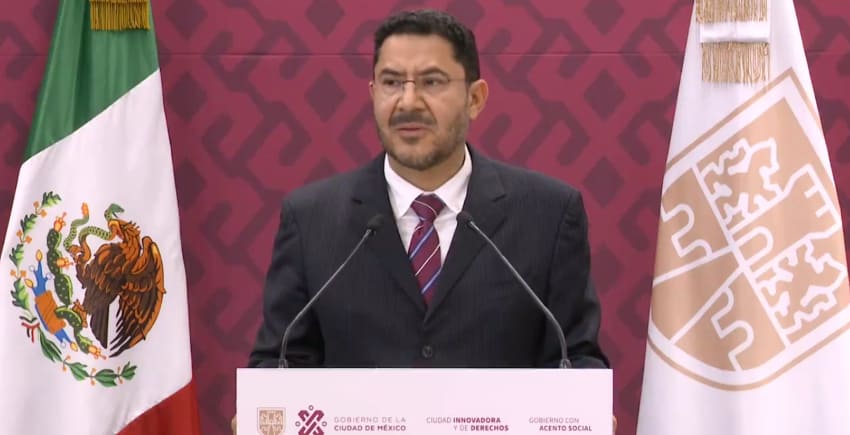
The security operation took place Tuesday night, after Mayor Martí Batres confirmed contamination in the water supplied to some areas of the Benito Juárez borough.(@tomaspliegoc/X)
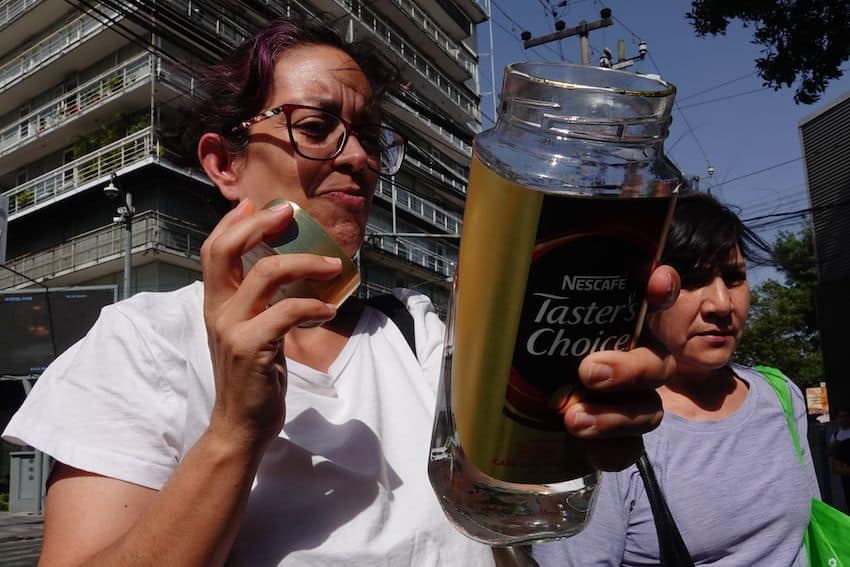
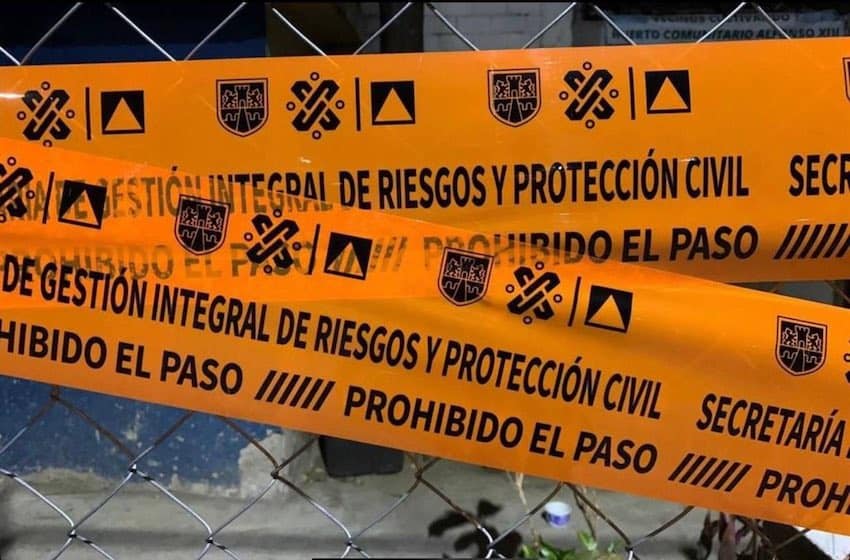
The National Guard (GN) secured a well in the Álvaro Obregón borough of Mexico City on Tuesday night, after reportedly detecting a gasoline odor.
The Alfonso 13 well, according to borough official Mariana Rodríguez, supplies water to the Nonoalco neighborhood of Benito Juárez borough, where residents had previously reported a gasoline smell in their tap water.
Residents of Colonia Del Valle in Benito Juárez first reported that their water smelled of gasoline on March 31. (Rogelio Morales/Cuartoscuro)
In an interview with La Jornada newspaper, Rodríguez said that city authorities refused to give any information about the security operation and denied residents of the borough entry to the well.
Rodríguez also said she asked a deputy city official what she should tell residents and if they could use the water, but received no response.
Mexico City’s mayor Martí Batres acknowledged at a press conference on Monday that the drinking water in several neighborhoods of the Benito Juárez borough was contaminated. However, the mayor said that industrial lubricants had been detected in the water, not gasoline.
The complaints began on March 31, when residents reported a foul smell coming from their taps, but it wasn’t until April 4 that authorities began surveying the affected areas and taking water samples.
City authorities have not yet indicated whether the water in the Benito Juárez borough is safe to drink. (@tomaspliegoc/X)
On Tuesday evening, Batres posted a message on his X account reporting that his government had identified and closed a well in Álvaro Obregón, identified as the contaminated water source reported by residents of Benito Juárez. However, he did not specify the name of the well.
Batres added that “two industries in the area that deal with various components and substances were also closed off as a precautionary measure” and that the state-owned oil company Pemex inspected its pipelines located in the region and did not find any variations in their pressure (which could indicate a leak).
On Wednesday morning, residents blocked traffic on Insurgentes Avenue in protest, demanding a meeting with the mayor and the head of the municipal water agency, Rafael Carmona. According to La Jornada newspaper, the protesters expressed skepticism of official statements regarding the source of contamination.
Batres said authorities are continuing to investigate and will report back with updates.
President López Obrador showed security camera footage of Ecuadorian police raiding the Mexican embassy to arrest former Ecuadorian vice president Jorge Glas, who faces corruption charges there. (Galo Cañas/Cuartoscuro)
Mexico will file a complaint against Ecuador with the International Court of Justice (ICJ) over last week’s police raid on the Mexican embassy in Quito on Thursday, President Andrés Manuel López Obrador (AMLO) said at his Wednesday morning press conference.
Mexico severed its diplomatic relations with Ecuador on Saturday after police broke into the Mexican Embassy on Friday night to arrest former Ecuadorian vice president Jorge Glas, who was in office from 2013 to 2017 but had been promised asylum in Mexico. Ambassador Raquel Serur Smeke — whom Ecuador declared a persona non grata before the raid — and other diplomatic personnel returned to Mexico on Sunday.
▶️ The world witnessed the violence, abuse and mistreatment of our Mexican personnel at the hands of the Ecuadorian police, and the violation of the immunity of our embassy in Ecuador.
Mexico will bring these violations of international law to the international courts and… pic.twitter.com/rLAOOS3EnZ
Footage released by the Mexican government showing the raid by Ecuadorian forces on Mexico’s embassy in Quito on Friday. (Ministry of Foreign Affairs/X)
Glas has been twice convicted for corruption in Ecuador and is currently facing new charges that he misused earthquake reconstruction funds. He has long claimed that the corruption charges leveled against him have been politically motivated, an allegation Ecuador’s government denies.
Mexican Foreign Affairs Minister Alicia Bárcena explained that the decision to break ties with the South American nation was taken “in view of [Ecuador’s] flagrant and serious violation of the Vienna Convention on Diplomatic Relations, in particular of the principle of inviolability of Mexico’s diplomatic premises and personnel and the basic rules of international coexistence.”
“Our people condemn this violation of our sovereignty, the vast majority of Mexicans don’t agree with the authoritarian behavior of the government of Ecuador. … The majority of governments around the world condemn these actions,” said AMLO, who on Tuesday accused the United States and Canada of being “very ambiguous” in their positions on the incident.
U.S. National Security Advisor Jake Sullivan subsequently condemned Ecuador’s actions, saying that “the Ecuadorian government disregarded its obligations under international law as a host state to respect the inviolability of diplomatic missions.”
López Obrador noted that the Organization of American States — a regional body of 32 countries — also spoke out against Ecuador.
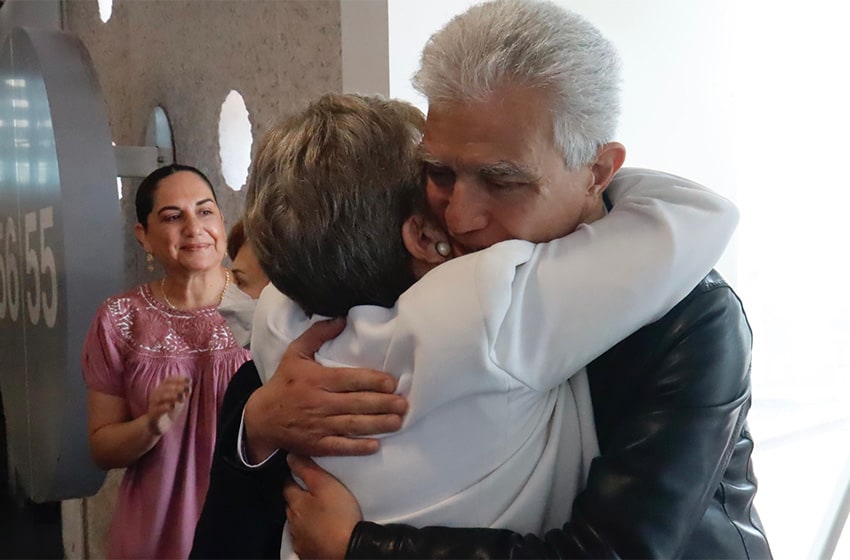
Minister of Foreign Affairs Alicia Bárcena hugs Mexico’s deputy chief of the Mexican diplomatic mission in Quito, Roberto Canseco Martínez, who returned to Mexico on Sunday. Canseco was assaulted by Ecuadorian forces after he tried to stop the arrest of Jorge Glas. (Ministry of Foreign Affairs)
“All the governments represented — and even Secretary [General] Luis Almago, who has had a very conservative, antidemocratic attitude — condemned the incident because the truth is, it’s unjustifiable,” López Obrador said.
At a meeting on Tuesday of foreign ministers of the Community of Latin American and Caribbean States (CELAC), Bárcena urged CELAC member states to “back the lawsuit that we will bring to the International Court of Justice, as well as the letter that we will send to the UN Secretary-General condemning these appalling events.”
Earlier on Tuesday, López Obrador presented security camera footage of the police raid, showing one heavily armed officer scaling the front wall of the embassy complex and several police carrying Glas out of the embassy. The former vice president had been living there since December.
Attempts by the deputy chief of mission Roberto Canseco Martínez to stop the police operation were fruitless. He was restrained and assaulted by police on repeated occasions.
Glas, who was vice president during governments led by former Ecuadorian presidents Rafael Correa and Lenín Moreno, was taken away in one of two vehicles that entered the embassy complex.
“This is what is going to be reported [to the ICJ],” López Obrador told reporters at the conclusion of the video.
Sullivan said that the U.S. government has reviewed the footage and believes that Ecuador’s actions were wrong and violated the Vienna Convention on Diplomatic Relations. He also said that the U.S. government had asked Ecuador to work with Mexico to find a solution to the dispute between the two countries.
On Wednesday, López Obrador thanked U.S. President Joe Biden for “rectifying” the U.S. government’s position with the “more forceful declaration” issued by Sullivan. He added that he was waiting for a similar move from Canada, Mexico’s other North American commercial partner under the USMCA free trade pact.
The Canadian government said on Saturday that it was “deeply concerned at Ecuador’s apparent breach of the 1961 Vienna Convention on Diplomatic Relations by entering the Embassy of Mexico without authorization.”
López Obrador said Tuesday that he wasn’t happy with Canada’s use of the word “apparent.”
“We don’t allow that; we don’t accept it,” he said.
Former vice president of Ecuador Jorge Glas (2013-2017) back in 2015, when he was serving under President Rafael Correa. (Micaela Ayala/Flicker)
Earlier this week, opposition presidential candidate Xóchitl Gálvez weighed into the debate over the raid on the Mexican Embassy. The candidate condemned “what happened in Ecuador” before declaring that “[Mexican] embassies in my government won’t be caves for criminals.”
“I wouldn’t give asylum to anyone accused in the Odebrecht case, for example,” she said, referring to corruption scandals involving the Brazilian construction company and ex-officials in several Latin American countries, including Glas in Ecuador and former Pemex CEO Emilio Lozoya in Mexico.
On X social media platform, Morena presidential candidate Claudia Sheinbaum said that seeing the video López Obrador made public “provokes enormous indignation” and supported the decision for Mexico to cut diplomatic ties with Ecuador.
The office of Ecuadorian President Daniel Noboa said in a statement issued shortly after the Friday night raid that “no criminal can be considered a politically persecuted person” and that “the diplomatic mission harboring Jorge Glas” had “abused the immunities and privileges” granted to it and gave the former vice president “diplomatic asylum contrary to the conventional legal framework.”
For those reasons, authorities proceeded with the “capture” of the ex-official, the statement said.
“Ecuador is a sovereign country, and we’re not going to allow any criminal to go unpunished,” Noboa’s office said.
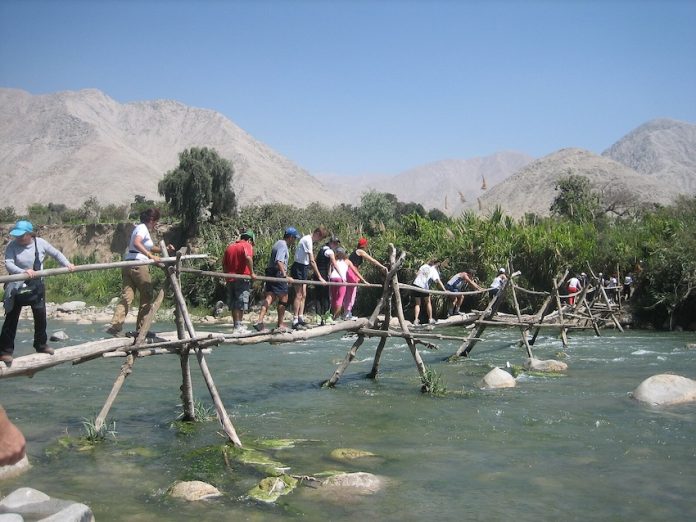
Ever wanted to get into running, but didn't want to give up those trips to the bar? The Hash House Harriers would like to have a word with you. (Jair Zuta La Rosa/Wikimedia)
Ever wanted to meet new people, have a great time and get fit doing it? Look no further than the Mexico City Hash House Harriers.
“Hashing” is a non-competitive fun run in which two or three runners (the hares) lay a trail in paper, flour, or chalk for the rest of the runners (the pack) to follow. The course is usually somewhere between seven and twelve kilometers in length, but there will be shortcuts and ‘checks’. A check is where the trail suddenly stops and the runners have to search for the next mark. This offers the fitter “athletes” a chance to go dashing off looking for the new trail, while the walkers can take a break. If they search in the wrong direction, the fastest runners can suddenly find themselves behind everybody else and will have to work hard to catch up. A good hash is one where the fastest and slowest runners get to the finish within a few minutes of each other.
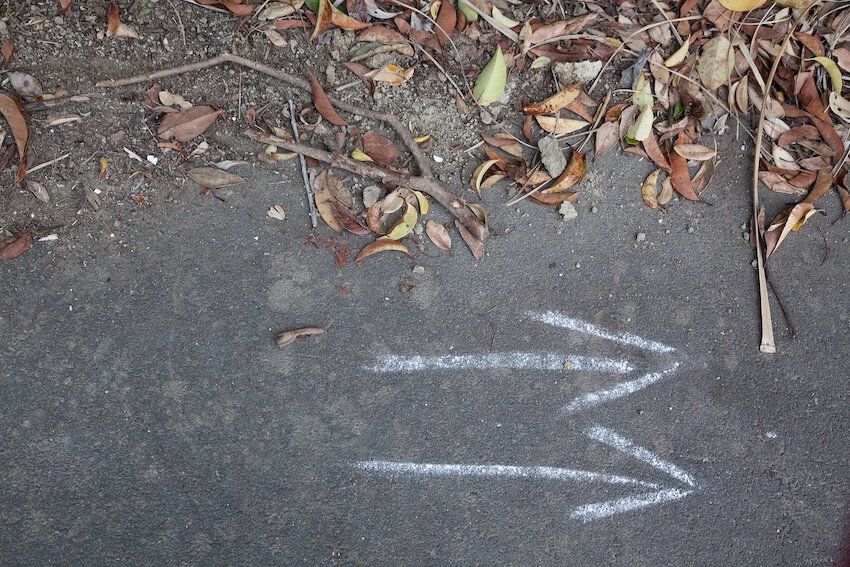
Chalk arrows are often used to direct hashers down a series of complex trails. (Russell Street/Wikimedia)
Unlike many running clubs, however, the Hash House Harriers has a strong social focus, with runs ending at local bars. Here hashers will often spend the rest of the afternoon (and in some cases, evening), celebrating their achievements and reviewing the run that day. This has given rise to the nickname “The drinking club with a running problem.” While alcohol is optional (of course), hashers often enjoy a well-earned drink or three at the end of every hash.
When did all this start?
‘Hares and Hounds’ paper chases started in English public schools in the early 19th century. Rather than employing tutors, sending rich young boys to posh boarding schools became fashionable, with Rugby and Eton being the most famous. Many of these boys were keen hunters, but that was impossible in school. Instead, they would send a couple of their better runners off with a large bag of paper to set a trail across the local countryside. After giving these ‘hares’ a head start, the rest of the boys (the hounds) would set off in pursuit. These school races played an important role in the development of modern cross-country running. These hare and hounds paper chases were taken overseas by British officials and became particularly popular in Malaysia, where there were several clubs in the 1930s. Hashing dates back to 1938 when a group of expatriates working in Kuala Lumpur established a paper chase club called the “Hash House Harriers.”
During the 1960s, a dozen other hashes opened up around Malaysia, but it was the 1970s that brought real growth. The jogging craze had begun, and the expatriate community had become far more mobile. Suddenly, hash groups started to spring up all around the world and today, you can find a hash just about anywhere, from Tokyo to Buenos Aires.
Is it true hashers all use secret names?
Most of us do have a hash name, or a “handle” as we call it. This started in Jakarta in the early seventies. It could get pretty wild after a run, with the boys going on to the local discos after the run. As a report of events was published in a newsletter, “hash names” were adopted to keep activities secret from wives and bosses. It didn’t work, of course. In communities such as Jakarta or Bangkok, you were more likely to be addressed by your hash name than your real name!
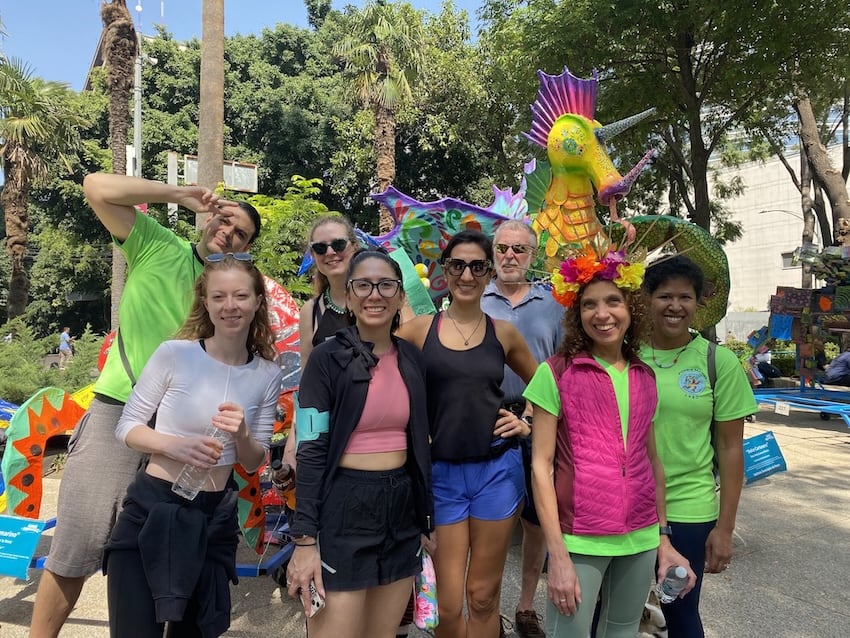
“Hashers” come in all shapes and sizes, and the focus of every run is on camaraderie, not fitness. (Bob Pateman)
What about hashing here in Mexico?
You don’t need to travel to some exotic Asian jungle to find a hash group, there are three groups (or kennels as they call themselves) in Mexico including Mexico City H3 who meet every other Saturday. The venue changes every run, but Polanco, Roma, and Coyoacán are regular meeting places. Hashers gather at 2:00 p.m. and are called around by the leader of the group – the Grand Master. They will welcome newcomers and invite the two hares, who have set today’s trail, to warn everybody what they might expect.
If there are newcomers to hashing or visitors from another hash, the hares will explain the marks. Chalk arrows drawn on the ground or on posts tell where you are in which direction you should be heading. A circle signifies a break in the trail, where the faster runners spread out to find the next arrow, which can be anywhere within 100 to 150 meters in any direction.
There are a few marks unique to Mexico. DGK means Don’t Get Killed, and it is written at busy road junctions that need to be crossed. Then there is BS – which brings a cheer from those listening because it stands for Beer Stop and means a pub has been selected for an early beer close to the end of the run.
With the marks explained, the Grand Master will shout On On and the pack set off following the first of the arrows that will mark the path around today’s 5-7 km trail. Some hashers will already be racing down the road, others will have settled into a walking pack at the back. Hashing caters for everybody!
Beer Stop is a special mark, native to the Mexico City hash. Runners will stop halfway through the trail for a pint of beer, before continuing on. (Bob Pateman)
There has been a hash in Mexico City since October 1983. Many of the founders worked in the oil industry and had hashed in other places around the world. Embassy staff also played a key role in setting up the group. Mexican colleagues from work were encouraged to join and while most of the ex-pats have moved on, a few of the Mexican pioneers are still running with us today.
Mexico City H3 hash every other week, but we are now back in full swing after COVID-19, and always welcome new hashers!
The post-COVID era started around October 2021 and numbers are climbing. Traffic makes getting out of town a problem, so we often run in the city. Even then we can still find interesting places. A few weeks ago, a run in the south of the town went alongside the canals of Xochimilco. The group gets a very good write-up from visiting hashers. Hazukashii, a hash legend and the first man to hash in over 100 different countries, recently visited. In his blog he wrote, “the whole pack was very friendly, and welcoming. If you ever get the chance to visit Mexico City, make sure to check the hash calendar and attend a hash trail.”
One memorable trip in the 1990s was to Tequisquiapan. One of the hashers lived out in the village and the visitors from Mexico City gathered at the local campsite for a long (we were all younger in those days) run through the beautiful fields surrounding the town. There was a barbecue and then the group sat under the stars telling stories.
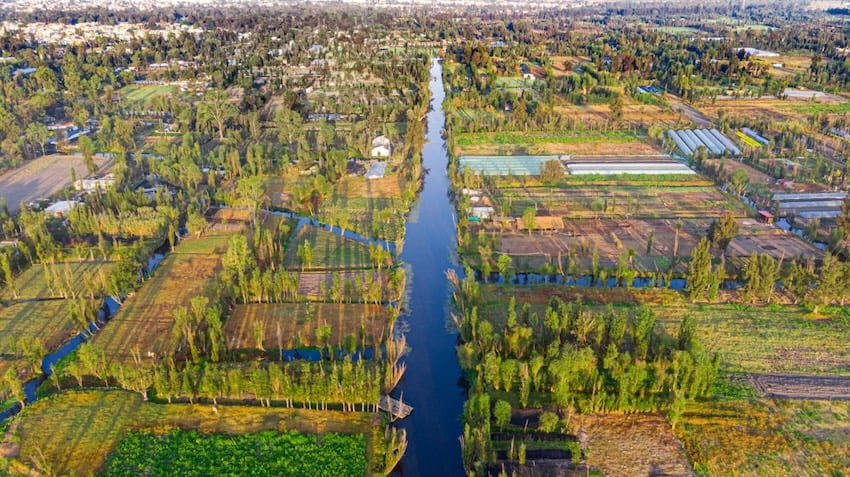
Recent hashes have seen runners chase the hare through the canals of Xochimilco. (Regeneration International)
The organizer woke in the morning to find all the tents empty and the campsite looking like a ghost town. Around 9:00 a.m., the hashers started returning. It had become so cold in the night that they had all bundled into cars and driven into town to sit in the local hotel bar until the sun came up. Despite that, the Tequisquiapan hash had a major impact on several lives, and one of the runners came back and bought a house in the village where he still lives! Although the hare that day moved on (to hash somewhere in Africa), for many years Mexico City H3 made Tequisquiapan an annual trip.
Hashing is, we can not emphasize enough, all about fun. A few weeks ago the walkers got fed up with a long trail and went down into the metro system. Having cut out a big part of the run they were happily sitting in the bar when the surprised runners arrived.
Come and join the Mexico City Hash; we will make you feel very welcome! Find us on Meetup.
There are also small but active hash groups in Mérida and Puerto Vallarta.
Bob Pateman is a Mexico-based historian, librarian and a life term hasher. He is editor of On On Magazine, the international history magazine of hashing.
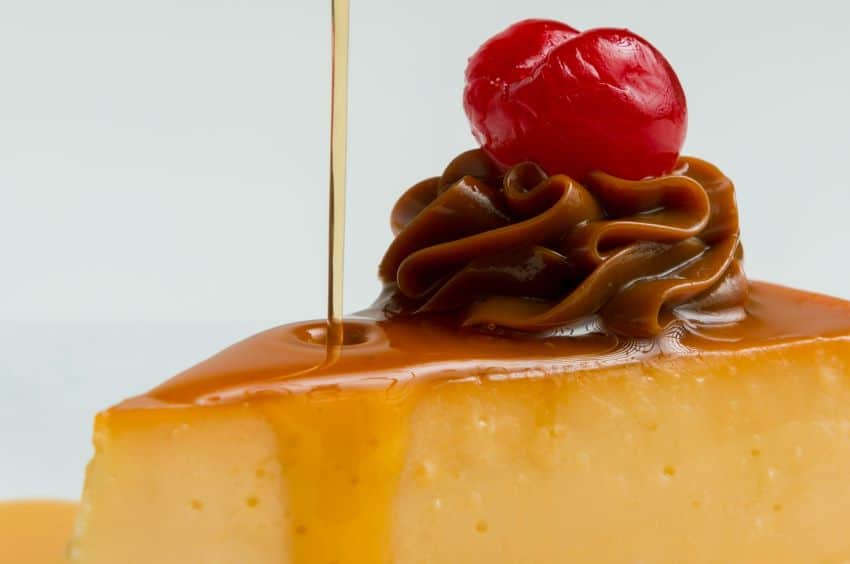
Dating back to the Roman empire, flan has become a staple Mexican dessert. (Matheus Ferrero/Unsplash)
Indulgent, creamy, and beloved, flan napolitano, or Neapolitan flan, proudly holds a lofty spot among Mexico’s favorite desserts. Its velvety texture and luscious caramel sauce are rooted in Spanish influence yet uniquely Mexican in adaptation. In this article, we delve into the history and recipe of this delicacy that is both perfect for celebrations and as a comfort food.
There are many ways to enjoy this flan in Mexico, ranging from homemade recipes to upscale gourmet versions, and it can even be purchased in small cups from street vendors. You can craft flan from scratch in your kitchen, opt for the convenience of instant mixes that only require adding milk or purchase elaborate versions from bakeries.
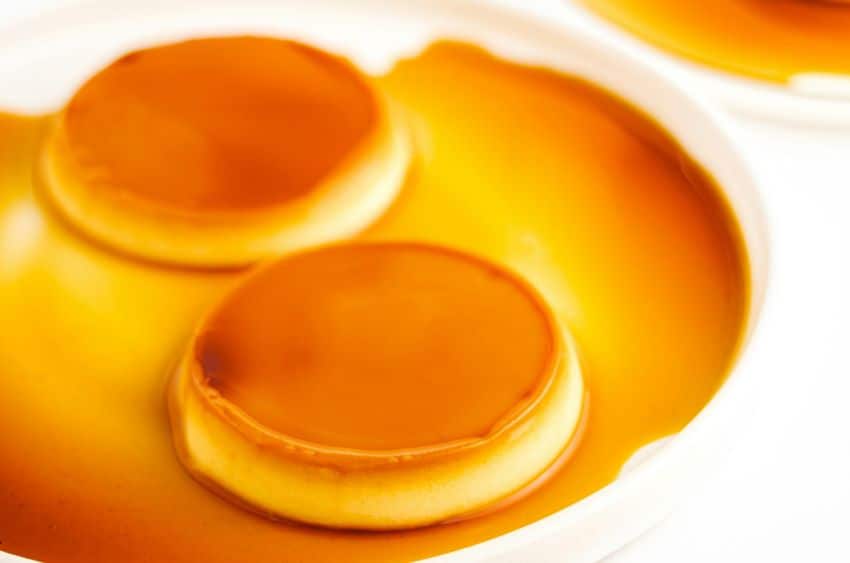
The humble flan appears in many forms, some of which are quite elaborate (and delicious). (Ronald Vargas/Unsplash)
The history of Neapolitan flan
The origins of flan can be traced back to ancient Rome, where it was known as “tyropatina.” Initially prepared as a savory dish, Marcus Gavio Apicius, a renowned Roman epicurean of the 1st century, is credited with providing the earliest description of this recipe, which featured honey, eggs, milk and black pepper.
Over time, as the Roman Empire expanded and interacted with other cultures, culinary influences spread, and the concept of flan evolved. As the Roman Empire declined and gave way to the Middle Ages, sugar was added to the recipe for making flan in various forms throughout Europe, eventually becoming popular in Spain.
Flan has undergone evolutionary changes as it traveled across the globe, giving rise to regional variations. In the 16th century, upon the arrival of Spanish conquistadors in the Americas, they brought along their rich culinary heritage, thus influencing the development of flan in the New World.
Despite the name suggesting an Italian origin, the Neapolitan flan was created in Mexico during the Spanish colonial period. It is presumed that the name intends to infer a foreign flair because, at that time, anything associated with European culture was held in high regard.
Despite the pretense of being Italian, the ‘Neapolitan’ flan is actually a Mexican creation. (Imad/Unsplash)
Neapolitan flan adds cream cheese and different types of milk to the original recipe, which are then cooked in a water bath and chilled before serving. The caramel topping is made by melting sugar, which is then poured into the mold before adding the flan mixture. To mitigate the risk of undercooked centers or overly browned exteriors, flan is frequently prepared and served in individual ramekins, while the bain-marie cooking method helps prevent the caramel from burning.
If you want to impress your guests with this creamy dessert, just follow this simple recipe.
Ingredients
For the caramel:
1 cup granulated sugar
For the custard:
4 eggs
8 oz of cream cheese at room temperature
1 can (14 oz) sweetened condensed milk
1 can (12 oz) evaporated milk
1 teaspoon vanilla extract
How to prepare Neapolitan flan:
Preheat your oven to 350°F (175°C).
To make the caramel:
In a saucepan, spread the granulated sugar evenly over medium heat. Allow the sugar to melt without stirring. Swirl the pan occasionally to ensure even melting. Once the sugar turns into a golden-brown liquid, remove the pan from the heat immediately to prevent burning. Quickly pour the caramel into a round mold, swirling it around to coat the bottom evenly. Set aside to cool and harden.
To make the custard:
In a blender or food processor, combine the eggs, sweetened condensed milk, evaporated milk, cream cheese and vanilla extract. Blend until smooth and creamy.
Pour the custard mixture over the cooled caramel in the mold.
Place the mold into a larger baking dish and add hot water to the outer dish, creating a water bath that reaches about halfway up the sides of the mold.
Carefully transfer the baking dish with the mold into the preheated oven.
Bake for approximately 50-60 minutes or until the flan is set but still slightly jiggly in the center.
Once baked, remove the flan from the oven and allow it to cool to room temperature.
Once cooled, refrigerate the flan for at least 4 hours, or preferably overnight, to chill and set completely.
To serve, run a knife around the edge of the mold to loosen the flan. Place a serving plate on top of the mold and quickly invert it to release the flan onto the plate, allowing the caramel to drizzle over the top.
Slice, serve and enjoy!
As the smooth, creamy custard melts in your mouth, you’ll understand why Mexicans love their Neapolitan flan. Whether enjoyed as a midday treat or a refreshing dessert after a spicy meal, its sweet silkiness evokes celebrations and family ties.
Sandra Gancz Kahan is a Mexican writer and translator based in San Miguel de Allende who specializes in mental health and humanitarian aid. She believes in the power of language to foster compassion and understanding across cultures. She can be reached at sandragancz@gmail.com
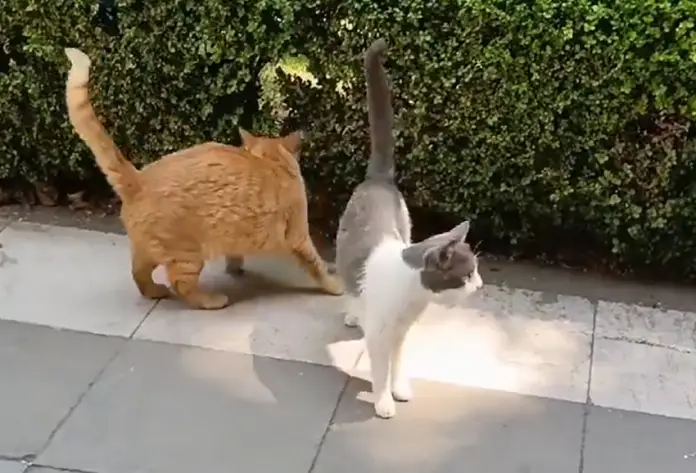
Nineteen clever cats won over Mexico's president, who ordered they be provided food and care in perpetuity. (Screenshot)
Cats are said to be connoisseurs of comfort and there may be no better example of this than the band of Mexico City felines that took up residence in an 18th-century palace, and sweet-meowed their way into free food and care in perpetuity.
Last week, by order of President Andrés Manuel López Obrador, the resident cats of Mexico City’s National Palace were named “living fixed assets,” the first animals in Mexico to receive the title. By definition, this means the government must provide them food and care for the rest of their lives.
🐱 Nube, Bowie, Roja y 16 gatos más que viven en Palacio Nacional serán los primeros animales en la historia de México que el gobierno federal reconocerá como “activos fijos vivos”.
“The cats are now a symbol of the National Palace,” said Adriana Castillo Román, general director of the National Palace and Cultural Heritage Conservancy, in an interview with the newspaper El Universal.
Today, a total of 19 cats roam the grounds of the National Palace, the seat of the federal government and the residency of López Obrador. It is not clear when the cats first moved in.
Their names are Panza (tummy), Ruffino, Topacio (topaz), Yema (yolk), Nube (cloud), Leona (lioness), Ollin, Bowie, Balam, Coco (coconut), Roja (red), Bellof, Princesa (princess), Esponjoso (fluffy), Ikal, Monita (little cutie), Scar, Tigre (tiger) and Bombón (candy).
The president and his team first took interest in the cats in 2018, seeing that they were living in unsanitary conditions.
In August 2023, veterinarians from the National Autonomous University of Mexico (UNAM) sterilized, vaccinated and micro-chipped the cats. All 19 received an “ID card” including name, approximate age and favorite place for a nap in the palace.
At the palace, the cats each have their own personal shelter with plenty of water, kibble and treats to go around. Their budget for their care comes directly from the Finance Ministry (SHCP).
“We are the first public institution where animals are part of the inventory… a living fixed asset of the Finance Ministry, in such a way that, even when we are no longer here … and the president is no longer the president, the kitties will be cared for,” Román said.
City authorities say they are continuing to sample and test the water in various neighborhoods in the Benito Juárez borough. (Sistema de Aguas de la Ciudad de México/X)
After more than a week of complaints, Mexico City officials finally acknowledged that there was a problem with the drinking water in several neighborhoods of the Benito Juárez borough on Monday. But solutions were not so forthcoming.
Mexico City Mayor Martí Batres confirmed that the city water in the borough of Benito Juárez has been contaminated in a press conference on Monday. He also said authorities had ruled out the presence of gasoline in the water, which locals had suspected, and insisted there is no risk of explosion. According to Milenio newspaper, the neighborhoods affected are Nonoalco, Nochebuena, Del Valle and Tlacoquemécatl.
Mexico City Mayor Martí Batres at a press conference on Monday afternoon. (Martí Batres/X)
The complaints began on March 31 when inhabitants reported a foul smell coming from their water taps.
Mexico City’s water authority Sacmex initially dismissed the notion that there was anything wrong, newspaper SDP Noticias reported.
The digital news site La Silla Rota reported last week that, in response to official indifference, locals organized to raise money to have their own water tests conducted, even though officials had told them it was safe.
It was not until April 4 — after reports of people falling ill — that officials began surveying the affected areas and taking water samples. One person told La Jornada newspaper that officials were insinuating that residents may have contaminated the water themselves.
By the weekend, officials confirmed the water had indeed been adulterated with industrial oils and lubricants but not gasoline, pinpointing the alleged source in the western part of the borough, though without offering details.
Even as the authorities claimed to have identified the elements that had polluted the water, there was still no official word on the cause, SDP Noticias reported.
The lack of information was compounded by the failure to provide clear instructions on which precautions should be followed by residents.
La Silla Rota published a recording on Tuesday in which an unidentified government official tells a Benito Juárez resident to avoid drinking or bathing in the water. The agent reportedly said the water could be used to water plants, to clean cisterns, and even to wash dishes, while stipulating that the dishes should not be dried with a cloth afterward.
On Monday, SDP reported on the bureaucratic maze that those affected had to navigate in order to get their water tested. The government set up a command center in a local park in the San Lorenzo neighborhood, where locals can file complaints. Then an agent is dispatched to the person’s home to take samples and turn them over to Pemex, Sacmex and the National Water Commission (Conagua).
Residents have been told the results of the analysis would be ready in four to five days.
The annual headline inflation rate in January was the highest recorded since June 2023. (Cuartoscuro)
Still, inflation last month resumed the upward trend seen between November and January, after the headline rate declined for nine consecutive months between February and October last year. The nine-month-long downward trend came after headline inflation increased to almost 8% in January 2023.
Inflation has now been above the Bank of Mexico’s target of 3%, with tolerance for one percentage point in either direction, for 37 months. Deutsche Bank said that the resilience of domestic demand and a tight labor market are among the factors keeping inflation above the central bank’s target.
Meanwhile, the closely watched core inflation rate, which excludes volatile food and energy prices, declined to 4.55% in March from 4.64% in February. It was the 14th consecutive month that the annual core rate fell. Analysts polled by Bloomberg had predicted a 4.63% rate.
INEGI also reported that month-over-month inflation was 0.29% in March.
March’s inflation data in detail
Inegi’s latest data shows that fruit and vegetable prices were 12.25% higher in March than in the same month a year earlier, while services were 5.37% more expensive on an annual basis.
The cost of processed food, beverages and tobacco rose 5.01% compared to March 2023, energy prices including those for gasoline and electricity increased 3.29% and non-food goods were 2.53% dearer.
Meat prices have continued their downward trend. (Cuartoscuro)
The only category in which prices declined compared to 12 months earlier was meat, which was 0.78% cheaper, according to INEGI.
The statistics agency also reported month-over-month price changes for a range of individual products.
Air travel was just over 28% more expensive in March, which included Semana Santa (Holy Week), while lettuce and cabbage prices surged 18.7%.
Among the other products that were significantly more expensive in March than in February were serrano peppers (+13.5%), chicken (+8.45%), limes (+8.45%) and tourism packages (+7.23%).
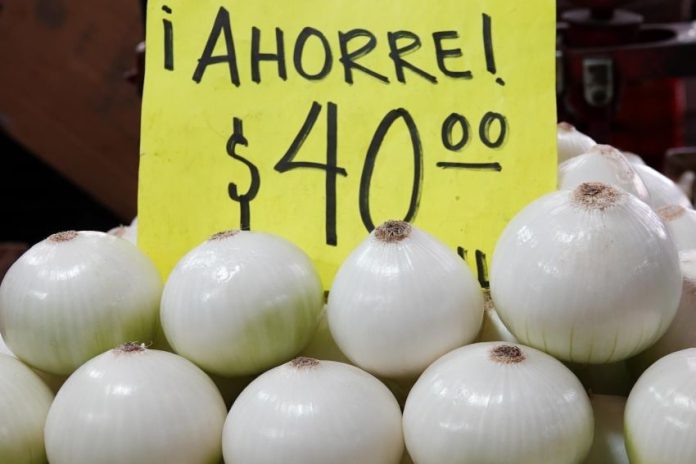
Among the products that were cheaper were nopales (-26.86%), onions (-19.89%) and tomatoes (-12.46%).
What does the inflation data mean for interest rates?
Bloomberg reported that the fact that headline inflation increased less than expected in March bolstered “economists’ bets that the central bank could deliver another interest cut as soon as May.”
Board members including Governor Victoria Rodríguez Ceja have indicated that rates will come down slowly, but the latest inflation data “puts a May cut back on the table,” according to Marco Oviedo, a strategist at the Brazil-based financial company XP Investimentos.
The central bank will hold its next monetary policy meeting on May 9.
Oviedo said that the inflation data as well as “the fact that the [Mexican] economy is weakening” and that “the peso is too strong” add impetus to the case for another interest rate cut next month.
However, Felipe Hernández, a Latin America economist for Bloomberg, is not confident that the Bank of Mexico will make another interest rate cut in the near term.
“Persistent high core services inflation and increasing upward pressure on energy prices rein in the relief from slower-than-expected March headline inflation in Mexico. And with less favorable base effects in coming months, there’s limited room for additional interest-rate cuts,” he said.
The Tianguis Turístico, which gathers businesses from across the tourism industry, will take place at the Expo Mundo Imperial convention center from April 10 to 12.
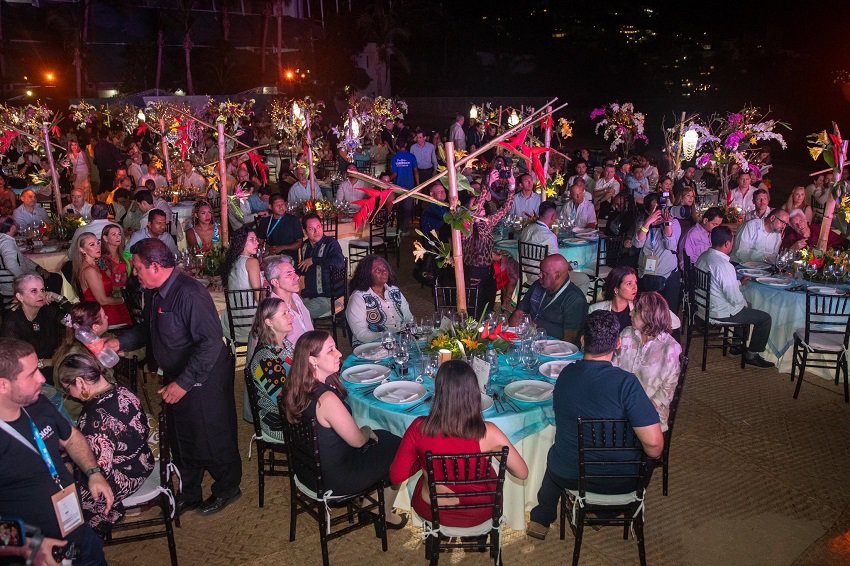
Government officials and tourism industry executives gather for the Captains of Industry Dinner, a traditional part of the fair. (Tianguis Turístico/X)
The fair promotes and markets various tourist products and services from around the country — including sunny beach destinations, culture, luxury, business and adventure — to national and international participants.
According to Tourism Minister Miguel Torruco Marqués, despite not being at full capacity due to damage caused by Hurricane Otis, Acapulco currently has 46.3% of its 21,000 hotel rooms available.
During an event on Sunday at Expo Mundo Imperial, Minister Torruco revealed that the original goal was to provide 5,000 hotel rooms for the fair. However, the demand by the fair’s participants exceeded expectations, so more rooms were made available to accommodate them.
“When the private sector unites with the local population and the three levels of government, there is no obstacle for Mexicans,” Torruco said. “Many said that it was impossible to rebuild Acapulco in five months. I, myself, said that we were only going to have 5,000 rooms ready, but today we have more,” he added.
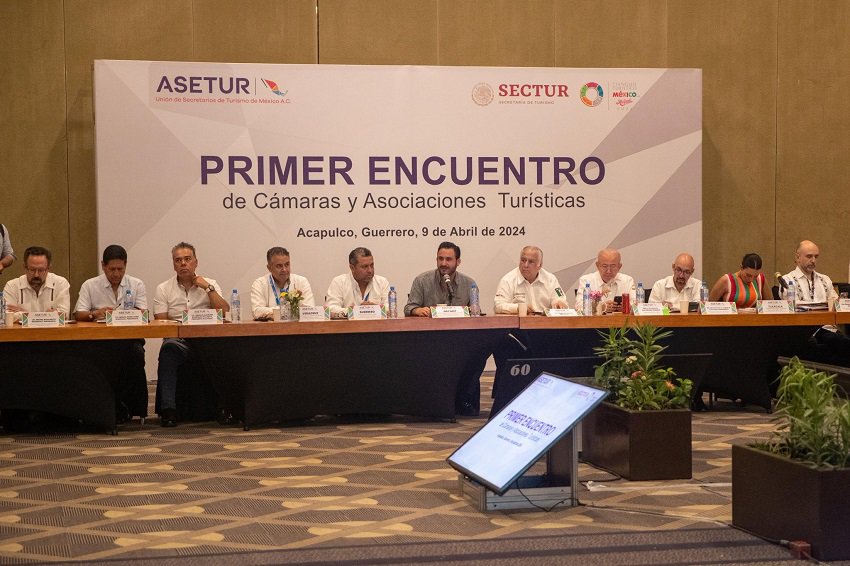
The First Meeting of Tourism Chambers and Associations took place Tuesday as part of the Tianguis Turístico. (Tianguis Turístico/X)
According to the Tianguis Turístico’s website, as of April 2, the fair had confirmed the attendance of 43 countries including Mexico, 1,337 buyers from 787 companies and 1,441 exhibitors from 852 companies.
Torruco Marqués stated that the newly revived state-run airline Mexicana de Aviación will participate in the event for the first time as one of its sponsors. The other airlines sponsoring the event include Aeroméxico, Volaris and Viva Aerobús.
The fair’s origin dates to 1975, when former Mexican president Miguel Alemán Valdés, who at the time was president of the National Tourism Council (CNT), managed it under the name of the International Fair of Hotels and Tourist Agencies of Acapulco (HATA), to market Acapulco as an international destination.
In 1976, the event changed its name to the one it bears today: Tianguis Turístico.
Since 2011, the event has taken place in different destinations besides its original host city. The 2023 and 2021 editions were held in Mexico City, while the 2018 edition took place in Mazatlán, Sinaloa.
Yucatán is Mexico's rising nearshoring star, particularly within the auto parts industry. (Martín Zetina/Cuartoscuro)
Thanks to nearshoring, Mexican states that did not figure prominently in the automotive industry are now finding success in the auto parts sector, with the state of Yucatán a prime example.
The National Autoparts Industry Association (INA) this week revealed a new top ten in the sector. Although states near the northern border, the industrial center and the Bajío region still predominate, Yucatán saw auto parts production spike by nearly 118%.
Yucatán saw auto parts production spike by nearly 118%. (INA/Facebook)
Citing INA data, Forbes México reported that the Gulf state saw auto parts production soar to US $23 million in January of this year, up from $11 million in January 2023, making Yucatán the state with the greatest growth in auto parts production in the country.
Zacatecas was second with a 31.5% increase, which rose from US $88 million to $115 million, followed by Durango, up 18.8%, and San Luis Potosí, up 18.3%.
INA Director Armando Cortés Galicia told the newspaper Forbes México that dynamic growth in Mexico’s auto parts sector was consolidating nicely as the new year began. Cortés attributed the production growth in new regions to an increase in companies relocating to the country.
“One important thing about the relocation of chains of production, about nearshoring, is that there are opportunities for every state to get involved,” he said. “Obviously, initial growth is seen in the traditional states where manufacturing operations already exist, but eventually, all these elements start producing greater benefits in other regions.”
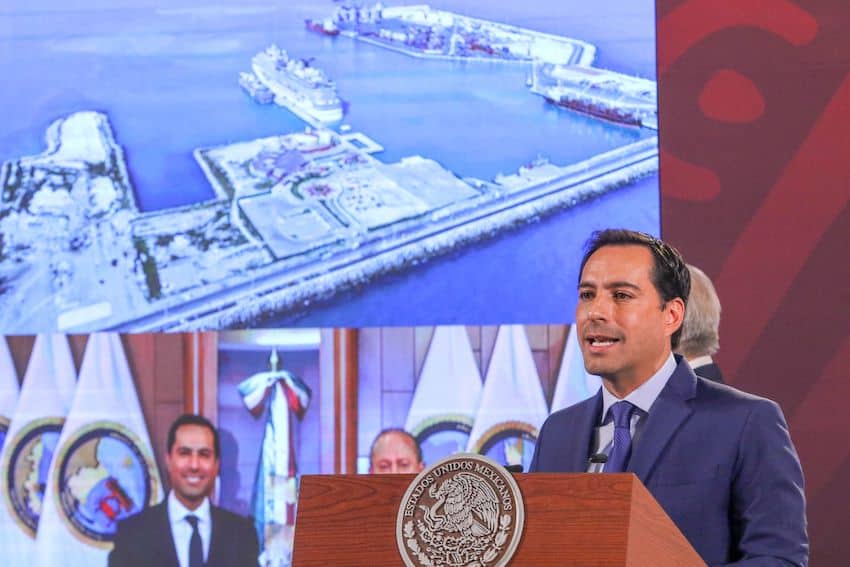
Governor of Yucatán Mauricio Vila Dosal said in March that investment in infrastructure has helped Yucatán become a top 3 state for nearshoring in Mexico. (Moisés Pablo/Cuartoscuro)
Yucatán has become a pioneer in attracting new investment stimulated by nearshoring, the magazine Líder Empresarial reported.
At the International Nearshoring Conference held in mid-March in Aguascalientes, Governor Mauricio Vila Dosal claimed that Yucatán’s investment in critical infrastructure — more power stations, new natural gas lines, improvements to the port of Progreso and connections to the Maya Train — have helped the southeastern state climb to the third-place spot among states receiving new nearshoring investments in Mexico.
Vila Dosal also spoke of his government’s efforts to promote local talent as well as public-private sector initiatives.
Across Mexico, total auto parts production in January exceeded US $10 billion, the highest total since 2018.
At the same time, auto parts exports to the United States rose in the January-February period, exceeding $13.5 billion, an increase of more than 40% since before the COVID-19 pandemic. The newspaper El Economista attributed the improvement to the ratification of the United States-Mexico-Canada Agreement (USMCA), which went into effect on July 1, 2020.
Overall, Mexican-produced auto parts now dominate the U.S. market. El Economista reported that auto parts from Mexico comprise 42.5% of all auto parts imports — significantly more than second-place Canada, which supplies 10.5% of imports.