Home Blog Page 626

Is jazz music making a comeback in Mexico City? The 4 bars you need to visit

2
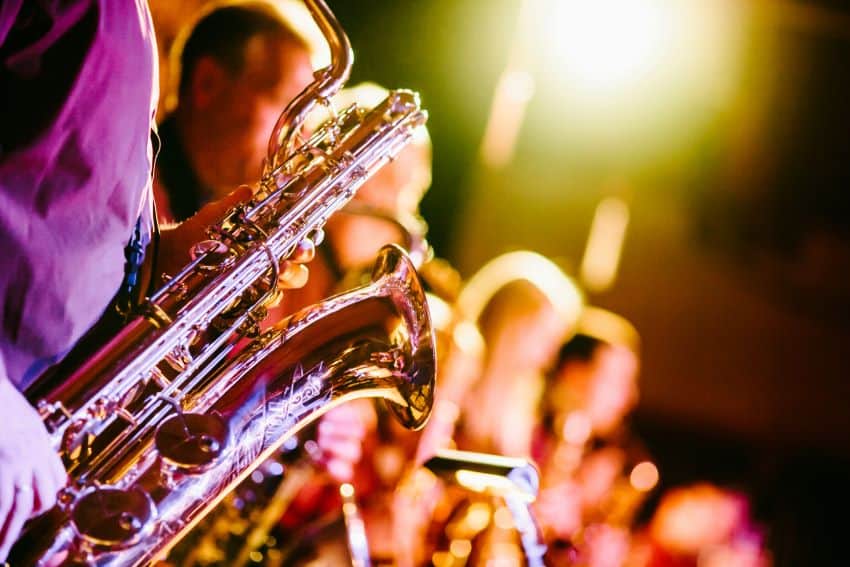
While the genre is most associated with the 1930s, jazz music is alive and well in Mexico City. (Dolo Iglesias/Unsplash)

While the rest of Latin America moves and grooves on the daily, Mexico City bounces to the beat of its own drum. Or lack thereof. Yes, you’ll hear Luis Miguel blasting from the tiny speaker at the corner taco stand. You will listen to plenty of marching bands parading down Avenida Reforma. There is also the occasional saxophone player or mariachi group that will inevitably show up, uninvited, to serenade you awkwardly on your first dinner date with that cute guy you’d been eyeing for months at the coffee shop.

But when it comes to live music, the pickings are slim. However, thanks to the Tío brothers, Jelly Roll Morton, and even good ol’ Porfirio Diaz, Mexico City’s jazz scene rumbles with seduction. Before you make your Saturday night reservation at Parker & Lenox, read on to find out how Mexico discovered jazz and jazz, Mexico. 
Jazz in Mexico dates as far back as 1884. (Jens Thekkeveettil/Unsplash)

A history of Mexican jazz

Alain Derbez, author of Jazz en México, chronicles the birth of Mexico’s relationship to jazz in 1884. New Orleans hosted the World Industrial & Cotton Exposition and Porfirio Diaz sent the Mexican Eighth Cavalry Regiment band to perform. The group of nearly 100 musicians were such a hit that they were featured in Century [music] Magazine and according to TripodNola, the local paper at the time, Daily Picayune, had this to say:

“There has never been a band which has taken such hold on the affections of the people of New Orleans, not only on account of its artistic ability, but the individual and social qualifications of its members.” 

Several members of the Cavalry Regiment stayed north, including Lorenzo Tío of the famous Tío brothers, who would go on to introduce Americans to the clarinet. To be clear, the Tío clan was Catalan by origin, but spent several decades living in Tampico, Mexico. 

Mexico’s melodic influence continued to taint the early American jazz and blues scene. Pianist and composer Jelly Roll Morton, who would record alongside Lorenzo Tio Jr., once said “If you can’t manage to put tinges of Spanish in your tunes, you will never be able to get the right seasoning, I call it, for jazz.” 

The legendary Jazzatlán, home of Mexico City’s modern-day jazz scene. (Jazzatlán)

The golden age of Mexican jazz

Which brings us to jazz’s journey to Mexico. The USA’s Original Dixieland Jazz Band recorded the first official jazz album in 1917, but jazz didn’t truly thrive until the 1920s. Its rise coincided with Prohibition, the nation’s 13-year ban on alcohol. 

It is speculated that a wave of musicians, as well as drinkers, fled across the border looking for work or whisky. Even Morton himself is said to have performed in Mexico in 1921 and composed “The Pearls” in Sonora. By the 1930s, Mexican big band music exploded in popularity. This would later encourage greats like Duke Ellington to perform locally [Ellington held a concert at Palacio de Bellas Artes in 1968]. 

Juventino Rosas’ waltz “Over The Waves” had formed an integral part of jazz music in New Orleans. But it wasn’t until 1954 that ¡La Orquesta de las Estrellas! released the first jazz album in Mexico. Years later, clubs started surfacing in the capital in neighborhoods like Juarez, Roma, and Centro and a handful remain to this day. I spoke with Maurice Orlando Montoya, Mexican-American owner of MM Music Agency in Los Angeles and expert on all things jazz, about his thoughts on Mexico City’s music scene. “⁠I was happily surprised to find a jazz scene in [CDMX]. I was even happier to see that the audience was young and enthusiastic and ready to party.”

Is Mexican jazz having a comeback?

Montoya, whose agency represents the finest Jazz, Afro-Caribbean, Brazilian, and Contemporary Music artists, thinks the expat community might have something to do with it. “Like France in the 50’s, expats make for a good audience. However, the twist here is young people do not listen to jazz Stateside as they did in the middle of the 20th Century.” Does that mean jazz is making a comeback? Or are Mexico City’s jazz clubs more enticing to younger generations than they are in the States? Maybe it’s because, as Montoya says, “mezcal and jazz mix well.”

Is jazz having a moment in Mexico City? Get down to a jazz bar and find out for yourself. (Mónica García)

Multi-day festivals celebrating jazz and blues have also popped up as of late. MJazz, a family-friendly outdoor music jubilee, takes place every February at Parque Bicentenario. The Polanco Jazz Festival is a series of outside concerts in April that showcases talent from Cuba to France, Mexico to Spain. Neuma is a Mexico City-based jazz school that offers classes, workshops, and concerts throughout the year.

All of which makes for an excellent alternative to your usual night out. When you’ve tired of the predictable date night in a restaurant or chisme and cocktails with friends, change it up with some live music. Mexican musicians are often featured, giving you the chance to dive into the local creative culture. Plus, there’s really no better way to refine your listening skills than trying to understand your server speaking Spanish over an enthusiastic trumpet set.

Feeling jazzed up? Here are four cool clubs in Mexico City to scratch the itch.

Jazzatlan Capital: Guanajuato 239, Roma Norte

An intimate, bilevel space with a full menu. Downstairs sees a rotation of multiple artists that change each month, and entry is free. Upstairs is reserved for resident musicians and international players. Tickets are required, open daily. There is a second location in Cholula.

Casa Franca: Merida 109, Roma Norte

Charming and eclectic spot with pizzas, tapas, and drinks. There is a cover charge before midnight and live music Tuesdays — Saturdays. Reservations are suggested and can be made on Facebook or Instagram.

Parker & Lenox: Calle Gral. Prim 100, Juárez

The legendary Parker & Lenox offers a diverse range of sounds for listeners with a discerning ear. (Mónica García)

Very vibey and spacious club known for its eclectic music scene and live music Tuesdays — Saturdays. Reservations are required and talent is sourced from Mexico and beyond. There is a full menu of food and drink. 

Zinco Jazz Club: Calle de Motolinia 20, Centro Histórico 

The most iconic jazz club in Mexico City can, and should, be found in the Historic center. It’s where you go for a sexy, dancey night out in your date-worthy attire. Reservations are absolutely necessary and musicians come from all over the world to perform on Zinco’s stage.

Bethany Platanella is a travel planner and lifestyle writer based in Mexico City. She lives for the dopamine hit that comes directly after booking a plane ticket, exploring local markets, practicing yoga and munching on fresh tortillas. Sign up to receive her Sunday Love Letters to your inbox, peruse her blog, or follow her on Instagram.
Mexico’s agricultural exports off to a booming start in 2024

0
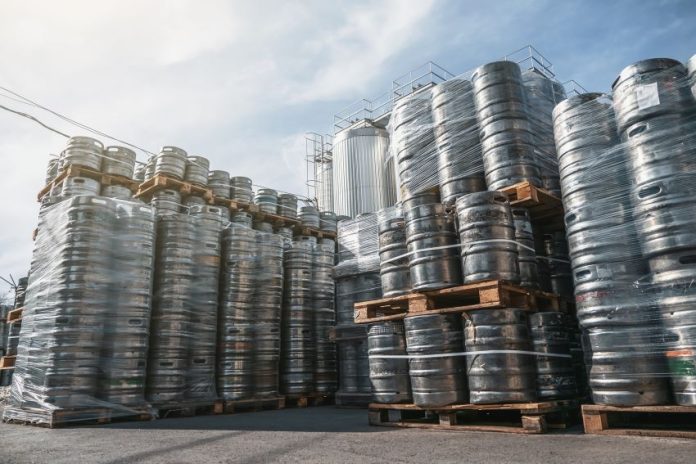
Beer kegs stacked on shipping pallets
Mexico exported more than US $1 billion worth of beer in the first two months of the year. (Shutterstock)

Mexico’s agricultural exports increased almost 9% in the first two months of 2024, helping the country to register a record-high agricultural trade surplus.

Citing data from the Bank of Mexico, the Ministry of Agriculture and Rural Development (SADER) reported Sunday that agricultural and agro-industrial exports were worth US $9.06 billion in January and February, an increase of 8.85% compared to the first two months of 2023 — Mexico’s best ever year for ag exports.

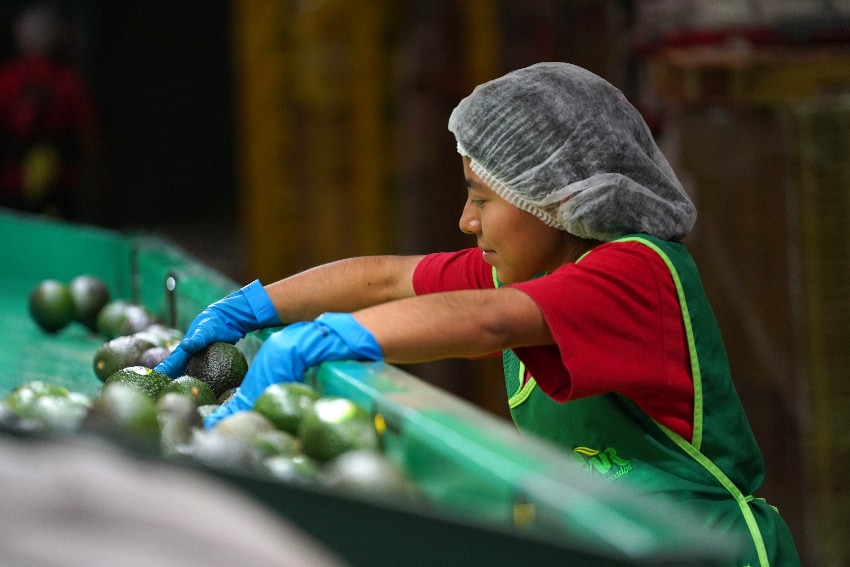
Avocado processing plant
An avocado packer sorts produce destined for export in Michoacán. (Cuartoscuro)

Agricultural imports increased by a modest 2.3% to reach $7.57 billion in the first two months of 2024.

Mexico thus recorded an agricultural trade surplus of $1.49 billion in January and February, a record for the period. The surplus increased 60.95% compared to the first two months of 2023, SADER said.

What were Mexico’s top agricultural/agro-industrial exports? 

Un chingo de cerveza, por favor.” (A shitload of beer, please.)

That is apparently the order the rest of the world placed with Mexico as Mexican beer exports were worth just over $1 billion in the first two months of the year, a 33.8% increase compared to the same period of 2023.

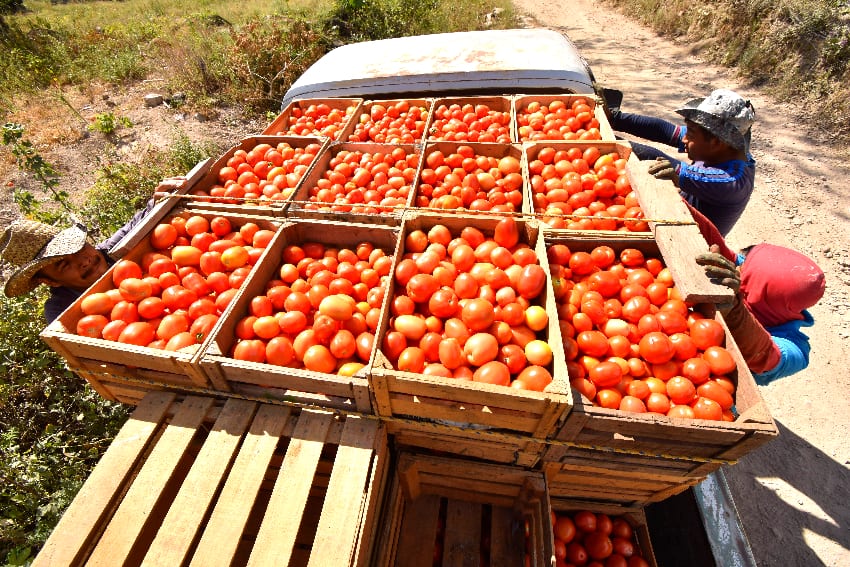
Mexican-grown tomatoes were also in high demand abroad. They brought in revenue of $630 million in the first two months of the year, making the fruit Mexico’s second highest-earning agricultural export, according to SADER.

Rounding out Mexico’s top 5 agricultural exports in January and February were tequila and mezcal ($621 million); avocados ($594 million); and fresh strawberries and raspberries ($531 million).

The majority of Mexico’s agricultural and agro-industrial exports go to the United States, but Mexican products also reach many other countries around the world, including markets in Asia and Europe.

Tomatoes in crates on a truck
Tomatoes were Mexico’s second-highest-earning agricultural exports in January and February. (Cuartoscuro)

Which agricultural products recorded the strongest export growth?

SADER said that exports of chocolate and other products containing cacao increased 71.7% in annual terms in the first two months of the year, while the value of tea, coffee and yerba mate shipments rose 64.5%.

The agricultural products that recorded the next highest export growth were orange juice (62.4%); guavas, mangos and mangosteens (48.6%): grapes and raisins (38%); and cattle (35.9%).

Mexico News Daily 

Mexico saw unprecedented numbers of undocumented migrants arrive in 2023 

0
Migrants ride a freight train through the desert
Migrants ride above a freight train in northern Mexico. (Pedro Anza/Cuartoscuro.com)

The presence of undocumented migrants in Mexico rose significantly last year, surpassing by 77% the numbers recorded in 2022, says the International Organization for Migration (IOM).

The U.N.-affiliated IOM released its Annual Bulletin of Migration Statistics 2023 for Mexico on April 12.

Jerry MacGillivray, deputy head of mission at IOM Mexico, said the report “highlighted the record of irregular migration in Mexico in 2023.”

The IOM found 782,176 encounters with undocumented migrants in Mexico last year, whereas in 2022 only 441,409 such encounters were recorded. MacGillivray explained that the IOM uses the terminology “encounters” because the same migrant may be detained more than once while traversing the country.

The numbers indicate a sharp increase since the beginning of the COVID-19 pandemic. (The IOM database reveals only 82,379 encounters occurred in 2020.)

The report also recognized that greater numbers of children were detained in Mexico last year. Although the percentage of children among immigrants was roughly the same (15% in 2022 versus 16% in 2023), the year-on-year increase overall explains the high number of children — 133,660 in 2023.

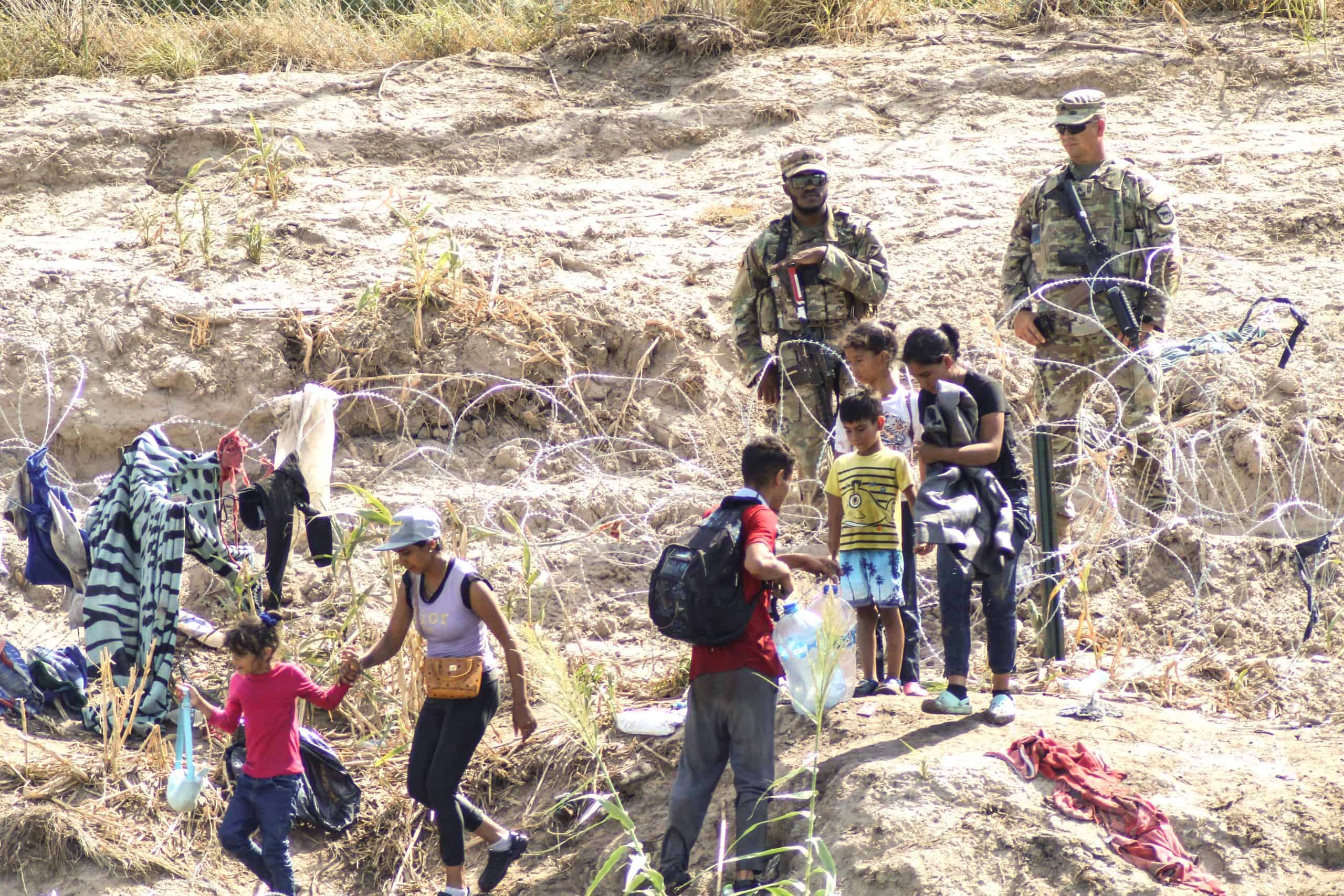
Migrants attempt to cross into the U.S. near Piedras Negras
Mexican immigration authorities detained more children last year than in 2022. (Cuartoscuro)

The IOM did acknowledge that Mexico’s immigration controls appear to be effective as evidenced by a decrease in incidents of violence toward migrants. And this even as there has been a reduction in deportations of Central Americans to their home countries — 56% fewer in 2023 than in 2022, newspaper Animal Político reported.

Mexico received a record number of asylum applications last year, while at the same time processing a record number of documented arrivals (nearly 44 million), Animal Político reported. In fact, this is now the third consecutive year that a new record in documented arrivals has been set.

At the same time, the expiration of the U.S. Title 42 regulation in May 2023 impacted the numbers. Title 42 — part of the Public Health Service Act of 1944 — allows the U.S. government to immediately expel undocumented migrants, which resulted in the deportation to Mexico of considerable numbers of migrants. Overall, the number of deportations from the United States to Mexico in 2023 were down 17% compared to 2022.

MacGillivray speculated that CBP One, the U.S. government’s new visa application, has also contributed to the more orderly patterns of migration here. “The [migrants] know they must use a digital tool to make an appointment and it’s best to try from Mexico City or [non-border] states,” he said, according to La Jornada.

That means fewer people are clustered at Mexico’s border with the United States where overcrowded migrant shelters had become a safety hazard. “In the middle of 2023, most of those shelters were at above 100% occupancy, some even hitting 200%,” he said.

The reduction in numbers of migrants at the border with the United States was further reflected in the IOM’s January data.

There have also been important developments in Mexico this year related to immigration.

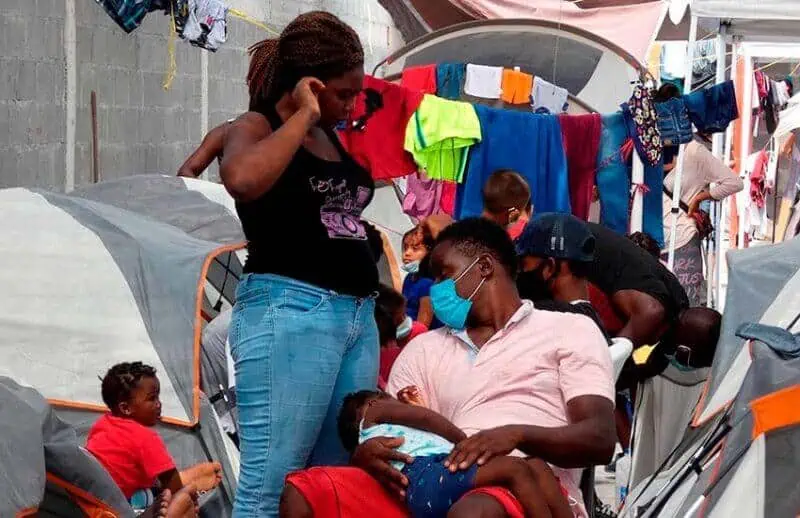
Haitian migrants in Reynosa
According to one expert, the CBP One application, which allows migrants to schedule immigration appointments online, has helped ease crowding at shelters along the Mexico-U.S. border. (File photo)

In February, 50 companies joined a coalition of major businesses committed to hiring refugees and migrants. And last month, the Mexican government reached an agreement with Venezuela to repatriate that country’s migrants. There are between 4,000 and 5,000 Venezuelans “stranded” in Mexico trying to gain entry to the United States.

MacGillivray concluded by saying more could be done to improve the situation for migrants while calling on Mexico’s presidential candidates to open a dialogue with the IOM with respect to migration policy.

With reports from La Jornada and Animal Político

Nearly 40,000 Mexicans living abroad removed from electoral roll

1
INE ballot for electronic voting
Mexican voters living abroad were able to vote online in the 2023 state-level elections, but the 2024 elections will be the first time they can vote electronically for federal-level positions. (INE)

President Andrés Manuel López Obrador said Monday that the federal government is working to ensure that Mexicans abroad can vote in the June 2 elections after almost 40,000 citizens were removed from Mexico’s foreign electoral roll due to what the National Electoral Institute (INE) called “irregularities” or “inconsistencies” in their voter registration applications.

After a reporter asserted that the INE committed a “great fraud” in rejecting the applications of more than 39,000 Mexicans, López Obrador acknowledged that there is “discontent among our compatriots who were removed from the [electoral] roll.”

He added that the government is “dealing with the issue with INE to find the way in which they can vote.”

López Obrador said he would ask Foreign Affairs Minister Alicia Bárcena and Interior Minister Luisa María Alcalde to “seek information” and meet with INE President Guadalupe Taddei Zavala and electoral councilors to “look at the issue.”

He was critical of the electoral agency for “always putting obstacles” in the way of migrants that prevent them from participating in elections in Mexico.

“That’s why very few vote,” López Obrador said, adding that Bárcena and Alcalde would provide an update on the situation on Wednesday.

AMLO at the morning press conference on Monday
President López Obrador said the federal government is working with the National Electoral Institute to facilitate the voting process for Mexicans living abroad. (Cuartoscuro)

The three candidates vying to become Mexico’s next president — Claudia Sheinbaum, Xóchitl Gálvez and Jorge Álvarez Máynez — all criticized the INE for its removal of tens of thousands of Mexicans abroad from the foreign electoral roll.

The INE advised the almost 40,000 Mexican about the problems with their registrations just over seven weeks before citizens will go to the polls to elect a new president as well as state governors, mayors and thousands of federal, state and municipal officials.

Mexicans abroad advised that their applications to vote were “inadmissible”

A significant number of Mexicans living abroad reported last week that they had received emails from INE advising them that their applications to be registered as overseas voters had been rejected.

Recipients of the emails from INE have shared them on social media

Emails received by would-be voters — copies of which were published in news reports and on social media — said that the status of their “individual request” to be included on the foreign electoral roll had been changed to “inadmissible” due to “inconsistencies and/or an invalid registration situation.”

Those emails did not tell individuals what inconsistencies had been detected in their applications, but the INE on Saturday published a statement in which it broadly explained the reasons why the requests to vote from abroad on the internet, by mail or in person  were denied.

Many recipients of the emails said that they were previously informed that their applications to vote had been accepted.

Fernanda Morales-Calva, a Mexican woman studying in Texas, is one such person. She said on the X social media platform that she had been informed of her “successful inclusion” on the electoral roll “months ago.”

What were the reasons for the rejection of voter registration applications?

INE said that it carried out a “meticulous revision” of 42,436 voter registration applications and determined that 39,724 — or almost 94% of those reviewed — were inadmissible due to “irregularities” or “inconsistencies” in supporting documents. It highlighted that the number of people whose applications were rejected is equivalent to just 0.04% of the number of citizens on the national electoral roll.

The electoral authority said that the irregularities and inconsistencies it detected in voter registration applications fell into four categories.

  • More than 18,000 applications were rejected due to “signature irregularities,” including that the signatures were illegible or didn’t match those on voter IDs.
  • Over 12,500 applications were deemed invalid due to “non-compliance” with INE requirements.
  • More than 8,000 applications had “multiple irregularities,” such as the inclusion of “fake documents” and “non-existent addresses.”
  • Over 800 applications had “irregularities” in documents that were provided as proof of address.

After the revision process, INE said that 187,388 people remained on the foreign electoral roll. In other words, 17.5% — or one in six — of those who were previously on the roll were removed.

Affected Mexicans advised to contact INE 

INE said in another statement that Mexicans who were told that their application to vote from abroad was rejected could contact INE to “clarify the situation with their registration.”

The statement said that those affected should call INE on one of the numbers provided or write to a specified email address by May 5 to “make the necessary clarifications and ratify their registration on the foreign electoral roll in the specific method they chose.”

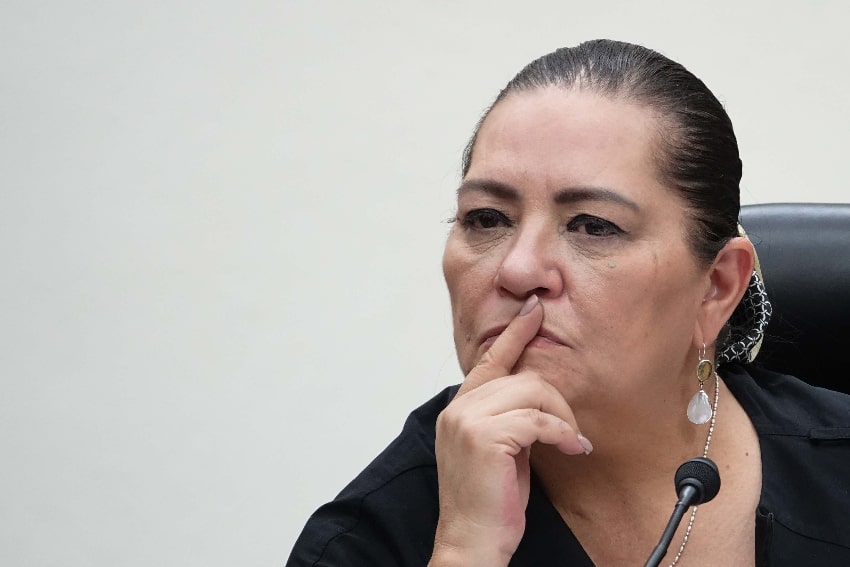
Guadalupe Taddei, director of INE
The president said he has asked the foreign affairs minister and interior minister to work with Guadalupe Taddei, the president of INE, to resolve the issue. (Cuartoscuro)

One person left a comment beneath the statement, saying that it was pointless to call INE as “the person” who answers “doesn’t know exactly what happened with your process.”

“They just ask you to fill out a complaint form, send papers to Mexico and see what they respond,” wrote Cecilia Tejeda.

Other Mexicans claimed that there wouldn’t be enough time for INE to re-register all affected voters before the elections are held.

INE: Mexicans excluded from foreign electoral roll can still vote — but not online or by mail  

INE said that Mexicans abroad who were advised that their application to vote by their chosen method was deemed invalid could still vote even if they don’t make the “necessary clarifications” to “ratify their registration” on Mexico’s foreign electoral roll.

However, to do so they must vote in person at one of 23 Mexican consulates with a “voting reception module.”

In other words, they can’t vote online or by mail, the other two “methods” Mexicans abroad were given the option of choosing when registering to vote. This is the first federal election in which Mexicans living abroad can vote electronically, although they were able to vote online in state-level elections in 2021 and 2023.

“It’s important to specify that Mexicans whose registration was found to be inadmissible … and who don’t make said clarification … will, with [their voter] ID processed in Mexico or abroad, be able to vote in special booths that will be installed in 23 consular offices,” INE said.

Getting to a voting location may be difficult if not impossible for some Mexicans abroad, especially if they don’t live in the United States.

Photos of the three main candidates in Mexico's upcoming presidential election
The three candidates for Mexico’s presidential election, which will take place on June 2, from left to right: Xóchitl Gálvez of the Strength and Heart for Mexico coalition; Claudia Sheinbaum of the Morena party; and Jorge Álvarez Máynez of the Citizens Movement party. (X/MND)

Twenty of the locations are in the U.S., including in the cities of Los Angeles, New York and Houston, while one is in Montreal, Canada. The other two are in Madrid, Spain, and Paris, France.

The electoral authority also noted that Mexicans who live abroad could vote in Mexico on June 2 as they will still be on the national electoral role. Their ability to cast a ballot in Mexico “guarantees at all times their right to vote,” INE said.

However, returning to Mexico to vote is unlikely to be a viable option for many Mexicans who live abroad.

While the majority of Mexico’s diaspora is in the United States, Mexicans live all over the world, including in scores of countries where they won’t have the option to vote in person.

Many of the almost 40,000 Mexicans whose suffrage was suddenly jeopardized will no doubt be waiting anxiously for the update from the government on Wednesday.

Mexico News Daily 

First heat wave of the season brings scorching temperatures across Mexico

0
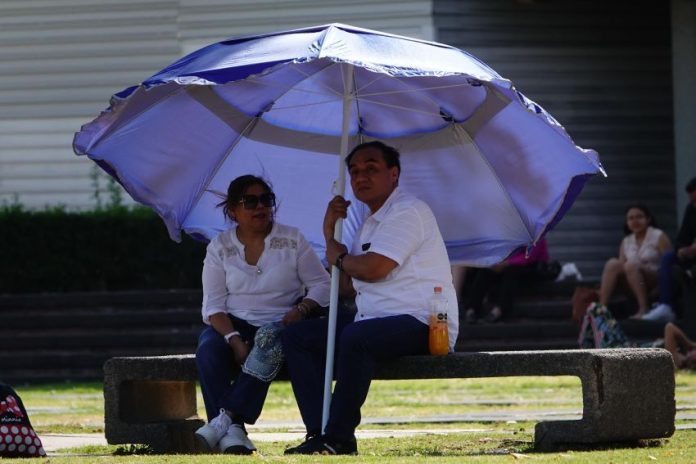
A couple brings their own shade to a Mexico City park in late March.
A couple brings their own shade to a Mexico City park in late March. (Rogelio Morales/Cuartoscuro)

Brace yourself for a hot week in Mexico with the arrival of the season’s first official heat wave.

The National Meteorological Service (SMN) predicts that temperatures are set to rise up to 45 degrees Celsius (113 degrees Fahrenheit) in the southeastern states of Campeche, Chiapas, Guerrero, Tabasco, Oaxaca and Veracruz, as well as the northern state of Sinaloa.

Scorching temperatures between 40 to 45 degrees Celsius are forecast for Coahuila, Colima, Jalisco, Morelos, Nayarit, Nuevo León and Yucatán.

Temperatures between 35 to 40 degrees are expected in Chihuahua, Durango, southwest México state, southern Guanajuato, northern Hidalgo, southwest Puebla, Quintana Roo, southern San Luis Potosí, Sonora, Tamaulipas and Zacatecas.

Meanwhile, Aguascalientes, Baja Southern California, Mexico City, Querétaro and Tlaxcala will see temperatures range between 30 to 35 degrees Celsius.

The heatwave, which began on Sunday, has already brought record temperatures for Mexico City. On Sunday afternoon, the Meteorological Observatory of Tacubaya registered 32.9 degreesCelsius, exceeding the previous record of 32 degrees Celsius registered by the observatory on the same day in 1998.


On April 14, Mexico City recorded a temperature of 32.9 degrees Celsius, the hottest temperature in the area in recorded history.

The SMN explained on its X account that Mexico’s current heatwave is caused by a semi-stationary anticyclonic system that inhibits cloud formation, increasing temperatures.

Due to the high temperatures, the population is advised to take preventive measures such as staying hydrated and closely monitoring chronically ill people, children and older adults. Authorities also recommend avoiding eating street food as the heat will increase the risk of foodborne illness.

Scattered rains and low temperatures are forecast in other parts of Mexico

Meanwhile, some lucky regions will see scattered rainfall (from 5 to 25 millimeters) due to low pressure channels over the middle of the country. These regions include Chiapas, Guanajuato, Hidalgo, Michoacán and Querétaro. Isolated showers (from 0.1 to 5 mm) are forecast in Coahuila, State of Mexico, Nuevo León, Oaxaca, Quintana Roo, San Luis Potosí, Tamaulipas and Zacatecas.

Meanwhile, northern cold front number 46 will cause wind gusts of 80 to 100 kilometers per hour (km/h) in Chihuahua and Sonora, with whirlwinds and dust devils likely. Coahuila, northern Nuevo León and northeastern Tamaulipas may also feel the chill with winds forecast to reach 60 to 80 km/h.

The cold front will cause lows ranging between -5 to 5 degrees Celsius in the mountainous areas of Baja California, Chihuahua, Durango, México state, Hidalgo, Oaxaca, Puebla, Sonora, Tlaxcala and Veracruz.

Mexico News Daily

Which city was named the best destination in Mexico by Tripadvisor?

12
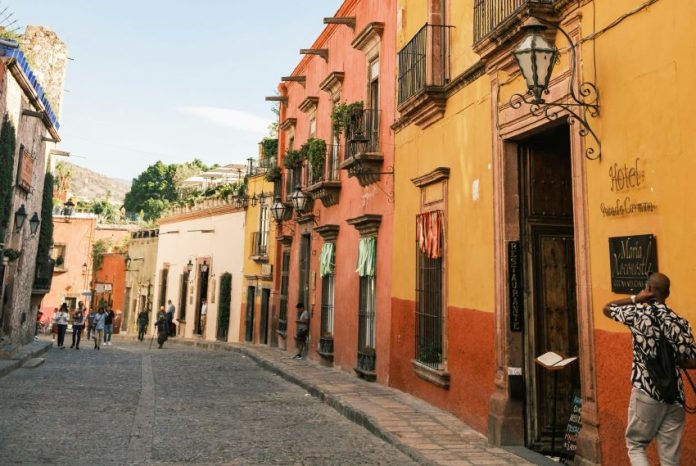
Vendors, tourists and locals mingle in the streets of downtown San Miguel de Allende. (Lauren King/Unsplash)

Tripadvisor Travelers’ Choice Awards has recognized San Miguel de Allende, Guanajuato, as Mexico’s best tourist destination, according to media reports on the awards that took place during the Tianguis Turístico 2024 in Acapulco.

The Travelers’ Choice Awards Best of the Best title recognizes the highest level of excellence in travel. “Out of our 8 million listings, fewer than 1% achieve this milestone,” Tripadvisor says on its website, which has yet to show the new award information.

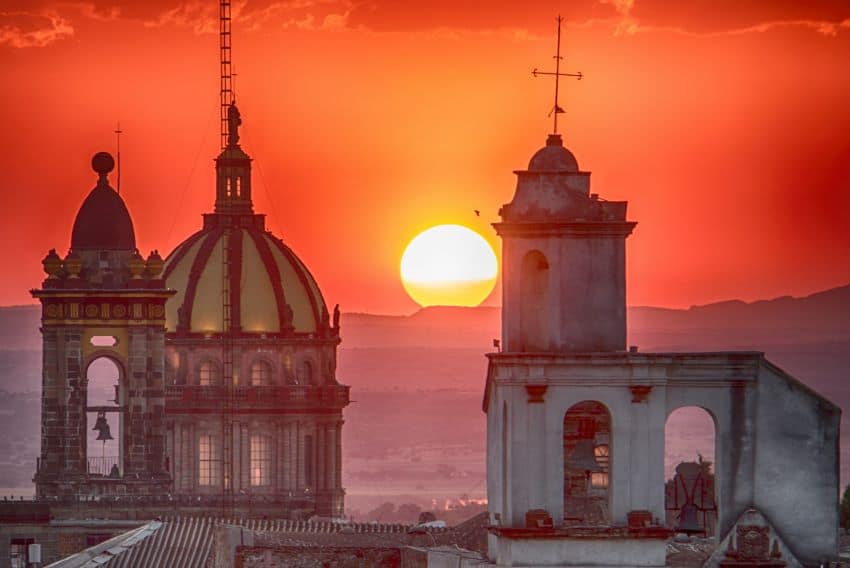
The sun sets behind San Miguel's Church of the Immaculate Conception
The sun sets behind San Miguel’s Church of the Immaculate Conception. (Daniels Joffe/Unsplash)

The accolade is awarded to “those who receive a high volume of above-and-beyond reviews and opinions from the Tripadvisor community over a 12-month period,” the platform says. Previously, such recognition belonged to Cancún.

Tripadvisor’s award adds to praise heaped on San Miguel de Allende throughout the years — it is a five-time winner of the world’s “Best Small City” award by Condé Nast Traveler, a UNESCO World Heritage Site and Travel + Leisure magazine’s Best City in the World.

“It’s the type of place that our readers come back to, year in and year out, and a destination where many travelers want to put down roots,” T+L said of San Miguel de Allende, which surpassed cities on the ranking like Florence (No. 6), Tokyo (No. 19) or Rome (No. 14).

Located in the far eastern part of Guanajuato in the Bajío region, San Miguel de Allende stands out for it’s cultural and culinary offerings and  is a popular destination for wellness tourism. Moreover, it is a historical city that combines Spanish heritage with Indigenous traditions.

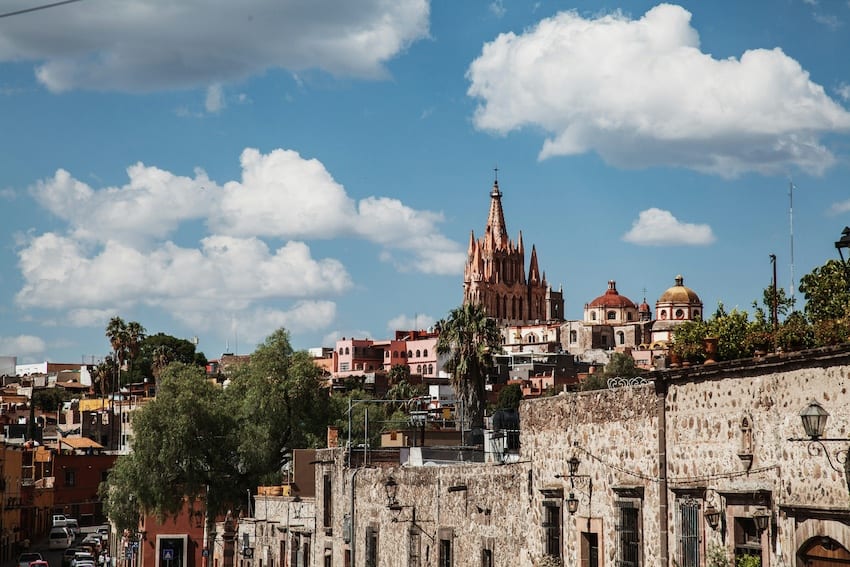
San Miguel skyline
San Miguel de Allende is renowned for its historic colonial-era churches and historic downtown. (Jillian Kim/Unsplash)

Because of its location in central Mexico, San Miguel de Allende acted as a “melting pot” where Spanish immigrants, Mexicans of Spanish heritage and the Indigenous communities “exchanged cultural influences” and “human values,” UNESCO says.

Moreover, the city is a perfect example of buildings in the style of the Mexican Baroque. “Some of these buildings are masterpieces of the style that evolved in the transition from Baroque to neoclassical,” according to the UNESCO website.

As one of Mexico’s most visited cities, San Miguel de Allende saw over 2 million visitors in 2023, surpassing the numbers from 2022 — when it received 1.8 million tourists — and setting a new record for the small city.

“This consolidates San Miguel de Allende as a world-class tourist destination and without a doubt one of the most important destinations in the country,” San Miguel de Allende’s Mayor, Mauricio Trejo, said at the time.

With reports from Milenio

Viral video raises alarms about a disappearing Lake Pátzcuaro

3
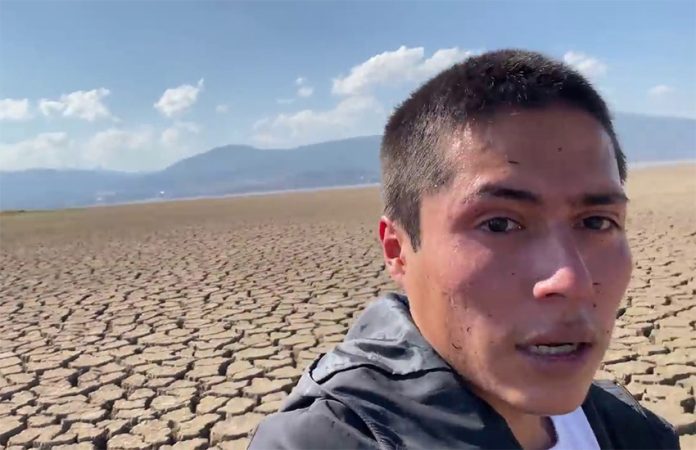
The YouTuber known as El Purepeche's documentation of Lake Patzcuaro's dry lakebed drew the attention of web denizens across a range of social media platforms.
The YouTuber known as El Purepeche's documentation of Lake Patzcuaro's dry lakebed drew the attention of web denizens across a range of social media platforms. (Screenshot)

Lake Pátzcuaro, a jewel of Mexico loved by locals and tourists alike, is facing an alarming decline in water level — a development driven home by a video posted on YouTube last week that went viral.

Titled “You can cross Lake Pátzcuaro, Michoacán without a boat,” the 25-minute video exposes vast amounts of dry, cracked lakebed where there used to be deep waters and lanchas taking tourists to the emblematic island of Janitzio.

That video and shorter versions on other social media sites have been viewed over 950,000 times combined.

The sharer of the initial video, “El Purepeche,” isn’t quite able to walk all the way to Janitzio. The tourist-friendly island, topped by an iconic, 40-meter statue of José María Morelos, is still surrounded by a channel of water.

But his point is made.

“Today, the most famous lake in Mexico is in a deep crisis caused mainly by the theft of water,” said Serapio Cruz Guzmán, president of the Janitzio Island Communal Council.

A clip of the video shared by the Michoacán news site Changoonga. (X)

The lake, on a volcanic plateau at 2,195 meters (7,200 feet) above sea level, has been ravaged by drought along with avocado and berry farmers who are said to be tapping into the lake to irrigate their crops.

A report last month on the Televisa news site N+ noted that Lake Pátzcuaro was at 50% of its normal level.

Overall, Michoacán is in dire straits: 97.3% of the state is facing severe drought conditions, with 63 municipalities at the most extreme levels, and state reservoirs were at only 59% of capacity as of last week.

Beyond drought, experts point to water theft as a major factor in Lake Pátzcuaro’s shrinkage. Determined to combat this, authorities this month began deploying dozens of uniformed civil guard officers equipped with drones and patrol vehicles to monitor the lake.

These efforts seem to be yielding some results, with initial reports suggesting the interception of 600,000 liters of illegal water extraction daily.

Additionally, the Interdisciplinary Committee in Defense of Lake Pátzcuaro was formed to bring together various stakeholders to tackle the crisis. Their focus includes addressing the root causes of the lake’s decline, such as deforestation (in order to plant more and more avocado trees) and inflowing pollution and wastewater.

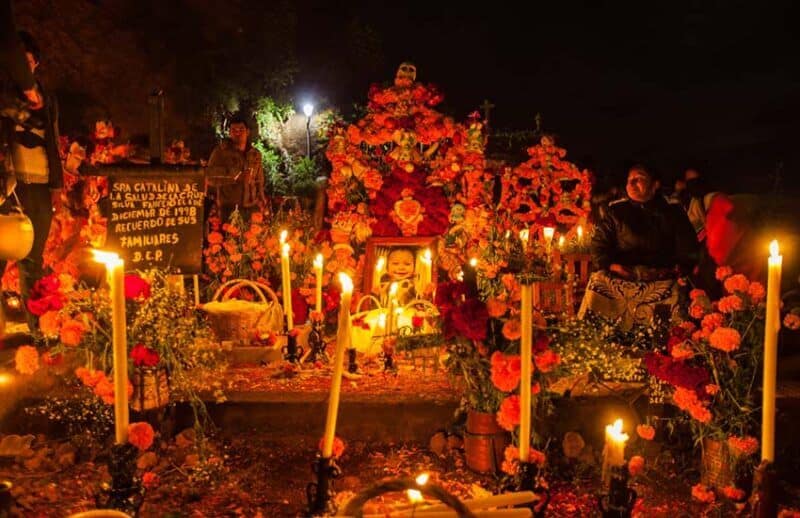
Lake Pátzcuaro is not just a water source. It’s a cultural and ecological treasure that the surrounding communities, renowned for their Day of the Dead traditions, rely on for tourism and fishing. It is also an important habitat for various species of waterfowl and fish, and includes five islands.

Day of the Dead in Patzcuaro, Michoacán
The island of Janitzio in Lake Pátzcuaro is famous for its dramatic Day of the Dead celebrations. (File photo)

Nearby, Lake Cuitzeo, the second largest freshwater lake in Mexico, has lost a staggering 70% of its water, according to recent reports.

Concern over Lake Pátzcuaro is not a new phenomenon. In 2020, there was a drive by four lakeside municipalities — Pátzcuaro, Erongarícuaro, Quiroga and Tzintzuntzan — to create a comprehensive restoration plan to reverse the lake’s pollution and below-optimal water levels.

In recent months, residents of Pátzcuaro, which has a population of 98,000, protested the ongoing water shortages by washing clothing in the fountain at the city’s main square, Plaza Vasco de Quiroga.

“What a shame and a pity,” one user wrote after viewing the viral video. “It is a sign from Mother Nature so we can raise awareness.”

With reports from Milenio, El Financiero, Infobae, N+ and El Sol de Morelia

Mexico City authorities advise Benito Juárez residents continue to use purified water

0
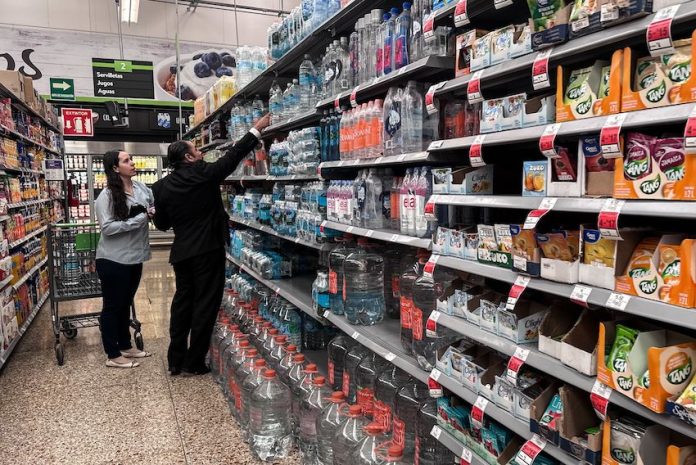
People buying bottled water from a supermarket
Until the contamination is cleared up, residents of Benito Juárez who detect a foul smell in their tap water should use purified water for drinking and cooking. (Andrea Murcia/Cuartoscuro)

The Mexico City water authority (Sacmex) warned those living in the Benito Juárez borough not to drink foul-smelling water, or use it to brush their teeth or give it to pets, after city authorities advised residents last week that contamination will continue to affect the water supply for another two weeks.

Criticized for being slow to react to the emerging crisis after residents began reporting complaints in late March, the capital government has taken steps to address the contamination, but the situation — like the water — remains murky.

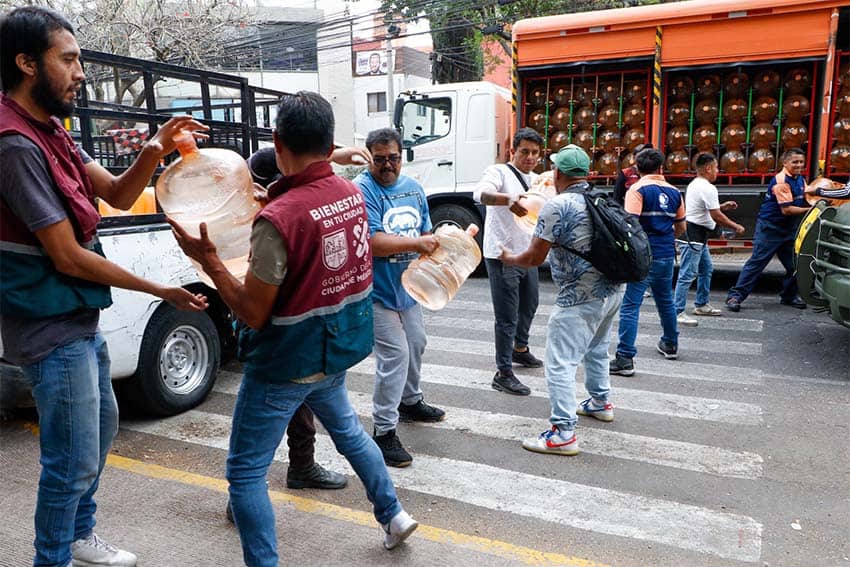
Mexico City workers distributing 20 gallon bottles of water to Benito Juarez residents
Benito Juarez residents will likely be dealing with unsafe tap water for another two weeks, said city civil protection and risk management official Miriam Urzúa. (Martí Batres/X)

Mexico City Mayor Martí Batres on Sunday announced that his government had set up a second command center in the Nápoles neighborhood of Benito Juárez and the Naval Ministry (SEMAR) had installed a potable water apparatus. The city also delivered several hundred 20-liter bottles of purified water for residents of affected neighborhoods, including Nonoalco, Nochebuena, Del Valle and Tlacoquemécatl.

The city has begun emptying and sterilizing cisterns across the borough, with the newspaper El Financiero reporting that three wells had been secured by the National Guard. Sacmex, however, said the Miraflores, Jardín Pombo and Rosendo Arnaiz wells had already been inspected by the agency and found no evidence of vandalism or of gasoline in the system.

Sacmex is still trying to pinpoint the cause of the water contamination in Benito Juárez after saying a week ago that they had traced the problem to the Alfonso XIII well. Though located in the neighboring borough of Álvaro Obregón, the Alfonso XIII well supplies water to the areas of Benito Juárez that are currently dealing with contaminated tap water. 

National oil company Pemex said it had examined an oil duct that passes within meters of the Alfonso XIII well and found the pipeline to be undamaged. “We did not see any fissure, leakage or evidence of an illegal tap on the duct,” director of Pemex Logistics Javier Emiliano González told the newspaper La Jornada.

Mexicans examining bottles of drinking water
Mexico City residents take bottles of drinking water from a distribution point in the Benito Juárez neighborhood, where a mysterious contamination of the water supply has occurred. (Cuartoscuro)

Early speculation was that criminals siphoning oil from a Pemex pipeline — an increasingly frequent occurrence in Mexico City, according to the newspaper Reforma — had caused a leak that had infiltrated the city’s water distribution system.

On Friday, Pemex confirmed that trace amounts of oil derivatives and industrial lubricants had been found in water taken from taps in Benito Juárez.

A Pemex official told La Jornada newspaper that the amount of contaminants was so minuscule it had not been detected in initial tests.

Over the weekend, Mayor Batres insisted the contamination does not pose serious risks to public health but cautioned residents of Benito Juárez to avoid drinking the water, urging them to cook food, brush their teeth and provide their pets with purified and bottled water. 

“The water from your taps should only be used for washing dishes, washing cars, cleaning floors and patios and for flushing your toilets,” Batres said.

As of Monday afternoon, no statements have been made as to what caused the contamination. 

With reports from El Financiero, La Jornada and Sin Embargo

Helicopter crash in southern Mexico City kills 3

2
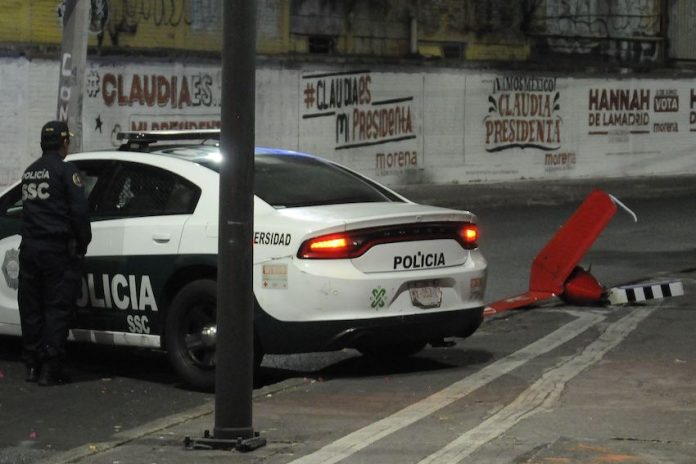
The tail of a crashed helicopter lies on a roadway in Mexico City
The crash occurred in the Coyoacán borough of Mexico City on Sunday. (Daniel Augusto/Cuartoscuro)

UPDATE:

On Monday night, after the publication of this story, the Mexico City Attorney General’s Office published a statement indicating the two passengers (one man, one woman) aboard the helicopter were foreigners, however their identity has not been confirmed as of Tuesday morning. Reforma newspaper reported late Monday that sources close to the investigation say the victims were Korean.

Three people were killed on Sunday afternoon when a helicopter operated by a tour company crashed in southern Mexico City.

The cause of the accident that claimed the lives of the pilot and two passengers appeared to be engine failure, according to the federal Infrastructure, Communications and Transport Ministry (SICT).

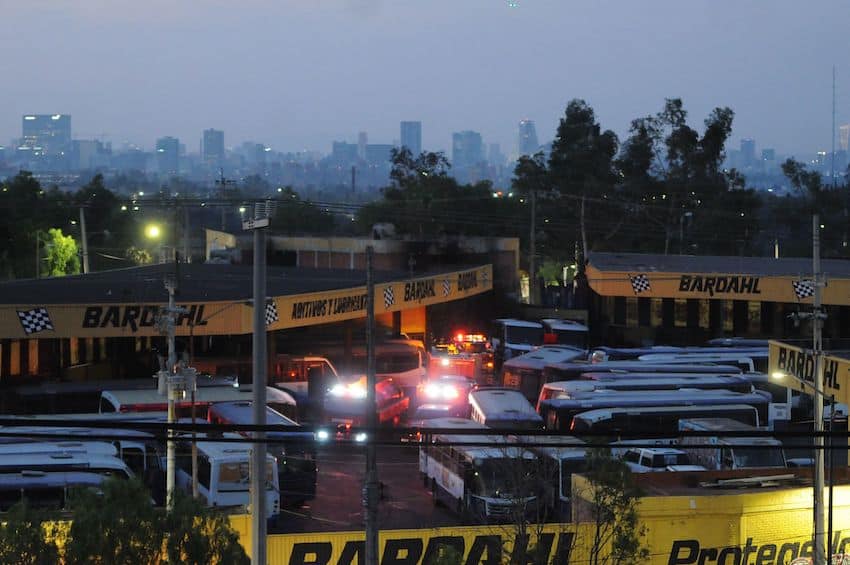
The helicopter crashed into a public transport maintenance facility. (Daniel Augusto/Cuartoscuro)

The Bell 206B helicopter operated by the company Let’s Fly came down in the borough of Coyoacán and crashed into a public transport maintenance facility. The aircraft burst into flames upon impact.

Police, firefighters and paramedics all responded to the crash, which occurred at a location near University City, the main campus of the National Autonomous University, or UNAM.

Some local residents also rushed to the scene, but nothing could be done to save the lives of the three people on board the helicopter.

Mexico City Security Minister Pablo Vázquez Camacho said on the X social media platform Sunday evening that the general population was not at risk from the accident and that there was no danger to nearby homes.

The Mexico City Attorney General’s Office said on X that it had begun an investigation and that its personnel were at the scene of the crash.

On Monday morning, President Andrés Manuel López Obrador sent his condolences to the families of the three victims, and paid tribute to the pilot “because everything indicates that he maneuvered [the helicopter] so as to not fall where there were homes with families.”

The pilot was identified as Armando Cervantes. SICT said on X he had a commercial helicopter pilot’s license that was valid until January 2025.

Francisco Ahumada, a business owner in Coyoacán, told the newspaper El Universal that he saw the helicopter nose-dive before it crashed. He said the aircraft “exploded” into flames when it hit the ground.

Benjamín Gallardo said that he and other stall holders at a tianguis, or street market, thought the helicopter was going to come down on top of them.

“But it ended up in the repair yard, we heard a horrible explosion,” he said.

The helicopter took off from the Mexico City airport and intended to land there, according to El Universal.

Let’s Fly says on its website that it offers “the opportunity to live a unique and different adventure in Mexico City.”

“With us you can fly by helicopter over the most emblematic and spectacular places in the capital, enjoying a panoramic and exceptional view that will leave you breathless,” the company says.

With reports from Milenio, Infobae and El Universal 

How a Californian expat became part of the Mexican community through fungi

0
Dennis Taylor mycopreneur
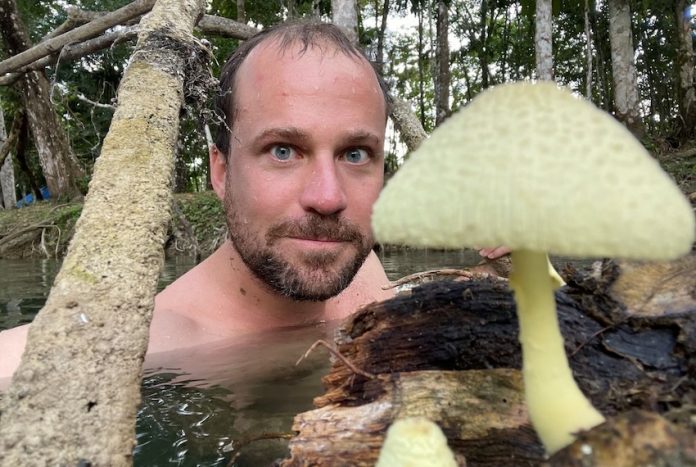
Dennis Walker is the man behind Mycopreneur, a satirical look at the space where mushroom culture and international living collide. (Dennis Walker/Mycopreneur)

Vegan tacos aside, when you think about mushrooms in Mexico, what comes to mind? Frolicking through the lush, green forests of San Jose del Pacifico? Chasing elves and fairies through trees that appear to be breathing? Watching multi-colored clouds transform into real life, shimmering animals, only to disappear into dust when you touch them?

When I scheduled an interview with Mexico-based mushroom enthusiast Dennis Walker, this is exactly the conversation I envisioned. I figured if I didn’t come out with the necessary information for an article, I’d at least get hooked up with a reputable shaman to help me find God during a visit to Tulum. I mean, why else take mushrooms in Mexico, am I right?

Magic mushrooms
Mexico has become increasingly synonymous with magic mushrooms in recent years, with some mixed results for the indigenous communities that hold them sacred. (Wikimedia Commons)

Turns out, I’m not.

This is not the world of fungi in which the owner of Mycopreneur, the leading mushroom publication which follows the emerging psychedelic industry and the cultural, historical, spiritual and medicinal use of traditional functional mushrooms, lives. 

Dennis entered my life as many do these days, through social media. I watched his satirical video about expats in CDMX, a group into which I am unfortunately lumped. It made me laugh so much that I reached out to hear his thoughts on life as an entrepreneur in Mexico and his opinion of the best magic mushroom retreats within driving distance.

What I learned was just as profound as a weekend of psychedelics. I came out of our chat with a deeper respect for mycology and an understanding of how we, as expat immigrants, can assimilate into our chosen society.


View this post on Instagram


A post shared by Dennis Walker (@mycopreneurofficial)

At 17, Dennis tried magic mushrooms for the first time and had a “pivotal, transformative, cathartic experience”. There were no lingering side effects, minus the shift in how he viewed life as a whole. He was fascinated by the fact that the source was natural as opposed to lab-created, and his investigation began.

He found himself in Mexico, where mushrooms are revered and used in a variety of ways, from taco fillings to healing teas. It felt familiar and comfortable to be here. Growing up in San Diego had intertwined Dennis with Mexican culture, even prompting him to produce a documentary about life on the border in 2017. After graduating university he worked as a high school teacher in Southern California, but his interest in mushrooms remained.

During summer breaks, he’d return to Mexico, introducing himself to the indigenous communities fighting to conserve and protect the fragile fungi. Dennis got involved with groups like Cooperativa Simbiosis in Mexico City, Fungaria in Chiapas, and Fungipeople in Jalisco. He worked with them to organize events like cooking classes, conservation techniques, and even mushroom beer brewing. He learned how and when to forage, which species are used ceremoniously and why, and how to grow his own. 

As this fascinating world of mycology unfolded, Dennis left the education industry to support his fellow mycologists through an online platform, a podcast, and international speaking engagements. He relocated to Mexico, where, as he puts it, “I found a sense of charm and character that I don’t sense in the US.”

mushrooms on display at Mixtlan Mushroom Festival in Jalisco
Walker says that mushrooms help to “[Put] me in touch with nature, my health, and my community.” (Magaly Rayita)
I didn’t write this piece with the intention of making you eat more mushrooms. I wrote this because after my talk with Dennis I understood that it was his love of fungi that assimilated him into a life in Mexico. Dennis has succeeded where few have even attempted — he’s been incorporated into local societies from urban to indigenous. When asked how mushrooms have improved his life, Dennis told me this: “We live in an age where everyone is trying to reduce everything to the sum of its parts. The joy of [foraging for and learning about] mushrooms restored in me a childlike sense of wonder. It puts me in touch with nature, my health, and my community.”                            

That’s when the light bulb went off. It was his passion that didn’t just take him down a new path professionally and personally, but directly into a society that welcomed him with open arms. Isn’t that what we, as expats, are ultimately looking for?

A fusion like this doesn’t happen on its own. As Dennis puts it, it’s “incumbent on people moving to a new place to work on assimilating, integrating, and building connections locally”. Diving into something you love alongside others who share that love is paramount to connecting with your adopted community. 

Expat doesn’t have to mean “foreign”.

What do you want to do more of? Learn more of? Experience more of?

Let your interests guide you, and Mexico will open its doors.

Bethany Platanella is a travel planner and lifestyle writer based in Mexico City. She lives for the dopamine hit that comes directly after booking a plane ticket, exploring local markets, practicing yoga, and munching on fresh tortillas. Sign up to receive her Sunday Love Lettersin your inbox, peruse her blog, or follow her on Instagram.