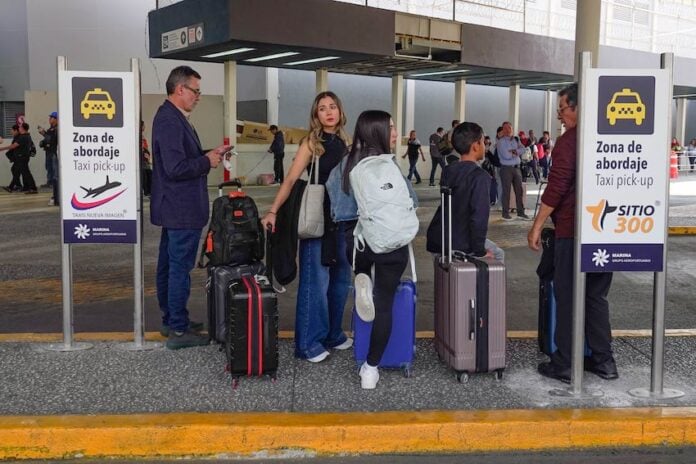
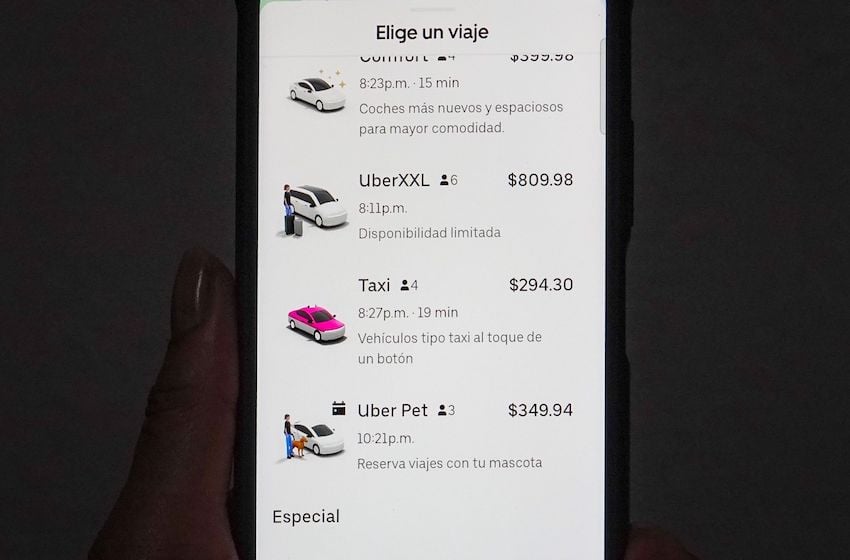
The new pact allows taxi drivers and riders to piggyback on Uber's app system. (Rogelio Morales/Cuartoscuro.com)
Uber, the longtime nemesis of Mexico’s licensed cabbies, is now their partner — at least on paper.
Thirteen years after launching in Mexico, Uber announced Tuesday what both sides called a “historic” alliance with MX Taxi that will let users request licensed cabs inside the app via a new taxi option, with destinations ordered in advance and fares pre-calculated.
Both parties are calling the agreement historic, as it gives Uber and MX Taxi the option of working cooperatively. (Rogelio Morales/Cuartoscuro)
The price will be based on what a normal taximeter would charge using government‑approved taxi rates, not Uber’s own fare structure. There also won’t be any dynamic pricing, such as fares based on supply and demand or time of day.
MX Taxi taxistas won’t operate as Uber drivers, but their cars will now use Uber-style safety features such as insurance, 24/7 support and RideCheck. Credit card payment can be made within the app, although in some cases, cash will be accepted if preferred.
The deal is being called national, but the rollout will effectively be city by city, not an instant switch everywhere, according to those involved.
Initial implementation is centered on big markets — especially the World Cup host areas of Mexico City, Guadalajara and Monterrey. Uber’s taxi option is already available in CDMX, with about 3,000 to 3,500 cabs participating in the pilot phase, out of a total of some 45,000 licensed cabs in the capital.
The deal comes less than three months before Mexico co‑hosts the 2026 World Cup and as authorities brace for millions of extra taxi and Uber rides.
Uber has already launched Uber Shuttle in Mexico City, a system of vans/buses with fixed routes and schedules at lower prices than its traditional services.
CDMX Secreta has issued a primer on how to hail a taxi in Mexico City using the Uber app.
MX Taxi is a Mexico City–anchored association of licensed, concession-holding taxi drivers; it is present around the country though not necessarily in every city.
With the deal, MX Taxi will plug into Uber’s massive pool of riders but keep its own brand, tech and dispatch systems.
Uber general manager Félix Olmo said the alliance responds to “demand in Mexico, whether local or from tourists, and the demand that is coming with the World Cup, which exceeds the possible number of drivers that exist.”
Spokesman Erasto Vázquez called it a “new era” for a union that lost an estimated 60% of its street presence after Uber’s 2013 arrival and saw active cabs fall from roughly 100,000 to 45,000.
Uber maintains that a disputed court injunction allows it to keep operating at airports under “legal protection,” but the Navy‑run AICM and the federal Transport Ministry insist that app‑based services are not authorized inside the federal zone and have used the National Guard to push them out.
In recent days, however, AICM has started setting up a designated waiting and pickup zone for Uber and DiDi vehicles, located approximately eight minutes on foot between terminals 1 and 2.
The poll was conducted this month by Echelon Insights in conjunction with the U.S.-Mexico Foundation, the American Chamber of Commerce of Mexico and the Mexican Association of Industrial Parks. (Shutterstock)
President Claudia Sheinbaum is now approaching the 18-month mark of her six-year term, while U.S. President Donald Trump has been back in office for just over 14 months.
During this period, Mexican and U.S. officials have declared that the bilateral relationship is going very well, although there have been various pressure points. Think tariffs, threats of military strikes on Mexican cartels, an accusation from the White House that the Mexican government has an “intolerable alliance” with drug trafficking organizations, a declaration by Trump that he doesn’t care about the USMCA.
Still, Sheinbaum and Trump get on — although they are yet to have a formal bilateral meeting — and the former frequently asserts that the bilateral relationship is based on mutual respect.
Despite this, an El Financiero poll we reported on last September found that a majority of Mexicans — 56% of 1,000 respondents to be exact — believed that Sheinbaum was doing a bad job managing the relationship with Trump, while 51% said that the bilateral relationship was bad or very bad.
But what do Americans — i.e., U.S. voters — think about Mexico and the Mexico-U.S. relationship?
A poll conducted this month by Echelon Insights in conjunction with the U.S.-Mexico Foundation, the American Chamber of Commerce of Mexico and the Mexican Association of Industrial Parks sought to find the response to that question.
A total of 1,033 U.S. voters were surveyed in the poll, titled “U.S. Voter Attitudes Towards the U.S.-Mexico Relationship.”
Here are some key takeaways.
Mexico’s ‘net favorable brand image’ has declined over the past year
Poll respondents were asked whether they had a favorable or unfavorable opinion of eight countries, including Mexico, Canada, China and Russia.
Forty-four per cent of those polled said that they had a very favorable (13%) or somewhat favorable (31%) opinion of Mexico, whereas 38% said they had a very unfavorable (12%) or somewhat unfavorable (26%) view of the United States’ southern neighbor. The remainder of respondents either had no opinion of Mexico or hadn’t heard of the country (1%).
Mexico thus had a “net favorable brand image” of +6 with Americans who participated in the poll. That rating was on par with Israel, but well below the “net favorability” scores of Canada (+58) and the United Kingdom (+54).
The other countries included in the poll — Venezuela, China, Iran and Russia — all had negative net favorability scores.
Mexico’s score declined 14 points from +20 last April and 16 points from +22 last May. It is up four points from a recent low of +2 in December.
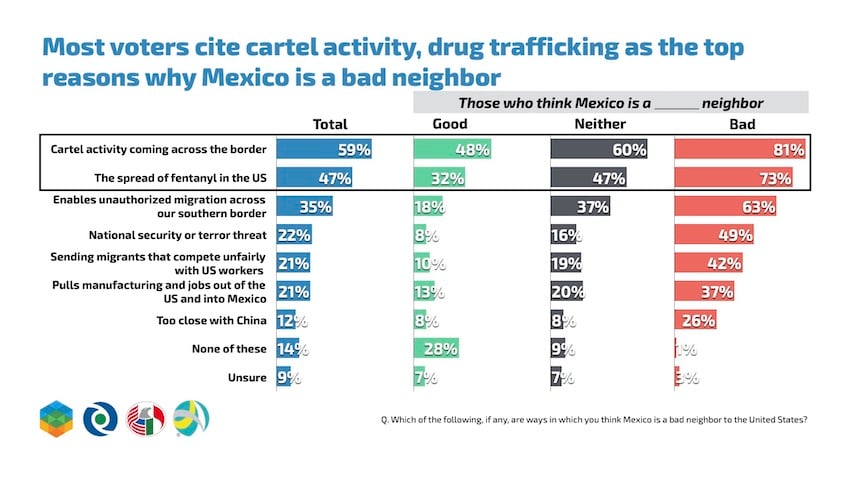
Cartel activity is the top reason why Mexico is seen as a bad neighbor
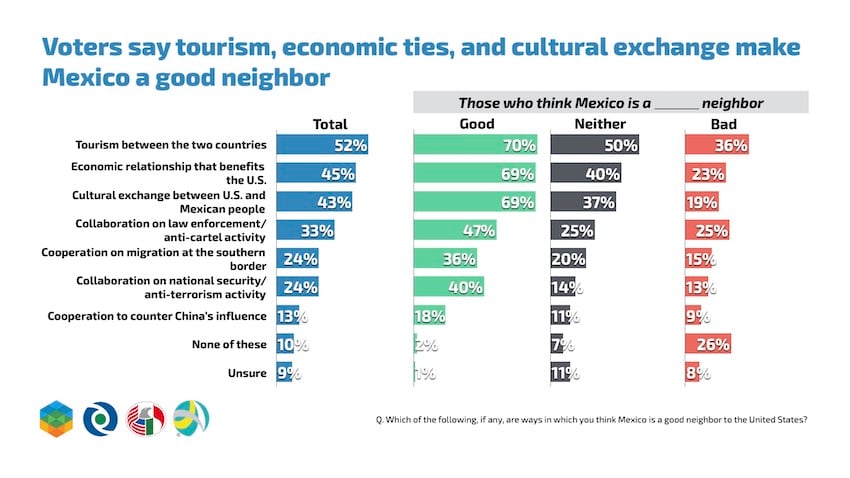
Almost six in ten of those polled (59%) said that “cartel activity coming across the border” is a way in which Mexico is a bad neighbor to the United States.
Almost half of respondents (47%) identified “the spread of fentanyl in the U.S.” as a reason why Mexico is a bad neighbor, even though the Mexican government has ramped up efforts to stem the northward flow of the synthetic opioid and other narcotics.
More than one-third of respondents (35%) said that Mexico is a bad neighbor because it “enables unauthorized migration across our southern border,” while 22% said the same because the country is a “national security or terror threat.”
Around one in five respondents said that Mexico is a bad neighbor because it is “sending migrants that compete unfairly with U.S. workers” (21%), and because it “pulls manufacturing and jobs out of the U.S. and into Mexico” (21%).
One in ten of those polled said that none of the reasons listed above made Mexico a good neighbor.
Only 4% of Republicans consider Mexico a very good neighbor
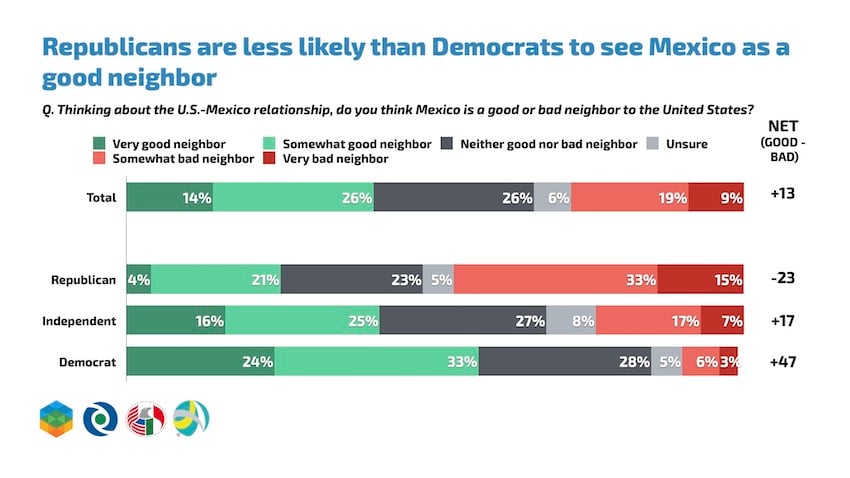
“Thinking about the U.S.-Mexico relationship, do you think Mexico is a good or bad neighbor to the United States?”
All 1,033 respondents to the poll were asked to respond to that question.
Four in ten of those polled said that Mexico was either a “very good neighbor” (14%) or a “somewhat good neighbor” (26%).
Almost one in ten respondents (9%) said that Mexico was a “very bad neighbor,” while 19% said that the country was a “somewhat bad neighbor” to the United States.
The remainder either said that Mexico was “neither good nor bad” as a neighbor (26%) or that they were unsure (6%).
Among respondents who identified as Republicans, just 4% said that Mexico is a “very good neighbor,” while 21% said the country was a “somewhat good neighbor.”
Almost half of Republicans surveyed said that Mexico was either a “somewhat bad neighbor” (33%) or a “very bad neighbor” (15%).
In contrast, just 9% of Democrats polled said that Mexico was a “somewhat bad neighbor” (6%) or “very bad neighbor” (3%).
A strong majority of respondents who identified as Democrats said that Mexico was either a “very good neighbor” (24%) or a “somewhat good neighbor” (33%).
A strong majority of Democrats oppose a blanket tariff on Mexican goods
Asked whether they supported or opposed the imposition of a tariff on “all goods coming into the U.S. from Mexico,” 76% of respondents who identified as Democrats said they were against such a measure. Almost six in ten of such people (57%) said they were “strongly” opposed to a blanket tariff, while 19% said they were “somewhat” opposed.
In contrast, 64% of Republicans said they supported a tariff on all Mexican goods. Almost four in ten of such people (38%) said they “somewhat” supported such a measure, while 26% said they “strongly” supported a blanket tariff on imports from Mexico.
Among respondents who said they supported tariffs on Mexican goods, 55% said they saw the duties as a way to “put pressure on Mexico to take action on migration, drugs, or crime.”
Trump has used tariffs — namely, 25% duties on non-USMCA compliant goods — in this way.
The other reasons why people said they supported tariffs on Mexican goods were:
“To raise revenue for the U.S. government”: 41% of respondents in favor of tariffs cited this reason.
“Because I generally think tariffs are good”: 30%
“To make Mexican-made goods more expensive in the U.S.”: 22%
“Because Donald Trump supports them”: 17%
A majority of all respondents (61%) said that (additional) U.S. tariffs on goods from Mexico would either make their cost of living “somewhat more expensive” (38%) or “much more expensive” (23%).
Almost half of respondents are unsure whether the USMCA should be extended
Poll respondents were also asked whether the United States should extend the USMCA free trade pact, which the U.S., Mexico and Canada will formally review this year.
Just over four in 10 respondents (41%) said that the U.S. should extend the agreement, while 49% said they were unsure whether the U.S. should support an extension of the pact.
Only 10% of those polled said that the United States should not extend the USMCA.
Even if Mexico, the United States and Canada don’t agree to extend the USMCA during the upcoming review process, it would not be terminated until 2036. If the three countries do agree to extend the USMCA, the pact will remain in effect until at least 2042.
The poll also found that 14% of Republicans believe the USMCA shouldn’t be extended, compared to just 7% of Democrats who don’t support an extension of the six-year-old trade agreement.
In order to make the USMCA a “fair deal” for the United States, a majority of Republicans said that the pact should “make sure factories and businesses stay in the U.S.” (51%) and “make sure American farmers and ranchers can sell their products in Canada and Mexico (51%).
A majority of Democrats (53%) said that “reducing tariffs within North America” is needed to make the USMCA a “fair deal” for the United States, whereas only 29% of Republicans said the same.
A majority of Democrats (53%) also said that “lowering prices on everyday goods” would make the USMCA a “fair deal” for the U.S., while 49% of Republicans said the same.
4 in 10 respondents are happy that US is co-hosting World Cup with Mexico and Canada
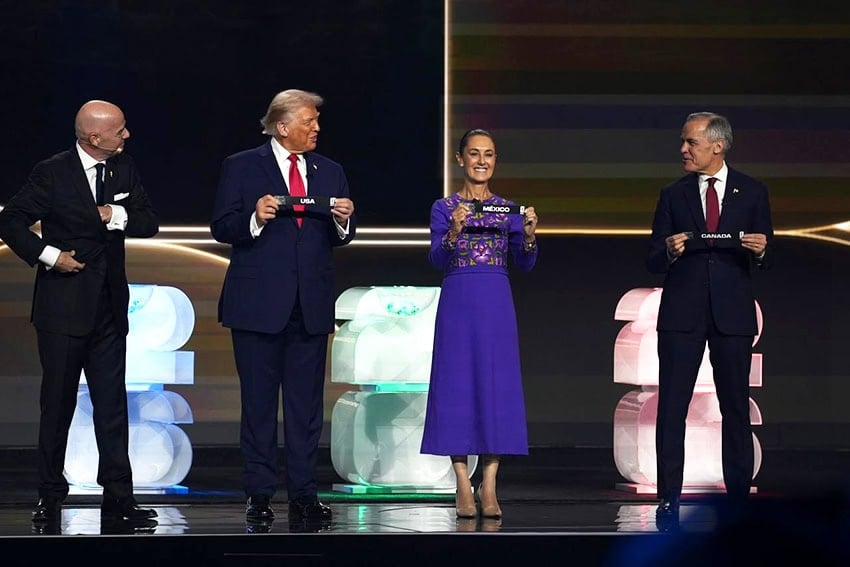
Forty-one per cent of poll respondents said they were glad that the United States is co-hosting this year’s FIFA men’s World Cup with Mexico and Canada.
About half of the polled U.S. voters seemed not to care much at all about the United States’ role as a co-host of the 2026 FIFA World Cup. (Presidencia)
One in 10 of those polled said they wished the U.S. wasn’t co-hosting the tournament with Mexico and Canada, while 49% said they didn’t really care either way.
A majority of Democrats (53%) said they were happy the U.S. is co-hosting the event with its two neighbors, but only 31% of Republicans said the same. Fifteen per cent of Republicans said they wished the U.S. weren’t co-hosting the World Cup with Mexico and Canada, while 7% of Democrats said the same.
A total of 104 World Cup matches will be played in the U.S., Mexico and Canada this June and July. U.S. cities will host 78 matches, while Mexico and Canada will host 13 matches each.
Mexico and South Africa will play the opening match of the tournament in Mexico City on June 11.
By Mexico News Daily chief staff writer Peter Davies (peter.davies@mexiconewsdaily.com)
At her Wednesday morning press conference, Sheinbaum called Tuesday's shooting at a Lázaro Cárdenas school — where a 15-year-old allegedly killed two female teachers — "very painful in many senses." (Juan Carlos Buenrostro/Presidencia)
Sheinbaum’s mañanera in 60 seconds
🏫 School shooting in Michoacán: Sheinbaum called Tuesday’s shooting at a Lázaro Cárdenas school — where a 15-year-old allegedly killed two female teachers — “very painful in many senses.” The suspect had posted an Instagram video referencing misogyny and school shootings, linked to the “incel” online subculture. She called it an “isolated incident” and announced plans to expand a mental health program already in place in some middle schools.
🇺🇳 Mexico stands by Bachelet for UN: Despite Chile’s new president Kast withdrawing his country’s support, Sheinbaum reaffirmed Mexico’s backing of Michelle Bachelet for UN Secretary-General — a role no woman has ever held. “We believe Bachelet is an ideal person to lead the United Nations,” she said, citing her two presidential terms and human rights work.
🧱 On the border wall: Asked about the U.S. expanding its border wall — reportedly now cutting through national parks and wilderness — Sheinbaum said it’s Washington’s call, but made Mexico’s position clear: “We prefer to build bridges, not walls.” She pushed development cooperation as a more effective tool to address migration.
Why today’s mañanera matters
At her Wednesday morning press conference, President Claudia Sheinbaum responded to Tuesday’s shooting at a school in Michoacán. Unlike the United States, school shootings are very rare in Mexico, and Sheinbaum is determined to make sure that their incidence doesn’t increase.
Also of note at today’s mañanera was the president’s reaffirmation of Michelle Bachelet’s candidacy to become the next secretary general of the United Nations. The former president of Chile has lost the support of the Chilean government, but Sheinbaum is convinced that Bachelet has what it takes to lead the world’s preeminent intergovernmental organization.
The president said last month that “it’s time for a woman” to lead the UN, and her opinion on the matter has certainly not changed.
“One, the death of the teachers at the hands of this young person with a long gun,” she said.
“And everything appears to indicate that they … were the people he was looking for,” Sheinbaum added.
Before the shooting, the alleged perpetrator of the crime, a 15-year-old boy identified as Osmer H., “shared a video on Instagram with references to hatred toward women and school shootings,” according to the newspaper El País.
“… The content Osmer shared is associated with the ‘incel’ universe, a digital subculture made up of men who call themselves ‘involuntary celibates’ and who share extremist discourses on masculinity,” the newspaper wrote.
Sheinbaum said that her government wanted the shooting on Tuesday to be an “isolated incident” that is “not repeated.”
She went on to say that the government is planning to broaden the implementation of a mental health program that is already being taught in some middle schools.
The program, Sheinbaum said, is aimed at young people the same age as the boy who allegedly perpetrated the shooting in Lázaro Cárdenas.
Mexico to continue support Bachelet’s candidacy for UN secretary general
After a reporter noted that the government of Chile, now led by President José Antonio Kast, had withdrawn its support of Michelle Bachelet’s candidacy for secretary general of the United Nations, Sheinbaum said that her administration would continue supporting the former Chilean president in her quest to head up the UN.
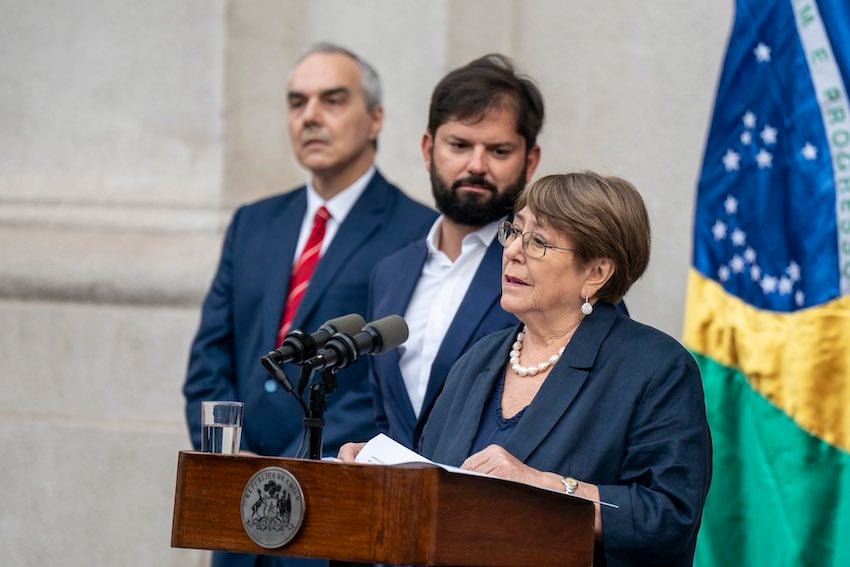
Earlier this year — before Kast had replaced Gabriel Boric as president of Chile — Bachelet was formally nominated as a candidate for UN secretary-general by Mexico, Brazil and Chile.
Michelle Bachelet was formally nominated as a candidate by Mexico, Brazil and Chile at a ceremony in February. (@GabrielBoric/X)
Sheinbaum said that she would soon speak by phone to Bachelet, who served twice as president of Chile (2006-2010 and 2014-2018) before becoming the UN high commissioner for human rights.
“She’s a woman with a lot of experience. She was president of Chile twice, she’s a woman who seeks peace in the world, a woman who has ideas about the construction of rights and the peaceful resolution of conflicts,” Sheinbaum said.
“… We believe that Bachelet is an ideal person to lead the United Nations, and we’ll continue supporting her,” she said.
Since its establishment in 1945, the United Nations has never been led by a woman. A new secretary-general will be selected later this year and replace António Guterres at the helm of the UN on Jan. 1, 2027.
‘We prefer to build bridges, not walls’
Asked about the expansion of the border wall between the United States and Mexico, Sheinbaum said it was a matter for the U.S. government.
“We believe there are other mechanisms to reduce migration,” she said, specifically citing “cooperation for development,” including in Western Hemisphere countries from which large numbers of people have emigrated in recent years.
“… There is a phrase that several governments have used, not just us,” the president added.
“We prefer to build bridges, not walls.”
The Washington Post reported last Saturday that “the Trump administration is building hundreds of miles of border wall through iconic national parks, public lands and ecologically sensitive wilderness, empowered by provisions in the One Big Beautiful Bill that provided $46.5 billion in funding and a 2005 law that waived dozens of environmental rules for border securityprojects.”
Citing an analysis of U.S. Customs and Border Protection data, the newspaper also wrote that “despite illegal crossings dropping to historic lows, DHS and the Defense Department plan to construct more than 1,350 miles of new border wall in the Southwest” of the United States.
By Mexico News Daily chief staff writer Peter Davies (peter.davies@mexiconewsdaily.com)
March 16 was the official start of the USMCA review process. It’s the first time the three countries — the United States, Mexico and Canada — will go through this process. Unfortunately, just two are sitting at the table. That’s why this is the perfect timing for the start of a new series: Regional Utopia.
Let’s get started.
By now, it should be clear that trade integration in North America has been, at least in part, a success. Over the past three decades, it has expanded commerce, deepened supply chains and given firms the legal certainty they need to invest and operate across borders. What began as trade has quietly evolved into continental co-production.
Yet this success also exposes its limits. Trade integration was necessary, but never sufficient for sustained, broad-based growth. Perhaps because it was never meant to be.
While North America built one of the world’s most integrated production systems, productivity growth remained modest, industrial expansion uneven and income convergence essentially stalled (you can read more about this in the analysis my co-authors and I wrote for the Inter-American Dialogue). Trade surged, but prosperity did not always keep pace for everyone. The agreement created the platform, but it was not designed to tackle the larger challenge of economic development.
In short, trade integration was only one piece of the puzzle. Many of the most important pieces — infrastructure, talent flows, regulatory alignment, shared industrial strategy — were left undiscussed.
This new series explores those missing pieces: the policies, institutions and strategic choices that could make North America more competitive, more productive and ultimately more prosperous, while spreading the gains more widely.
As the United States, Mexico and Canada approach the practical limits of what trade pacts alone can deliver — and with the USMCA joint review now underway — we face a natural question: what comes next?
My view is that the region must think more holistically about growth. “Fortress North America” makes for a catchy slogan in policy circles, but slogans are not strategy. The real work lies in navigating the political and economic realities that shape cooperation.
First of all, one contradiction stands out. Both the United States and Mexico are navigating sharp political and ideological shifts. Sovereignty, national identity and strategic autonomy have returned to the forefront of debate. At first glance, this resurgence of national priorities seems at odds with deeper regional integration.
How can governments put their own countries first while advancing shared regional prosperity?
The answer is to identify areas where cooperation directly reinforces national interests rather than undermines them. Two objectives tower above the rest: economic prosperity and security. If North America can pursue these goals collectively, the incentives for collaboration will align naturally.
The urgency sharpens in the global context. The competitive arena is no longer national. It is continental.
Competing at that scale demands more than national strategies. No single country in North America can go toe-to-toe with an entire continent alone. An “America First” posture may satisfy domestic politics, but economically it will fall short against a rival bloc. North America must learn to compete as a region.
That requires confronting difficult but unavoidable issues: labor mobility and migration management, regional skills certification, border infrastructure, trade facilitation, regulatory alignment, shared security frameworks, infrastructure corridors, joint energy systems and a coordinated industrial strategy rooted in economic complementarity. In short: building a more robust ecosystem.
For clarity, I group these challenges into three broad categories: people and talent, institutional architecture and industrial co-production.
First, North America must fully leverage its human capital. Our half-billion people must compete with more than two billion across China and its neighbors. Talent needs to move where it is most productive and needed.
This does not mean permanently higher migration flows. Mexico, in particular, needs its young, skilled citizens at home. But more flexible mechanisms — seasonal and circular migration programs, regional professional certifications — could let doctors, engineers, technicians and skilled workers cross borders when needed and source unfilled labor gaps.
Second, our institutional framework must catch up to economic reality. Regulatory coordination can slash friction in trade, investment, and innovation. Mutual recognition agreements — for instance, in pharmaceuticals — could let FDA or COFEPRIS approvals carry weight across borders. Joint border inspections, aligned intellectual property rules and coordinated approaches to emerging technologies like artificial intelligence would further boost productive capacity.
Third, the region must think deliberately about industrial coordination. Fiscal incentives, infrastructure investment, supply-chain strategies, sectoral policies and regional champions should reflect regional complementarities. Policymakers may shy from calling it a customs union, but a deeply integrated production platform will inevitably begin to resemble one.
If managed well, these steps could create a region where opportunity is more evenly distributed, investment and jobs stay within North America, innovation accelerates and economic dynamism helps tackle persistent challenges—from organized crime to irregular migration.
The central argument of this series is straightforward: North America already holds the building blocks of a continental economic system. What it lacks is the political imagination to treat itself as one.
This is not a call for a borderless region, but for strategically managed, efficient circulation of human capital.
It is not reckless outsourcing. It is a complementary, innovative system where the three countries design and build high-value products that sustain well-paid jobs across the continent.
And it is not subordination or diluted sovereignty. It is shared priorities — pursued by confident allies and trusted partners alike, in pursuit of mutually beneficial outcomes.
That is my vision of a regional utopia.
In the essays ahead, I will dig into each of these ideas in detail.
Pedro Casas Alatriste is the Executive Vice President and CEO of the American Chamber of Commerce of Mexico (AmCham). Previously, he has been the Director of Research and Public Policy at the US-Mexico Foundation in Washington, D.C. and the Coordinator of International Affairs at the Business Coordinating Council (CCE). He has also served as a consultant to the Inter-American Development Bank.
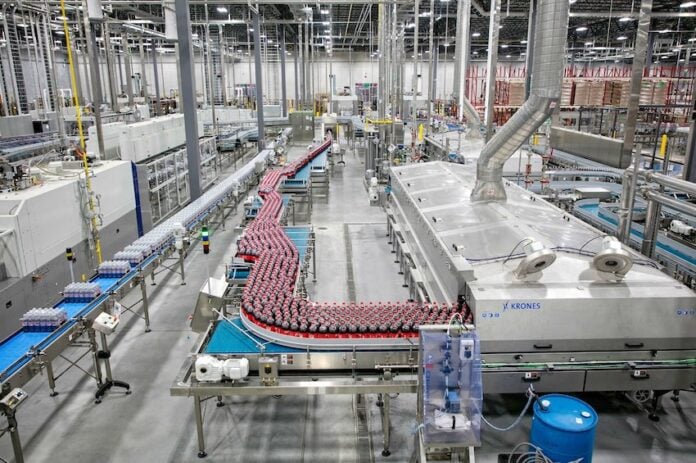
Arca Continental, Mexico's second-largest Coca-Cola bottler behind Femsa, is celebrating a century of operations in Mexico this year. (Arca Continental)
Two of the world’s largest consumer goods companies announced major investment commitments in Mexico this week, underscoring the country’s continued appeal as a manufacturing and distribution hub despite ongoing trade uncertainties.
Monterrey-based Arca Continental, one of the largest Coca-Cola bottlers in the world, announced it will invest 18.5 billion pesos — roughly US $1 billion — in its Mexican operations in 2026, representing half of a global capital deployment that also covers the United States and South America.
Arca Continental, which is celebrating a century of operations in Mexico this year, said the funds will go toward expanding production and distribution capacity, accelerating digital transformation and launching new beverage categories.
CEO Arturo Gutiérrez Hernández reaffirmed the company’s focus on operational excellence and sustainability, noting that Arca Continental surpassed 50 billion pesos ($2.8 billion) in EBITDA for the first time in 2025 on consolidated net sales of nearly 248 billion pesos ($14 billion).
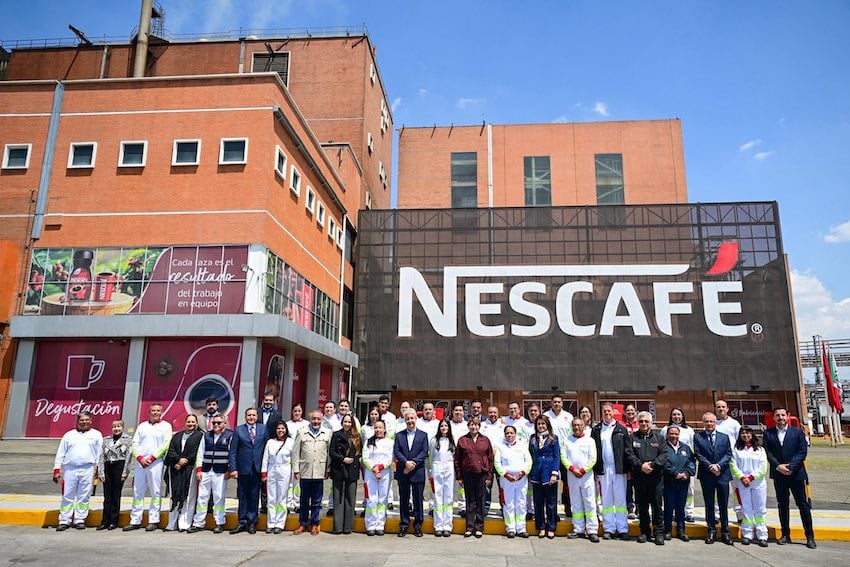
Of that total, $275 million will be directed to the company’s five existing plants in the area — located in Cuautitlán, Tultitlán and three sites in Toluca — which produce everything from Nescafé coffee and chocolates to Purina pet food and Terrafertil healthy snacks.
Governor of México state Delfina Gómez attended the investment announcement on Monday. (Delfina Gómez Álvarez/Facebook)
The remaining $180 million will fund a new distribution center in Zumpango with a capacity of 90,000 pallet positions. Nestlé Mexico President Fausto Costa said construction will begin promptly following a formal agreement signed with México state Governor Delfina Gómez. The company currently employs nearly 3,000 people directly in the state.
Both companies cited sustainability as a core pillar of their expansion plans, with Nestlé highlighting renewable energy use and zero-waste-to-landfill goals, and Arca Continental noting its inclusion for the fourth consecutive year in the S&P Global Sustainability Yearbook.
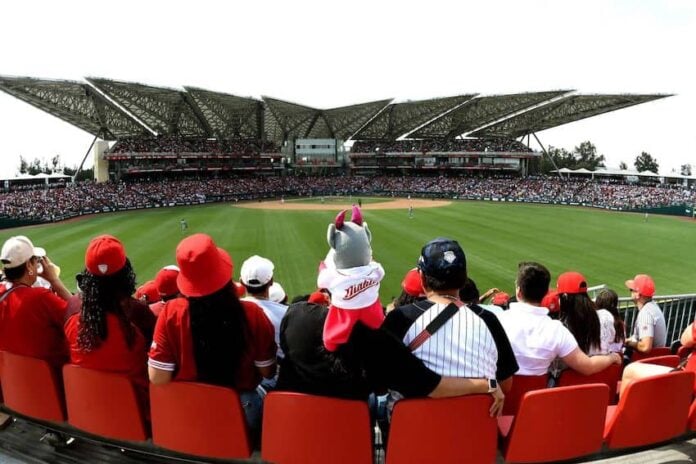
Baseball is the second most popular team sport in Mexico, and the Mexico City Diablos Rojos are its premier franchise. (Diablos Rojos/Cuartoscuro)
It’s hard to imagine now, but before football conquered Mexican Sundays, baseball held a central place in the country’s sporting imagination. Sunday afternoons meant radios crackling with play-by-play from ballparks in Mexico City and Monterrey, but also from diamonds in the United States and Cuba — a soundscape in two languages, tied together by nine innings and a bat.
As you might guess, baseball in Mexico has no pre-Columbian roots. It is, instead, a living reminder of the long, entangled history between Mexico and the United States.
How did baseball arrive in Mexico?
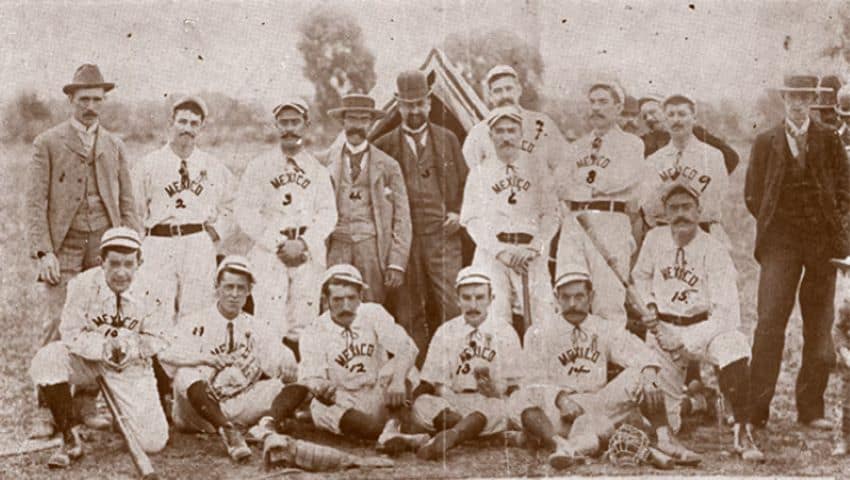
Club México, founded in 1887, was the first all-Mexican team to officially be formed in the country. (Salón de la Fama del Béisbol Mexicano)
The truth is, historians have never been able to pinpoint the exact moment the game crossed the border. What we do know, in broad strokes, is that by the late nineteenth century, railroad workers, soldiers, sailors, miners, and, of course, U.S. businessmen who sponsored local games were already bringing baseball to Northern Mexico and to the major ports of the era. In a study by researchers at Harvard, one influential theory is that baseball arrived through the commercial and maritime circuits linking the United States, Cuba and Mexico — a triangle of trade that also moved ideas, customs and games.
By the end of that century, baseball was familiar in Mexico City, Mazatlán, Guaymas, Veracruz, Nuevo León and Tamaulipas. Sunday newspapers are full of early box scores and game stories describing matches between Mexican clubs and foreign
teams, written in a tone that makes clear this was no longer an exotic novelty but part of the weekly rhythm of urban life.
Mexican baseball
The first officially documented Mexican club was Club México, founded in 1887. And the first truly emblematic game was played on March 5, 1899, when the American team“Masters” faced the Mexican “Señores.” The Mexicans won by the improbable score of 51-49. From that moment on, baseball in Mexico began to consolidate as a sport followed religiously, Sunday after Sunday, by a growing local fan base. In those early decades, baseball was still a binational activity, with Mexican and American communities alike tracking their teams and heroes on both sides of the border.
The Mexican Revolution, however, changed the tone of the game. Starting in 1910, many foreign residents — fearing for their safety — shut down their businesses and left the country. In the few surviving baseball chronicles from those years, American surnames begin to disappear from lineups and box scores, just as Mexican teams, players and announcers proliferate. The game remains the same, but its center of gravity shifts decisively into Mexican hands.
The Mexican League
The history of the Liga Mexicana de Béisbol (LMB) is, at its core, the story of how Mexican baseball stopped being an archipelago of amateur leagues and became a professional circuit — modeled on the U.S. system, but with its own logic.
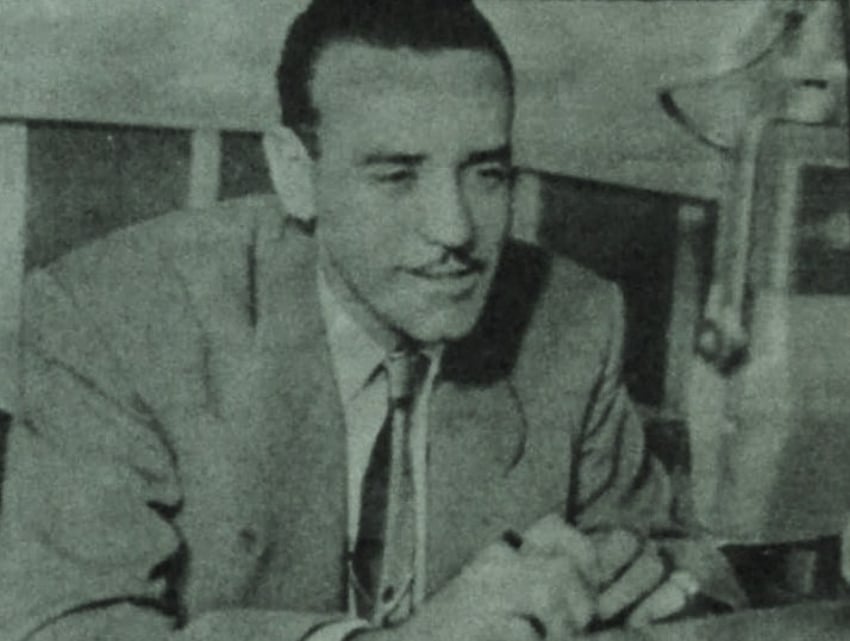
After the revolution, baseball in Mexico City was wildly popular yet fractured: rival associations fought over players, ballparks and legitimacy, in what historian Miguel Ángel Esparza calls a “struggle for the diamond.” Businessman Ernesto Carmona
grasped that whoever controlled the parks controlled the sport and secured the concession to Parque Franco Inglés, while sportswriter Alejandro Aguilar Reyes — “Fray Nano” — used his column to argue for a single, unified league with clear schedules and rules, in line with the great leagues to the north.
Pedro “El Mago” Septién was a legendary Mexican baseball announcer who left behind phrases that have become part of the game’s lore. (Editorcarolus/Wikimedia Commons)
The turning point came on Feb. 24, 1925, when the main associations merged and founded the Liga Mexicana de Béisbol. The new league launched with six clubs — México, Agraria, 74 Regimiento, Águila, Guanajuato and Nacional — backed by businessmen and military officers who saw baseball as a tool for business, prestige and social cohesion in a postrevolutionary capital.
Its first official game, on June 28, 1925, at Parque Franco Inglés, ended with Club México defeating Agraria 7–5 in 14 innings, a marathon now remembered as the formal birth of professional baseball in the country. Those early seasons were fragile — riddled with financial crises and internal feuds — but over time, the LMB stabilized, expanded beyond the capital and learned to coexist with football and with the gravitational pull of Major League Baseball.
Nearly a century later, with 18 franchises and one of the longest uninterrupted histories in professional baseball, the LMB stands as the platform from which Mexico speaks back to U.S. baseball, not just as a source of players, but as a mature system in its own right.
Baseball in Mexican culture
There are myths, legends, and fully documented anecdotes that testify to the depth of Baseball’s place in Mexican life.
One of the most beloved involves perhaps the most important baseball broadcaster in Mexican history, Pedro “El Mago” Septién. In 1951, during a New York Yankees game, the live feed from the stadium suddenly failed. Septién had to call the remaining innings using only short telegraph dispatches from wire services. A single telegram was enough for him to spin an entire inning’s worth of drama, reconstructing pitches and swings in the imagination of his listeners.
His “magic” was not just in his encyclopedic memory, but in what he could do with language. He left behind phrases that have become part of Mexican baseball lore, like his description of the sport as “a ballet without music, a drama without words, a carnival without showgirls.”
100 years later
The Mexican Baseball League was born a century ago, but the history of the league continues today. (Liga Mexicana del Beisbol)
In a few days, when the Kane County Cougars run onto the field at Estadio Alfredo Harp Helú to face Diablos Rojos del México in the opening game of the Baseball Champions League Americas, the scene will tell a story far larger than the final score.
In the capital of a country where baseball first arrived as a U.S. import more than a century ago, the champion of an American independent league will square off against the reigning LMB champion on Mexican soil, under the umbrella of a continental tournament that puts clubs from Mexico, the United States, Cuba, Nicaragua and Chinese Taipei on the same footing.
This is not a Major League showcase tour. It is something more horizontal: five champions (or near champions) sharing the same diamond in a round-robin format, as if baseball were reminding itself that it is, before anything else, a common language rather than a pecking order of flags.
Almost 100 years after Fray Nano and Ernesto Carmona stitched together that
first professional season in a Mexico City ballpark, professional baseball is once again
placing the city at the center of the map — this time as host of a Champions League of the Americas, in which the LMB acts not as a peripheral guest, but as the home
institution.
From March 24 to 29, the Alfredo Harp Helú Stadium — home of the Diablos, a
regular LMB venue, and a recurring stage for official MLB games — will become, for one week, a small laboratory of the very history this article has traced: a game that crossed the border in the hands of U.S. soldiers, railroad workers and sailors, then returned northward laden with new accents, styles and domestic leagues now solid enough to welcome a U.S. representative as just another contender for a continental title.
Closing thoughts
Baseball runs through Mexican cinema, family anecdotes and collective memory as
that sound in the background of long Sunday meals. It ceded ground, over time, to the tidal force of football. And yet, as recently as 2019, 54% of Mexicans still identified as baseball fans; it ranks as the country’s fourth-most-watched sport, and since the opening of Alfredo Harp Helú in Mexico City, interest in Mexican baseball has only grown.
Do you have a baseball memory of your own — on either side of the border? Mine is a
bittersweet mix of sadness and joy, remembering how my grandfather would forbid us from changing the TV channel because he was watching his “beis”, and telling us about his own experience as a player on the TELMEX Team.
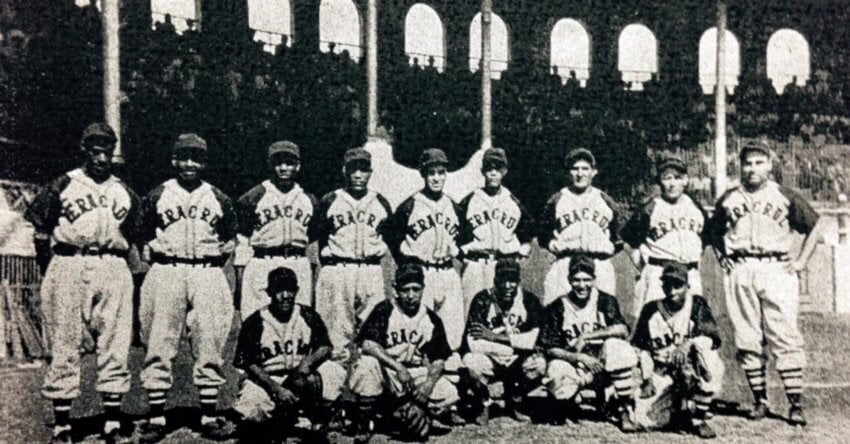
Pitcher Dinelson Lamet of El Águila de Veracruz in 2025. (LMB)
For more info, check out the American Association site for more information on the 2026 Baseball Champions League Americas.
Maria Meléndez writes for Mexico News Daily in Mexico City.
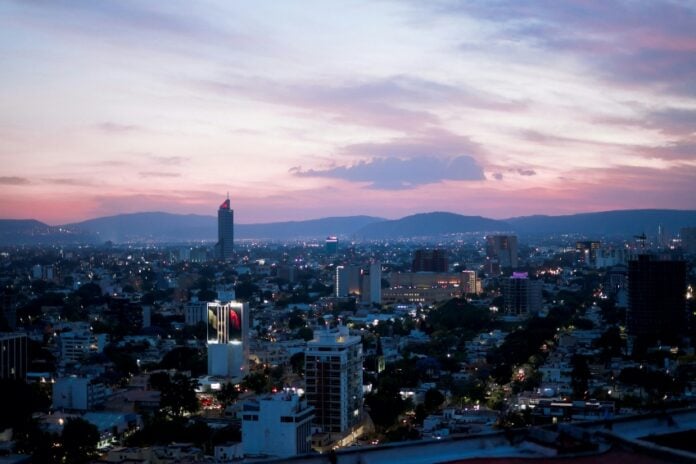
Easter week is a great time to visit Guadalajara, for both religious and secular activities and events. (Roman Lopez/Unsplash)
As Semana Santa (Easter week) approaches, locals and visitors who forego the traditional beach getaway for a Guadalajara city holiday will be rewarded with plenty of options. Enjoy your spring break with art exhibits, live music, discounted family entertainment, wine tastings and more.
Discounted cultural activities for families during Easter week
Staying in town for the Easter holiday instead of heading to the beach? There will be no shortage of entertainment options, thanks to Zapopan’s Spring Tourist Tours initiative.
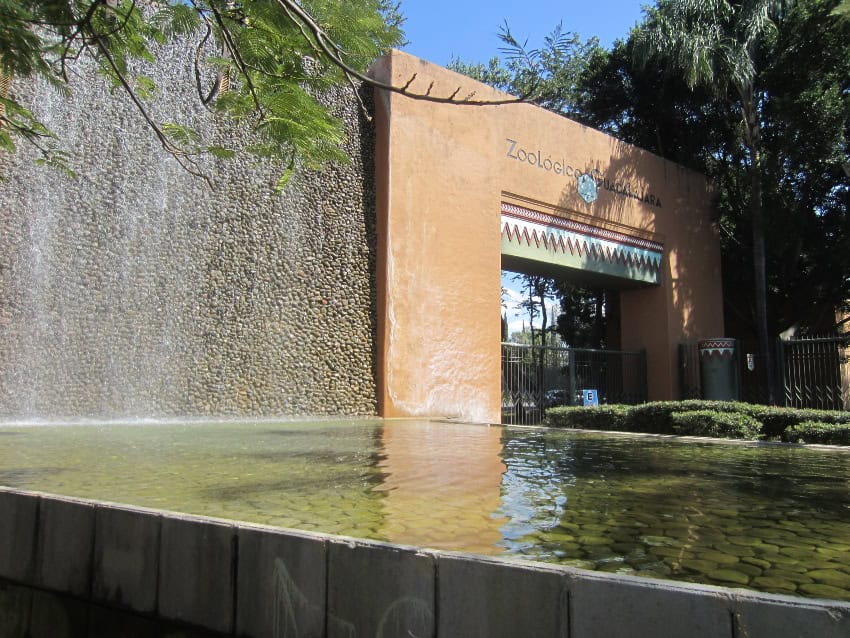
Easter week is a good time to visit the Guadalajara Zoo, with tickets very reasonably priced. (Another Believer/Wikimedia Commons)
To promote visitation during what is typically a slow vacation period, various cultural and entertainment options will be offered around the city at free or reduced rates. Between March 30 and April 10, tours will be available to public pools, museums, aquariums, the Guadalajara Zoo and select amusement parks.
Discounted access is available only on the specific days and times noted below. Here is a partial list of the tours being offered:
Monday, March 30 — Balneario Cañón de las Flores at 8:30 a.m. Cost is 50% off.
Tuesday, March 31 — Los Camachos Parque Acuático at 8:30 a.m. Cost is 50% off.
Wednesday, April 1 — Belén Cemetery (night tour) at 5:15 PM. Cost is free.
Tuesday, April 7 — Michin Aquarium at 9:30 a.m. Cost is free.
Tuesday, April 7 — Chivas Museum at 3:30 p.m. Cost: Free
Wednesday, April 8 — Guadalajara Zoo at 8:30 a.m. Cost for adults is 295 pesos, children 205 pesos.
Wednesday, April 8 — Selva Mágica amusement park at 9:30 a.m. Cost is free.
Thursday, April 9 — Planetario Lunaria at 9:15 a.m. Cost is free.
Pop visionary Lorde set to perform at Telmex Auditorium in Zapopan
Pop superstar Lorde will be performing in Zapopan in April. (Stub Hub)
The singer-songwriter from New Zealand who performs as Lorde is set to play Telmex Auditorium next month as part of her Ultrasound World Tour.
Beloved for her unconventional vocals and emotional songwriting, Lorde broke onto the music scene in 2013 with the smash single “Royals.” The track sold roughly 10 million copies worldwide and earned her two Grammy Awards at the ripe old age of 16.
Her debut studio album, “Pure Heroine” (she’s always had an abundance of swagger), followed soon after, to massive critical acclaim and commercial success.
Taking inspiration from a wide range of musical genres, including jazz and soul legends Billie Holiday and Sam Cooke, and indie electronic artists SBTRKT and Grimes, Lorde continues to mature musically.
Hitting the road this year in support of her fourth studio album, “Virgin,” Lorde mixes electronic synth-pop with storytelling more suited to a woman approaching 30. For a tour selling out plenty of large arenas in the U.S., it’s a gift to have this immensely talented artist playing here in Zapopan at a relatively intimate venue.
Date: Wednesday, April 29, at 9 p.m.
Location: Auditorio Telmex, Obreros de Cananea 747, Complejo Belenes, Zapopan
Tickets: Available at Ticketmaster, starting at 990 pesos, not including fees.
Rocío Sáenz exhibits her Wild Order at MUSA
Rocío Saénz showcases her art at Guadalajara’s MUSA Museum through April 12. (Alondra Ibarra)
A good art exhibit will elicit emotion, challenge preconceptions and hopefully encourage the viewer to think a little differently.
Rocío Sáenz’s current show Orden Salvaje (“Wild Order”) at the MUSA delivers a multi-sensory experience through works of painting, ceramics, photography and drawings.
Her vibrant and colorful compositions belie some of the dark themes that inspired them. As a Guadalajara-based artist, Saenz’s work tackles contemporary issues that Jalisco residents are all too familiar with — human violence and disappearances.
“I cannot distance myself from the issues that are happening in Mexico, such as missing persons, corruption and the feeling of powerlessness and immobilization,” said Saenz.
A self-taught artist born in Chihuahua in 1971, Saenz earned a Master of Fine Arts from the ISA in Havana, Cuba. Her work has been exhibited over the years in Mexico and abroad.
Dates: Through April 12, 2026. Open Tues – Sat: 10 a.m. — 6 p.m., and Sun: 10 a.m. — 3 p.m.
Location: MUSA Museum of the Arts, University of Guadalajara, Avenida Juárez 975, Colonia Americana, Guadalajara.
Cost: It is always free to visit the MUSA.
Taste Mexican wines at the 3rd annual Festival del Vino in Tlaquepaque
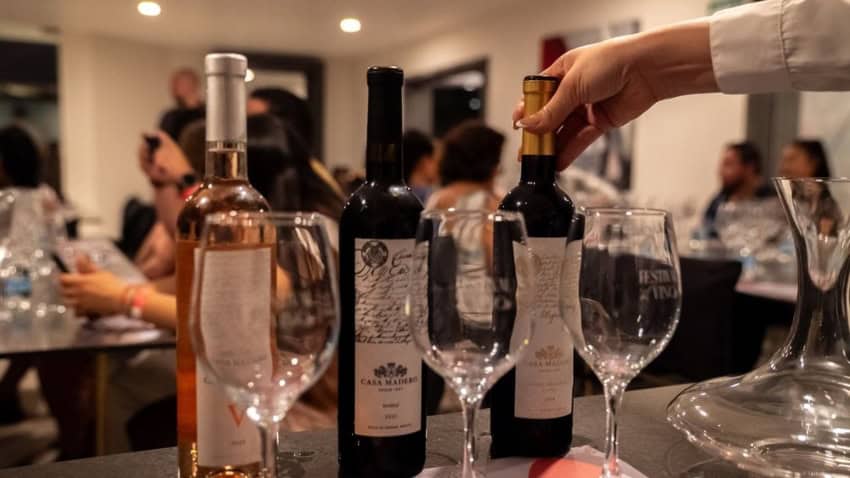
The Festival del Vino offers a showcase for some of Mexico’s finest wineries. (Visita Jalisco)
In its third edition, the Tlaquepaque Wine Festival will feature wine tasting, instruction on food and wine pairings, and gourmet treats for purchase.
Participating wineries will include Mexican and international brands. And while the full list of wineries isn’t yet published, it includes Mexico’s oldest winery, Casa Madero, as well as newer producers such as Llano Colorado in Baja California and Cava Ortiz in Guanajuato.
And since Mexicans love a good party, there will also be live music, including jazz, flamenco, pop and rock, with DJs keeping things festive late into the evenings.
The tasting venue Casa Agave sits in the heart of Tlaquepaque Centro, a Pueblo Mágico adored by locals for its pedestrian-friendly streets, old-world architecture, colorful holiday installations, art galleries, ubiquitous crafts and live mariachi music — bonuses for those who make the trip.
Date: Friday, March 27, from 4 p.m. to 1 a.m. and Saturday, March 28, from 2 p.m. to midnight
Location: Casa Agave Eventos. Calle Juárez 292, Centro, San Pedro Tlaquepaque
Cost: 950 pesos for Friday and 1,050 pesos for Saturday. Tickets are available on the festival websiteor from Casa Agave directly.
MND Writer Dawn Stoner is reporting from Guadalajara.
MEXICO CITY — Farmacias Similares, the pharmaceutical chain behind Dr. Simi — the beloved, rotund, mustachioed mascot whose foam effigy is hurled at concert stages with a frequency that suggests it is Mexico’s national pastime — filed suit against Mattel Inc. on Thursday, claiming the California toy giant violated its exclusive intellectual property rights by producing a Barbie doll in the likeness of Mexican NASCAR driver Regina Sirvent without first obtaining written consent from a dancing pharmacy mascot.
The 47-page complaint, filed in Mexico City civil court, argues that Farmacias Similares holds “the sole and inalienable right to manufacture, distribute, and have thrown at Billie Eilish any three-dimensional representation of a Mexican person,” a claim legal experts described as “creative,” “unprecedented,” and, from one professor at UNAM who asked not to be named, “absolutely unhinged but also somehow not obviously wrong.”
See? Even the female Simi’s have facial hair. (Revista Brújula/X)
At the center of the dispute is Sirvent’s Barbie Role Model doll, produced by Mattel to honor the 23-year-old Mexico City native’s historic achievements as the first woman to win a NASCAR Mexico Truck Series race and the first Latina to win a NASCAR international race. Mattel presented the doll to Sirvent in February — a one-of-a-kind figurine wearing a racing suit, which the company said would not be sold to the public.
Dr. Simi’s legal team argues this is irrelevant.
“Whether one unit or one million, the precedent is the same,” the filing states. “A plastic Mexican woman was manufactured without our client’s knowledge or approval. Our client has been manufacturing plastic Mexican people since 1997 and considers this its core business.”
The filing further notes that the Barbie in question stands approximately 11.5 inches tall, wears a tailored racing suit, and bears no mustache, all of which Farmacias Similares’ attorneys argue constitutes an “unauthorized departure from established aesthetic norms” for Mexican dolls.
Mattel, reached for comment, said it “respectfully disagrees with the characterization that Dr. Simi owns Mexico.”
Sirvent, currently preparing for her next NASCAR event, said she was honored by the Barbie recognition and had not previously been aware that a foam mascot had standing to sue over it. Her representatives noted that she intends to keep racing regardless of the outcome.
Farmacias Similares is seeking unspecified damages, a formal apology, and the right to produce an official Dr. Simi x Regina Sirvent crossover doll, which it confirmed would absolutely be thrown at concerts.
The La Paz Internal Combustion Power Plant
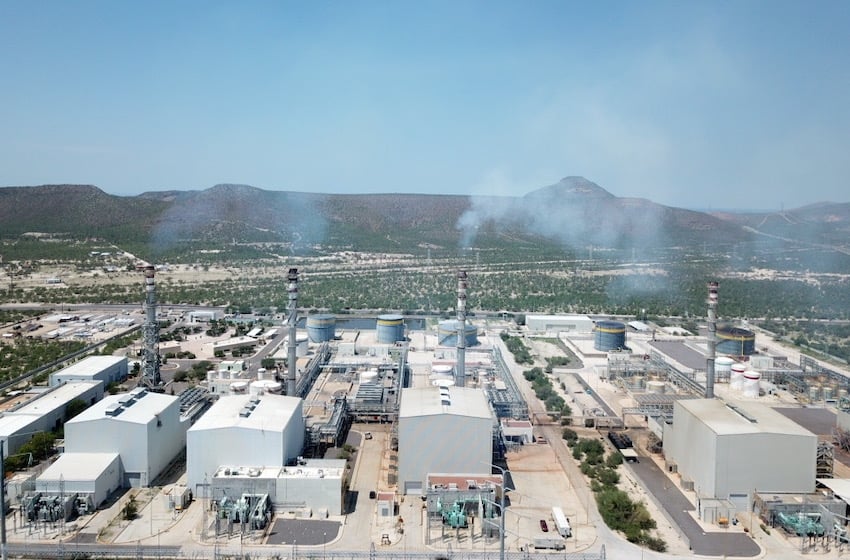
and the Punta Prieta Thermoelectric Power Plant, both located within 15 kilometers of La Paz, were fined over US $72,000 by the Federal Attorney for Environmental Protection. (Ernesto Mendez/CEMDA)
The Federal Attorney for Environmental Protection (Profepa) detected irregularities in emissions from power plants in La Paz, Baja California Sur, resulting in fines for the offending companies.
The La Paz Internal Combustion Power Plant and the Punta Prieta Thermoelectric Power Plant — both managed by the state-owned Federal Electricity Commission (CFE) — were slapped with fines of 610,956 pesos (US $34,317) and 678,840 pesos (US $38,137), respectively.
The plants operated with fuel oil and without the implementation of sufficient emissions controls. (Ernesto Mendez/CEMDA)
After years of complaints about the pollution and a request for a public inquiry failed to generate a response, a federal judge ordered Profepa to carry out inspections.
Profepa said it sanctioned the two companies for failing to demonstrate compliance with the maximum pollutant emission limits established in environmental law. Both companies lacked technical information, had incomplete emissions reports and were unable to produce reliable operational records.
The La Paz plant was also found to have deficient fuel consumption records and lacked adequate maintenance of emissions control equipment. At the Punta Prieta plant, Profepa detected similar omissions, including a lack of records on the operation of pollution reduction systems.
La Paz Mayor Milena Quiroga Romero blamed the pollution on the continued burning of fuel oil at the plants, adding that long-term solutions can be achieved by relying on renewable energy.
“The transition to cleaner energy championed by President Claudia Sheinbaum must be driven by the federal government and it will take time,” she said.
The previous administration had promised to reduce emissions by installing filters in chimneys and transitioning to natural gas, but the plants continue to operate with fuel oil and without the implementation of sufficient controls.
Promises aside, the Mexican Center for Environmental Law (Cemda) said in a press release that although the fines exceed 1 million pesos, that alone is not enough to repair the environmental damage, guarantee the implementation of corrective measures or result in the reduction of toxic emissions.
For its part, the La Paz-based Alianza por la Calidad del Aire (Air Quality Alliance) asked local authorities to accompany the sanctions with a comprehensive strategy that promotes the proper operation of existing plants in the city, as well as a quicker transition to the use of clean energy sources.
La Paz is the main energy center of Baja California Sur. Most of the state’s electricity is produced in power plants located in the state capital.
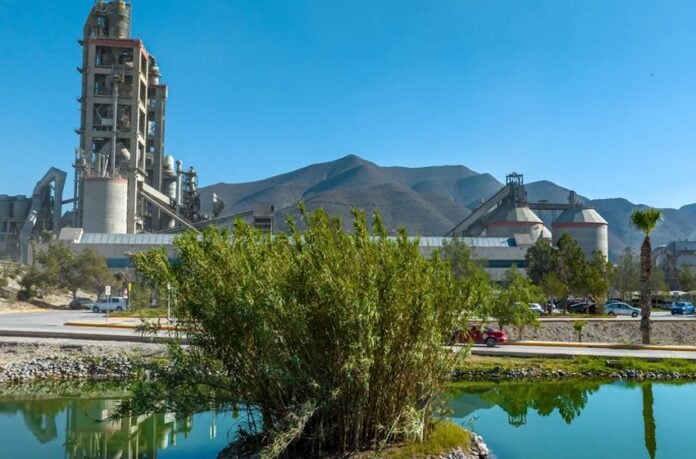
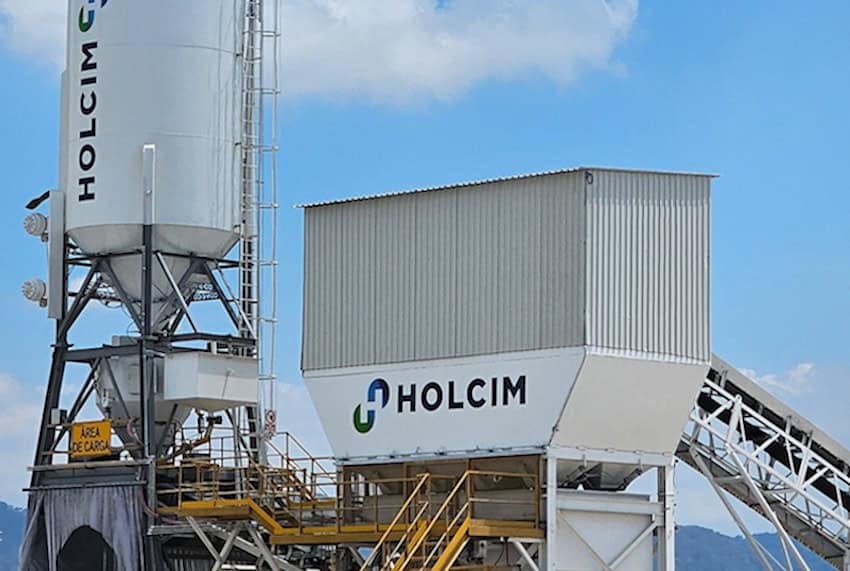
Holcim is not only seeking to reduce water use in its Mexican plants, such as this one, but also to manufacture materials that require less water use by customers after they're sold. (Holcim)
Swiss-based building materials company Holcim is investing heavily in the water conservation efforts of its Mexico operations, as the popular mood in Mexico has been turning against perceived excess corporate water use.
The global firm plans to invest 356 million pesos (US $20 million) by 2027 to expand its infrastructure and technology for water management. The planned expenditure supports Holcim’s expressed goal of reducing water extraction across all its Mexico operations by up to 33% by 2030.
The Swiss-based construction materials producer could be a trendsetter among manufacturers sensing the need to engage in water conservation and decarbonization. (Holcim)
Companies are feeling pressure to reduce their water use in Mexico as increased episodes of drought across much of the country have forced individual users to cut back on water use.
To date, Holcim has cut its water extraction volume by 58% by increasing the use of treated wastewater, recirculation technologies and predictive maintenance, which it implements at 71% of its plants.
Holcim México also conducts rainwater harvesting projects, community infrastructure projects and environmental restoration in vulnerable areas near its operations.
In the Moctezuma basin, which helps drain the Bajío region and where Holcim conducts much of its non-Mexico City operations, the company has reduced its freshwater extraction by 47%, far higher than its 39% target.
In addition to reducing potable water use in its plants, Holcim aims to reduce the water consumption required for construction processes by customers using Holcim building materials. So far, the firm has achieved a potential reduction of 232 million liters of water in construction projects nationwide by launching several innovative products.
For example, its self-curing concrete technology, I-dracreto, eliminates the need for subsequent watering, saving roughly 70 liters of water per square meter poured. Meanwhile, its permeable systems promote infiltration and natural aquifer recharge.
“Our vision has evolved: simply reducing consumption is no longer enough,” said Holcim México’s sustainability manager, Ibette Sosa. “We are transforming our operating model toward a circular water economy ecosystem, where systematic reuse and regeneration are the pillars of our efficiency.”
Holcim México’s decarbonization efforts
In November, Holcim México inaugurated its first 100% electric ready-mix concrete plant, investing 51 million pesos ($2.9 million) in the electrification of its Zapopan, Jalisco facility.
The firm aims to contribute to the decarbonization of the construction industry and move toward a net-zero model by 2050, with plans to replicate the electrification model in other regions of Mexico, according to the firm’s director of sales and operations, Pedro Garza.
“With innovation, technology, and commitment, we are demonstrating that sustainable construction is already a reality in Mexico and that it can generate economic, environmental, and social value,” Garcia stated.
The electrification of the facility reduces dependence on fossil fuels and reduces carbon emissions by an estimated 300 tons a year. The move is also expected to decrease internal noise pollution by 90%, eliminate traffic noise and cut energy costs by 67%.
At present, Holcim manages over 77 ready-mix concrete plants, seven cement plants, and one grinding mill in Mexico, supporting over 5,000 direct jobs.