Home Blog Page 875

Protests against electoral reform held in 50 cities on Sunday

0
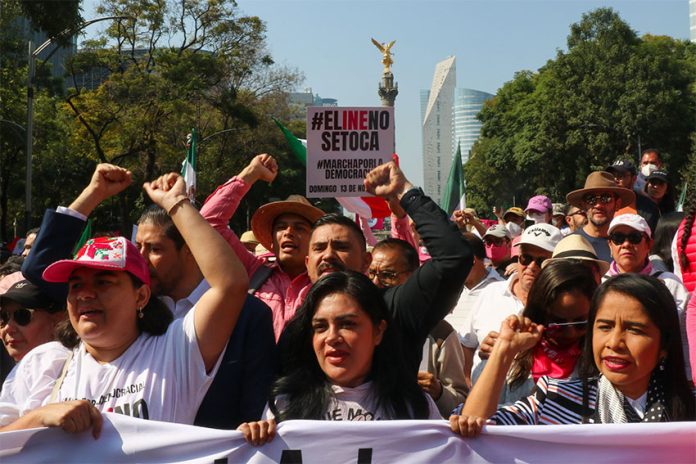
Citizens marched in protest against the proposed electoral reforms in Mexico City and dozens of other cities around the country.
Citizens marched in protest against the proposed electoral reforms in Mexico City and dozens of other cities around the country. Moisés Pablo Nava / Cuartoscuro.com

Mexicans took to the streets in some 50 cities Sunday to protest against the federal government’s proposed electoral reform, legislation that would replace the National Electoral Institute (INE) and state-based electoral authorities with one centralized body.

Approximately 500,000 people including leaders of opposition parties participated in demonstrations in 15 federal entities, according to an El Economista newspaper report that cited statistics provided by protest organizers and media outlets.

However, the number of people who protested the proposed reform in Mexico City — where the nation’s largest march was held — is hotly contested.

Martí Batres, a high-ranking official in the Mexico City government, tweeted from the capital’s security camera monitoring center that between 10,000 and 12,000 people took to the streets, while former president Felipe Calderón cited a vastly different “conservative” estimate of 500,000.
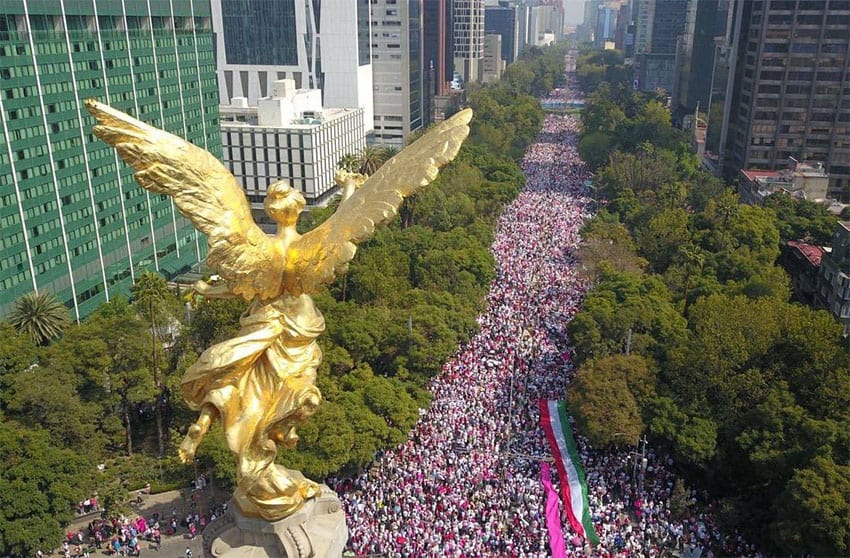
The crowd, many wearing the pink and white colors of the INE logo, filled Mexico City's Paseo de la Reforma on Sunday.
The crowd, many wearing the pink and white colors of the INE logo, filled Mexico City’s Reforma Avenue on Sunday. Twitter @JTrianaT

Citing figures given by civil society organizations that organized the march, El Economista reported that between 150,000 and 200,000 people marched from the Angel of Independence on Reforma Avenue to the Monument to the Revolution, located just outside Mexico City’s historic center.

Among the other cities where protests were held were Monterrey, Guadalajara, Morelia, Querétaro, Culiacán and Cancún.

Via signs they carried and slogans they chanted, protesters declared that the INE — known as the Federal Electoral Institute (IFE) prior to 2014 — mustn’t be “touched.”

They also asserted that the proposed reform — currently under consideration by the Chamber of Deputies — won’t pass Congress.

That outcome appears likely as no opposition party supports the proposal and the ruling Morena party and its allies don’t have the two-thirds majority required to pass constitutional bills.

The reform bill proposes replacing the INE with a centralized authority to be called the National Elections and Consultations Institute. The new authority’s electoral councilors, as well as electoral tribunal judges, would be directly elected by citizens if the bill passes Congress.

Exactly half of the respondents to a recent Reforma newspaper poll said that President López Obrador and his Morena party want to dismantle the INE in order to “appropriate the new institute to control elections.”

The IFE oversaw Mexico’s transition to full democracy after the once-omnipotent Institutional Revolutionary Party dominated politics in the 20th century, a period in which the party’s success at elections was virtually guaranteed due to its own control of the electoral system.

The INE itself jumped into the online commentary on the protests, re-sharing this and other statements from its supporters on Twitter.

The reform bill proposes a range of other measures, including cutting the funding of political parties and electoral authorities, and reducing the number of lawmakers in both houses of Congress.

At a rally at the conclusion of Sunday’s march in Mexico City, former IFE president José Woldenberg declared that protesters were demonstrating their “profound commitment” to democracy and defending “an electoral system that protects all of us and allows the co-existence of diversity, and the replacement of governments via pacific and participative means.”

“Mexico doesn’t deserve a constitutional electoral reform driven by a single will,” he charged, referring to López Obrador.

“… Mexico … mustn’t transfer the electoral register to another institution because the INE has excelled in the formulation of a reliable list,” Woldenberg said.

The former electoral official also said that upcoming elections “must have the same guarantees” as the most recent ones: a trustworthy register, a level playing field for candidates, impartiality of the officials organizing them, meticulous counting of votes and the announcement of preliminary results on the night voters went to the polls.

He questioned whether a centralized electoral institute would have the capacity to organize elections to elect officials for the different levels of governments, saying that state-based electoral authorities registered over 275,000 candidates in 2021 alone.

“With such numbers I ask you: Is it desirable and possible to concentrate, centralize and administer that political universe in a single institution?” Woldenberg asked, prompting a resounding “no” from his fellow protesters.

In a video message posted to social media after Sunday’s protests, INE president Lorenzo Córdova noted that hundreds of thousands of people came out to defend “our democracy and our electoral system in the face of the risk of an anti-democratic regression.”
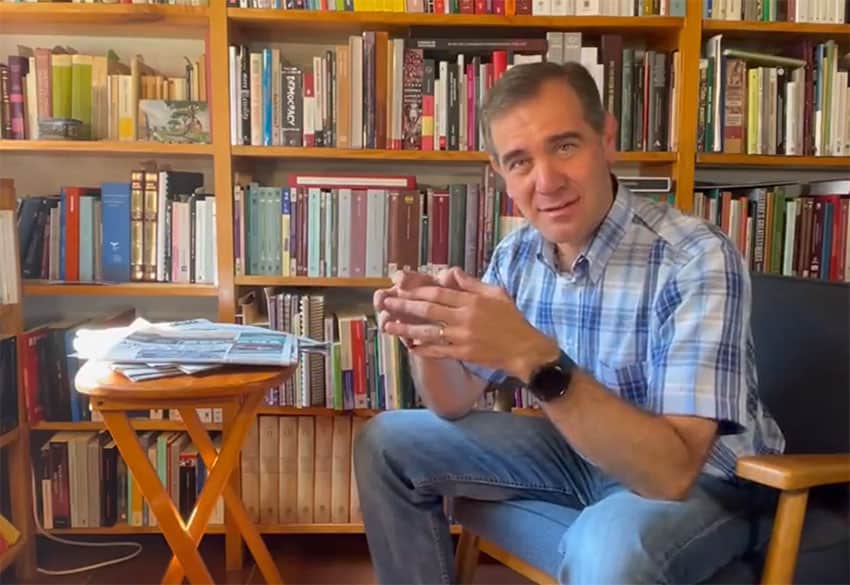
INE Director Lorenzo Córdova said the protests were a defense of democracy against the threat of democratic backsliding.
INE Director Lorenzo Córdova said the protests were a defense of democracy against the threat of democratic backsliding. Twitter @lorenzocordovav

“… The democracy and electoral system we have today are a collective work and asset of all citizens,” he said. “… Mexican democracy wasn’t built in a day nor is it the work of just one man, one party or one political force. It’s the product of multiple civil struggles against a hegemonic party regime, struggles against electoral fraud that characterized the anti-democratic past.”

The INE chief added that that “we can’t allow” the electoral authority to lose its constitutional autonomy “if we don’t want to return to the authoritarian past that we fortunately left behind.”

Córdova also said that, “at INE we watch on with enthusiasm and satisfaction … [as] citizens value and defend … [Mexico’s] democracy.”

More than half a million people have also signed a Change.org petition that denounces the proposed disbandment of the INE.

López Obrador, the key proponent of the electoral reform bill, declared Monday that those who participated in Sunday’s protests are opposed to the transformation his government is carrying out in Mexico. They protested “in favor of the privileges they had before the government I represent [took office], in favor of corruption, in favor of racism, classism and discrimination,” he said.

The president asserted that “not a lot” of people participated in the Mexico City march, claiming that the protesters didn’t go to the zócalo as they “wouldn’t have filled even half” of the capital’s central square.

He described the protest as a “political [and] public striptease of conservatism in Mexico,” adding that “this is very good because if this doesn’t surface it remains hidden and does a lot of damage [to efforts] to have a better, fairer, more equal, more fraternal society.”

Former president Vicente Fox, who joined the Mexico City protest, highlighted on his Twitter account that López Obrador pledged in 2020 that he would quit if 100,000 people protested against him. AMLO said at the time another prerequisite to him leaving office early was opinion polls showing that he has lost support. However, polls have consistently shown that he retains the support of a majority of citizens.

With reports from El Economista, Reforma, El Financiero, Sin Embargo and Proceso 
Air quality alert continues for Mexico City metro area

0
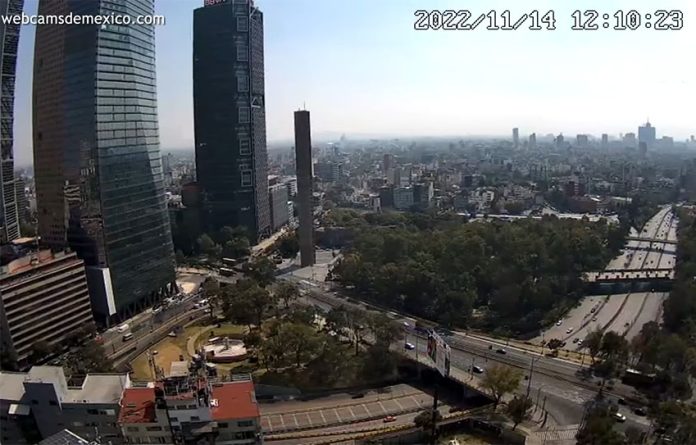
On Monday, the capital was visibly smoggy with light traffic due to the driving restrictions.
On Monday, the capital was visibly smoggy with light traffic due to the driving restrictions. Webcams de México

Following the phase 1 environmental alert issued over the weekend, Mexico City residents began the week on Monday with limitations on traffic and outdoor activities due to the high levels of ozone in the air.

In a Sunday evening press release, the Environmental Commission of the Megalopolis (CAMe) announced that at 5 p.m. on Sunday, the monitoring station in the borough of Miguel Hidalgo registered an ozone value of 134 parts per billion (ppb).

These conditions have led the CAMe to categorize the air in Mexico City and the metropolitan area as “bad to very bad,” representing a health risk ranging from “high to very high.”

Authorities expect that the high-pressure conditions will continue for much of the day with high temperatures, persistent solar radiation and very light winds.

It is also expected for these conditions to last until Tuesday.

The elevated “Hoy No Circula” (“no-drive days”) restrictions will remain in place until the alert is lifted. Cars with verification hologram type 1 and license plates ending in 1, 3, 5, 6, 7, and 9 are banned from circulation between 5 a.m. and 10 p.m. Also, cars with hologram type 2 are restricted, as well as those with hologram type 0 and 00, yellow tag and plate numbers ending in 5 and 6 (for full details, click here).

Although not restricted, outdoor activities are discouraged especially between 1 p.m. and 7 p.m., when ozone levels are more likely to be elevated. Authorities have also suggested avoiding the use of air fresheners, aerosols, paints, waterproofing and products that contain solvents.

Although Mexico City is used to alerts during pollution peaks, alerts in the fall are uncommon — they’re usually issued in the spring before the rainy season.

If a phase 2 alert is issued, in addition to the restrictions listed above, schools will be closed and all outdoor events and activities will be canceled. 

With reports from El Financiero, El País and Comisión Ambiental de la Megalópolis

(Almost) instantly delicious

0
Instant Pot
An Instant Pot’s mission is to make your life easier—and get your cooking done faster.

It took me awhile to accept the value of an Instant Pot; I couldn’t see why I needed one. My slow cooker worked just fine, and I was OK with using pots and pans for other things. But about a year ago, I was gifted one. Suddenly, I had a beautiful, fancy new appliance to figure out and assimilate into my cooking regime.

An Instant Pot is basically a fancy pressure cooker, with specialized preset modes (specific pressure levels and times) for cooking different items. It also works as a slow cooker/crockpot and as a yogurt maker. And it can work like an electric pot, with the lid open, to sear or steam.

The presets make it super-simple to create a complex meal quickly and easily; once you figure it out, an Instant Pot is kind of a one-stop cooking device. Things like beans — which can take hours to cook — are done in 20 minutes or so; meats like brisket, pork roast and even ribs can cook long and slow with no fear of burning or drying out; and stews of all kinds come out with smooth, creamy textures simply by being cooked at high pressure.

Like many other people, I found that yogurt was the first, easiest thing I made in my “IP.” Overnight, I had a couple of quarts of gorgeous yogurt that required no more effort than mixing milk with a bit of yogurt as a starter.

Chicken burrito bowls
Chicken burrito bowls are a quick ‘n easy crowd pleaser!

Then, I will admit, the IP sat on my counter, and then its designated shelf, for weeks before I forced myself to use it for something else, something complicated I usually made on the stovetop with multiple pots. Not only was that Thai Peanut Ramen almost effortless, the broth had a silky texture I’d never been able to make before. (IP directions below.)

Since then, I’ve expanded my repertoire considerably: pork roast, applesauce, all kinds of stews, macaroni and cheese, chicken breasts, brown rice in minutes. (As I write this, chicken stock is bubbling away in my Instant Pot. I’ll end up with two quarts or more of flavorful, delicious stock tucked away in the freezer for future use.) I haven’t made any desserts in it yet, but they’re on the agenda.

I’ll be the first to say that it takes a while to get used to using an Instant Pot, but once you do, they’re great! There are oodles of sites online with all sorts of Instant Pot recipes; I’ve included a few of my favorites here:

Chicken Burrito Bowls

  • 1 lb. boneless, skinless chicken breasts, cut in 1-inch chunks
  • 1 (1.25-oz.) package taco seasoning or equivalent spices
  • 1½ cups chicken or veggie broth
  • 1 (15-oz.) can corn kernels, drained, or equivalent frozen
  • 1 (15-oz.) can black beans, drained and rinsed, or equivalent fresh-cooked
  • 1 cup salsa, homemade or store-bought
  • 1 (4.5-oz.) can chopped green jalapeños
  • 1 cup uncooked rice
  • 2 cups shredded Chihuahua cheese
  • Garnish: 2 Tbsp. chopped fresh cilantro leaves

Mix chicken, taco seasoning and broth in a 6 qt. Instant Pot. Stir in corn, beans, salsa and green chiles. Spread rice on top; press down gently to moisten. Select manual setting and adjust pressure to high. Set time for 10 minutes.

When finished cooking, quick-release pressure. Stir in cheese until melted. Serve immediately, garnished with cilantro.

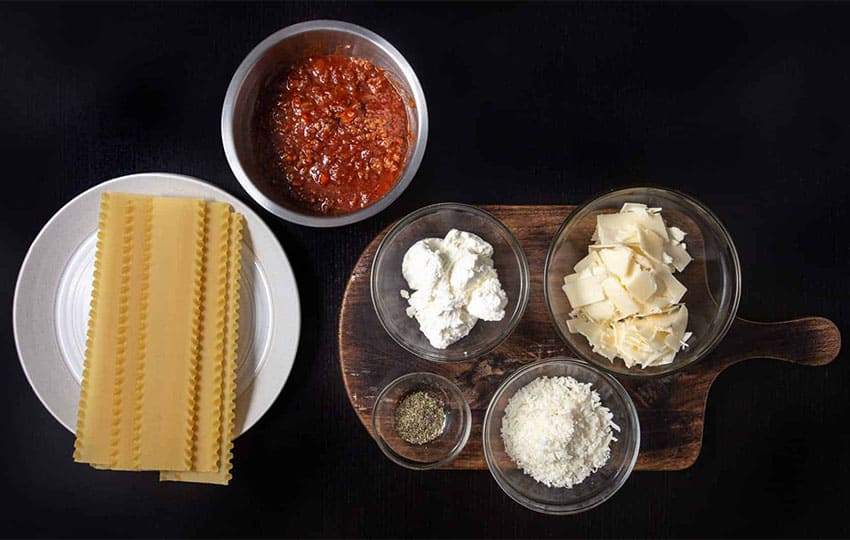
Lasagna

Note: You’ll need a springform pan that fits inside your Instant Pot.

  • 8 oven-ready lasagna noodles
  • 2 cups shredded mozzarella or Chihuahua cheese
  • ¼ cup grated Parmesan cheese
  • 3 cups marinara/meat sauce
  • Salt and pepper
  • ¾ cup ricotta cheese
  • 1 tsp. Italian seasoning
  • 1 large egg
  • Pinch salt

In a bowl, beat an egg, then add ¾ cup ricotta. Season with Italian seasoning, salt and pepper; set aside. Line a 7-inch springform pan with parchment paper.

lasagna ingredients
Instant Pot lasagna? Why not?!

Break uncooked lasagna noodles into smaller pieces; place at bottom of pan in a single layer. Make 3 layers of sauce, ricotta mixture, noodles and shredded cheese, finishing with Parmesan on top. Wrap springform pan tightly with aluminum foil.

Pour 1 cup cold water in Instant Pot; place a trivet in bottom of pot. Use foil to create a sling for the springform pan, then place it gently on top of trivet. Close lid; pressure cook on high setting for 24 minutes + 10 minutes natural release. Check that noodles are cooked enough; if necessary, cook for 5 minutes more.

Remove from Instant Pot. Let sit 5 minutes in pan, then remove and serve.

Thai Peanut Ramen

(Click on the link to find ingredients list.)

Combine chicken broth, coconut milk, soy sauce, fish sauce, honey, peanut butter and curry paste in Instant Pot. Add chicken, mushrooms, red peppers, ginger and garlic. (If using shrimp, do not add them now.) Cover and cook on high pressure for 10 minutes. Once done cooking, release the steam vent.

Shred chicken; stir in the noodles, if using, lime juice, spinach and cilantro. Add shrimp, if using. Let sit 5 minutes or until noodles are soft and shrimp are cooked.

If necessary, pressure-cook for 3–4 minutes to cook shrimp. Ladle soup into bowls, top with peanuts and toasted sesame oil.

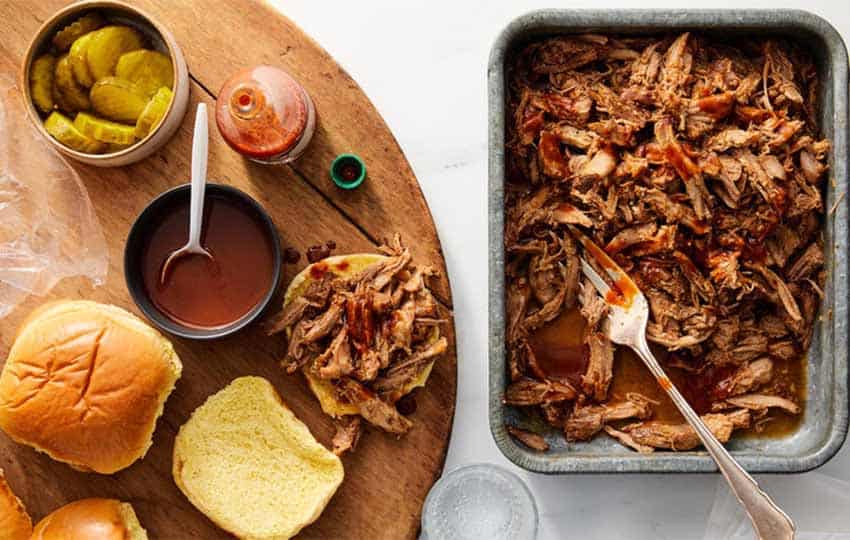
BBQ Pulled Pork

  • 1 Tbsp. garlic powder
  • 1 Tbsp. onion powder
  • 2 tsp. smoked paprika
  • 2 tsp. salt or to taste
  • 1 tsp. black pepper
  • 3-4 pounds boneless pork shoulder, fat trimmed, cut into 4 large chunks
  • 2 Tbsp. vegetable oil
  • 1 yellow onion, chopped
  • 1 can dark soda (Cola, Dr. Pepper, root beer)
  • ½-1½ cups barbecue sauce
  • Hot sauce

Mix garlic and onion powders, paprika, salt and pepper in large bowl. Add pork; turn to coat. In Instant Pot, pour oil; turn to sauté setting Add pork and brown. Add onion and soda; stir and scrape up browned bits from bottom of pot.

Close lid, cook on high pressure setting for one hour. Turn off; release pressure.

Remove pork and onion bits to large bowl. Using two forks, shred meat. Add ½ cup barbecue sauce and a few spoons cooking liquid to moisten. (Discard remaining cooking liquid.) Add salt, pepper, hot sauce and more barbecue sauce as desired.

Janet Blaser is the author of the best-selling book, Why We Left: An Anthology of American Women Expatsfeatured on CNBC and MarketWatch. She has lived in Mexico since 2006. You can find her on Facebook.

Parras, Coahuila: a desert oasis known for its wineries

0
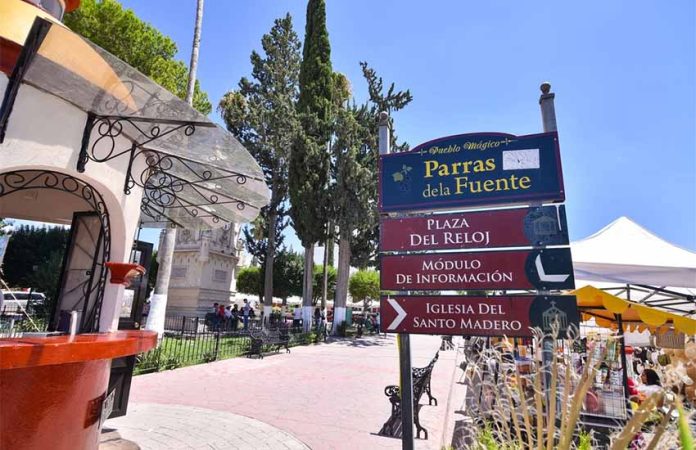
downtown Parras, Coahuila
Parras is a Pueblo Mágico, designated as such for its history, its colonial-era construction, and its hot springs. It can be some work to travel between the downtown and the wineries its famous for on the outskirts. Sectur

Parras de la Fuente, Coahuila, is a literal and economic oasis wedged in the seemingly endless Chihuahuan Desert.

It is a green spot with trees defining the exact extent of where the underground water table rises, as underground flows are blocked by the mountain ranges that separate Coahuila from Zacatecas. The difference in vegetation is striking, especially when seen from the rock outcropping of San Madero Church.

The only settlement of any size between Coahuila’s cities of Torreón and Saltillo, Highway 40 is its lifeline to civilization.

Despite its geographical isolation, Parras has been an important historical and economic center regionally and nationally. With 400 years of European occupation, agriculture and ecology, it was the first northern community to be named a Pueblo Mágico in 2004.

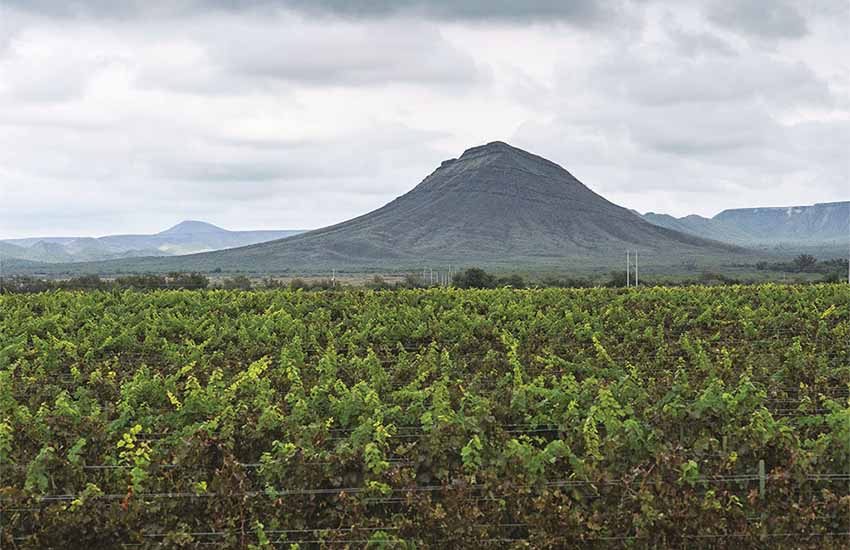
vineyard in Parras, Coahuila
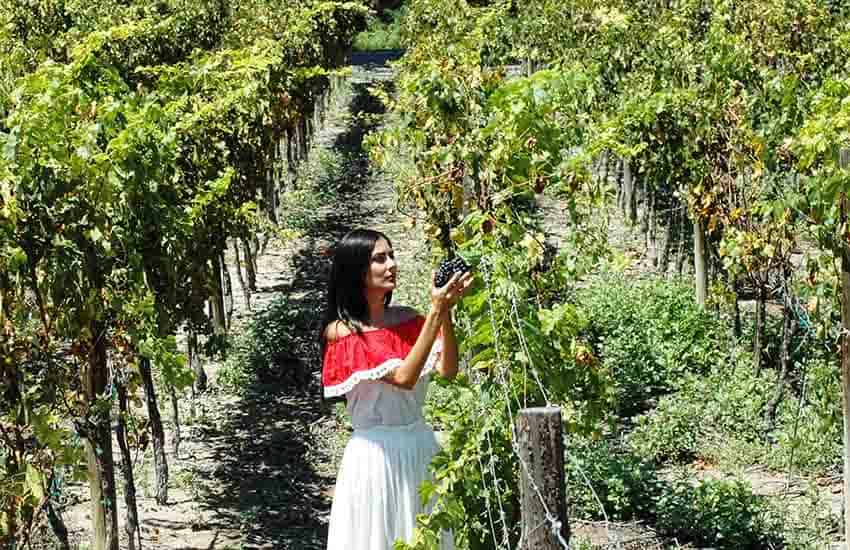
Parras is known first and foremost for its wineries, which are growing in number. Sectur

The vast majority of people who visit do so for one reason — wine. It has played an important role in the area’s history and remains extremely important today. The oasis got Spanish attention early in the colonial period. They had taken control by control by 1578, with the name referring to the wild grapes growing here.

There are a number of internationally-recognized establishments here, but Casa Madero still dominates local winemaking. Founded in 1597 as Hacienda San Lorenzo, it is considered to be the oldest winery in the Americas.

Today, Casa Madero is still extremely important and still enjoys great prestige despite the rise of winemaking in Baja California and other areas of Mexico. Casa Madero is often called upon by new wineries for advice and approval.

Parras’s designation as a Pueblo Mágico was not predicated solely on wine, however. The official reasons for the recognition include its history — it was the birthplace of revolutionary icon and former Mexican president Francisco I. Madero.

Its natural springs, its colonial-era construction in the historic center, its festivals dedicated to the town’s foundation, a cross credited with miracles and local crops such as pecans, figs and pine nuts were also reasons for the designation. It’s also known for cajeta (dulce de leche).

Most Parras wineries are nowhere near as old as Casa Madero, but in the last couple of decades, newer arrivals, such as Rivero González and Don Leo, have been extending Parras’s reputation internationally, introducing new grape varieties and even Mexico’s first kosher wine. There is even one winery, Hacienda de Perote, that makes the cousin to tequila and mezcal, sotol, in addition to wine.

Admittedly, there is something a bit odd about naming Parras as a Pueblo Mágico. There are only two main areas for tourists to go: the wineries on the outskirts and the historic center. Understandably, the vineyards are located outside the town proper, but their wines do not seem to have an obvious presence downtown. I saw only one or two shops offering local vintages, and far fewer fine restaurants than I would have expected.

One reason for this is that the wineries themselves offer tours, upscale restaurants, lodging, invited chefs and opera singers and more. Everything you need for a perfect wine weekend is at one or more of these establishments.

Casa Madero winery, Parras, Coahuila
Casa Madero is a well-respected Mexican winery known for being one of the oldest in Latin America. Mexican Commission of Filmmaking

The municipal government has been trying of late to attract tourists interested in more than just wine: in March, the local government created a new tourism arm to promote different activities in and around the city, although many of them are, again, outdoor activities not in the historic center.

The large historic center with many mansions indicates that Parras has been a city for quite some time, but it also has a ring of cinder block buildings indicating rapid, recent expansion. This clashes with the reputation of Pueblos Mágicos as small communities for people to go to appreciate traditional Mexico. And in order to appreciate both the wine and Parras’ historic center, you will have to ignore the modern, sometimes poor, areas between the two.

Leigh Thelmadatter arrived in Mexico 18 years ago and fell in love with the land and the culture in particular its handcrafts and art. She is the author of Mexican Cartonería: Paper, Paste and Fiesta (Schiffer 2019). Her culture column appears regularly on Mexico News Daily.

I love my life in Mexico, but I know my family back home pays a price for it

0
US father and daughter
The writer and her father share a quiet moment while packing up her childhood home. When you're an expat, being there for family milestones isn't always possible.

Guess what, y’all? I’m in Texas again!

Unlike my last trip here, this is not a vacation in any way. My dad is downsizing to a smaller place after having sold the house he’s lived in for 40 years — the house I grew up in — and I’m here to help him do that.

We’ve had a lot of long, exhausting days as we sort through 40 years’ worth of possessions, deciding what to get rid of and what to make very purposeful space for. We don’t have a lot of time, so plenty of things that we could probably sell for a good profit will be donated instead.

We’ve also done some bickering, as families do:

I think the shower chair, which belonged to his deceased second wife, is worth taking to the new place; he doesn’t want to because the chair itself is loaded with meaning, signifying that he’s officially “old” (he’s 68).

I’m a notorious backseat driver — I just can’t help it; if I were superstitious, I’d say I’ve died in car accidents in at least five past lives. My dad drives an average of 25 miles per hour, usually in the fast lane, as cars swerve angrily around us on the right. I close my eyes and try to avoid gasps, reminding myself that he’s survived as a driver for this long.

He wants to keep every piece of writing his own father ever wrote; I argue that there’s little point since they’ll just remain in storage boxes for another 20 years. There’s little time for it during this trip, but maybe in the future, we’ll sit down and make digital copies of it all before tossing, framing a few nice examples.

But I’m here. He needs me. The rest of my family needs me, too, to lighten their load.

The topic of caring for one’s parents from afar as they age is a fraught one for immigrants all over the world, and I’m no exception. I suspect that we all feel a measured amount of guilt about this.

So many questions come up: would our parents’ lives be better if we were closer to them physically? Would my sister’s life — who’s had to be there in big ways and small for all three of our parents at different points — be better? (Answer: certainly.) And if I lived in the United States, would I even be able to both support myself and have the time to care for them? (Answer: uncertain.)

For a time after my daughter was born, I wanted to move back to Texas so that I could help take care of my increasingly sick mother, sure that I could improve her quality of life, if not extend it. But I couldn’t get my now ex-husband on board with the idea in time. In the couple of years after my mother died, I gave up both on going back and on my marriage, deciding I’d stay in Mexico forever and just try my best to earn enough money for frequent trips back home.

For me personally, life is easier in Mexico. I’m happy, and I live a good life. I don’t want to leave, and probably never will. But the tradeoff is that my family’s life is very likely slightly harder because of my absence.

So, here I am, doing the same thing for my dad that I did six years ago for my mom and stepdad: organizing, packing up, getting a new place ready — complete with labels, calendars, safety features and organizational systems that would make Martha Stewart proud. My contributions are in short but very intense bursts.

I’ve tried my best to create small, comfortable palaces for them, with their every need anticipated and dealt with in advance, with their every worry already imagined and solved before they can even have the thought. I wanted, and still want, to make their lives easier.

But my mother didn’t care about labels and handrails in the bathroom as much as she cared about me. And “me” is what she couldn’t keep with her. I lived elsewhere.

Thankfully, she had my sister and my other dad, Richard, who weathered the most difficult parts of her care in my absence. My contributions, while appreciated and needed, could only solve so much: the handrails and furniture placed “just so” couldn’t prevent her sudden fainting spells that resulted in concussions, worsening her dementia a little more each time.

The labeled bathroom and kitchen cabinets couldn’t stop her from having terrifying hallucinations. And the bright sunshine pouring through the windows through soft, translucent curtains were no match for her sense of longing to spend time with her granddaughter, who was born in and lived in Mexico.

During Hurricane Harvey, it wasn’t me who stayed sheltered with them during days on end of flooding outside and no water or electricity inside. I’ve escaped the most hellish, difficult parts of parental care simply by being in Mexico, unavailable by default.

As I’ve complained to friends about the difficulty of the work I’m doing, some have asked incredulously, “…and nobody is helping you? Your sister’s not there?”

She’s not at the moment, but I’m the truly “not there” sister.

And for everything my sister has had to deal with in my 20 years of absence, I’d spend months walking on my knees through gravel for her: not simply out of penance but also because she is constantly going it alone. So, single-handedly getting my parents packed up and moved to a new place feels like quite literally the least I could do next to what would actually be fair — moving back to Texas to help with the increasing amount of day-to-day work there is to be done as the years go by. But although I’ll continue to come to the States as often as I possibly can, I will not be moving back.

What does family mean when physically you’re only a fleeting part of your own tribe? What are our responsibilities to the people who raised us? I know that this is generally a human question, not just an immigrant one, but living so far away raises the stakes of the conversation: the conclusions are real, not imaginary.

All I can do for now is argue over a shower chair and lay down some good, sturdy bathmats. My dad might wish for me to sit at his table every week; he might feel lonely sometimes; he might mourn his old house.

But I’ll tell you what he won’t do: slip on the tiles in the bathroom.

Sarah DeVries is a writer and translator based in Xalapa, Veracruz. She can be reached through her website, sdevrieswritingandtranslating.com

With 27 arrests in a week, a renewed focus on femicides in Mexico

0
Rautel "N" is one of the suspects in a high-profile case: the murder of Ariadna Fernanda López.
Rautel "N" is one of the suspects in a high-profile case: the murder of Ariadna Fernanda López. FGJ-CDMX via Cuartoscuro.com

Convinced that she was being kidnapped, a young woman threw herself out of a moving taxi in Mexico City.

A México state mother disappeared on her way to her job as an English teacher and wasn’t seen again until her corpse was found six days later.

Another young woman was found dead on the side of a road in Morelos after she disappeared in Mexico City.

Lidia Gabriela Maldonado, Mónica Citlalli Díaz and Ariadna Fernanda López, all of whom died in the past two weeks, are among the latest victims of gender-based violence in Mexico, where an average of 10 women are killed every day and victim blaming — including by authorities — is rife.

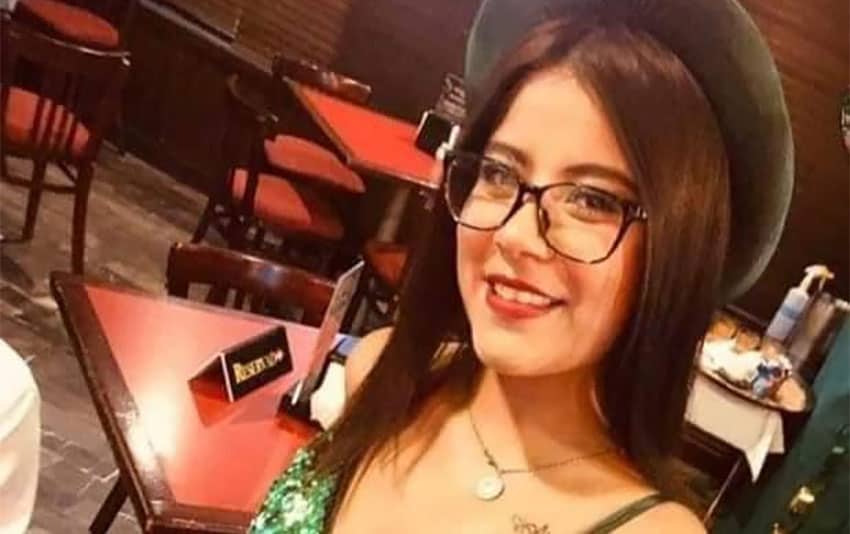
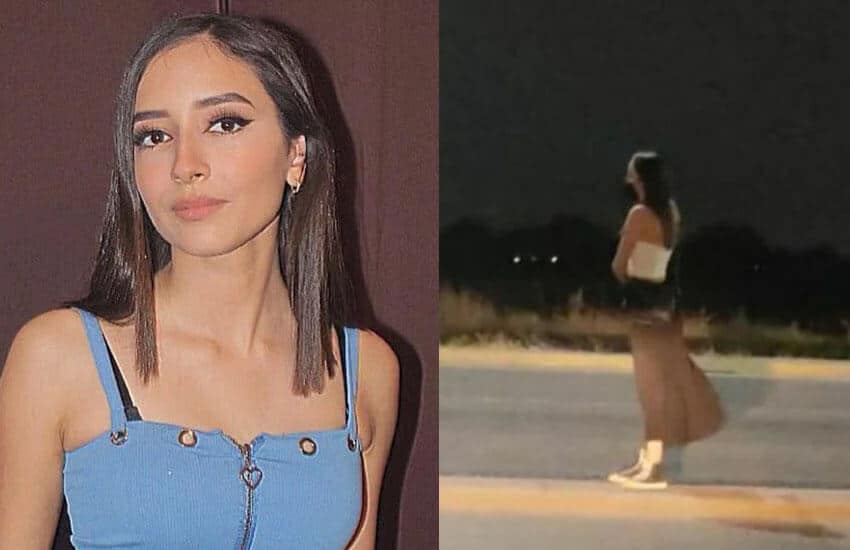
The murder of Ariadna Fernanda López has been one of the most high-profile recent alleged femicides.
The murder of Ariadna Fernanda López has been one of the most high-profile recent alleged femicides. Social media

Some alleged femicide cases, such as that of 18-year-old Nuevo León woman Debanhi Escobar earlier this year, attract intense media coverage and provoke national outrage, but many others are barely reported on, if at all, and go unperceived by most Mexicans.

Firmly in the former category is the case of Ariadna López, whose body was found on Oct. 30 by cyclists in Tepoztlán, Morelos, the day after she disappeared in the trendy Mexico City neighborhood of Condesa. One factor that has raised López’s case profile is the intervention of Mexico City Mayor Claudia Sheinbaum, a leading candidate to succeed President López Obrador.

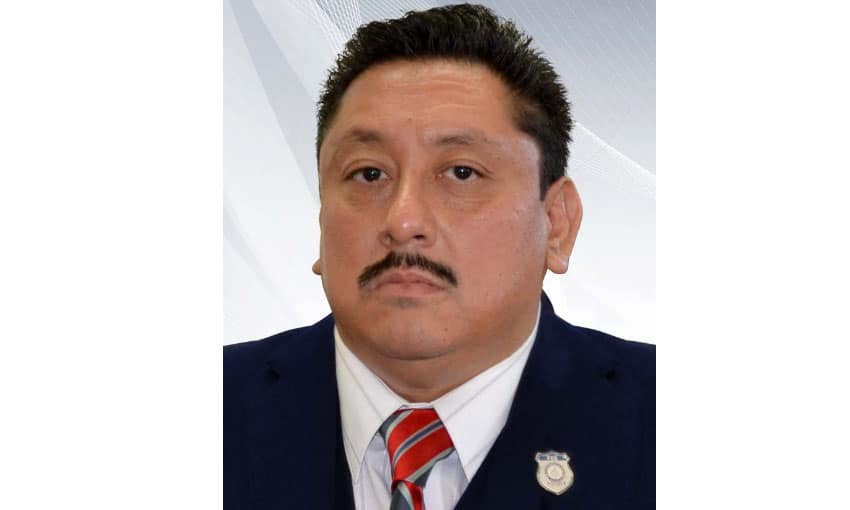
Sheinbaum accused Morelos Attorney General Uriel Carmona of protecting the alleged killer after he announced that a forensic examination determined that López choked on her own vomit due to intoxication.

“It is clear that the attorney general of Morelos tried to cover up for the killer of a woman because of his ties to the killer,” she said earlier this week.

Mexico City Attorney General Ernestina Godoy said Sunday that a subsequent autopsy completed by experts in the capital found “several lesions caused by blows” on López’s body and determined that the cause of her death was “multiple traumas.”

A man and a woman, reportedly a couple, have been arrested in connection with her alleged murder, but impunity for femicides — and most other crimes — remains the norm in Mexico. Authorities, including the federal government and the president, have been accused of indifference to the country’s monumental gender-based violence problem even as feminist groups organize increasingly large protests to demand action.

Critics of Mayor Sheinbaum have even claimed that her outspokenness about Ariadna’s case is politically motivated — part of her campaign to position herself for a presidential run.

As anger over the alleged femicides of López and other recent victims continues to simmer, the federal government on Thursday attempted to demonstrate that it is committed to combating violence against women.

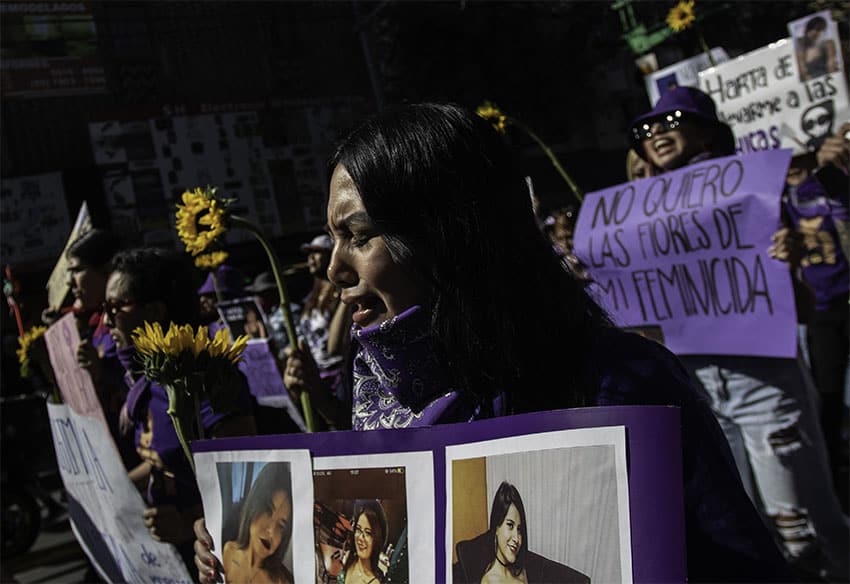
Family and friends of Ariadna joined feminist collectives in a protest march on Sunday in Mexico City.
Family and friends of Ariadna joined feminist collectives in a protest march on Sunday in Mexico City. Andrea Murcia Monsivais / Cuartoscuro.com

López Obrador reaffirmed his disdain for impunity and complicity between officials and criminals, while Deputy Security Minister Ricardo Mejía reported that 27 people were arrested or sentenced on femicide charges in the seven days between Nov. 3 and 9. Among those detained was the couple accused of killing Ariadna López and the man driving the taxi when Lidia Maldonado leapt to her death.

“Let’s remember that the sentence for the crime of femicide ranges from 40 to 70 years in prison,” Mejía said, without mentioning that the vast majority of perpetrators are never held accountable for their crimes.

While Sheinbaum’s motives for her intervention in López’s case have been questioned, a member of the National Citizens Observatory on Femicide praised the Mexico City mayor.

“I believe [her] words are … exceptional because politicians are normally very careful with the narratives [they present],” Ana Yeli Pérez Garrido told the newspaper El País.

Morelos Attorney General Uriel Carmona headshot
Sheinbaum accused Morelos Attorney General Uriel Carmona of protecting the alleged killer after he announced that Ariadna López choked to death, a finding at odds with subsequent autopsies. Morelos Fiscalía

She said she was conscious of the mayor’s political aspirations, but still believes she sent an “important message” by speaking out so forcefully against another official — a person with the capacity to fortify the fight against impunity and help make Mexico safer for women.

Sheinbaum’s words laid bare “the deficiencies” of authorities tasked with combating and investigating crime, Pérez said. “That’s favorable in Mexico, [the shortcomings of authorities] is not a minor issue,” she said.

“… Prosecutors offices have given shelter to impunity, … that’s why it’s important that politicians send messages of intolerance of that,” Pérez added.

Patricia Olamendi, a well-known feminist, asserted that “almost all” prosecutors offices are negligent and Mexicans are fed up both with attorney generals such as Carmona “coming out and saying that the [femicide] victim was drunk” and with the lack of policies to prevent violence against women.

The feminism movement in Mexico has helped to raise awareness of the country’s gender-based violence problem and people now want action, she said. “Society is starting to say enough, because this [ongoing violence against women] is a horror movie,” Olamendi said.

In a column published in the El Universal newspaper earlier this week, prominent security analyst Alejandro Hope wrote that violence against women in Mexico is “qualitatively different” to violence against men.

While 69% of men who were murdered in 2021 were shot, the figure for women was 58%, he wrote, noting that 15% of female victims were hung and 12% were killed with sharp objects such as knives. Hope also wrote that 24% of women who were murdered last year were killed in a private home whereas the figure for male victims was just 11%.

Debanhi Escobar disappeared from Escobedo, Nuevo León on April 9 after attending a party with friends.
Debanhi Escobar, another alleged victim of femicide, disappeared on April 9 after attending a party near Monterrey with friends. Instagram @debanhi.escobar

“Home is not a safe place for a significant proportion of women and many of them live with their aggressors,” the analyst said.

He cited a study by the National Institute of Statistics and Geography that found that in 40% of cases of murder committed against women between 1990 and 2017 in which the relationship between the alleged aggressor and the victim was known, the alleged perpetrator was the victim’s partner.

Hope added that femicide is “the extreme manifestation” of a range of different forms of violence that women in Mexico face.

“According to the most recent National Survey on the Dynamics of Relationships in Homes (Endireh 2021), 1.5 million women were physically assaulted in the family environment during the 12 months prior to the survey,” he wrote.

Citing another survey, the analyst said that 1.7 million women were victims of sexual crimes last year, most of which weren’t reported. The survey counted 10 sexual crimes against women for every one committed against a man, he wrote.

“To all of the above, we have to add all the other many forms of violence and exclusion that women suffer in Mexico. According to Endireh, 70.1% of women older than 15 have suffered at least one incident of emotional, economic, physical or sexual violence, or discrimination, in their lifetime,” Hope wrote.

“In conclusion, the tragic deaths of Ariadna Fernanda and Lidia Gabriela are not more than the most extreme manifestation of a condition of structural and daily violence women face,” he said. “… Acknowledging that fact and trying to correct it is a necessary step to confront other forms of violence and other injustices.”

According to the National Commission to Prevent and Eradicate Violence Against Women (Conavim), personal, social and cultural factors all contribute to the prevalence of violence in Mexico.

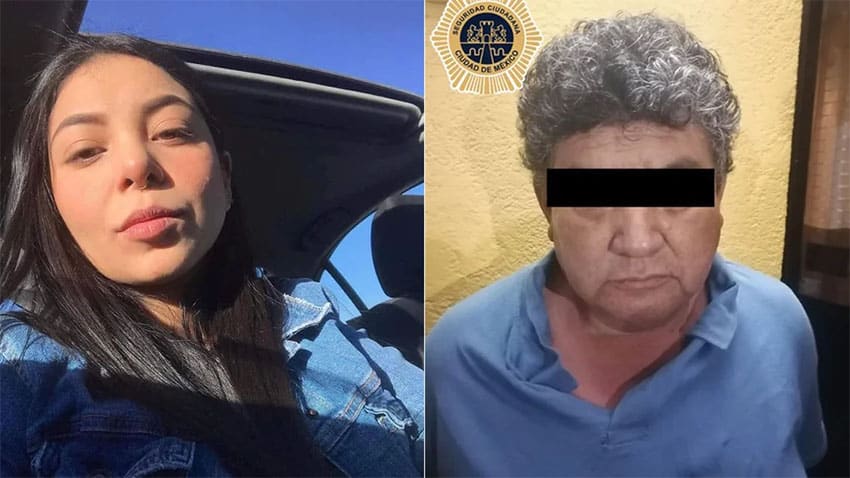
Lidia Gabriela and the taxi driver accused of attempting to kidnap her, prompting her to jump from the moving vehicle.
Lidia Gabriela and the taxi driver accused of attempting to kidnap her, prompting her to jump from the moving vehicle. Social media/FGJ-CDMX

On a federal government website, the commission said that perpetrators of violence against women are “immersed in a society and culture that has historically conditioned them to think that one way to express their masculinity is through violent, dominant, possessive and controlling attitudes and behavior, and that any attempt to change this represents a risk to their manliness.”

“… Both women and men have a role to play … to eradicate gender-based violence, and it is important to understand the origins of violence in order to prevent it … and to learn to identify the warning signs in order to avoid a situation escalating until it becomes a manifestation of extreme violence against women,” Conavim said.

Writing in Americas Quarterly earlier this year, the co-founder of the Mexico Violence Resource Project at the Center for U.S.-Mexican Studies at the University of California San Diego said “there’s no panacea in addressing gender violence, but there is one major prerequisite for protecting women on which Mexico’s government has fallen far short: the social safety net.”

“Evidence from around the world shows how social programs aimed at promoting gender equality also provide women with the financial independence they need to escape situations that put them at risk (an abusive marriage, for example),” Cecilia Farfán-Méndez wrote.

“But while López Obrador came into office on a promise to reinvigorate and strengthen programs for the most vulnerable, his government has done much to tear down the social infrastructure designed with women in mind,” she wrote.

“… To be sure, violence against women did not begin under the López Obrador administration. Nor were programs promoting gender equality enacted in previous administrations without significant fault (there is always room for improvement). But the steps the government has taken so far to protect women have often been at best misguided.”

With reports from El País and AP

Oaxaca lawyer seeks to become first female president of National Notary Association

0
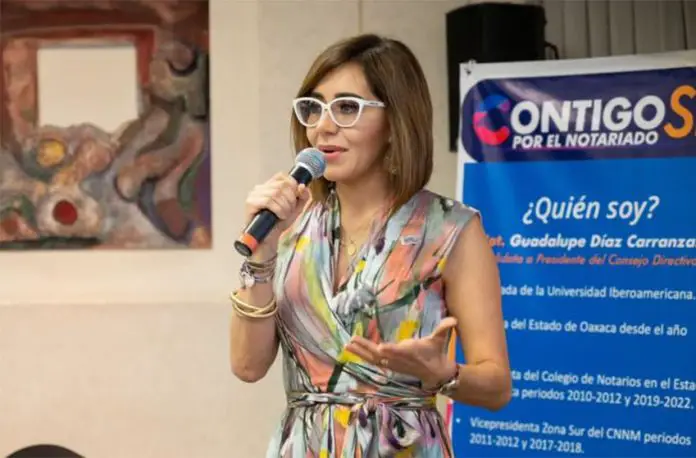
Notary Public Guadalupe Díaz Carranza on the campaign trail.
Notary Public Guadalupe Díaz Carranza on the campaign trail. Twitter @gdcoax

Notary Public Guadalupe Díaz Carranza seeks to be the first woman to chair the National Notary Association of Mexico since its creation in 1955.

Díaz Carranza, Notary Public 83 of Oaxaca, will compete against Nicolás Maluf Maloff, Notary Public from the State of Mexico, in a voting session to be held on Saturday during the last day of the 35th Congress of the national association.

Díaz Carranza’s trajectory as a Notary Public dates back to 2004 when she received the appointment. She’s also been president of the Notary Public Association of the State of Oaxaca twice, and vice-president of Notary Public National Association for the South two times as well. She currently holds the position of Financial Secretary for the association.

As part of her campaign “Contigo Sí,” she toured 29 states and 39 cities to collect the concerns of approximately 4,200 notaries in the country with the intention to have a campaign program.

Among her proposals is to facilitate education across the country so that members don’t have to go to Mexico City to receive training and education on the matter. “We plan to have an itinerant presidency by bringing the benefits of the national association to all members in each one of the entities,” Díaz said in an interview for El Universal newspaper.

If chosen, she said she would also invest in technology to improve the security tools used to protect notaries and users, like the notary’s digital stamp. She would also use biometric devices to help identify clients and avoid identity fraud.

Scandal, however, has been part of the voting process with both candidates fielding a diverse range of accusations.

As for Días Carranza, some members have accused her of having falsified her birth certificate to make it appear she was 30, instead of 28 years old, when she was appointed Notary Public (the local law states 30 as the legal age to become a notary). Meanwhile her competitor, Maluf, is accused of having ties to a Mexican drug cartel.

Nonetheless, on Saturday, 1,400 members of the association will choose one of the above as a new president for the 2023-2024 term.

While state law regulates notarial practice, the national association is in charge of unifying and fortifying the profession and representing its members. Notaries are appointed by the government to act as witnesses and to certify the validity of legal documents, and to facilitate judicial administration. There are an estimated 4,600 notarial offices in the country.

With reports from El Universal, Debate, and Proceso
The surprising number of Nahuatl words used in modern Mexican Spanish

0
pre-Hispanic depiction of a possum
Indigenous depiction of the tlacuache, the Nahuatl word for possum still used in Mexico today.

English speakers constantly use words borrowed from Latin, Greek, French, German, Spanish and plenty of other languages, but did you know we even have a few words from Nahuatl?

This indigenous language famously spoken by the pre-Hispanic Mexica is still spoken today by around 1.5 million people in Mexico. It once served as a lingua franca among ancient peoples in Mexico and Central America. Curiously, it appears to have originated in what is now the southwestern United States, thereafter slowly spreading southwards.

Because it’s still a living language, English speakers from all over the world have had a chance to interact with Mexico throughout modern history and thus borrow various words from Nahuatl, words like:

  • chocolate
  • tomato
  • coyote
  • tamales
  • peyote
  • guacamole
  • mezcal
  • shack
chocolate cake
Thanks to Mexico’s pre-Hispanic Mexica, you can call this cake “chocolate” — originally a Nahautl word. David Holifield/Unsplash

“Shack?” Believe it or not etymologist David Gold traces this word back to the Nahuatl word xacalli, (note that this x should be pronounced “sh”), also spelled jacalli, meaning “hut with a straw roof.”

He says settlers on the Great Plains of the United States couldn’t use wood for their homes and learned the building techniques of the local Native Americans who spoke Uto-Aztecan languages and used the word xacalli. Audubon’s Western Journal says, “The ranchos are forlorn ‘jacals,’ sheds covered with skins and rushes and plastered with mud.”

If a few Nahuatl words like “chocolate” and “tomato” have found their way into English, far more have inserted themselves into Mexican Spanish.

Read the following. Can you understand what it’s all about?

tianguis
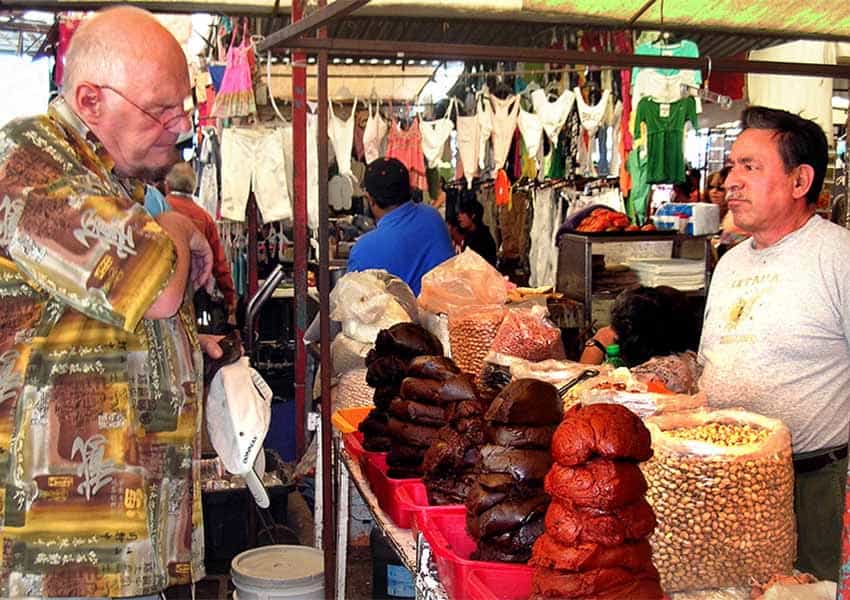
The word tianguis comes from tiyānquiztli, a pre-Hispanic open-air market — something Mexico still has in most cities and towns today.

“While he was in the tianguis, Nacho bought cacahuates for his pet tlacuache. As long as he was there, he looked for atole but couldn’t find any, so he settled for tejuino.”

“I want a popote with it,” he said, and when he didn’t get one, he became angry.

Replied the tejuino maker: “Por favor, cuate, stop this mitote and I’ll give you your popote!”

Easy to follow? If not, here’s a glossary of the words that come from Nahuatl:

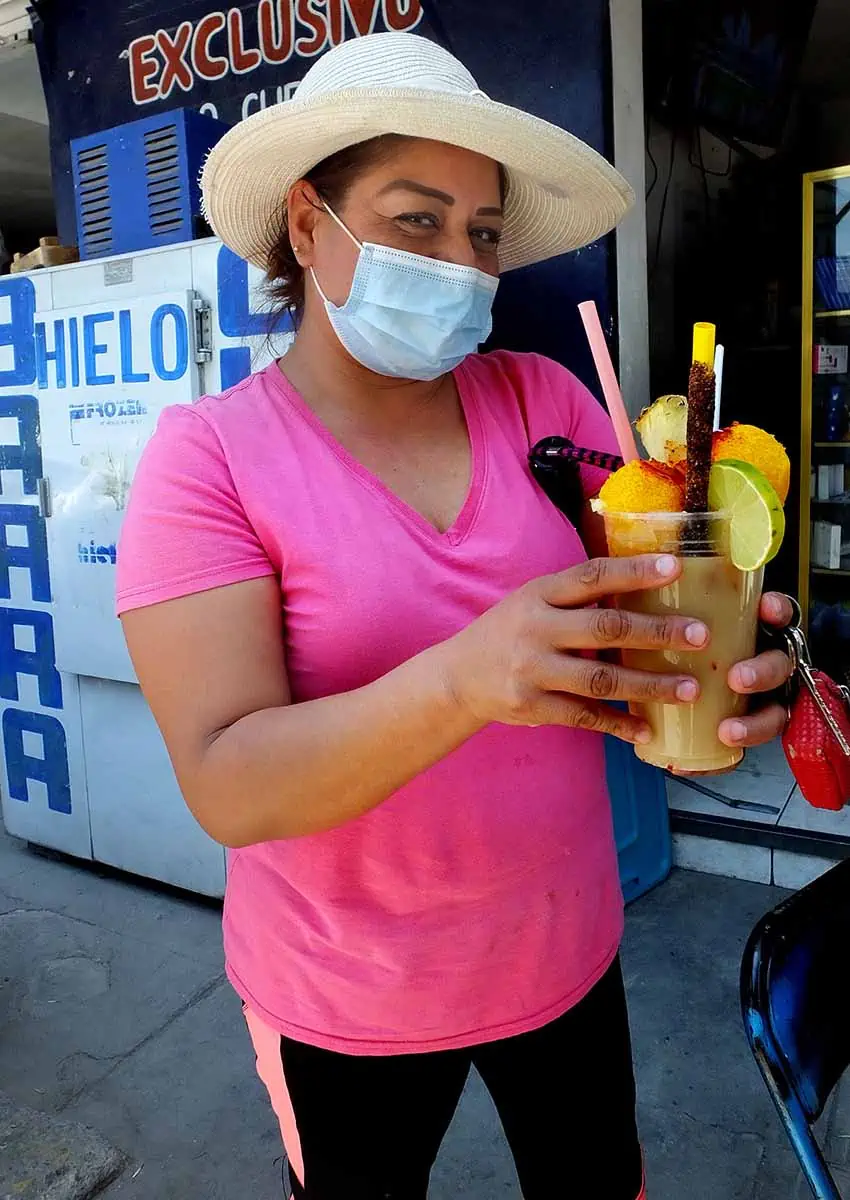
Mexican drinking tejuino (corn beer)
A customer about to drink her tejuino (corn beer) through two popotes (straws).
  • Tianguis: from the Nahuatl tianquiz(tli), or a street market. If a tianguis is enclosed, it will be called a mercado.
  • Cacahuate: this means “peanut.” The ancient Mexica used to refer to a ground nut as a tlacáhuatl or “earth cocoa-bean.”
  • Tlacuache: a tlacuache is a possum. This word comes From tlacuatzin, meaning “little fire-eater.”
    How is a possum a fire-eater? Well, in pre-Hispanic mythology, the tlacuache stole fire from the gods (grabbing a firebrand with his tail) and gave it to men. And that’s why the tail of a possum is hairless!
  • Atole: a thick drink popular in Mexico made from corn flour and water, sweetened with piloncillo (brown cane sugar) and flavored with cinnamon, vanilla and maybe chocolate. Atole is what you drink right before you hit the sack.
  • Tejuino: a tart, nonalcoholic beer made from sprouted corn still popular in parts of Mexico. The ancient Nahua viewed it as the “drink of the gods.” If you drink it regularly, they say, it will replace the pathogenic bacteria in your colon with probiotics.
  • Popote: this word, meaning “drinking straw,” is derived from the Nahuatl popotli, referring to the hollow reeds which grew all around the ancient city of Tenochtitlán.
  • Cuate: this word said to come from Nahuatl means “twin.” Today it is used much like “buddy” or “dude.”
  • Mitote: this may have originally referred to the dancing and drinking that went on at ceremonial centers in pre-Hispanic Mexico. In modern times it means “a mess” or “chaos.” Armar un mitote is to make a fuss.

Ready for more? The following paragraph contains a few more Nahuatl words ensconced in the ordinary vocabulary of many Mexicans: “A tecolote peacefully slept in a pochote while a zanate danced in the branches of an amate. Down below, seven escuincles played with their canicas…”

  • Tecolote: this comes from the Nahuatl word for “owl” and is found in the common Mexican dicho or saying, “Cuando el tecolote canta, el indio muere.” (“When the owl hoots, the Indian dies.”)
  • Pochote: also called a ceiba, this is the silk-cotton tree, considered divine in ancient Mexico because its branches, trunk and roots represented the cosmos’ three levels. Many pochote varieties can be recognized by their trunk’s thick spikes.
  • Zanate: this bird is called the great-tailed grackle in English. Legends say it has seven distinct songs, all of which it stole from the sea turtle. It is thought that in these songs you can hear the seven passions: love, hate, fear, courage, joy, sadness and anger.
  • Amate: ficus tree, and also paper made in pre-Hispanic times out of the tree’s bark. Still used today by artisans, ancient peoples used it for communication and religious ceremonies. A crumpled piece of amate paper found in the Huitzilapa shaft tomb in Jalisco dates back to the year A.D. 70.
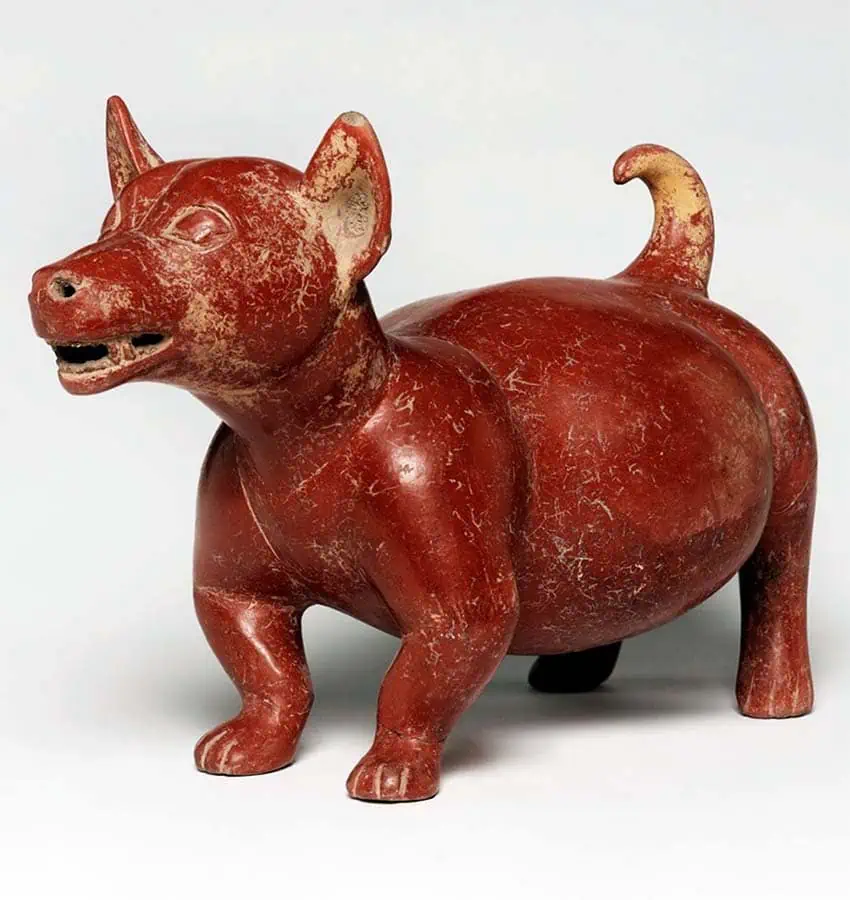
  • Escuincle: this is a short form of xoloitzcuintle, the Mexican hairless dog breed. Today, the derivative escuincles refers to children. This is not necessarily pejorative, as xolos were considered protectors from evil spirits and the guides who take our souls to the next life.
  • Canica: This word means “marble,” as in the glass balls kids play with. The word supposedly comes from the Nahuatl expression Ca, nican nican! meaning: “This is mine right here!” which you would shout if you thought your marble was the winner.
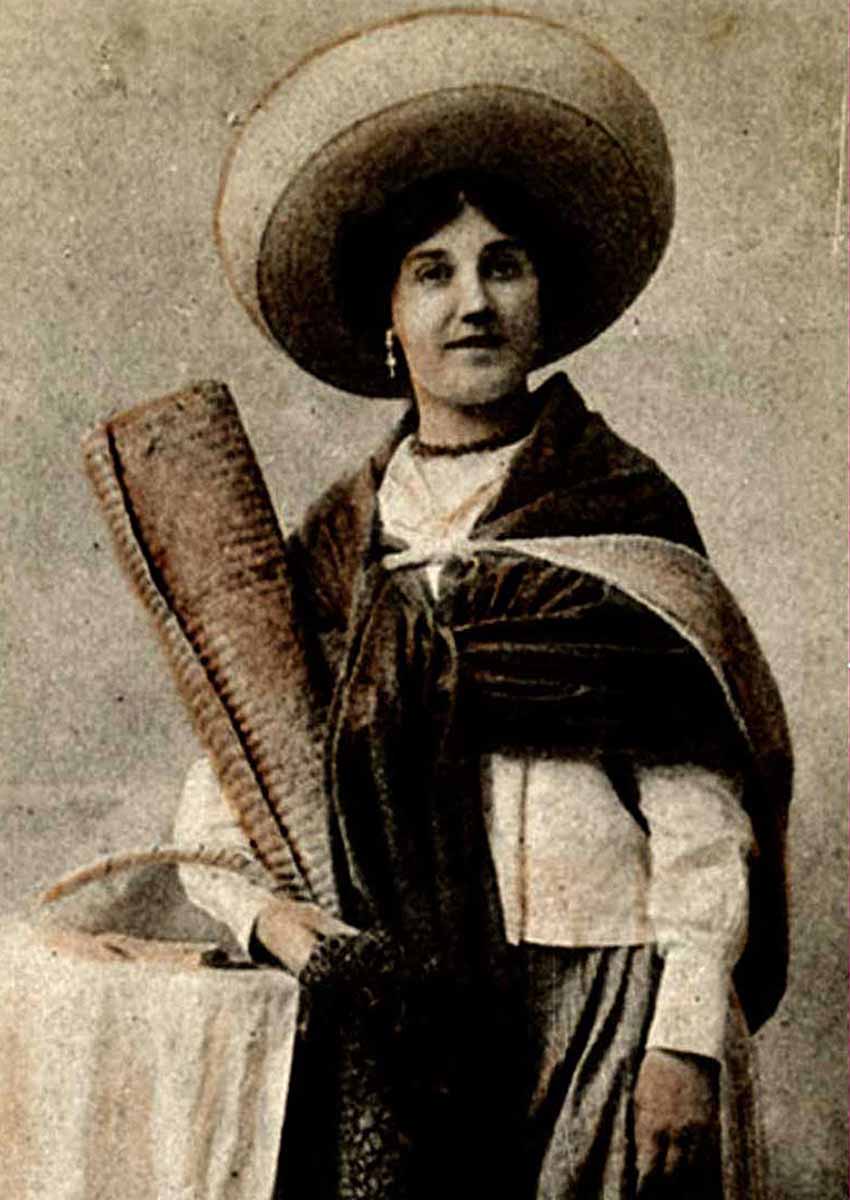
  • Petatearse: a petate is a mat woven from reeds or palm fronds. It was also used to roll up a corpse for burial. From this comes the verb petatearse. So, se petateó means something like: “He kicked the bucket.”
  • Titipuchal: a great quantity of people or things. So, this sentence — “Mi bisabuelito se petateó por el titipuchal de años” — means: “My great-grandpa died of a superabundance of years.”

Which might sound a bit more chistoso (funnier) like this: “Great-grandpa kicked the bucket because he was older than the pyramids.”

xoloitzcuintle statue
The xoloitzcuintle dog breed dates back to pre-Hispanic Mexico. Its name somehow morphed into today’s escuincle, which can mean “kid,” brat,” “urchin” or “stinker.”

The writer has lived near Guadalajara, Jalisco, since 1985. His most recent book is Outdoors in Western Mexico, Volume Three. More of his writing can be found on his blog.


The Laud Codex
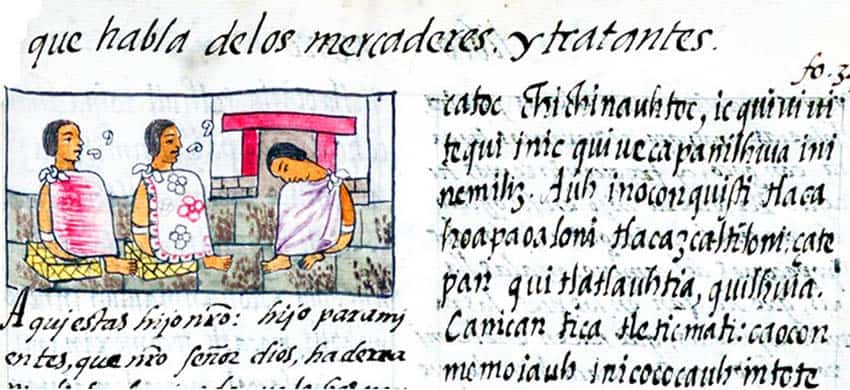
From the Laud Codex: a tecolote, or owl, hoots when Mictlantecuhtli, the lord of the underworld, is about to strike.


woman holding a petate mat
This woman holds a petate rolled up in her arm. Woven from reeds or palm fronds, it was used as a corpse’s shroud. INAH


Florentine Codex
A Nahuatl speaker depicted in the Florentine Codex. The speech scroll indicates talking or singing.


Florentine Codex
Pre-Hispanic businessmen speaking Nahuatl, from the Florentine Codex, written in Nahuatl with a Spanish translation by the Franciscan missionary Bernadino de Sahagún.


Mexican actors join the Marvel universe in ‘Black Panther: Wakanda Forever’

0
Tenoch Huerta plays the villain Namor in Black Panther: Wakanda Forever.
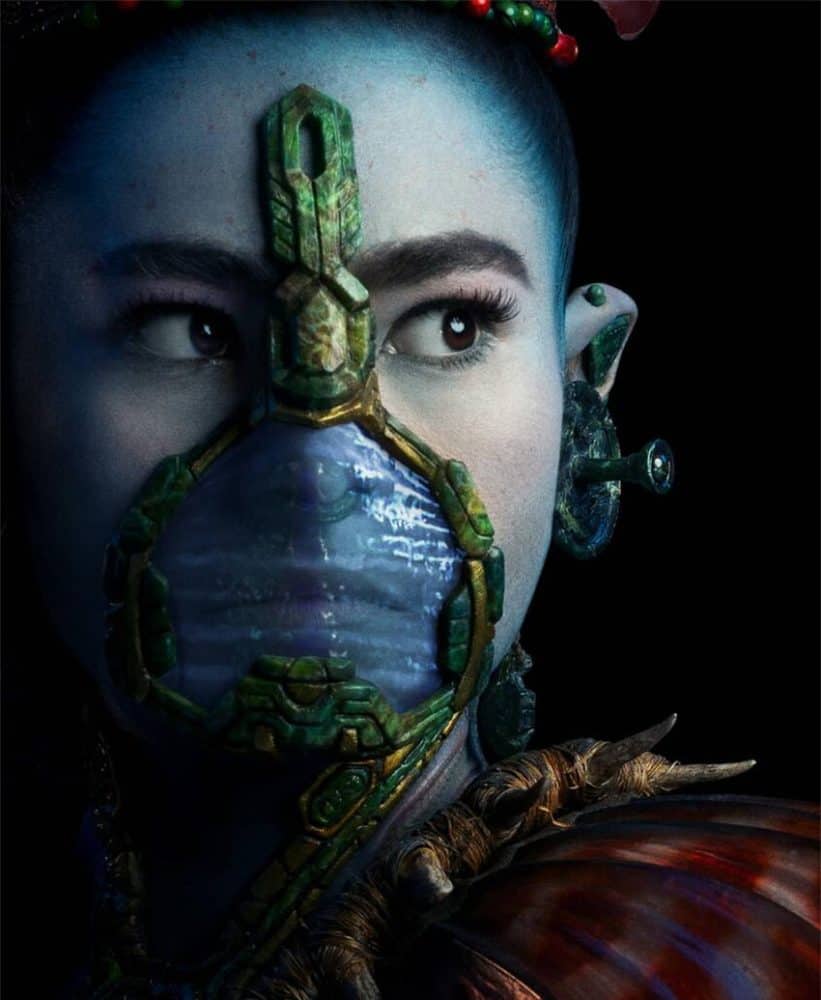
Tenoch Huerta plays the villain, Namor the Sub-Mariner, in Black Panther: Wakanda Forever. Marvel Studios

The second movie in Marvel’s “Black Panther” superhero series — which debuted in Mexico on Thursday and is projected to have a humongous opening in the United States this weekend — has a significant amount of Mexican blood and culture pulsing through its veins.

Most notably, Tenoch Huerta stars as the movie’s villain, Namor the Sub-Mariner, who leads his blue-skinned, water-breathing people on an invasion of the futuristic country of Wakanda. Seen previously as the drug lord Rafael Caro Quintero in Netflix’s “Narcos: Mexico,” Huerta, 41, was born in Ecatepec in the state of México.

“Black Panther: Wakanda Forever” also features Mabel Cadena, 32, in the smaller role of Namor’s cousin, a warrior character named Namora. Cadena was born in Naucalpan in the state of México, grew up in Minatitlán, Veracruz, and can speak Náhuatl (more on that later).

Another main character, Nakia, is played by Lupita Nyong’o, an Academy Award winner in 2014 for best supporting actress in “12 Years a Slave.” Nyong’o, 39, was born in Mexico City to Kenyan political refugees parents who opted to give her the Mexican name Lupita, a diminutive of Guadalupe. Her family moved back to Africa when she was 1, but Nyong’o returned to Mexico as a teen to learn Spanish and lived in Taxco, Guerrero, for seven months. She identifies as Mexican and Kenyan, and these days lives in Brooklyn, N.Y.

Tenoch Huerta and Lupita Nyong'o took a moment to show off their dance moves at the Mexican premiere of Black Panther: Wakanda Forever.
Tenoch Huerta and Lupita Nyong’o took a moment to show off their dance moves at the Mexican premiere of Black Panther: Wakanda Forever. Marvel Studios

Huerta, Cadena and Nyong’o appeared together on Thursday at the Mexican premiere of the 161-minute movie (rated PG-13) at the Cinépolis Plaza Satélite in Naucalpan. Director Ryan Coogler also was present at the red-carpet event, at which Huerta and Nyong’o showed off some dance moves to “Suavemente” by Elvis Crespo and Nyong’o spoke about the feminine power that pulsates through the new movie.

“Black Panther: Wakanda Forever” is the sequel to the 2018 blockbuster based on the Marvel Comics character Black Panther. A sequel was a foregone conclusion after the first one grossed more than US $1.3 billion worldwide, broke numerous box office records and was the highest-grossing film ever directed by a Black filmmaker.

However, planning for the sequel took a sharp turn when the star of the first “Black Panther,” Chadwick Boseman, died in 2020 at age 43 after a private battle against stage 4 colon cancer. Marvel opted to not recast his role of T’Challa, the king of Wakanda known as Black Panther. So for the sequel, T’Challa has died and Wakanda is now a shaky empire — opening the door for the nation of Talokan to stage an overthrow led by its king, Namor.

Huerta plays that character — a quick-tempered, mutant spawn of a human sea captain and a princess from Atlantis — with aplomb, and the role is expected to mark a huge jump in his career. Huerta is also hoping the movie creates a demand for Mexican and other Latin American talent, including those (such as himself) who have brown skin.

“I hope that this film empowers and opens the eyes of producers and directors and platforms in Latin America,” he said at the premiere in Naucalpan, “so that they understand that [Latino] representation matters [and] sells. We are the majority and we deserve to be on the screen.”

In June, Huerta was featured in a Vice.com exposé headlined “New ‘Black Panther’ Star is Calling Out Mexico for its Racism,” so his happiness over the Latin presence in “Wakanda Forever” is palpable. The movie “generates new horizons, new narratives,” he said.

Huerta and others playing characters from Talokin had to learn how to speak a bit of a Mayan language for their roles. It was challenging, they said, although Cadena’s ability to speak Náhuatl (the largest indigenous language still spoken in Mexico) made it a bit easier for her.

Cadena described working on the movie, which also includes a lot of Mexican folklore, as “super beautiful” and especially wonderful because the movie includes “a lot of faces from Latin America.”

Mabel Cadena as the warrior Namora in Black Panther: Wakanda Forever.
Mabel Cadena as the warrior Namora in Black Panther: Wakanda Forever. Marvel Studios

“I feel very emotional to see a face like mine — that represents many stories, many struggles behind it — being part of [the Marvel] universe,” she said. “For me it means being part of a movement [will] open doors in narratives, in the industry, in the stories — and it fills me with faith and enthusiasm for the generations to come.

“I am living a dream that I never had,” she added. “As superheroes in this film … we are extolling the beauty of Latin American culture [and of] beautiful Mayan faces. Our path has not been easy.”

The movie also includes a lot Mexican, Latino and Mesoamerican music. Composer Ludwig Göransson spent time in Mexico City and Lagos familiarizing himself with local music, and the end result is a staggeringly diverse soundtrack. 

Namor’s birth scene, for example, is amplified by Mexican singer Vivir Quintana and Mexican rapper-activist Mare Advertencia Lirika’s haunting vocals on “Árboles Bajo El Mar.” Other pivotal scenes are soundtracked by the dreamy sounds and vocals of Mexican singer Foudeqush on “Con La Brisa,” and there’s also a song by Santa Fe Klan, a 22-year-old rapper from Guanajuato.

Coogler, the director, said the film aims to highlight the cultures of Mexico and Africa and how, after being colonized, the people sustained their traditions and didn’t back down.

“We had experts in Mesoamerican and Mayan culture, we approached different professors from various universities, who helped us to carry out the entire process of the correct representation of culture,” he said.

“Black Panther: Wakanda Forever” is currently playing at movie theaters across North America, including many locations in Mexico.

With reports from Informador and Pitchfork

Foreign Minister Ebrard hits the road for COP27 and G20 Leaders’ Summit

0
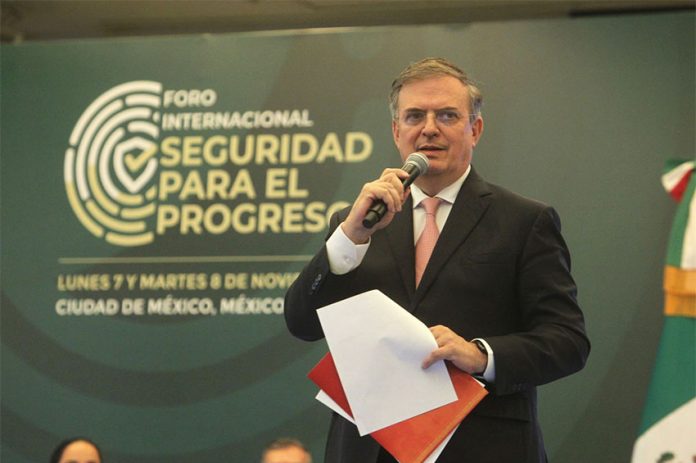
Foreign Affairs Minister Ebrard speaks at a meeting in Mexico City on Monday.
Foreign Affairs Minister Ebrard speaks at a meeting in Mexico City on Monday. SRE

Foreign Affairs Minister Marcelo Ebrard will represent Mexico at three major international events in the coming days, a role in which he has ample experience due to President López Obrador’s predilection for staying at home.

Ebrard will first attend the United Nations Climate Change Conference in Sharm El-Sheikh, Egypt, before traveling to Bali, Indonesia, for the G20 Leaders’ Summit. Later next week he will fly to Ankara, Turkey, for a meeting with his Turkish counterpart, while on Nov. 20 he will be in Qatar to attend the opening match of the FIFA World Cup.

At COP27, as the climate conference is commonly known, Ebrard will present “Mexico’s vision for the transition to clean energy” and outline its commitments to help the world combat climate change, the Ministry of Foreign Affairs (SRE) said a statement.

The Environment Ministry said earlier this week that Mexico would announce a commitment to reduce its greenhouse gas emissions by 30% by 2030 at COP27, which began last Sunday and concludes next Friday. That’s an increase of eight percentage points compared to the nationally determined contribution goal it set in 2016, and there is some skepticism that Mexico will be able to achieve the more ambitious target given its current heavy reliance on fossil fuels for energy production.

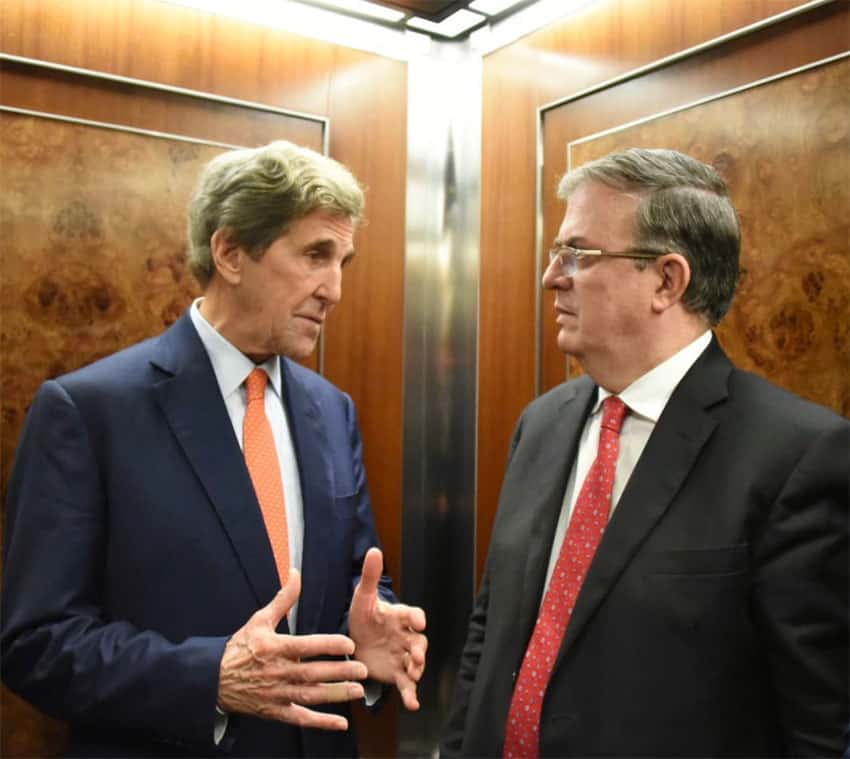
Ebrard saw U.S. Special Climate Envoy John Kerry as recently as October, when the U.S. diplomat visited Sonora.
Ebrard saw U.S. Special Climate Envoy John Kerry as recently as October, when the U.S. diplomat visited Sonora. Twitter @m_ebrard

However, Ebrard said Thursday that he would meet with United States climate envoy John Kerry in Egypt to discuss “the expansion of clean energy production in Mexico.”

Mexico needs to increase such production “at a rate even faster than the United States” to ensure it can comply with any clean energy requirements the U.S. imposes on exports to that country, the foreign minister said. During Kerry’s visit to Sonora last month, Mexican and U.S. officials spoke of their shared vision to increase the production of solar, wind, geothermal and hydroelectric energy, he added.

Ebrard, who hopes to win the ruling Morena party’s nomination in order to contest the 2024 presidential election, will meet with leaders of the world’s largest economies at the Nov. 15 and 16 G20 summit in Bali, hosted by Indonesian President Joko Widodo.

U.S. President Joe Biden, Chinese President Xi Jinping, Indian Prime Minister Narendra Modi and new United Kingdom Prime Minister Rishi Sunak are among the leaders who will attend the annual meeting.

“Mexico will actively participate [in the summit] so that the G20 assumes the responsibility that corresponds to it in order to make progress on the priorities of the group in the areas of health, energy transitions, digital transformation, migration, gender equality and women’s empowerment, development, environment and climate change,” the SRE said.

The ministry noted that this year’s leaders’ summit will occur in an “unprecedented context due to the geopolitical situation in eastern Europe because of Russia’s invasion of Ukraine and its impact on food and energy security.”

Russian President Vladimir Putin won’t attend the G20 Summit in person but may join virtually, Russian and Indonesian officials said Thursday.

Ebrard said Monday that the war between Russia and Ukraine, food security, global economic growth prospects, inflation and public security will all be discussed in Bali, one of 37 provinces of Indonesia. The discussions won’t be easy but “dialogue is important,” he told reporters in Mexico City.

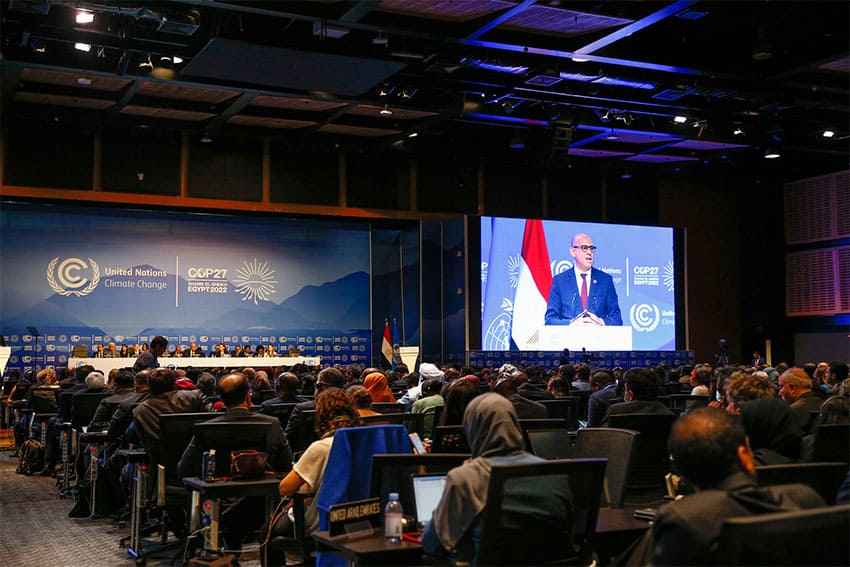
The opening plenary of the COP27 climate conference occurred on Sunday.
The opening plenary of the COP27 climate conference occurred on Sunday. Flickr / UNclimateconference

The SRE said the foreign minister will also attend a series of bilateral meetings in Bali, including ones with his U.S., Canadian, Spanish and Argentine counterparts and the director-general of the World Health Organization. Mexico is currently in dispute resolution discussions with the U.S. and Canada after those two countries challenged the federal government’s nationalistic energy policies under the USMCA, the North American free trade pact that took effect in 2020.

From Bali, Ebrard will head to Ankara to co-chair with Turkish Foreign Minister Mevlüt Çavuşoğlu the second meeting of the High Level Mexico-Turkey Commission, the SRE said. Both countries are part of the MIKTA group, an informal partnership between Mexico, Indonesia, South Korea, Turkey and Australia, all of which are considered middle powers.

While in Ankara, Ebrard will also meet with business people and members of the Mexican community in Turkey, the ministry said.

The foreign minister will subsequently head to Doha, Qatar, to attend the opening World Cup match between Qatar and Ecuador and Mexico’s first group match against Poland on Nov. 22. The SRE said that Ebrad will represent President López Obrador at the World Cup, and noted that he was invited to attend by the Emir of Qatar, Tamim bin Hamad Al Thani.

Among other scheduled activities in Qatar, the foreign minister will visit the Katara Cultural Village, where “he will unveil sculptures by renowned Mexican artist Rodrigo Solórzano, as a symbol of Mexico’s friendship and appreciation of Qatar,” the SRE said.

Ebrard frequently represents Mexico on the world stage as López Obrador — who asserts that “the best foreign policy is domestic policy” — prefers to remain at home to focus on national issues. The president held his morning news conference in Mérida, Yucatán, on Friday and will once again inspect progress on his pet infrastructure project, the Maya Train railroad, this weekend.

Among the recent events Ebrard has attended in López Obrador’s stead are the state funeral of Queen Elizabeth II in London in September and the 77th session of the United Nations General Assembly in New York later the same month.

With reports from El Economista and Reuters