Home Blog Page 951

Jalisco cartel to rivals: don’t interfere with Catholic priests

0
“Priests deserve special respect," the speaker in the video said, before signing off as "Mencho Oseguera."
“Priests deserve special respect," the speaker in the video said, before signing off as "Mencho Oseguera." Screenshot

The Jalisco New Generation Cartel (CJNG) has instructed its rivals to leave priests, doctors, nurses and teachers alone.

“I’m communicating with all the cartels to invite you to make the war [just] between us and not interfere with those we shouldn’t interfere with,” a masked and armed man said in a video posted to social media.

Surrounded by a group of armed and masked cartel henchmen, the man told rival cartels they shouldn’t interfere with “any religion or their ministers or followers, especially the Catholics.”

“[We mustn’t] bother the priests, as has been seen recently,” the man said.

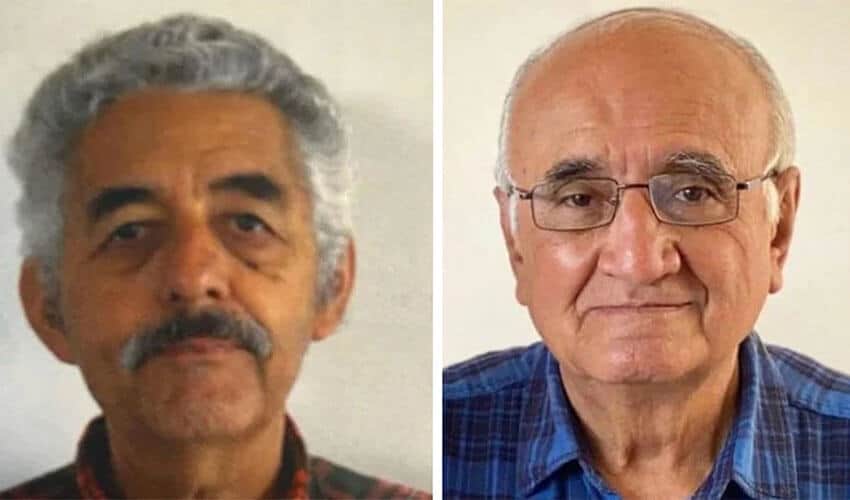
Jesuit priests Joaquín Mora, left, and Javier Campos were killed in Chihuahua last month.
Jesuit priests Joaquín Mora, left, and Javier Campos were killed in Chihuahua last month. Social media

Two Jesuit priests were murdered in Chihuahua last month, while an archbishop and a bishop were recently questioned at cartel checkpoints in northern Jalisco. In addition, a priest said he was attacked while getting into his car in the Michoacán municipality of Queréndaro earlier this month. The CJNG spokesman said that “priests deserve special respect.”

“They’re people who are solely dedicated to spreading the word of God and helping those who need help,” he said.

The man said that vehicles in which priests are traveling should be respected and that they shouldn’t be bothered or physically attacked if they are stopped.

“I invite you to not bother doctors, nurses and teachers who go to the villages and towns,” he added. “Let them do their work because [just as] my cartel doesn’t interfere with any religion, we don’t bother doctors or teachers. Yours sincerely Mencho Oseguera.”

“El Mencho” is Nemesio Oseguera Cervantes, the leader of the CJNG and a wanted man in Mexico and the United States. There is some speculation that it was Oseguera who read the message, but that hasn’t been confirmed.

The appearance of the video comes a few weeks after footage of the CJNG announcing their arrival in a small town near Lake Chapala surfaced on social media. “We’ve arrived in Volantín and we’re not leaving,” some of the men shout.

With reports from Reforma 

Government exhibits multi-billion-peso transfers by Peña Nieto; it’s a smokescreen: critics

0
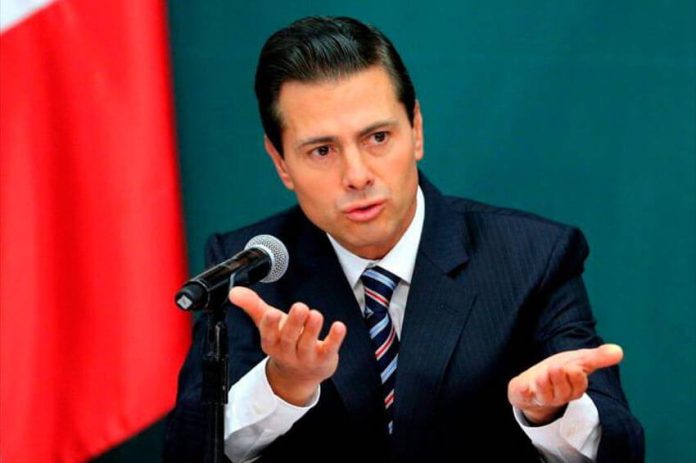
Former president Enrique Peña Nieto.

Former president Enrique Peña Nieto has defended the legality of his wealth after the federal government revealed it had asked the Attorney General’s Office (FGR) to investigate money transfers and companies from which he allegedly benefited.

At President López Obrador’s press conference last Thursday, the head of the Financial Intelligence Unit (UIF) said there was evidence that Peña Nieto – who was in office between 2012 and 2018 – received 26 million pesos (US $1.25 million at today’s exchange rate) in transfers between 2019 and 2021.

Pablo Gómez Álvarez said that a sister of the former president transferred the funds from an account in Mexico to Spain, where Peña Nieto now lives. He said that she also sent checks for 29 million pesos to Peña Nieto’s brother.

“The blood relative made withdrawals for 189.85 million pesos and deposits for 74.52 million pesos between 2013 and 2022. … The deposits are relevant given that, as cash operations, the source is unknown,” Gómez said.

Among other questionable dealings, Gómez said the UIF detected that Peña Nieto has links to two companies with “fiscal and financial irregularities.”

The official said that the former president was a shareholder in one company – “company A” – that transferred large amounts of money. “It’s a family company that existed before the former president became president,” Gómez said.

He said that the other company – “company B” – was formed by Peña Nieto and family members prior to 2012. “It has a symbiotic relationship with a multinational company that benefited from federal government contracts during the administration of the then head of the executive,” Gómez said.

The UIF chief added that company B – a manufacturer of plastics and disposable medical materials – has been identified as a government supplier and provider of services, and won contracts worth a total of 10.53 billion pesos (US $508 million at today’s exchange rate) during Peña Nieto’s administration. Between 2015 and 2021, it transferred large quantities of money – over 1.5 billion pesos – to the United States, Ireland and the United Kingdom, Gómez said.

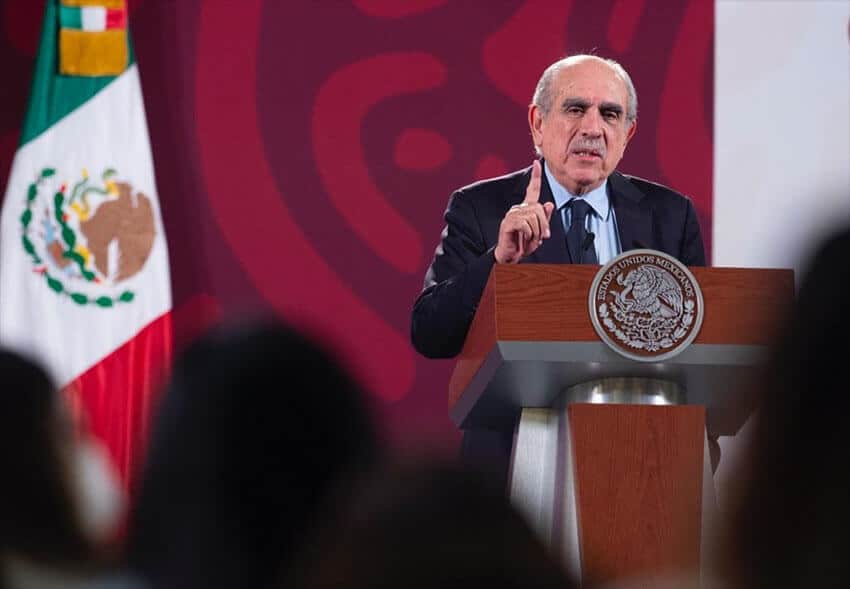
Pablo Gómez Álvarez, the UIF chief, speaks at last Thursday's presidential press conference.
Pablo Gómez Álvarez, the UIF chief, speaks at last Thursday’s presidential press conference. Presidencia de la República

“The complete information with all the details has been delivered to the federal Attorney General’s Office and the FGR has opened an investigative file. The FGR will do the investigation and the Financial Intelligence Unit will provide everything it needs,” he said.

“The UIF is never in charge of investigations,” Gómez stressed, distancing the government from the prosecution of the case. “The UIF simply collects information in accordance with the law, analyzes it and delivers it” to other authorities, he said.

Gómez rejected any suggestion that the case was politically motivated. “There is not a policy of persecution for purely political reasons,” he said.

Asked what crimes Peña Nieto was accused of, the UIF chief said that was up to the FGR to determine. “That’s part of its constitutional function at the time of prosecuting a case. … While there’s no prosecution of a case, there’s no crime,” Gómez said.

The UIF chief’s remarks brought Peña Nieto out of a five-month-long social media hibernation, with the ex-president writing on Twitter that he was certain he would be given the opportunity to clear up “any questioning” about his wealth and prove its legality. “I express my confidence in the institutions … of justice,” he added.

José Antonio Crespo, a political scientist, described the case against Peña Nieto as “political,” but predicted nothing will come of it.

“Once again it’s a political use of justice, of the law, that’s why it’s coming out now,” he told the newspaper El Universal.

Crespo said he believed that the government was seeking to pressure Peña Nieto to use his significant influence in his native México state to help the ruling Morena party win the 2023 gubernatorial election. He said it appeared that the government wants the ex-president – a former governor of México state – to ask the Institutional Revolutionary Party and the current México state Governor Alfredo del Mazo Maza (a cousin of Peña Nieto) to help Morena.

“The president will use everything necessary to win the entity due to its political and economic importance,” Crespo said, noting also that the 2023 election is a forerunner to the 2024 presidential election.

He predicted that neither the UIF nor the FGR will investigate Peña Nieto thoroughly, describing the case against him as a “smokescreen.”

Crespo said that the apparent charges the ex-president faces are minor compared to the multi-billion-peso “Master Fraud” embezzlement scheme and Pemex’s 2013 purchase at a vastly inflated price of what has been described as a “junk” fertilizer plant. Former cabinet minister Rosario Robles is in prison in connection with the former case, while ex-Pemex CEO Emilio Lozoya is in jail in relation to the latter.

Crespo said the government could enlist Peña Nieto’s support in México state within the framework of an impunity pact the former president allegedly reached with his successor. If Peña Nieto agrees to help Morena, law enforcement institutions could subsequently say that they found nothing against him, the political scientist said.

José Perdomo, a legal academic at the La Salle University, described Gómez’s airing of the Peña Nieto case as an act of an “eminently political nature” and warned that it could become a “media circus.”

He said it was clear there was an impunity pact between López Obrador and his predecessor, and suggested that the former president’s questionable conduct was revealed last Thursday to divert attention from the country’s serious problems, such as violence and inflation.

With reports from Reforma, Milenio and El Universal 

70,000 new cases a day predicted when COVID wave peaks later this month

0
Mexico City leads for active cases per capita basis with nearly 700 cases per 100,000 people.
Mexico City leads for active cases per capita with nearly 700 per 100,000 people.

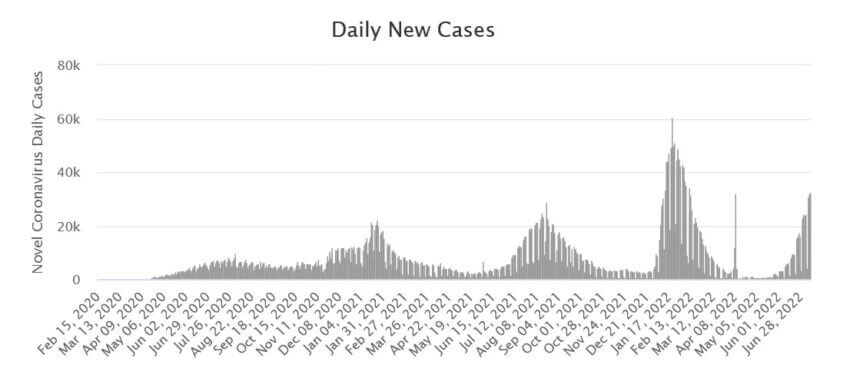
Mexico could record some 70,000 new coronavirus cases per day when the fifth wave peaks in late July and early August, according to the spokesman for the National Autonomous University (UNAM) coronavirus commission.

In an interview with the newspaper El País, Mauricio Rodríguez predicted that case numbers will continue increasing in the coming weeks.

“It’s possible that we’ll exceed what we saw in the fourth wave and we could … have … about 70,000 cases a day at the end of the month and in the first week of August,” said the medical academic.

Mexico’s current single-day record for new cases is 60,552, set amid the fourth wave in January.

Rodríguez predicted that hospitalizations and COVID-19 deaths will also increase as case numbers rise, but not to the same extent, largely due to high rates of vaccination. He said there is a risk that highly contagious omicron sub-variants will become widespread here and cause case numbers to rise even more quickly.

“It’s probable that we’ll still have strong epidemic activity in August,” he added, even though the peak of the fifth wave is expected in late July and early next month.

Most cases during the current wave will be mild if they occur in vaccinated people and are detected in a timely way, Rodríguez said. “The worst of the pandemic has already passed,” he said, referencing the high number of COVID deaths recorded in 2020 and 2021.

Mexico currently has 223,074 estimated active cases, a 30% increase compared to a week ago when there were 171,291. It is recommended that people with COVID isolate for at least seven days, even if they don’t feel unwell.

Over the next month, the country could exceed 60,000 new COVID daily COVID cases, its record during the fourth wave.
Over the next month, the country could exceed 60,000 new daily COVID cases, its record during the fourth wave. Worldometer

Mexico City easily has the highest number of active cases on a per capita basis with close to 700 per 100,000 people. Baja California Sur and Colima rank second and third respectively for the size of their outbreaks. Each state has more than 300 active infections per 100,000 residents.

The Health Ministry reported a total of 169,725 new cases during the past seven days for an average of 24,426 per day. The accumulated case tally rose to just under 6.26 million on Sunday with 9,342 additional infections reported.

The official COVID death toll increased to 326,085 with eight additional fatalities registered. A total of 297 COVID-related fatalities were recorded during the past seven days for a daily average of 42 per day.

The Health Ministry said in a statement Sunday that 16% of general care beds set aside for COVID patients are currently occupied while just 4% of those with ventilators are in use.

The federal government is no longer using a stoplight system to warn citizens of the COVID risk level in Mexico’s 32 entities, but authorities in Nuevo León continue to use their own system and last week upgraded the risk level from green to yellow. The state recorded 3,860 cases last Wednesday, the highest single-day figure since January, and hospitalizations have recently trended upwards.

There are currently just over 200 active cases per 100,000 people in Nuevo León, according to federal data published Sunday. On a per capita basis, the state has the eighth largest outbreak in the country after Mexico City, Baja California Sur, Colima, Sinaloa, Quintana Roo, Querétaro and Yucatán.

With reports from El País, El Universal and El Financiero 

It ain’t easy being a vegetarian in Mexico

0
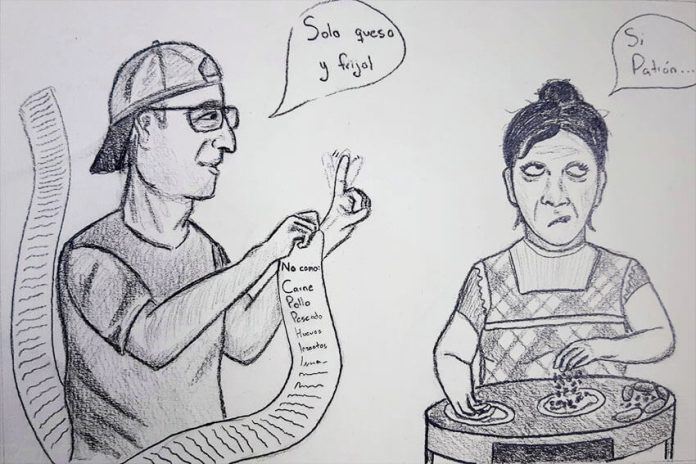
Being vegetarian comes with its own special challenges in Mexico.
Being vegetarian comes with its own special challenges in Mexico. Miguel Ángel Gómez Cabrera

I decided to sample some local cuisine on my first night in San Gregorio Atlapulco, a town in the borough of Xochimilco, Mexico City, so I went out for a gordita. Gorditas are made from masa (corn flour) and, at least in Mexico City, are thick and round and stuffed with whatever you’d like.

I didn’t know much about the town at the time or which food stands were the best, so I randomly picked one just a couple of blocks from my apartment. It was one of those tiny places, the ones that have a sign saying “Antojitos Mexicanos” hanging outside and a couple of women cooking on a comal inside.

I’d made many trips to Mexico and had experienced many of the challenges that come with being a vegetarian here. Through those experiences, I’ve learned that saying I’m a vegetarian or that I don’t eat meat isn’t enough. To most Mexicans, saying I’m a vegetarian and that I don’t eat meat only means I don’t eat red meat. I know from my travels around the country that I when I eat out, I have to go down a list of things I don’t eat: no meat, no chicken, no fish, no ham, etc. or specify exactly what I want to eat. So in this case, I wanted to make what I wanted absolutely clear.

“I would like a gordita with just beans and cheese,” I said to the woman standing at the large comal. “Nothing more. Is that possible?”

“Of course, señor” she replied.

“That’s all I want: just beans and cheese.”

She nodded in reply, looking just slightly annoyed.

I waited off to the side, watching as she made the gordita and then became a little concerned as she added some red stuff to it. I approached cautiously.

“Is that my gordita?” I asked.

Sí señor.”

“What’s that?” I asked, pointing at the red stuff.

Chorizo,” she replied.

“That’s meat, isn’t it?” It sure is. Chorizo is a sausage that’s made with pork and spices. It’s extremely popular in San Gregorio and, I suppose, everywhere in Mexico. Strings of chorizo hang in butcher shops.

“Yes,” she said. “It is chorizo.”

“I’m a vegetarian. I can’t eat that. That’s why I asked for a gordita with only beans and cheese.”

She looked at me like I’d just made a major faux pas. Apparently, it’s just understood that all gorditas, no matter what, have chorizo. I felt really bad but there was no way I could eat it. Even if I could’ve gotten it down, my stomach probably would have up and left my body. The misunderstanding was partly my mistake. I thought saying “Only beans and cheese” to her twice would be enough. Obviously, I was wrong and should have gone down the list of what I don’t eat. Now, when I go to a new restaurant or taquería, I add “No chorizo” as well.

When I’m invited to eat a meal at someone’s home, I make it clear from the get-go that I’m vegetarian and always go down the list of animals I don’t eat. Actually, I don’t eat any animals and can only hope that my list has covered all possibilities and that my host or hostess understands what “vegetarian” means. There have been several times when I’ve been assured that it’s not a problem, that they understood, and it turned out that it was a problem and they didn’t understand.

I was in Hueyapan on a project when the group I was to work with sat down for lunch. They invited me, which was kind of them. I told them I’m a vegetarian and dutifully went down my list.

“The soup,” said the cook, “is vegetable.”

“Great,” I replied.

So she ladled up a nice bowl of soup and right after I’d dug into it, pulled a hunk of meat out of the soup pot.

“Would you like this?” she asked.

I thanked her as nicely as I could but said “No thanks” to the meat. At that point, I had to eat the soup she’d given me, apologizing to my stomach for what I was about to do to it.

And it’s not a language problem. Several years ago, I was with a Mexican friend and, because we were in a very small town, I thought it would be best if he ordered my food for me. I figured there was less chance of being misunderstood. So I asked him to order me a sandwich with just cheese. I clearly heard him say, “Puro queso, puro queso,” or “Only cheese.” When the sandwich arrived, it certainly had cheese. And a large slab of ham sitting on top of it.

Things have gotten a little bit better. People are eating less meat and restaurants are catching on to this. But it’s still pretty rare in Mexico, especially in smaller towns, and it confuses — or fascinates — some people, one of my neighbors in particular. When I first moved into my house in Chipilo, I was talking with my new neighbor, Enrique, and he mentioned inviting me to dinner some day. I told him I’m a vegetarian and he was taken aback.

“What do you eat?” he asked. That’s a typical first question for the uninitiated.

“Lots of stuff,” I replied. “Just no animals.”

“Do you eat tortillas?”

I found that question to be a little odd since, as far as I know, there are no animal products in tortillas.

“Yes,” I told him.

“Cheese?”

“Sure. I’m not a vegan.”

On and on it went. For weeks, whenever he saw me, he’d ask about another food group. What struck me as really strange was that none of the foods he asked about would have meat in them: pasta; rice; beans; milk; bread. He even asked if I drank beer. I imagined him writing a list of foods he needed to ask me about. Finally, and happily, he must have exhausted that list because now when he sees me he just gives me a quizzical smile and a wave when he sees me.

Now, I’m not a fanatic. I know that when I eat at someone’s house or in a restaurant, things like beans and mole have almost always been cooked using manteca (lard) and the rice usually with chicken broth. If I eat too much food containing those two things, my stomach complains but, so far, I’ve survived. It’s just another thing that makes living in Mexico so interesting. And challenging.

Joseph Sorrentino, a writer, photographer and author of the book San Gregorio Atlapulco: Cosmovisiones and of Stinky Island Tales: Some Stories from an Italian-American Childhood, is a regular contributor to Mexico News Daily. More examples of his photographs and links to other articles may be found at www.sorrentinophotography.com  He currently lives in Chipilo, Puebla.

What used to be a lakeside tourist destination is now a narco-cemetery

0
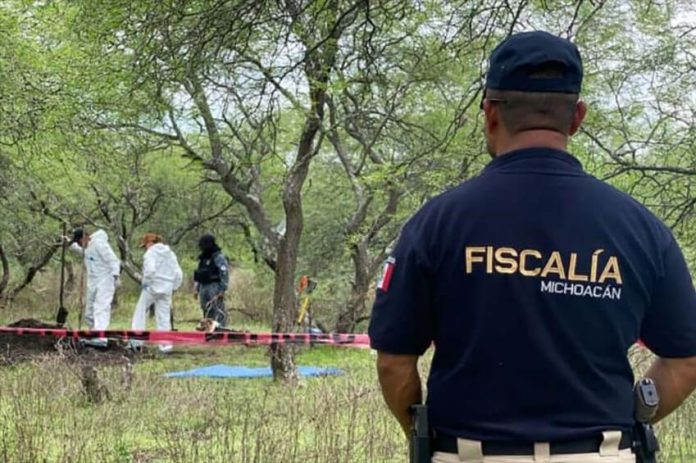
Authorities continue to search for bodies in the area around Los Negritos lake in Michoacán.

Nestled between mountains near the Michoacán-Jalisco border, Los Negritos used to be a weekend destination for spending a little time by the lake, throwing some meat on the grill and having family fun.

Now it might be one of the largest clandestine cemeteries in the country.

Over the past three weeks, according to a report in the newspaper El Universal on Monday, officials from Michoacán and Mexico’s Attorney General’s Office have exhumed 25 bodies from the Los Negritos, a natural area in the Villamar municipality, and activists say as many as 500 people could be buried there.

All the while, as the work progresses, trucks with the initials of the Jalisco New Generation Cartel (CJNG) are reportedly circulating nearby as a show of muscle.

[wpgmza id=”363″]

The deceased buried there are suspected of being victims of the cartel, and El Universal tabbed the place a narco-cementerio. It is located in “The Corridor of Death,” so named by residents for the violence, forced disappearances, kidnappings, massacres, and attacks against municipal, state and federal forces that occur in the region.

The area includes many municipalities, such as Zamora, Jiquilpan and Sahuayo, and a portion of it currently is in dispute between internal groups of the Jalisco-headquartered CJNG, El Universal reports. Just last month, Zamora was named the world’s most violent city of 2021 in a study by a Mexican non-governmental organization.

Of the bodies found through Sunday, eight were identified and 17 remain unknown.

A group of people who feel their relatives might be buried there, and who say there could be as many as 500 dead bodies or even more, put pressure on the authorities to begin the excavations.

Los Negritos lake is a popular tourist destination in the region.
Los Negritos lake is a popular tourist destination in the region. Google Maps

The group was formed by Isis del Rocío Macías Gracián of San Pedro Cahro, Michoacán, after her brother was kidnapped and, five months later, found dead in the area. It’s called “San Pedro Cahro en Busqueda de Ángeles,” meaning “San Pedro Cahro in search of angels.”

El Universal reported that Macías Gracián’s efforts led authorities to arrest those responsible for the kidnapping and murder of her brother, but her fight didn’t end there. She opted to keep working on behalf of families searching for missing loved ones.

“I continue in this because I know what it feels like to have a missing relative and that there is no one who gives you support or is encouraged to carry out this type of search,” she said.

Regarding the Los Negritos narco-cementerio, she said, “There is information that there may even be human remains buried on that property that have been there for seven or eight years.”

She also said some of the bodies will not be able to be rescued because the site is in a geothermal zone with volcano vents. “Many of the bodies could be inside the boiling wells or the lake,” she said. “The people who are from here know that if that happened, those bodies can no longer be rescued.”

A woman quoted in El Universal, whose name was withheld for security reasons, said her sister, who disappeared two years ago, could be buried in the Los Negritos grave.

“With what is known and what is being seen in the Los Negritos lake, I feel that she is there, too, because that was where the bad guys always took them,” she said. “My sister was very cheerful. She liked to party a lot. She had many friends that perhaps had something to do with” her disappearance. Neighbors told her that armed people arrived in trucks and took her sister and another girl.

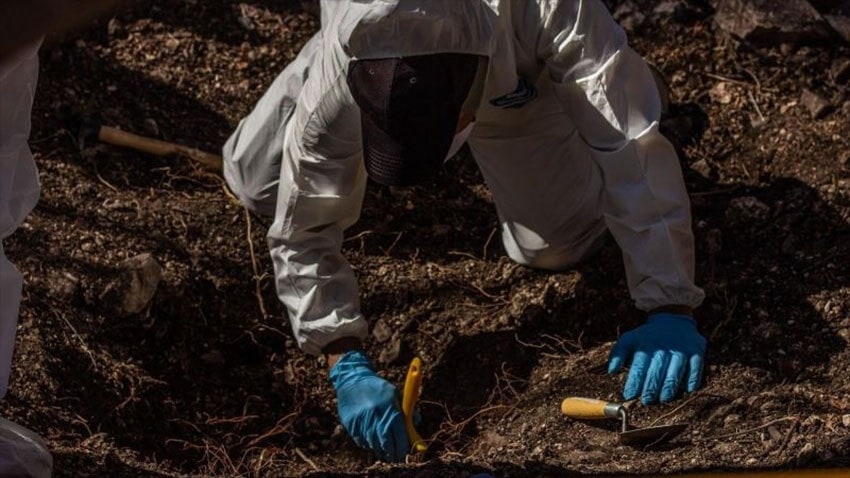
The search and excavation work in Los Negritos has been headed by personnel from the Michoacán prosecutor’s office, supported by state public security and police from nearby municipalities, including Villamar. A police dog named Manchas has been instrumental in finding many of the bodies.

A forensic worker collects evidence at Los Negritos.

“There are already more than 110 points where we believe there are remains of buried victims,” said a member of San Pedro Cahro en Busqueda de Ángeles.

As the work continues, criminal convoys are driving around the area at high speeds and revving their engines, an attempt to “try to scare away the security and law enforcement agencies,” El Universal reported.

The newspaper quoted one resident as saying that the area used to be nice before criminal groups took it over and made it an extermination camp and clandestine cemetery.

“We all know what has been happening here for many years,” he said. “We heard the bam! bam! bam! of the machine guns every day, but if we said something, they killed us.”

With reports from El Universal

Searches turn up luxurious appointments of homes linked to Familia Michoacana

0
The investigators seized a wide variety of both live and taxidermied animals.
The investigators seized a wide variety of both live, taxidermied and even stuffed animals.

Exotic animals, cattle, luxury cars, chandeliers, gold-plated fittings, stuffed animals, swimming pools and artificial lakes were all found in seizures of properties linked to the Familia Michoacana cartel in México state, justice officials announced on Sunday.

At least four properties were seized in seven simultaneous operations by security forces and other officials in Tlatlaya and Amatepec, neighboring municipalities 150 kilometers south of Toluca.

Three people were arrested in the seizure of a two-hectare residential ranch in Amatepec with 145 animals living on the property. Searchers found a home with 14 bedrooms, two artificial lakes and luxury vehicles. Another 3.5-hectare ranch in Amatepec had a bullring and cattle-raising facilities.

In photos of the properties posted by the state Attorney General’s Office on social media, a chapel can be seen as well as stuffed birds, stuffed deer and a stuffed tiger, among other taxidermy, as well as a box of herbs resembling marijuana.

The property owners appear to have spent lavishly on extensive private gardens, palapas, pools, chandeliers, gold detailing, and other luxury amenities.

The animals seized included 70 cattle, 30 goats, 40 poultry, three horses and two peacocks. The seized vehicles included two SUVs, six all-terrain vehicles and a scooter.

State officials said the seizures would limit the operational capacity of criminal groups in the region as the properties were used as safe houses and vacation homes by cartel members.

Cartel properties seized by security forces often reappear in government raffles. In one raffle in September, the houses of Joaquín “El Chapo” Guzmán, former boss of the Sinaloa Cartel, and Amado Carrillo Fuentes of the Juárez Cartel were awarded as prizes.

Security forces in high crime México state have turned up results this month. On Friday, they performed a drugs bust at a property in Tultepec. At least two people with links to organized crime were arrested earlier last week and seven more alleged cartel members were charged.

With reports from El Universal and Infobae

Ribera de Chapala could be Mexico’s next wine tourism region

0
Don Serapio's vineyard, Viñedos El Tejón, was one of the first in the area.
Don Serapio's vineyard, Viñedos El Tejón, was one of the first in the area. Jalisco Tourism Ministry

Oenophiles in Mexico — and even people who just like a big ol’ glass of hearty red with their mole poblano — are already hip to wine regions in Baja California and Querétaro.

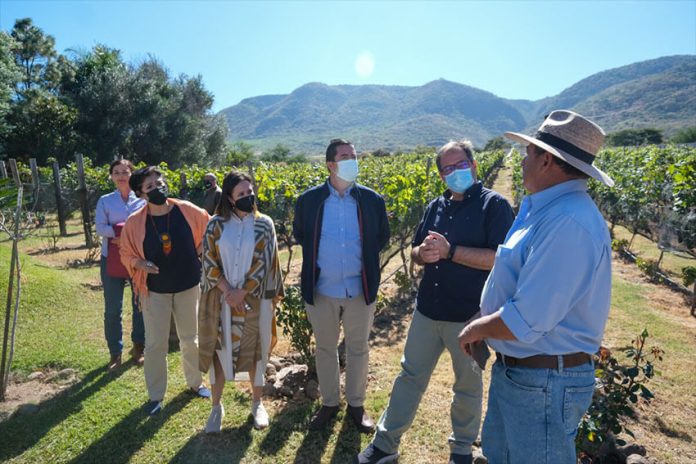
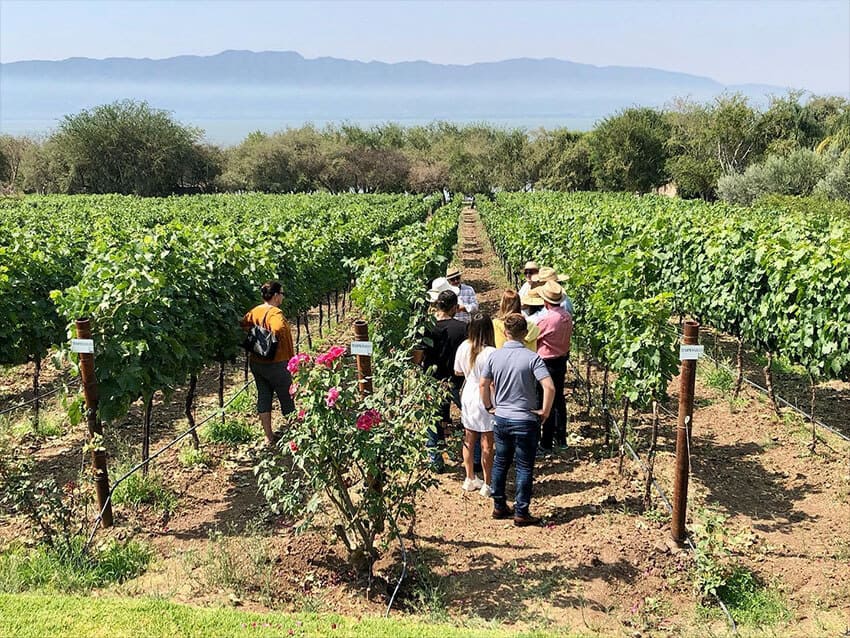
But now there’s a new up-and-coming wine destination in Mexico: La Ribera de Chapala, a cluster of small wineries on the southern shore of Lake Chapala in the state of Jalisco. In this case, La Ribera means “the lakeside.”

According to the newspaper Reforma, a 2014 study by Mexico’s National Institute of Forestry, Agricultural and Livestock Research (Inifap) determined that this area of Jalisco would be ideal for wine production — and that’s just when a lot of grapevines in the new region began taking root between cornfields and greenhouses growing berries.

Reforma reported that the pioneer of the burgeoning area is Don Serapio, a 60-year-old who spent four decades in the Napa Valley before returning to his home of San Luis Soyatlán on the southern shore of Lake Chapala. (San Luis Soyatlán prides itself as the home of the vampirito, a mix of tequila, sangrita, orange and lime juices and the soda Squirt, and served here in a plastic bag, but that’s for another story.)

Serapio’s project — Viñedos El Tejón, or “Badger Vineyards” — inspired others to start producing wine in the region sheltered” by Lake Chapala.

“I don’t have academic degrees. My teacher is nature,” Serapio said in Reforma. “I went to the United States to work. There I had to plant, graft, prune and even pick grapes. I saw that they grew vines everywhere, and I wondered why in Jalisco nobody did. I started to do tests, first with cabernet sauvignon.”

While that particular “cab” experiment didn’t turn out well, the winery currently has 6,000 plants spread out over three hectares, with grapes such as sauvignon blanc, shiraz, malbec, garnacha blanca, tempranillo and malvasía.

El Tejón has scheduled a harvest festival from 11 a.m. to 5 p.m. Saturday, August 6, with Serapio himself welcoming visitors and giving tours. There will also be a four-course meal orchestrated by catering chef Gabriel Gómez of El Grill de Catamarca. The cost of 1,500 pesos (US $72) will include food, wine pairings and a tour. Reservations are required at (331) 845-6649, or visit @eltejonvinedos on Instagram.

Visitors tour Finca La Estramancia, another Ribera de Chapala vineyard.
Visitors tour Finca La Estramancia, another Ribera de Chapala vineyard. Facebook / La Estramancia

Other wineries in the region include Crotalus, Chava Calupo, Finca La Estramancia and Ritualista (all in San Luis Soyatlán) and Post Data (in El Tepehuaje). All are in the municipality of Tuxcueca. La Estramancia is open for private or group visits, and Post Data is not accepting visitors at the moment. Public access to the other wineries was not made apparent.

Crotalus, which refers to a rattlesnake native to the area, specializes in merlot, petit verdot and viognier. Other grapes in the region not already mentioned include macabeo, syrah and nebbiolo. 

“The soil [in this region] has an organic layer with a lot of stone, and everything is almost of volcanic origin, which gives the wines a mineral flavor,” said Rafael Vargas, founder of Cava Chalupo. “The results have had good acidity and color, but they are young plants. Each year, the plant evolves and improves its quality.”

In a promotional tour last year, which reached the vineyards by crossing Lake Chapala in a boat, Xavier Orendáin de Obeso touted the emerging area and suggested that one day there could be public boat tours there from Chapala and Ajijic on the other side of the lake.

“We will promote the development of wine tourism in an orderly and sustainable manner,” emphasized Orendáin de Obeso, who coordinates economic growth and development for Jalisco, according to the newspaper Laguna. “We can have a united industry, we can have protected areas, and we come to ask for a vote of confidence. Opening these new opportunities for development is what moves us.”

With reports from Reforma

Catholic Church turns up volume in call for peace, begins 3-week prayer campaign

0
Bishop Castro of Cuernavaca
Bishop Castro of Cuernavaca: 'We're seeking a more effective security strategy.'

Bishops and priests across Mexico used their sermons on Sunday to plead for peace as the Catholic Church embarked on a national prayer campaign amid ongoing high levels of violence.

The church’s Jornada de Oración por la Paz – a three-week-long peace campaign – began Sunday, three weeks after two elderly Jesuit priests were murdered in Chihuahua. The campaign – which seeks to promote peace and commemorate victims of violence, including slain priests – will continue throughout the remainder of July.

In the Cuernavaca Cathedral, Bishop Ramón Castro Castro expressed concern about the high levels of violence in Mexico, where there were almost 13,000 homicides in the first five months of the year.

“That’s why the clergy is saying ‘enough already,’” said Castro, bishop of the diocese of Cuernavaca and the secretary general of Mexico’s bishops’ association.

“We’re seeking a more effective security strategy, it’s time to listen to us,” added the bishop, who earlier this month criticized the federal government’s non-confrontational “hugs, not bullets” approach. “It’s time for all of us to look for the peace we all long for. Let us attend to wounded Mexico, let’s respond with … hope and faith.”

Castro said that he and other Catholic Church leaders wouldn’t turn their backs on Mexico’s violence problem due to fear or “not wanting to get into trouble.”

“We dream of a Mexico at peace and that’s why all the bishops have raised their voices with a statement, pleading … for there to be peace,” he said.

Issued by the Episcopal Conference of Mexico (CEM) and two other Catholic organizations, the July 4 statement announced the Jornada de Oración por la Paz and advocated “social dialogue to build a path of justice and reconciliation that leads us to peace.” Castro reiterated that message. “We’re not declaring war on anyone. We don’t want more conflicts than there already are, we’re pleading for dialogue for the construction of true peace,” he said.

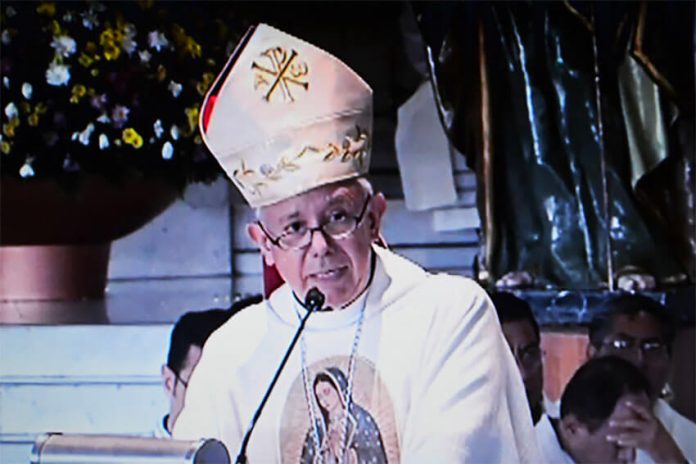
In his Sunday sermon, Monterrey Archbishop Rogelio Cabrera López advised his congregation that they would pray for “our country, which is reaching an unsustainable point” due to the incessant violence.

“Things must change,” declared the septuagenarian archbishop, who is currently president of CEM. Cabrera reminded authorities they have a responsibility to “contain” the violence that has affected the lives of countless Mexicans. “Many families in our country are suffering because of violence – they’ve had to escape, flee,” Cabrera said, referring to people forced out of their home towns due to the presence of crime groups.

He noted that many other people have been abducted and murdered by organized crime, which holds sway in many parts of the country.

During a Mass in the town of Chapala, Jalisco, Cardinal José Francisco Robles Ortega suggested that Mexico’s violence problem is related to a lack of application of the love thy neighbor commandment. “We’re not taking enough care of our brothers. That’s why we have so many missing people, so many people murdered and so many young people immersed and involved in the world of drugs and evil,” said the archbishop of Guadalajara.

A Jesuit service in Mexico City Sunday commemorates victims of violence.

He criticized people in power for being more concerned about themselves than the citizens they are tasked with protecting. “They’re more intent on taking care of their party, their position, … [and] their future than looking after citizens,” Robles said.

“They’re more concerned with looking after economic interests,” asserted the cardinal, who had his own brush with organized crime last month when stopped at unofficial checkpoints while traveling in northern Jalisco.

Mexico needs to undertake a process of pacification and reconciliation, Robles said, adding that delving deeper into division will only result in “disaster for the majority of us who live in this country.”

In his Sunday homily, Ciudad Juárez Bishop José Guadalupe Torres Campos offered an encapsulation of the Catholic Church’s view on the situation the country is facing. “We’re all exclaiming this cry, this protest, with concern and sadness: Enough of so much death, so much pain, so much violence, so much evil across Mexico, in our state and in our city!” he said.

At the Basilica of our Lady of Guadalupe in Mexico City, Monsignor Andrés García Jasso called on his flock to not grow insensitive to the violence plaguing the country. “Let’s not become accustomed to these scenarios of deaths and disappearances,” said the auxiliary bishop of the Archdiocese of Mexico. “Let’s continue to get angry every time we hear news of this nature and, above all, let’s continue praying for peace in our families, our nation and the entire world.”

García called on teachers and parents to work toward the eradication of violence through education and the restoration of Mexico’s social fabric, and urged authorities to provide “the public security necessary for all Mexicans.”

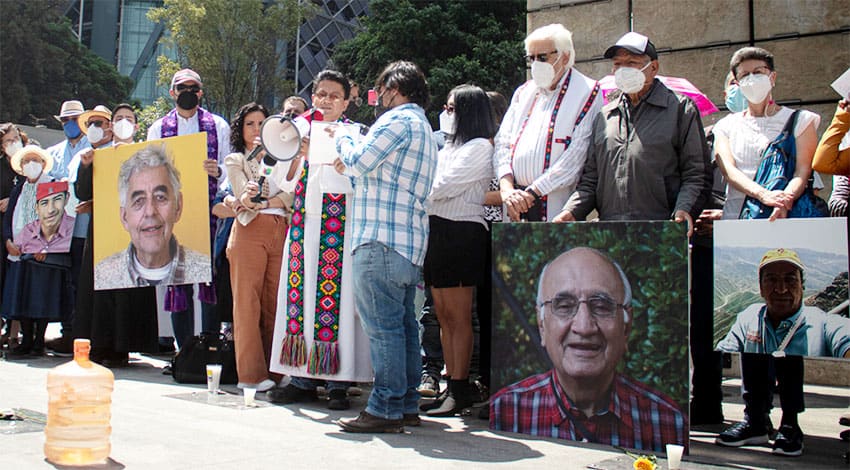
In addition to churches across the country, believers also gathered next to the Estela de Luz (Stele of Light) monument outside the capital’s Chapultepec Park for a service to mark the commencement of the Jornada de Oración por la Paz. Some 100 people attended the Jesuit service to commemorate the lives of the priests who were recently murdered in the Sierra Tarahumara region of Chihuahua and other victims of violence.

“[We’re] united by the desire for justice, reconciliation and peace that emerges from the depths of our hearts in the face of the blood that is shed every day in this country,” said Jorge Atilano González Candia, a Jesuit priest.

“… Today we are starting a cycle of prayers for peace at the national level. It is the opening of a month marking the memory of all the people killed and disappeared. Today we are remembering the priests, the journalists, the social activists and the young people who have died violently,” he said.

“The over 100,000 disappeared and the 122,000 killed during this administration is a source of pain, of strength, of anger and courage to build justice, reconciliation and peace,” González said.

Among the murder victims since President López Obrador took office in December 2018 are seven priests, according to Mexico’s Catholic Multimedia Center. At least two dozen were killed during the 2012–18 term of the government led by former president Enrique Peña Nieto.

With reports from El Universal and AP 

Ground-breaking indigenous chef recognized by state of Chiapas

0
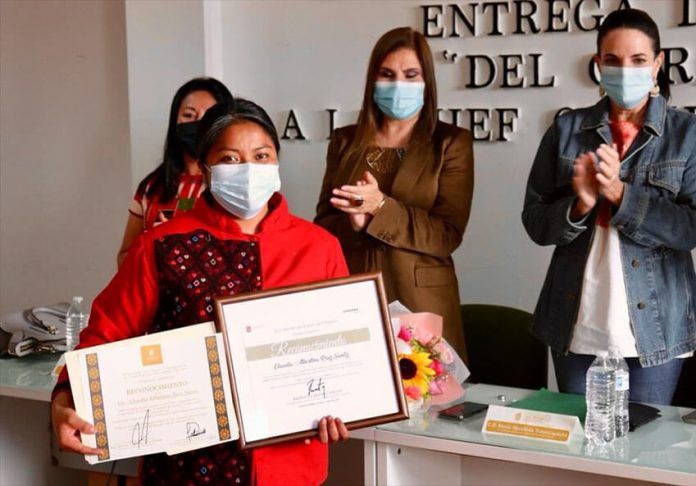
Chef Claudia Albertina Ruiz Sántiz receives the state award.
Chef Claudia Albertina Ruiz Sántiz receives the state award. Twitter @SEIGEN_CHIS

An indigenous Tzotzil chef from Chiapas received an award on Thursday for her culinary work promoting regional cuisine.

Claudia Albertina Ruiz Sántiz received the Del Corazón a la Tierra (From the Heart to the Earth) award from the state government on Thursday, which recognizes the success of indigenous women and women of African heritage.

Ruiz has carved her own path through her career. She was the first indigenous woman to enter the school of gastronomy at the Chiapas University of Sciences and Arts and then became the first indigenous woman to work at Pujol, the world-renowned restaurant of chef Enrique Olvera in Mexico City. Last year, Ruiz was recognized by the 50 Next, a list that celebrates 50 young people around the world who are “changing the world of gastronomy in unique and interesting ways,” compiled by the culinary reviews site The World’s 50 Best.

In 2016 Ruiz opened her own restaurant, Kokono, in San Cristóbal de las Casas. The restaurant serves traditional Chiapas dishes and promotes indigenous culture. Its name comes from the Tzotzil translation for the Mexican herb epazote.

Ruiz said that her success had come against all odds. “There were three things that prevented me from achieving my dreams: being a woman, being indigenous and being young … unfortunately society thinks that we as young people, as women and as indigenous people do not have the capabilities and skills to achieve great goals,” she said.

Governor Rutilio Escandón Cadenas and the mayor of San Cristóbal de las Casas, Mariano Díaz Ochoa, presented the award on Thursday. “We are very proud of you chef Claudia, because your career has promoted the name of Chiapas internationally … Through your restaurant Kokono indigenous gastronomy is exalted, and it’s a tourist attraction for San Cristóbal de Las Casas. International visitors and visitors from other states of the Mexican republic come exclusively for the culinary art of chef Claudia … it’s an honor to receive you and for you to represent Tzotzil culture,” Díaz said.

With reports from Diario de Chiapas

International recognition sought for Durango’s cuisine

0
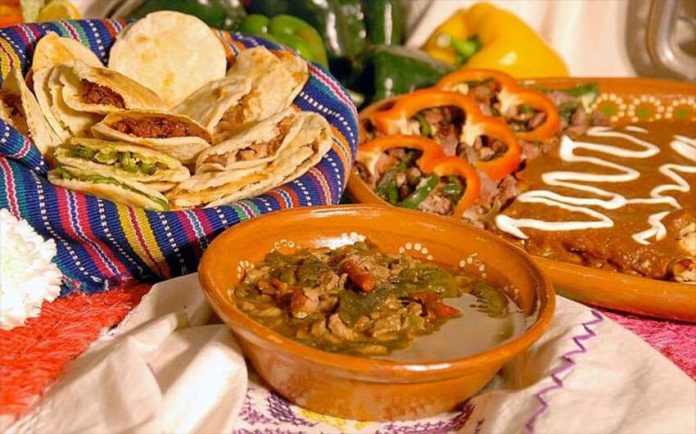
A few of Durango's traditional dishes.
A few of Durango's traditional dishes. Sectur

Proponents of Durango cuisine are seeking to have the state’s culinary offering recognized as a cultural heritage in Mexico as a first step towards international recognition.

Governor José Rosas Aispuro Torres is set to sign a decree on Thursday which will make Durango the sixth state to have cuisine recognized as a national heritage, the newspaper La Voz de Durango reported. The signing will be followed on Friday by the start of the National Festival of Durango (Fenadu) where the state showcases its regional delicacies.

The head of the national restaurant association Canirac said the cuisine’s recognition in Mexico was a step towards being awarded world heritage status by UNESCO. “We are taking a giant step for the identity of Durango’s food … This gives us a touristic and gastronomic credential to show off to the country … it gives the identity that Durango’s dishes and gastronomy deserve,” said Miguel Camacho Herrera.

Camacho explained that gorditas, corn dough stuffed with meat, cheese or other fillings, and cadillo durangueño, a beef stew, are two of the dishes in the supporting document compiled by historian Javier Guerrero Romero, but that another somewhat dubious delicacy, scorpion tacos, has not been included.

Tobacco, sweet potato, corn, chile, beans and pumpkin are all harvested in Durango, while fruits such as pomegranate, quince, peach, pear and apple are grown. Pigs and cattle are raised in the region, which is famed for its cheese production. Sweet preserves and dried fruits are also traditionally produced.

Dishes unique to Durango include venorio, which is made with pork ribs, cactus and a chile sauce, and gallina borracha (drunken hen), which requires chorizo, chicken, mezcal and sherry. Carne seca (beef jerky) is another local favorite.

One beverage traditional to the region is licor de membrillo, a liquor made from quince fruit.

With reports from El Sol de Durango, México Desconocido and La Voz de Durango