Mennonites from other Mexican states and from Paraguay, Bolivia and Canada attended the celebration just outside Cuauhtémoc, Chihuahua. Photos from Facebook
One of Mexico’s oft-forgotten groups, the Mennonites, closed celebrations for the 100th anniversary of their settling in Mexico on Sunday.
Thousands attended the festivities, which began last Wednesday outside Cuauhtémoc, Chihuahua. The state is home to some 90% of the Mennonite community in Mexico. There are also smaller groups in Durango, Campeche, Tamaulipas, Zacatecas, San Luis Potosí and Quintana Roo.
Events at the celebration included history lectures, a parade, theater, music, a rodeo and business expos.
Mennonites from other Mexican states and from Paraguay, Bolivia and Canada attended, as did representatives from the consulates of Canada, the U.S. and Germany. “Today more than ever we are proud to be Mennonites and proud to be Mexicans,” the master of ceremonies said.
The five days of festivities included many activities: talks about Mennonite history, concerts and a rodeo among them.
Cuauhtémoc Mayor Elías Humberto Pérez Mendoza told attendees that, over a century, the city had successfully combined three cultures: Mennonite, mestiza (mixed European and indigenous ancestry) and indigenous Rarámuri.
The Anabaptist Christian group originally from Europe was previously based in Canada before a nationalistic climate in their adopted home pushed them to leave the country and settle in Mexico at the beginning of the 2oth century.
The religious sect acquired a 100,000-hectare land grant in Chihuahua from the government of Álvaro Obregón, and in 1922, Mennonite families first arrived by train in their thousands.
Historian Peter Rempel said the Mennonites’ departure from Canada was spurred by anti-German sentiment at the time, which led to discrimination against the ethnically Germanic group. Military conscription in Canada for the First World War also conflicted with their philosophy of pacifism.
Mennonites in Mexico still speak a form of German as well as Spanish and English.
Life today in Mexico’s Mennonite communities remains largely conservative, but the use of automobiles has become the norm and Spanish and English are spoken alongside Plautdietsch, an old Germanic language.
Mexicans outside of Chihuahua will also be able to honor the Mennonites’ anniversary: the Bank of México has created a commemorative 20-peso coin bearing the image of a Mennonite family in traditional dress.
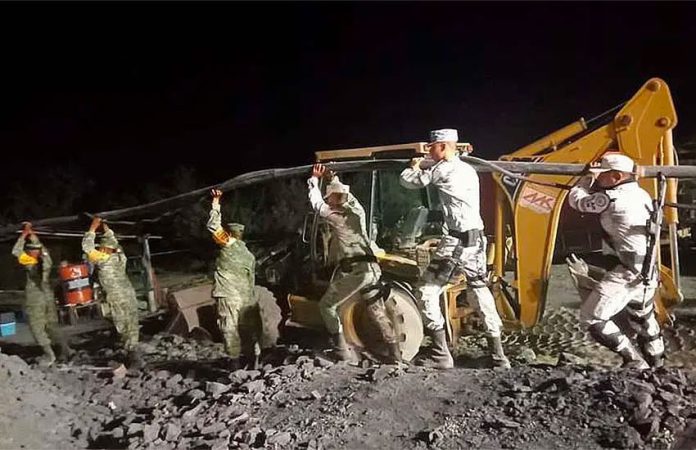
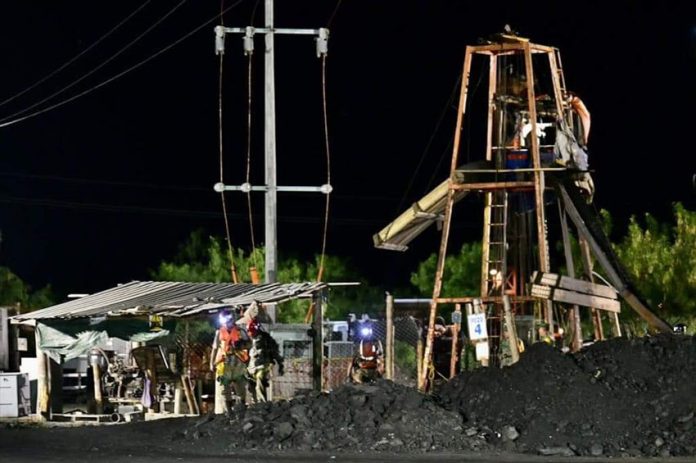
Soldiers arrive at the mine site August 3 to assist with the rescue.
The federal government will ask two foreign companies for advice about how to go about rescuing 10 miners who have been trapped in a flooded coal mine in Coahuila since August 3.
National Civil Protection chief Laura Velázquez said Tuesday that the government will seek help from a German firm and another in the United States, neither of which she named.
“We’ll speak with them today to find out who can give us the best opinion, … taking the conditions of this mine into account. They’re two companies that will give us an opinion to determine the most precise [rescue] actions,” Velázquez told President López Obrador’s morning news conference.
The Civil Protection chief noted that the request for international help came from the families of the trapped miners, who are camped out at the flooded El Pinabete mine in the municipality of Sabinas.
“We’re attending to their basic needs so that their stay at the mine and their wait are a little calmer,” Velázquez added.
The 10 miners became trapped when the mine flooded after excavation work caused a tunnel wall to collapse 13 days ago. Authorities have used pumps to extract water, but levels in three wells rose suddenly on Sunday as water from an abandoned adjacent mine called Las Conchas apparently leaked – or gushed – into the El Pinabete mine.
The abrupt increase in the water levels hampered rescue efforts, which authorities say require low levels to proceed safely. Heavy rain fell at the mine site on Monday, further complicating the rescue work.
The El Pinabete mine is just 400 meters from the Sabinas River in an area of subterranean springs. With the rainy season underway, there is a risk that more water will enter the mine via the water table, the newspaper Reforma reported.
Velázquez announced Monday that concrete will be injected into the mine to seal off inundated wells from the adjacent mine and thus prevent more water flowing into El Pinabete, but that work hasn’t yet begun. The official said she will provide additional information about the plan on Wednesday.
For his part, López Obrador called on the federal Attorney General’s Office (FGR) to investigate a concession granted for the mine during the 2000-2006 government led by former president Vicente Fox.
“The concession for this mine was issued by Fox and … in a strict sense, the concession shouldn’t have been granted. How can a concession be granted next to a flooded, canceled mine? The FGR has to do an investigation about this regrettable incident,” he said.
The president highlighted that his administration hasn’t granted a single mining concession since it took office in late 2018. Past “neoliberal governments,” in contrast, issued permits for mines totaling 120 million hectares, he said.
It is a claim the president has made several times but the figures don’t match with those of the Ministry of Economy, which says mining concessions cover 16.84 million hectares of Mexico’s territory.
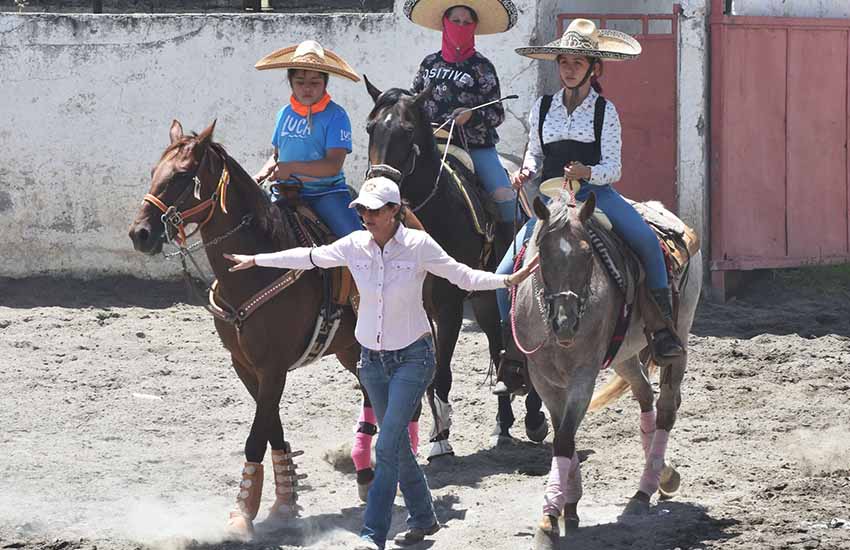
Competitor and trainer Claudia Ivet Becerril Aragon teaches a young woman a maneuver for competition. Becerril has been in the sport for 28 years. Photos by Joseph Sorrentino
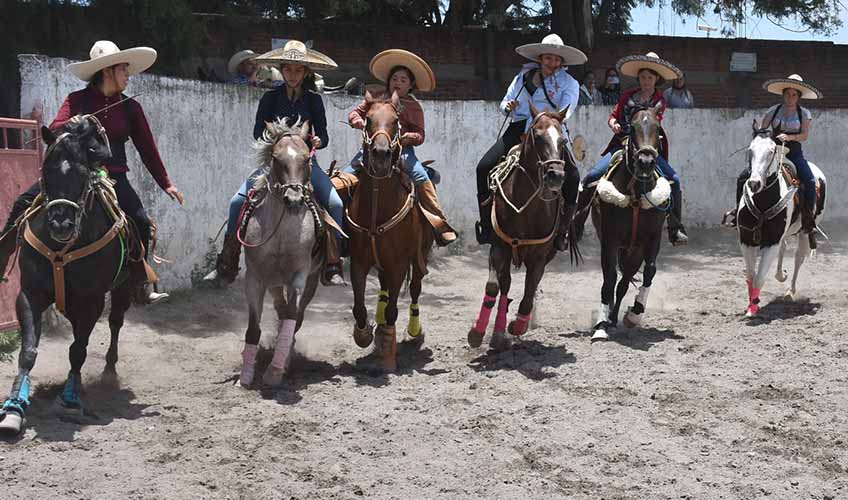
Under the watchful eye of their trainer, four pairs of young women on horseback circle a small arena in Chipilo, Puebla, keeping alive a Mexican tradition that dates back to the Spanish colonial era.
When their captain, Fernanda Berra, calls out “uno,” they turn their horses toward the center of the arena and smoothly for a circle before breaking off again in pairs to perform the maneuver yet again.
In fact, they’ll perform this maneuver and several others again and again until they’re perfect — in hopes of someday taking part in an escaramuza charra, a traditional Mexican equestrian event for women.
The goal with this team, and with all teams, is to enter competitions. They’ll start with local ones, hoping to advance to state and, eventually, the national competitions, which are held in late October or early November.
Escaramuza charra riders practicing a coordinated abanico riding maneuver in Chipilo, Puebla. Males perform singly, but females do maneuvers in a team of eight.
“The name escaramuza (skirmish) comes from the Mexican army,” said Claudia Ivet Becerril Aragon, who has performed in escaramuza charra for 28 years and worked as a trainer for 10. “[These soldiers] were mounted on horses and were in the lead. They were in front of everything.”
The tradition came out of charrería — traditional Mexican rodeo — which has its roots in rural Mexico where haciendas had large herds of cattle. Part of the tradition involved competitions between haciendas that showcased a cattleman’s ability to rope and ride.
After the Mexican Revolution ended in 1920, the nation’s haciendas were broken up. Many owners, as well as the workers on these estates, moved to cities where they continued to ride and often met in informal competitions.
These competitions and the sport became formalized in 1921 with the formation of the National Charro Association. And in 1933, charrería was declared Mexico’s national sport. It’s also on UNESCO’s world list of intangible cultural heritage.
Charrería opened up to women sometime in the 1950s. While men perform individually, women perform in teams of eight.
The women wear colorful ruffled dresses and sombreros during competitions, a costume that honors the Adelitas, women who fought in the Mexican Revolution. The teams of women ride sidesaddle while performing intricate movements to traditional music. They do maneuvers that involve crosses and turns and forming circles.
“It takes two years for a team to be ready to compete and to perform decently at the lowest level of competition,” said Becerril, “and four years to be ready to compete at the national level.”
When Becerril wants the women to learn a new movement, she calls them to the center of the corral, called a lienzo, gesturing as she explains. For the cross maneuver, the women ride from opposite sides of the lienzo and weave their way past each other.
It all seems incredibly complicated to an outsider, but she somehow gets her point across and the women trot away as Becerril continues to call out instructions and encouragement.
Escaramuza charra is not an inexpensive sport. The women all wear the distinctive, large sombrero traditional to the sport that was originally made of straw but that these days, is often made of rabbit skin and embroidered with intricate designs. These can cost as much as US $2,000.
Then there are the beautiful dresses the women wear, costing between US $150 to US $250. Buying a horse runs anywhere from US $1,750 to US $7,500, and the animal’s food and maintenance can cost as much as US $3,000 a year.
It’s a beautiful and expensive sport. It’s also dangerous.
The sport is often a family affair, with mothers and daughters pursuing it while fathers and brothers do the male version of the sport.
“There are many risks,” said Becerril. “It is considered an extreme sport. A person can fall, there are crashes at high speed. There can be fractures and even deaths. It is always dangerous to mount a horse; it is an animal.”
But, she added, “At the moment of the presentation, there is adrenaline. It makes one feel alive. One feels connected with the horse. It is a link. I think that contact with a horse makes one happy.”
“It is my passion,” explained 15-year-old Renata Mora López. “I love horses. It is a little dangerous, but I have no fear. None. It is like I have practiced all my life.”
Sixteen-year-old Emma Elizabeth Cilia García, who’s been participating for seven months, says it’s not only fancier than other sports, “there is more adrenaline, and it requires more discipline.”
Practices can sometimes last as long as four hours. “It is pretty rough sometimes,” she admits, “but it is worth it.”
For many of the women, including Becerril, escaramuza charra is a family affair, with mothers, aunts and nieces participating. Often, their fathers and uncles are participating in the male version.
Becerril says that after working together for hours over months and years, the women also form a close-knit unit, what she calls a charra family.
But, she acknowledges, that doesn’t always happen right away. It can be a challenge to keep the younger women involved long-term. She maintains an upbeat and patient demeanor during rehearsals, smiling and laughing often, but she admits to feeling frustrated at times.
“It is difficult to keep a team together because girls leave,” she said. “We will get to one point, learn the exercise and then someone says, ‘I am going to leave.’ You get to one point, and then you have to go back to the step before. It is a lot of work.”
At one recent practice, two new girls were having difficulty learning the maneuvers. “You see how it is with new girls?” she said. “We advance, and then we go back.”
Despite the challenges and frustrations, Becerril said she will continue to teach, and not just because she personally loves the tradition.
“If we do not continue, the sport will be lost,” she said. “It is very important for the culture of Mexico to continue with these traditions, to continue the traditions that the generations behind us have given us.”
It’s a tradition that she says is authentically Mexican.
“To see someone dressed in charro, you will identify that person as a Mexican,” she said.
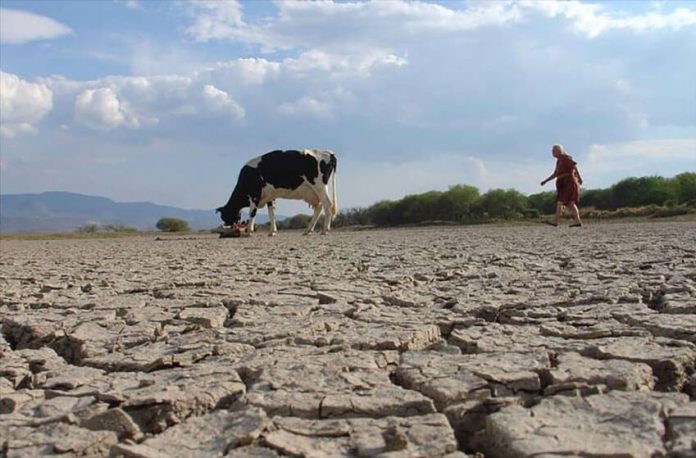
Some ranchers in drought-stricken areas are struggling to provide food and water for their livestock.
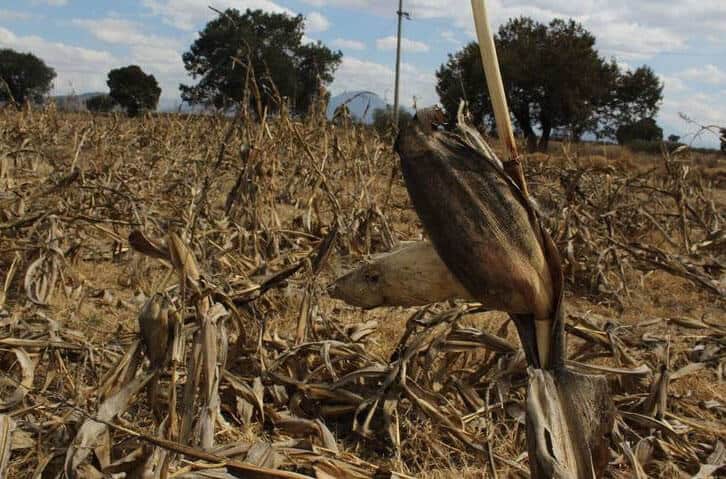
The secondary effects of drought are set to spread beyond the worst affected areas, hitting grain production in the millions of tonnes, endangering livestock and limiting water supply in urban areas.
Corn production has already fallen this year. From January through July, 13.4 million tonnes of corn, wheat and sorghum grains were produced, 6.6% less than in 2019, according to the Agri-Food and Fisheries Information Service (SIAP).
This year’s drought looks set to make matters worse. The National Water Commission’s (Conagua) drought monitoring report with data to July 31 shows water levels 13.2% lower in annual terms in dams for agricultural use. Seven hundred and seventy municipalities were revealed to be experiencing exceptional drought, 8.1% higher than for the same period last year.
Jorge Luis López of the National Agricultural Council (CNA) said the lack of water could cause ever greater losses in the near future. He said northern Mexico “is the most affected in terms of availability, we lost on the order of 1 million tonnes of grain, but if it doesn’t rain throughout central north Mexico we’re talking about losing 3 to 4 million,” he said.
Drought has caused the loss of a million tonnes of grain so far this year, according to the National Agricultural Council.
“There are significant risks because throughout the center and north of the country, which is the main grain zone, the Conagua drought monitor is at severe levels. We are entering the rainy season, hopefully it will rain, but today there is a significant risk of the grain production cycle being affected,” López said, adding that farmers in Tamaulipas had turned to crops that use less water like sorghum.
However, the head of the National Association of Water and Sanitation Entities (ANEAS), Hugo Rojas, said the agricultural sector uses 76.6% of water in the country, but does so inefficiently. “They would have more water than they could use if they had some saving or efficient water management systems,” he said.
Rojas added that the government was responsible for water management and that a new strategy is long overdue. “We have been commenting on the need for a change of management model for 20 years. We began to see the effects, and for a long time nothing was done, and we hope that with this crisis and especially with those that come in the short term, the necessary measures are taken,” he said.
For the time being, the water crisis is set to spread to the most populated area of the country. Thirteen municipalities in the Valley of México and 16 Mexico City boroughs will have water supplies cut by 2.4% from August 15 due to the lack of rainfall.
In northeast Mexico, cattle are also facing a bleak future. The head of a farmers committee in Reynosa, Tamaulipas, Mauro Barrera Martínez, said the situation was at a crisis point after 120 days without rain. “The crisis of water that we are experiencing in the northeast is taking on catastrophic tones … the municipality is sending water for human consumption but not for cattle. A large animal drinks 60-70 liters of water a day … we don’t have food for the cattle, we don’t have crops, we don’t have anything,” he said.
Enrique Marthen, the grand warlock of Catemaco, is behind the church project.
A Satanic temple is under construction in Veracruz, a project that is unsurprisingly opposed by the Catholic Church.
The place of worship is the brainchild of Enrique Marthen Berdon, the brujo mayor, or grand warlock, of Catemaco, a city in the south of the Gulf coast state. Funded by donations from Satanists, the temple is being built in that city, located about 170 kilometers south of the port city of Veracruz.
Berdon, who is the founder of the “El Ahijado” (The Godson) spiritual center, expects his 400-square-meter satanic temple to be finished by March 2023. According to the brujo mayor, water from seven rivers, seven waterfalls and seven lagoons will constitute a water feature inside the temple.
The bishop of Veracruz said the Catholic Church is opposed to the project. Carlos Briseño Arch also said the church is against Satanism, charging that it only promotes death and destruction on Earth.
“Of course we’re against everything that is destruction and Satan is the prince of destruction, and he seeks to prevent us from leading a happy life on Earth,” he said. “… [Satanism] is not a true religion,” Briseño added.
The bishop said Satanic temples have been built in other parts of Mexico, but never before has one been constructed and promoted in such an open way.
“There are in fact temples of this kind, it’s not the first in Mexico. There are a lot of … things of this style, only they are always built in a hidden … [way], but unfortunately this [phenomenon] exists,” Briseño said.
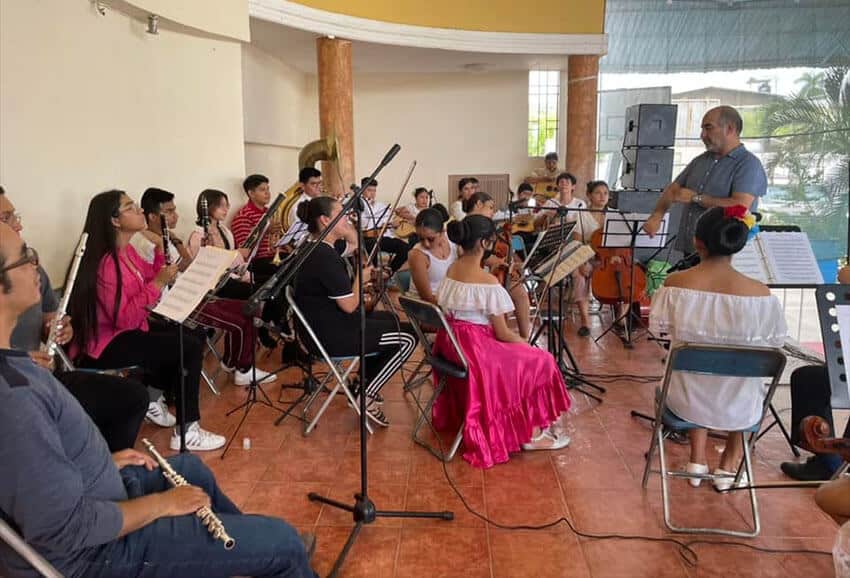
The Tierra Caliente Youth Orchestra and Choir. Facebook / Orquesta y Coro Juventud de Tierra Caliente
A music program in Apatzingán, Michoacán, not only gives children and adolescents the opportunity to sing and play instruments but also serves as a beacon of peace in the state’s notoriously violent Tierra Caliente region.
Formed just over a year ago, the Tierra Caliente Youth Orchestra and Choir (OCJTC) is made up of 80 members who make music under the guidance of Emilio Medina González. The ultimate aim of the group is for music to prevail over the sound of gunshots.
“It’s a sad reality that [violence] came … to this part of the country but in one way or another the [music] programs have come to benefit [youth in Tierra Caliente],” Medina told the newspaper El Universal.
He said there are a lot of talented young people in Tierra Caliente, but their talent has been obscured by the violence that has plagued the region.
Medina directed another musical group that was the forerunner to the youth orchestra and was also in charge of the broader “Culture in Harmony” program, a federal government initiative that began in late 2014.
However, the OCJTC is not government-affiliated and survives purely on donations and contributions from its members’ parents, according to an El Universal report. The orchestra initially didn’t have anywhere to rehearse, but the principal of an Apatzingán primary school came to the rescue and allowed it to practice there.
Medina said that the security situation in Apatzingán is currently better than it has previously been, but violence remains a problem in the broader Tierra Caliente region.
He said that both the forerunner group and the current orchestra were formed “for peace” and that the primary objective is for children’s voices and musical instruments to ring out more loudly than “the roar of bullets in the streets.”
Emilio Medina González leads students as they practice their instruments.
Music teachers travel from Morelia to impart classes to the orchestra members, who are loaned instruments so they don’t have to buy their own. That allows children and teenagers from families of limited means to join the program.
Twelve-year-old Mariana Flores Aguilar, who plays the violin, told El Universal that she enjoys playing with the OCJTC. “Music relaxes me and at the same time I like it,” she said. “… I didn’t imagine playing an instrument.”
Alejandro Marconi Ruíz Vargas, 13, also said he enjoys the experience of being part of a musical group.
“I like collaborating in a project in which I feel good, I feel at ease and I’m part of something very beautiful, very healthy,” he said. The parents of the orchestra members are similarly pleased.
“The children will grow up in a different environment [to that of the dangerous streets] in which they’ll develop culturally. Values, attitudes and aptitudes that will be very important in their formation as adults will be inculcated in them,” said Marisa Salas González.
“… The teacher Emilio is a great orchestra director who has rescued the traditional music of Apatzingán and made it known,” she said.
“Art must be part of the education of all children,” said Medina. “It’s a universal right. It’s important because it generates a lot of the values that society is asking for, that it demands.”
The West Titania oil platform off the coast of Campeche, where workers stopped an attack by pirates on Thursday. Such attacks have occurred 22 times in the area in 2022. Seadrill/Facebook
Oil workers aboard a ship and an oil platform used firefighting equipment to repel modern-day pirates in the Gulf of Mexico last Thursday.
A group of 15 workers aboard the ship Atares and the West Titania platform connected hoses to fire hydrants and directed high-powered jets of water at the pirates, according to a Milenio newspaper report.
They were successful in scaring off the pirates and avoiding yet another heist in the waters off Campeche’s coast. Pirate attacks on oil platforms and vessels in the Gulf of Mexico are relatively common, with thieves often getting away with equipment, tools and other valuable items.
The attempted attack occurred during the early hours on Thursday. Two boats with between three and four crew members each approached the Atares and the platform. “It was three in the morning when we noticed the presence of the vessels; everything happened very quickly,” one of the oil workers told Milenio.
“We managed to repel the [attempted] boarding,” he said before comparing foiling the attack to Spanish galleons’ repulsion of filibusters who wanted to steal their riches over 300 years ago.
“On this occasion, it wasn’t artillery [that warded off the attackers] but jets of water from the firefighting equipment, which has great pressure,” the unnamed oil worker said.
Milenio said that sources close to Pemex confirmed last Thursday’s events, but the state oil company hasn’t officially acknowledged the attempted raid. Oil platforms and vessels owned by Pemex and private companies have been attacked 22 times this year off the coast of Campeche, the newspaper said.
Senator Rocío Abreu Artiñano, president of the upper house’s energy committee, said that it appears that the same group of pirates have perpetrated all 22 attacks because the modus operandi was the same in each.
“The pirates arrive at night and board the [oil sector] facilities,” she told Milenio, adding that the attacks threatened the safety of workers and the safe operations of platforms and vessels.
“… We run the risk of a death occurring at any moment, and we’re not going to allow that,” Abreu said.
The water levels in the mine increased early Sunday morning, evidently due to accumulated water in the nearby Las Conchas mine. Twitter @GobDeCoahuila
An abrupt increase in water levels in a flooded Coahuila coal mine is hindering efforts to rescue 10 miners who have been trapped since August 3.
The National Civil Protection Coordination (CNPC) said in a statement that water levels rose Sunday in wells 2, 3 and 4 at the El Pinabete mine in the municipality of Sabinas. The Coahuila government said water levels were between 12 and 15 meters on Sunday morning, well above the 1.5-meter level required for a safe rescue attempt.
The high water mark had dropped to below one meter in one of the wells, but on Monday levels had surged to above 40 meters in one well and to over 35 meters in the other two.
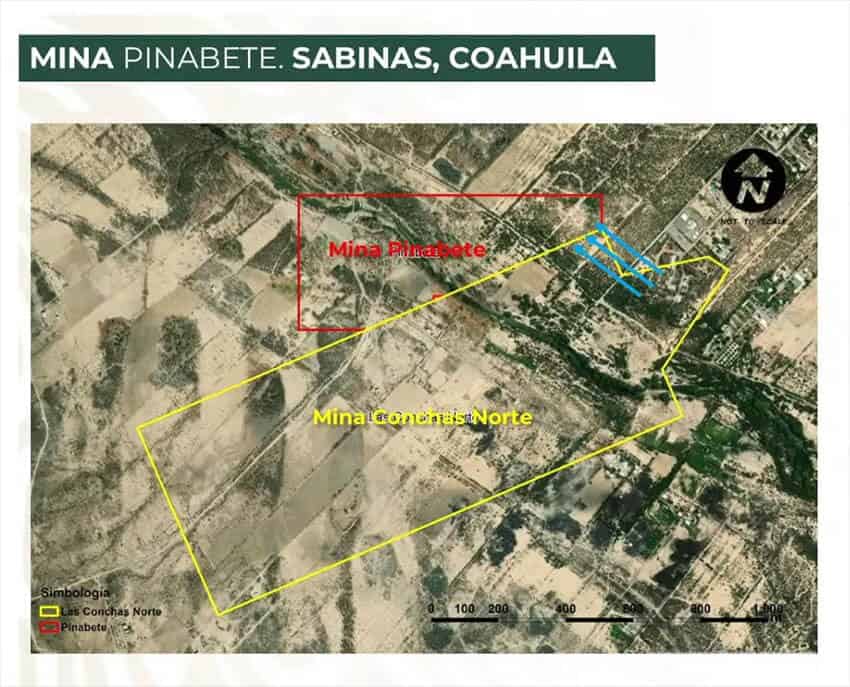
Authorities have been using pumps to extract water from the mine, which flooded when excavation work caused a tunnel wall to collapse. The sudden increase in the water levels on Sunday was apparently due to water leaking – or gushing – into the El Pinabete mine from the adjacent Las Conchas mine, which was abandoned 30 years ago.
A diagram presented at the president’s Monday press conference shows the location of the Las Conchas mine, the apparent source of the flooding that trapped the miners in El Pinabete mine. Presidencia de la República
The CNPC said that specialists from the Mexican Geological Service and a private company were designing a strategy to prevent water levels from rising further and to “generate conditions to rescue the miners,” who have now been trapped underground for 12 days.
Civil Protection chief Laura Velázquez said Monday that engineers had recommended the continuation of pumping to remove water from the mine, while concrete will be injected to seal off the inundated wells.
President López Obrador told his regular news conference he had issued instructions for the entire rescue plan to be reinforced.
“They’re pumping about 290 liters per second [but] we’re going to increase the pumping and the mining engineers are developing a proposal to build a kind of barrier between one mine and the other to stop the water. We’re going to intensify the [rescue] work,” he said.
Meanwhile, the families of the trapped miners – who have set up camp at the mine site – are becoming increasingly desperate. They have criticized the authorities for not making progress in the mission to rescue their loved ones, and have called for the resignation of Velázquez.
“We can’t take it anymore,” a woman whose brother is trapped told reporters on Saturday.
Gabriel Rodríguez, who also has a brother in the mine, told an impromptu press conference that family members have been waiting more than 200 hours without knowing anything about their loved ones.
“They tell us to wait, that there’s not long to go, that the water [levels] have come down, but they only tell us lies,” said Rodríguez, who is a miner himself.
Familiares de los 10 mineros atrapados en una mina de carbón en Sabinas, Coahuila, afirman que “las autoridades han perdido mucho tiempo en el rescate”. 📹: @ManuVPCpic.twitter.com/g7eRLmHUHw
Family members of the trapped miners said rescuers should have been pumping water out of the Las Conchas mine from the start and wondered why the pumps were not working around the clock.
“The army divers are afraid because they don’t know mines,” he charged. “They see a piece of wood and say they can’t advance. That’s why we tell [the authorities] that we’ll sign a paper, that we’ll be responsible for what happens to us inside [the mine] and that they should let us go down.”
Rodríguez also called for additional rescuers, “from here or abroad,” to be deployed to the mine.
Sergio Alejandro Martínez Valdez, another brother of a trapped miner, said that authorities should be pumping water from both the El Pinebete and the Las Conchas mines. “But they don’t listen to us at all,” he complained before also calling for international help.
Foreign mining experts could “come and give us their opinion,” Martínez said. “We’re asking for their help to get our family members out of there.”
Velázquez, the Civil Protection chief, defended the rescue efforts, saying that the Civil Protection department is one of the most experienced in the world because Mexico is so vulnerable to natural disasters. She pledged Sunday that the authorities wouldn’t abandon the trapped miners or their despondent – and angry – relatives.
“We share the anguish they suffer, and they should know that we’re not skimping on resources to achieve the goal [of rescuing the miners],” Velázquez said.
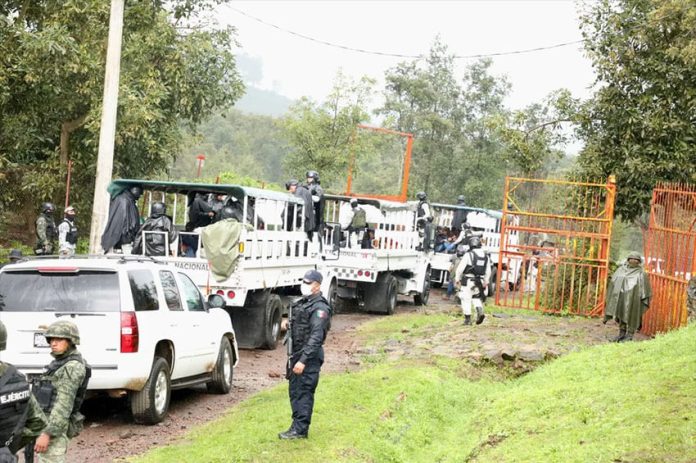
National Guard trucks transport alleged members of Pueblos Unidos after their arrest in Michoacán. SSP Michoacán
Avocado exports to the United States resumed last night after a brief suspension due to violence in Michoacán in the second halt to exports this year.
U.S. Department of Agriculture (USDA) activities were suspended on Sunday due to safety concerns following a string of violent incidents inside and near Uruapan, the city at the center of the international avocado trade, the head of the security at the Mexican Association of Producers and Packers of Exported Avocados (APEAM), Juan José Retiz León, said in a statement.
Retiz added that the suspension could only be lifted by the U.S. State Department. Exports resumed later on Sunday.
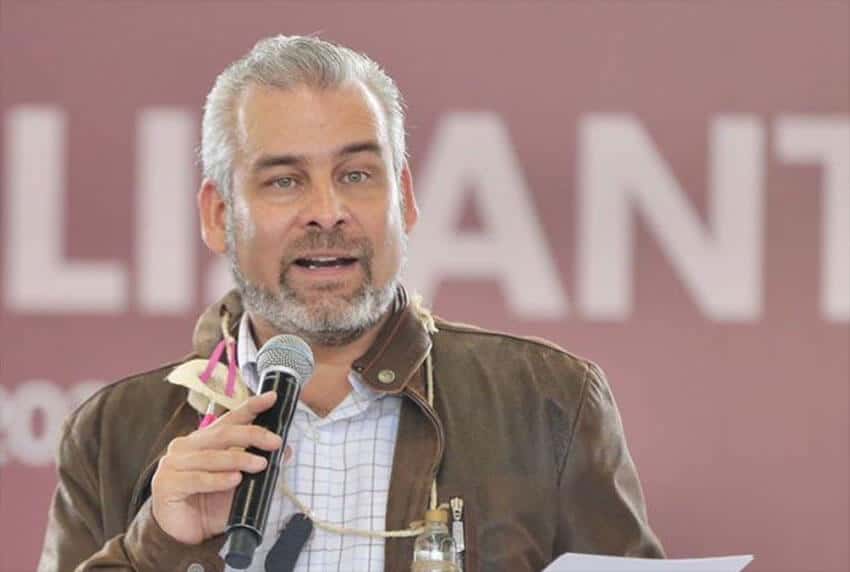
Addressing the disruption, Michoacán Governor Alfredo Ramírez Bedolla denied that exports were ever suspended. “They are working in coordination with USDA, they [exports] were not suspended … USDA is working today and there is no suspension of exports,” he said on Sunday.
Michoacán Governor Alfredo Ramírez Bedolla denied that exports were briefly suspended on Sunday.
The violence started on Friday in Tiamba with armed confrontations between supposed criminal groups, 16 kilometers north of Uruapan. Security forces undertook mass arrests on Saturday, detaining 164 people following blockades on the highway which links the state capital Morelia to the Pacific port at Lázaro Cárdenas.
Disruption continued with further blockades and the kidnapping of National Guardsmen in Paracho.
The arrested people are presumed to be members of Pueblos Unidos, a well-armed self-defense movement that was created in 2020 by avocado farmers, supposedly in response to gangs’ extortion demands. Federal authorities, however, have described the group as a criminal organization, and one of the groups challenging the Jalisco New Generation Cartel (CJNG) for control in Michoacán. Security forces confiscated almost 200 weapons, some which were army property, and vehicles during the operation.
In response to the arrests, members of Pueblos Unidos allegedly blocked roads in the state with burning vehicles. Latinus reported blockades on the Pátzcuaro-Uruapan section of the Morelia-Uruapan highway Sunday night, and on the Pátzcuaro-Lázaro Cárdenas highway between Pátzcuaro and Uruapan early Monday morning. By late morning, both blockades had been cleared, according to Latinus and the state Transportation Ministry.
The U.S. government has acted on security concerns in the past, halting imports of avocados for a week in February in light of a threatening phone call received by a Michoacán-based U.S. inspector.
Avocados have been termed “green gold” for their value as exports and suspensions are a costly business: Citibanamex estimated the February suspension cost avocado producers US $7.7 million per day. Mexico’s farmers account for more than 80% of the avocado consumed in the United States.
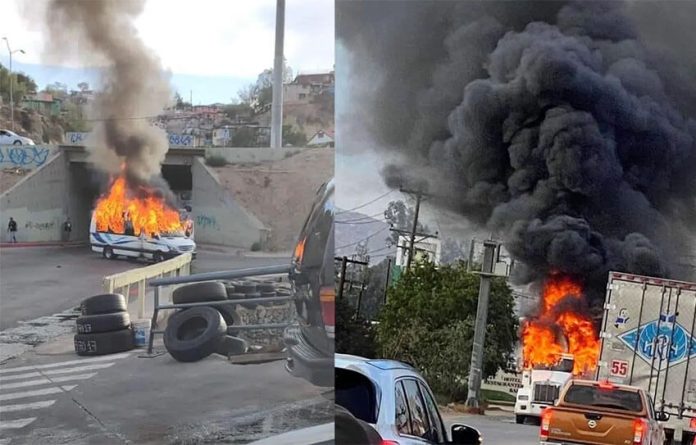
Presumed cartel members blockade roads around Baja California on Friday. Facebook / Yo Amo Tijuana
Fiery narco-blockades in Baja California and Guanajuato last Friday capped a violent week in Mexico, during which criminal groups ran riot in four states.
The wave of violence began in Jalisco and Guanajuato last Tuesday when the Jalisco New Generation Cartel (CJNG) responded to the arrest of one of its leaders by setting vehicles and businesses on fire. On Thursday, a brawl between members of rival criminal gangs imprisoned in a Ciudad Juárez jail and a subsequent wave of attacks in the northern border city claimed the lives of at least 10 people, including innocent civilians.
The violence spread to several Baja California cities on Friday – including Tijuana and state capital Mexicali – and returned to Guanajuato, Mexico’s most violent state.
According to a Reforma newspaper report, armed men seized and set alight at least 19 vehicles in Tecate, Tijuana, Playas de Rosarito, Mexicali and Ensenada. Public transit buses and trucks were among the vehicles set ablaze, reportedly by CJNG-affiliated criminals. Ten vehicles were torched in Tijuana to block roads in the northern border city.
I left Baja Beach Fest about an hour ago, there was no signal. Festival goers probably don’t know what’s happening. There’s no way everyone at the festival is staying in Rosarito. Taxis aren’t going into Tijuana. The festival hasn’t been canceled. This is going to be chaos.
Alexis Hodoyán, music editor for the U.S.-based Latin American culture publication Remezcla, describes returning to the U.S. from a music festival in Rosarito early Saturday morning as violence unfolded in Tijuana and the surrounding area.
The United States Consulate General in Tijuana issued a security alert amid the chaos and instructed U.S. government employees to shelter in place, an order that wasn’t withdrawn until Sunday.
Baja California Governor Marina del Pilar condemned the violence and reported that arrests had been made but didn’t specify how many. Federal officials said later that 17 suspects were detained, including seven people in Tijuana and four in each of Mexicali and Rosarito.
In a Twitter post on Saturday, Del Pilar assured that her government was working to protect residents and attend to “each of the violent events” that occurred in Baja California, where one person was reportedly injured but there were no deaths.
Some 300 soldiers and 50 additional National Guard members were dispatched to Tijuana on Saturday to bolster public security efforts in the state, where thousands of guardsmen are permanently based.
Members of the National Guard arrive in Tijuana on Saturday. Jorge Dueñes
Three days after presumed CJNG members murdered at least two people and torched scores of businesses and vehicles in Guanajuato, the Bajío region state saw another outbreak of violence on Friday. Cartel henchmen once again set vehicles alight to create narco-blockades, this time after a confrontation with security forces on the Celaya-Juventino Rosas highway.
After the clash, state police pursued a pickup truck but their chase was hindered by spike strips and blockades that were created by setting two vehicles on fire near the community of La Veguita, according to a Milenio newspaper report.
On social media, messages attributed to the CJNG warned people to stay at home over the weekend in both Baja California and Guanajuato. The Los Angeles Times reported Sunday that Avenida Revolución – the main entertainment strip in Tijuana – had become a virtual ghost town.
However, in a Twitter post on Sunday, Tijuana Mayor Montserrat Caballero said the city wouldn’t stop or be divided by Friday’s violence. She also sent a message to criminal organizations, telling “thugs” to settle their scores “outside our city.”
WATCH: President Andrés Manuel of Mexico (@lopezobrador_) said that the acts of violence recorded in Baja California were “more propaganda” and that, as a result, “there are people who are thinking about political issues,” but they should not be given too much weight. 🧵👇 pic.twitter.com/tCdpvB1vu7
The president lamented the targeting of innocent bystanders in Ciudad Juárez and other areas of the country at his Monday press conference, but said that reports of violence in Ensenada and Tijuana were “more propaganda” and didn’t result in loss of life.
“We don’t want you here, don’t interfere with those of us who work every day to build a better future and a Tijuana for everyone,” Caballero wrote.
For his part, President López Obrador on Monday advised citizens to remain calm despite the violent events of last week.
“To the people of Mexico, I say be calm. There is governability, there is stability,” he said at his regular news conference.
The president claimed that the government’s political adversaries – the “conservatives” – were “exaggerating things” to make the security situation appear worse than it really is. López Obrador said that there were only 196 homicides across Mexico in the three-day period between Friday and Sunday, not 260 as some media outlets reported.