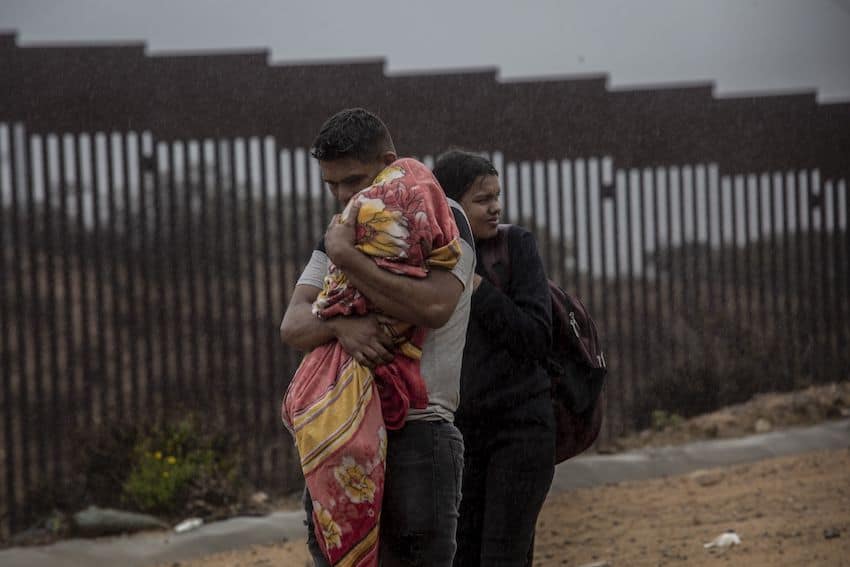
Human Rights Watch (HRW) has urged the Mexican government to reject harsh new restrictions on asylum seekers, currently under consideration by the United States Congress and President Joe Biden.
In a letter addressed to Mexican President Andrés Manuel López Obrador and Foreign Minister Alicia Bárcena Ibarra on Jan. 18, the international human rights NGO said that Mexico should publicly declare that it will not agree to any measures that would lead to an increase in summary expulsions of migrants to Mexico.

“The proposals being considered in the United States could have devastating consequences for the rights of migrants and asylum seekers if implemented, undermining the right to seek asylum and exposing thousands of people to serious danger,” the letter said.
The proposed measures include allowing U.S. immigration officials to expel asylum seekers without hearing their claims; restricting the humanitarian programs that allow Cuban, Haitian, Venezuelan and Nicaraguan migrants to apply to travel legally to the U.S.; and instating a permanent “transit ban,” requiring refugees to seek asylum in any transit country they pass through before being eligible to apply in the U.S.
The measures are being pushed by Republican lawmakers in the U.S. Congress, some of whom are conditioning their support for US $100 billion in aid for Ukraine and Israel on inclusion of the immigration restrictions in the 2024 U.S. federal budget.
HRW argues that the proposals contravene international human rights standards and effectively reinstate the controversial Title 42 border expulsions policy, which ended last May. They would also establish a de facto “safe third country” agreement between the U.S. and Mexico —something Mexico has repeatedly said it will not accept.
The NGO stressed that the erosion of U.S. asylum provisions that started with the 2019 “Remain in Mexico” policy has left thousands of expelled migrants vulnerable to “kidnapping, extortion, assault, and other serious abuses at the hands of criminal groups and corrupt officials” in Mexico.

The letter was published on the same day that members of Mexico’s security cabinet traveled to Washington to discuss bilateral cooperation on various issues, including migration. The meeting follows up on the agenda set during the visit of U.S. Secretary of State Antony Blinken to Mexico last December, when the two countries agreed to establish a bilateral group to tackle mutual security concerns such as migration and drug trafficking.
“Mexico’s president should make it clear that he does not intend to be complicit in this attempt by U.S. congressmen to tear apart the U.S. asylum system,” said HRW Americas Director Juanita Goebertus. “These proposals would violate basic rights and further empower the criminal groups in Mexico that profit from kidnapping and extorting vulnerable migrants.”
With reports from Excelsior