Like the United States and many other countries, Mexico is politically polarized.
On one hand, President Andrés Manuel López Obrador (AMLO) has maintained high approval ratings throughout his six-year term, and over 33 million Mexicans voted for Claudia Sheinbaum, delivering a landslide victory to the ruling party candidate who has pledged to build on the “transformation” of Mexico initiated by her political mentor. The president has legions of devotees, colloquially known as AMLOvers.
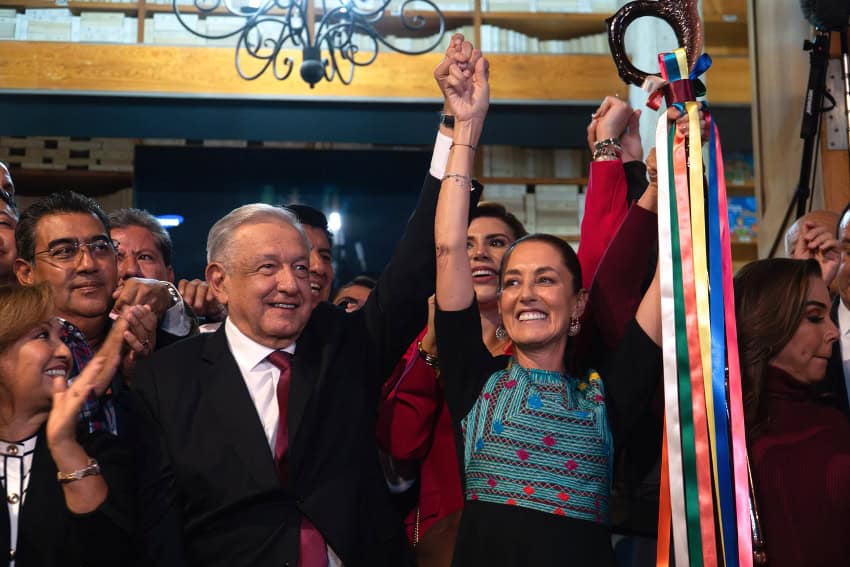
On the other hand, millions of Mexicans loathe AMLO and believe that he — and the president-elect — pose a threat to Mexico and its democratic institutions, in part due to the constitutional reform proposals the president submitted to Congress earlier this year and which Sheinbaum supports. The presidential candidate most of those people supported on Sunday was Xóchitl Gálvez representing the PAN-PRI-PRD coalition, who received more than 15.5 million votes.
One manifestation of the political polarization in Mexico is that “friends and relatives no longer talk politics for fear of worsening unbridgeable divides,” the Associated Press said in a recent article.
On Sunday, while analyzing and discussing the election results during a Televisa broadcast, well-known journalist Denise Maerker weighed in on polarization in Mexico. Her remarks “resonated widely,” El Universal reported, and in this day and age that means they went viral on social media.
During a discussion with other high profile journalists, including Ciro Gómez Leyva and Jorge Ramos, Maerker was asked whether polarization is good, bad or “inevitable,” and whether there could be some kind of “national reconciliation” after the elections.
🚨 ESTO PASÓ
Denise Maerker 🧑🏻, productora y conductora de N+ 📺, se hace viral por su reflexión y conclusiones en mesa de análisis respecto a la jornada electoral 🗳️. pic.twitter.com/v6PSkpTMX0
— Radio Contexto (@tenemoscontexto) June 2, 2024

This clip of journalist Denise Maerker speaking about polarization in Mexico has 1.8 million views.
She began by speaking about the vast economic gulf between Mexico’s poorest people and the middle and upper classes. AMLO’s political base is mostly the former cohort — who have benefited from expanded social programs during the current administration — while more well-off Mexicans are more likely to be critical of the president.
“There is a polarization that is structural and it has to do with a deeply unequal society,” Maerker said.
“What does this polarization mean? The [different] social groups can’t think alike nor can they have common interests or views of the world,” she said, adding that in some cases they are incapable of understanding each other.
“The division between social classes and the immense inequality is a polarization in itself,” Maerker said.
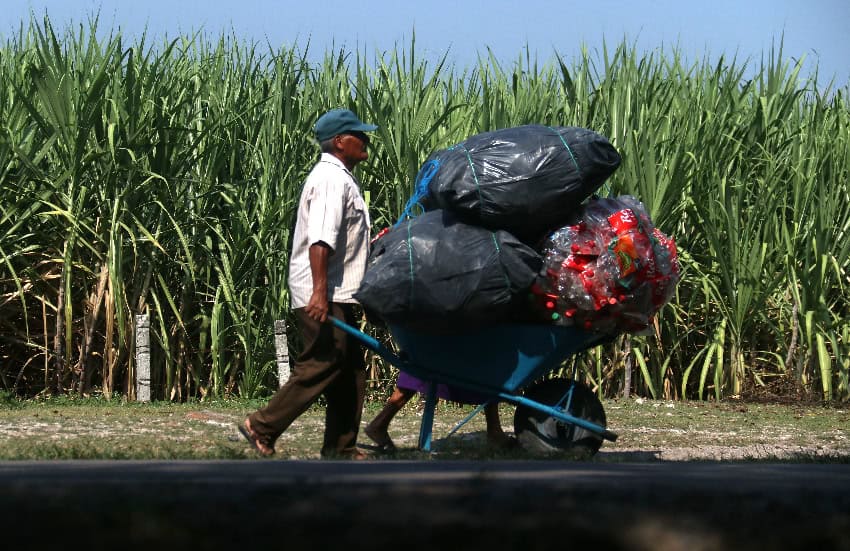
The journalist asserted that López Obrador has exacerbated that polarization — and made the divide a more deeply political one — with his rhetoric, in which he often pits ordinary Mexican people, el pueblo, against “greedy” elites. He once derided the middle class as “aspirational” and “without moral scruples.”
“What López Obrador did,” Maerker said “was to bring this existing polarization out into the light and throw loads of gasoline on it.”
She asserted that political polarization can be reduced “very quickly” if the “gasoline the president throws every morning” at his press conferences, or mañaneras, is no longer thrown.
“I believe there is a polarization [in Mexico] that is deeply fueled [by López Obrador],” Maerker said, referring to political polarization rather than “structural,” economic polarization.
“I believe that [political polarization] is going to diminish” when López Obrador leaves office, she said.
However, structural polarization won’t diminish until Mexican society becomes “more even,” Maerker added.

“It’s obviously structural [polarization] that gives rise … to tremendous differences [between classes],” she said, noting that many Mexicans find it impossible to understand why their fellow citizens voted for Sheinbaum, or why they voted for Gálvez, as the case may be.
“This lack of understanding is because there are places in society that are profoundly different,” Maerker said.
Her explanation of polarization in Mexico was “widely praised” on social media, El Universal said, highlighting comments such as “I completely agree with Denise Maerker” and “while people with money continue living in their bubble and don’t see the reality of the country, this will continue happening.”
One comment beneath a clip of Maerker’s remarks that has been watched 1.8 million times simply said: “Very true.”
It remains to be seen whether Sheinbaum — who has said she wants to unite Mexican society — will be able to reduce polarization with less divisive rhetoric, but one thing that is clear is that combating political division will be one of the key challenges for the incoming president, along with things such as reducing violence, growing the economy, managing the relationship with the United States and lifting even more Mexicans out of poverty.
Mexico News Daily