Sheinbaum’s mañanera in 60 seconds
-
🚆 AIFA’s rail link hits another delay — The train connecting Buenavista in CDMX to the Felipe Ángeles airport has completed testing but is still awaiting certification, pushing the opening back by a few weeks. The line was originally meant to open under AMLO; Sheinbaum had promised it before Holy Week.
-
🛢️ Gulf oil spill probe ongoing — Investigators are weighing whether natural seeps in the Cantarell Field or a Pemex infrastructure leak caused contamination along roughly 630km of Veracruz and Tabasco coastline. Sheinbaum says the natural seep hypothesis looks most likely.
-
💉 Measles outbreak turning a corner — 17.2 million vaccines administered since mid-February, and Deputy Health Minister Eduardo Clark says transmission is now declining in all 32 states. New cases have been falling for four consecutive weeks.
Why today’s mañanera matters
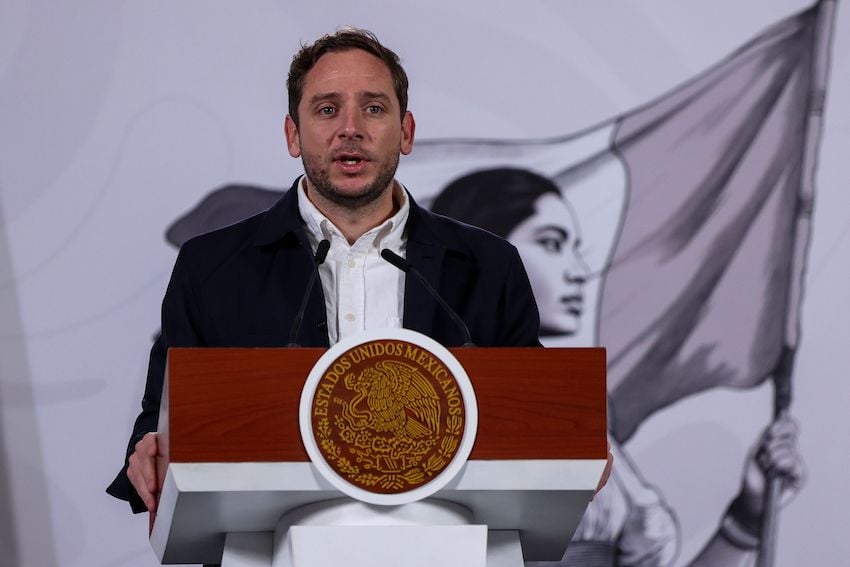
Updates on three matters of great public interest were provided at President Claudia Sheinbaum’s Tuesday morning press conference.
Sheinbaum spoke about the opening of the long-awaited rail link to the Felipe Ángeles International Airport (AIFA) and an investigation into widespread oil contamination in the Gulf of Mexico, while Deputy Health Minister Eduardo Clark gave an update on the national measles situation.
Today’s mañanera served as a reminder why the federal government so highly values the direct, unfiltered communication to the Mexican people that a daily press conference affords. The presser allows the government to get key information to a significant audience of viewers and listeners on mediums including television, radio and social media. At the same time, the mañanera enables the government to largely set the national news agenda.
AIFA has now been open for 4 years, but passengers are still waiting for a rail link
Sheinbaum told reporters that testing of the rail link between central Mexico City and AIFA in México state has been carried out but the related “certification” hasn’t been issued.

As a result, the opening of the train line will be delayed by a few weeks, she said.
“We want it to be certified so that it can operate,” Sheinbaum said.
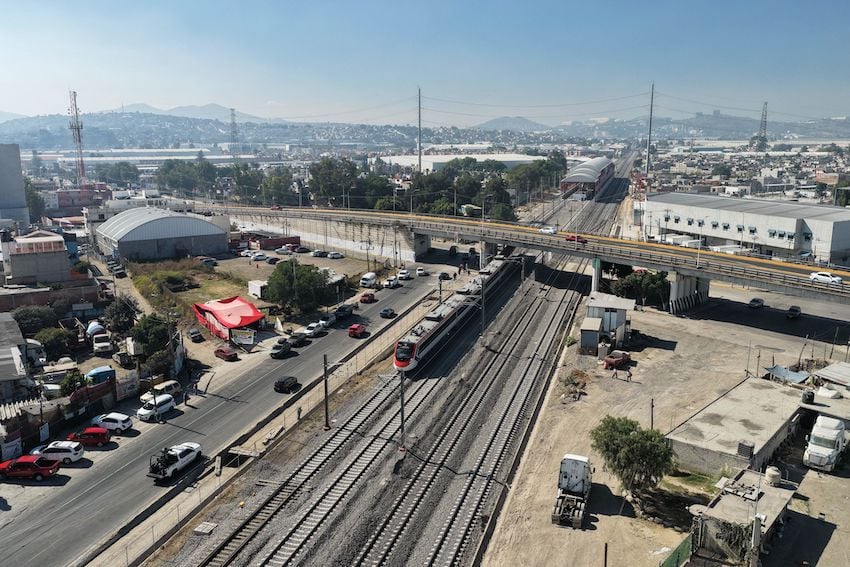
The president said earlier this year that the rail link from the Buenavista station to AIFA would open “before Holy Week.” The train line — an extension of the existing Mexico City suburban railroad — was originally expected to open during the presidency of Andrés Manuel López Obrador (2018-24), whose government built the airport.
Just over four years after AIFA opened, Sheinbaum presented an infographic that showed that more than 18 million passengers have used the airport since March 21, 2022. She reported that the top five states for flights to and from AIFA are Quintana Roo, Jalisco, Nuevo León, Yucatán and Oaxaca. The airport is a hub for the state-owned Mexicana airline, which began operations in late 2023.
Investigation into cause of oil spill continues
Sheinbaum said that the government, in collaboration with scientists, is investigating whether natural oil seeps in the Cantarell Field of the Gulf of Mexico are the cause of the widespread oil contamination along the coasts of Veracruz and Tabasco.
She said that investigators are also considering the possibility that oil leaked from Pemex infrastructure.
“For this they have to inspect all the facilities,” Sheinbaum said.
“So far no leak has been reported,” she added.
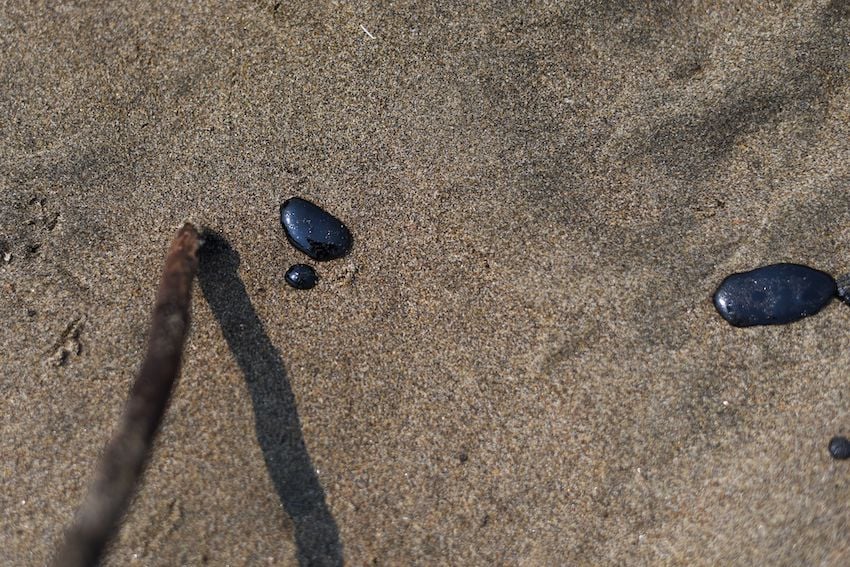
Sheinbaum said that the “hypothesis” that natural oil seeps caused the contamination appears most likely.
Mexico News Daily reported last Thursday that Veracruz Governor Rocio Nahle — a former energy minister with close ties to Pemex — blamed a privately owned vessel operating off the coast of Campeche for the oil spill, but an inspection revealed the ship in question was not responsible. Before she made that allegation, Nahle raised the possibility that a natural oil seep caused the Gulf of Mexico contamination.
On Tuesday morning, Sheinbaum said that the government has done a lot of work to contain the contamination and clean up affected beaches.
“There are lot of people from Pemex working, a lot of people from the Ministry of the Navy, a lot of people from the Environment Ministry working to contain and clean up the contamination through different methods,” she said.
Last week, more than a dozen environmental organizations accused the government of covering up an oil spill that has despoiled some 630 kilometers of beaches along the Gulf coast.
Measles transmission on the decline
Deputy Health Minister Clark reported that health authorities have administered 17.2 million vaccines against measles since Feb. 12.
“In seven weeks we reached this number and for that reason, the transmission of measles today is on the decline in each and every one of [Mexico’s] 32 federal entities,” he said.
“… This is very good news,” Clark said, adding that new cases have been declining for four weeks.
Mexico has faced a concerning outbreak of measles, with almost 15,000 confirmed cases reported across the country so far this year.
By Mexico News Daily chief staff writer Peter Davies (peter.davies@mexiconewsdaily.com)