Today’s mañanera in 60 seconds
- 🗳️ Sheinbaum’s electoral reform proposal was rejected in the Chamber of Deputies after Morena allies PT and PVEM withdrew support. She’s now pushing a “plan B” focused on cutting privileges in local congresses and municipalities, and expanding citizen referendums.
- 🚕 The president sided with taxi drivers protesting at the Mexico City airport, calling their grievance against Uber a “valid argument” — taxistas pay airport fees, ride-hailing drivers don’t. A proposal would move app pickups away from terminals, just three months before the World Cup brings millions of tourists to Mexican airports.
- 🔍 Sheinbaum said she doesn’t know the whereabouts of El Mencho’s romantic partner, who was with the CJNG leader before the Feb. 22 operation that killed him. She promised an update later.
Why today’s mañanera matters
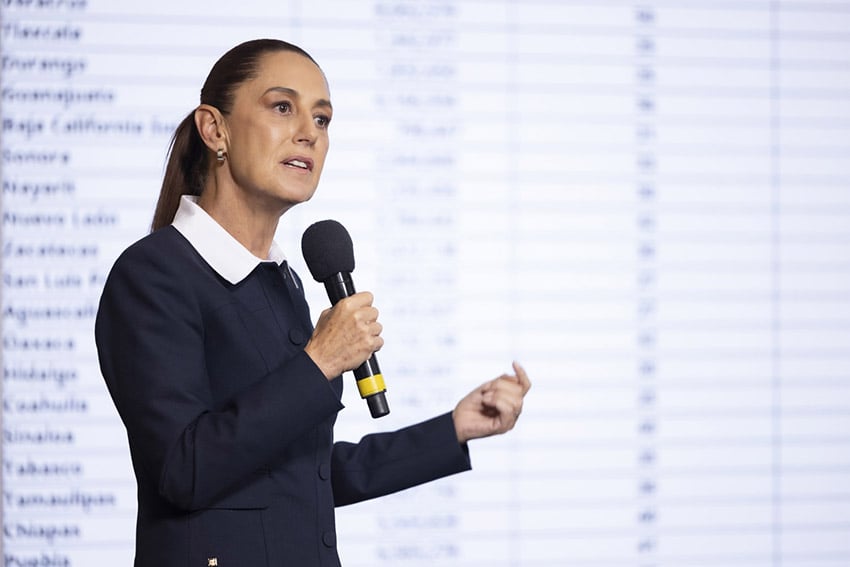
At her Thursday morning press conference, President Claudia Sheinbaum acknowledged that her electoral reform proposal didn’t pass the lower house of Congress and consequently outlined a “plan B” initiative.
The rejection of the proposal — which was effectively dead on arrival in the Chamber of Deputies — is a significant blow for the president, although she asserts that she fulfilled her commitment to the people of Mexico by simply submitting it to Congress.
Sheinbaum is presenting her “plan B” as a strong alternative to her original electoral reform proposal. However, the new bill, if approved, will not achieve the same far-reaching electoral changes she had hoped to make.
Today’s mañanera was important as Sheinbaum offered the first details on her “plan B,” and addressed other highly-topical issues, including the taxi drivers’ protest that took place at the Mexico City International Airport on Wednesday.
Sheinbaum prepares ‘plan B’ electoral reform
Sheinbaum acknowledged that her electoral reform proposal was rejected by the lower house of Congress on Wednesday.
“We already knew they weren’t going to approve it,” she said.
Indeed, many lawmakers with the Labor Party (PT) and the Green Party (PVEM) — both of which are allies of the ruling Morena party — had expressed their opposition to the constitutional reform bill, whose objectives included reducing the size of the Senate, changing the way plurinominal (proportional representation) deputies are elected and lowering election costs, including by cutting funding for political parties. Opposition parties also opposed the reform proposal.

Without the full support of the PT and the PVEM, the bill was unable to pass the Chamber of Deputies.
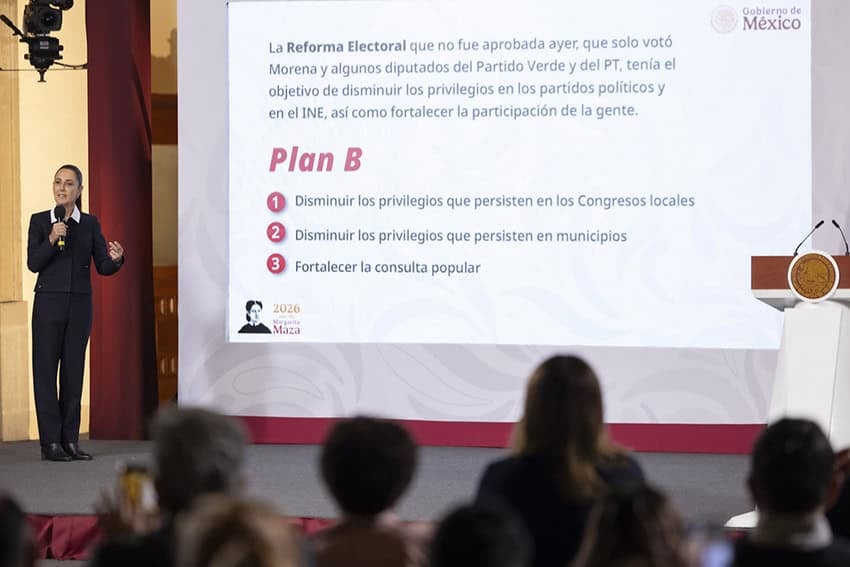
Sheinbaum said on Thursday morning that her reform proposal also aimed to “reduce privileges in political parties” and the National Electoral Institute, and “strengthen the participation of the people” in democracy in Mexico.
Given that the reform proposal was rejected, Sheinbaum will now submit a “plan B” bill to Congress, as she had indicated she would do.
The president said that her “plan B” has three main objectives:
- “Reduce the privileges that persist in local Congresses” — i.e. the legislatures in Mexico’s 32 federal entities.
- “Reduce the privileges that persist in municipalities,” of which Mexico has almost 2,500, each with their own municipal government.
- “Strengthen public consultation” — i.e. give citizens a greater say on important issues, including via referendums, several of which were held during Andrés Manuel López Obrador’s presidency.
Sheinbaum: Protesting taxi drivers have ‘valid argument’
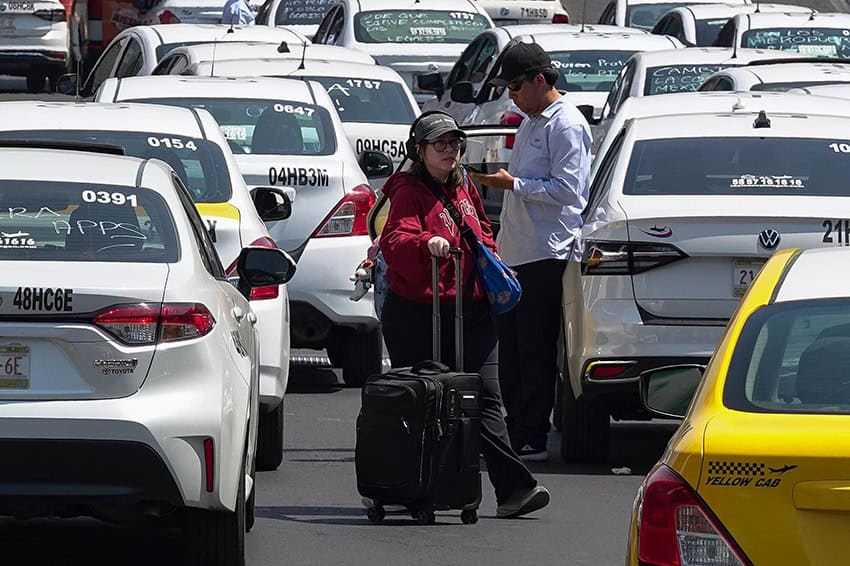
A day after taxi drivers protested at Mexico City International Airport (AICM) against the operation of drivers for ride-hailing apps at the airport, Sheinbaum noted that taxistas pay fees for the right to work there.
In contrast, the president highlighted, ride-hailing apps such as Uber do not.
She noted that taxistas are opposed to drivers from ride-hailing apps having the same right to operate at the airport without having to pay any fees.
“It’s a valid argument,” said Sheinbaum, who went on to outline an AICM proposal to establish “a space” further away from the terminals where drivers for ride-hailing apps can “safely arrive” to pick up passengers.
She noted that would allow taxi drivers — “those who pay fees at the airport” — to pick up passengers directly outside the AICM’s two terminals.
Several taxi companies operate at AICM, where passengers are required to pay for their trips inside the terminal before getting into vehicles. Prices are fixed depending on the part of Mexico City passengers are traveling to.
Still, Sheinbaum said that taxis that operate at airports across Mexico need to “moderate” their prices “to benefit passengers.”
The protest at AICM on Wednesday came exactly three months before the commencement of the FIFA men’s World Cup, which Mexico will co-host with the United States and Canada. Millions of tourists are expected to arrive at Mexican airports during the five-week tournament.
Where is El Mencho’s lover?
Sheinbaum said she didn’t know what happened to the lover of Nemesio Rubén “El Mencho” Oseguera Cervantes, who spent time with the Jalisco New Generation Cartel leader prior to the Feb. 22 military operation that resulted in his death.
The day after the operation, Defense Minister Ricardo Trevilla Trejo said that authorities determined the location of Oseguera in Tapalpa, Jalisco, after a man delivered one of his “romantic partners” to him. He didn’t identify the woman.
Asked whether she had been detained, Sheinbaum said that her government would report on the matter at a later date.
By Mexico News Daily chief staff writer Peter Davies (peter.davies@mexiconewsdaily.com)