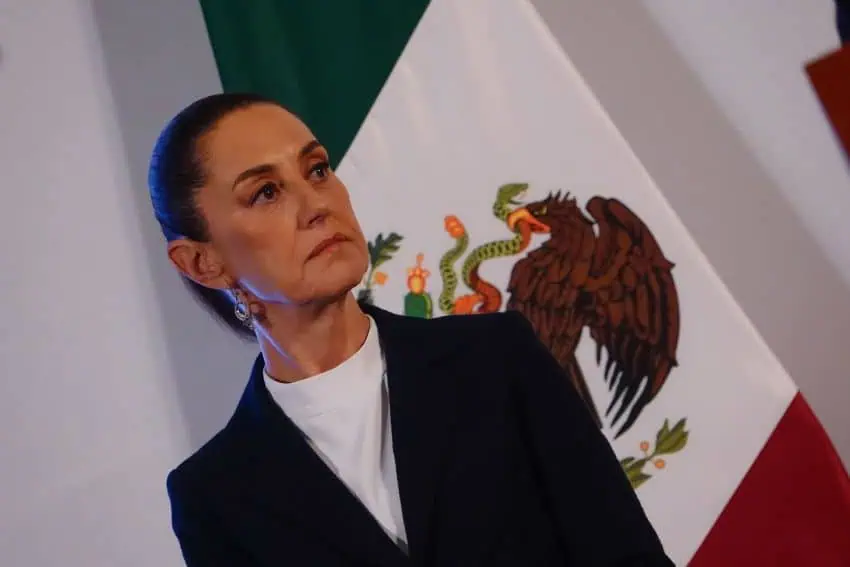
President Claudia Sheinbaum said Friday that she won’t comply with a judge’s order to withdraw the publication of a decree that promulgated the government’s controversial judicial reform.
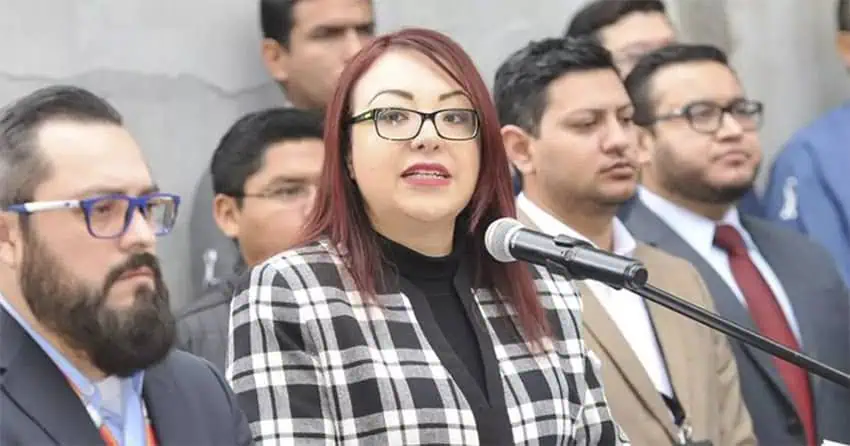
Nancy Juárez Salas, a federal district judge based in Coatzacoalcos, Veracruz, ordered Sheinbaum and the director of the Official Gazette of the Federation (DOF) to remove the decree published on Sept. 15, ruling that the government breached a provisional suspension order against publication.
Former president Andrés Manuel López Obrador promulgated the judicial reform despite a court in Colima ruling against its publication in the government’s gazette.
In her ruling on Thursday, Juárez ordered Sheinbaum and DOF Director Alejandro López González to eliminate the published decree within 24 hours.
She warned that the failure to do so is punishable in accordance with a law that stipulates that a public official who fails to comply with an injunction can be sentenced to a prison term of up to nine years as well as fined and removed from office.
However, the Reforma newspaper reported that the Federal Attorney General’s Office didn’t proceed against officials who defied court orders during the presidency of López Obrador.
At her morning press conference on Friday, Sheinbaum said that the judge in Coatzacoalcos doesn’t have the authority to order the removal of the decree from the DOF.

She offered three reasons in support of her assertion:
- “A judge is not above the people.”
- “What she’s doing doesn’t have any legal basis.”
- Mexico’s Congress — which approved the judicial reform in September — “ordered the then President Andrés Manuel López Obrador” to publish the decree.
“So we’re not going to take the publication down,” Sheinbaum said.
The judicial reform — the most controversial aspect of which is the provision allowing citizens to elect all judges in Mexico, including Supreme Court justices — will not be stopped by anyone, the president said.
“Not a male judge nor a female judge, nor eight Supreme Court justices can stop the will of the people of Mexico,” said Sheinbaum, who made it known before she was elected in June that she supported all of the constitutional reform proposals that López Obrador submitted to Congress in February.
The president also said that the government would file a complaint against Juárez with the Federal Judiciary Council (CJF).
Rulings against constitutional reforms are invalid, says president’s legal advisor
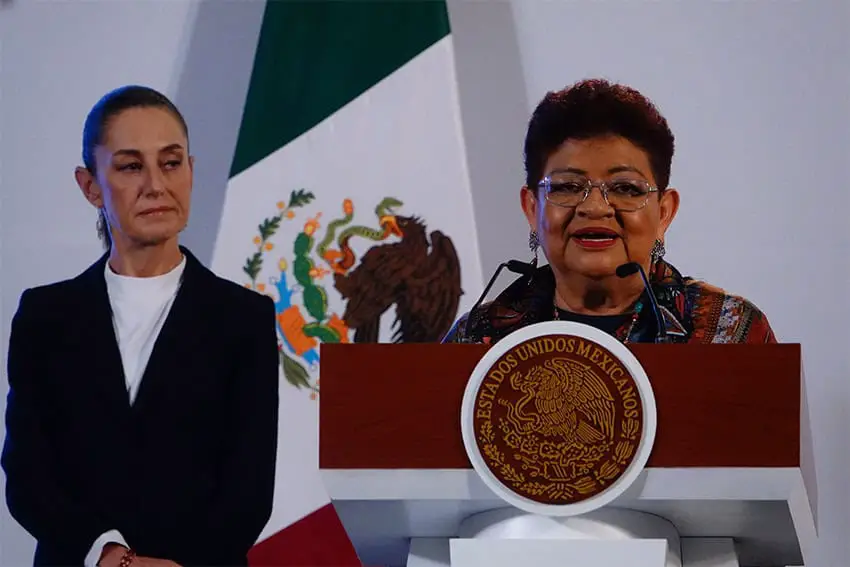
Ernestina Godoy, legal counsel to the president, told Sheinbaum’s press conference that constitutional reforms that have been approved by Mexico’s Congress are “exempt” from judicial revision.
She highlighted that the Supreme Court, “in multiple opinions and rulings,” has “rejected” the notion that a constitutional reform can be reviewed in court.
“It’s extremely clear,” said Godoy, who served as attorney general of Mexico City while Sheinbaum was mayor of the capital.
Arturo Zaldívar, a former chief justice of the Supreme Court who is now an official in the Sheinbaum administration, also said that judges don’t have the authority to hand down rulings against constitutional reforms.
Godoy said that the CJF needs to review the conduct of district judges who are “defying the constitution” by handing down rulings against constitutional reforms.
Many of those judges could soon be without a job as the federal government intends to hold a first round of judicial elections in 2025.
Critics of the reform argue that judges sympathetic to the ruling Morena party’s legislative agenda could come to dominate the nation’s courts, effectively removing an important check on government power.
With reports from Animal Político, Reforma, El Financiero and Milenio