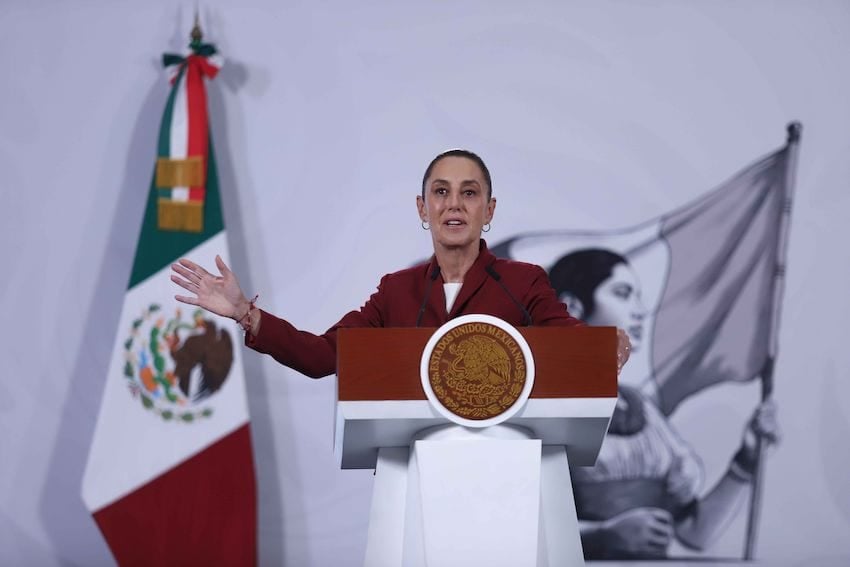
Sheinbaum’s mañanera in 60 seconds
- 🗳️ Sheinbaum could face a recall election in 2027 or 2028: Interior Minister Rodríguez noted that under the “plan B” electoral reform proposal, citizens can request a presidential recall vote in either the third or fourth year of Sheinbaum’s term. Sheinbaum pledged on inauguration day to subject her leadership to a vote, but given her consistently sky-high approval ratings, she’d almost certainly be confirmed to continue in office.
-
🚆 AIFA train slightly delayed: The new Buenavista–AIFA line is now expected to open April 6, slipping from Sheinbaum’s previous March 29 target due to ongoing testing. The trip will take around 40 minutes.
-
🇨🇺 Sheinbaum calls Cuba’s economic opening “historic”: She praised Cuba’s decision to allow its diaspora to invest and own businesses on the island — banned for decades — while carefully framing it as a sovereign Cuban choice.
Why today’s mañanera matters
More details are emerging about President Claudia Sheinbaum’s “plan B” electoral reform proposal, developed by the government after the president’s original constitutional bill was rejected by the lower house of Congress.
One detail that came to light on Tuesday is that a presidential recall election could be held in 2028, even though Sheinbaum committed to putting her leadership to a vote in 2027.
Sheinbaum’s Tuesday mañanera was also consequential as a new timeline for the opening of the long-awaited railroad to the Felipe Ángeles International Airport was revealed and the president commented on the Cuban government’s decision to allow investment in Cuba by Cuban nationals who live abroad.
A presidential recall election could be held in 2027 or 2028
Presenting the details of Sheinbaum’s “plan B” proposal, Interior Minister Rosa Icela Rodríguez said that a presidential recall election could be held in either 2027 or 2028, if citizens request one.
“With regard to the revocation of mandate, I remind you that the people of Mexico have the right to decide if the president should continue in the position or not,” Rodríguez said.

She noted that Sheinbaum’s “plan B” bill — which will be submitted to the Senate on Tuesday — proposes that a revocation of mandate, or recall, election be held on the first Sunday in June during the third or fourth year of a president’s six-year term.
Thus, Sheinbaum could face a recall election in 2027 or 2028, “depending on the year citizens request” a vote, Rodríguez said.
Former president Andrés Manuel López Obrador faced a recall referendum in 2022, the fourth full year of his presidency. Among Mexicans who participated in the election, the vast majority voted in favor of AMLO completing his six-year term. However, fewer than 20% of Mexico’s eligible voters cast a ballot in the referendum.
One of Sheinbaum’s 100 commitments for her presidency is to subject herself to a recall election.
“In 2027, I will subject myself to a revocation of mandate [recall election], as the constitution establishes,” she said during an address in Mexico City’s central square on Oct. 1, 2024, the day she was sworn in.
Poll results consistently show that Sheinbaum is a highly popular president, suggesting that Mexicans would overwhelmingly vote in favor of her continuing her term until its scheduled conclusion in 2030.
Opening of train line to AIFA will be delayed
Sheinbaum told reporters that the train line between Mexico City and the Felipe Ángeles International Airport (AIFA) in México state looks set to open on April 6, over a week later than the date she gave last month.
“I asked for it to be ready on March 29, but they tell me it will probably be April 6,” she said.
Sheinbaum said that the slight delay is related to the testing of the railroad to AIFA, an extension of the existing Suburban Train line that runs between Buenavista in central Mexico City and Cuautitlán, México state.
“They’re finishing the tests and at the time … [the railroad] is ready, it will open,” she said.
Construction of the new line between the Lechería station and AIFA began during the presidency of Andrés Manuel López Obrador, whose government built the airport.
AIFA opened in March 2022, and passenger numbers have gradually increased since then.
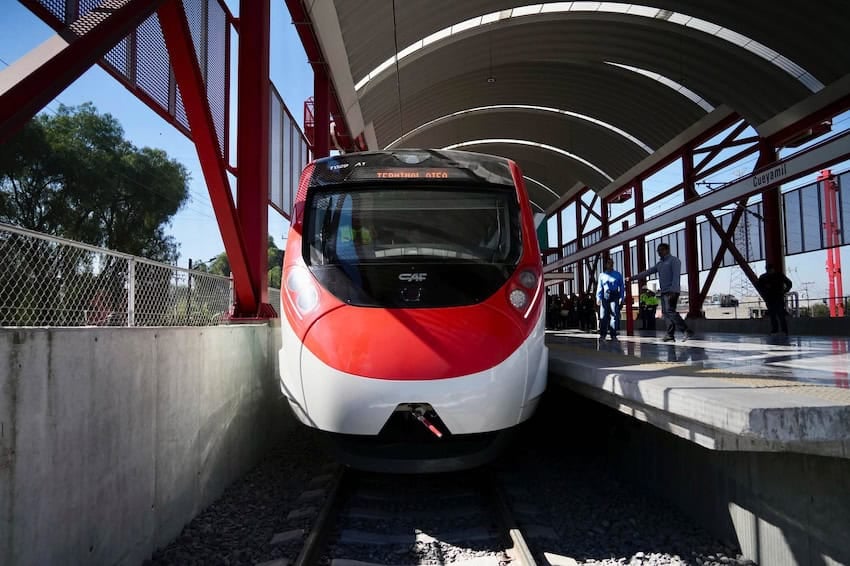
The airport is located about 50 kilometers north of central Mexico City in the México state municipality of Zumpango. The federal government hopes that the opening of the train line will lead to an increase in passenger numbers at AIFA. The trip from Buenavista to the airport will take around 40 minutes.
Sheinbaum: Cuba’s decision to allow Cubans abroad to invest in their homeland is ‘historic’
A reporter asked the president her opinion about the Cuban government’s decision to allow Cuban nationals who live abroad to make investments in their homeland.
“It’s a sovereign decision of the government of Cuba,” Sheinbaum said.
“… We have to acknowledge that they’re seeking different options for the people of Cuba. And it’s historic because for many years this wasn’t allowed,” she said.
“It’s their decision to open up investments,” Sheinbaum said, noting that Cubans who live abroad will be able to own businesses “on the island.”
“It’s their sovereign decision and it represents a change,” she said.
NBC News reported Cuba’s decision after an exclusive interview with the country’s Deputy Prime Minister and economic czar Oscar Pérez-Oliva Fraga.
“Cuban nationals living abroad in places such as Miami will be allowed to invest in the private sector and own businesses in their homeland, the country’s economic czar has told NBC News in an exclusive interview,” the report stated.
The Cuban government’s decision came as the Cuban people face extreme hardship due to food shortages and a U.S. blockade on oil shipments to the island.
Cuban President Miguel Díaz-Canel said late last week that his government had held talks with the Trump administration in order to seek a “possible solution to bilateral differences.”
By Mexico News Daily chief staff writer Peter Davies (peter.davies@mexiconewsdaily.com)