This morning in San Miguel de Allende, I had the opportunity to meet with and hear Beatriz Paredes present her vision as an aspiring president of Mexico.
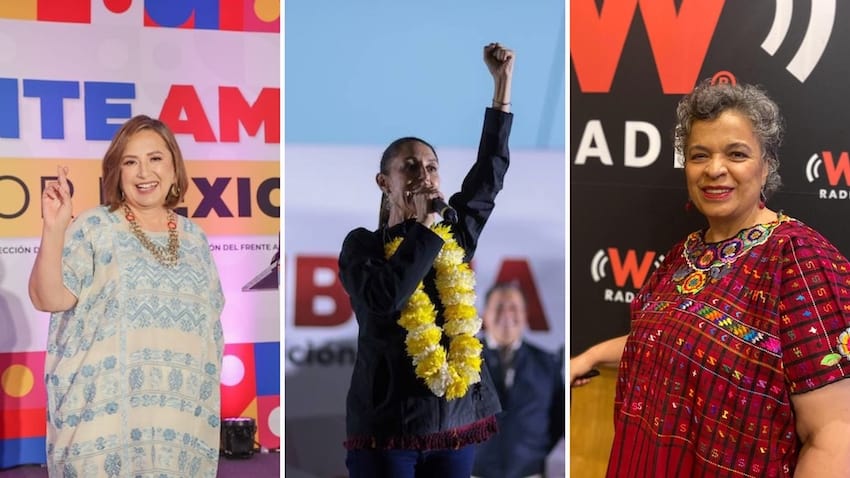
Paredes, along with Xóchitl Gálvez, are now the only two remaining candidates competing to be nominated by the opposition coalition of the PAN, PRI and PRD political parties. Earlier in the week, Santiago Creel withdrew from the race and threw his support behind Gálvez. This means that the Frente Amplio por México (Broad Front for Mexico) now has two senators – both women – as the finalists for their nomination.
The nominee (to be announced on Sept. 3) will likely face Dr. Claudia Sheinbaum, the leading candidate competing to represent the ruling Morena party. Sheinbaum is one of six potential nominees, but leading in the polls over her main competitor, former Foreign Affairs Minister Marcelo Ebrard.
I first wrote about why I think it’s worth paying attention to the Mexican presidential race just a month ago after having met Sheinbaum at a breakfast in Leon, Guanajuato. Having had the opportunity to meet Sheinbaum and now Paredes, I am hoping for the opportunity to soon meet and hear more from Gálvez as well.
As I listened to Paredes present this morning, I couldn’t help but think about how, just a few months ago, many Mexicans told me that Mexico is “not ready” for a female president. Yet here we are now with the three leading women candidates. It’s incredible to see Mexico changing so quickly, right before our eyes – even surprising many Mexicans at the speed and depth of change.
These women bring unique and different perspectives to the problems facing the country today. Sheinbaum is the granddaughter of European Jewish immigrants and is 61 years old. Gálvez is the daughter of an Otomí father and mestiza mother and is 60 years old. Paredes was the second woman governor in the nation’s history, began her political career at the age of 21, and is 70 years old.
Sheinbaum studied physics and earned a PhD in energy engineering. Gálvez studied computer engineering and Paredes studied sociology. Given that degrees in political science, law, economics, and business are the usual background for Mexico’s presidents, these candidates promise something different.

How would these women project “Brand Mexico” to the world differently than the previous men who have run the country? How would they handle the relationship with the United States differently? How would they handle security issues differently? How would they take advantage of the nearshoring opportunity? How would these experienced women prioritize healthcare and the environment differently? These are open questions, but fascinating to consider.
Surprises most certainly await us. Just yesterday former president Vicente Fox threw his support behind Xóchitl Gálvez. There are rumors that Marcelo Ebrard could defect to the Citizens Movement (MC) party. An unexpected candidate might yet decide to run.
This election is one that will most certainly energize and excite the Mexican population as much as any other election.
As Paredes said this morning, “every election is important but not every election is historic….this one is historic!”
The country is changing, evolving, growing, and the excitement of what’s to come is palpable. I have often found myself saddened at the state of politics in many parts of the world, including my home country of the United States, but I am genuinely engaged with Mexico’s current political scene.