
Many foreigners who choose to make Mexico their long-term home eventually find that residency offers more than legal permission to stay. It influences daily life, access to services, and even the financial outcome when buying or selling property.
Although Mexico allows nonresidents to own real estate, holding legal residency often simplifies the process and can significantly affect capital gains tax obligations at the time of sale.
How to get legal residency
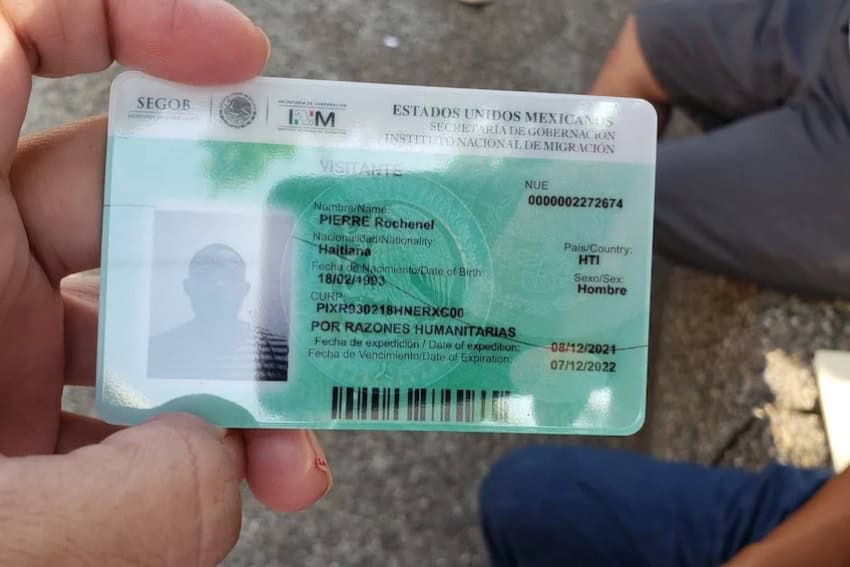
Mexico offers two main residency options: temporary and permanent. Both allow foreigners to stay in the country beyond the 180-day tourist permit, but each category carries different expectations and benefits.
Temporary residency is generally issued for one year at the beginning of your immigration to Mexico and may be renewed for up to four years. After that period, most residents become eligible to convert to permanent residency, which does not expire and removes the need for renewals. Permanent residents may work in Mexico without obtaining an additional work permit, although they must register with the tax authority and notify immigration afterward.
In all cases, the residency process begins at a Mexican consulate outside of Mexico and is completed at an immigration office (INM) once the applicant enters the country with the approved visa.
Some consulates will issue permanent residency directly — for example, to retirees, spouses of Mexican citizens, or parents of Mexican-born children. Many consulates, however, decline to grant permanent residency to applicants below retirement age the first time around unless they qualify through family relationships or specific categories.
In some cases, applicants who already hold temporary residency and live in Mexico may be permitted to convert to permanent residency earlier than the four-year period, depending on the criteria applied at their local immigration office.

What you’ll need to apply
The financial requirements for residency are based on either monthly income or savings and investments. These thresholds, published by the Secretaría de Relaciones Exteriores, vary slightly between consulates and may change at any time because they are tied to Mexico’s minimum wage or UMA values — the latter being a monetary number updated annually that is used to calculate fines, payments and tax obligations in Mexico.

Under the commonly applied standards, temporary residency generally requires a monthly income of about US $4,393 or an average balance of more than $73,215 over 12 months.
Permanent residency typically requires a monthly income above US $7,322 or an average balance above $292,859 over 12 months. All financial documents must match the applicant’s passport information exactly, without any variations in spelling or punctuation.
At a Mexican consulate outside the country, applicants present their financial documents, identification and any materials related to employment, investment or family ties. If the application is approved, the consulate places a visa sticker on the applicant’s passport. This visa allows entry into Mexico for the second phase of the process, which must be completed within a limited number of days.
Once inside the country, applicants visit the National Migration Institute (INM) to submit photographs, fingerprints and final documents. Temporary residents renew this information annually; permanent residents do not.
The advantages of residency when buying and selling property
Residency is not required to purchase property in Mexico. Foreigners may buy real estate anywhere in the country, including along the restricted coasts and borders, which technically is off-limits to foreigners. In these restricted zones, however, non-Mexicans typically use a fideicomiso, a bank trust that legally holds title on behalf of the foreign buyer, allowing a purchase.
Outside the restricted zones, property can be titled directly in the buyer’s name.

Even though residency is not a prerequisite for ownership, and foreigners may purchase real estate with only a valid tourist entry card, having a residency card can make transactions smoother.
Banks, escrow companies and notaries frequently prefer a residency card for identification. Residency also eliminates concerns about leaving the country when a tourist entry card expires, which can be disruptive during closings, renovations or long-term stays.
Avoiding capital gains tax
The most significant advantage of residency appears when selling property. Under Mexican tax law, temporary and permanent residents may qualify for a full or partial exemption from capital gains tax when selling their primary residence. For many homeowners, this exemption represents substantial savings, particularly in cities where property values have appreciated quickly.
Non-residents, by contrast, generally face much higher tax liabilities: They may be taxed at a flat 25% of the total sale price, with no deductions, or at approximately 35% of the net gain, depending on how the notary calculates the transaction.
To qualify for the capital gains exemption, however, the seller must meet several conditions:
- The property must be the seller’s principal residence, not a vacation home, rental investment or raw land.
- The seller must be able to prove occupancy, often through recent utility bills, a residency card, voting documents — in the case of Mexican citizens — or other forms of acceptable proof.
- The seller must not have used the exemption on another property within the period allowed by law, typically once every three years.
When all requirements are met, the notary may apply the exemption, reducing or eliminating the capital gains tax due.

Nonresidents, including foreigners who rely on tourist permits, generally do not qualify for this exemption and often face significantly higher tax liabilities at closing. For long-term foreign residents who intend to eventually sell their home in Mexico, obtaining residency well in advance makes sense.
Not just at tax time: A residency card makes daily life easier
Residency also simplifies many aspects of daily life for foreign homeowners. It allows easier access to banking, facilitates the registration of utilities and services and supports compliance with tax obligations related to rental income. While nonresidents can handle these tasks, the processes tend to be more straightforward for those with a residency card.
For many foreigners, the decision to pursue residency depends on how they plan to live in Mexico. Buyers who expect to spend most of the year in their home, or who anticipate selling it in the future, gain the most from being a legal resident. Investors who plan to manage multiple properties or conduct long-term business in Mexico also benefit from holding residency.
All applicants should keep in mind that immigration rules, UMA values, minimum wage-based calculations and financial thresholds can change at any time. Unlike what you may be used to back home, requirements also vary from one consulate to another and from one immigration office to another in Mexico. Before applying, it is important to confirm up-to-date requirements through official channels or with qualified professionals.
Glenn Rotton is a real estate agent with eight years of experience in San Miguel de Allende. Originally from Seattle, he has lived in Mexico for twelve years with his husband, Kiang Chong Ovalle, and their dog, Angus. Read more about Glenn here.