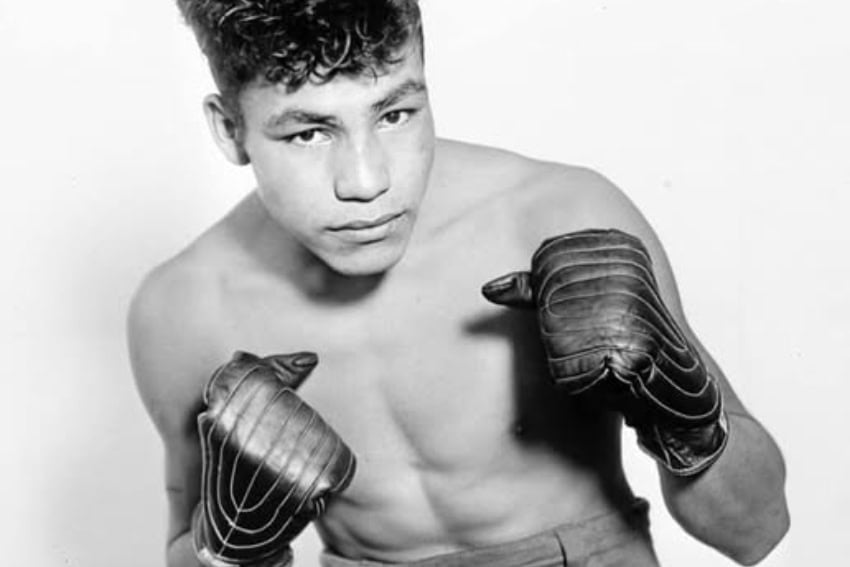
Sometime in early 1867, a group of wealthy young men of possibly dubious habits gathered at a gymnasium in Mexico City. Frenchman Nicolas Poupard had run a fencing school in the city for some time but had recently lost much of his trade to a new arrival, Thomas Hoyer Monstery. In a showdown to demonstrate who was the master of combat sports, they staged a series of contests ranging from sword fighting to boxing. Whether these were exhibitions or duels is uncertain, but the truth probably lies somewhere in between.
Monstery was quite a character and is worth a mention in passing. Born in Denmark, he traveled the world with the Danish navy, then became a master fencer and a talented boxer. He spent a spell in Russia as a fencing instructor and was forced to flee Copenhagen after killing a man in a sword duel. By 1867, Monstery was in Mexico, where he and Poupard fought the first recorded boxing match in the country. Yet, while this makes a good story, it did not inspire any great interest in boxing, and the Mexican origins of the sport lie elsewhere.
From gentlemen’s clubs to the circus
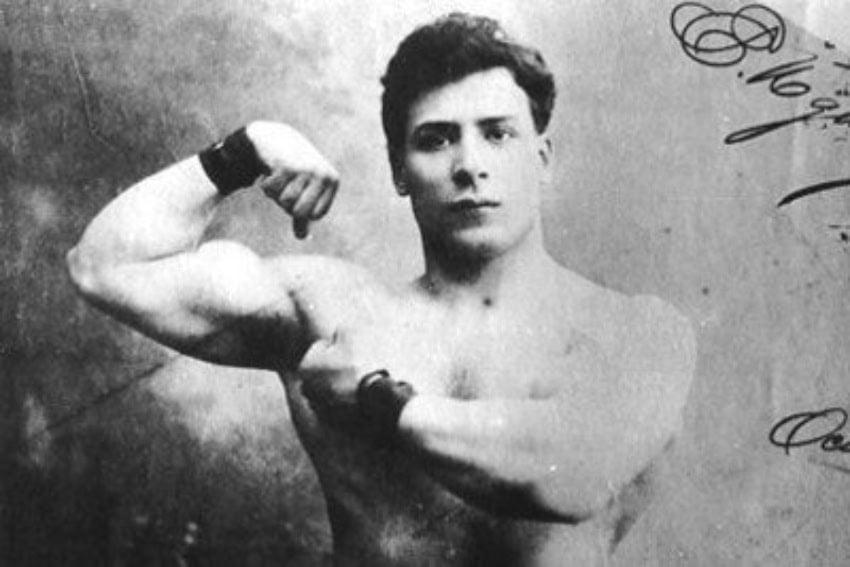
President Porfirio Diaz saw sport as a symbol of the modern Mexico he sought to build, with activities centered on sports clubs open to the upper and middle classes. Cricket, soccer, tennis and golf were all popular, but there were also boxing lessons. The noble art was seen as a fine way for a gentleman to exercise and defend himself if needed. The sport, however, also had some less refined roots, and the man who might be considered the father of both Mexican wrestling and boxing was Enrique Ugartechea.
Although Ugartechea came from a middle-class background, he acquired his interest in boxing from a grittier source. In 1903, while still a teenager, he watched the Italian wrestler Romulus at a circus and challenged the performer to a wrestling match in the local bullring. This was the first step toward young Ugartechea becoming “El Hombre Mas Fuerte de Mexico” (“The Strongest Man in Mexico”). Over the next few years, Ugartechea and his fellow bodybuilders regularly promoted boxing and wrestling matches in bullrings, theaters and carnivals throughout the country. This might be considered the birth of boxing in Mexico, while their wrestling tournaments were an early — though not direct — ancestor of lucha libre.
Revolution and port city rings
The revolution in 1910 set sport back, and whatever fights took place were hidden away in neighborhood boxing gyms or parks. The sport was in its infancy in Mexico, and when Jack London wrote “The Mexican,” fiction mirrored real life in that his young hero had to move to Los Angeles to pursue a boxing career. Notably, the most famous boxer of this period, Miguel Ángel Febles, “The Lion of Veracruz,” learned his art in Cuba. Febles was another colorful character whose resume included serving as a cavalry captain during the Mexican Revolution and a boxing instructor to the police. It was a tough way to make a living, and Febles performed at carnivals, fairs and circuses up and down the country, once fighting bouts in Puebla, Pachuca and Guadalajara in the same week.
Sheinbaum’s latest ‘Boxing for Peace’ program enlists 5,000 fighters as paid youth mentors

The port cities along the Gulf of Mexico were another center of boxing, with visiting seamen using a rope and four chairs to set up a ring in a shady nightclub. Hats would be passed among the spectators to collect drinking money for the fighters, and one of the images boxing had to contend with was that it was a violent sport for drunken foreigners. Boxing had lost much of its early respectability, but the men coming through this age of small neighborhood fights would shape the golden age of the sport that followed.
International stars reignite the sport
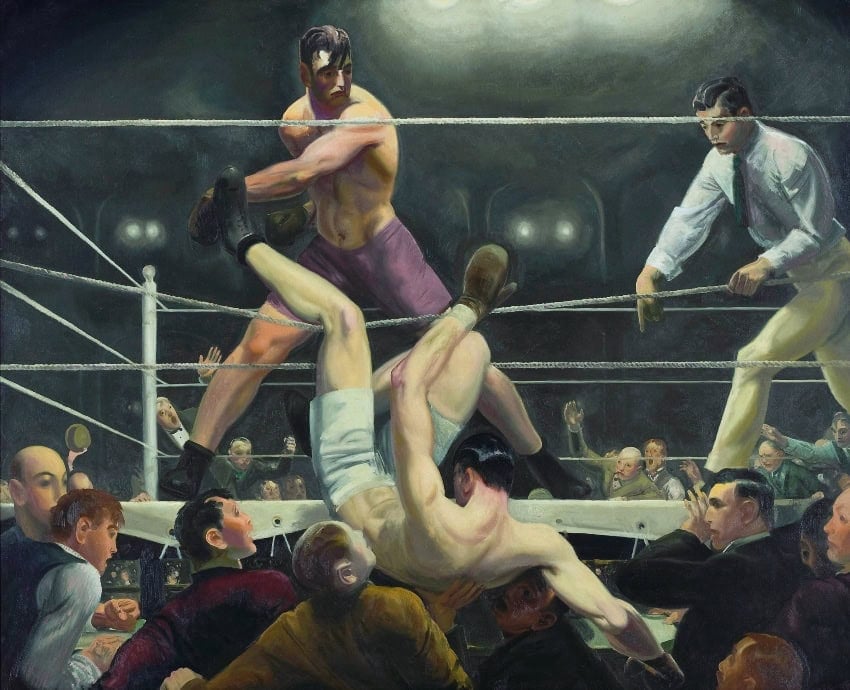
Boxing was given a boost in 1919 when world champion Jack Johnson arrived in Mexico City. Johnson had broken U.S. segregation laws by marrying a white woman, and his exile in Mexico created considerable excitement. Hundreds turned up to watch him train; there was an exhibition match in a bullring and a confrontation with armed police who came to seize his car. As the country became more peaceful, sports centers once again became popular, and the excitement generated by Johnson helped boxing in Mexico City reemerge from the shadows. The sport received another boost in 1923 with the historic boxing match between Jack Dempsey and Luis Ángel Firpo at the Polo Grounds in New York. The prospect of a Latin American boxer fighting the great Dempsey for a world title captured the Mexican imagination and was widely covered by the media, including newspapers and radio.
Moving to the barrio
At the same time boxing was breaking into the news, the Mexican economy was starting to prosper, and there was a migration of people from the countryside into the big cities. In Mexico City, many found lodgings in the working-class neighborhood of Colonia Guerrero, where boxing joined jai alai and wrestling as cheap street entertainment that could draw an enthusiastic local crowd. With this, the center of boxing moved from the rich sports club to the barrio gym. At one point, parliament considered banning the sport, but it slowly won the approval of the authorities.
Both government and church were concerned over the vices the young were being exposed to in the expanding slums, and boxing was seen as a way of offering the city’s poor discipline and purpose. With boxers coming from the growing population of the slums, the middle class was largely excluded from participation, but many rich and influential men could be seen at the ringside for big fights. They introduced organization to the sport, including founding the Mexico City Boxing Commission in 1923. With this, championship titles became official, and boxers could be enticed down from the United States, reasonably certain they would collect the promised purse at the end of the fight.
The rise of Baby Casanova
One of the men promoting the sport was Jimmy Fitten. Born in San Francisco, he had a long professional career of 59 recorded bouts spanning from 1909 to 1924. Coming to Mexico in 1925, he turned promoter just in time to benefit from boxing’s new popularity. He was ambitious, gritty, understood the art of promotion and had a web of connections in a sport he had given his life to. Fitten is particularly linked with one of the most beloved fighters of this age, Rodolfo “Baby” Casanova.
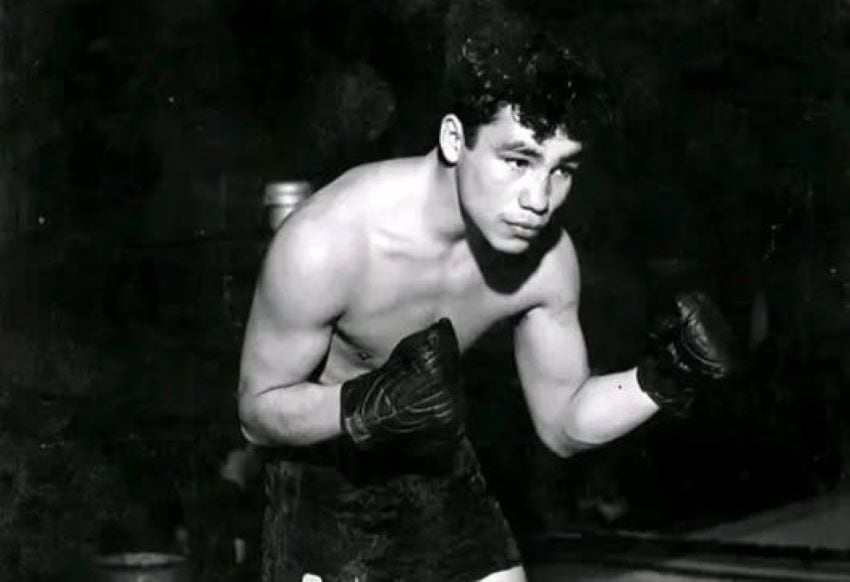
Casanova’s father died during the civil war, after which his mother moved the family to Mexico City. He grew up in the slums of La Lagunilla and entered the ring in 1932 as a 16-year-old. He had 15 fights that year, and when he was put into the ring against Speedy Dado, he was expected to be a tough opponent but not a real danger to a man in line for a world title. Casanova, however, beat Dado in Mexico City, earning him big-money fights in Los Angeles.
Fighting in LA
At the time, L.A. was a growing city without a franchise in any major U.S. professional sports league. In the absence of baseball or basketball, boxing ruled. Generally, Mexican boxers were looked down upon, but Casanova won over local fans who loved his style and aggression. Like many boys from the barrios who suddenly find themselves with money and fame, Rodolfo struggled to cope. He was regularly seen at local nightclubs, and rumors even swirled that he was hanging out with Mae West. When Casanova lost a world title fight to Sixto Escobar, it was reported that the young man had escaped from his hotel the night before and was found in the early morning drunkenly wandering the streets. His critics were vicious; the young man, it was said, had left his fighting skills along with his money in nightclubs.
A golden age cut short
Back home, the sport was helped by the opening of the Arena Nacional in 1930. This 30,000-capacity stadium was ideally suited for boxing, and a generation of fighters that included Kid Azteca, Baby Arizmendi and Juan Zurita produced magical nights there. Casanova was also back in the ring and forgiven. Like another flawed genius of a later generation and a different sport — Diego Maradona — his vulnerability seemed to identify him as a child of the barrios and made him even more popular. His three fights with Zurita during the mid-1930s were legendary for their passion and violence, while 30,000 fans packed into the city’s bullring to see him fight American Freddie Miller.
It was a golden age for the sport, with giant advertising posters around Mexico City previewing fights and promoting gyms. Boxing stories featured in comic books and magazines, and Olympic boxer Raúl Talán became a movie star thanks to the boxing movie “Todo un Hombre” (“A Real Man”). The general theme of the story, copied by nearly every other boxing movie, was that a poor boy makes good in the ring and wins a girl above his social class.
A blow to the sport
Boxing operated on many levels, and a man could gain prestige among his peers by fighting at a lower level. The taxi drivers’ society, for example, staged popular fight nights between its members. If it was tough at the top, it was harder still for the men who made their living further down the food chain fighting in grimy venues for pitiful rewards.
The sport then received two blows. On June 7, 1936, a promising 17-year-old, Paco Sotelo, was taken from the ring unconscious after a third-round knockdown against Jesus Najera. The crowd, believing the fight had been fixed, booed, but then came the news that Sotelo had died in the hospital. The following year, a fire ripped through the Arena Nacional, destroying the sport’s spiritual home in the city. By then, boxing was firmly established as part of Mexican culture, but a little of the magic had been lost.
Bob Pateman lived in Mexico for six years. He is a librarian and teacher with a Master’s Degree in History.