Arena CDMX is unlike any other professional basketball arena in the NBA’s minor league system. That’s because it’s located south of the border in Mexico City’s Azcapotzalco borough, lined with street food vendors, tianguis, police escorts and bootleg salesmen hawking unofficial NBA gear — Dennis Rodman t-shirts, Kobe Bryant jerseys, LeBron James posters, the whole nine. And yet, the fans arrive by the thousands nightly to cheer on the Mexico City Capitanes, the only Mexican-owned franchise in the NBA’s North American constellation, which spans throughout the United States and Canada, but until this decade, has never officially spanned into Mexico.
That all changed in December of 2019, when NBA Commissioner Adam Silver announced that the Capitanes — a team that had been formed just two years before to compete in Mexico’s Liga Nacional de Baloncesto Profesional (LNBP) — would be joining the G League as the 29th organization in the NBA’s second-division program. At the time, the NBA Commissioner excitedly touted the move as groundbreaking, strategically giving the NBA a Latin American basecamp from which they could expand their product’s reach and foster a love of the game in Mexico’s capital — a sports-loving city that, before the Capitanes, had been bereft of a pro hoops unit for over a decade.
Sports leagues target Mexico for new fans

The team’s inclusion in the NBA signaled a major shift regarding Mexico’s viability as a business opportunity for the world’s most iconic sports brands. It highlighted new possibilities for the ways in which both U.S.-based and international sports leagues understood Mexico’s market appeal. In the past decade alone, the NFL, MLB, and F1 have all significantly expanded their efforts and made inroads in Mexico, where each league has hosted events with increasing regularity to create an ongoing presence with Mexican fans.
To date, however, only the NBA has truly doubled down on its Mexican investment by adding a fully-equipped Mexico City team. And to their credit, they have allowed the team to retain much of its Latin American spirit and identity, with the majority of its players coming from all over Latin America and within Mexico — an uncommon sight for a league that has only ever seen six players of Mexican nationality in its 79 years of existence.
Capitanes break G League attendance records
Despite navigating previously uncharted territory — which the managing director for NBA Mexico, Raul Zarraga, admitted to ESPN was “a long, difficult process” — the team has stuck around. So, with the end of their trial period approaching quicker than a mid-court fastbreak, how exactly has the team performed?
The Capitanes were contractually allotted a minimum of five years in the NBA’s ranks, originally slated to begin in 2020, but having been delayed due to COVID. Unfortunately, the setback forced the team to postpone their debut for one year, in which they would eventually relocate to Fort Worth, Texas, as their temporary home once the league resumed play in 2021. The following year, they would finally return to host their inaugural game in Mexico City in 2022, which broke G League attendance records.

Since then, Chilango fans have continued to shatter the NBA’s minor league attendance numbers, with 35,043 fans showing up for a two-game series against the South Bay Lakers (the minor league representative of the ever-popular Los Angeles Lakers) in 2024. As of this writing, the Capitanes have led the G League in quantifiable metrics like merchandise, ticket sales and fan attendance. They’re also recognized as having avid fans in the G League, often showcasing Mexico’s zealous passion (the team formerly played inside Gimnasio Olímpico Juan de la Barrera, an Olympic-era relic from 1968, before relocating to the state-of-the-art Arena CDMX on the other side of the beastly megalopolis).
Fan experience in Mexico City
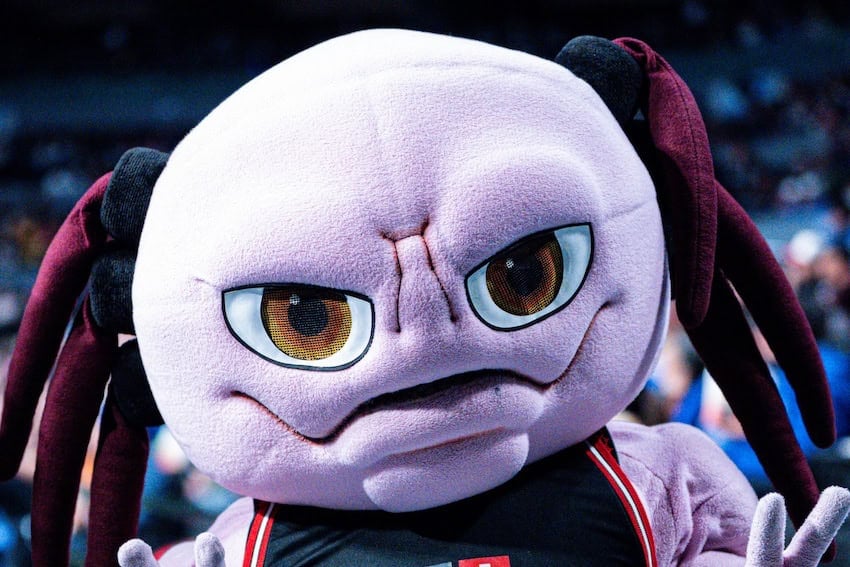
Though the team’s official logo is the Monumento a la Revolución, their mascot is a giant axolotl named Juanjolote. Their jerseys are colorful and snazzy, often highlighted with traditional Mexican touches and patterns (one of their more popular kits is a limited-edition piñata-themed colorway). Combined with the modern amenities of most NBA arenas — to go along with Mexicanized in-game entertainment like mini luchadores, mariachis, Mexican celebrities sitting courtside, and more — the overall fan experience is unlike anything else in the NBA stratosphere. And that alone is of value to the league at large, which aspires to maintain a direct connection with its Spanish-speaking audience across the border.
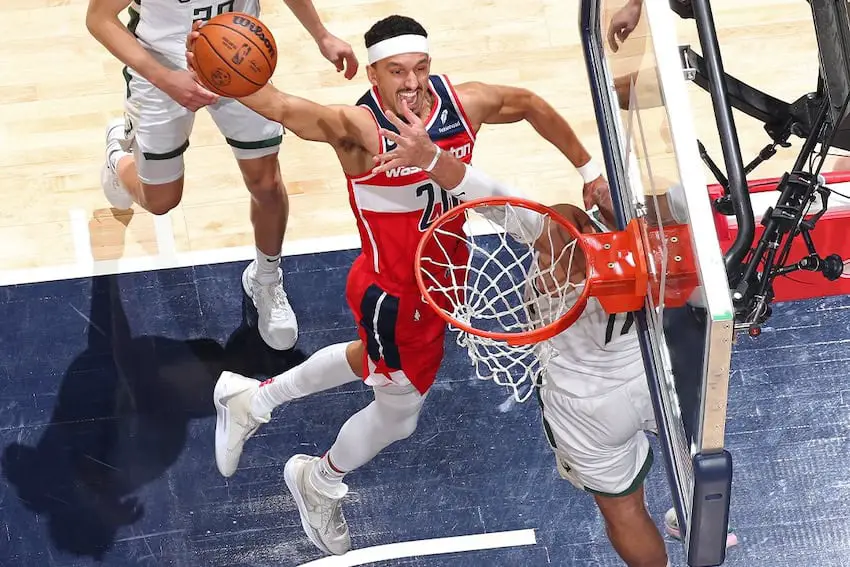
On the court, the team hasn’t won any championships, nor have they outright dominated the competition. Even at their best, they’ve mostly been a middle-of-the-road team in a league that constantly fluctuates due to the nature of being a farm system for the NBA (that is, players often get called up to play for the NBA’s flagship teams at various points in the year, making the G League a fluid, shifting league).
Highlighting Mexican heritage
The areas in which the team has outright succeeded is in highlighting its Mexican-heritage players: most famously, Juan Toscano-Anderson, a former NBA Champion with the Golden State Warriors who played two seasons with the Capitanes after his contract expired in the NBA’s big leagues. JTA, as he is known by fans, brought massive fanfare to the franchise during his time, helping to provide a veteran legitimacy and winning acumen to the squad for a few years and elevating their status with his gameplay and fan popularity. Outside of Mexican-blooded hoopers, there have also been recognizable NBA names like Shabazz Napier and Kenneth Faried, as well as young, talented prospects from around the world like Brazil’s Bruno Caboclo and American high schooler Dink Pate, who has openly spoken about his love for Mexico and its basketball fanatics.
Most recently, the team signed Mexican national team forward Gael Bonilla and Texcoco-born point guard Luis Andriassi to contracts, bolstering their Latino ranks. Their current General Manager, Orlando Mendez-Valdez, is a former Capitanes player himself and a Mexican American star who cut his teeth in Mexico’s pro league as a three-time champion and All-Star in the LNBP. For his part, Mendez-Valdez has assembled perhaps the most competitive Capitanes team to date.
As of this writing, the Mexico City team is on an eight game win streak with a 10-2 record, and will hope to make a dash into the postseason and reach their first NBA G League finals.
Will the Capitanes remain an NBA affiliate?
Regardless of this season’s outcome, it’s overwhelmingly clear that the Capitanes are Mexico’s favorite basketball team and are shouldering the nation’s NBA aspirations. They’ve come a long way from their amateur-like days in the LNBP, but have they done enough — both on- and off-the-court — to convince the NBA of their value? Culturally, they’ve added a priceless dimension to Mexico City’s sporting offerings. It’s yet to be seen, though, if they’ll continue to be around for future tip-offs as an NBA affiliate in the coming years. With league expansion looming, Mexico City has positioned itself as close to the rim as possible — and anything can happen.
Alan Chazaro is the author of “This Is Not a Frank Ocean Cover Album,” “Piñata Theory” and “Notes From the Eastern Span of the Bay Bridge” (Ghost City Press, 2021). He is a graduate of June Jordan’s Poetry for the People program at UC Berkeley and a former Lawrence Ferlinghetti Fellow at the University of San Francisco. His writing can be found in GQ, NPR, The Guardian, L.A. Times and more. Originally from the San Francisco Bay Area, he is currently based in Veracruz.