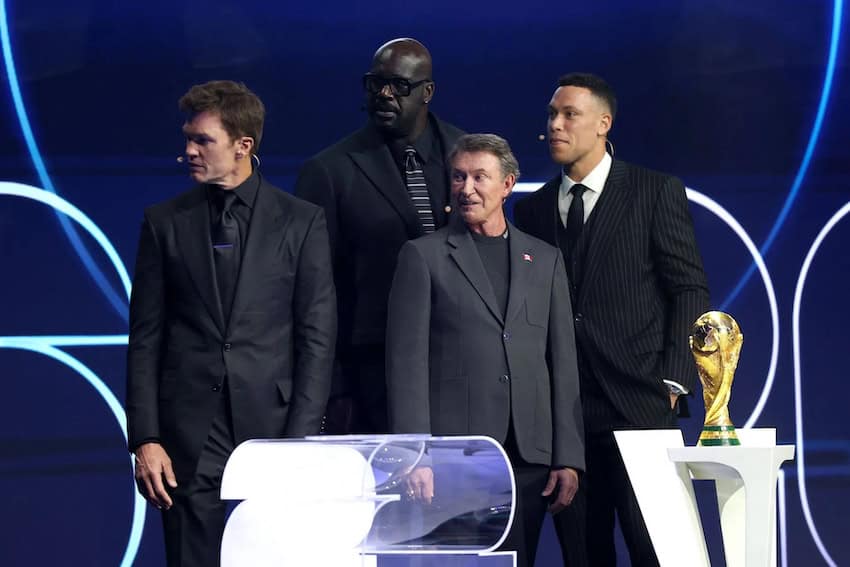
“I should not say soccer,” comedian Kevin Hart said at the FIFA World Cup 2026 Draw on Friday in Washington, D.C. “The rest of the world calls it football. I do know my Messi from my Michael Jordan. I know my Cristiano from my Steph Curry. And I know my Bellingham from my Tom Brady. I’m educated.”
Hart’s joke, whether he meant it to be or not, was a complex mix of humorous self-effacement on behalf of the United States for its reputation of ignorance about the world’s number-one sport, and a defensive — almost defiant — assurance that while soccer is generally the fifth most popular sport in the U.S. behind American football, basketball, baseball and ice hockey, the U.S. had done its homework and is fit to be running things.
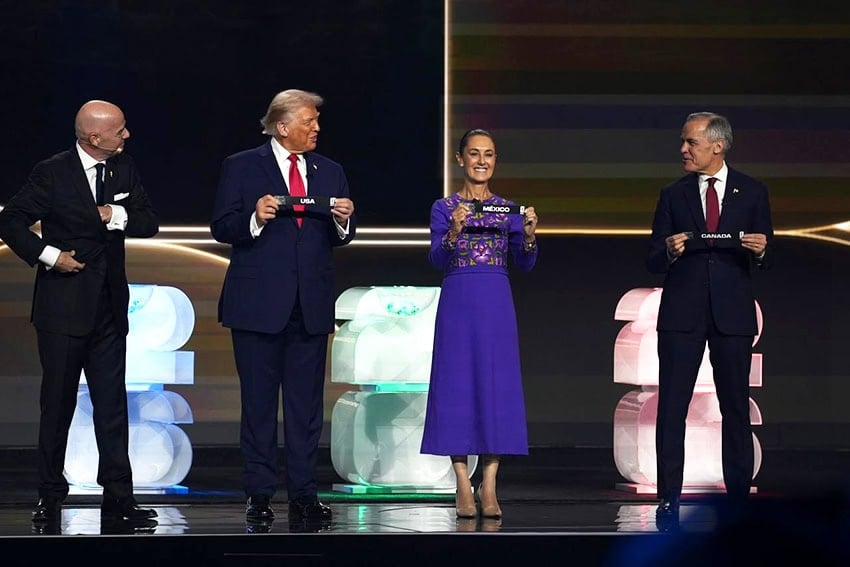
While Hart’s remarks were undoubtedly well-intentioned, they unintentionally captured the spirit of what, as a Mexican Canadian, I found problematic about this World Cup draw. This two-and-a-half-hour event to announce the details of the upcoming FIFA men’s soccer tournament, intended to evoke a spirit of collaboration between the three host countries — Mexico, the U.S. and Canada — instead felt like a greatly unbalanced ode to American greatness, one in which my two countries were treated like sideliners.
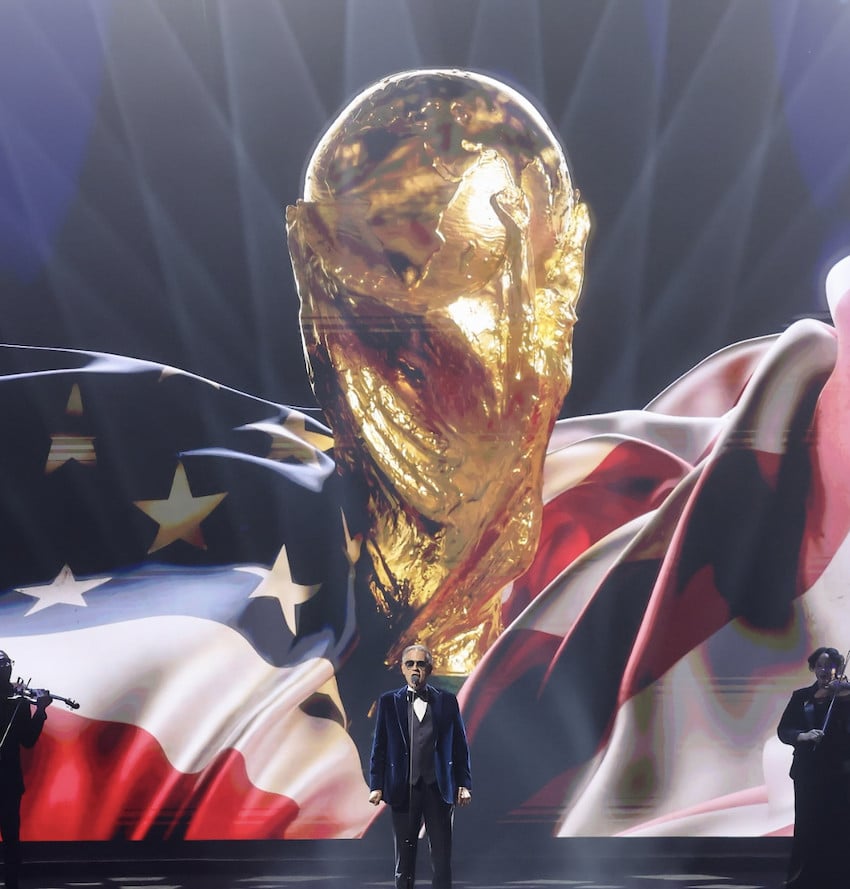
Sure, this event was held in Washington D.C., so the spectacle was bound to be a bit U.S.-centric. But was awarding U.S. President Donald Trump a newly created FIFA Peace Prize the best way to make fellow World Cup host leaders Claudia Sheinbaum of Mexico and Mark Carney of Canada feel like equal players? The Village People, an iconic American band known for their hit “YMCA,” was also the main headliner — a longtime Trump rally anthem that has become something of a political signature.
Claudia Sheinbaum and Mark Carney, on the other hand, were supporting characters at best to a show centered around the U.S. president.
Even the celebrities participating in the draw felt like tone-deaf choices. For example, Heidi Klum was Hart’s cohost, a German-American supermodel known for being one of the judges on the U.S. television show, “America’s Got Talent.” She’s a global icon, sure, but was she the best choice out of a plethora of Mexican, Mexican American and Canadian celebrities that would’ve done a great job hosting? The short answer is no.
Salma Hayek, Eva Longoria, popular hosts like Mario Lopez and comedians like Gabriel “Fluffy” Iglesias would’ve made great picks to host the show. What about Mike Myers, a world-famous Canadian celebrity who’s a well-known soccer fan? Or Canadian women’s football legend Christine Sinclair, a CONCACAF champion who’s scored more international career goals than any male or female player? Pairing Toronto native and actor/comedian Russell Peters with a funny Mexican American like Fluffy (or, God forbid, an actual Mexican) would’ve been a chef’s kiss choice by representing all three host nations.

But instead, an overwhelming number of American celebrities were highlighted in the draw: Shaquille O’Neal, Tom Brady and Aaron Rodgers — with MAGA-approved Wayne Gretzky as the token Canadian. It was obvious most of the presenters were kind of asked to do it at the last minute without having a general baseline knowledge of the beautiful game — and, in some cases, how to pronounce certain countries’ names. If you had asked most of these U.S. celebrities beforehand if they’re a fan of the game, they might’ve used the word “soccer” in their responses.
Where were Mexican celebrities like football coach Rafa Marquez, boxer Canelo Alvarez, or singer Luis Miguel? What about Mexican American actress Jessica Alba or some top female Mexican footballers like Scarlett Camberos and Teresa Noyola, the latter a Mexican American footballer who’s played on the Mexican women’s team? A variety of these sorts of athletes and celebrity presenters would’ve given the show more life.
Where there were fragments of Mexican and Canadian representation at the 2026 draw, it was deeply buried under Americana, to the point where it was confusing: The World Cup Draw is supposed to be about celebrating all the nations that have made it into the tournament; it’s supposed to be as inclusive as you can get, but this time, it seemed like Trump and the United States took the liberty of organizing the global event to be all about themselves. It was like being invited to a Day of the Dead event in Oaxaca and being offered hamburgers and milkshakes.
After the draw concluded, I went on with my day, thinking about how we should’ve seen a deeper sense of collaboration. If this foreshadows what we’ll see in 2026, there’s a real fear it may turn into an overdone U.S.-style Super Bowl spectacle that’ll alienate fans and be about everything but watching the world’s game at the highest level.
Case in point: FIFA has just announced that — for the first time ever — the final game will feature a Super Bowl-style halftime show.
Ian Ostroff is an indie author, journalist, and copywriter from Montreal, Canada. You can find his work in various outlets, including Map Happy and The Suburban. When he’s not writing, you can find Ian at the gym, a café, or anywhere within Mexico visiting family and friends.