If you love nature and outdoor adventure, you’re going to find the state of Nayarit irresistible.
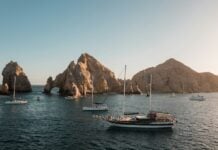
Located in western Mexico, just northwest of Jalisco, Nayarit has a wide range of geographical attractions. Along the Pacific Coast, you have the popular Riviera Nayarit, a budget-friendly stretch of relaxed fishing villages and laid-back beaches. At its northern end, you’ll find Playa Novillero, Mexico’s longest beach, where you can stretch your legs over 90 kilometers of shimmering sand, while at its southern end lies Mexico’s biggest bay, La Bahía de Banderas, one of the best places in the world for whale watching.
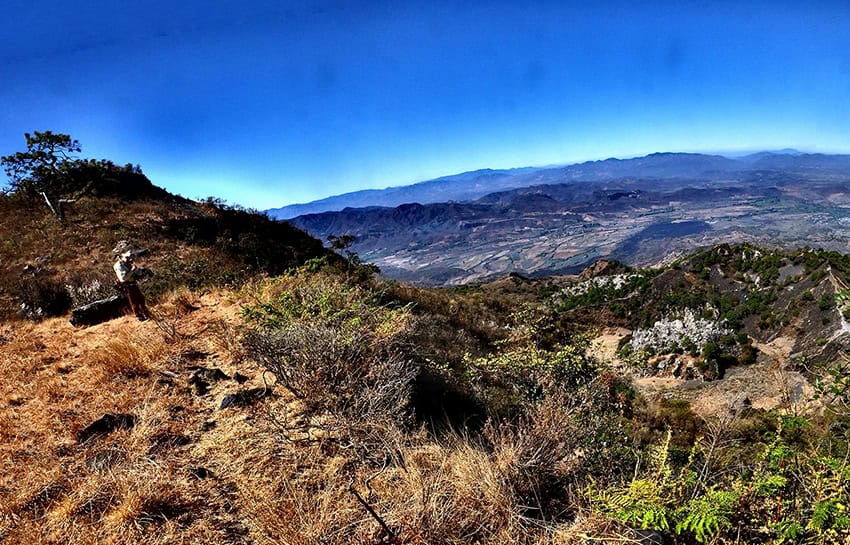
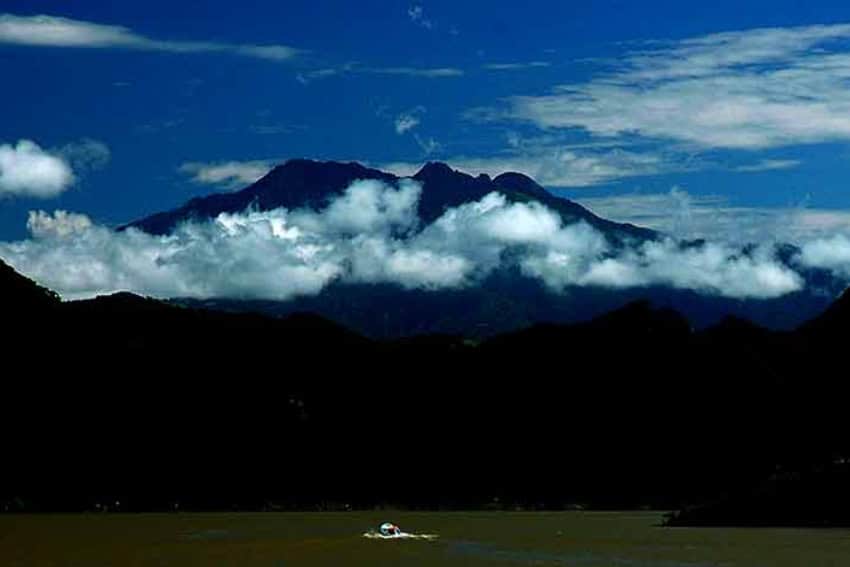
In contrast, you have the eastern side of Nayarit, intersected by the Trans-Mexican Volcanic Belt. Here you’ll find massive volcanoes like Sangangüey and Ceboruco, covered with pines and oaks dripping with Spanish moss.
This rugged area is cut, in turn, by the dramatic Santiago River Canyon, which winds its way through Nayarit for over 200 kilometers. The canyon can get as deep as 600 meters, featuring a semi-tropical environment at the bottom and offering hikers exciting challenges.
Along the river’s route lies the huge Aguamilpa Dam, one of the best places in the world for bass fishing.
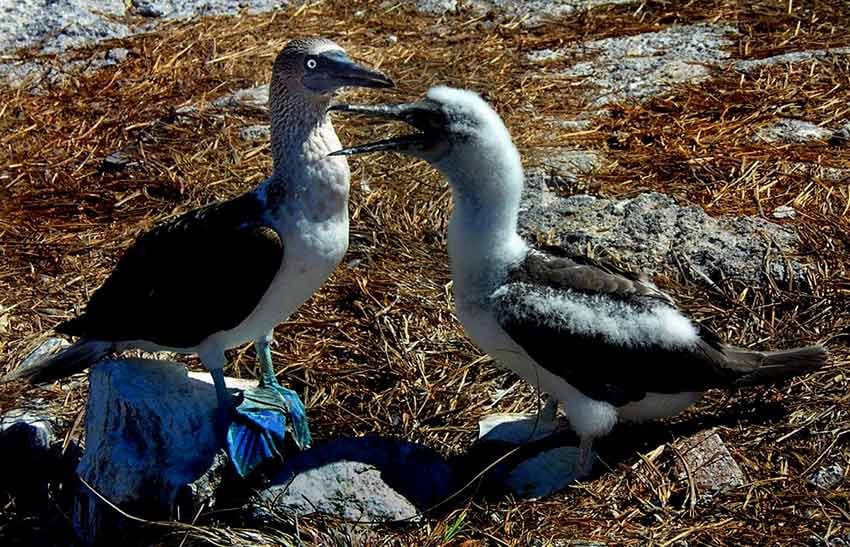
Isabel: home of the blue-footed boobies
Nayarit’s geodiversity and biodiversity are greatly expanded by the inclusion of the Marieta and Isabel islands, off its west coast.
Isabel has been called “Mexico’s answer to the Galapagos.” If that sounds like an exaggeration, note that Jacques Cousteau spent weeks there filming a documentary on the island, after which he urged Mexico to turn it into a national park (which it did in 1980).

Just getting to Isabel is an adventure, during which you may make friends with humpback whales and dolphins. On the island, you will discover that the frigate birds and boobies nest on the ground and in low trees, unafraid of visitors. While camping on the island, your hosts will treat you to delicious homegrown oysters and smoked fish. Isabel is an island you will never forget!
Fumaroles and pumas
Ceboruco Volcano is conveniently located along the toll road leading from Guadalajara to Puerto Vallarta. It is 2,280 meters high and you can easily get to the top via an excellent antenna-maintenance road. The volcano last erupted in 1875 and has at least seven craters, all of which are great fun to explore. Among Ceboruco’s many attractions are picturesque green meadows that abruptly butt up against high walls of chunky black basalt. Trees on this mountain top are festooned with lichen, orchids, bromeliads and Spanish moss.
Camp up at the top near a blowing fumarole and the next morning you may discover that you were visited by a puma in the dead of night.
Magic River
El Manto is a one-of-a-kind water park located on the eastern edge of Nayarit, 115 kilometers from Guadalajara in Jalisco.
Here is born a stream of crystal clear, room-temperature water which then flows through a narrow, gorgeously colored canyon, past three small waterfalls.
As a boy, Don Salvador Quintero, owner of El Manto, would blissfully float down this river on an inner tube, dreaming that someday he would transform it into the best water park in the world.
One day, as an adult, he shared his dream with the owner of the land, who then and there sold it to him for 300 pesos.
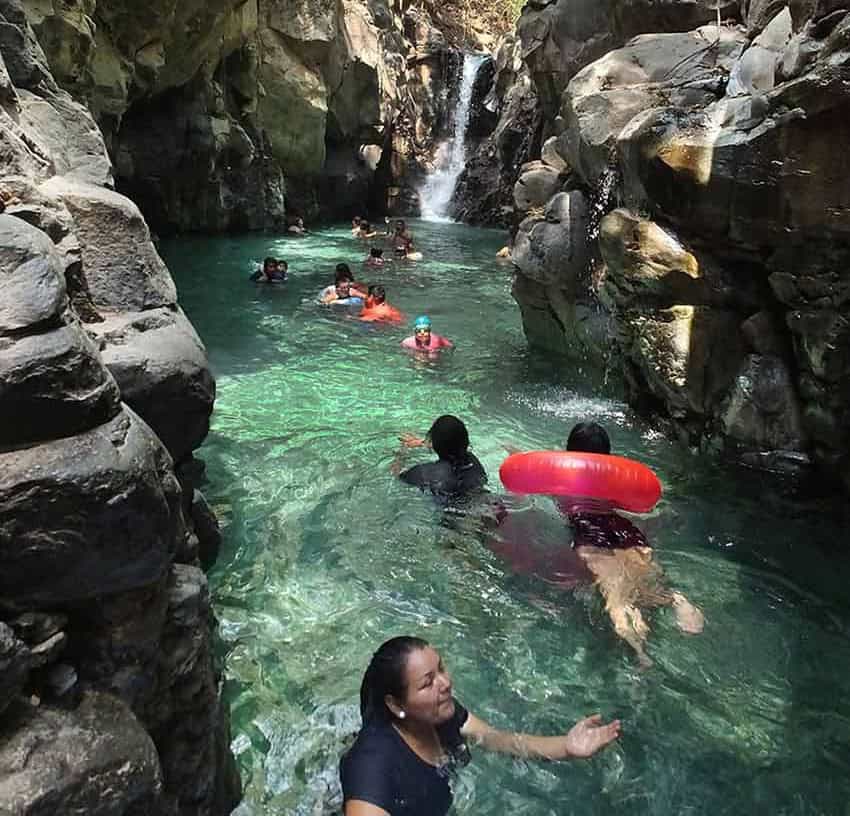
Don Salvador immediately began constructing the sturdy stairway that now takes visitors from the surface down to the canyon floor.
Everyone who comes to El Manto falls in love with it and they arrive by the busload.
In time, villas and a camping area were built for those who would like to spend the night at this charming hideaway. And today it has two restaurants.
You can have this unique water park all to yourself if you come on a weekday when kids are in school.
Santa María del Oro
A 40-minute drive from Tepic, this crater lake, whose water transitions from deep blue to emerald green, deserves to rank among the most picturesque and serene crater lakes in the world, but only a lucky few have even heard of it.
Here you can camp or rent a cabin cheaply and then kayak around the lake, which is two kilometers long.
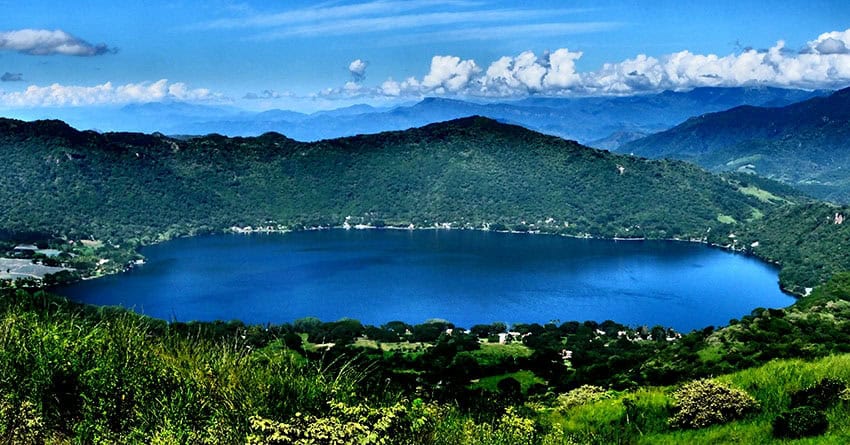
Once said to be bottomless, Santa Maria Del Oro is now known to be 60 meters deep, with warm currents continuously rising to the surface. After touring the lake, enjoy the crater’s famous chicharrón de pescado, small bits of mojarra fried in batter, to be munched, of course, under a thatched roof at the water’s edge.
Visit Santa Maria Del Oro and you may cry out like French documentary maker Christophe Delestre: “Mon Dieu! Here I am floating in a crater lake in Mexico, surrounded by a volcano’s walls … incroyable!”
Other outdoor attractions in Nayarit
There are plenty of other attractive sites in Nayarit. For example, you can take an early-morning panga (small boat) ride through the mangroves of San Blas and see huge numbers of water birds while hobnobbing with crocodiles. South of San Blas, there is the wild and still natural Turtle Beach, where you can camp for free and help release turtles in the evening.
Looking for petroglyphs? There’s a trail at Altavista, near Chacala, that functions as a unique rock-art gallery, ending at an exotic pool called La Pila del Rey, surrounded by hexagonal columns of basalt.
And, of course, Nayarit is famous for its many Wixárika (Huichol) villages. Yes, some of them do accept visitors, especially those alongside Aguamilpa Dam.
To see everything in Nayarit, be prepared to dedicate several lifetimes!
John Pint has lived near Guadalajara, Jalisco, for more than 30 years and is the author of “A Guide to West Mexico’s Guachimontones and Surrounding Area” and co-author of “Outdoors in Western Mexico.” More of his writing can be found on his website.