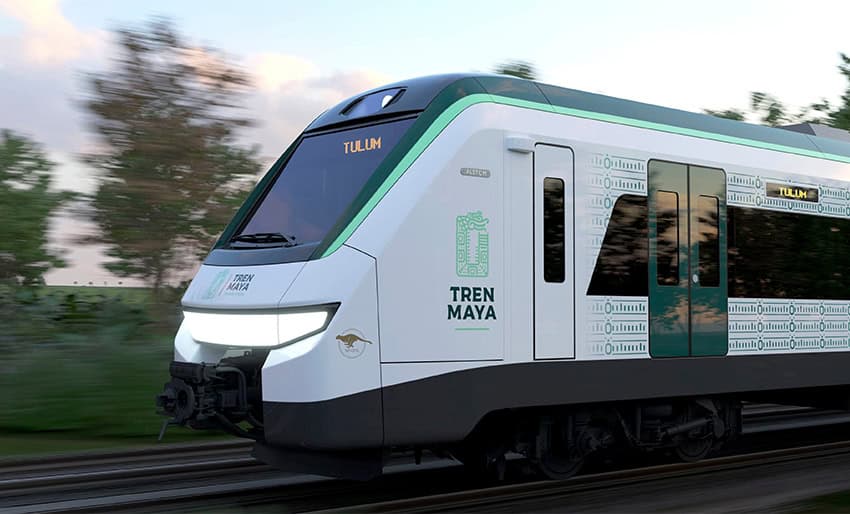
Tickets for the Maya Train will go on sale in Europe starting Feb. 1, thanks to a collaboration with the German transport company Flix
Flix, a German mobility and technology company that operates mainly under the FlixBus and FlixTrain brands, will distribute Maya Train tickets on its website, app and physical stores across Europe.
Until now, the Maya Train only sold tickets in Mexico. With this alliance, it will open its international sales in the European market for the first time.
The Mexican passenger train will now be integrated into Flix’s catalog, which operates in more than 40 countries and connects hundreds of destinations, making it easy to include the Maya Train in international itineraries.
Tourism Minister Josefina Rodríguez Zamora said that the tickets’ availability in Europe will allow foreign travelers to plan their trips further in advance, while helping advertise the train across the pond. She remarked that the addition of the Maya Train to Flix’s network “strengthens the country’s tourism competitiveness by integrating digital tools that simplify the travel experience and bring the destinations of the Maya World closer to a greater number of international visitors.”
With this collaboration, Mexico seeks to reduce logistical barriers by allowing European travelers to plan, book and pay for their rail journeys before arriving in Mexico, just as they would with a bus or train within Europe.
Meanwhile, head of the Maya Train Óscar David Lozano pointed out that the alliance also seeks to redistribute the tourist flow towards local communities to strengthen community tourism.

According to official data by the Tourism Ministry (Sectur), the Maya Train offers 20 daily commercial runs and has transported 2.15 million passengers since it began operations in December 2023. During the recent winter holiday period, it recorded a peak of 9,844 passengers in a single day.
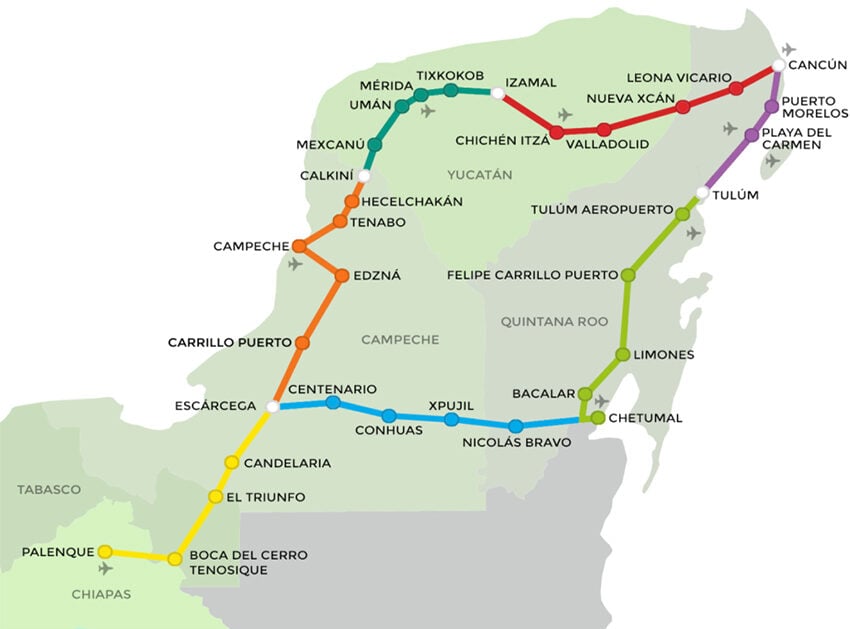
The Maya Train, one of the signature projects of former President Andrés Manuel López Obrador (2018-2024), runs for 1,554 kilometers (966 miles) across five states in southern Mexico: Chiapas, Tabasco, Campeche, Yucatán and Quintana Roo.
With reports from El Financiero and Lider Mexico