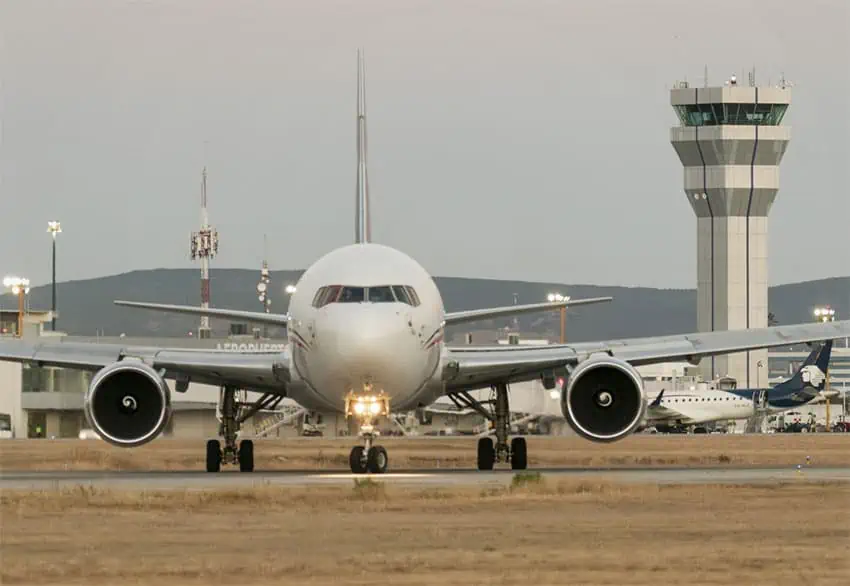
During the pandemic, the Mexican airline industry became the most competitive in Latin America, according to an index created by the firm Amadeus and the Latin American and Caribbean Air Transport Association (ALTA).
The second edition of the study, known as the Air Transport Competitiveness Index in Latin America and the Caribbean, found that Mexico stands out for high levels of connectivity, air transport policy, and for the wide variety of destinations accessible to its citizens without a visa.
Brazil ranked second, with high levels of competitiveness due to the low airport operating costs, followed by Panama, with high levels of international connectivity and the third best score for aviation authority governance.
In terms of connectivity, Mexico has 100 international destinations, surpassing Panama with 80 and the Dominican Republic with 57. In the first half of the year, Mexico had also registered more than 111,000 international operations — far ahead of the runner-up, Colombia, with 34,000.
Mexico’s top position in the index corresponds to the country’s open border policy during the pandemic. With some of the world’s loosest border restrictions since COVID hit, Mexico managed to maintain and even increase its passenger flow by 14% compared to pre-pandemic levels. The Dominican Republic and Colombia have also surpassed their 2019 levels.
Similarly, Mexico ranked No. 1 for post-pandemic promotion of aviation, in line with the country’s, followed by Costa Rica and El Salvador.
Mexico is also home to the largest number of airlines in the region, with 52 national and foreign companies, a fact which was reflected in its index score

However, the country’s good ranking in terms of connectivity and competitiveness contrasts with the elevated airport costs and the limited market to acquire jet fuel.
The airports of Monterrey and Mexico City reported the highest airport fees in the region with an Airport Use Fee (TUA) of US $61.70. In the overall ranking, Mexico has the highest airport charges just behind Argentina, Haiti and Curaçao. It also charges the most airport fees and taxes in the region after the Bahamas and Ecuador.
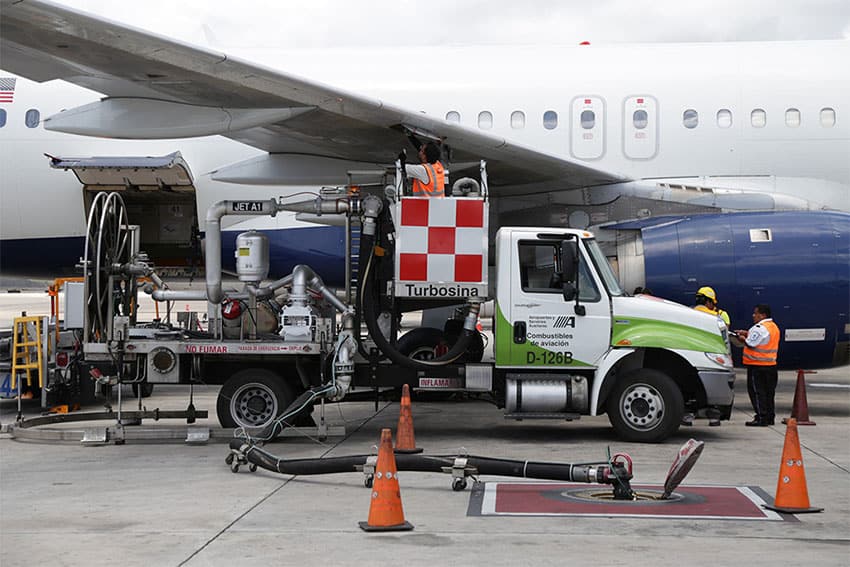
In terms of fuel, the analysis ranked Mexico as “uncompetitive.” According to the media outlet Expansión, this is due to the virtual monopoly that the partially state-owned company ASA has on the supply of jet fuel.
Although the index analyzes the elements “considered to have an immediate impact on the operation of airlines and on the well-being of the industry in general,” it does not rate safety. The responsible institution to do so is the International Civil Aviation Organization (ICAO), which is set to audit Mexico’s aviation industry in 2023.
However, the United States’ Federal Aviation Authority has already rated Mexico’s safety when it downgraded the country from Category 1 to Category 2, preventing Mexican airlines from opening new routes to the United States.
The downgrade reflects the domestic airline industry’s recent infrastructure and organizational struggles. Just this week on Wednesday, thieves cut the Mexico City internet cables after mistaking the fiber optic cables for valuable copper wiring. This provoked an internet outage that forced immigration authorities to return to using slow paper forms and led to passengers missing flight connections.
Just one month ago, the aviation and transportation authorities were forced to suspend medical, physical and license renewal exams for the rest of the year because the transportation authority had been hacked. What’s more, authorities recently revealed the sinking of one of the airport’s main terminals shortly after a near-miss between two planes at the Mexico City airport on May 7.
Although Mexico’s ranking in the Amadeus and ALTA index is good, the current problems faced by Mexico City’s airport could affect its position when the ICAO evaluates the national aviation industry. As Amadeus and ALTA stress in their index, “Safety is the industry’s number 1 priority and therefore should be considered as a factor for the competitiveness of countries.”