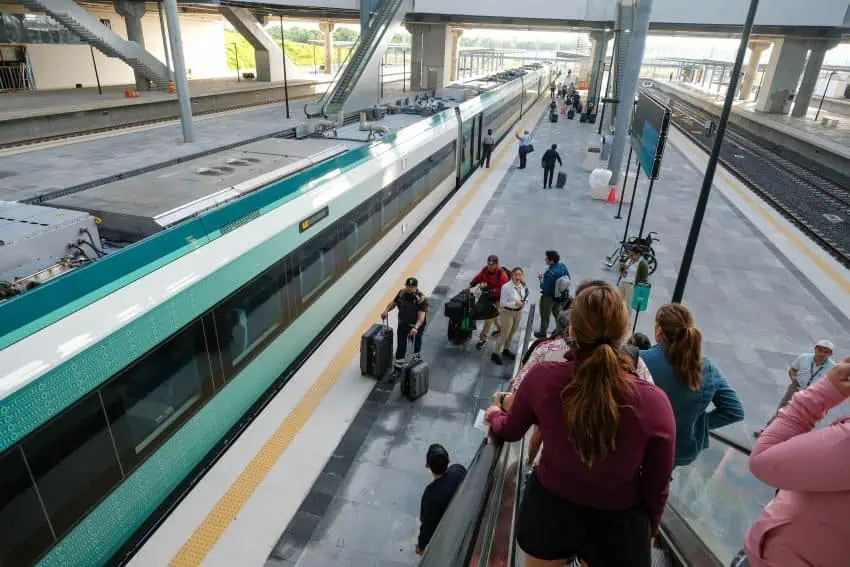
Mexico’s Maya Train reached one million passengers since its launch in December 2023, the general director of the state-owned railroad, Óscar David Lozano Águila, announced on Wednesday.
“Thanks to the trust Mexicans have placed in us, I am confident that the Maya Train will position itself as a regional transportation system that unites the communities of the Maya world in the southeast of the country,” Lozano said during President Claudia Sheinbaum’s Wednesday morning press conference.
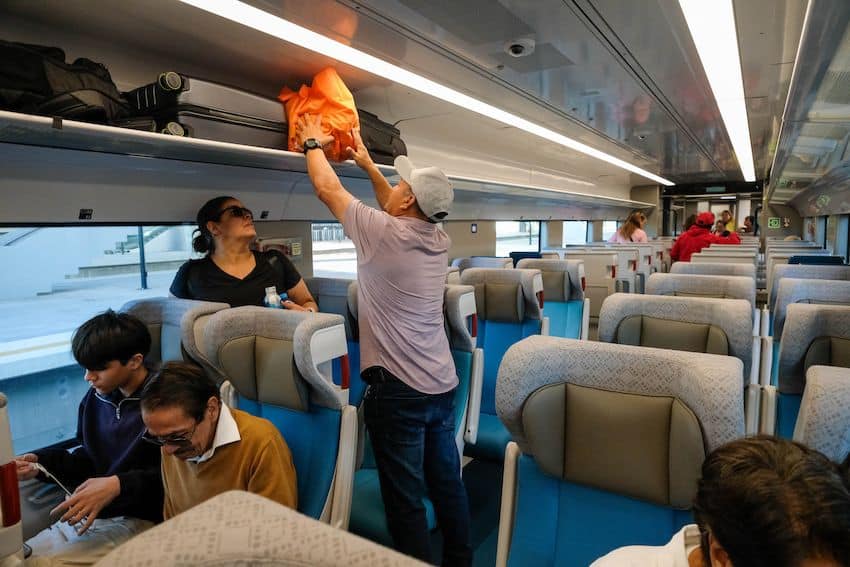
The millionth passenger was a 70-year-old man who purchased his ticket on Monday, according to Lozano. He will be recognized at a ceremony in the city of Mérida in Yucatán on Thursday.
The Maya Train, or Tren Maya in Spanish, is a flagship project of the ruling Morena party’s so-called “Fourth Transformation” of Mexico.
The final section of the Maya Train line was inaugurated by President Sheinbaum on Dec. 15, 2024, completing the 1,554-kilometer route that connects the southeastern states of Tabasco, Chiapas, Campeche, Yucatán and Quintana Roo.
The railroad has stations in or near the cities of Palenque, Campeche, Mérida, Valladolid, Cancún, Playa del Carmen and Chetumal, among others, improving access to tourist attractions such as archaeological sites, cenotes (natural swimmable sinkholes) and beaches for foreigners.
Locals have also adopted the train as a transportation alternative: in 2024, over 281,000 passengers were nationals — 167,901 were local residents and 120,141 were senior citizens, students, teachers and people with disabilities.

During the press conference, Lozano said that passenger occupancy had been “steady and consistent,” with passenger numbers increasing by 181% in the first quarter of 2025 compared to the same period in 2024.
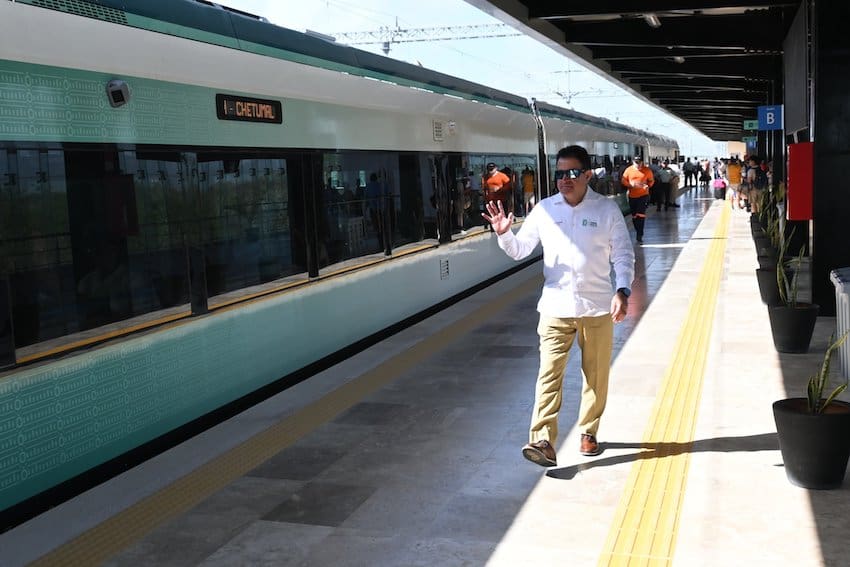
The Maya Train is expected to transport 1.2 million passengers this year, according to Lozano. More than 1,500 tickets have already been sold for the Easter period, bringing in revenue of 9.4 million pesos (US $462,000).
Most tickets for the Maya Train have been sold at the train stations and other in-person sales sites. By Jan. 21, 791,730 tickets had been sold in total, of which 500,427 were sold in person and 291,303 online.
The busiest stations are Mérida, with 189,536 tickets sold, Cancún Airport, with 180,079, and Playa del Carmen, with 70,976.
What is the Maya Train?
The Maya Train project was launched by former president Andrés Manuel López Obrador in June 2020, and faced opposition from environmental groups due to the deforestation and habitat destruction it caused to Mexico’s largest rainforest.
The construction of the railroad created more than 600,000 jobs, and cost approximately 500 billion pesos (US $24.8 billion).
On April 2, Environment Minister Alicia Bárcena announced that the government is preparing a restoration plan to address the ecological damage done by the train.