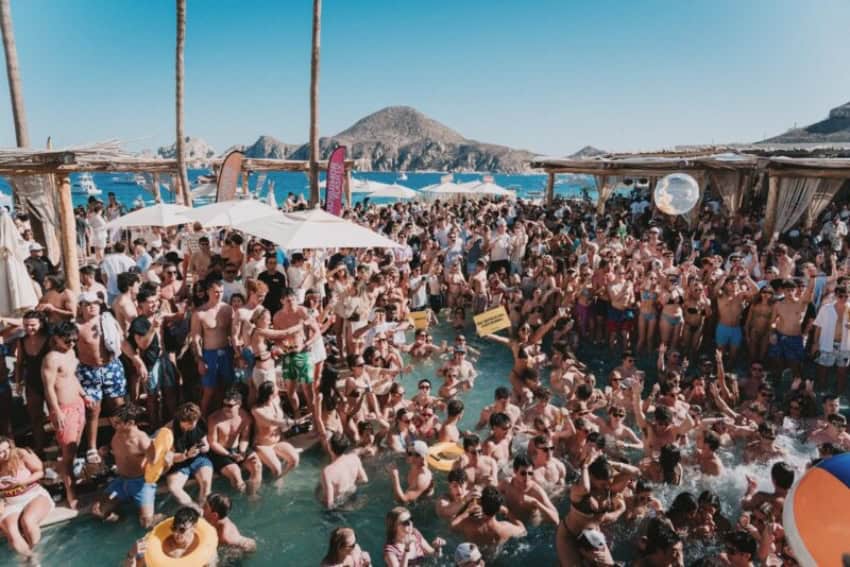
Spring Break and Semana Santa — the Holy Week before Easter and a traditional family travel period in Mexico — are the one-two punch that marks the peak of high tourist season in Los Cabos. This year, for the third year in a row, hotel occupancy rates hit 90% during Semana Santa. For context, the average occupancy rate during the rest of the year is 70%, and the only other time 90% has ever been reached is during the week between Christmas and New Year’s Day.
So Semana Santa on its own is noteworthy. But following, as it does, hot on the heels of Spring Break, a monthlong period in March during which college students from the U.S. flock to Médano Beach in Cabo San Lucas and other areas of Los Cabos, this period of intense tourist activity provides an annual bellwether, not only for how robust Los Cabos remains as a tourist market, but also how it is being perceived in terms of safety.
Spring Break goes off without a hitch
As has been noted before, Los Cabos is one of the safest travel destinations on the planet. But this reputation is always tested during Spring Break, not only because of the participants’ age, but also because of the amount of booze they consume and the media attention the event receives. The spotlight on this year’s Spring Break was further enhanced by the February incidents following the death of CJNG cartel leader “El Mencho,” with cards and businesses set on fire in numerous mainland states, including in tourist hotspots Puerto Vallarta and Cancún.
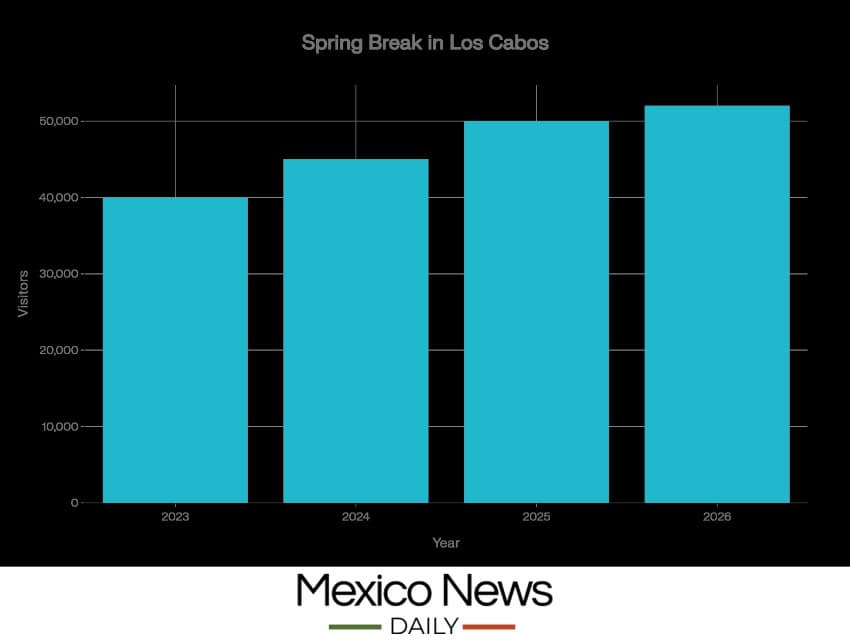
There were no incidents in Los Cabos, as per usual, and the destination was actually expected to benefit from the negative perception attached to Puerto Vallarta, with up to 20,000 Spring Breakers thought to be considering a switch of travel plans from PV to Los Cabos. However, that turned out to be a wildly optimistic surmise. Los Cabos received 52,000 Spring Breakers this March, an enormous number, but only 2,000 more than it had been anticipating all along.
Zero safety concerns
But, importantly for the destination’s reputation, Spring Break went off without a hitch or any safety blemish. Important and also interesting, since as Sudcaliforniano recently reported, over 10,000 parents came along for the party, or about 20% of the college-age kids on Spring Break in Los Cabos this year. This contingent of parents was a new feature and could only have happened in response to safety fears following the aforementioned incidents on the Mexican mainland.
But Los Cabos authorities were up to the task of handling the massive influx — in recent years, Los Cabos has typically received not just large numbers of Spring Break and Semana visitors, but over 350,000 tourists in total in both March and April — and as always, the ability to handle security challenges posed by this level of tourism didn’t happen by accident.
New surveillance cameras are being installed on Playa El Médano and other Los Cabos beaches
Keeping Spring Breakers and Semana Santa travelers safe this year required joint efforts between numerous municipal, state and federal agencies, from Zofemat — the federal agency in charge of Mexico’s coastline — to the Mexican Navy, Los Cabos police, firefighters and rescue teams, the Red Cross, Civil Protection and others.

But surveillance cameras were also part of the plan, including a 5 million pesos investment in six new Zofemat lifeguard towers with video surveillance cameras for El Médano and Empacadora Beaches, which frame Cabo San Lucas Bay. The new cameras were specifically installed to protect swimmers during Spring Break and Semana Santa this year, each with a 200-meter range and a 180-degree field of view.
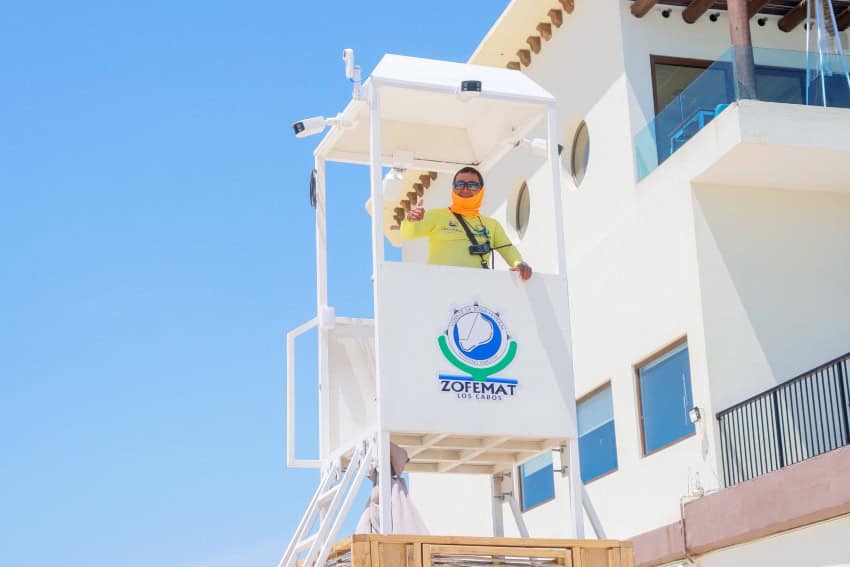
Those are added to the existing surveillance cameras on Médano Beach, which are designed not only to prevent drownings, but also to provide round-the-clock protection against theft, vandalism and unauthorized vendors.
“We are pleased that this is happening here in Médano, but it will also be in Santa María, Palmilla, Chileno, Acapulquito and others,” Zofemat coordinator Rafael Álvarez Munguía told Sudcaliforniano. “All these certified beaches, which are popular with tourists, will now have this video surveillance to monitor the activities of our concession holders and also to aid in coastal control.”
Baja California Sur is the leading state in Mexico for foreign investment in tourism
Safety, natural beauty and other factors contributed to Baja California Sur — home to popular tourist destinations like Los Cabos, La Paz and Loreto — leading all Mexican states in attracting direct foreign investment for tourism in 2025. The statistics for last year were recently reported by SETUE (the state’s Secretaría de Turismo y Economía), and BCS accounted for over 40% of the national total invested, with just over US $1.29 billion.
The U.S. led the way, providing 84% of the money invested, followed by Canada and Spain. But interesting, not only were the U.K. and the Netherlands also investors to the tune of US $28 million combined, but that was less than the amount invested in 2025 by Kazakhstan ($32.5 million). The United Arab Emirates also kicked in $4.4 million.
“This national leadership confirms that Baja California Sur continues to consolidate its position as one of the most attractive tourist destinations for investment in Mexico,” said SETUE head Rosa Maribel Collins Sánchez. “The confidence of international capital strengthens economic growth, generates jobs and contributes to the well-being of families in Baja California Sur.”
Update on the Fonatur roundabout infrastructure project
For close to a year now, the massive infrastructure upgrade adding a four-lane underpass to the Fonatur roundabout in San José del Cabo has been affecting traffic. The goal of the 470 million pesos project is, of course, to improve traffic at the busiest traffic node in Los Cabos, traveled by more than 62,000 vehicles daily. But before traffic could be improved, it had to be slowed even further for a year by construction work.
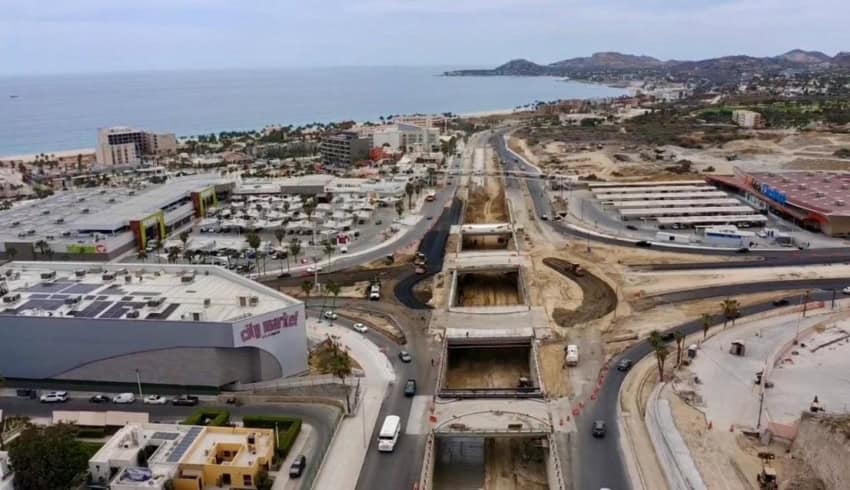
Thankfully, the Fonatur roundabout upgrade, which has been in progress since May 2025, is now nearly 80% complete, according to Roberto Flores Rivera, head of urban development for the Los Cabos municipality. The initial target goal was for the project to be finished by summer 2026, but shockingly, those expectations may be surpassed. In fact, if the current pace continues, work will be done by mid-May.
New design gallery opens in San José del Cabo
The Fonatur roundabout project has certainly affected businesses in San José del Cabo, but it hasn’t kept new ones from opening. One of the most notable to open its doors in 2026 is Diálogo Gallery, a design space that launched on March 5 in the heart of the Gallery District, and features a curated selection of art, furnishings and jewelry. These include pieces from the multidisciplinary design studios Atra Form and Dema Taller in Mexico City, art from Galerie Nordehake and jewelry from Ángel Bimbaro, also from Mexico City.
Chris Sands is a writer and editor for Mexico News Daily, and the former Cabo San Lucas local expert for the USA Today travel website 10 Best and writer of Fodor’s Los Cabos travel guidebook. He has also contributed to numerous other websites and publications, including The San Diego Union-Tribune, Marriott Bonvoy Traveler, Forbes Travel Guide, Porthole Cruise and Travel, and Cabo Living.