Nine weeks ago I set out on a mission. I had just arrived in Mexico for a journalism internship in San Miguel de Allende, and was trying to figure out why more foreigners — especially Americans — don’t travel to Central Mexico, and if they should.
Americans make up the majority of international arrivals into Mexico, but most head for the pristine coastline in Cancún, Cabo and Puerto Vallarta. Very few head to the country’s high-elevation center, and even fewer head to places outside of Mexico City.
But they are undoubtedly missing out. Americans tend to make long-haul trips to Europe to eat unique food, explore cobblestone streets and take in thousands of years of history. They can get the same experience with their southern neighbor, so why don’t they come?
Here are some of the reasons I found after living in Mexico for two months.
1. Public perceptions towards Mexico
The most obvious reason is the media perception of Mexico in the United States. Mexico is routinely painted as a hot, dangerous and drug-filled desert that sends millions of illegal immigrants through the northern border.
On Aug. 4, influencer César Gastélum was shot and killed on a live stream in Sinaloa amid ongoing cartel turf wars. The clip spread rapidly on social media, with the most-liked comments all calling Mexico unsafe and warning people to stay away.
Even before I started my internship, I had to go through weeks of safety training. I had friends tell me that they were scared for me and almost everyone questioned if it would be safe. That is the perception of Mexico that many Americans have.

Thirteen of Mexico’s 32 states have a level 3 or 4 advisory by the U.S. State Department, with only two — Campeche and Yucatán — holding a level 1 warning. These warnings and constant headlines of violence in Mexico keep the country off countless American bucket lists.
Mexico has problems, of course. Mexico’s homicide rate is 3-5 times higher than that of the U.S. and organized crime has plagued many states and areas around the country. But Mexico is a giant nation. There are parts I will never set foot in out of fear and parts I already want to go back to.
I grew up in the north suburbs of Chicago. Up there it is perfectly safe. Other parts of the city are not. There are areas of Chicago that I have never been to in my life, and that I never plan to go to. It is the same in Mexico but on a national scale. I will avoid Sinaloa and Ecatepec, but go to Mexico City and Oaxaca. Chicago and Mexico are both victims of clickbait headlines about widespread violence. Don’t believe them. I felt safer in Mexico than near my university in Seattle.
Wherever I went, I saw families playing outside and parties in town squares. The people seemed happy and secure. I do not get that same feeling in many parts of the United States.
2. Less familiarity
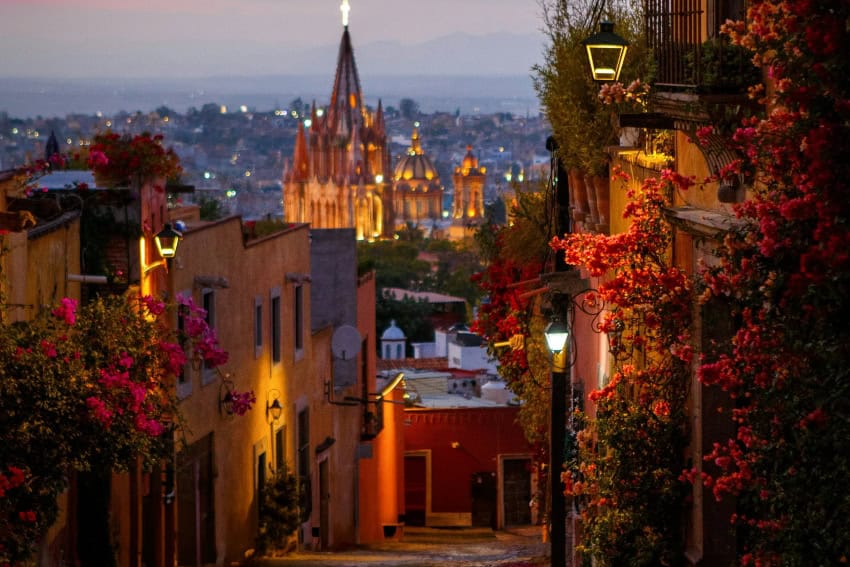
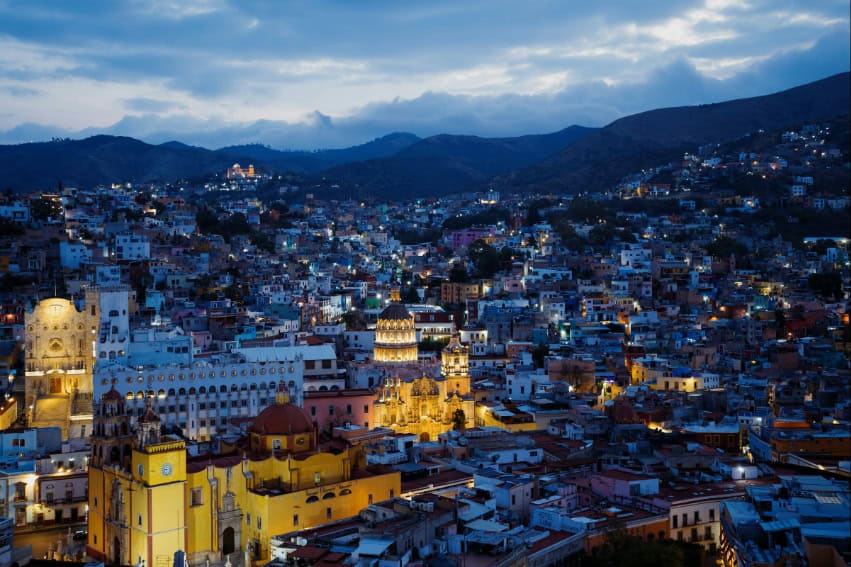
When most Americans think of an international vacation, they think of Rome, London, Madrid or Athens. Guanajuato, Querétaro, San Miguel de Allende or Oaxaca usually never cross their minds. There is a long history of Americans crossing the Atlantic for their big vacation, but that does not happen in Central Mexico.
While I met plenty of people who had been to San Miguel before I left, most had never even heard of it, let alone Guanajuato or Querétaro, which get far fewer American visitors.
Americans tend to like to enjoy places where they can be more comfortable, which usually means they flock to where Americans already are. Massive European hubs that have been recommended by countless American tourists to their friends and family will rake in visitors, while Central Mexican destinations — for better or worse — go unnoticed.
Central Mexico will never appear in as many movies (in a positive way, at least) as France or England. It will never be considered as romantic as Italy. So Americans will keep going to Europe.
I’ve been to Europe several times and now I’ve been to Mexico for nine weeks. The lack of familiarity, which is both real and exaggerated, is what made traveling in Mexico so great. I was never craving uniquely American experiences in Mexico. Why would I come to Mexico if I wanted everything to be like the United States?
So yes, there is sometimes a lack of familiarity. I noticed people wearing different clothes and eating different foods. They had different phrases that sometimes made me uncomfortable and they had different customs. But now I understand them and can go back to the U.S. having learned new things. I would not have gotten that if I just went to a place where every person I saw was a tourist.
3. Logistical and language issues
Americans like to speak English. In Central Mexico it’s far more common for people to lead with Spanish, unlike in Cabo or Cancún. For many American travelers, that’s enough to dissuade a visit.
Airport announcements are exclusively in Spanish, as well as signs at bus terminals. Sometimes asking for directions or ordering at a restaurant can be difficult. It can be hard to make conversation or meet acquaintances.
Am I being disrespectful? A reflection on living in San Miguel as an American intern
That’s part of the reason why San Miguel gets so many American tourists. You can easily get around with English and the town is relatively well-integrated to Americans. It may sometimes make for a less authentic trip, but one that is much easier to navigate and is more familiar while still having all the charm that Central Mexico provides.
As someone who speaks very limited Spanish, I was worried about the language barrier. Staying in San Miguel made it more seamless, but it was harder to get by when I traveled to Querétaro or Oaxaca. But that discomfort is part of traveling and part of becoming integrated in the culture. I had translation apps on my phone and tried to make an effort to speak in Spanish when I could. That was more than enough to get by.
It often was not easy but it was never that hard. If Spanish is stopping you from taking a trip to Mexico, I’m here to tell you that it shouldn’t. I struggled at times, but without trying to speak Spanish, I would not have been able to experience some of the rewarding experiences that I had.
What you’re missing out on
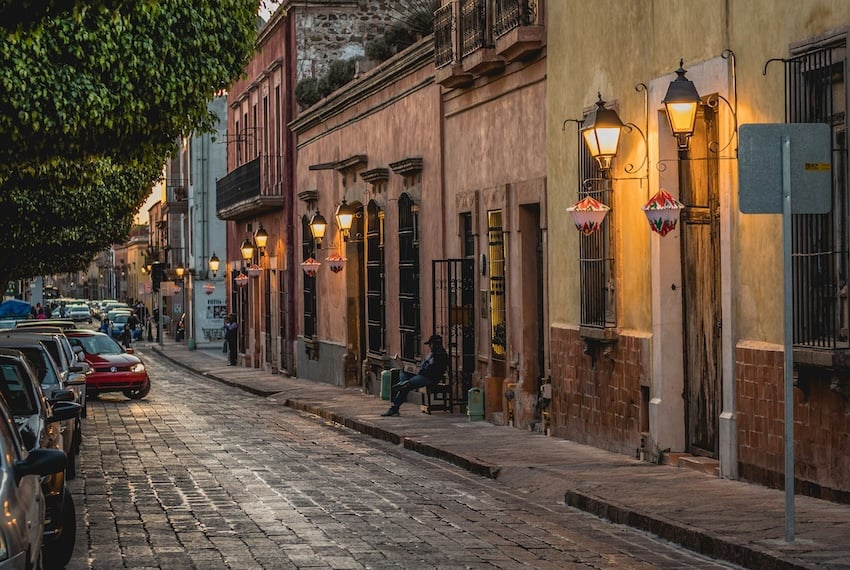
Colorful cities. Colonial streets. Winding mountain passes and waterfalls. Ancient ruins and cactus gardens. Tacos, tlayudas and empanadas.
Central Mexico truly has it all. I have been grateful to discover it during my nine-week internship. There were many times that I was grateful for streets that felt devoid of Americans, and there were times I was wishing for more familiarity. But that is the beauty of studying abroad.
Americans are missing out on many of the same experiences they can get in Europe. In Mexico, they can travel on a shorter flight and at lower prices. It also comes with learning what the real Mexico is like, which is ever-important as the two countries have been increasingly linked for decades. Over 38 million people of Mexican origin live in the U.S., and nearly two million Americans live in Mexico.
As these two countries seemingly grow apart over political tensions, meeting Mexicans in person and seeing how they truly live their lives has never been so fulfilling. It has also never been so maddening as they continue to be vilified in the United States. I can confidently say that coming to Mexico will be one of the greatest experiences of my college years and one that I will never forget.
Jared Tucker is a summer intern at Mexico News Daily in San Miguel de Allende and a rising senior at the University of Washington in Seattle, where he is the sports editor for The Daily UW. He was previously a fellow at TheFulcrum.us, where he covered public participation in American democracy.