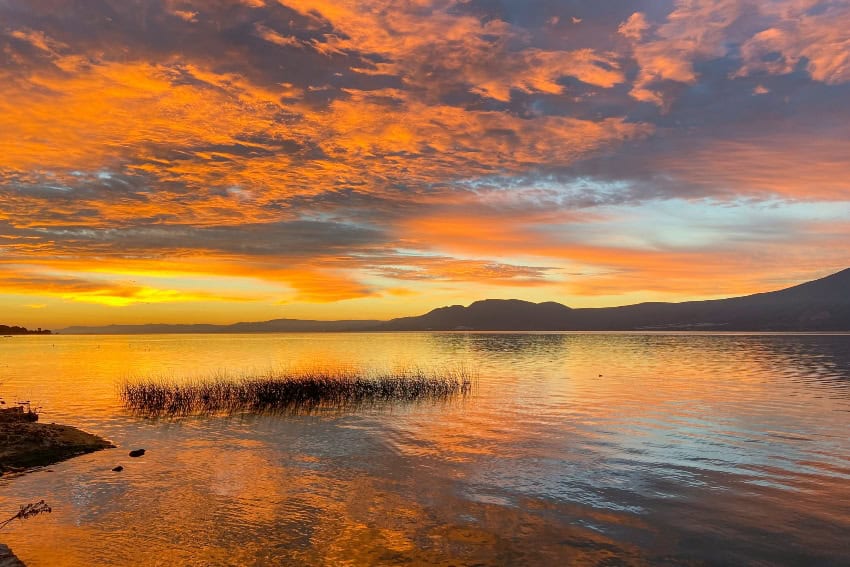
Mexico’s largest freshwater lake is at the center of a growing legal battle that could test how seriously the country enforces its environmental transparency laws. Lake Chapala is the source of up to 65% of Guadalajara’s drinking water. It also supports countless fishing and tourism livelihoods and is internationally recognized as a protected wetland under the Ramsar Convention. A dispute over a proposed aqueduct replacement has escalated into a broader fight over transparency, environmental governance and the future of the lake.
Lakeside groups have filed a federal injunction challenging the Jalisco government’s refusal to release the technical blueprint for the Chapala-Guadalajara aqueduct, arguing that withholding the information violates both Mexico’s transparency laws and its commitments under the Escazú Agreement.
What’s at stake
“This is not just a local case,” said María González, director of the Instituto Mexicano para el Desarrollo Comunitario (IMDEC A.C.), the organization that filed the injunction. “It is about whether Escazú is enforced in practice, or remains only on paper.” The Escazú Agreement, ratified by Mexico in 2021, requires governments to guarantee public access to environmental information and participation in decisions that affect ecosystems.
The conflict is not only about infrastructure. Supporters of the project argue that replacing an aging pipeline is essential to protect the water supply for Guadalajara’s nearly five million residents. State authorities have also maintained that the project would not increase water extraction from the lake.
Guadalajara’s federal concession allows withdrawals of up to 7.5 cubic meters per second, and officials have framed the project as a modernization effort that would remain within that cap. The State Water Commission (CEA) has further argued that releasing the detailed executive project could compromise strategic infrastructure planning and pose risks to infrastructure security and public health.
The CEA did not respond to requests for comment by press time.
The water supply of Lake Chapala and its sustainability
Critics acknowledge the importance of Chapala as a water supply, but they say the debate must be broader: improving extraction capacity without first restoring the lake and reducing urban water losses reflects an outdated hydraulic model of water management, they say, that doesn’t take into account the ecological health of a lake already under pressure.

“Guadalajara has to change its water governance model,” González said. “It cannot continue depending on ever more distant sources. The model has always been large dams and large aqueducts — not watershed restoration or comprehensive management.”
She argued that Guadalajara must move beyond a model that is overly reliant on distant water sources instead of investing first in watershed restoration, demand management and repairing its own distribution system. Capturing some of the abundant rainfall and redirecting it to replenish the aquifer is another important strategy, she said.
At the center of the dispute is how much water Guadalajara is actually drawing from Lake Chapala — and how much it could draw if the new aqueduct operates at full capacity. According to González, the metropolitan area is currently extracting between 5.6 and 5.7 cubic meters per second, below the federally authorized concession of 7.5 cubic meters per second. State officials have emphasized that the project would remain within that legal limit.
Water extraction issues
Critics, however, are concerned that replacing the pipeline could enable the system to consistently operate at the maximum concession, effectively increasing withdrawals even if the legal cap does not change.
Estimates suggest that up to 40% of Guadalajara’s treated water is lost through leaks in the metropolitan distribution network. “You can’t keep putting coins into a pocket with a hole,” González said. In her view, repairing the city’s aging pipes and improving water efficiency should take priority before expanding extraction infrastructure from the lake.
The controversy has brewed for more than a decade, but the current flashpoint centers on the executive project — the detailed technical blueprint that cost nearly 22 million pesos to produce. At a public meeting in June of last year, they were told their questions would be answered in the executive project, according to González. In January 2026, they made a formal request, only to be told it is classified as reserved information.
Broader ecological concerns
For Dr. Alicia Torres Rodríguez, a researcher at the University of Guadalajara who specializes in water and sustainability, the controversy cannot be separated from the lake’s broader ecological condition.
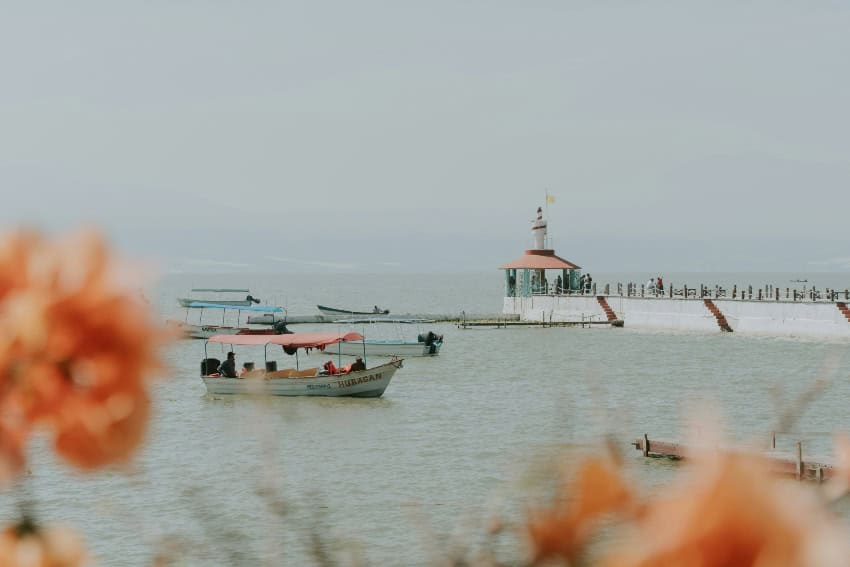
Born and raised in the lakeside community of Ocotlán, Torres’ feelings on the subject run deep. “My love for the lake does not arise only from a problem — it comes from my childhood, from having lived in a place where we could enter the lake, swim, catch fish and eat them, carry out many activities with the water because it was not contaminated.
“Now it is unthinkable to drink water directly from Chapala or to go in and bathe without fear of health consequences,” she said. “For me, Chapala is not just an academic subject — it is a way of life.”
Lake Chapala, she noted, faces what scientists describe as 16 of the 19 major stressors affecting lakes worldwide — including industrial contamination, agrochemical runoff from surrounding agricultural zones, invasive species, shoreline development and declining biodiversity.
“The debate should not be about an old pipe,” Torres said. “It should be about a living lake.”
Public health impacts
The lake has endured decades of cumulative contamination from untreated or insufficiently treated wastewater, fertilizer and pesticide runoff, and urban expansion along its shores, including real estate developments fueled by foreign investment. Shifts in agricultural production from staple grains to export crops such as berries, avocados and agave in recent years have amplified the impact.
Communities around the lake have also raised concerns about public health impacts linked to water contamination, including high rates of chronic kidney disease in parts of the region, which they fear could be exacerbated if lake levels drop further.
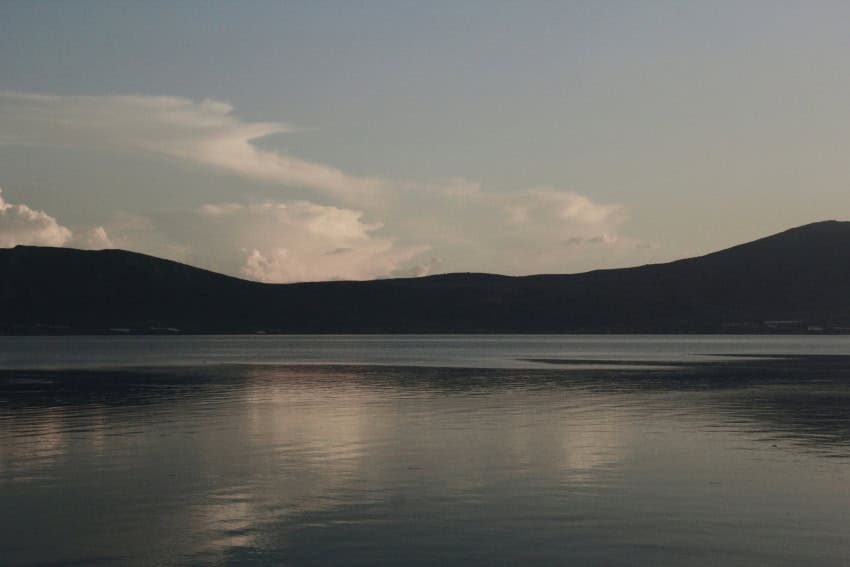
Despite these pressures, Torres emphasized that Chapala remains ecologically viable. “It is still alive,” she said, arguing that restoration, watershed protection and improved water management are essential if the lake is to continue supplying water to millions while sustaining the ecosystems and livelihoods that depend on it.
Urban water policy in Mexico
For Vicente Paredes Perales, a longtime activist from the lakeside community of Mezcala, the controversy reflects a deeper pattern in how urban water policy is designed in Mexico. A member of the Indigenous Coca community, Paredes has now joined forces with the Frente de Pueblos de la Ribera del Lago de Chapala, a coalition of communities that have joined forces to advocate on behalf of the lake.
“This is not an isolated project,” he said. “It fits into a model where the solution is always to build larger infrastructure — another dam, another aqueduct — instead of fixing structural problems.”
Paredes argued that while authorities frame the project as a replacement of aging infrastructure, Guadalajara has plenty of aging infrastructure to repair right there in its own city, with so many leaking pipes. Meanwhile, lakeshore communities worry about cumulative impacts besieging the lake from all sides.
“The lake is not a water tank for the city,” he said. “It is a living territory.”
A life source
Paredes, a longtime activist and member of the Indigenous Coca community of Mezcala, has watched the water quality and lakeside quality of life decline over the years, and will continue to fight for its defense as long as necessary.
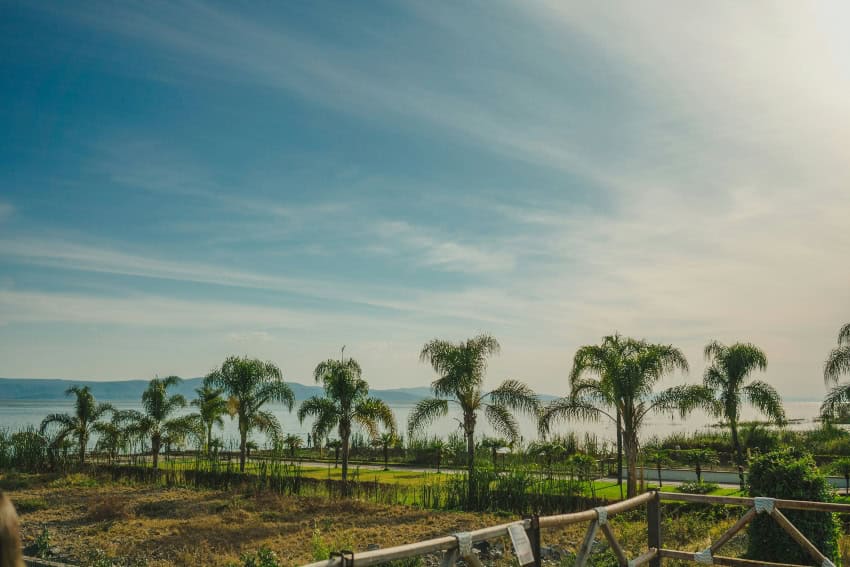
“For us, the lake is life,” he said earnestly. “We have always lived from it, feeding ourselves from it. It is an ecosystem that we all must value and defend — not only here, but throughout Mexico and the world. It is a living being, something that gives life.”
Alicia Córdova of Ajijic is also a member of the Frente. She stressed that the fight is not against Guadalajara, but for the lake itself.
“The lake is not an obstacle to development,” she said. “It is life; it feeds families; it regulates our climate; it sustains cultures.”
She paused before adding: “If we treat it only as a reservoir for the city, we will lose something much bigger than water.”
For the communities along its shores, she said, Chapala is not a technical file to be classified — it is a living territory whose future will shape generations to come.
Tracy L. Barnett is a freelance writer based in Guadalajara. She is the founder of The Esperanza Project, a bilingual magazine covering social change movements in the Americas.